Category Archives: Blog

Trip to Alaska — July-August 2014: Denali, Talkeetna

3 August 2014 — Denali to Talkeetna, and beyond!

Wonder Lake

Wonder Lake, with Mt McKinley in the background
Blog-2972

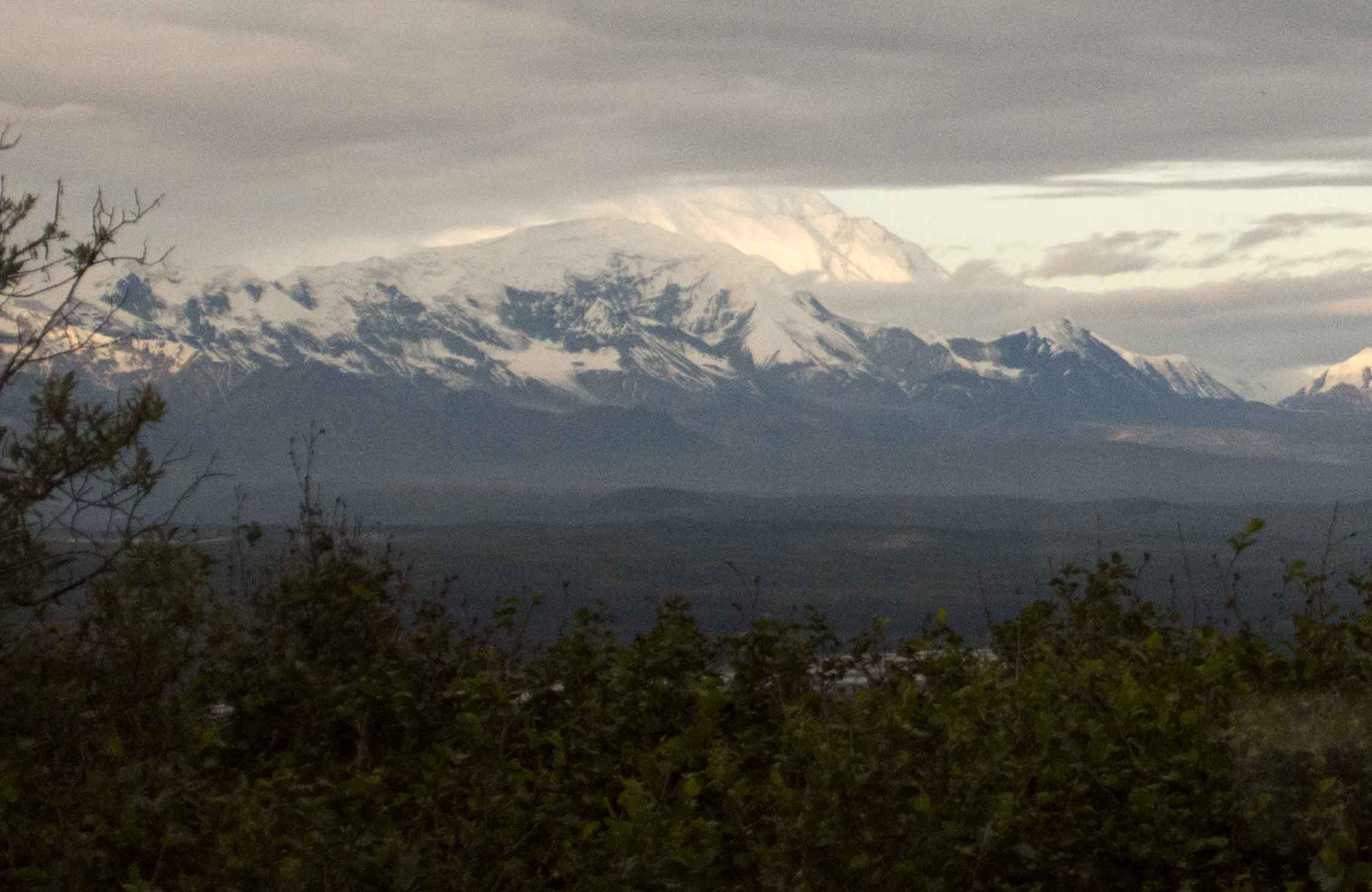
Mt. McKinley from the bus route out of Denali

Blog-3009

Moose enjoying a morning munch

This was an early morning (5:00 wake-up, with 6:30 departure). We had one of the best drivers (according to Albert) on the roads in Denali, and indeed she was safe, yet able to point out the sights we wanted to see, and she got us to the train on time.  
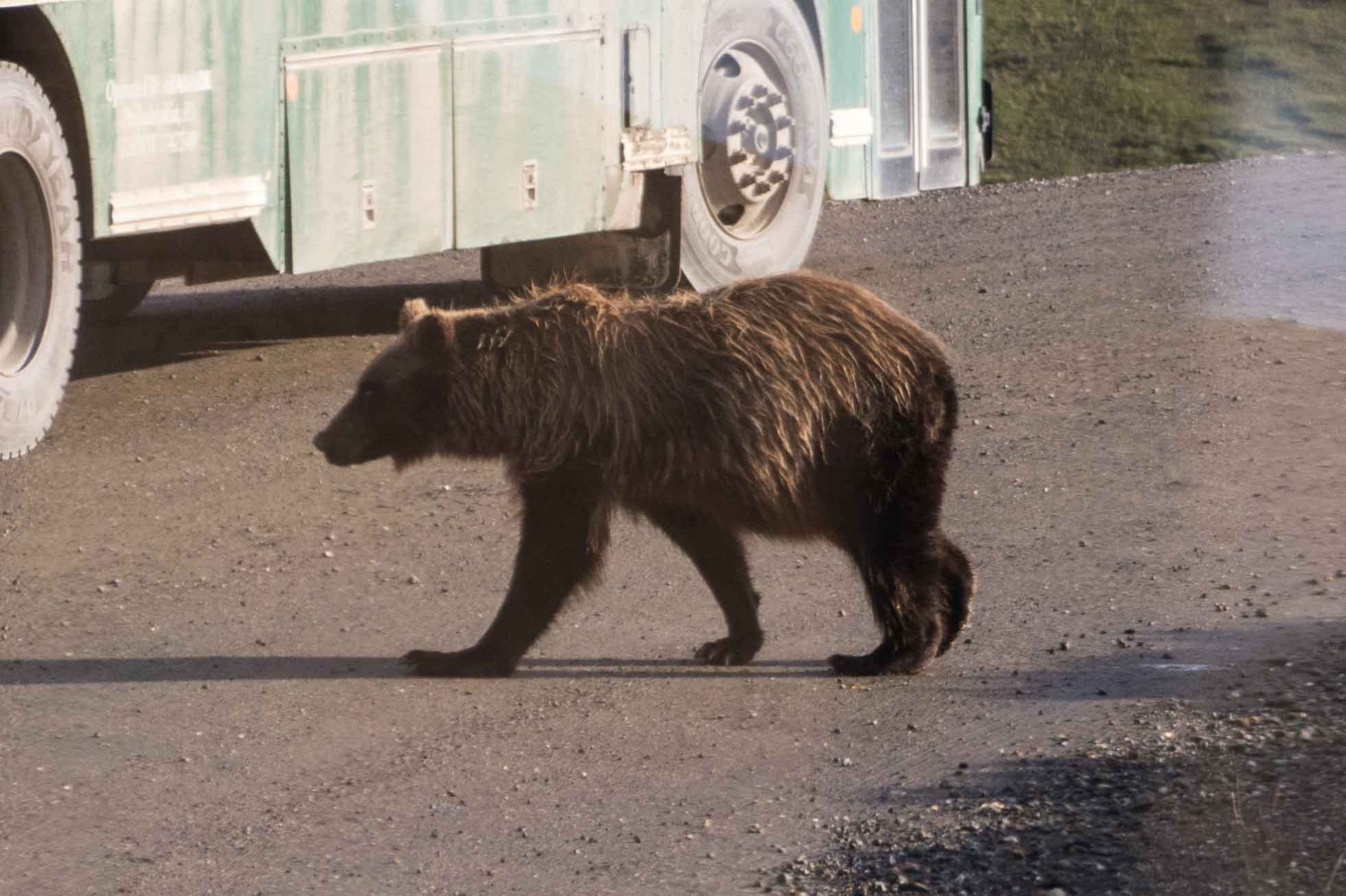
Blog-3095

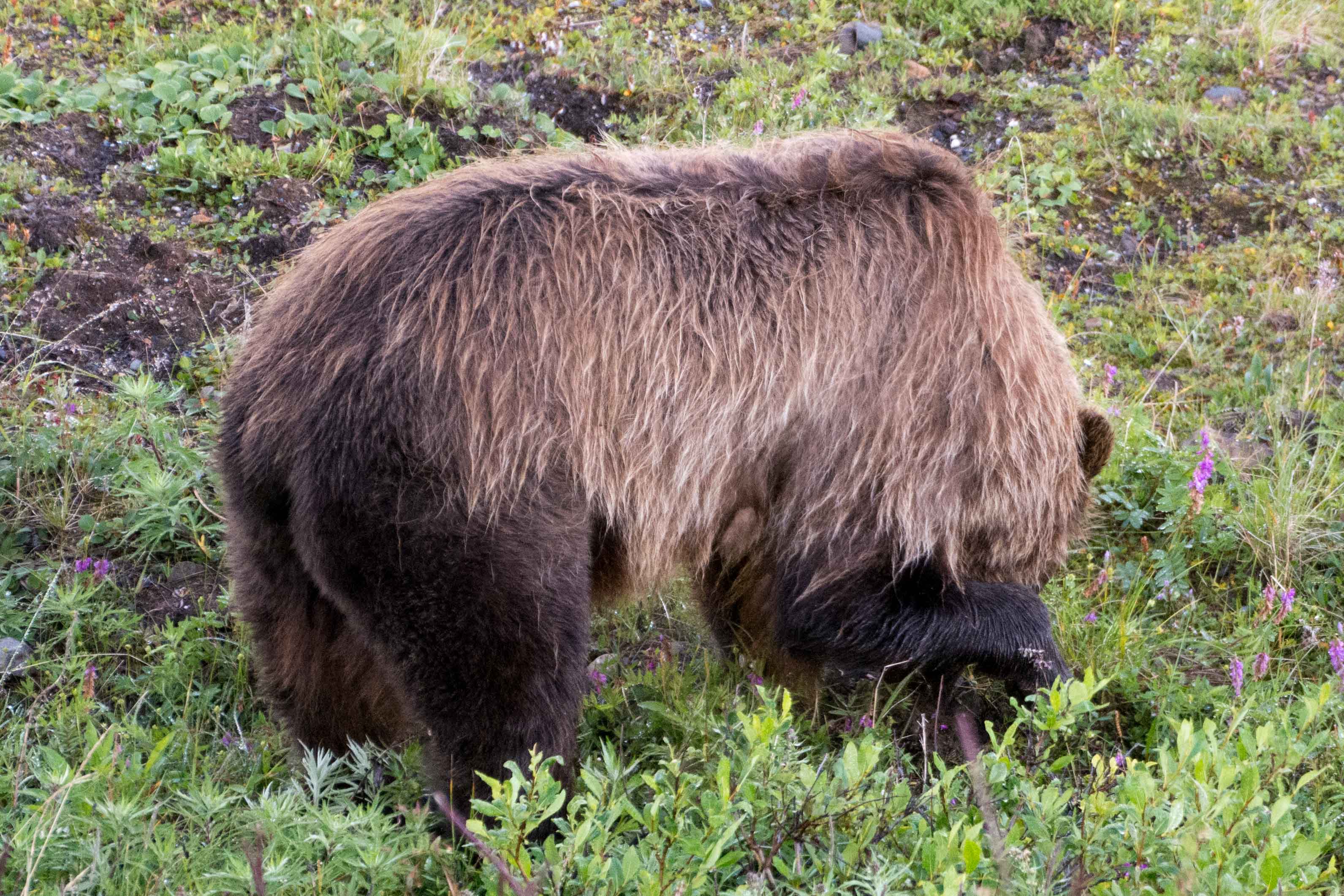
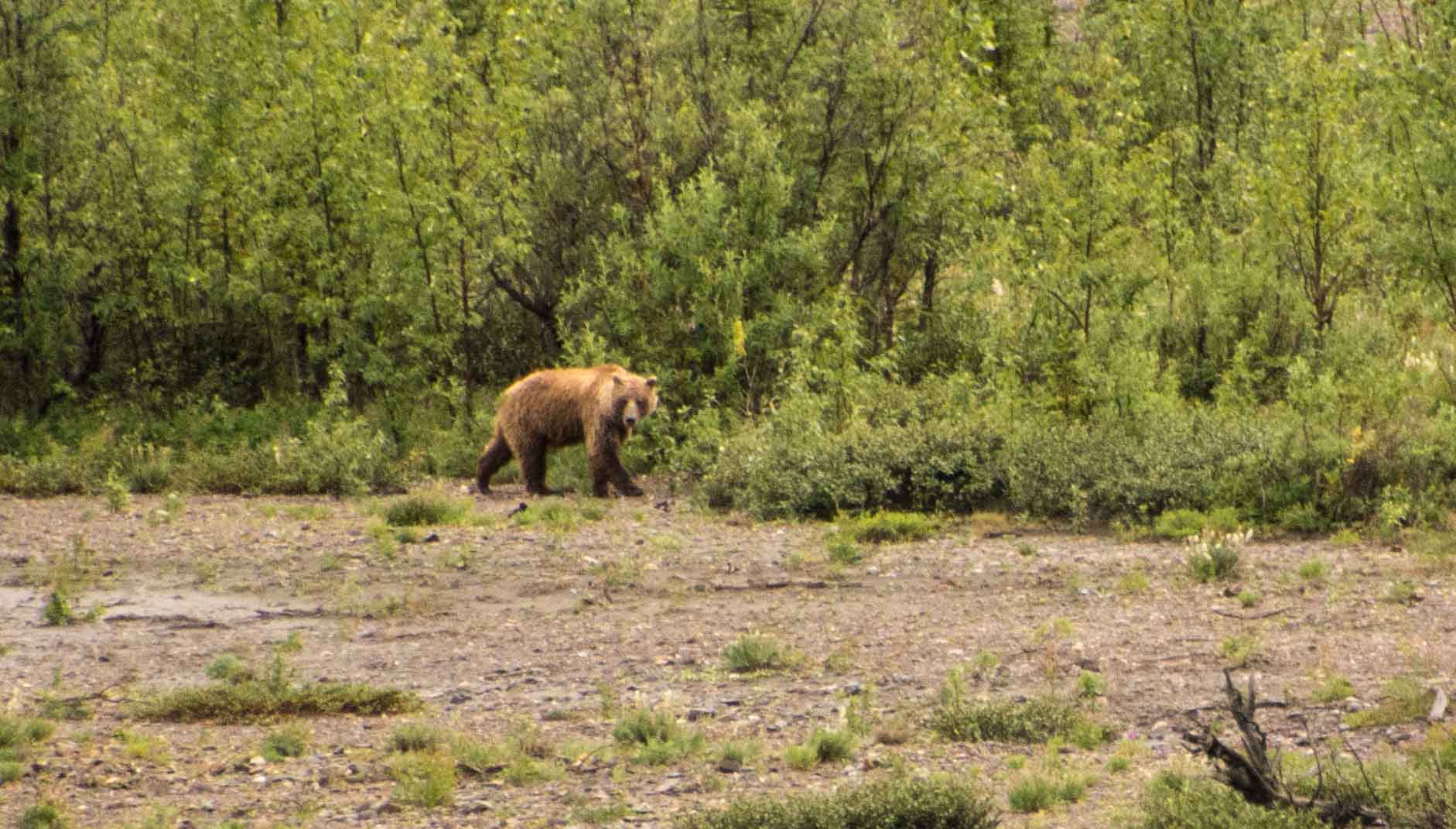
Bear crossing the road

Blog-3124

The same bear rooting around

Blog-3168

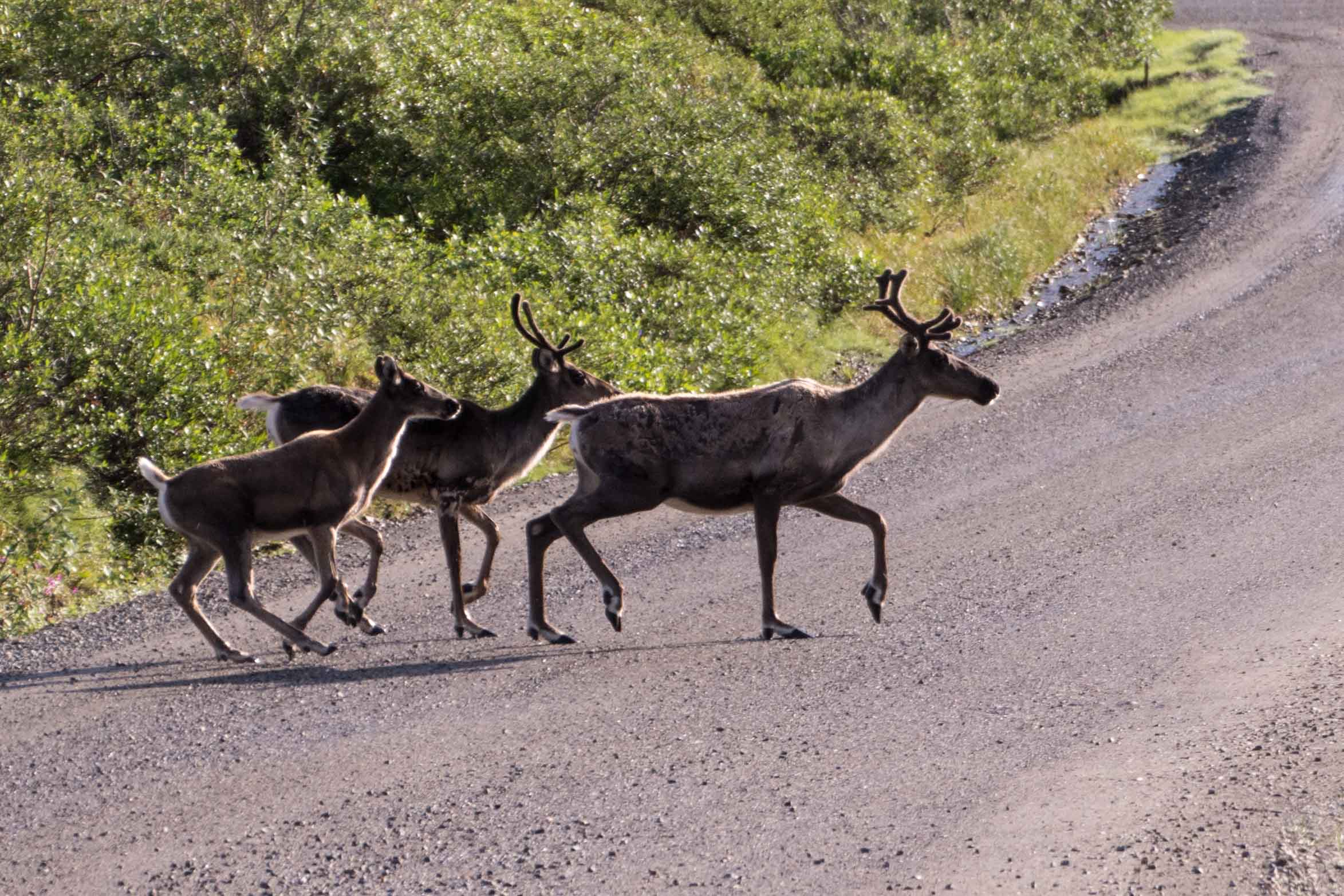
The caribou crossing the road

Blog-3251

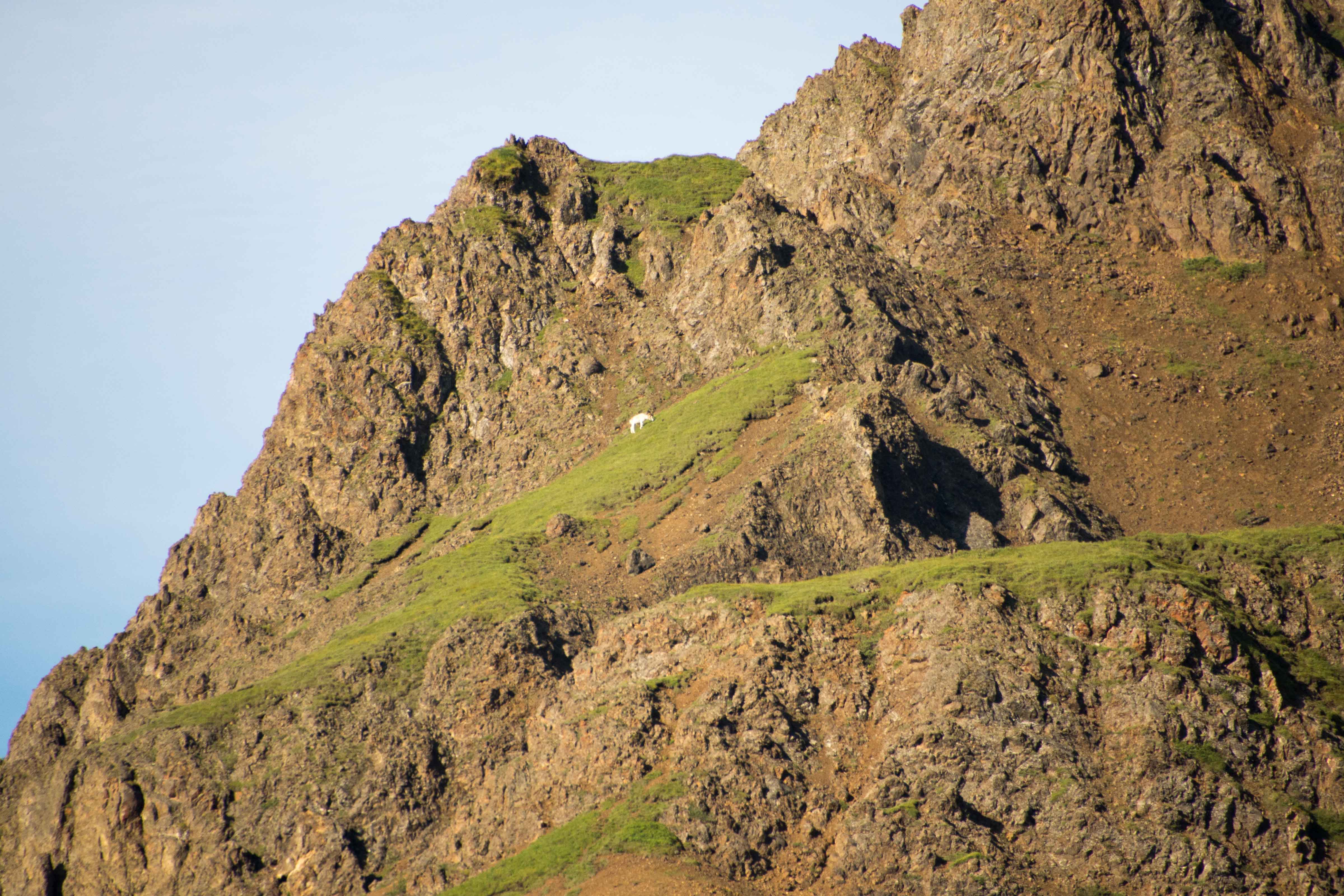
Dall’s Sheep way above us

Blog-3275

A second bear off the road

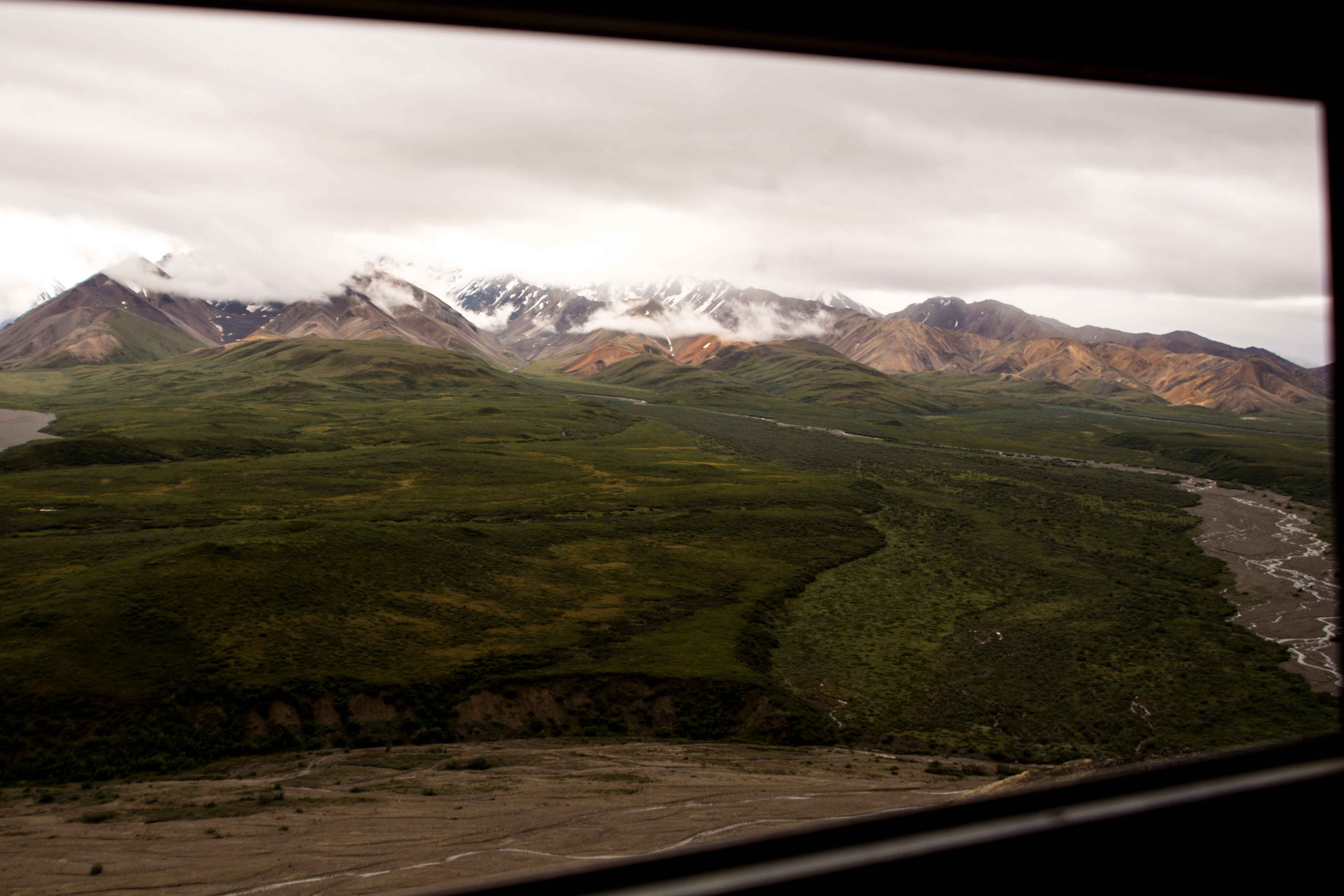
 And Mt McKinley played hide and seek with us all though the first couple of hours.   We saw far more than most people see in the summer, we were told, so we enjoyed what we could see. The morning light on the whole of the mountain range made for spectacular images.  
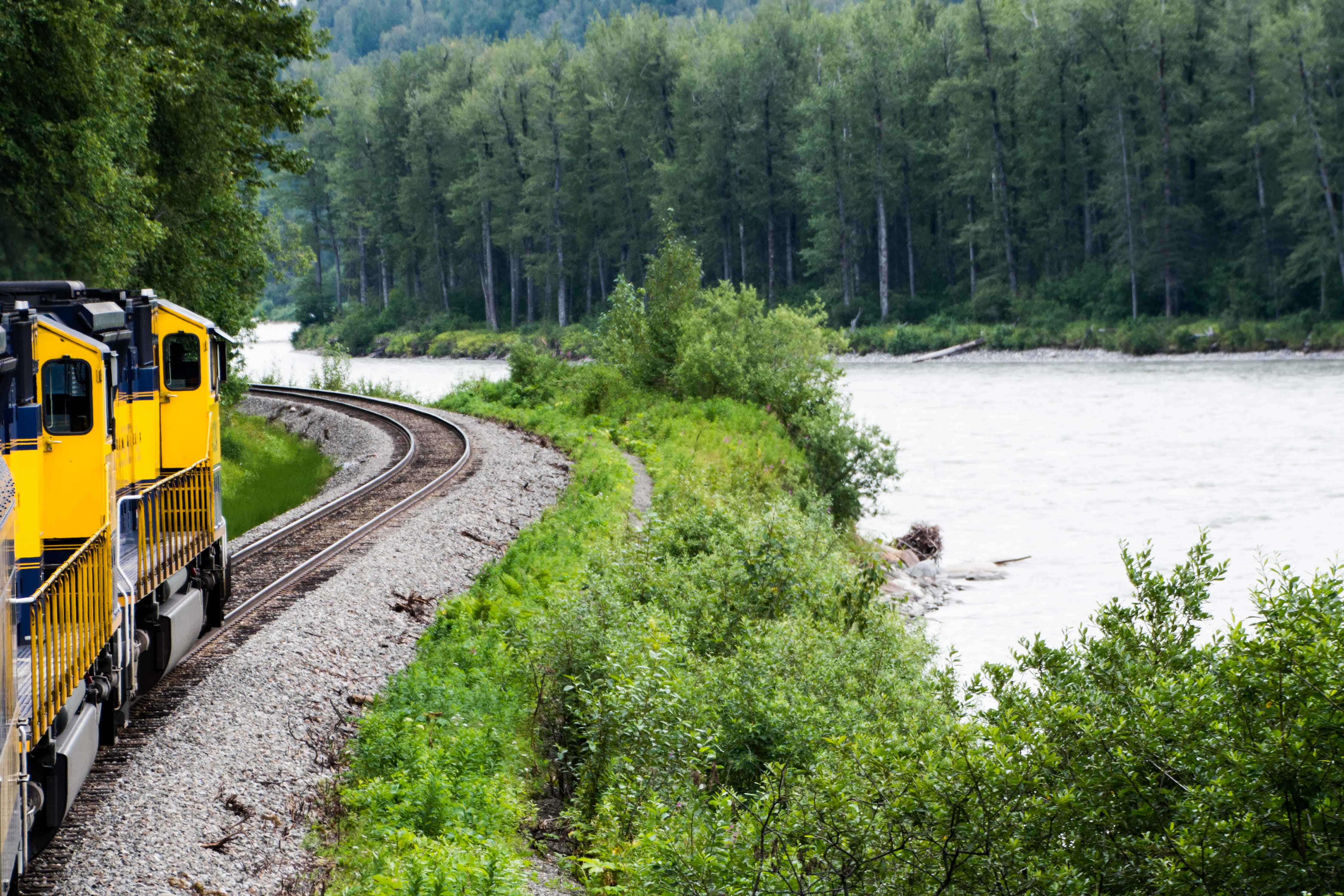
Blog-3449

Train ride to Talkeetna

Back in Denali, we were delivered to the railroad station. Contrary to most train schedules, they ran pretty much on time. The trip to Talkeetna was uneventful; we ate lunch in the dining car, enjoying the food, which was actually quite good. It was not really too pricy for Alaska, although the food remains pricy for the lower 48. Albert and Marlene (now accompanied by Matilda, a chiquaqua that we have hard about from the beginning of the trip. She is the apple of Albert’s eye, and you can see that the affection is reciprocated. We were delivered immediately to the local airport, as our next adventure is a small plane ride to a glacier about half an hour (air time) from Talkeetna. Gwen is not feeling well, so she decides to remain behind, which is good for getting our laundry done, and for getting her healthy, but it is my considered opinion after the trip that she missed one of the true highlights of our Alaskan vacation. The pilot, Jacques, piled the Sherman family (Mitch, Robin and Adam) into the 2nd and 3rd seat, and I get the co-pilot’s chair in what could have passed for a pre-WWII single engine monoplane. It is red, and the engine is a nine-cylinder wonder that never missed a beat. I don’t mind telling you that I had my qualms, as I had never flown in one of these small planes before. The dials are not that much different than I remembered from playing pilot simulation games on my first computer, an altimeter, engine speed, level indication, fuel consumption, and, oh yes, something not on my old computer, a GPS with a color display. Jacques starts the engine, using three pull-out controls on the dashboard between us, and proceeds to head down toward the runway. The plane has a short tail wheel, meaning it sits so that we are looking at the propeller, and can see quite well looking out side to side, but not so well straight ahead. We gain a little speed, and the plane rolls down to the end of the runway to execute the turn to take off. Full throttle now, playing a little with the fuel-air ratio and the flaps. We gain speed going down the runway, and in a remarkably short time, he pulls back on the bar and we are airborne. The ride is surprisingly smooth, and for the first time in a long time, I breathe. We gain altitude and head north, or something like north, I can only tell in that we see lots of trees, rivers, mountains, but no ocean. We do cross over the confluence of the three rivers (commemorated in the name Talkeetna, which means meeting of the three rivers in the Athabasca native tongue), which he tells us about. We had come by here on the train, and indeed the tracks are visible running by one of the rivers.
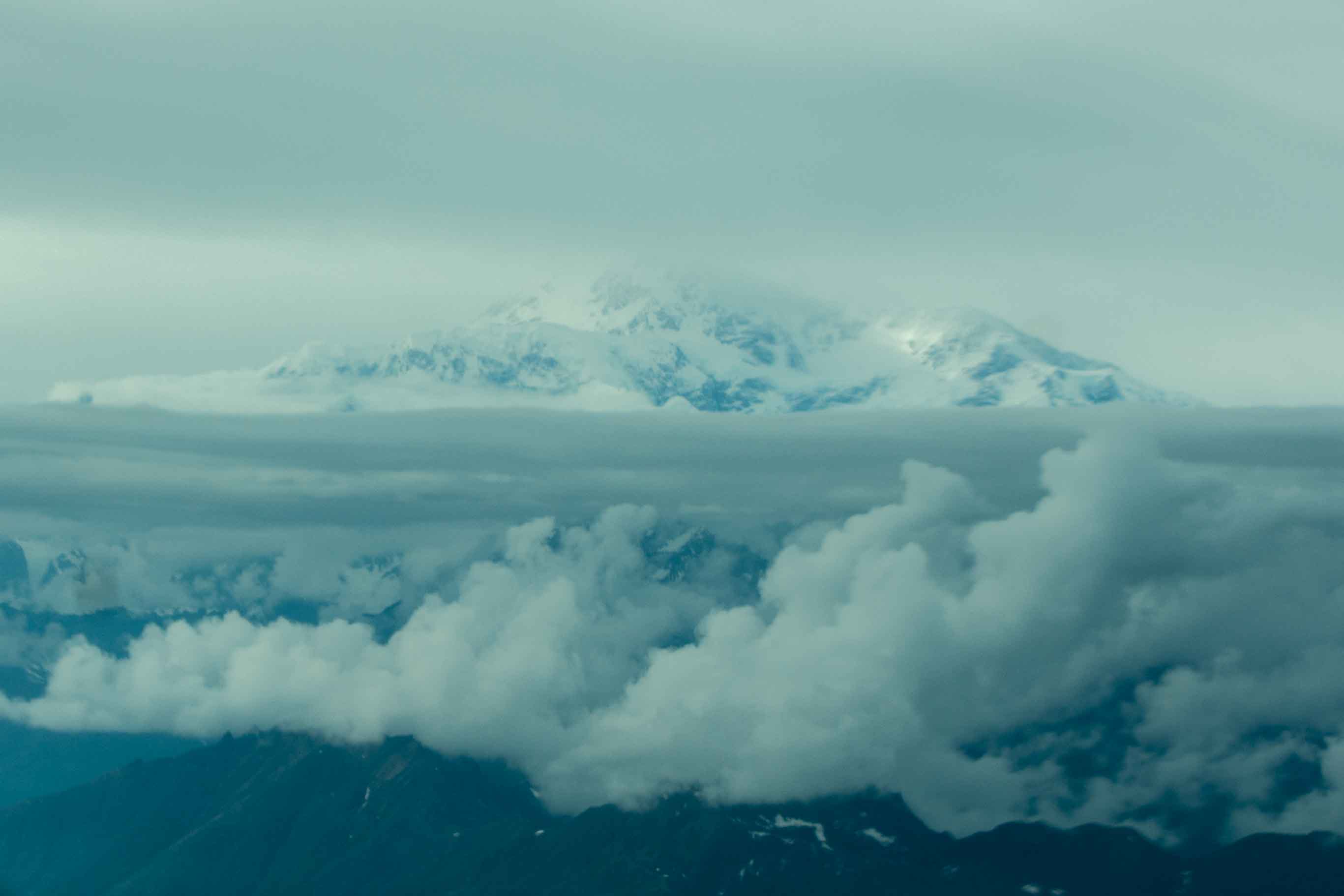
Blog-3513

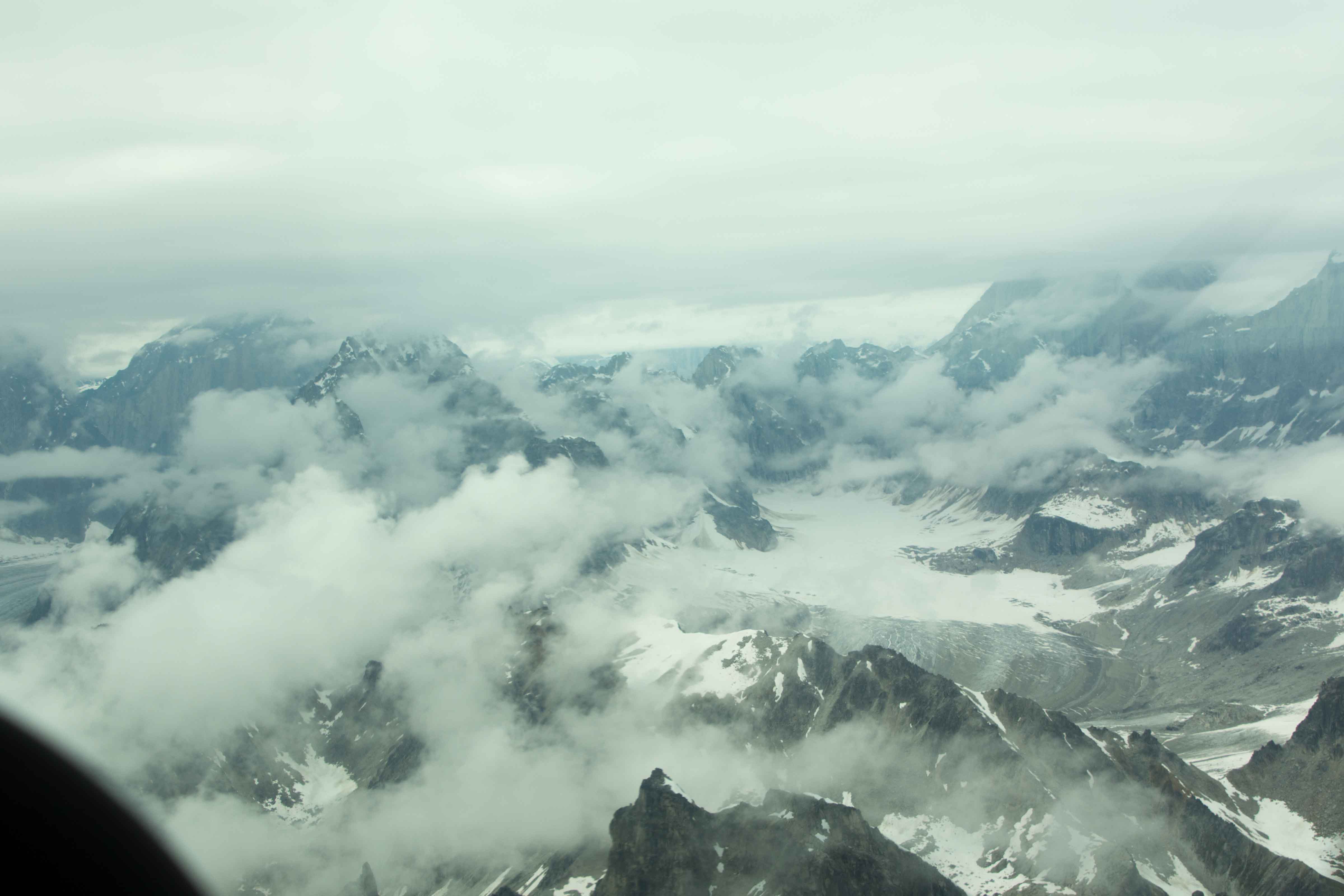
Mt McKinley as seen from our plane

Blog-3528

The snowy areas are glaciers

We’re up high enough now so that my fear of crashing into trees has been replaced by my conviction that we would not survive a fall at all. Surprisingly, I am not terrified, just mildly concerned, somewhat like being in a larger passenger plane. I guess the smoothness of the ride and the quality of the pilot’s handling of the aircraft have convinced me to leave the flying to him. We are all connected on an intercom system into headsets which enable us to talk to him, and of course he can talk to us, but we also hear all the communication with the control tower. There is another plane with us, carrying the other half of our tour group, headed to the same place we are, and they are ahead of us. The views are tremendous, and so much more satisfying than the two-dimensional views we have been seeing from the ground. One view we also got was again of Mt McKinley, which still had the cloud over the peak, but which was mostly visible to us in the evening sun.

Blog-3541

Another view

Blog-3553

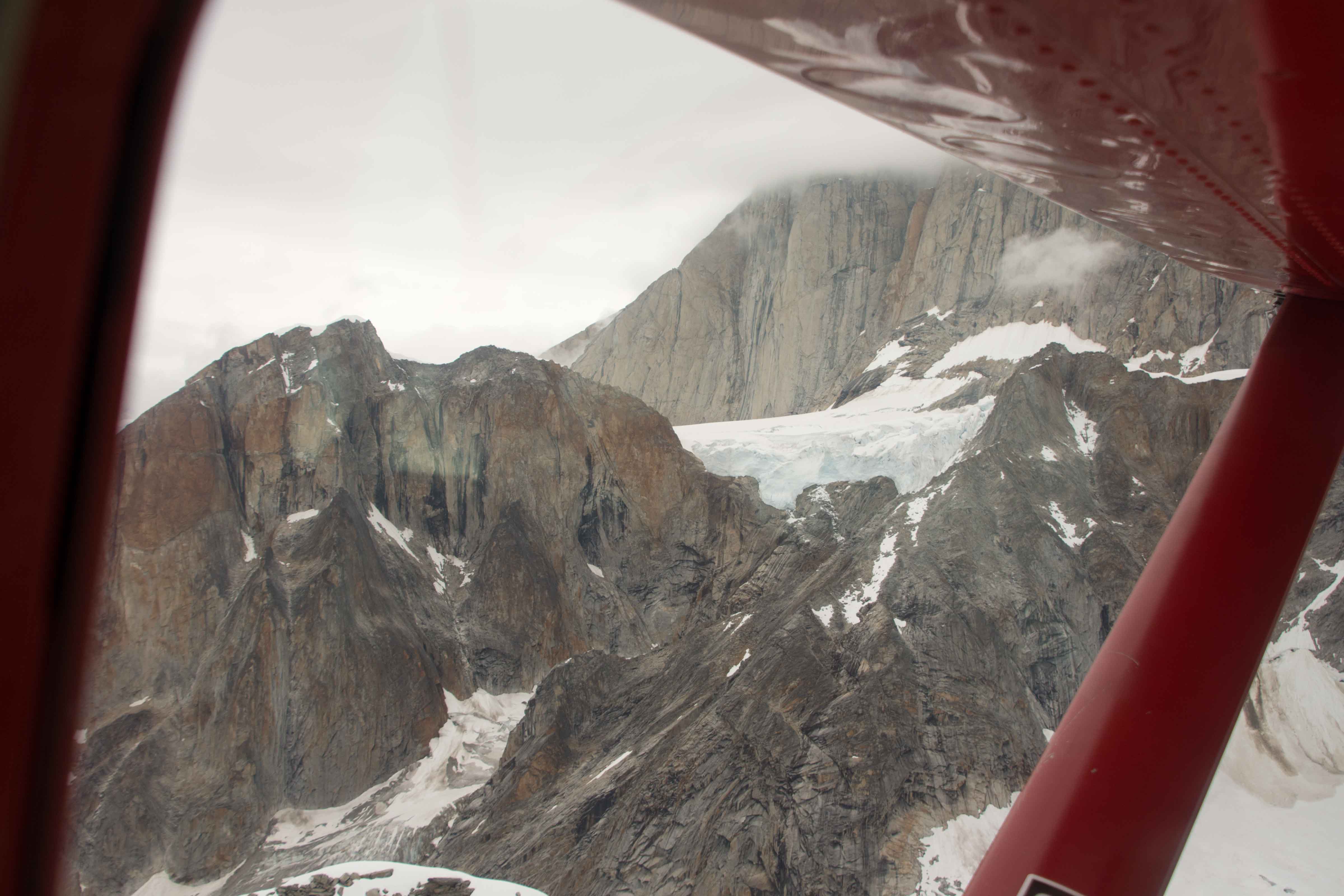
We got into the mountainous area. The edge of a glacier peeking over the moraine

After flying around for awhile, we come into the local mountain range, and I realize we are not flying over them, but are flying at an altitude that was less than their height. This brought more concerns, as I could see us flying right into the side of one of them. Indeed, we flew through and by them, viewing them close up as we passed. I thought I might get seasick from the rocking back and forth as he maneuvered through the peaks, but I didn’t feel any queasiness at all. To my totally unpracticed eye, it looked like we passed some of the cliffs awfully close, but miss them we did, and I am sure with plenty of room to spare. We finally went by one obvious glacier, wide with steep mountain sides on either side of it, and it is here we were to land. First, he said, we have to lose some altitude so that we are coming up to it rather than coming down on it. This did’t quite make sense to me, but of course, I wasn’t going to argue. So, descend he did, but not very far, and he turned a 270 degree turn as he descended to come in as he had said, gaining altitude. I should point out that about 10 minutes before we started this maneuver, he grabbed what for me would have been the parking brake handle on our old Honda, and started pumping away at it. The copilot’s seat was so close to the pilot’s seat that his right arm came up into my left inner elbow when he first started to pump, so I quickly moved closer to the door so he could pump. He told me that this was how he lowered the skids on which we were going to land. Lowered the skids? I had seen them skirting the wheels on the plane as we got in, and had noted the use of cables tied to the body of the plane, but it looked like a home-made structure, so I could not imagine that it actually moved. Move they did.
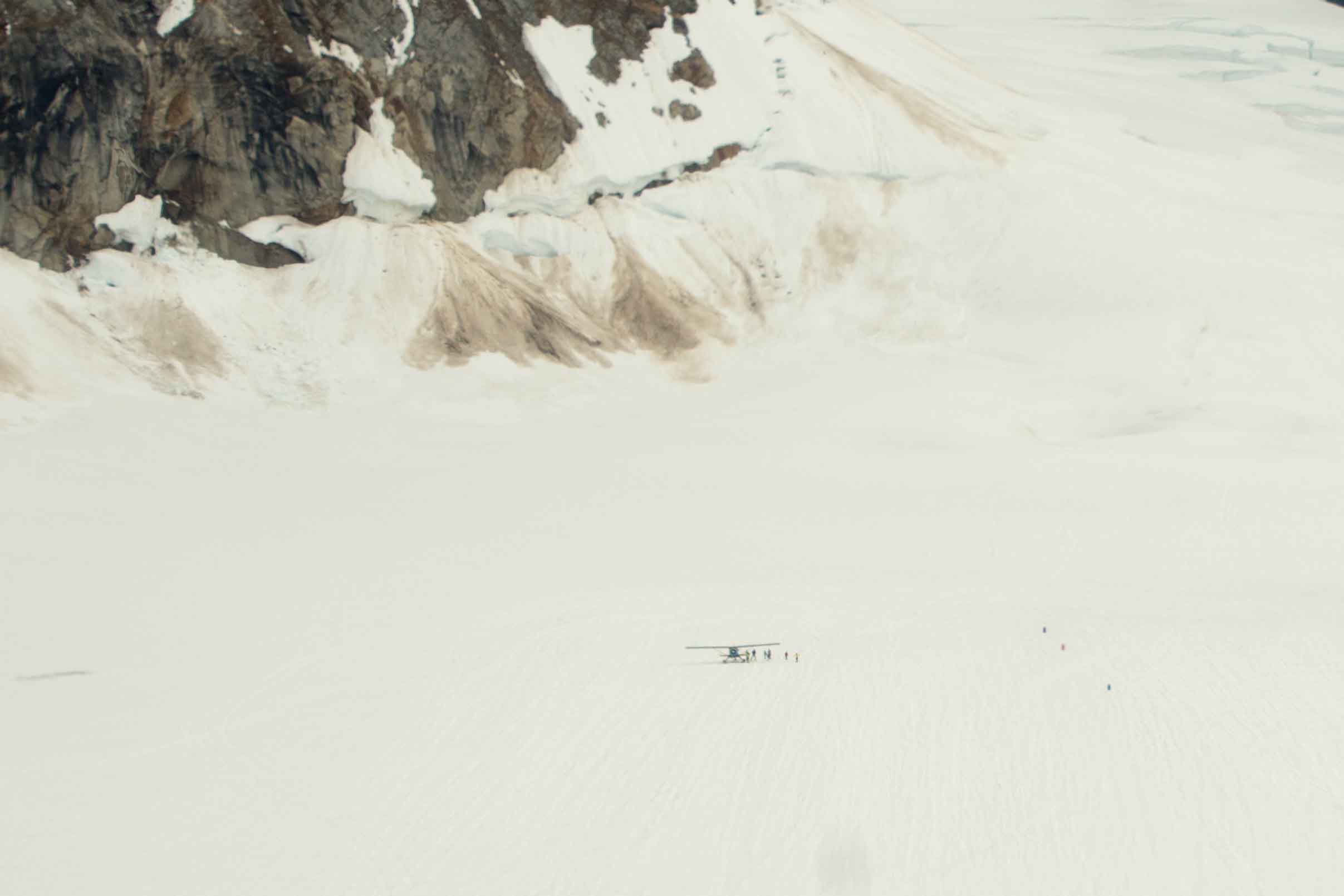
Blog-3563

The other plane was on the glacier as we approached

Jacques’ dialogue on the way was not limited to descriptions of the flora and fauna of the region. He started talking about the Athabasca Indians, and a study he had read recently relating the mitochondrial DNA (which, he explained is carried by the mother only, and therefore traces the lineage via mothers). The study had been of the DNA structures collected from the native indian populations, comparing them with that of the Asian populations from which they would have been derived according to current theory of the origin of the American peoples. The study had found a strange anomaly: the small random changes that were found in the Asian populations up to 27,000 years ago are reflected in the American Indian populations, but not those after that. The implication is that the American population separated from their Asian forebears at that time. That was as far as he got with the story, before he had to come down on the glacier, so that is as far as the story went. Once on the glacier, I asked him about it. I had read recently that there was some conflicts arising challenging the “walking across the Bering Straits” theory of the source of mankind in America, and the study he quoted seemed to fit this category. The concern is the timeline. Dating of the archeological remains suggests that the American Indians started to populating the continent around 10-12,000 years ago. When did the Bering Straits become “walkable”? Study’s suggest earlier, but now if the mitochondrial DNA suggested a separation 27,000 years ago, then what happened from then until 12,000 years ago? Interesting conversation.
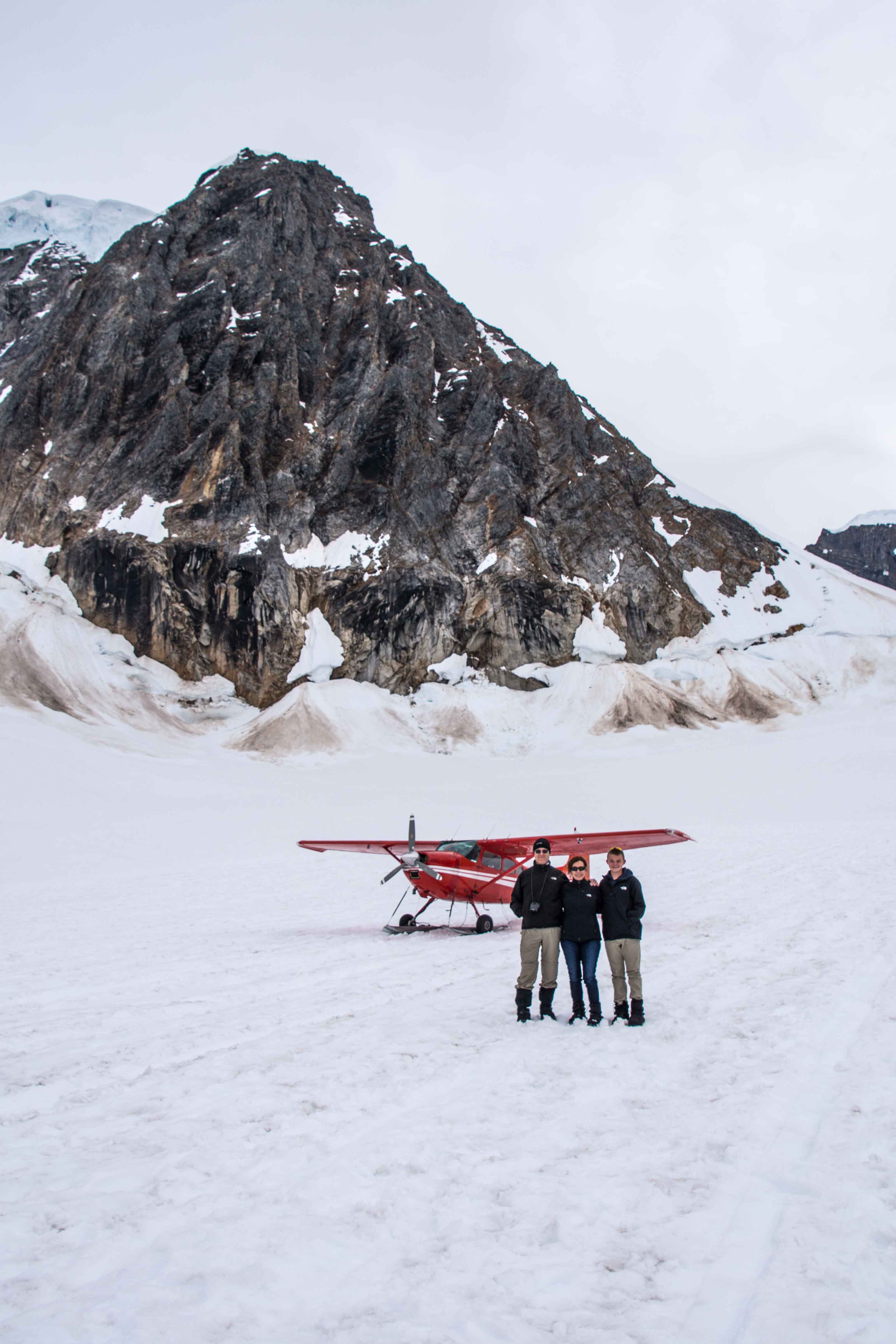
Bloga-3579

Our plane

Bloga-3587

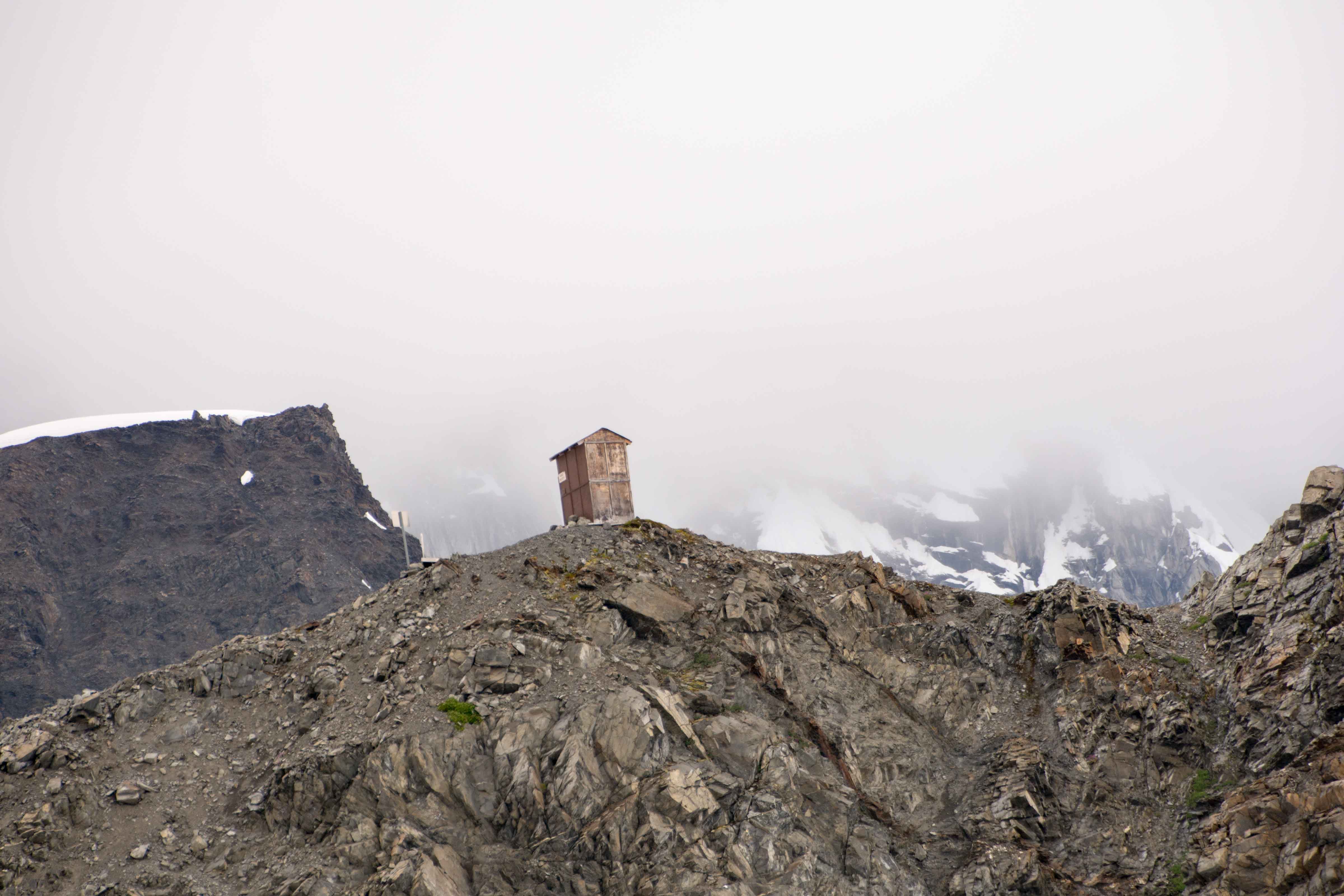
The outhouse on the ridge across the glacier floor from where we landed
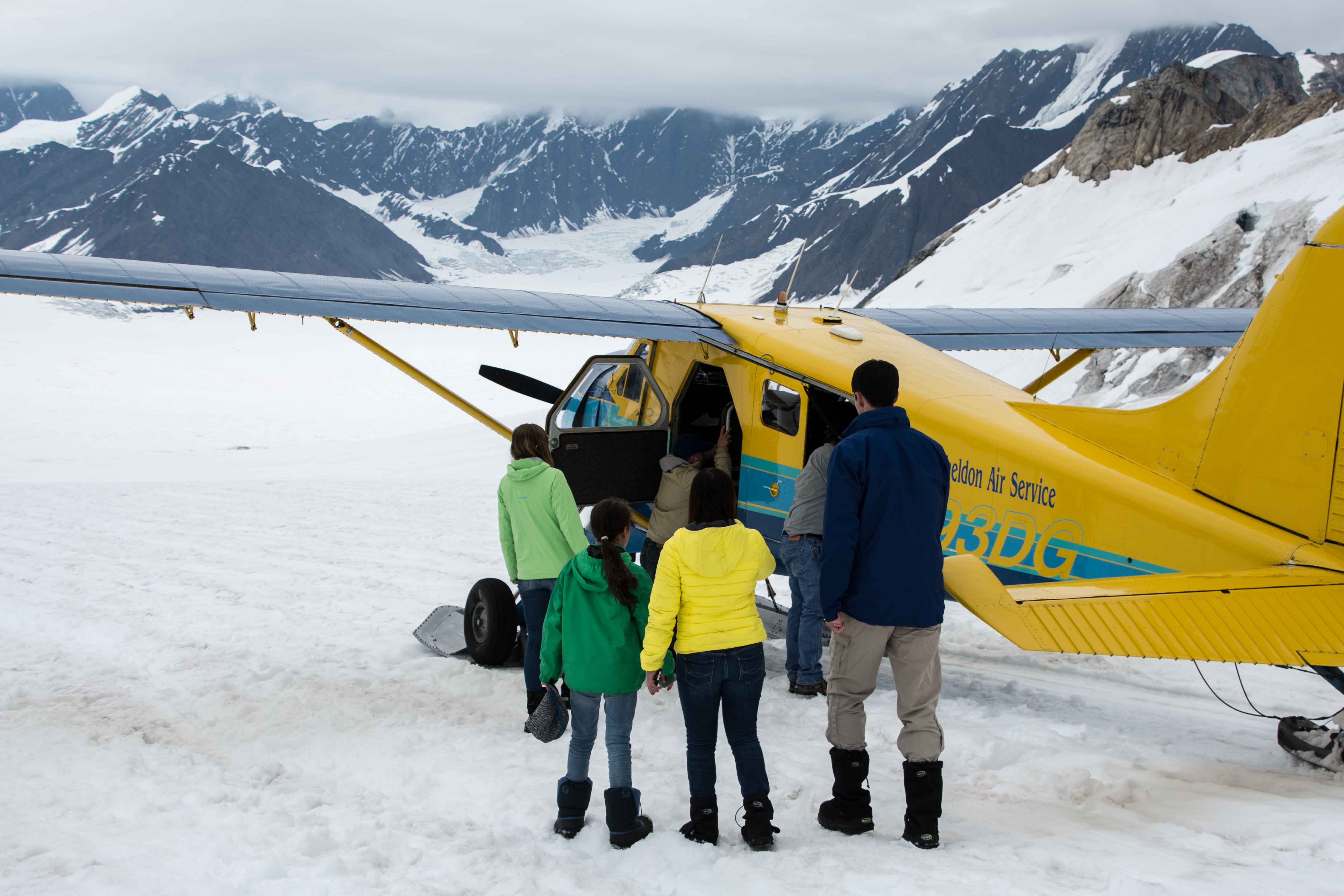
Blog-3645

The other plane as the Herrens get back on board
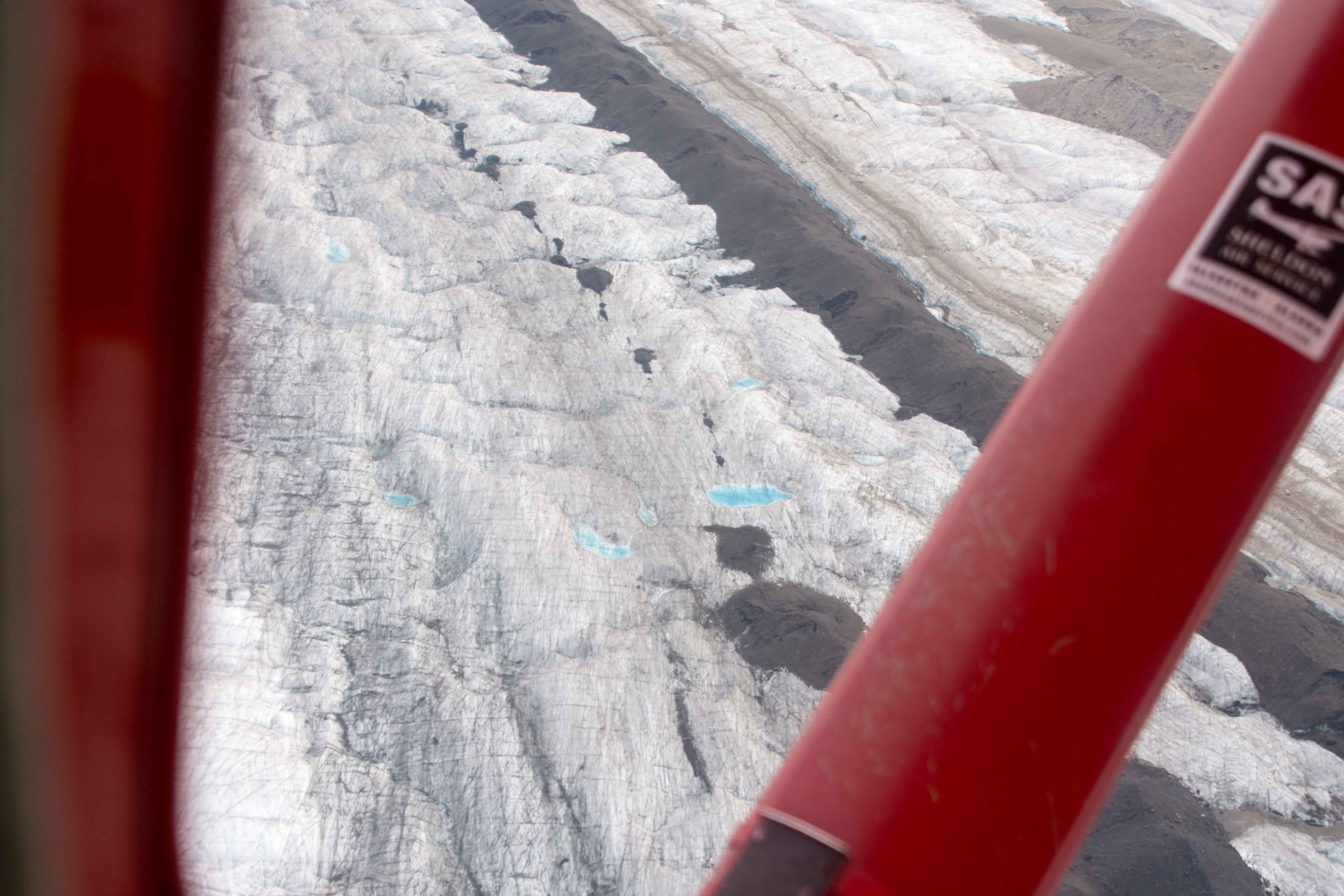
Blog-3653

Looking off to the right as we took off — Note the blue puddle in the glacier

Once we were on the ground (and the plane felt strange sliding on the snow), we extracted ourselves from the interior and started to explore our environment. Out in front of where we were was an obvious glacier (blue color, ridges, and so on). Behind the area where the planes were, vertical cliffs rising at least 2000 feet above our already high elevation. The snow on the ground was just that, snow. Somewhat slushy, but able to support us, snow. Across from us, at least a football field away, was the other side of this ‘valley’, with rocky outcroppings projecting up. On top of the nearest one was, to our surprise, an outhouse size building. Turns out it is indeed an outhouse. Around the rock it was on top of is a cabin that Don Sheldon built there to enable him to stay overnight if he wanted to on the glacier. The cabin (we were told, as we did not actually walk over to it) is a one-room affair, with benches around the walls where one can put a sleeping bag, and a stove in the center for heating. Everything has to be hauled in, of course, but people do stay there periodically. Don, who was a pioneer of commercial glacier flying and landing in lower Alaska, built it in the 1960’s. Our tour guide, Albert stayed there for three days with his daughter a few years ago, and said it was one of the most peaceful experiences he’s ever had.
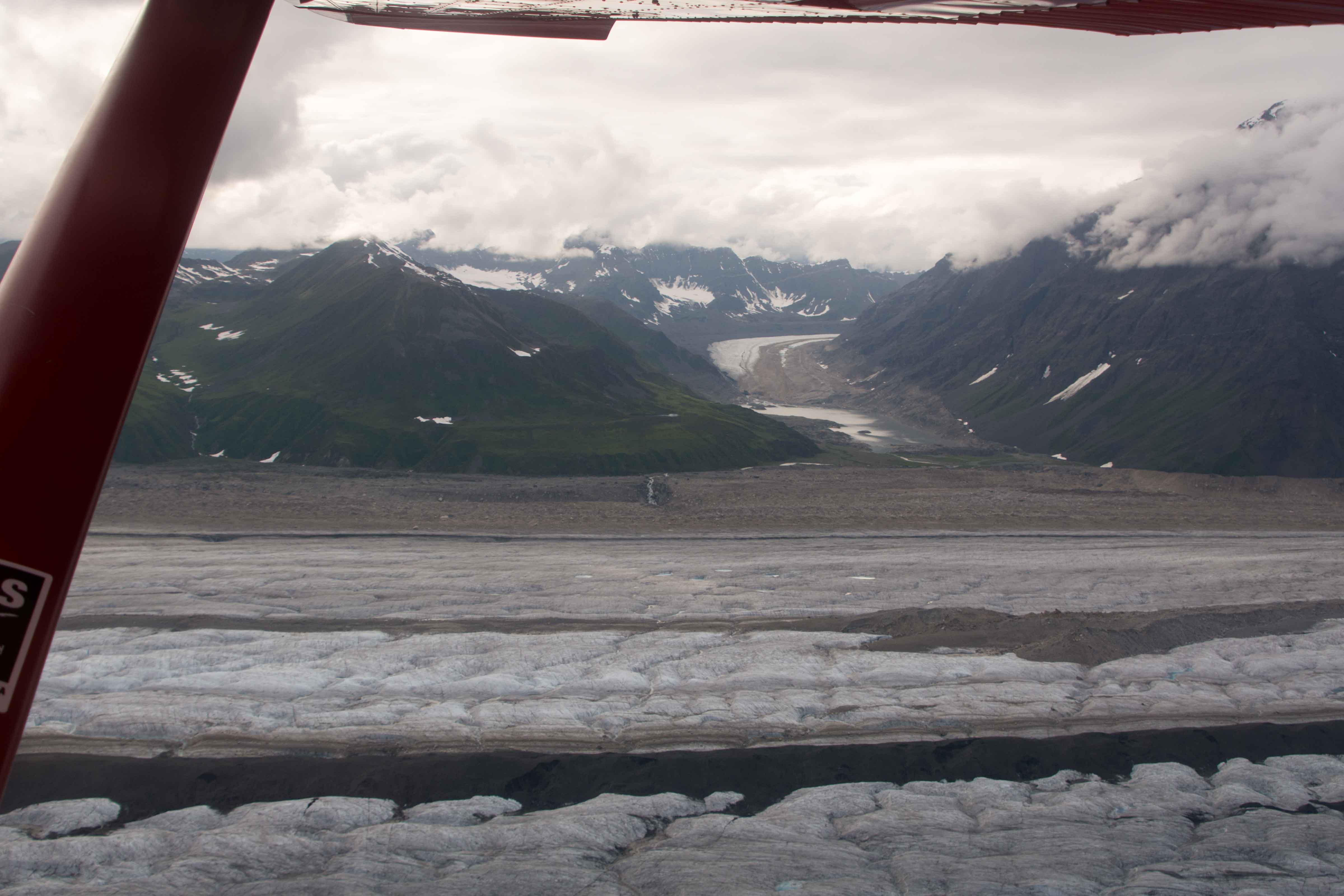
Blog-3662

View along the glacier

Blog-3692

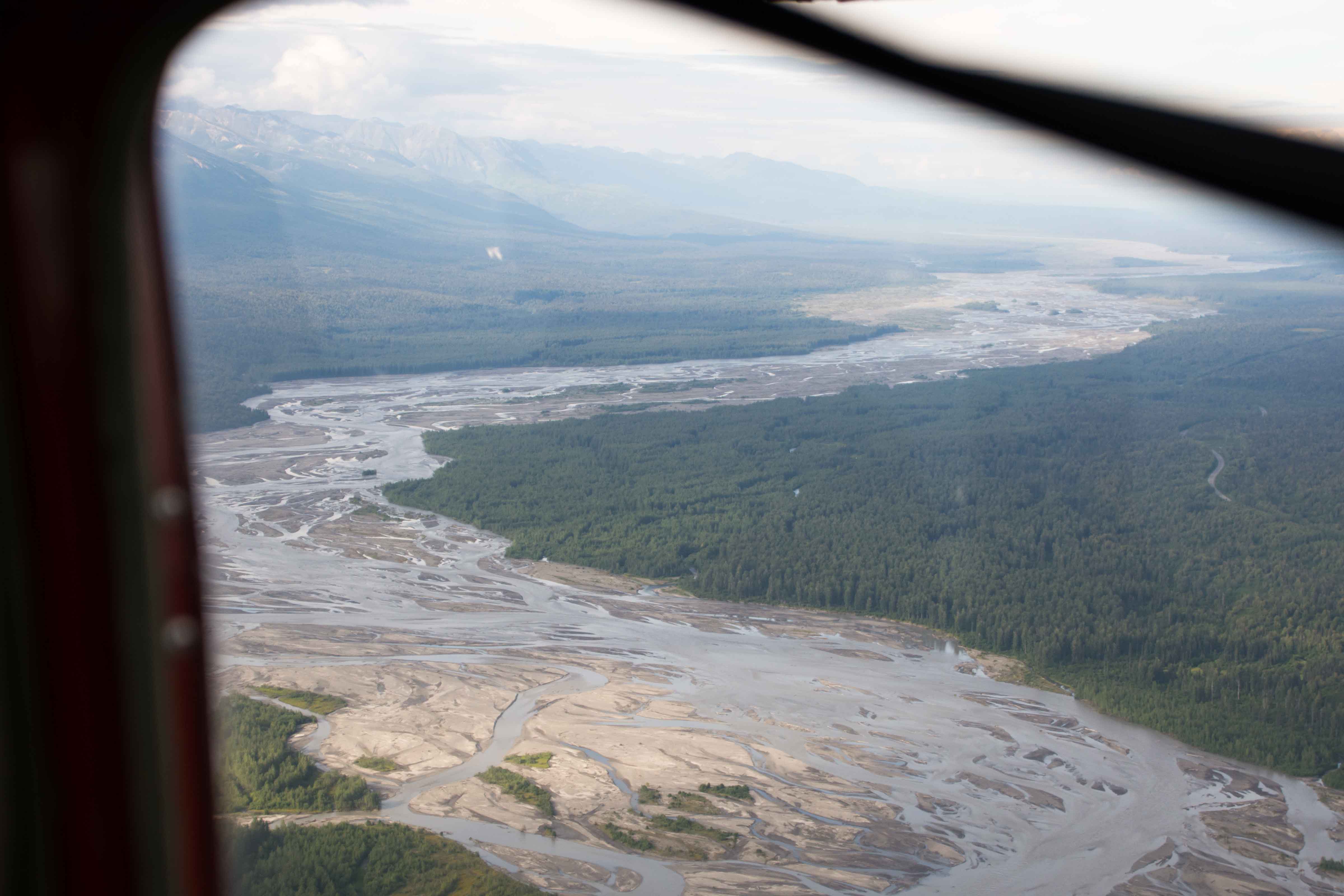
One of the rivers near Talkeetna

We got back into the planes and flew back to Talkeetna. On the way, we saw two bears and two swans, although seeing was a bit of a challenge. They were small, and could only be distinguished by contrast to the background. Landing at the airport was not a problem, at least it was not for me. Jacques seemed to handle it in his stride. Me, I just pushed myself into the smallest area I could occupy on the right side of the plane.

From the airport, Albert took us on a tour of downtown Talkeetna (at least the historical part), which was not a long drive. We stopped and were able to get a table big enough for us at the Wildlife Restaurant. Dinner took awhile in coming, so we were happy to get dropped off at our hotel (Susitna Lodges) shortly thereafter for a good night’s sleep.
Leave a comment

Filed under Blog

Trip to Alaska — July-August 2014: Anchorage, Denali National Park

1 August 2014 — Anchorage to Denali National Park

Blog-2555

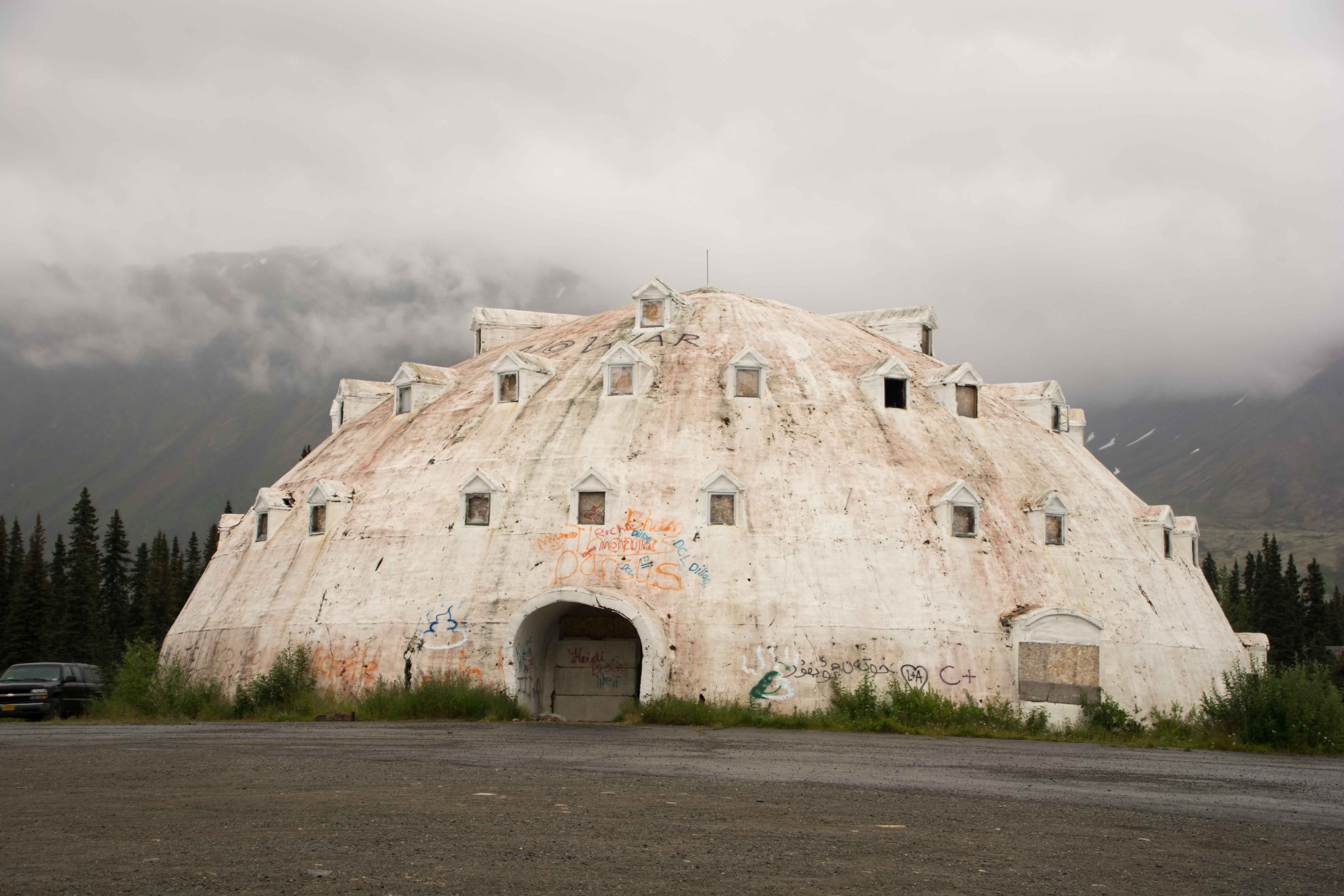
The “Igloo” on the way to Denali National Park

Today’s trip was long, but not bad. We got up and were on the road at about 7:00 am. The trip to the park took us until noon, but it was punctuated by dialogue and pit stops, which made the morning go faster somehow. Near one of the pit stops was what some entrepreneur hoped to be a hotel/casino, but the building lacked enough fire exits, of all things. It is shaped like a very large igloo. The building is closed currently, until someone with enough money to install the fire exits, and enough guts to buy the risk of sufficient business comes along.

Blog-2628

View of Denali as we were entering the park

Blog-2568

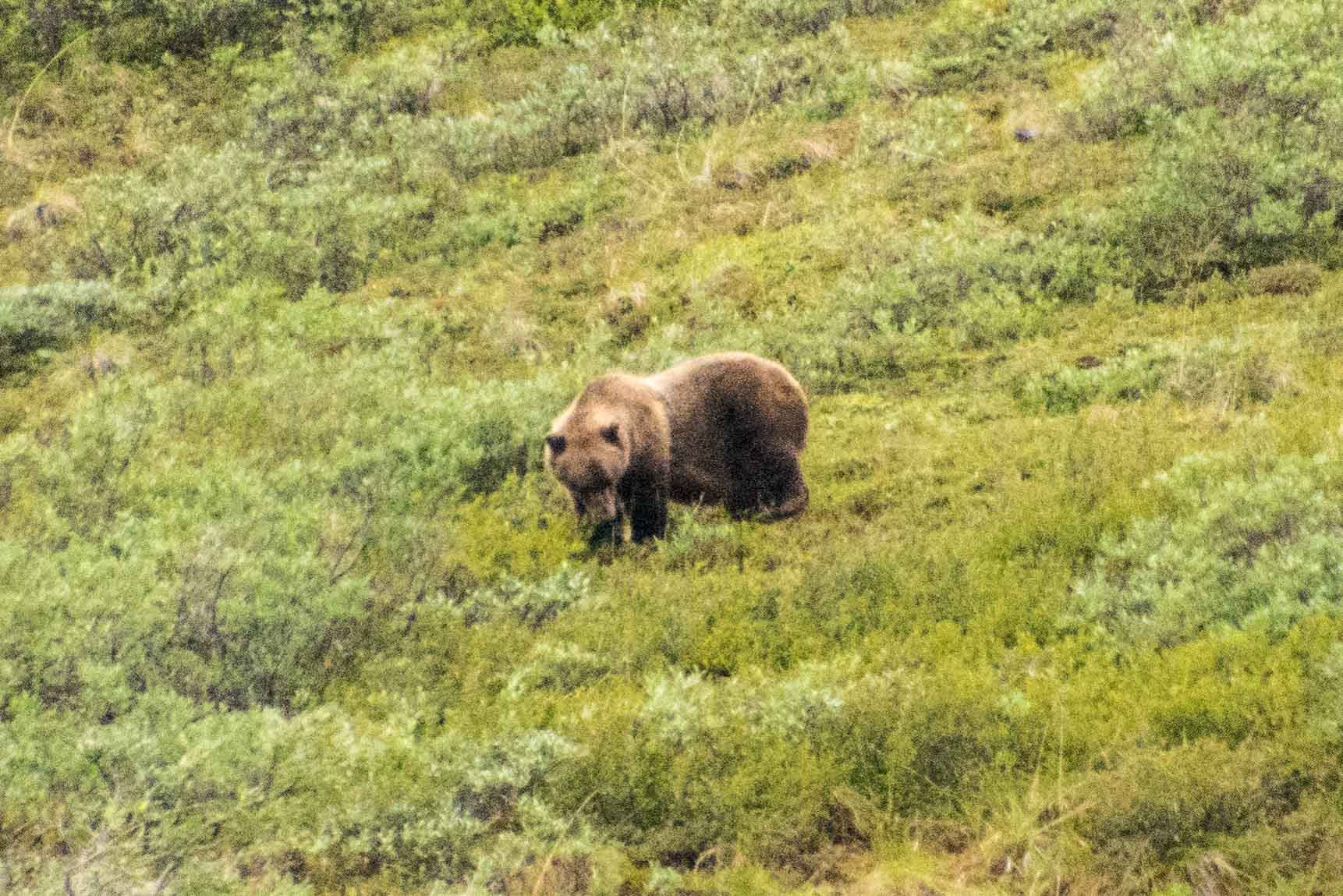
A local grisly bear

Blog-2643

Almost dead center on the upper part of the green patch is a Dahl’s sheep at least 5000 feet up.

Blog-2680

A second grisly, also foraging for roots and berries.

Blog-2714

We saw quite a few caribou (raindeer are domesticated caribou, we were told). Note the fawn by the female on the left.

Blog-2729

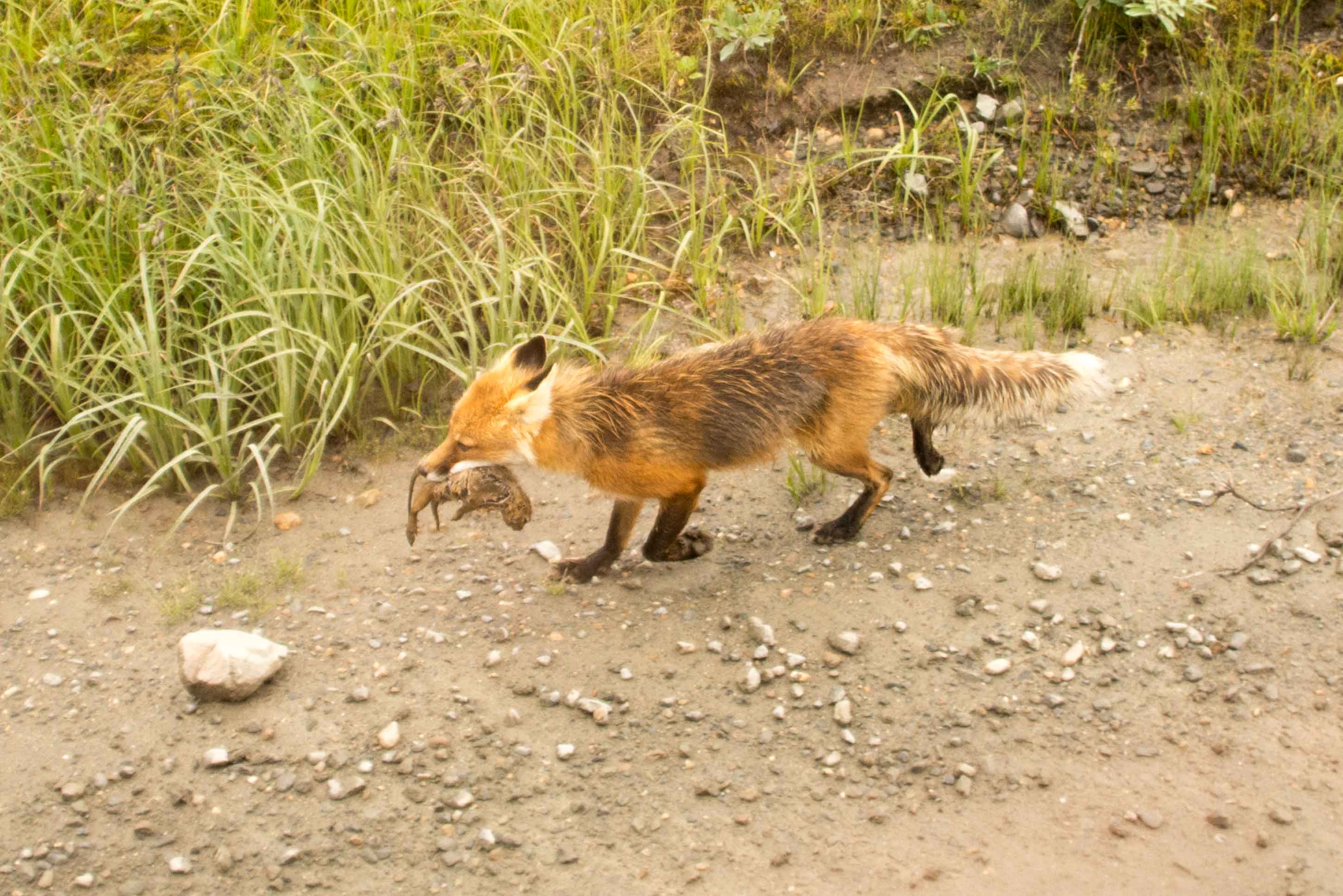
Arctic red fox carrying his dinner, an arctic squirrel.

Blog-2754

A moose walking across the tundra.

 After a lunch at the park entrance, we boarded a bus for the trip into the park itself. This trip was about 90 miles, with lots of stops along the way to look at animals. We saw two grizzly bears, 30 or so caribou in three groups, a lone Dall’s sheep high on a hill far away from us, two moose, at some distance from us, and a fox with an Arctic squirrel in its mouth walking jauntily down the road as we passed by in the bus. This was quite a haul for the drive in, but we were not able to see Mt McKinley for the clouds and fog. The lodge we stayed at is a collection of log cabins which were apparently set up by a Fairbanks judge who decided to try to be the first to climb Mt. McKinley, but failed, and on his way out decided to try his hand at gold panning in the Eureka River. He succeeded beyond his expectations, and started a local gold rush in the process. The Kantishna Roadhouse came into being. The meal was good, and it was the first time we as a group (except our Swiss family, unfortunately) were able to eat together. 

Tomorrow we get to explore the local terrain, and Gwen will get a message!


2 August 2014 — Kantishna Roadhouse deep in Denali National Park

Blog-2805

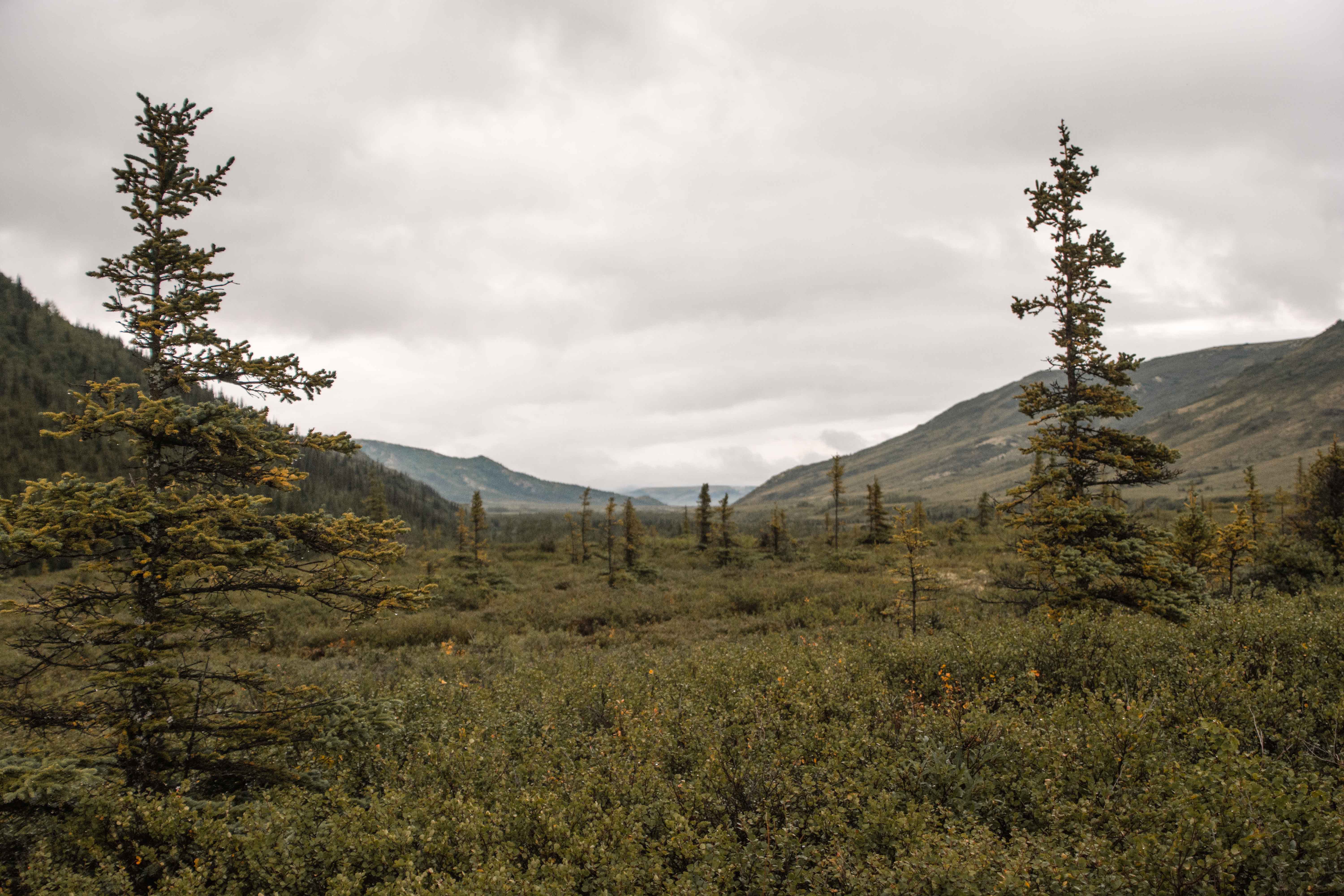
The tundra is springy to walk on. Note the sparse distribution of juniper trees going out to the horizon.


This morning was interesting, but not for the reasons you might suspect from where we were. I went on the “easy” walk, essentially a leisurely tour down an old mining road for about a mile, and then back again.  It took almost three hours to complete, so it was not strenuous. The group was led by Libby, a recent biology graduate from a small university in Vermont who is going on from her summer job here to two years in Madagascar doing hydraulic engineering and plant technology for the Peace Corps. In addition to her was a lady from Massachusetts and two couples from Dusseldorf, Germany. I got some chance to relocate my long lost German, spent some time deciphering the Bostonian accent, but most of the time we walked along examining the tundra flora we passed using Libby’s biological understanding.  The most interesting item was the wormwood plant which, it turns out, is a good insect repellent if you rub a leaf of it between your fingers until it turns tender and smells something like mint, and then rub it over any exposed skin areas. 

Gwen went over to Wonder Lake with Marlene (the wife of the leader of the expedition) and Robin.  Once there, they walked over two miles along the banks of the Lake enjoying the scenery. Unfortunately, Mt McKinley did not pop out of the clouds to greet them.  This is a constant theme in Denali, as the vast majority of the time (so we were told), the micro-climate of Mt McKinley keeps it surrounded by clouds regardless of the weather in the main multi-million acre park.  This day, the sun didn’t shine for us in Denali at all, so even if Mt McKinley had been in bright sunshine, there was no chance of glimpsing it.

Blog-2828We regrouped for lunch in the main building. After lunch, Gwen and I read and lazed around until 2:00, when there was a presentation about the sled dogs they use to get around in the park during the winter. The presenter is the son of an Iditarod competition participant (13 times), and he himself has done the “junior” Iditarod, which is 250 miles as opposed to the 1025 miles. He won that race once.  He did a very good presentation, and I learned a lot about the strategy racers employ, as well as the basics of dog sledding.  One story he tells is of the time his father come into a checkpoint just behind the leader.  The leader proceeded to feed his dogs and to lay out hay for the dogs to sleep on.  Presuming he was taking one of the mandatory rest stops, his father did the same and then went ahead and took the booties off the dogs.  The leader, as soon as he saw this, got his team up and off they went.  His father had to re-boot his dogs, a time-consuming process, before he could give chase, and the result was a considerable extension of the time between them.  Tactics make a difference!  

Later on, I met up with Albert, who took me through his use of Adobe’s Lightroom, a picture developing tool like Apple’s Aperture, but with slightly different and easier-to-understand tools. He showed me a little bit of how he uses Adobe Photoshop as well. I’ll be trying his tricks on my photos once I get back to my computer at home.

Gwen panned for gold (unsuccessfully), and then accompanied Robin on another excursion, this one to the Fannie Quigley cabin. This was a 4’10’ woman who came out from Nebraska to go to the gold rush (late 1800’s) and settled in what is now Kantishna. Gwen can tell you the story.

Blog-2813

Evidence of life!

Blog-2853

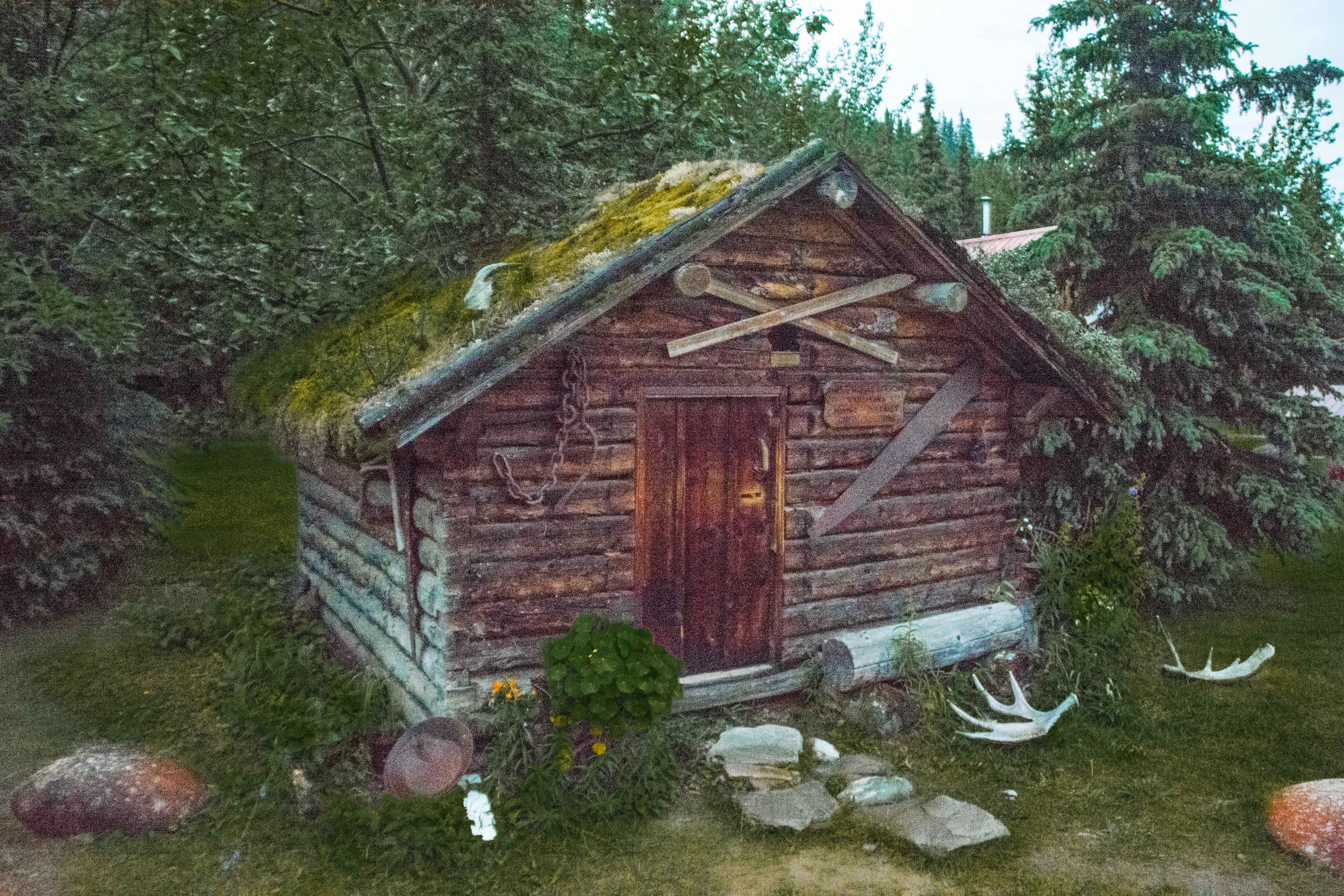
This old cabin was the assayer’s home on the Kantishna property, where he and his family lived in the late 1800’s

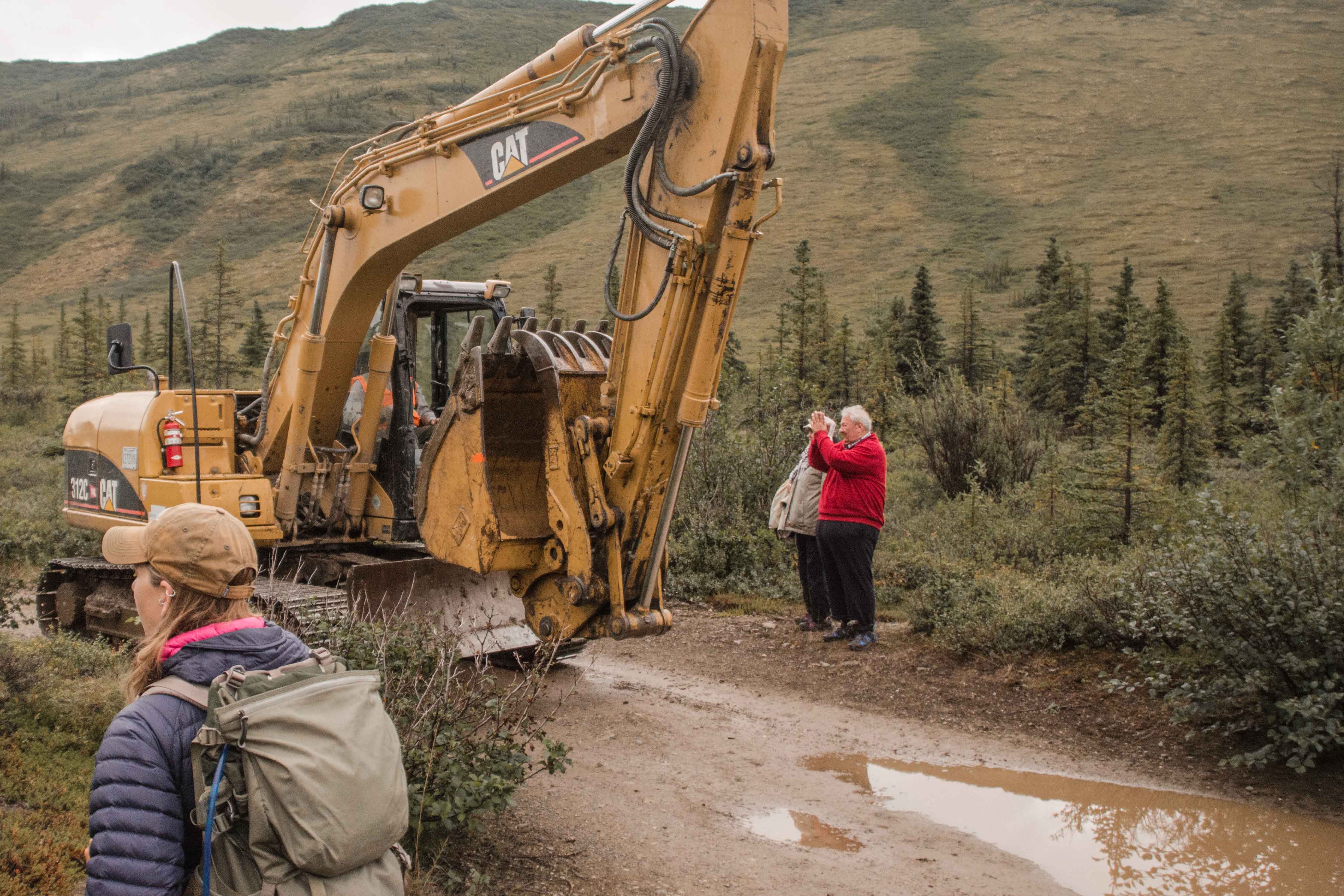
This evening was a presentation by Libby (the leader on the hike I did in the morning) on animals in Denali, their tracks, scat, and other signs of their existence. It was well done, going through about 15 of the most prevalent animals and giving good information on each. Lots of pictures and good stories.  From her, I learned enough to know how little I knew about tracking animals in the wild.  On our journey this morning, we found evidence of only two animals, a moose (scat several days old), and humans (a tent pitched on the side of the hill opposite the river from where we were walking).  The only other evidence we saw was a large self-propelled tractor shovel slowly making its way down the same road we were walking on.  

Now its off to bed, and then tomorrow it is on to Talkeetna.

Leave a comment

Filed under Blog

Trip to Alaska — July-August 2014: Seward, Kenai Fjord, and on to Anchorage

30 July 2014 — Seward, and good bye to the Navigator

Blog-1669

Gwen looking out from the Alaskan Sea Life Center

We ate our last breakfast on board, and went through the exiting procedure. We waited a bit in the Seward arrivals tent, and then Albert showed up. He and his wife Marlene got us loaded into their 12-passenger bus, and we were off under the auspices of Planet Earth Adventures. After stopping at the hotel to get a brief review of our itinerary and meet the others in our small group (a family of five from Switzerland, Oliver and Julie, with youngsters 6, 8 and 10 years old; a family of three, Mitch, Robin and Adam (14 years old); and Joy, whose significant other, Chris, went fishing all day, so we didn’t get to meet him right then). From there, we went into Seward to visit the Alaska Sealife Center, where they rescue sea life that has some kind of problem and if possible resolve the problem and send it back into the wild. This seems to be a theme in Alaska. It had a variety of exhibits, including sea lions, sea otters, fish of various varieties, puffins, all in well-equipped exhibits.

Blog-1672

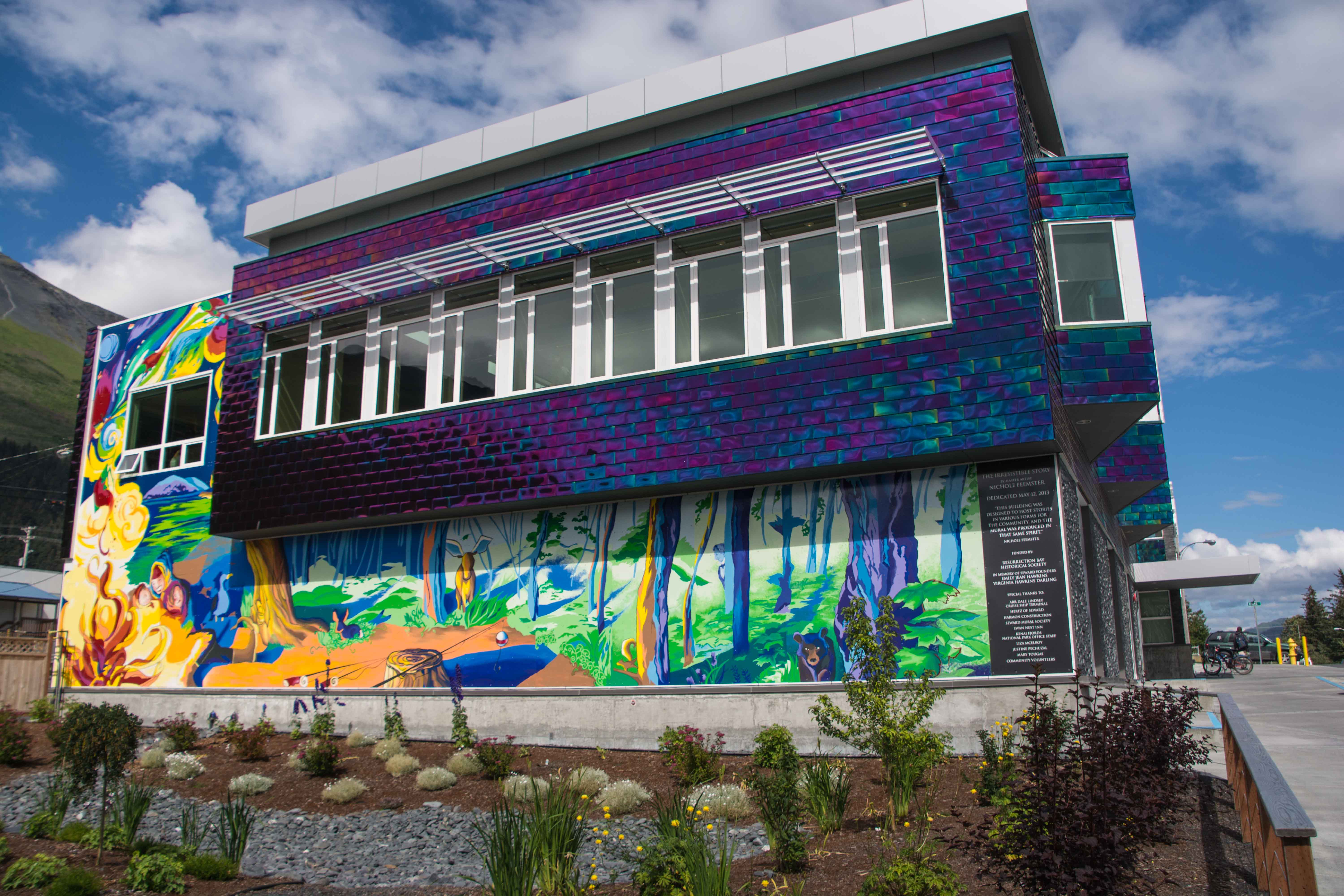
The back wall of the Seward Library and Museum center.

After a couple of hours, we met up outside to regroup, and then went our separate ways to get some lunch and walk about town. Our walk through town included stops in a number of art shops, a bookstore, and the town Library and Museum (both in the same building). The outside of this las building really stands out, as you can see.  In addition to a mural on the back wall, it’s second floor has multicolored iridescent rectangles around the whole of the outside of the building.  Is this supposed to mimic the shimmer of the light on the underside of a salmon?

Blog-1704

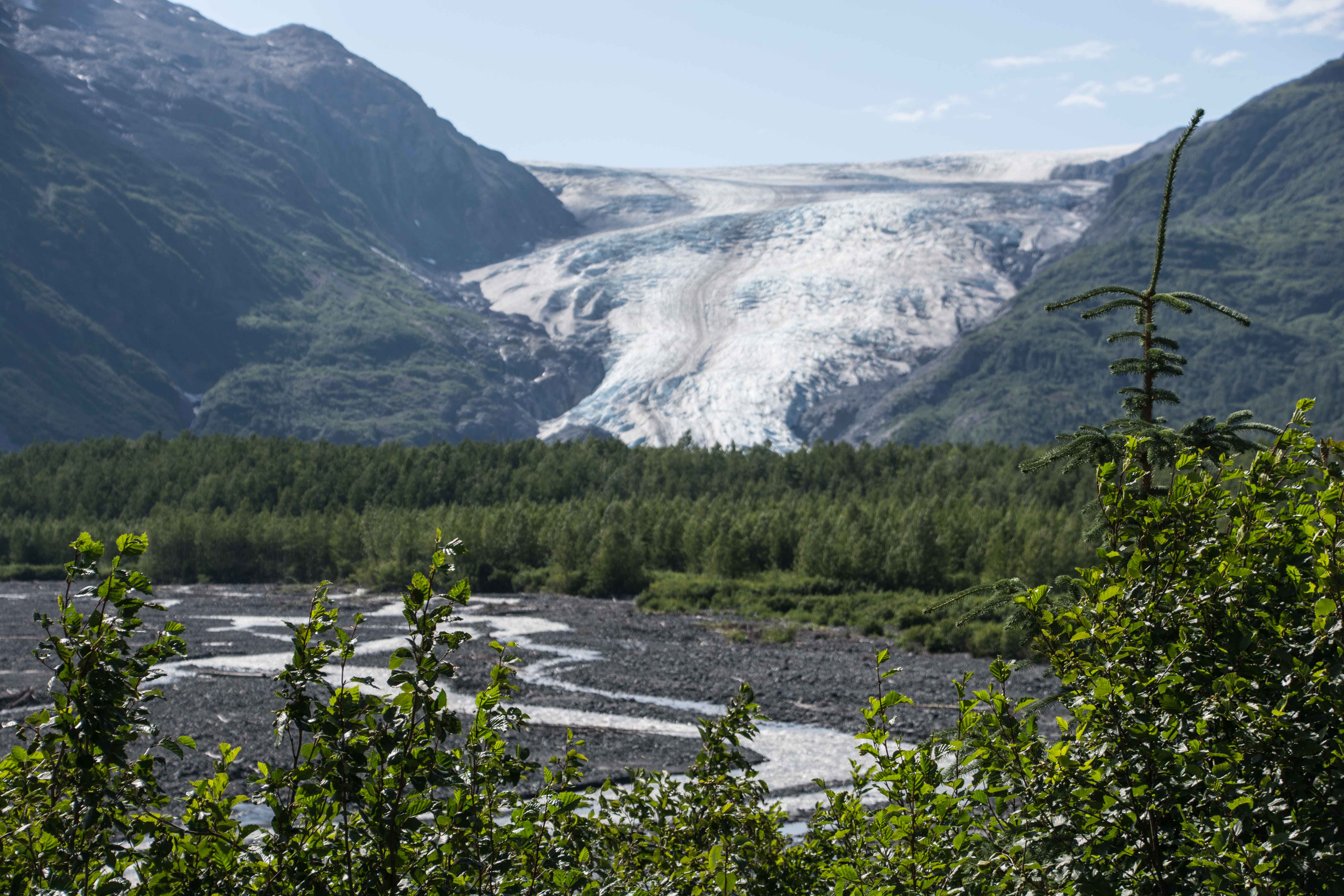
Exit Glacier

Blog-1724

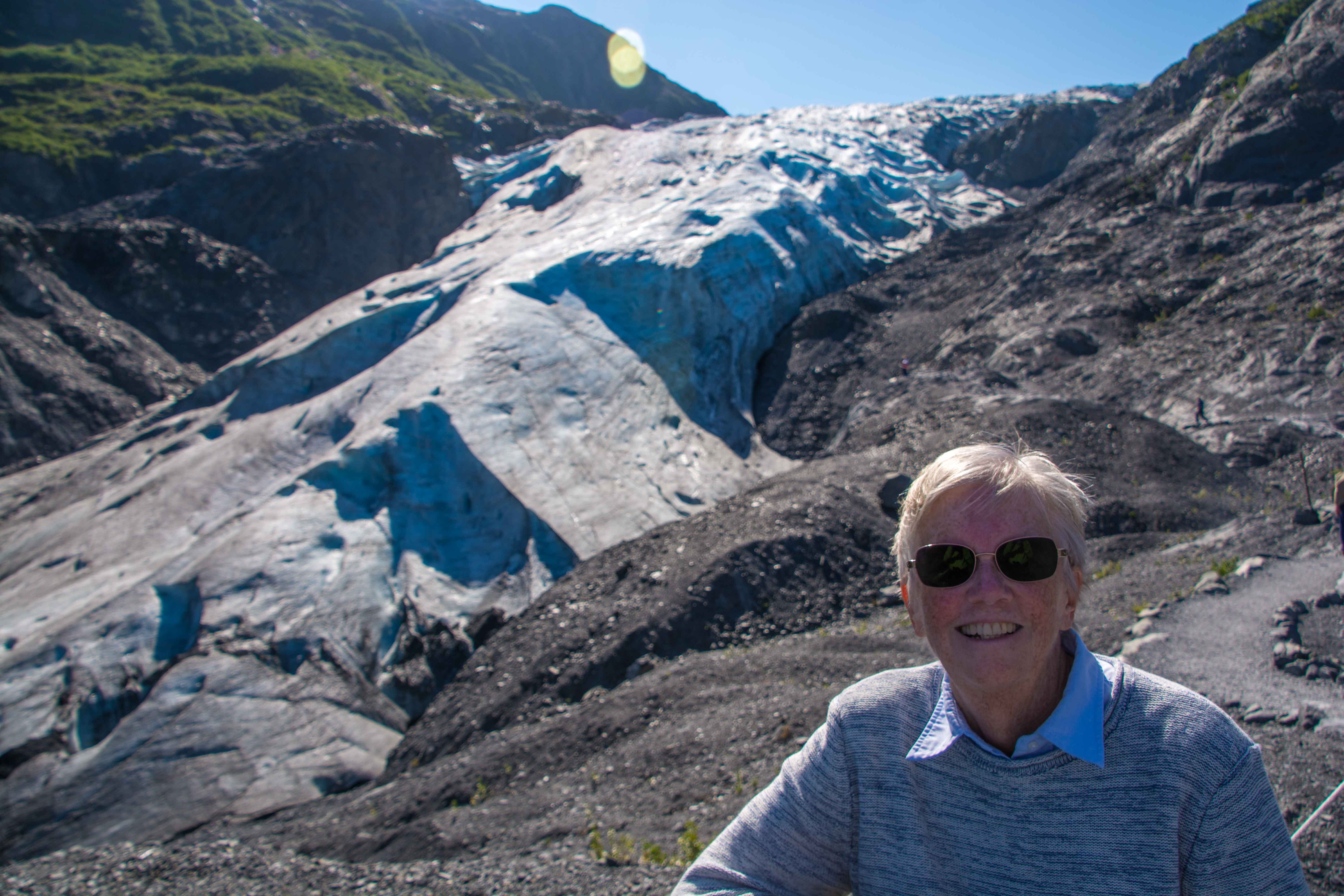
Gwen at Exit Glacier

Blog-1739

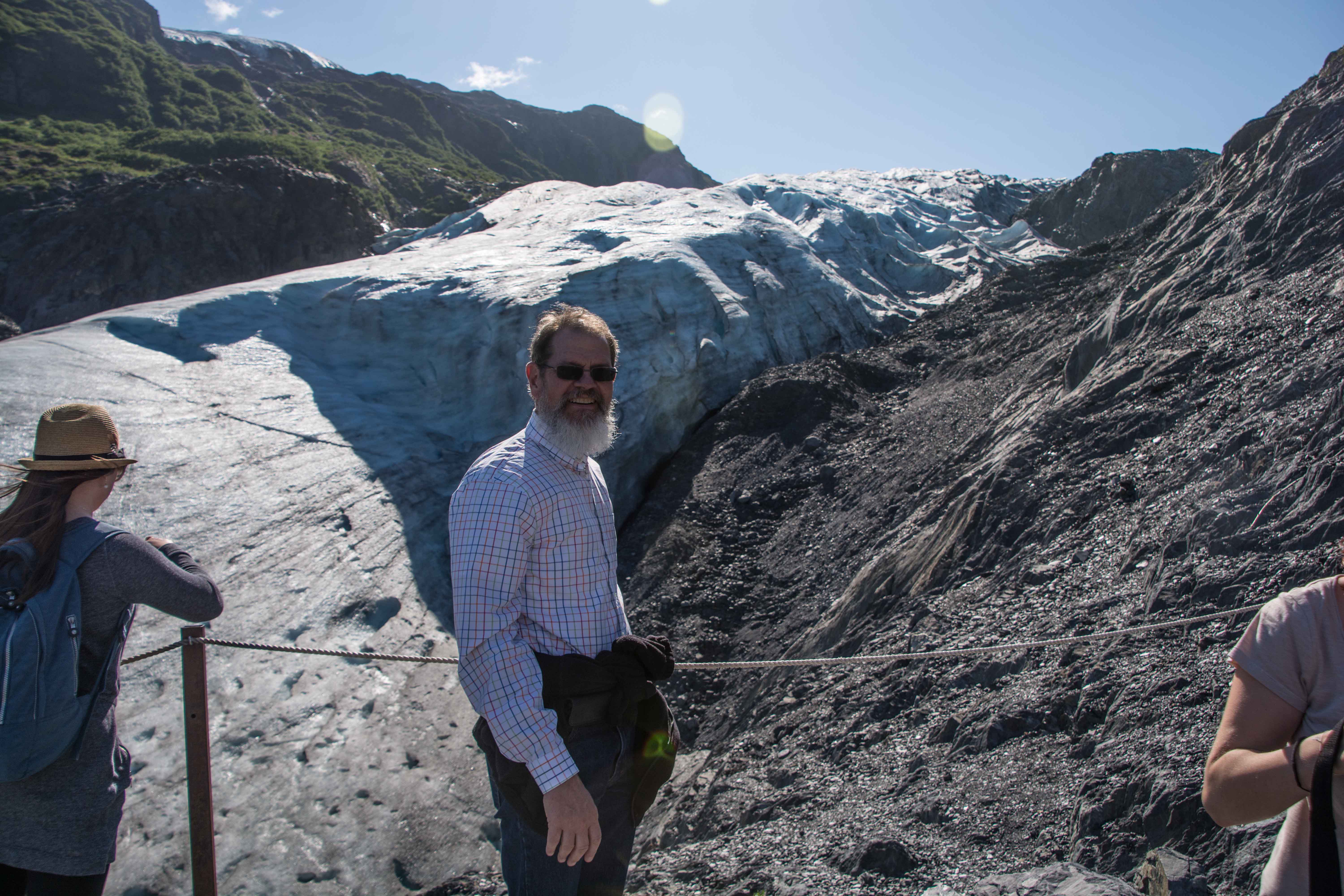
Yep, I was there, too.

From there, Albert took us to the Exit Glacier, which was our first hike. It was good fun, (reminded me of walking in the hills around Palm Springs). The glacier is indeed receding, as we were reminded of at every turn. This result of global warming is going to be disastrous for the world as we know it, and thus it is something we should all work to reverse. This glacier didn’t make a sound that we heard. It is considerably smaller than Hubbard Glacier, and that may explain the lack of cracking sounds. One thing we did see were the scrub marks on the rocks that had been under the glacier. The marks showed that the glacier pushed harder rocks along, and used those to scrap long grooves into the stationary rocks.

From there it was back to our hotel, and out to dinner (in the hotel restaurant — Resurrection Roadhouse — which did an excellent job with the Alaskan Salmon). Maybe there is something to the quality of fresh locally-caught fish!

Tomorrow it is out early to take a boat trip in down and around Kenai Fjord, and then a train ride to Anchorage.

31 July 2014 — Boat trip and on to Anchorage

Blog-1700

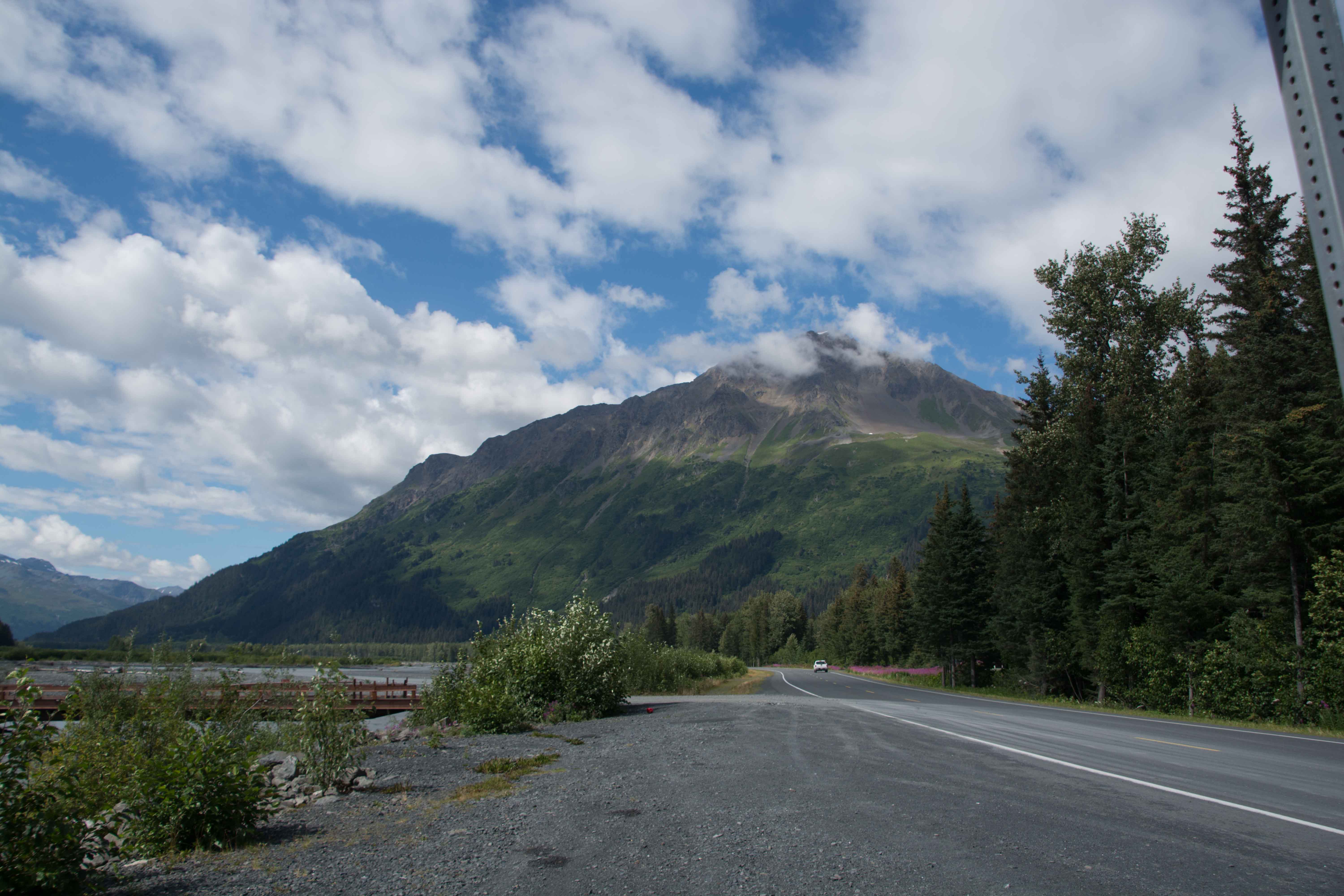
One of the hills near our hotel. High enough to reach into the clouds.

Today was a long day. We got up and breakfasted in the same restaurant as we had dinner in. As we were to learn, the cost of living in Alaska is about 1.5 times what it is in the rest of the US, if the cost of food is any indication. The breakfast was good, but nothing special. 

Blog-1764

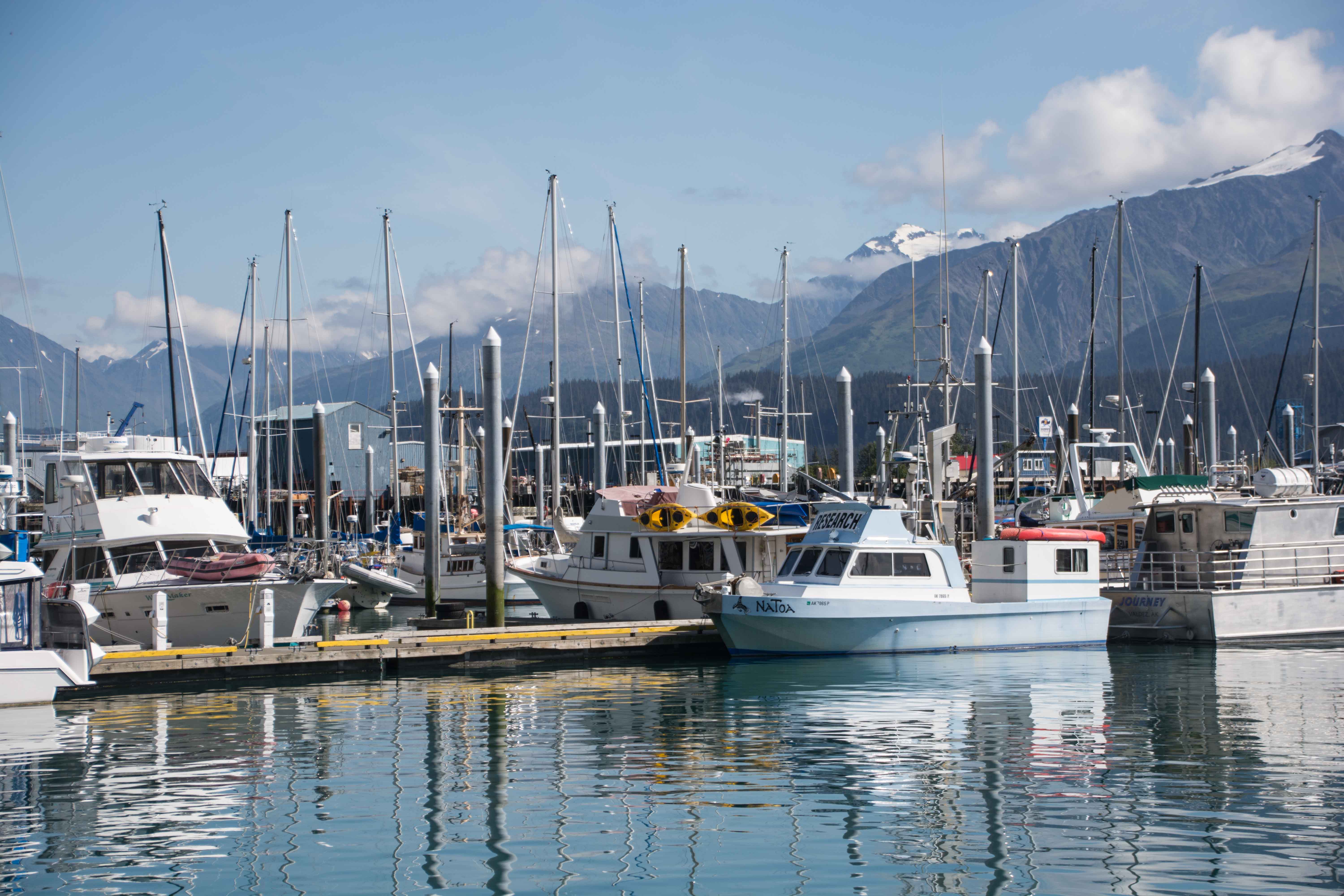
Seward Harbor

Blog-1786

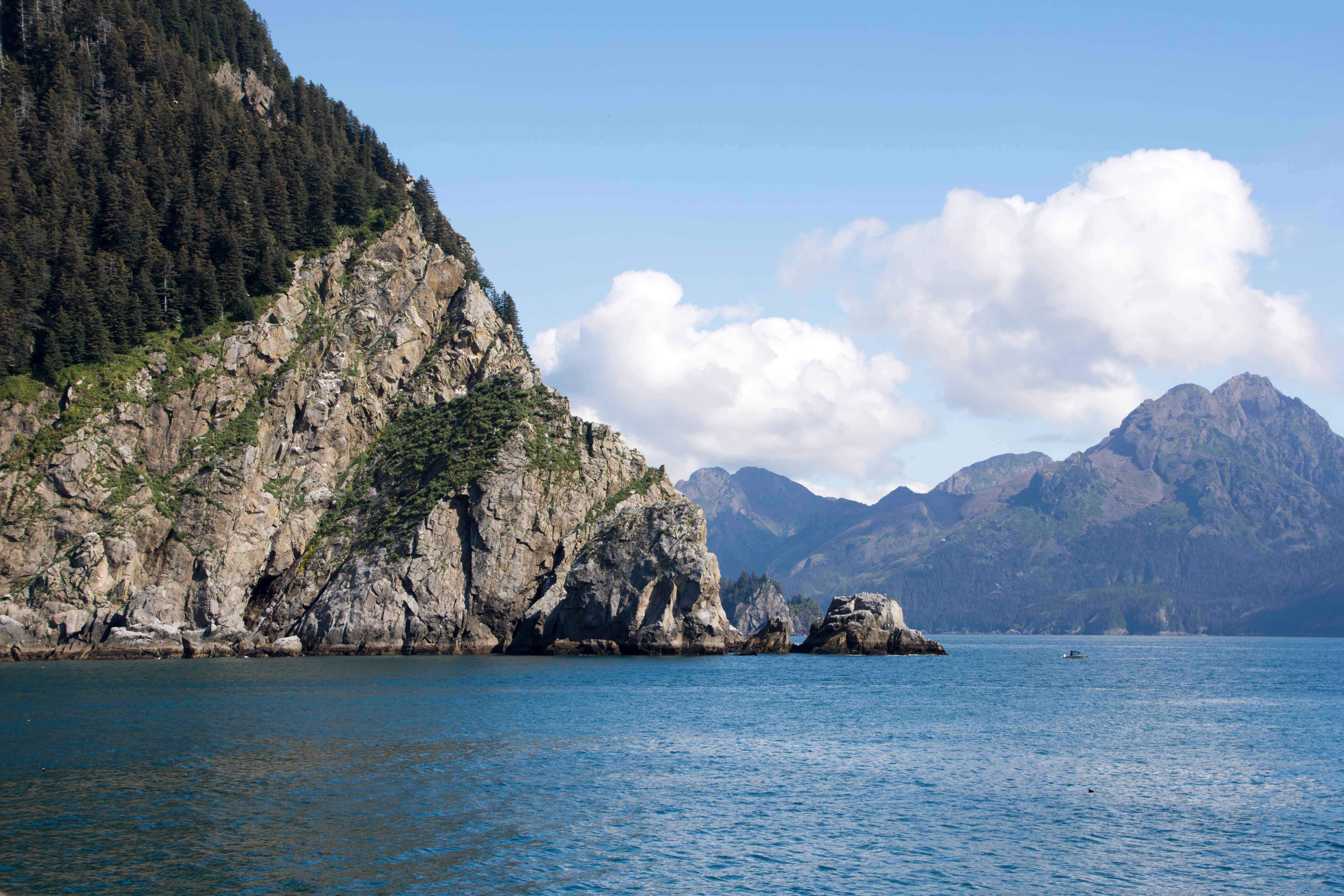
Out and into Kenai Fjord

Blog-1829

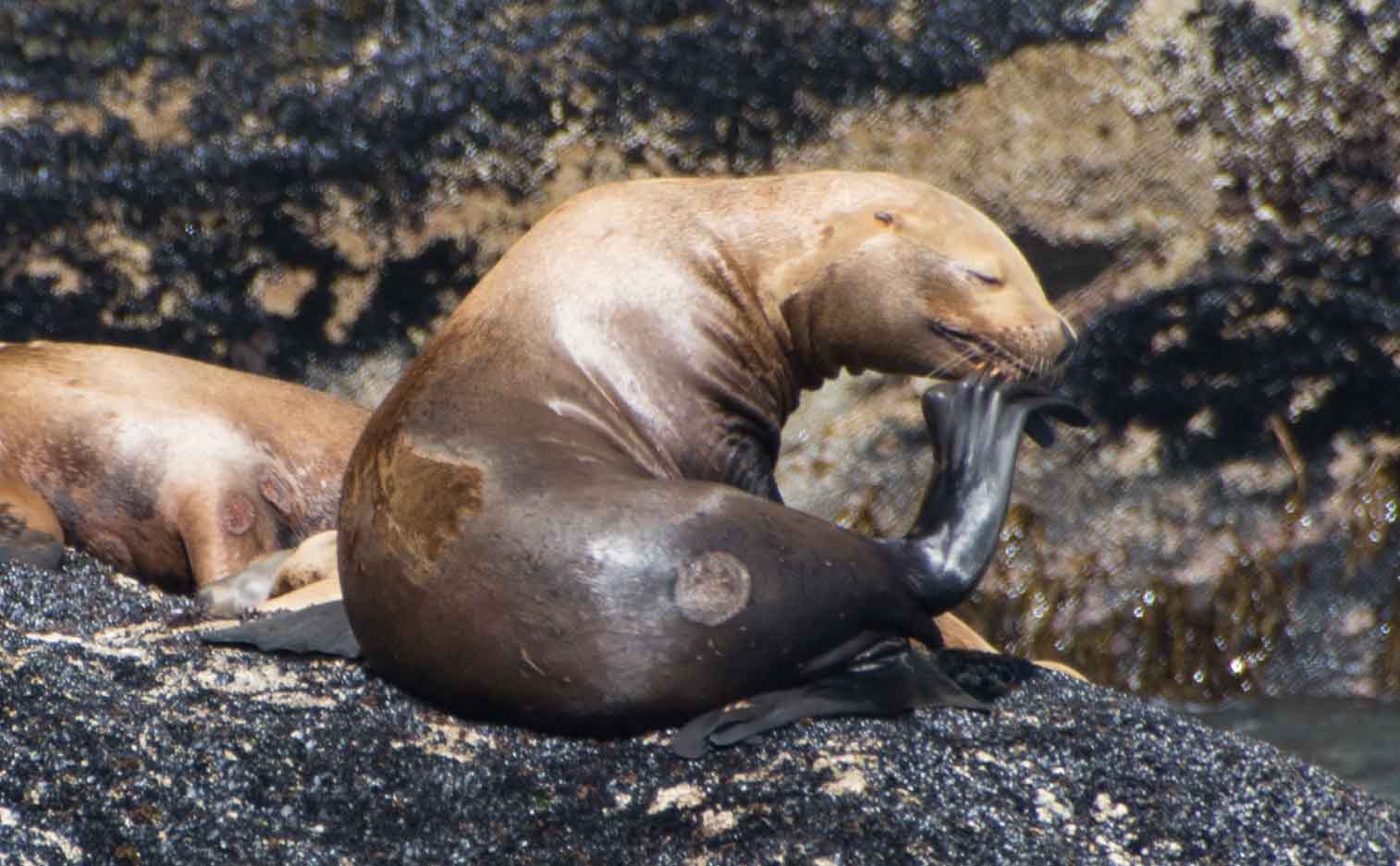
Stellar Sea Lions sunning themselves on the remarkably sunny day.

Blog-1832

Ah, yes, nothing like a good scratch!

We then met up with Albert and the rest of the gang, and were shuttled over to the harbor to go on the Kenai Fjord Tour. This is a boat trip out to see the waters, animals, birds and glaciers in and around Kenai Fjord. We started out at high speed in a catamaran (two hulled, but the decks were set across the two so that we didn’t know it wasn’t a single vessel except to look at the bow of the boat before we boarded). Just as the other boats we had been out in this trip, the lower of the two decks was completely enclosed, while the upper deck was enclosed at the front, but open at the back for those of us who wanted to take pictures.

Blog-1888

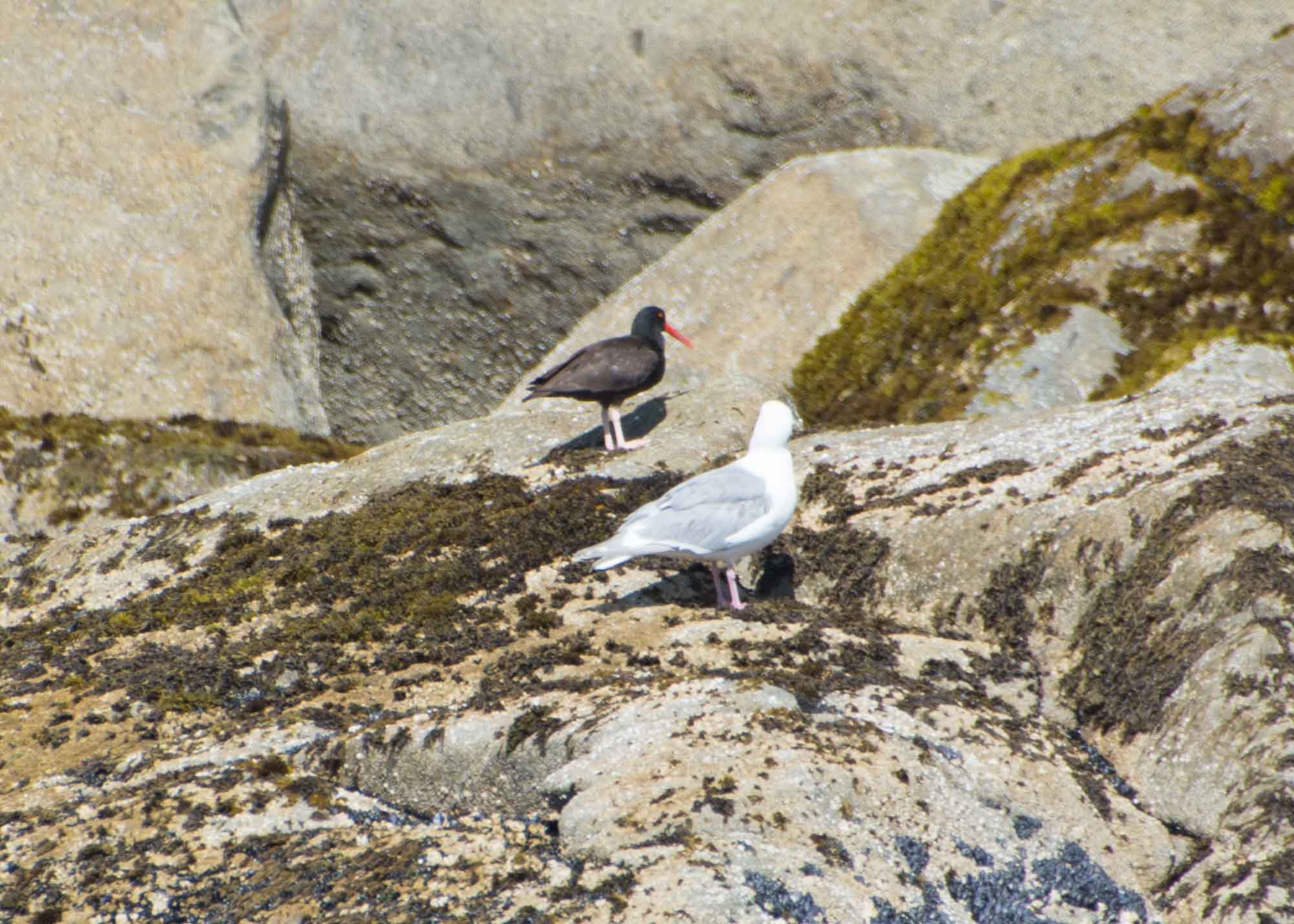
Birds in Kenai Fjord

Blog-1902

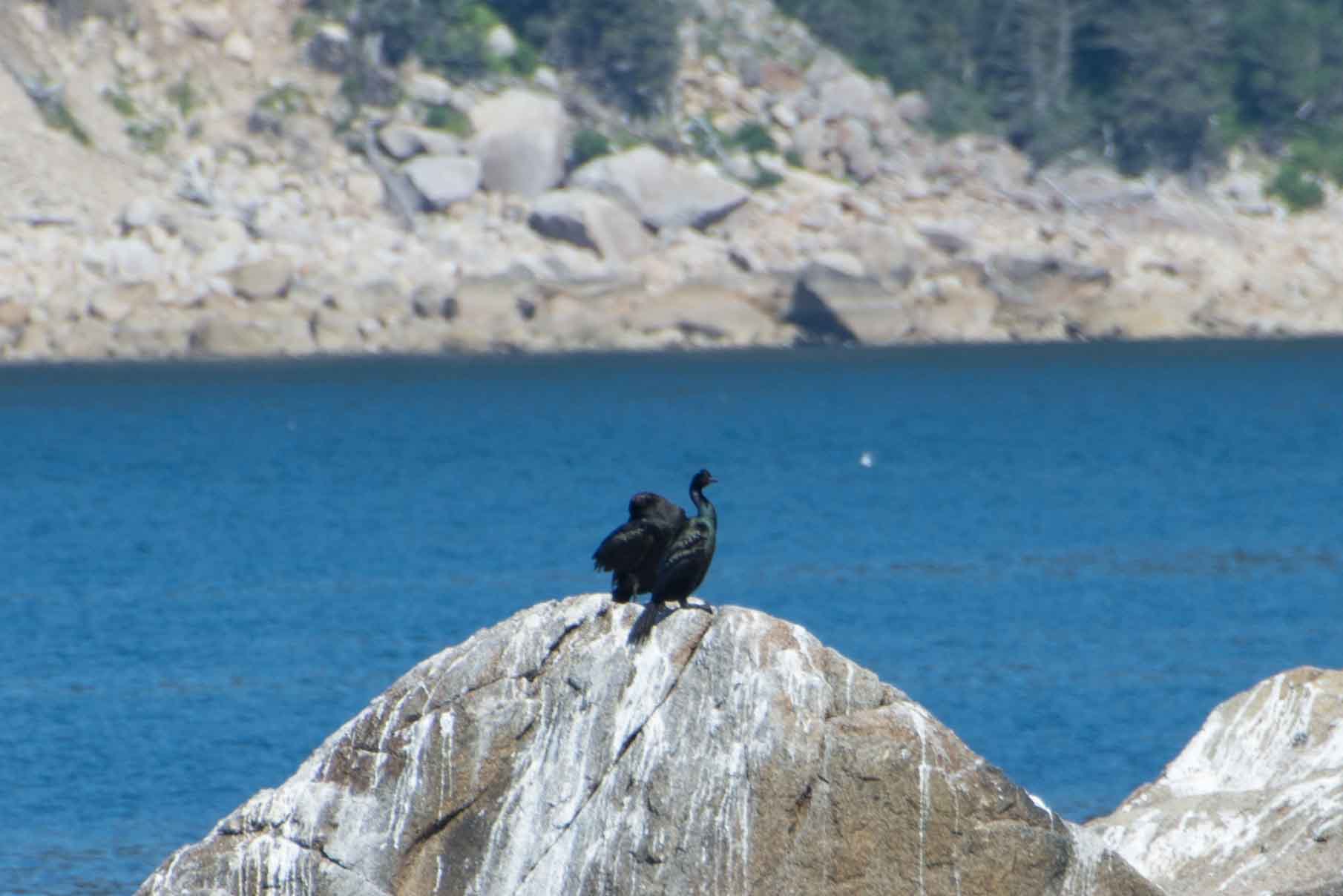
Cormorant puffing its wings to dry them in the sun.

Blog-1976

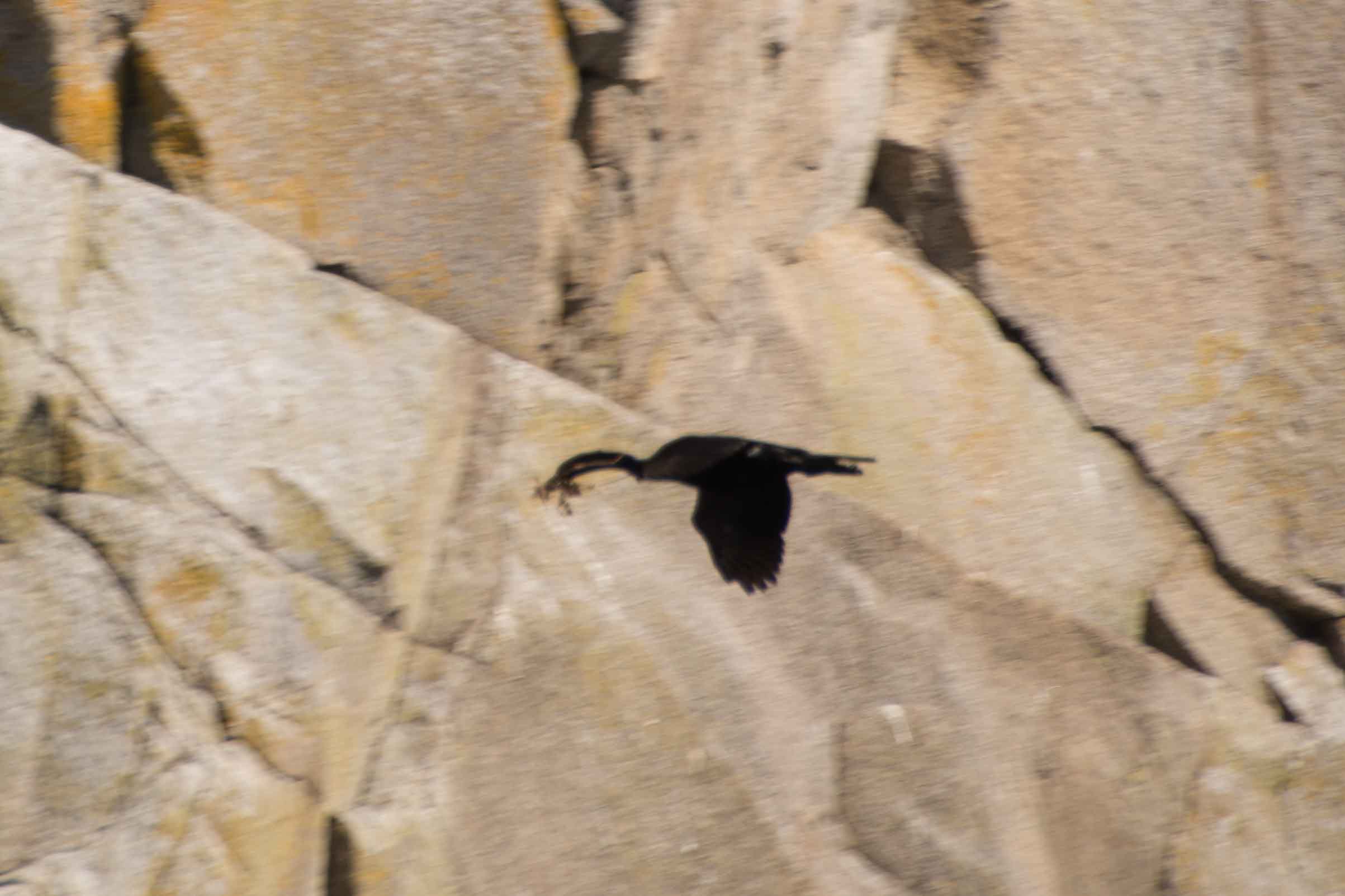
Flying by one of the rocky walled islands that these birds called home

Blog-2102

Surprisingly, we didn’t see any ducks

We were looking for harbor seals, or stellar sea lions, and we found them almost right off. They were happily laying in the sun warming themselves or in the shade, enjoying a cooling breeze. It was, after all, a sunny day, and while to us humans this was a good thing, to the sea creatures we were interested in, they rather preferred rain and cold. We also saw lots of birds, which our captain happily told us about. Aside from the sea gulls, there were cormorants, and puffins, more than one variety of each. They were nesting in the rocks that we sailed around, in very large numbers.

Blog-2015

Islands in Kenai Fjord

Blog-2068

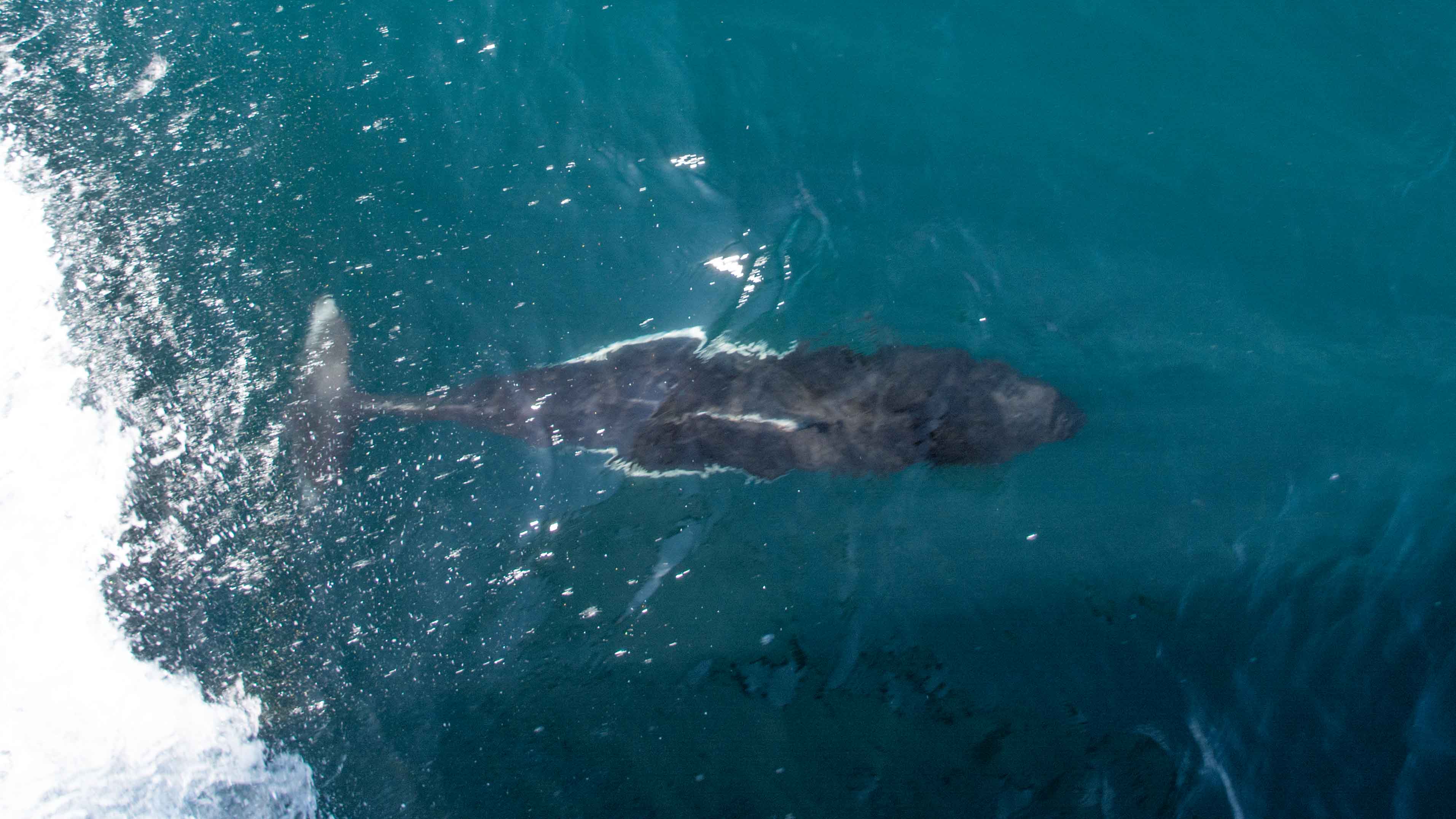
Our first whales, Sei whales we were told

Blog-2262

Porpoise running along side of ship

Blog-2267

Porpoises playing right next to the hull

Of course the attraction of the day was the whales. Were we going to see any? And the Dall’s porpoise — are they going to try to race the boat? Yes, of course they are, but not until we were coming to the glacier on the way back. Whales, though we saw in some numbers. The captain identified the first ones we saw as Sei Whales, and indeed pictures taken by Albert confirmed it.

I should take the time at this point to let you know that Albert is an avid amateur/professional photographer. He has two high-end Nikon cameras, and the long lenses to put on them. He gets some great pictures, but the camera structures he uses are heavy to carry around, and take a weight lifter to hold steady (my humble opinion). He uses them to perfection, though. He has some examples of his work in his van, which he let me take a look at. High quality stuff, mostly animals (which makes sense since he spends so much time leading these expeditions to see animals here). His outfits suit his purpose perfectly, I think.

Blog-2444

Water flapping whale

Blog-2491

After flapping several times, the whale dove for the depths

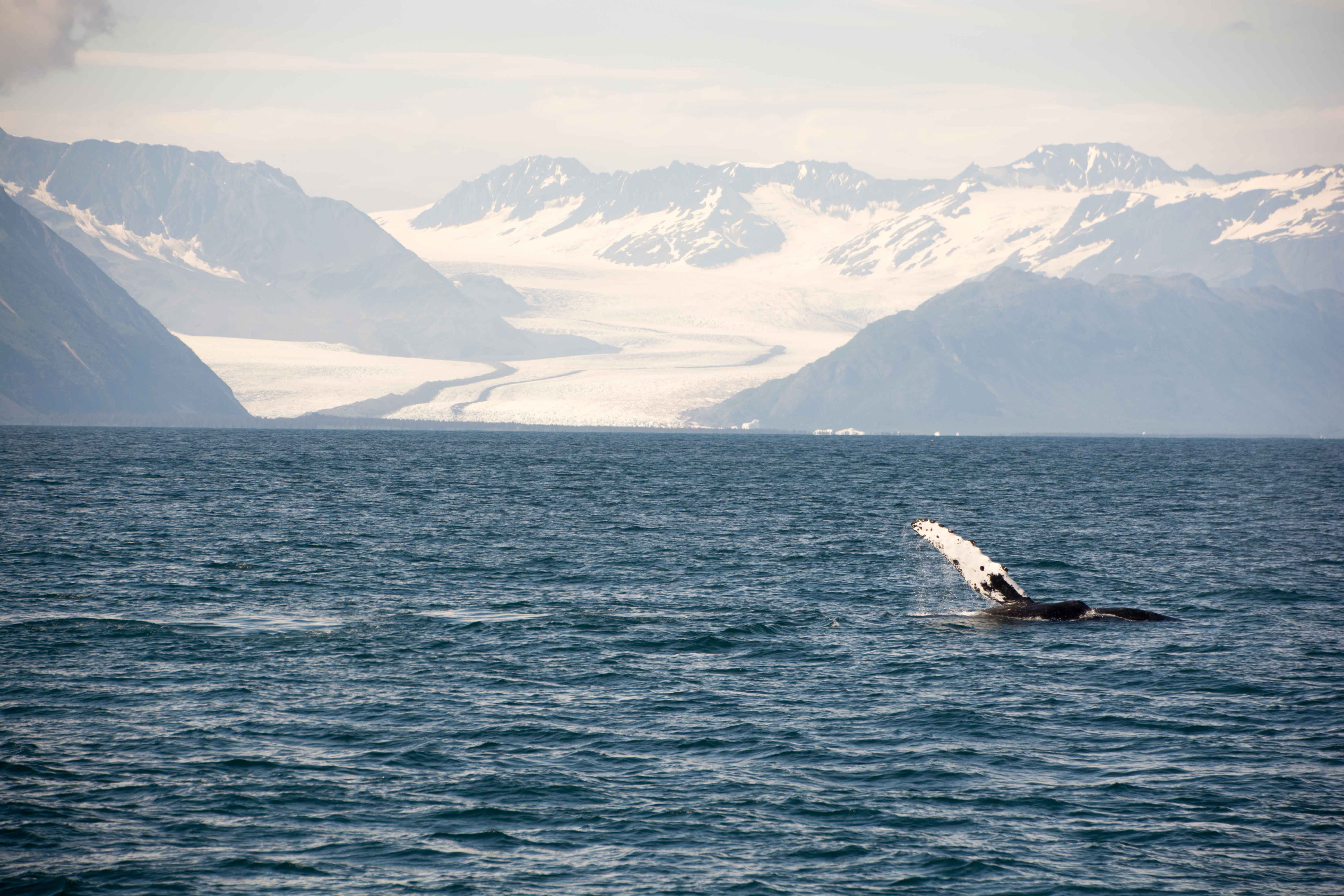
Back to the boat trip. We saw the Sei Whales swimming side by side, and taking in and expelling air. They were near enough to the boat to allow good pictures by all. We didn’t see any Orcas, unfortunately, but on the way back to the harbor, we were treated to a water flapping scene by a happy hump-back whale. He was kind enough to do it a number of times to get our attention, and to allow us to motor back to him and watch for awhile.

Blog-2315

A glacier coming into Kenai Fjord

Blog-2380

The clouds provided a marvelous counterpoint

Blog-2347

The front wall of this glacier calved as we were watching

Blog-2357

It kicks up quite a splash

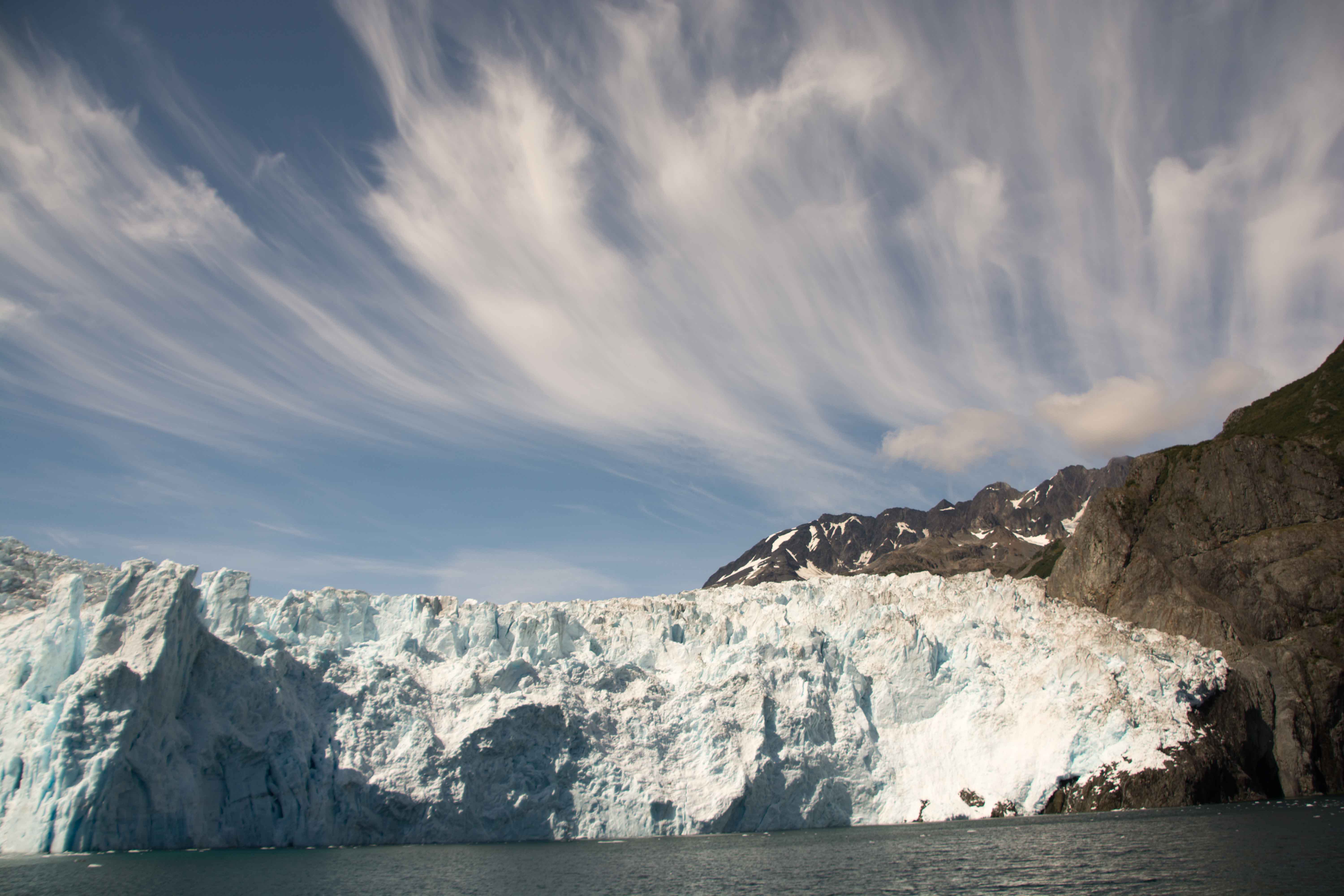
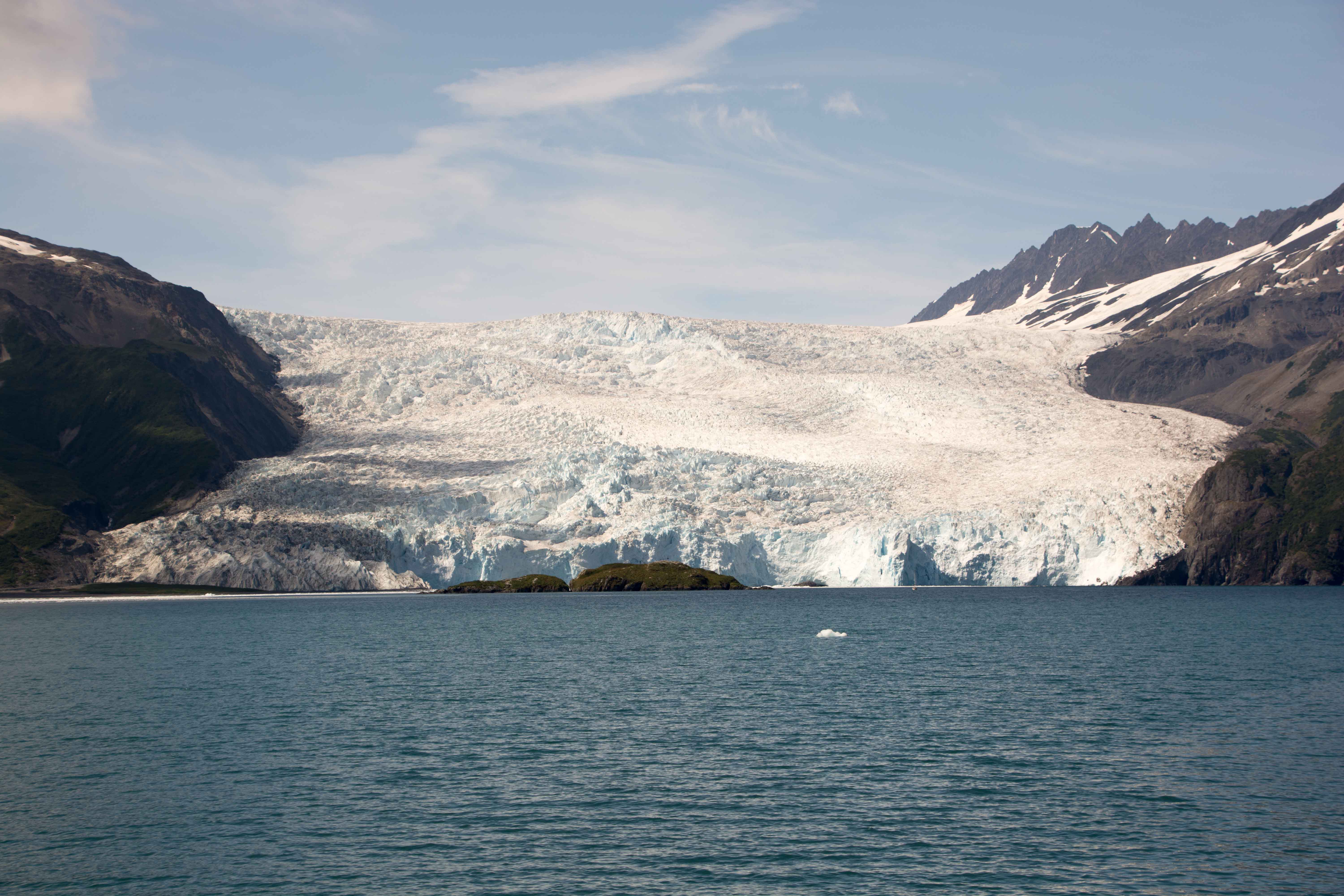
We did a sail-by of one of the glaciers that feeds into the Kenai Fjord. The captain took us up within a quarter mile of the face, and we were treated to some calving and the thunder and squeaking of the glacier as we watched the ice fall. The trip was a long one (we were on board at 11:30 and back at 5:30). We then were taken to the train station right near by and started our trip to Anchorage. We got an excellent dinner on the train, were seated in the dome car to see the countryside, and treated to a good trip, arriving in Anchorage just before 11:00 pm. Albert and Marlene loaded us into their vans and took us to the hotel for the night.

Leave a comment

Filed under Blog

Trip to Alaska — July-August 2014: Sitka, Hubbard Glacier and Seward

28 July 2014 — Sitka

Blog-1338

Sitka harbor

Blog-1340

Another view. Note the glacier on top of the mountains to the left.

Today we decided to take it easy, and just go into town and walk around. Gwen got the laundry done by 11 am, so we headed out. Once we hit the visitor’s center, we began getting hungry. They recommended a local fish and chip shop “in the ANB Hall.” We found it on the map, and walked to it. That was what it was called, the ANB Hall, and there was a sign out front telling us that they were indeed offering fish and chips. So we went inside, into what looked like a large church hall, with a kitchen off one side, and big round tables set up throughout. We ordered our fish and chips (Rockfish and chips with a couple of crab cakes on the side), and about 20 minutes later, they brought it out. It was really good, just as advertised.  While we were not alone in the hall, it did not seem very well known. And “ANB?” It stands for Alaska Native Brotherhood. We were being served by the local Tlingit tribe in their social hall.

Blog-1363

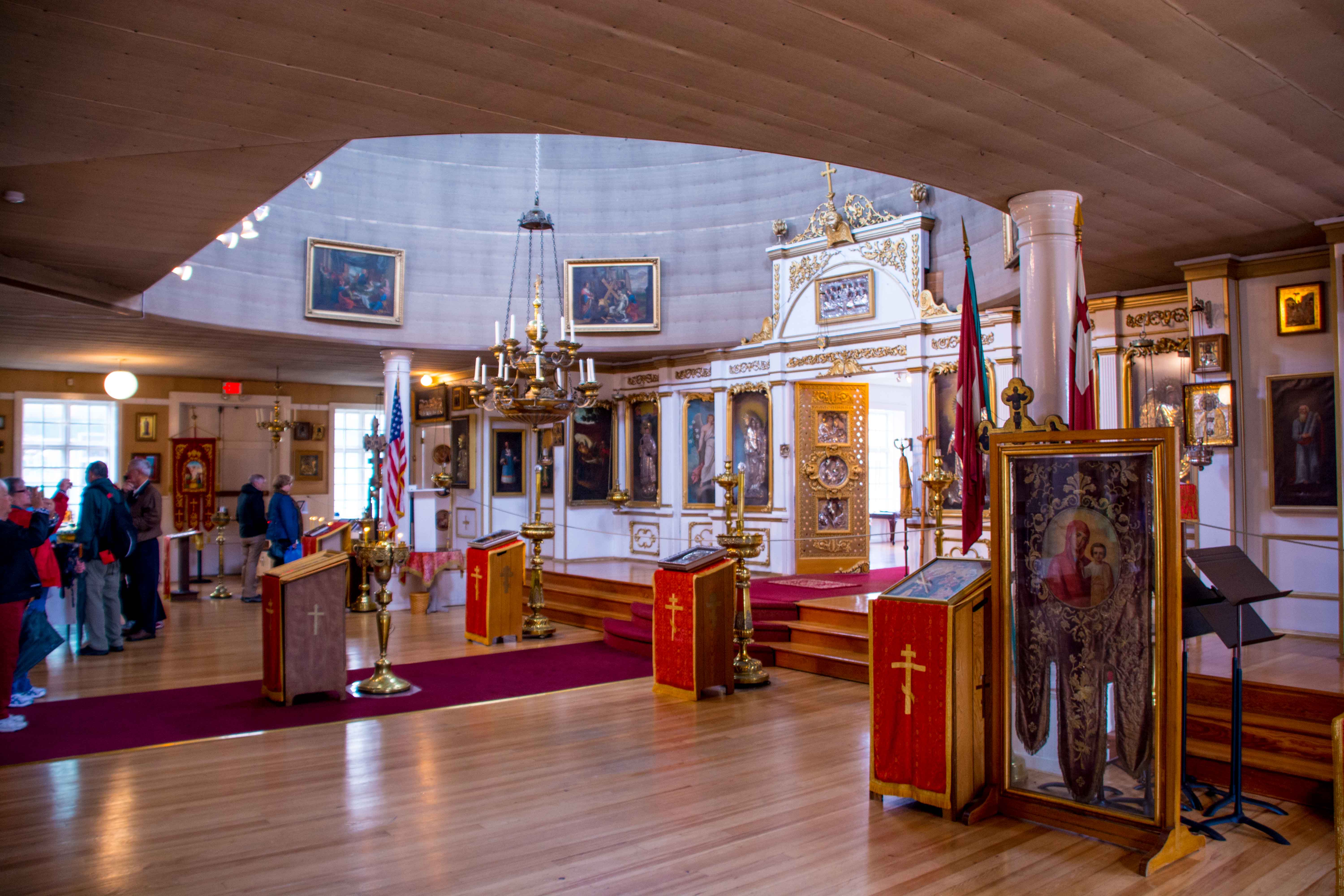
The sanctuary in the Russian Orthodox Church

After lunch, we walked to the Russian Orthodox Church, and the Russian Bishop’s House. The church is an active one, and indeed two priests were there as well as many visitors. The arrangement of the building was different from what I’m used to in a Catholic or Protestant Church, where the church is a hall with rows of pews and the area for the priests up front, and maybe a choir beyond. This arrangement was circular, with rows of chairs as you come in, then a central area without furniture in the center, and then beyond that a wall with doors in it, open to view, where the priests presumably occupy. On either side, there are icons with candle holders where one can invest to light a symbolic flame for a loved one or friend. The icons are (according to the signs) special messengers to God, who may choose to answer a prayer, or to channel support for the petitioner through it. The Russian Bishop’s House which is about a five minute walk from the church is no longer related to it. The house is now owned by the National Park Service, and they preserve it for its historical value. It was built in 1843 for Bishop Innocent (Ivan …..) who was one of the first Russian priests to live in the Alaskan area while it was claimed by Russia. Russia sold Alaska to the US and William H. Seward (U.S. Secretary of State) in 1867. Known thereafter as “Seward’s Folly”, Alaska was purchased for $7.2 million. The Russians had fought the Crimean war against England, France, and the Ottoman empire in the 1850s and needed money to rebuild their weakened military and political institutions.  Russia’s main interest in Alaska had been the fur trade, but it had waned as the sea lions became harder to find, and as competition from American and Canadian interests increased.  After the sale of Alaska to the U.S., the Bishop’s house was retained by the church with various functional uses until about 1970.  By that time it had gotten so expensive to keep up that it was just boarded up and abandoned. In 1972 the Park Service bought it and over succeeding years restored much of it to displayable condition.  One thing I learned was that many of the Tlingit were members of the Russian Orthodox church (as opposed to Catholic or Protestant) mainly because Bishop Innocent treated them with fairness and respected their already existing customs and practices.  He did not pressure them into his brand of religion, rather he served as a good example, and won them over with his activities on their behalf. He translated the bible into their languages.  He interceded on their behalf with the Russian traders to assure they got fair return on their efforts (they were the ones who actually trapped the animals for their furs).  After the US purchase, Roman Catholic and Protestant preachers came in to help convert the lost souls of the Tlingit people. These religious zealots took a much more dogmatic approach, and as a result, the Tlingit stayed with the Russian Orthodox Church by and large.

Blog-1373

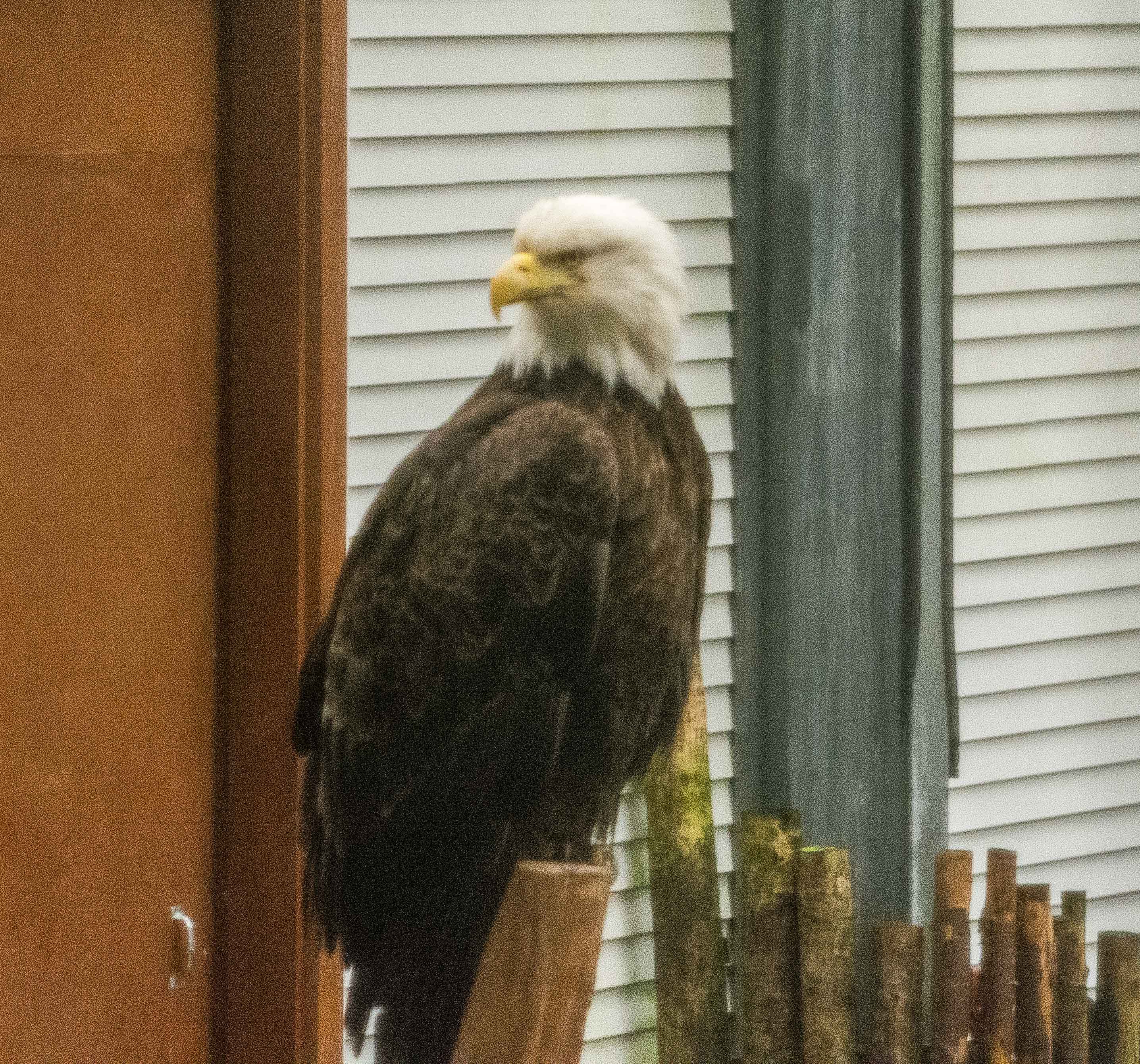
Bald Eagle being retrained for reintroduction to the wild.

Western Screech Owl

Western Screech Owl

Blog-1395

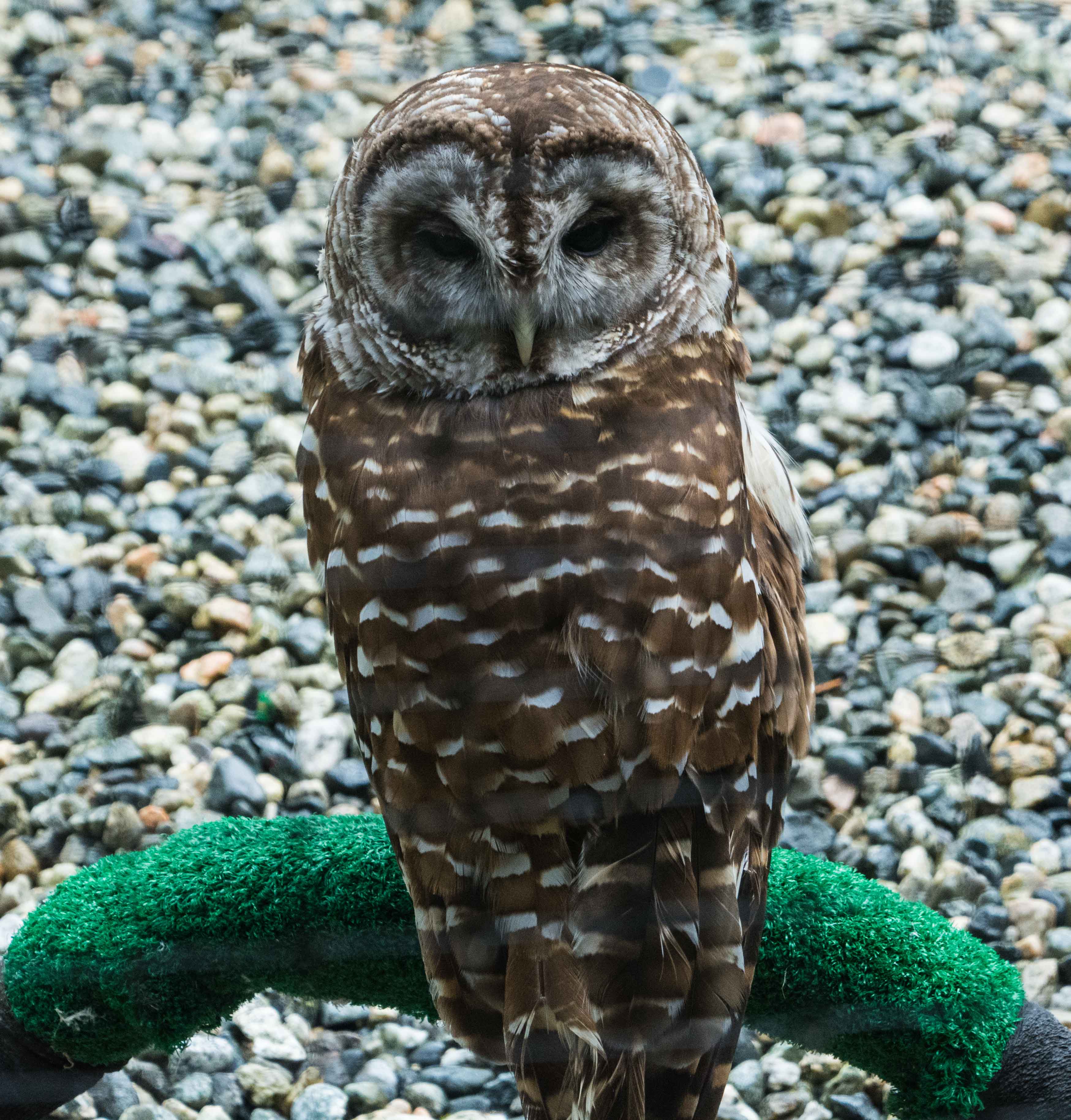
Barred Owl

Blog-1381

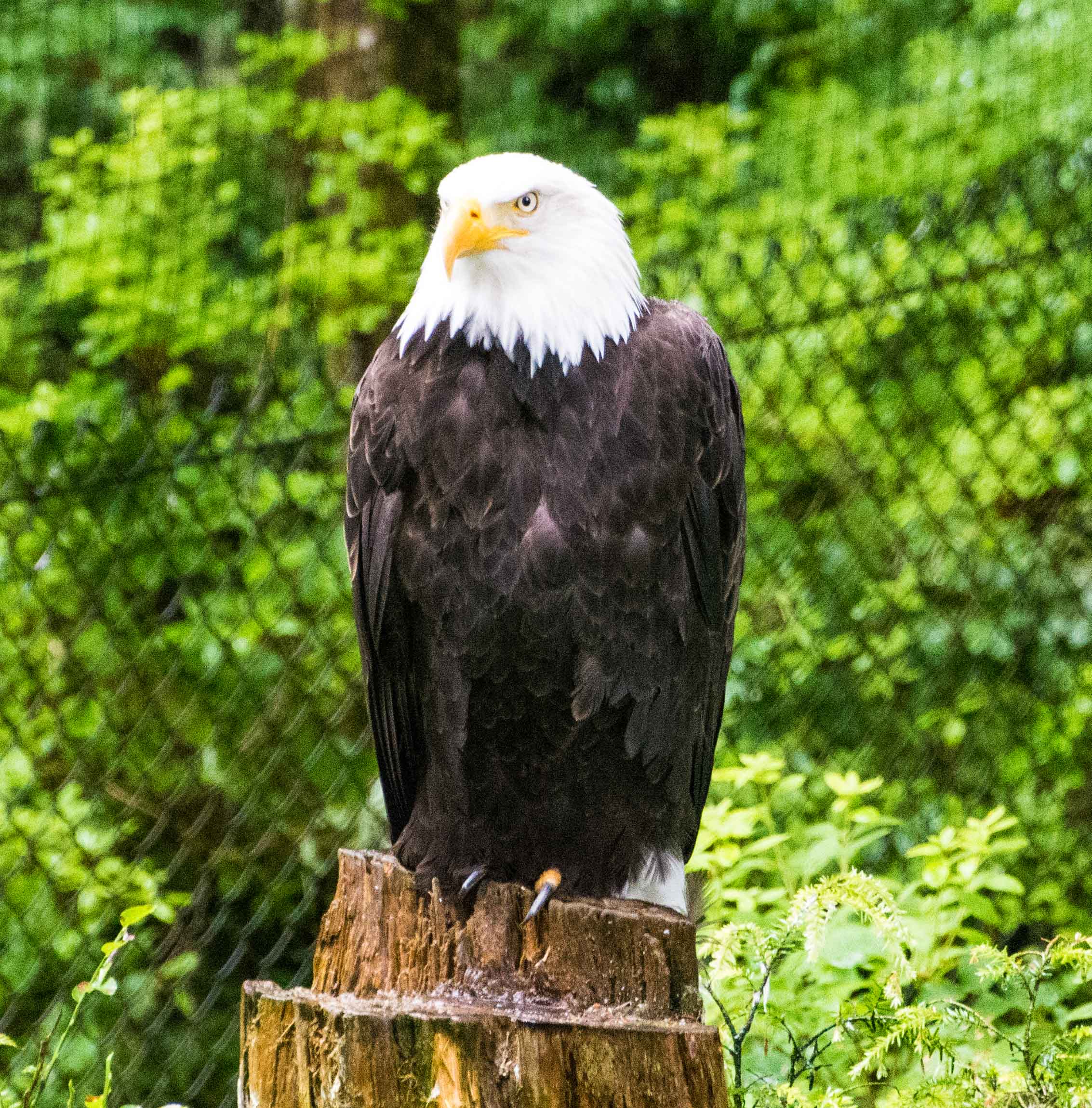
Bald Eagle on permanent exhibit

Blog-1416

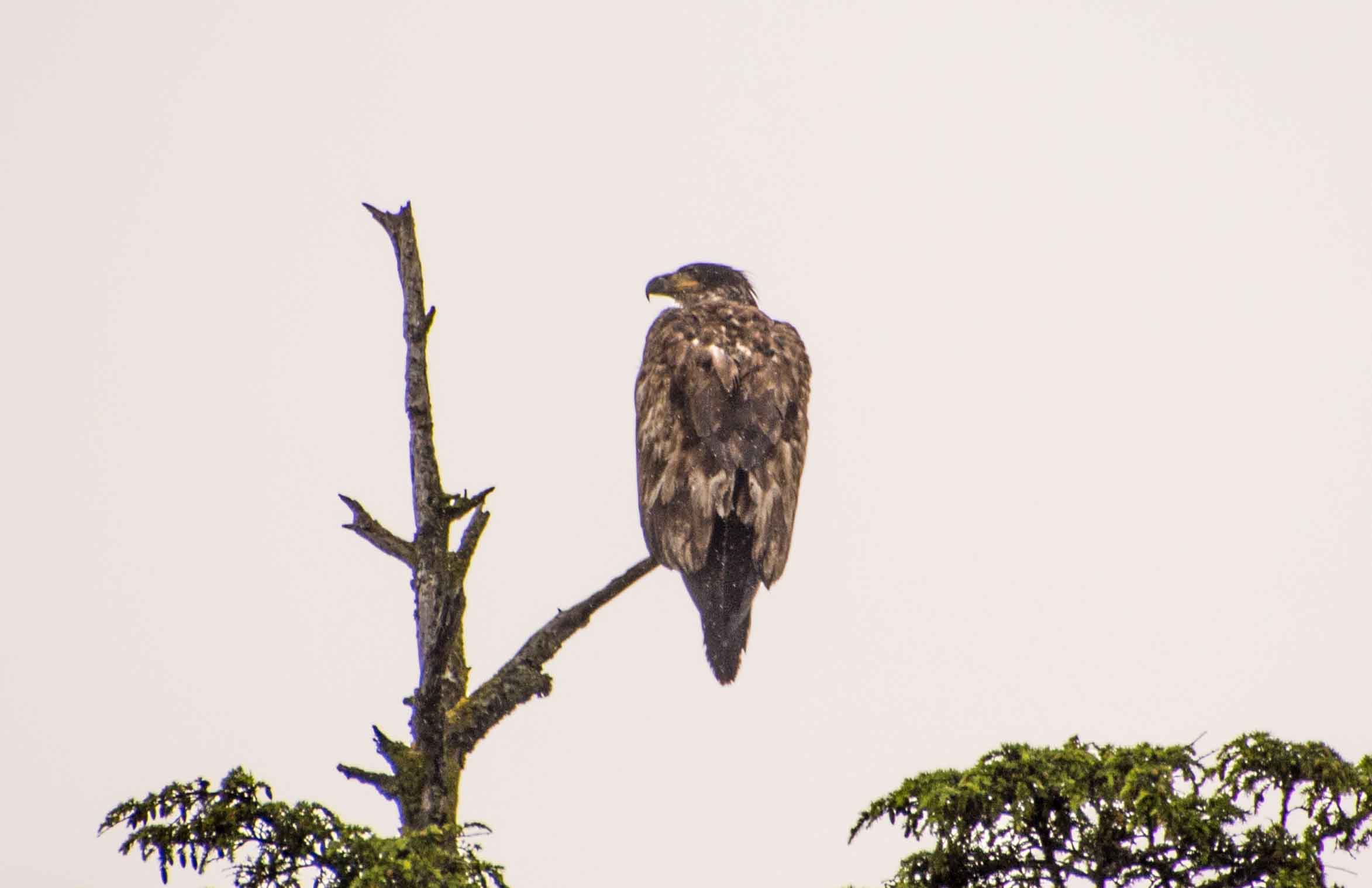
Eagle that was sitting on a tree outside the Raptor Center.

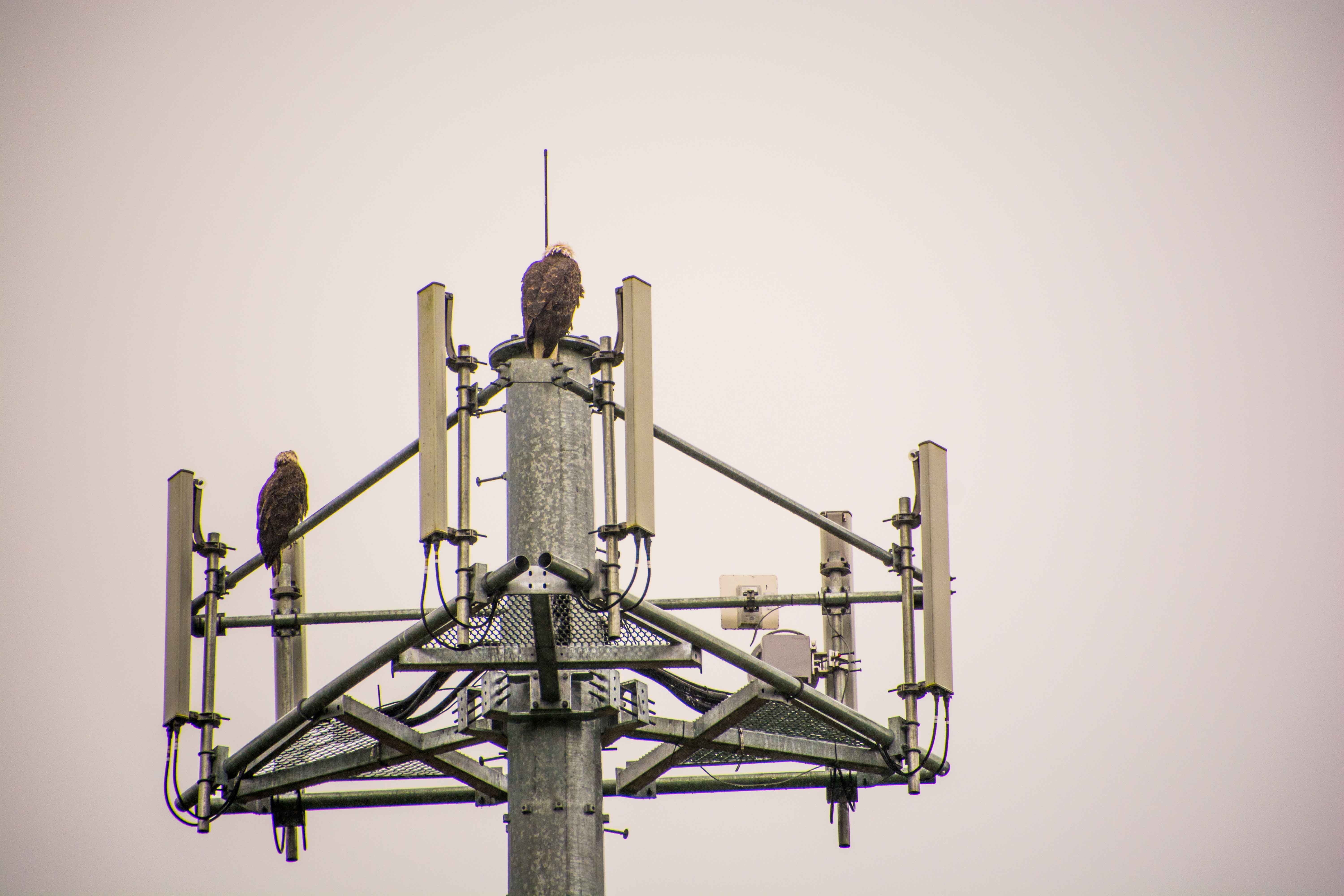
Eagles on the cell tower Sitka

In the parking lot of the Raptor Center is a cell tower. Perhaps not too surprisingly, it was a resting place for these Bald Eagles

We then found our way back to the Visitor Center, and took a bus from there to the Alaska Raptor Rehabilitation Center. They have a variety of Raptors there.  These birds are either recuperating and awaiting reintroduction into the wild, or, if they would not survive reintro-duction, they become part of the birds for display and education.  In addition to the aviary spaces for the birds on permanent visit, there are two areas for the recuperating birds to practice flying again. Each bird in the facility has its story. Probably the most unusual is a bird that had gotten hit by a Fed Ex plane. It was more than a bit shell shocked, and it lost the feathers on one side but physically, it was not hurt. Amazing! After growing its feathers back, it was reintroduced into the wild.

We then caught the reverse bus rides, and got back to the ship at about 3:30. And now is the time for us to rest!

Tonight’s entertainment is another music show, this time entitled the Piano Man. The music was by Billy Joel and Elton John. It was very well done, as have been all the presentations. The gymnasts still continue to fascinate me. Yesterday I thought the woman was small enough to enable the man to maneuver her around very easily, but tonight, comparing her to the other women, she is no smaller than they are — he is just incredibly strong!

When we got back from dinner, we received, as I’m sure everyone did, the debarkation paperwork. It said that we had to have the bags packed and available at 11:00 pm, and be ready to exit the ship by 8:00 the next morning. Panic set in… We wanted to go the show at 9:30, and it was 8:30, so we hurriedly decided what we had to have out with us beyond 11:00 pm and packed the rest. It took awhile, but we made it to the show, and enjoyed it. At the end of the show, as he did each night, Jamie, the cruise director, reminded us what was happening the next day. But what he was saying was not making sense. He said the commentary on the Hubbard Glacier would start at 7 am, and we would be approaching to the closest point at about 8 am. He talked about tomorrow night’s show being an amateur presentation by the members of the crew, and it would start at 6 pm. I’m thinking he must be describing the show for those who would not be leaving at Seward, but how could the ship be at Hubbard Glacier at the same time we were expected to be ashore? Gwen and I went back to the room bewildered. She’s panicking as perhaps she had miscalculated by a day the whole of the next part of our journey. How can she get hold of Albert at 10:30 at night (Alaska time)! We finally got our bearings reset when we realized that indeed today was not the last day of the cruise, but the next-to-last day. The computer was contributing to the problem as it was still on Eastern Time, and thus had already turned over to July 29th, which indeed is the last day of the cruise. Rereading the debarkation notice, we realized that we were due to leave on Wednesday, and it was only Monday night (the 28th). With that realization, we breathed a sigh of relief and climbed into bed and went to sleep knowing we had a whole extra day, and indeed Gwen had planned it all correctly to begin with.

29 July 2014 — Hubbard Glacier and on to Seward

Blog-1425

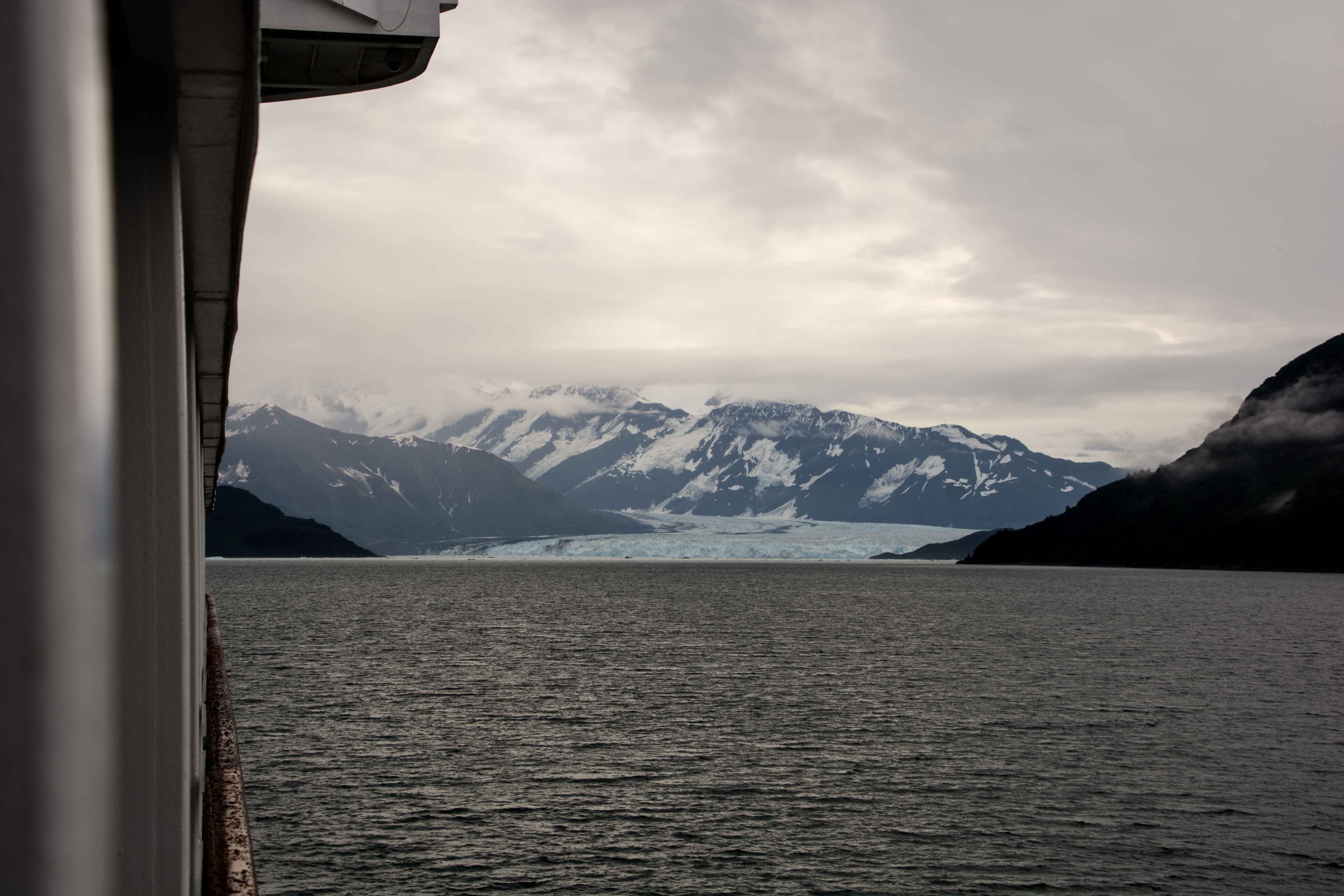
Approaching the Hubbard Glacier

Blog-1438

Coming up Disenchantment Bay to Hubbard Glacier

Blog-1483

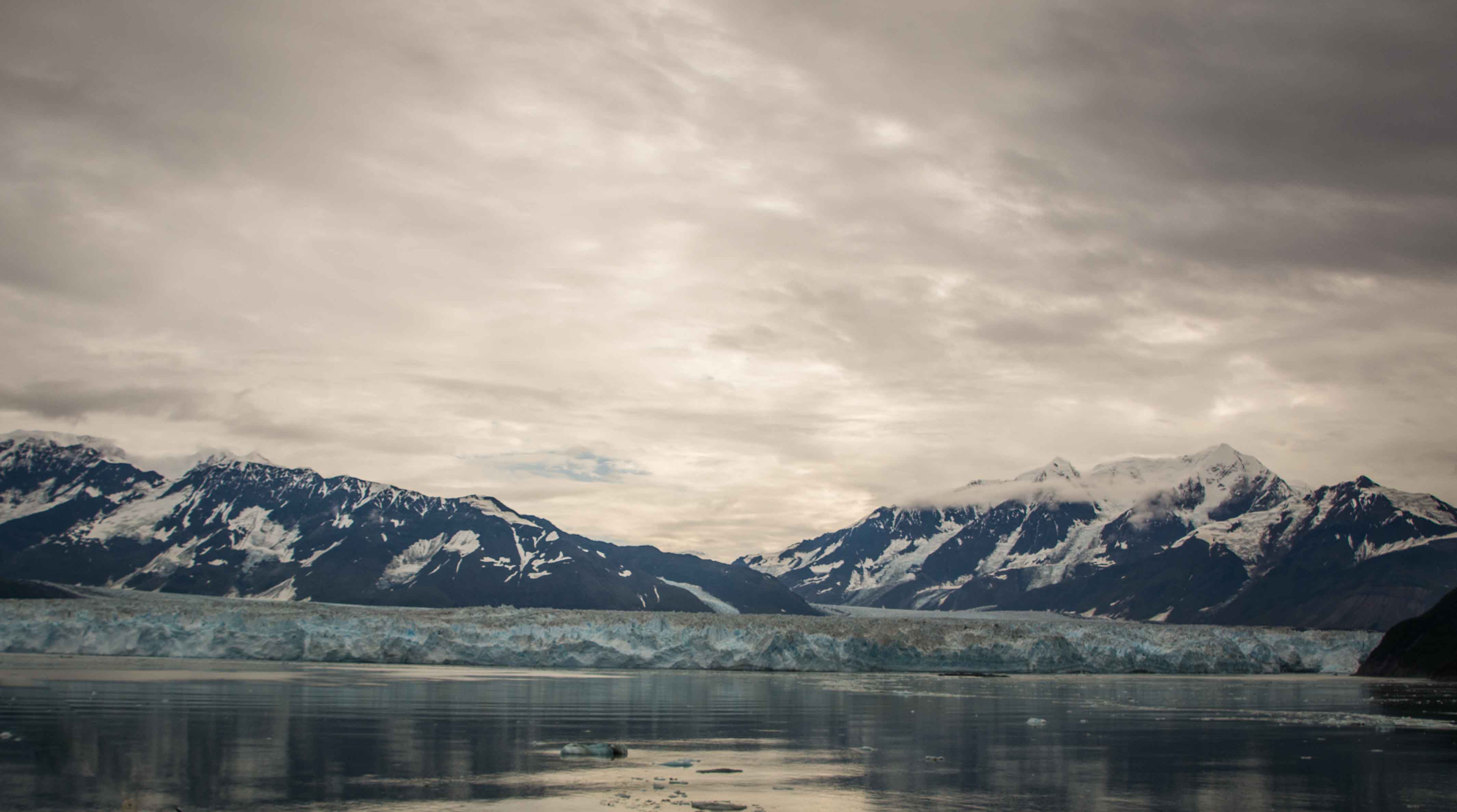
The main glacier on the right, being joined by Valerie Glacier on the left

Blog-1494

Behind the rock on the right is Russell Fiord. Twice (in 1986 and 2002) the glacier has blocked the Fiord from Disenchantment Bay for short times.

Blog-1496

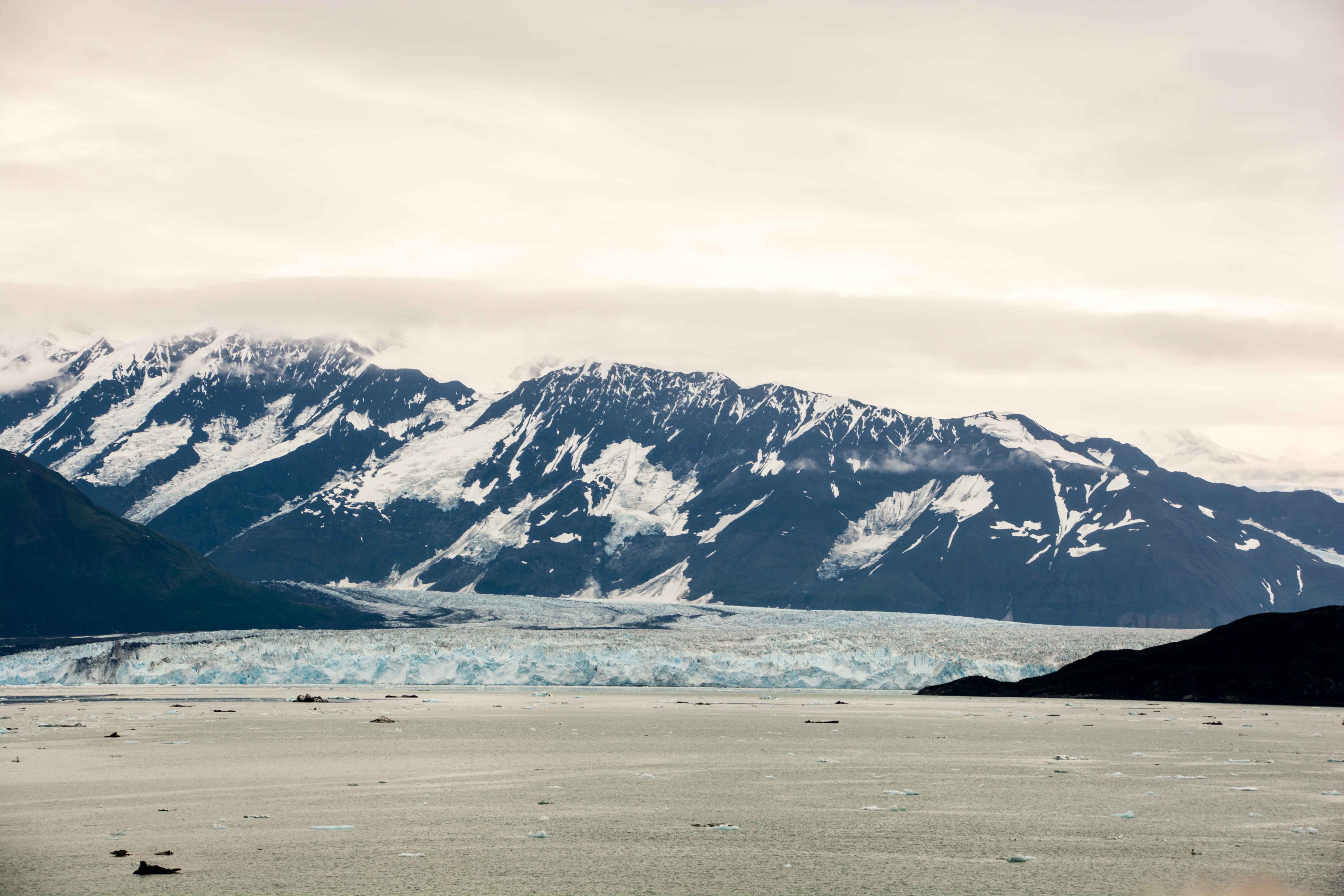
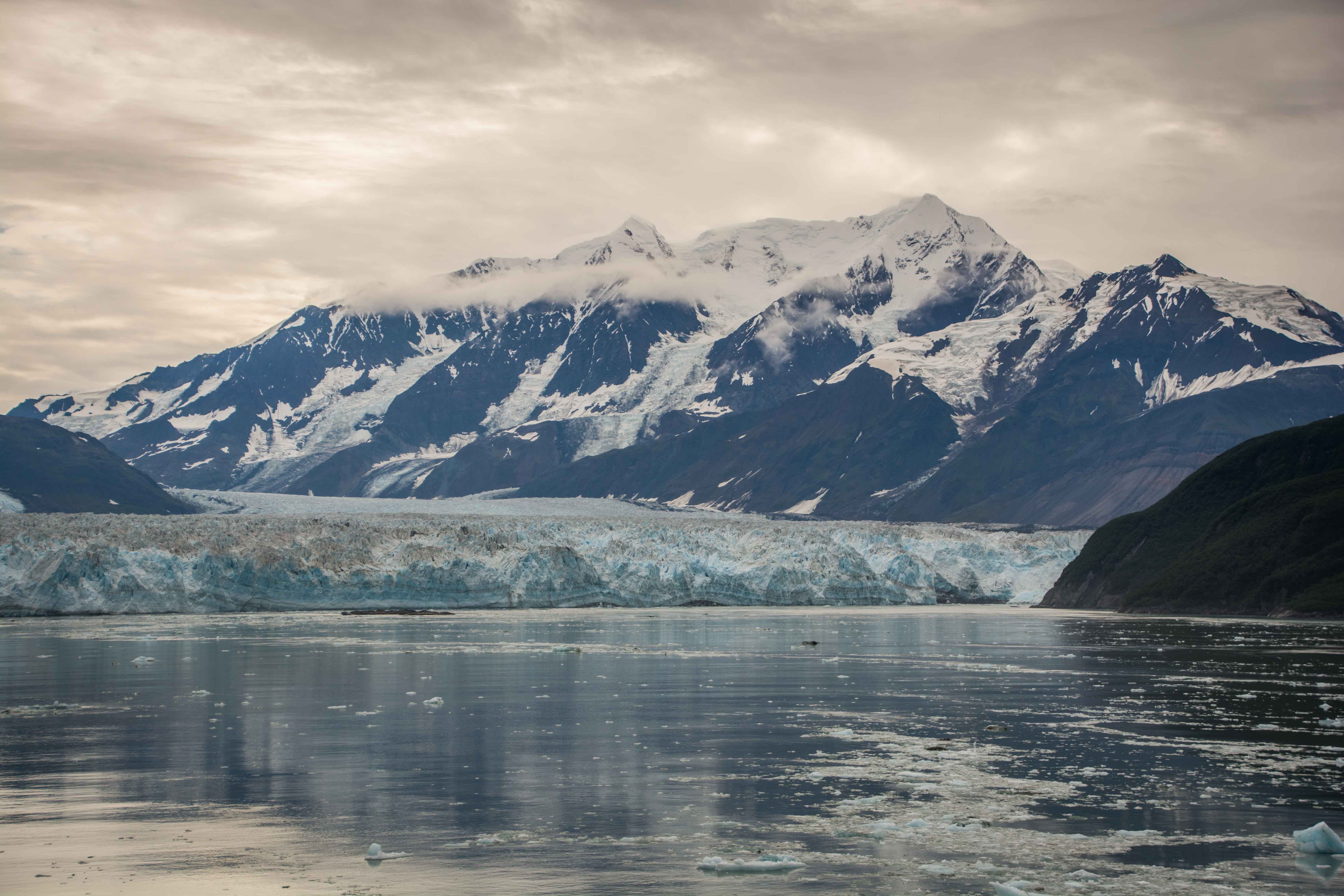
A closer view of Hubbard Glacier

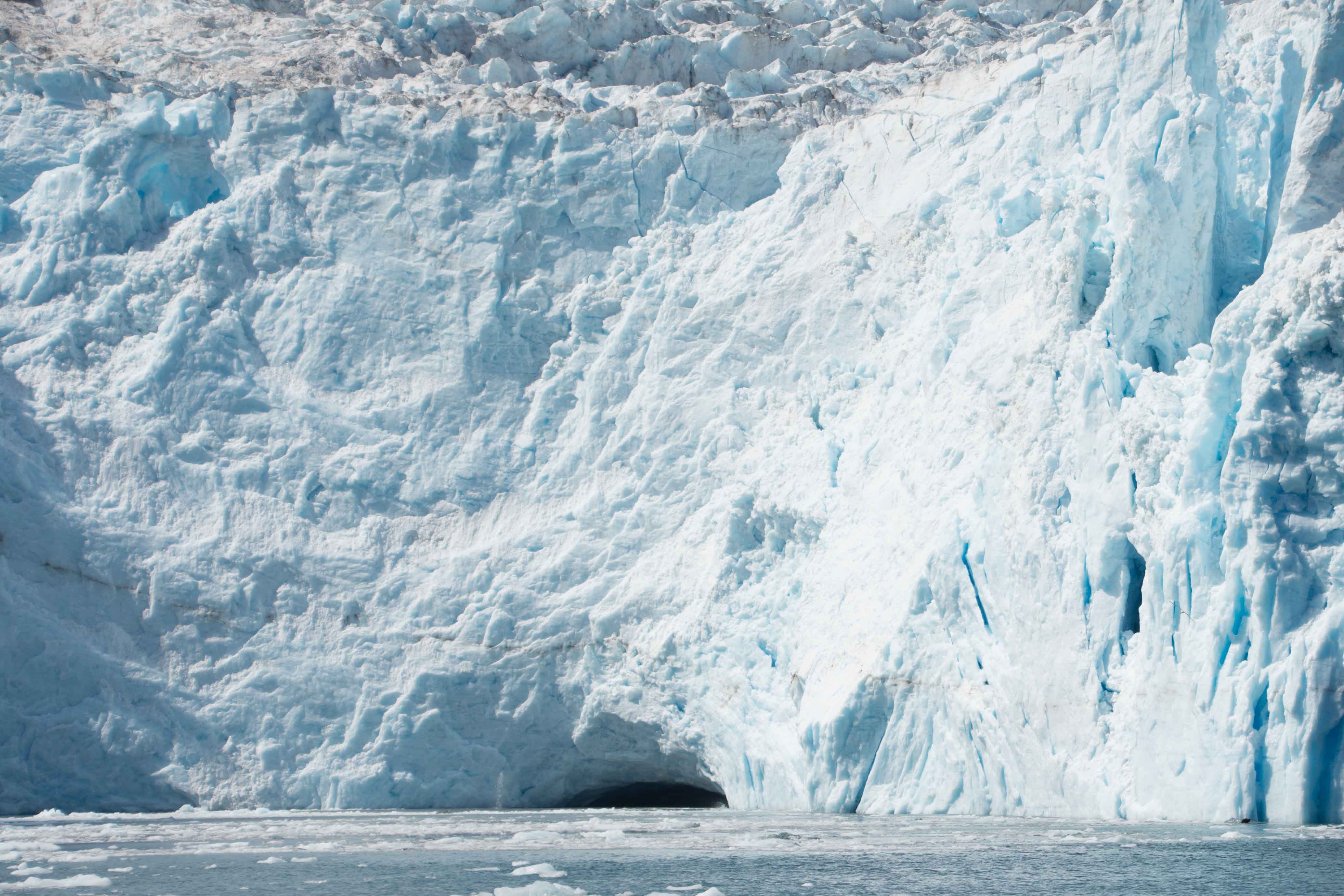
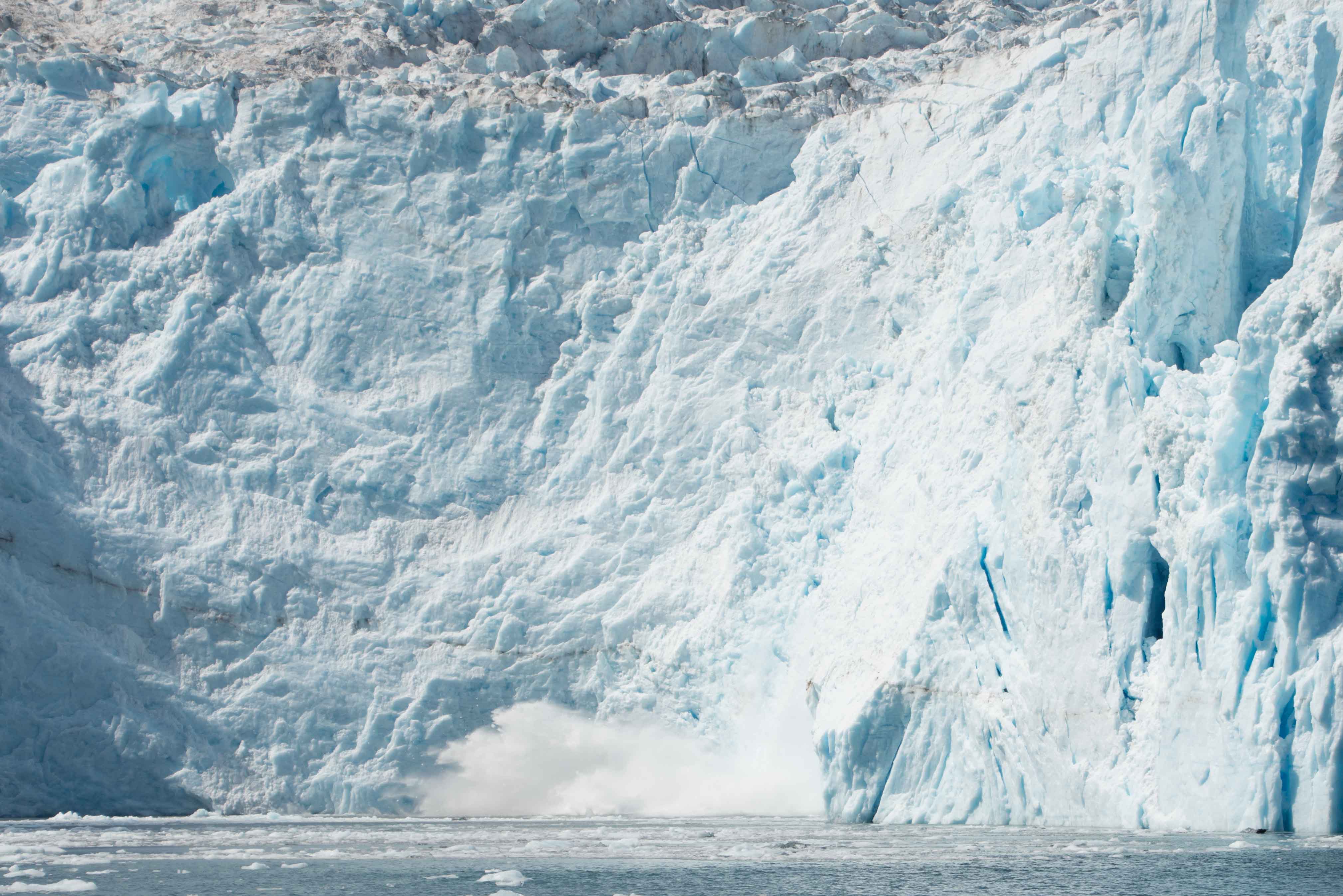
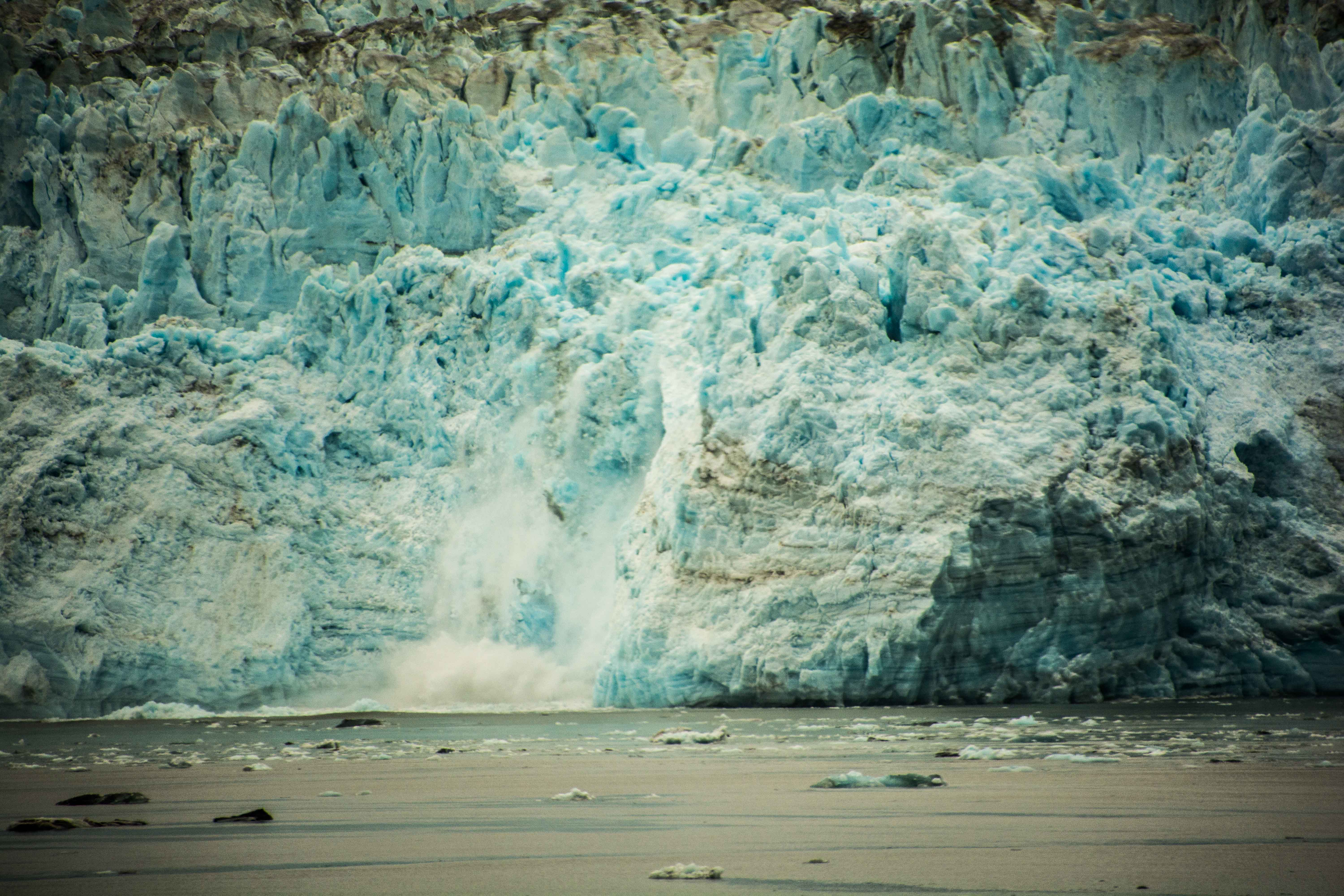
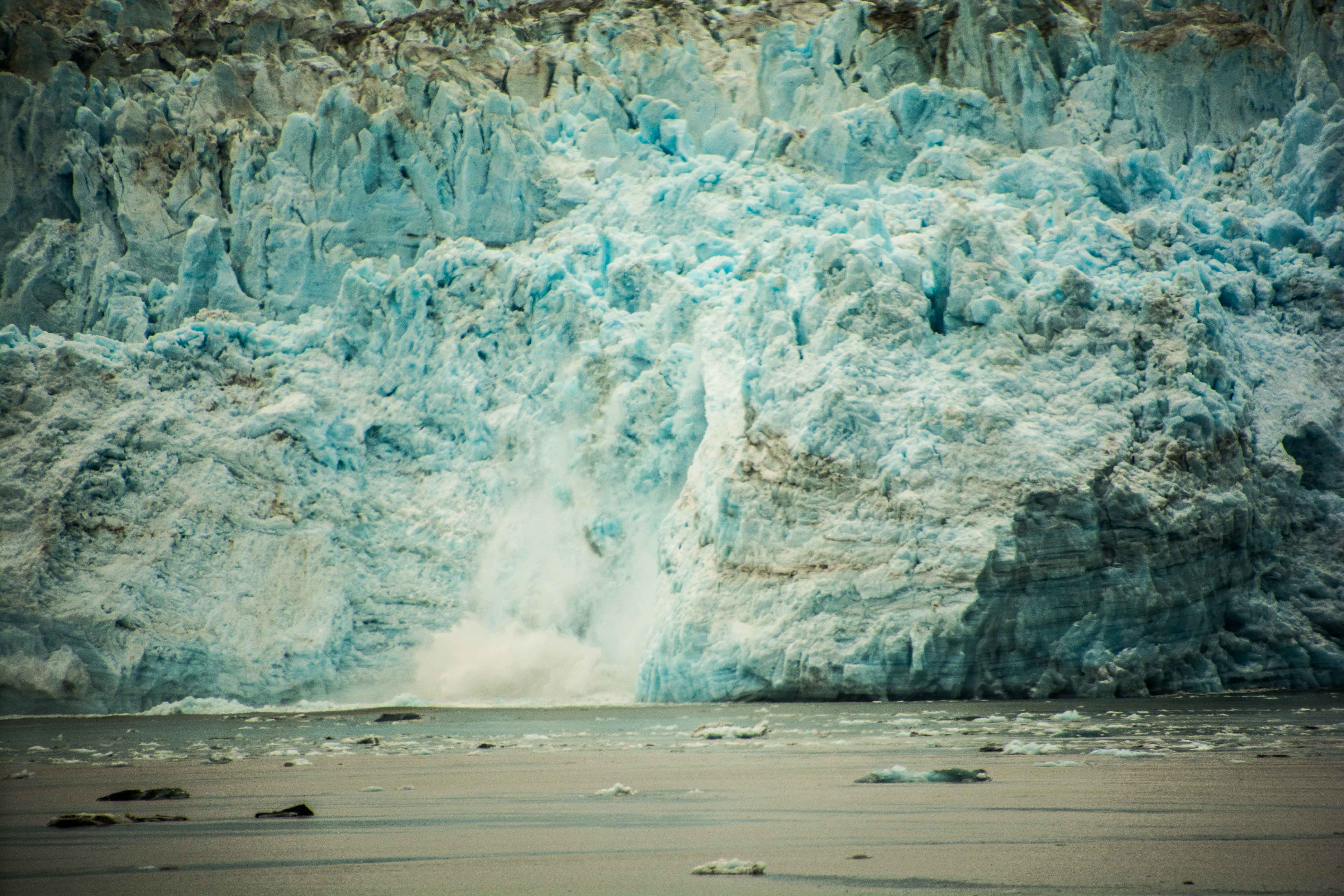
We were up early (as usual), and indeed Terry Breen started her commentary on our approach to Hubbard Glacier at 7 am. We had a spectacularly clear day (not cloudless, but relatively fog-less), and the visibility enabled the Captain to sail the ship to within half a mile of the glacier. It is indeed immense. The glacier is not smooth, as I imagined it, but quite craggy especially on top where the soot of dirt, smoke, and whatever created a gray to black covering that made clear the splits and cracks that marked the top. The main part of the glacier is characterized by the blue color we have now come to expect of the arctic ice, but it is softened by white of snow and / or melt-refreeze that made it seem like a blue creamsicle. Blog-1506The face of the glacier was not smooth, but also had the visage of craggy mountainsides, only with horizontal lines visible through it where dirt layers alternate with the white of snow.  The water we were floating through was full of ice rocks that had come off of the glacier. These small “rocks” helped us to see how the current flowed, as the ocean saltwater went in a giant counter-clockwise path across the front of the glacier. The glacier, Terry told us, averages 700 feet under the surface of the water where we couldn’t see it to tower as much as 500 feet above it.

Unexpectedly, the area was not quiet. The ice gave off snaps and groans as the air and water trapped in the freezing – refreezing process breaks free due to the warming brought by the daylight. Also giving off noise, much louder and deeper are the chucks of glacier dropping off the main glacier face and falling into the bay waters below. Much of the surface area of the glacier is moving, as it melts and freezes at different rates in different places, responding to the ever-changing stresses put on it. Blog-1620 Blog-1621 Blog-1622The sounds of loud booms and wails were audible occasionally, as if large land-based whales were singing their songs to each other through the air. Some of the sound is caused by ice calves dropping off the front of the glacier into the bay. We saw some large drop-offs, not so much as chunks breaking off but rather like sand falling down a steep sandpile raising a high splash as it sinks into the water.

After executing a 540 degree turn to give all a chance to see the glacier wall close up, the Captain aimed the ship back down Disenchantment Bay and we slowly made our way away.

The day passed slowly. We spent a couple of hours in the card room playing bridge, but other than that, we read or napped until time for the crew-based show. The 20 members of the crew did very well, and the show was done with humor and wit, as well as music and dancing. Notable were the couple of bamboo dances that were quite well done.

2 Comments

Filed under Blog

Trip to Alaska – July-Aug 2014: Juneau, Skagway and Haines

26 July 2014 — Tracy Arm and Juneau

Blog-0738

Tracy Arm

Blog-0734

Tracy Arm passage.

Blog-0767

Note the waerfalls.

Blog-0775

Note the low-hanging clouds.

Blog-0725

The deep blue color is characteristic of glacial ice.

Blog-0811

The color of the glacial ice contrasted with the water and land color.

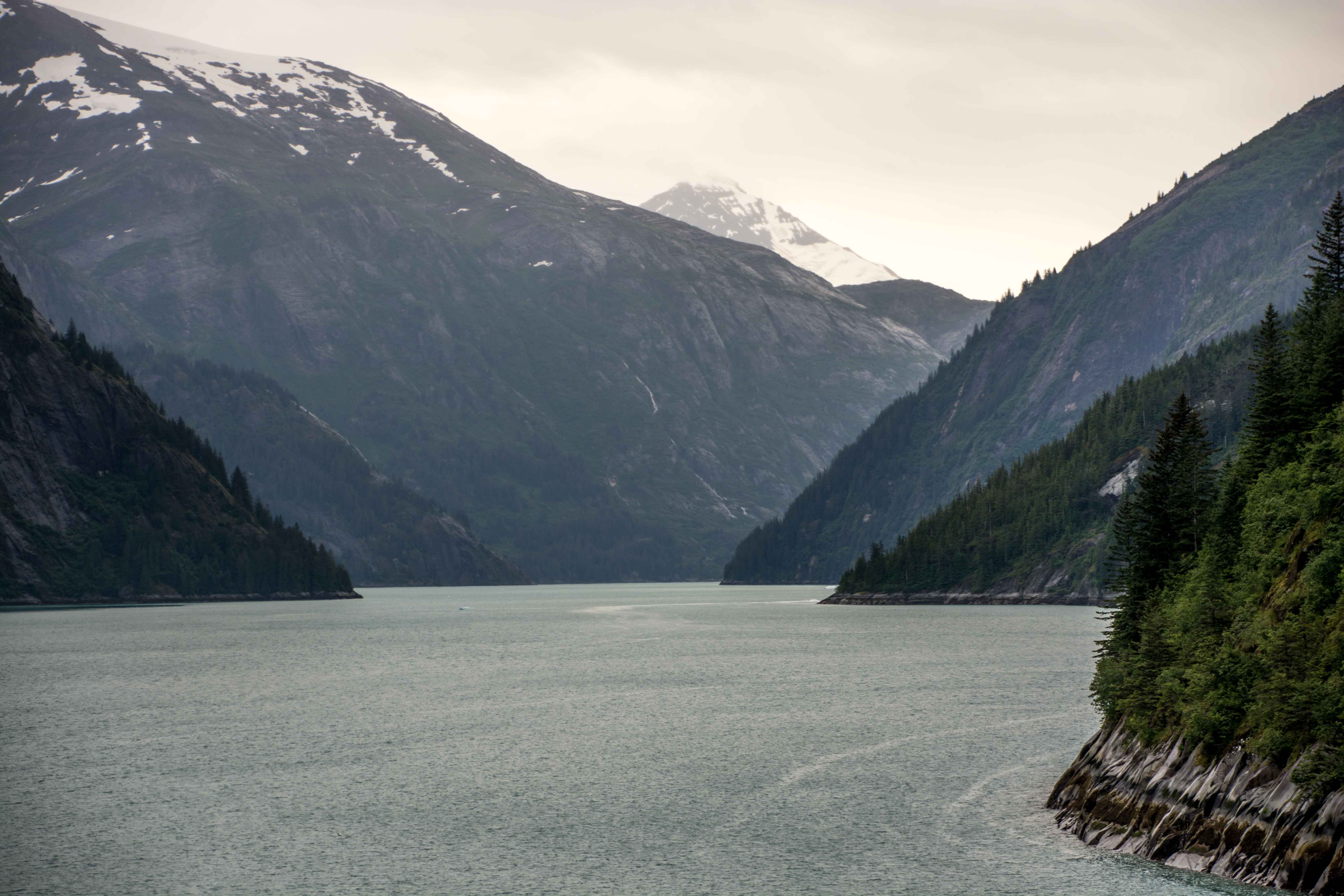
Early this morning, our first adventure is on-board ship, as it goes up Tracy Arm, a fjord structure that provides some spectacular views. Like most of this coast of Alaska, Juneau resides on an island.  There are many islands, and many of the water ways that surround them are fjords where glacier water meets sea water.   Many of the water ways around the islands were carved out by glaciers, and they have high almost vertical sides that grow from the carved trench floor and soar well above the water line.  Tracy Arm is one of the ones near Juneau, and because of its depths and widths, it is easily navigable, even for large cruise ships.

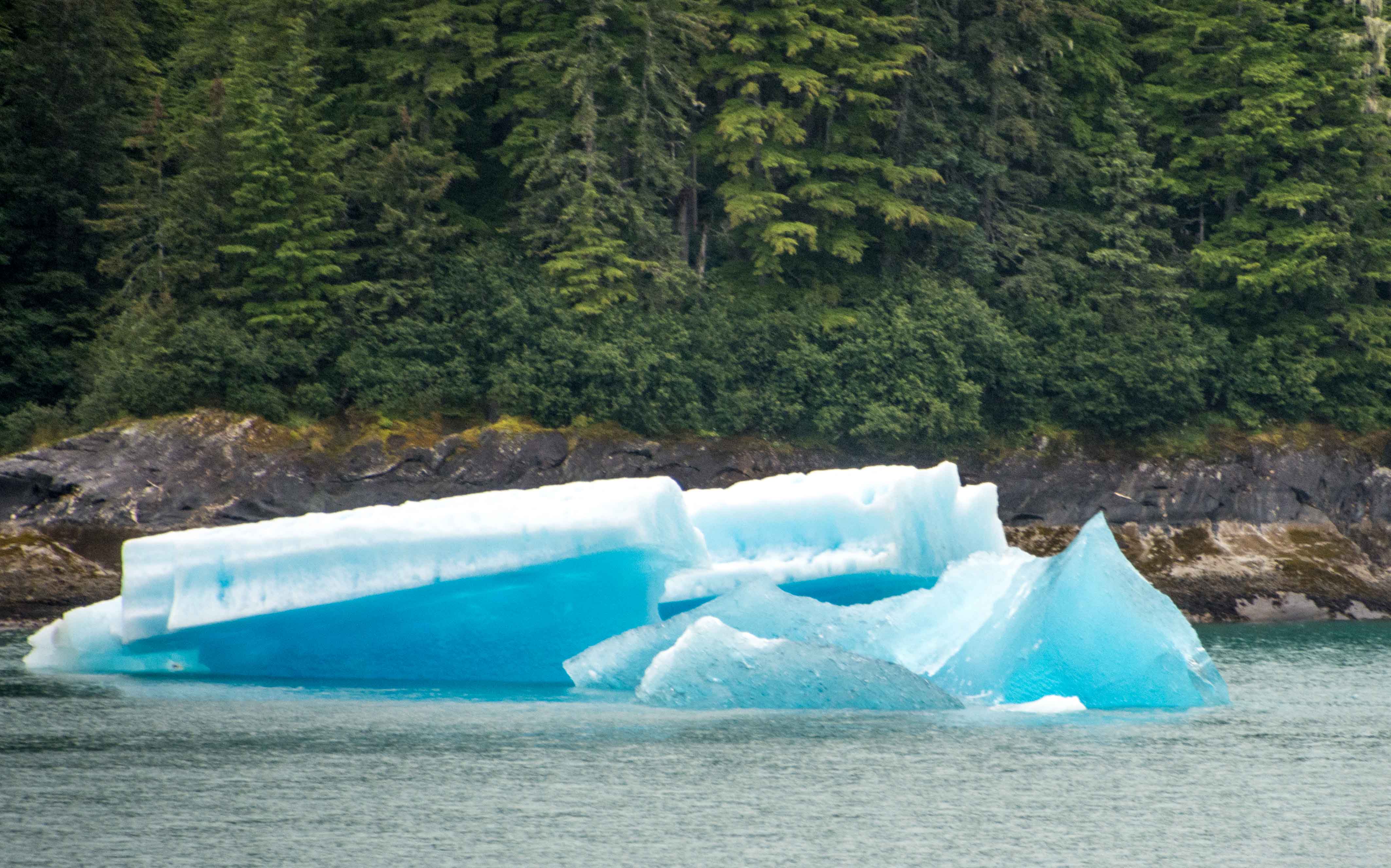
Tracy Arm averages 1.5 miles across and 1000 feet deep. Characteristic of fjords (so they tell me), is the narrow, deep structure, where it appears the walls are mountains sinking into the water.  Every so often as we motor along, the ship pases large  ice lumps floating in the fjord, or parked on the sandy silt which in many places borders the water. These “calves” of glaciers have broken off, and floated to their current locations as the currents dictate. The striking thing is the deep blue color they evidence.

Blog-0834

In our travels the stratified low clouds create fascinating patterns.

Blog-0757

The green water color is caused by the reflection of the light off the trees, the depths of the water, and the silt that comes from the glacier melt as it frees up the matter it has ground down from the land it travels over.

Our resident expert tells us this is due to the unique crystalline structure of the glacier caused by the immense pressure under which the ice is formed (heavy weight of the ice and snow above pushing the air out of the ice as it is forms and reforms). Glacial ice formed in this way absorbs all the colors except blue, creating the deep blue result. The waters in the fjord are also a unique color, a turquoise blue-green which our expert tells us comes from the depth of the water, the reflections of the pine trees, and the trace minerals in the water from the run-off.

The walls of the canyon are in places sheer drops, but mostly tree covered slopes with the occasional stream popping out of the rock and running down to the fjord proper. Beautiful stuff, and a convincing excuse to get the photographer in us (many of us) out in full. As we ride back down Tracy Arm, one of the more striking features are the clouds that hug the shoreline. I’m looking now at a white fleecy line of cloud about 10 feet think, and 10 feet above the water. Hovering above it is another ribbon of white this time three feet deep and fuzzy at the top, with wisps of white between them. Below the original layer are occasional small clouds, enough to be very noticeable. This cloud structure appears to cover only the first 20 feet out from the coast. The ridges behind the clouds stand out starkly in green and gray.

Now its on to another lecture by the expert, Terry Breen, this time on the native peoples of Alaska. Not the most interesting lecture, but she does put in a lot of good information on the four native groups that share Alaska. The ones we saw yesterday and today are the Tlingit. Anyway, we then got lunch while the cruise ship was landing at Juneau and then it is off to the Whale watching excursion. The group running this event are called Allen Marine, and through luck, or skill, or some combination, today’s watch was unique.

We spent some time getting out to the boat, and then the boat got about half an hour out along the river (the area is basically water and islands, so it is impossible to tell if it is really a river or just part of the broader body of water that surrounds all the islands). Then to everyone’s amazement, including Jeff the resident biologist, we were able to see 11 hump-back whales come up at the same time, having executed their prime feat of teamwork, bubble-net feeding. In this maneuver, one of the whales spots a large school of small mackerel or krill, their primary food, and notifies nearby whales using their characteristic singing. A group of whales gathers (they are not necessarily a family unit, nor do they necessarily feed together in a pod normally, but having heard the song, they gather.

Blog-0993

The humpbacks can get quite far out of the water. How many noses can you see?

Blog-1031

This is the last time we caught this particular group.

Blog-1099

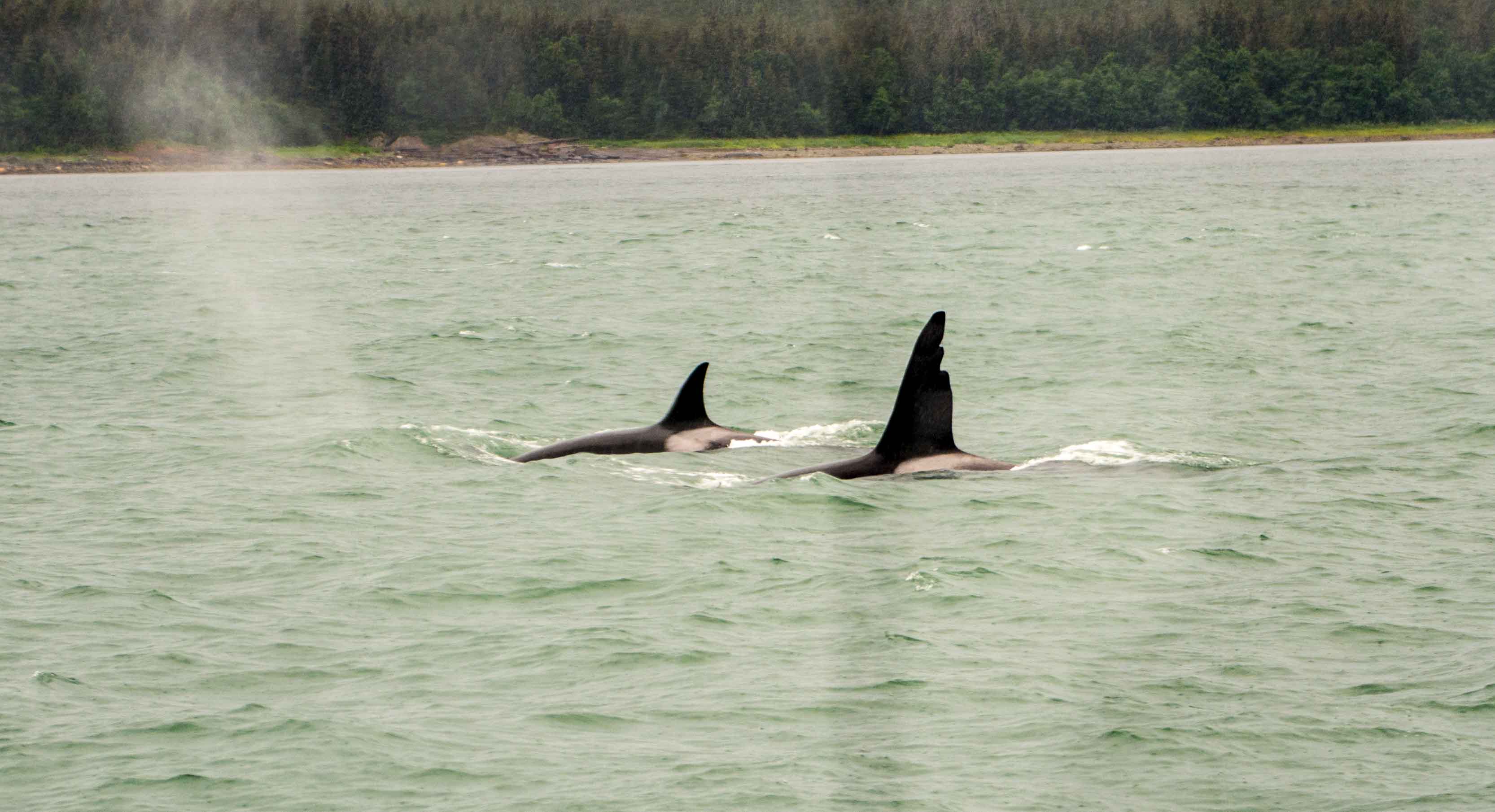
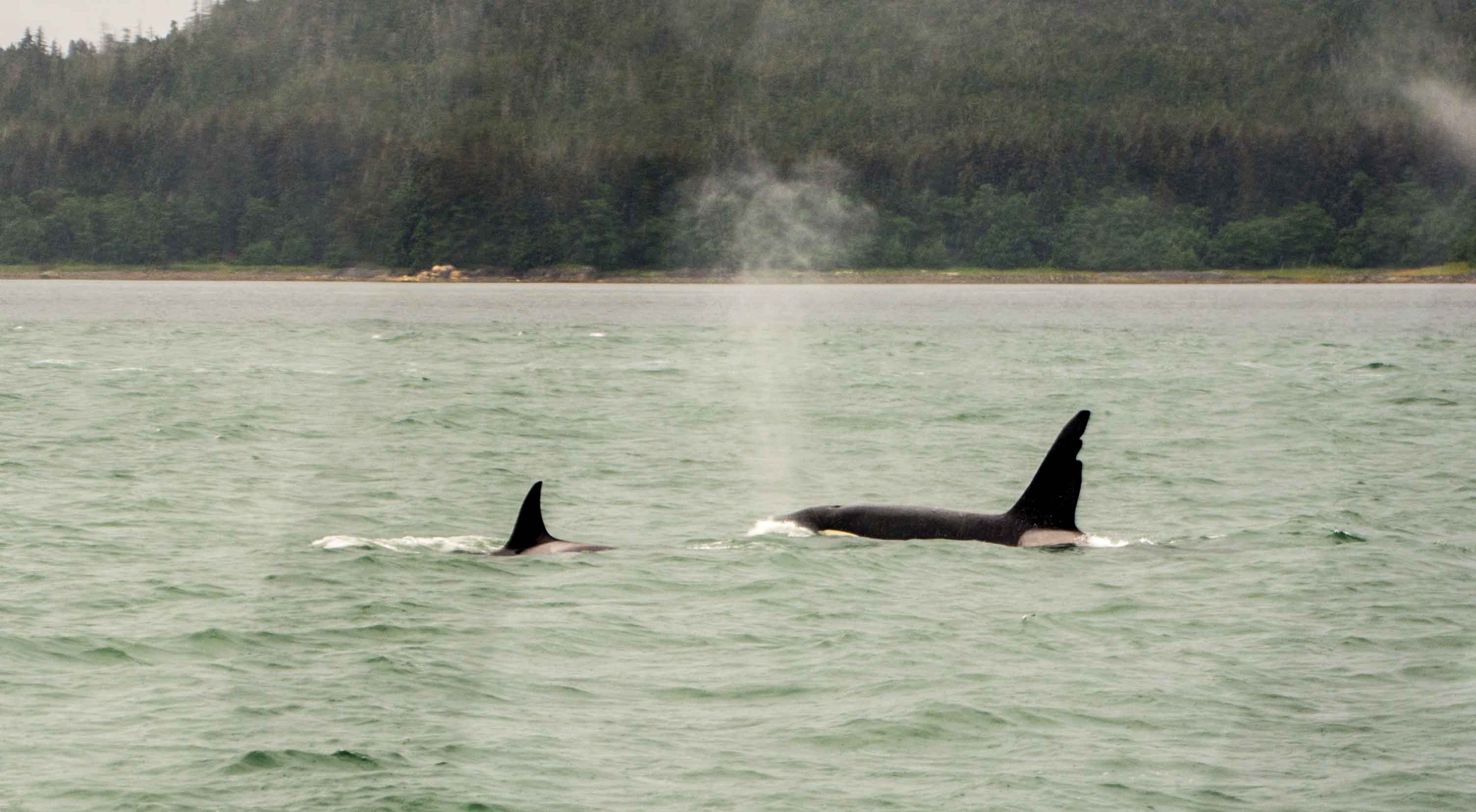
Killer whales; a dad and pup. They appear to be enjoying themselves.

Blog-1097

Killer whales. “Son, this is how you do it…”

Blog-1068

This is a lighthouse in the area we were passing as we sailed to and from the whale watch area. Not a place I would want to live!

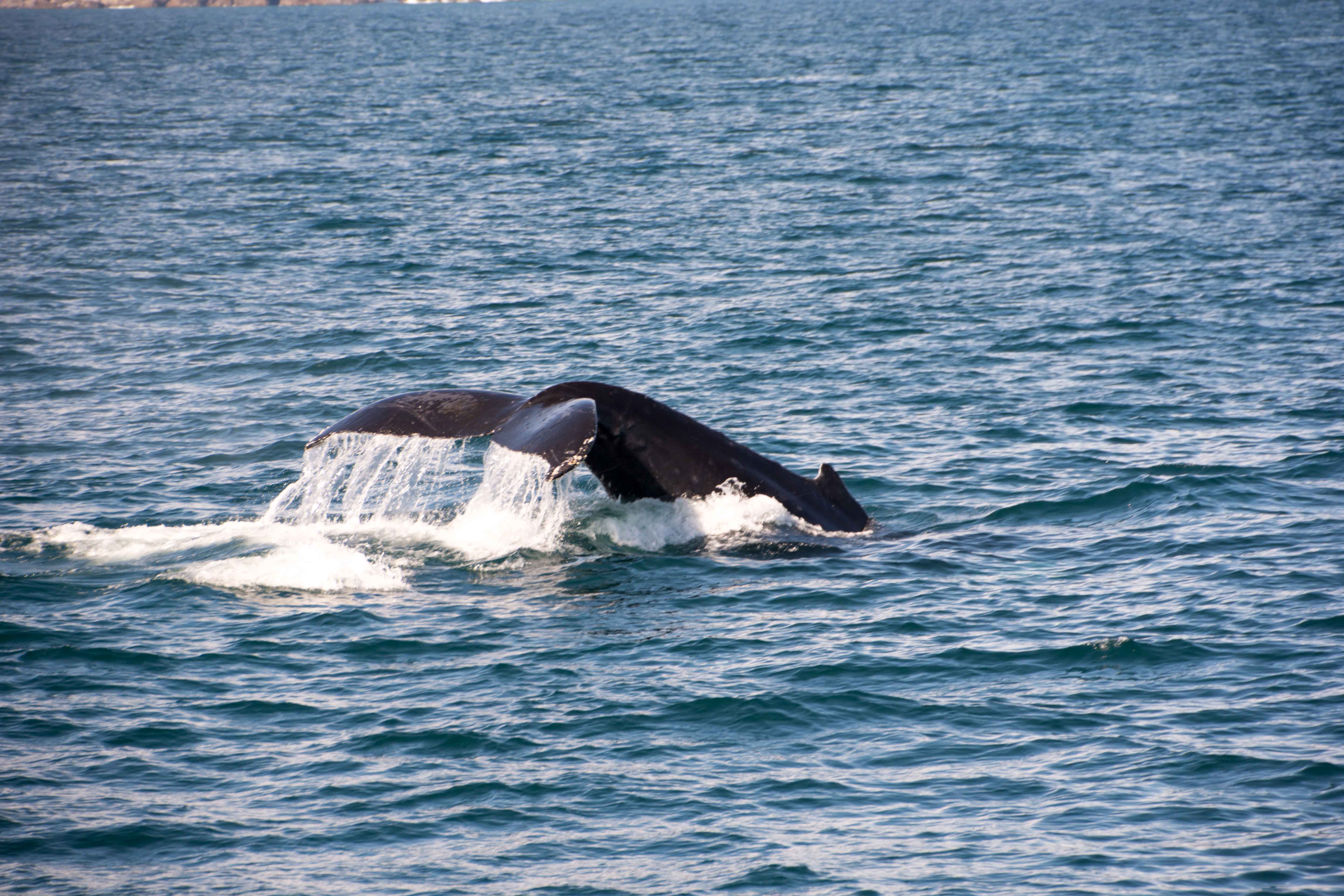
One or two go down beneath the school and using a spiraling motion they rise up exhaling a net of bubbles as they go. The fish do not like the bubbles, and their natural reaction is to crowd together.  Anticipating this, the whales swim up from below the “netted” school and scoop a large mouthful as they rise through it. The scene we’re watching for on the surface are the noses of the whales all of a sudden breaking through almost simultaneously.  Many birds are flying over the area, trying to catch a fish jumping from one of the whale mouths.   The whales upon completion of their grab, strain the water-fish mixture through their baleen as they settle back into the water.  They blow air from their lungs, surface swim for a short while to get their breath back, and dive again, which can be seen as their tail fins come out of the water.  When all are ready, if they are still hungry (which they are), they go for another round of the same exercise. We stayed around the first group we spotted watching them do this four times. The Captain then decided enough was enough and took us in search of other attractions. Sure enough it wasn’t too much later that we spotted two Killer Whales traveling together around the same area. Killer Whales are a matriarchal society, usually, but the larger of the two we saw was a male who was well known to Jeff, who tells us he is at least 40 years old, and has usually been seen alone here. These whales summer in Alaska to fatten up on food, and then go south to Hawaii, or Mexico to mate and have their calves. So it was quite s surprise to find this male with a lone female up in the feeding area! Whatever the reason, we were happy to see them. We stayed with the two as they came up for air and showed their dorsal fins at least three times. Then, on our return trip to the dock, we happened on another (or it could have been the same) group of hump-back whales doing the bubble-net exercise again. We watched them through a full cycle of this, and then sadly had to get back to the dock. To get an idea of how unusual this was, they told us that they were lucky to see bubble-netting once or twice a season, and Killer Whales maybe once a month in summer.

Once back aboard the ship, we went to our favorite restaurant, the Compass Rose, and had a marvelous roast pork (for me), a steak au Pauvre (Gwen) and shared an exceptional Coq au Vin. It is one of the joys of cruising that you can order more than you can eat just so you can try things (well, within reason). All dishes were tender and tasty. I’m gaining weight by the day, I’m sure, but fortunately, there are no scales to tell me how much.

27 July 2014 — Skagway and Haines

Breakfast was early this morning, as we had to be out for our tour at 7:20 am. We breakfasted in La Veranda, as it is the earliest one open. The ship was just finishing its docking procedure in Skagway as we were eating. The special of the morning was eggs benedict, which tasted nicely of the hollandaise sauce they used.

Skagway harbor provides marvelous illustration of the low cloud formations we have been treated to all along the cruise. The clouds start almost on the surface with a layer only as thick as the height of the cloud above the water, then a thinning, and then back to thicker whiteness as it goes up. The view is of bands of white overlaying the mountains in the background.

Blog-1146

Skagway harbor

Blog-1174

The cloud formations are fun to watch.

Blog-1190

From the ferry, more clouds cover the mountains on the side. Note the falls behind the clouds.

Blog-1212

On the opposite shore, a sea lion tries to get some rays.

Blog-1232

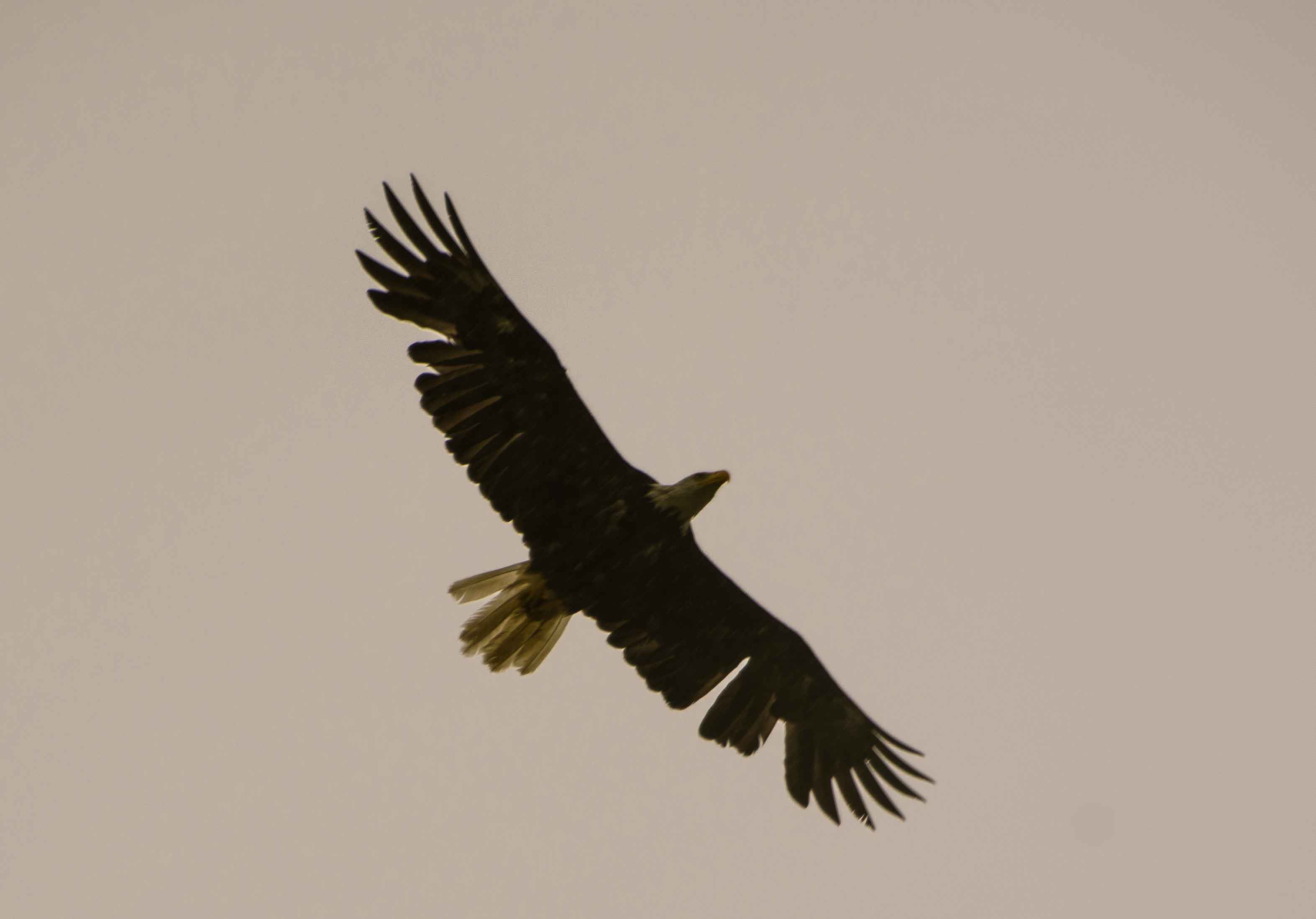
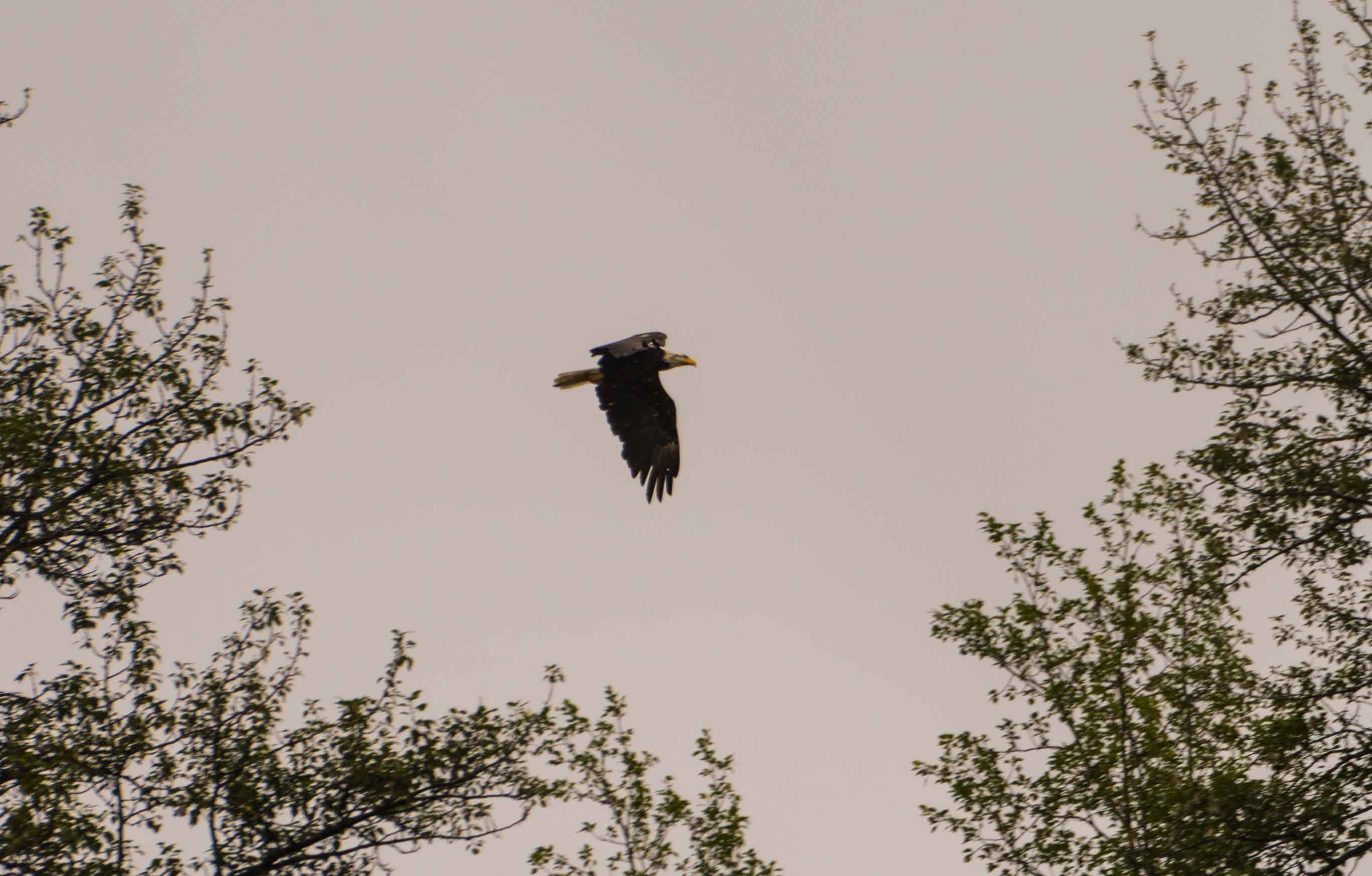
A Bald Eagle soaring overhead as we floated upstream.

Blog-1236

The same bird from a different angle.

Blog-1242

The eye test. See the moose? Is it male or female?

The 600-lb eagle's nest

The eagle’s nest where we were hoping to see eaglets. We never did, but hopefully they were just napping.

Blog-1287

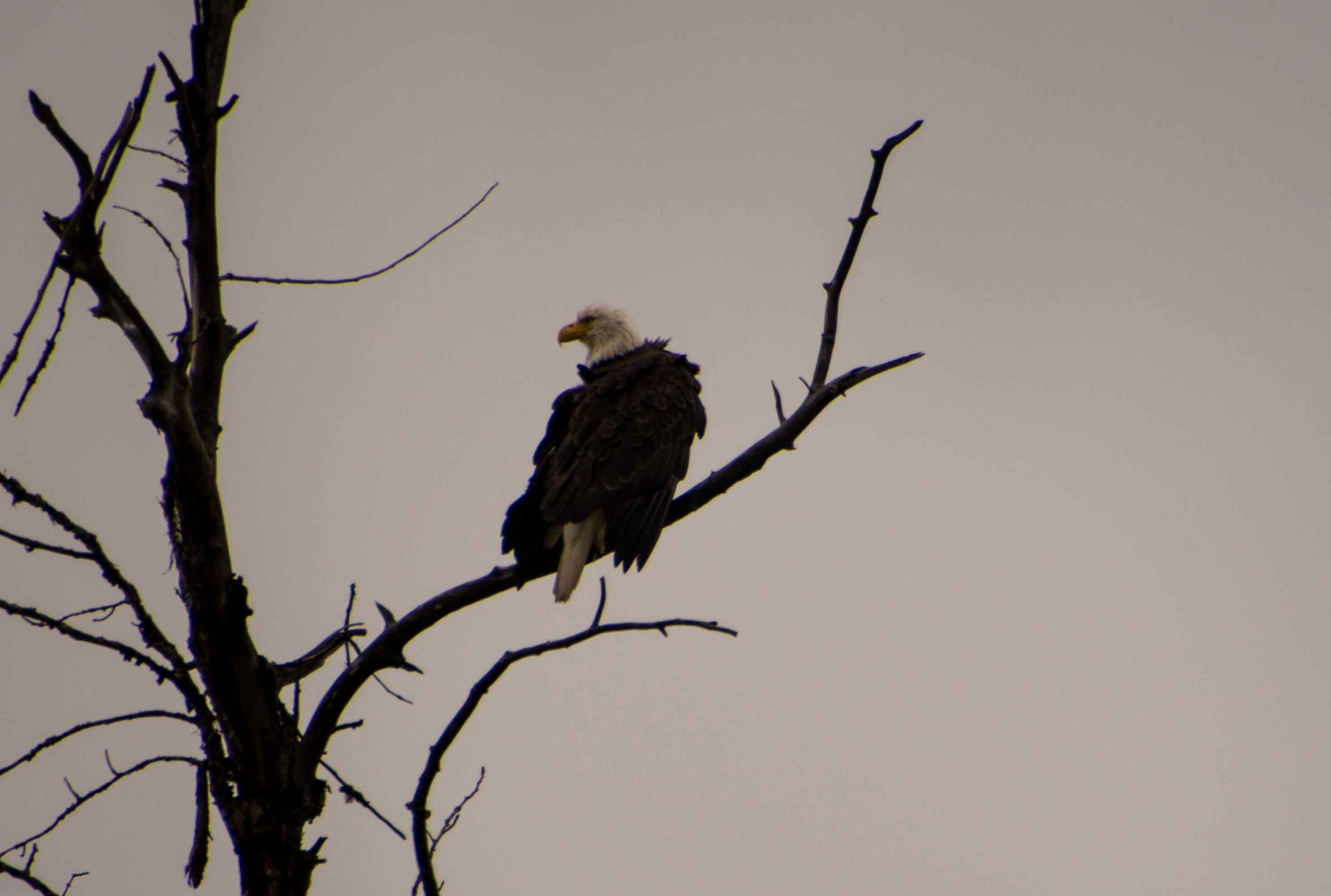
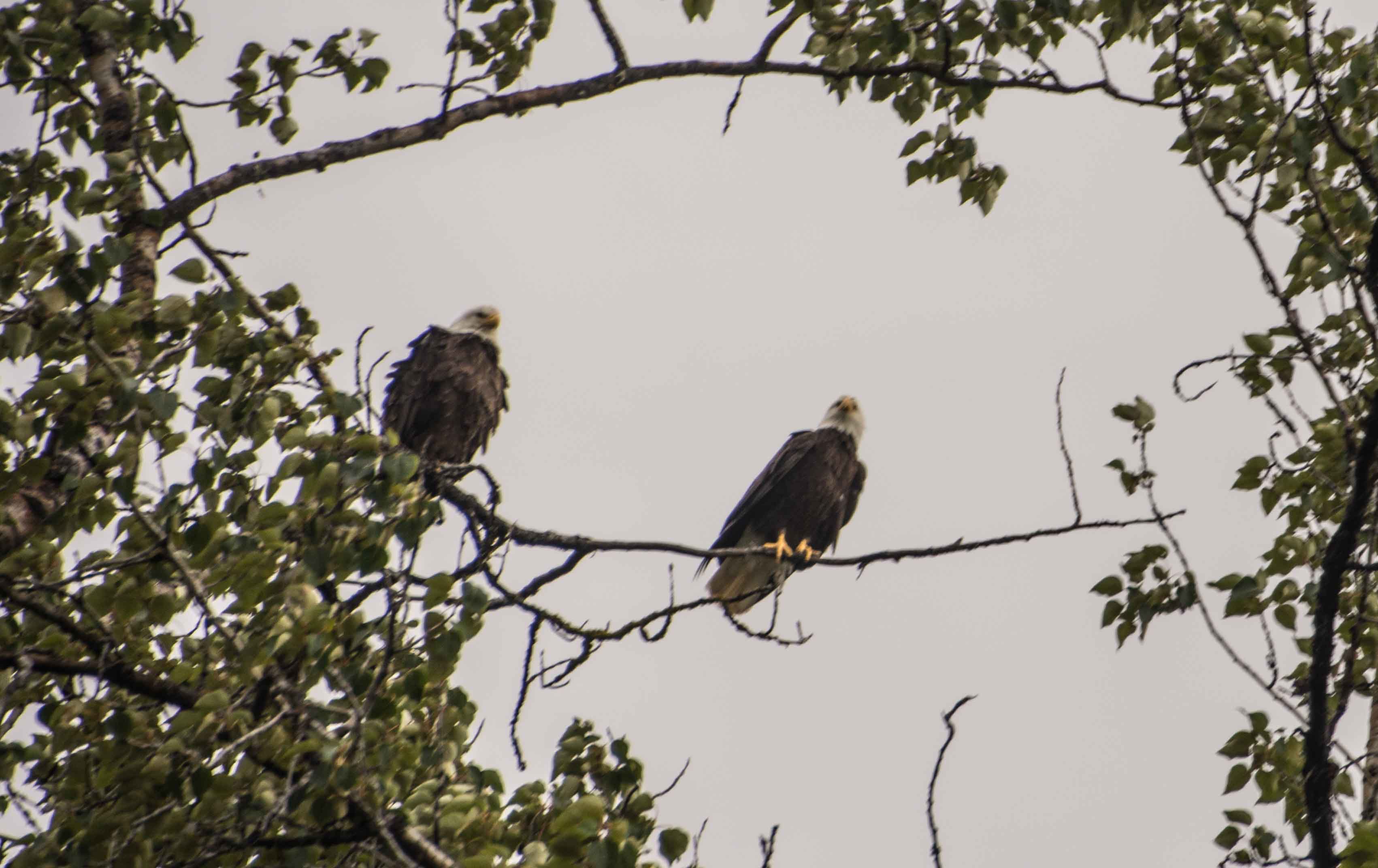
The mom or dad eagle was resting on a cottonwood tree nearby. Our guide was sure this was a parent, as they don’t allow other eagles within a mile of their nest.

Blog-1306

On the way back to the dock, we saw this pair of eagles.

The excursion today is a river boat trip to view eagles, bears and moose in a huge eagle preserve. Getting to the preserve is a long trip.  First we have to take a ferry to Haines, about 40 minutes from where we are, and then a bus ride another 30 minutes to get from the Haines harbor to the preserve.   The excursion itself was very well run — they provided jackets, ponchos and blankets, as well as gloves and earmuffs for us to wear to keep out the cold. It was a rainy morning, and all the extra gear did help. The river we traveled was wide, but not very deep, averaging only about three feet. Fortunately, about half way into the boat ride, the rain stopped and the clouds began to break up, so we were able to dry out a bit. Unfortunately, we didn’t see much wildlife, in total one moose and five eagles. The moose was spotted in the bush by a very observant fellow traveller, but once spotted, the driver/narrator kept us nearby until we all got to see it. It took both Gwen and I awhile to spot her, as she (we were assured that the males were not in the area at this time of year) was partially hidden in trees and was sunk in to her haunches in the grassy marshland. She was not anxious about us, at least not so we could see, as she was calmly pulling bark from the trees nearby and eating it, even as she looked in our direction. After about 10 minutes, she took one last bite of bark and slowly ambled off away from us. There were four eagles we saw by happenstance as we were motoring along, and one we went in search of. The latter was one of a pair who watched over a large nest that we were assured had chicks in it. When we got there, the nest was clearly visible, but no chicks poked a head above the edge, as we were led to expect. We pulled up the river another 100 feet, and sure enough in the top of a cottonwood tree was one of the nesting pair. Hopefully the chicks (two of them, we were told) were just taking a nap, and were not victims of one of the many predators that are part of reality in this wilderness. The narrator was surprised to note the lack of chicks, and will in due course determine if they are gone or just sleeping, but we are not to know. The nest was a huge affair, also in a cottonwood tree, that we were told has been the home of the pair for seven years. They continuously work on it, and he estimated the size of the nest at 600 pounds. Eagles mate for life, and will establish one or two nests which they maintain and return to year after year. The second nest is a backup in case the first fails. Cottonwood trees are not as solid as spruce or hemlock (also common in the area), but are favorites of the eagles as they grow near the water and favorite feeding sites. I got some pictures of the eagles we passed, so we’ll see which ones turn out. After the return to the dock, we were served a hot vegetarian chili and hot dog, along with a hot drink of choice. After saying our goodbyes to the tour guides, we reversed the trip to get us back to our cruise ship.

The overall experience was not to be compared with yesterday’s whale watching, as we were not so lucky as to see so much of what we were looking to see, but Gwen can now claim to have seen a moose in the wild!!

Tonight’s entertainment is “Le Cirque Navigator”. The production company has a man and woman who do acrobatics on hanging cloth, on rings, on each other, and bring it off with fantastic grace and style. In addition, there is a couple who do ballroom dancing in the style of the competitions. Both of these couples are incredibly limber. Especially the women. The young gymnast can stretch herself into pretzel shapes, twisting and turning in several directions at once. These two couples were the focus for the show. The others were there (two lead singers, male and female, and four more dancers, one male and three female). The male dancer does tap and Irish clog dancing with fantastic skill, and that was on show as well, The other women dancers handled the tap and clog dancing, but their talents supported the ‘stars’. It was a great show.

Leave a comment

Filed under Blog

Trip to Alaska – July-Aug 2014: The Cruise Begins

This is the diary of our trip to Alaska, starting with a cruise up the west coast from Vancouver, BC in Canada to a number of stops in southwest Alaska.  After the cruise, we went on a “Planet Earth Adventures” trip with ten other people who quickly became friends and traveling companions.  That trip was led by the owners of the travel company, Albert and Marlene Marquez.  Gwen set up the whole trip with Albert, and having now completed it, I can honestly say she did an excellent job.

22 July 2014 – Leave MI and go to Vancouver

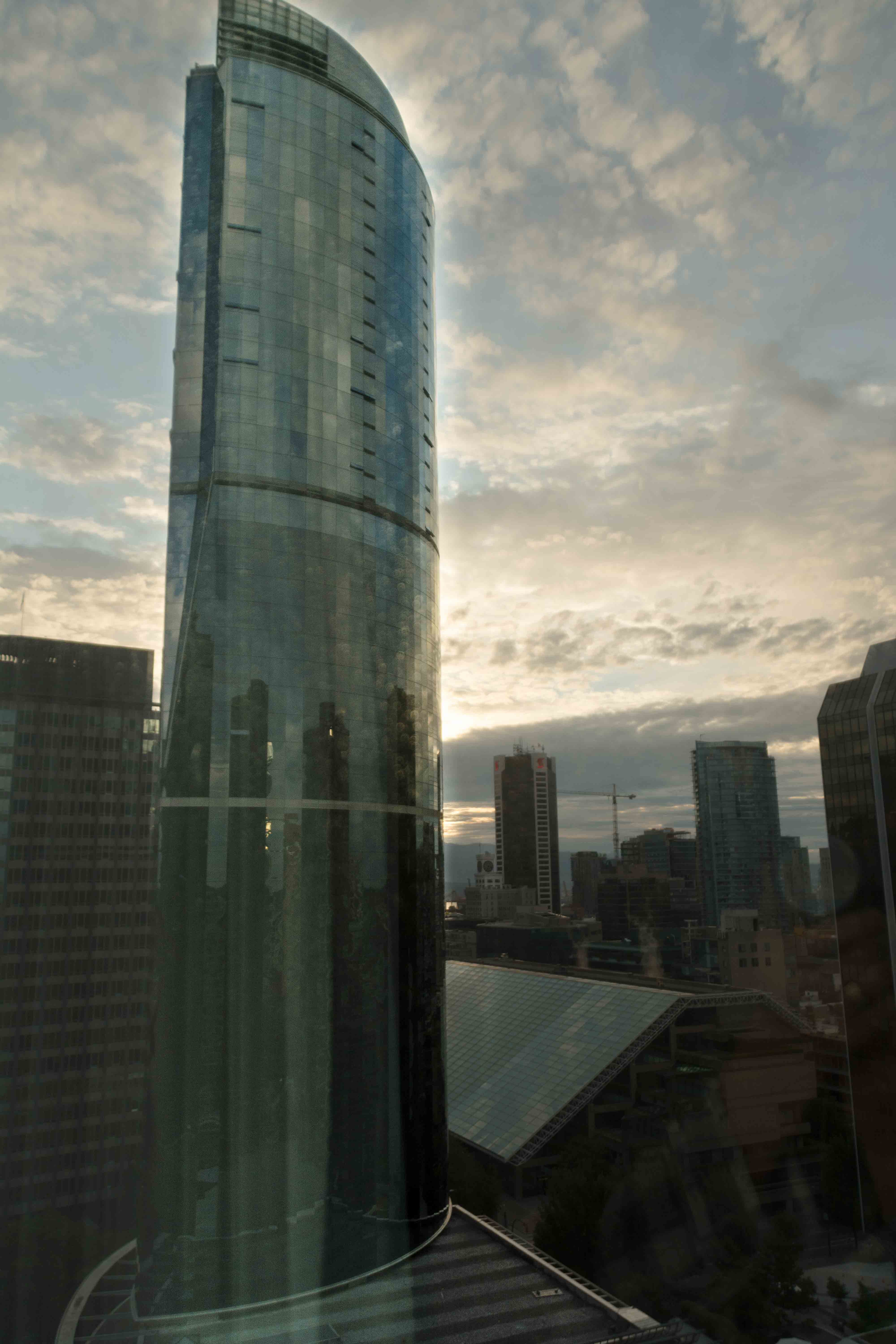
View from our Vancouver hotel

View from our hotel in Vancouver

Measured on the scale of “did we get there on the day planned?” this was a good trip   The journey to Vancouver via American Airlines is a three-part plane ride. We arrived at Flint thanks to Hank Kerr with plenty of time to spare, and happily the plane departed on time. The plane to Chicago arrived on time, and the wait there for the plane to Dallas was relatively short, and retained the original schedule. Once in Dallas, however, the trip ground to a halt. Four extra hours wait and one terminal transfer later, however, we were on-board the third plane of the day (a different plane than the airline had originally intended), and heading to Vancouver.   Arrival was much less effort than anticipated, as despite the late hour, there were plenty of taxis to take us to our hotel.  Without further delay, we got to our room, and dropped into bed.


Blog-0188

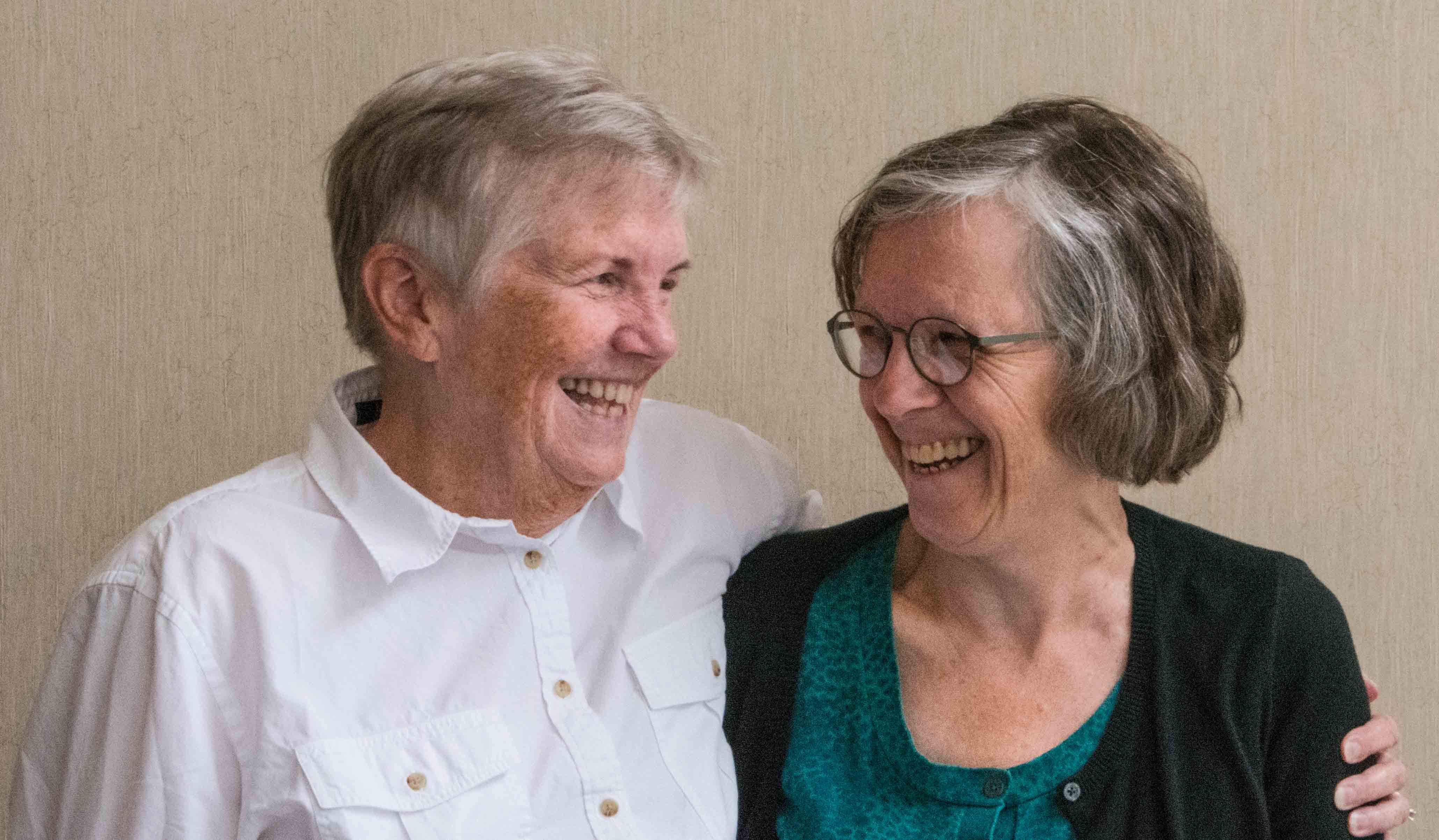
Gwen and Ann

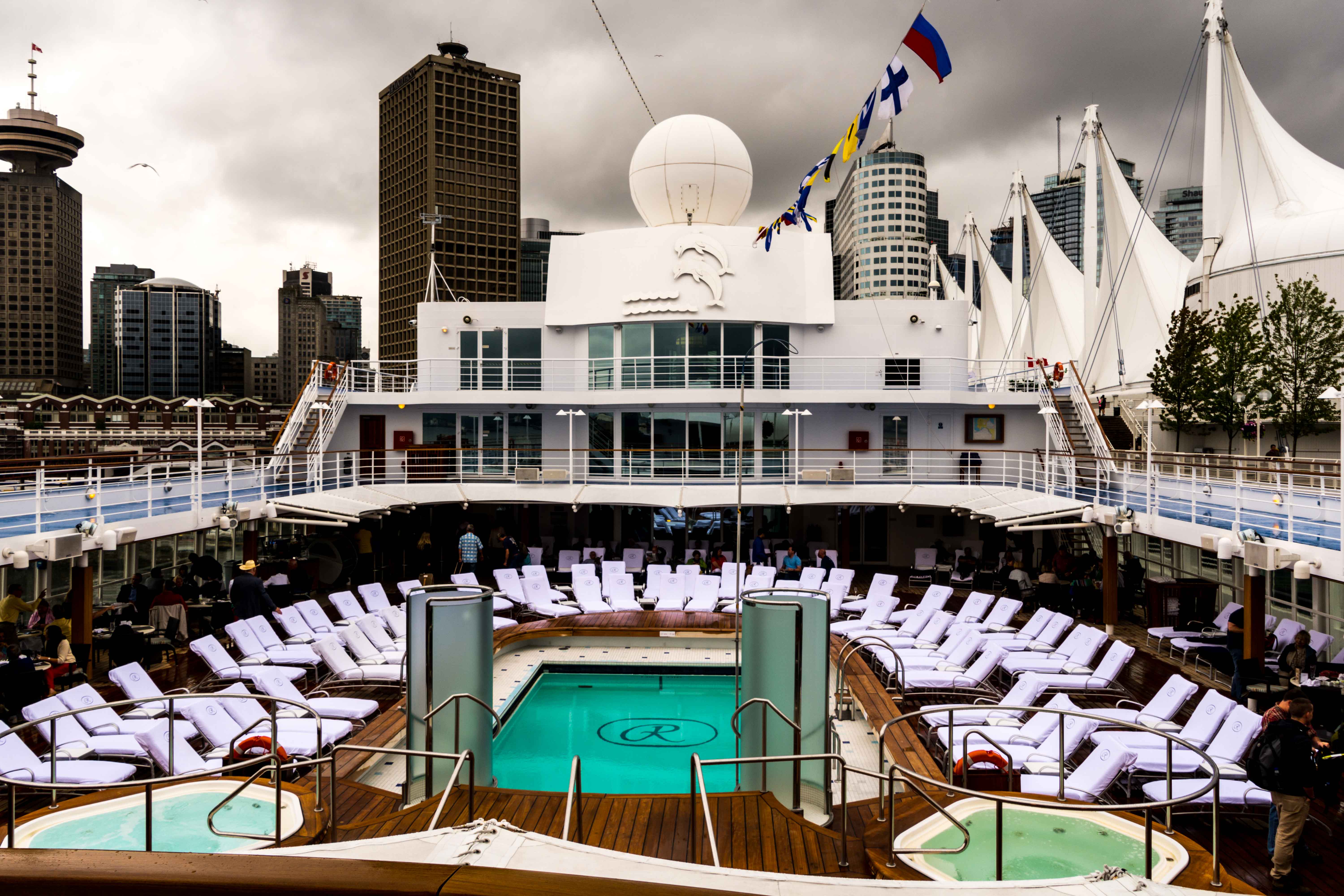
On bard ship in Vancouver harbor

The Vancouver dock where our ship is moored

23 July 2014 – Vancouver onto the cruise ship


Blog-0202

Outdoor swimming pool on board our cruise ship

Blog-0222

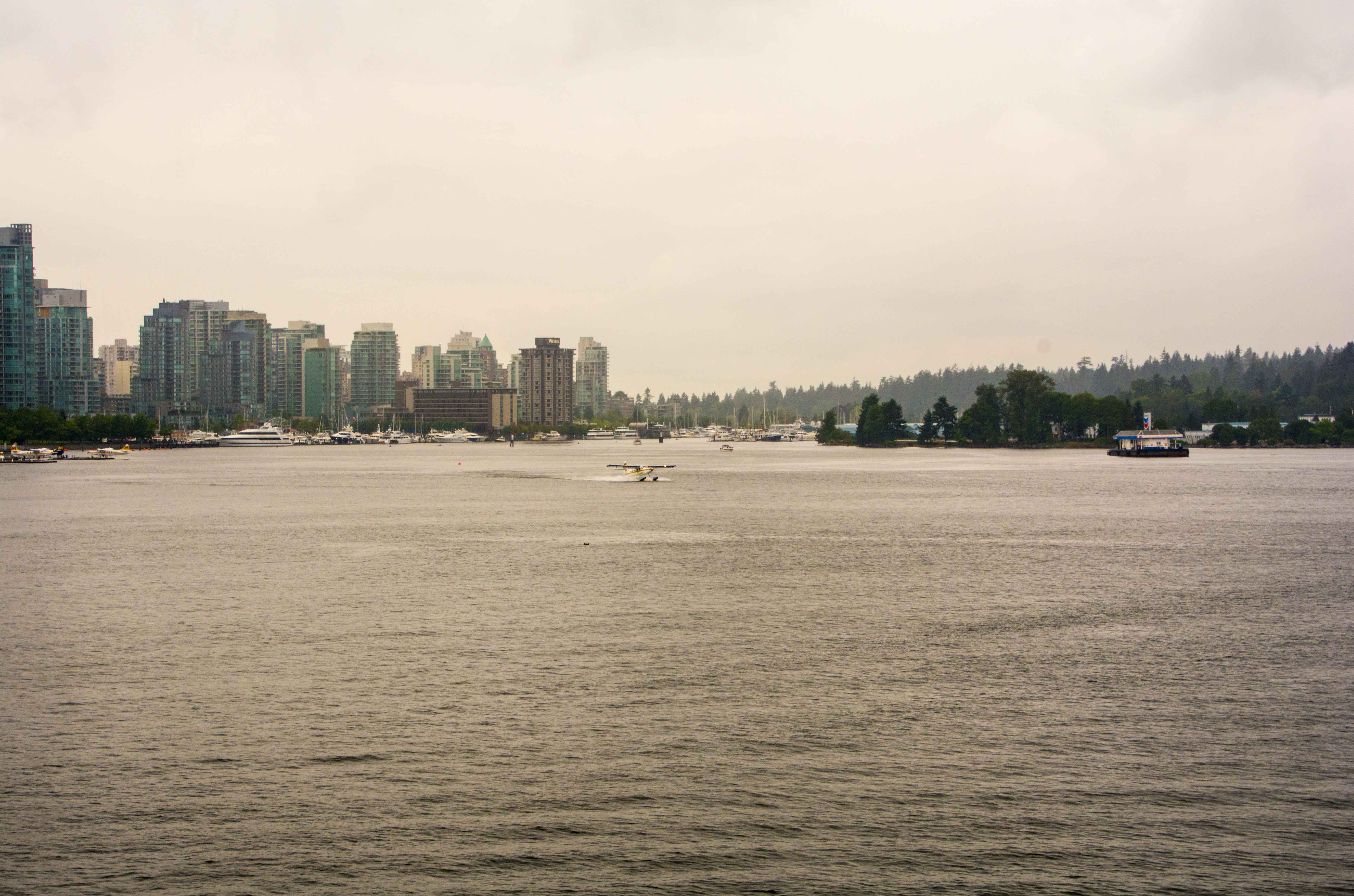
Vancouver harbor. Note the seaplane. These were a common sight in the harbors we visited.

Gwen’s cousin Ann, who lives in Vancouver, met us at our hotel, and we quite happily talked until we had to board the bus to take us to the port to board the Regent Seven Seas Navigator. This cruise ship is larger than the one we were on in the Caribbean at the end of 2012, as this ship has on board 400 passengers and 300 crew, versus 200 passengers and 200 crew. This ship is still small enough to have reasonable service, but larger so it can handle the waves better (at least that is my hope).


Once checked in, Gwen immediately unpacked us, and we were off to do something we were to find the staple of our time on board: eat! We had a nice lunch, and relaxed until dinner. We had dinner reservations in their premier restaurant, which indeed was premier. The steak and lobster was superb, while Gwen’s prime rib was also very good.

Tomorrow is a slow day, as it will be spent on board as we steam along at 15 knots up the coast of British Columbia toward Alaska.

24 July 2014 – Up the coast of British Columbia

An easy day. We spent the day reading, and helping put a puzzle together. We also explored the ship, but not much else. We were a bit worried, as it was just this kind of sailing that got me seasick on the Caribbean cruise, but dramamine did its job, and I didn’t have a moment’s problem. This cruise had its opening social foray, a “block party”, at 5:30, and we went out into our hallway, and met some very nice people. We have since seen several of them in our excursions, so it was worthwhile. Gwen got tired, but I went to the Broadway production later in the evening, and was pleasantly surprised. The production was a few songs from each of about six current Broadway productions, sung and danced by a troop of about eight members accompanied by a live band. It was professionally done, and the result was quite good. Afterwards, I found the piano bar, and enjoyed a woman who liked Carol King songs. The band that had backed the Broadway production changed venues and played Motown music in arrangements that sounded more like musak than music, unfortunately. I then joined Gwen in our room and we slept soundly through, catching up a bit on our sleep.
25 July 2014 — Ketchikan

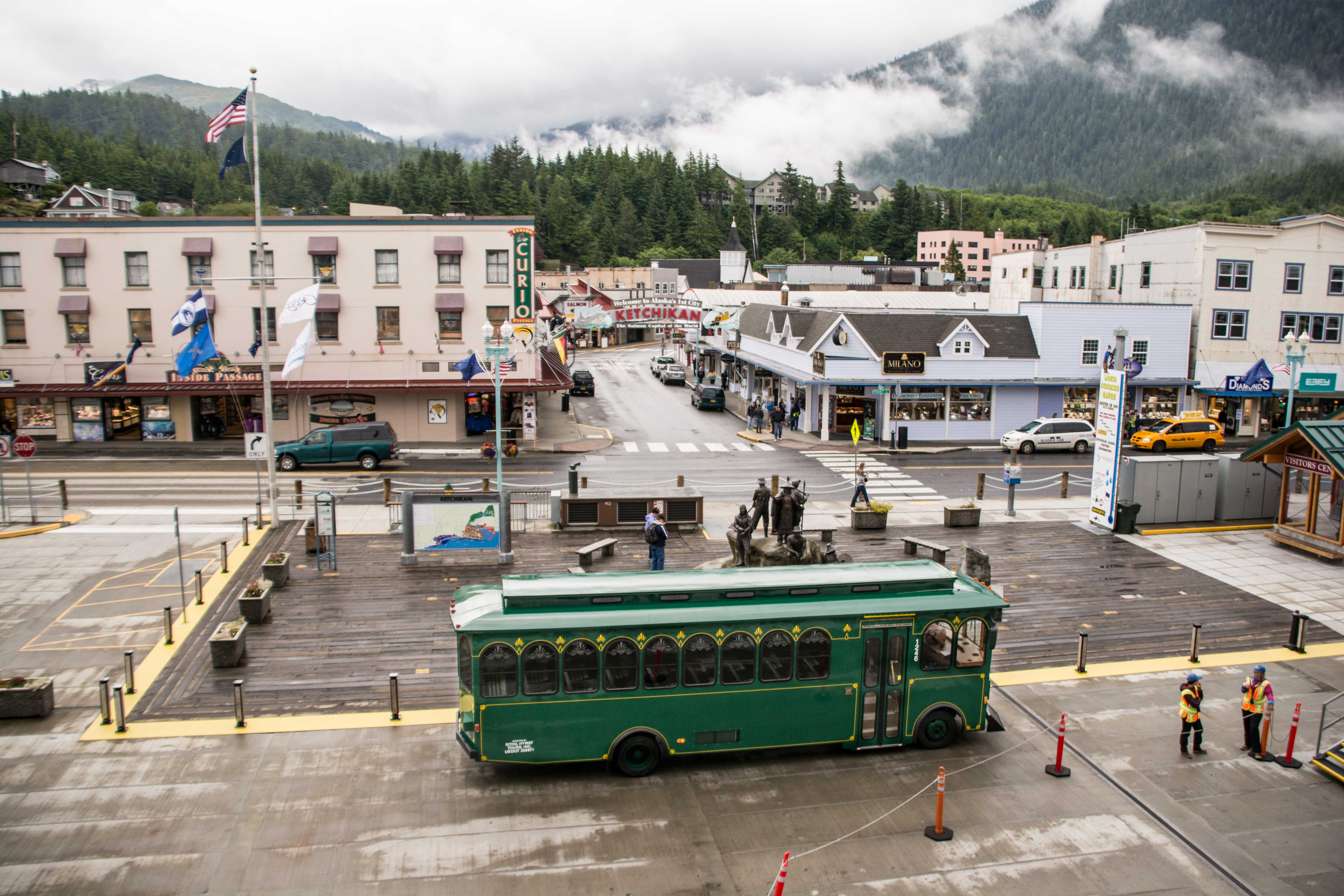
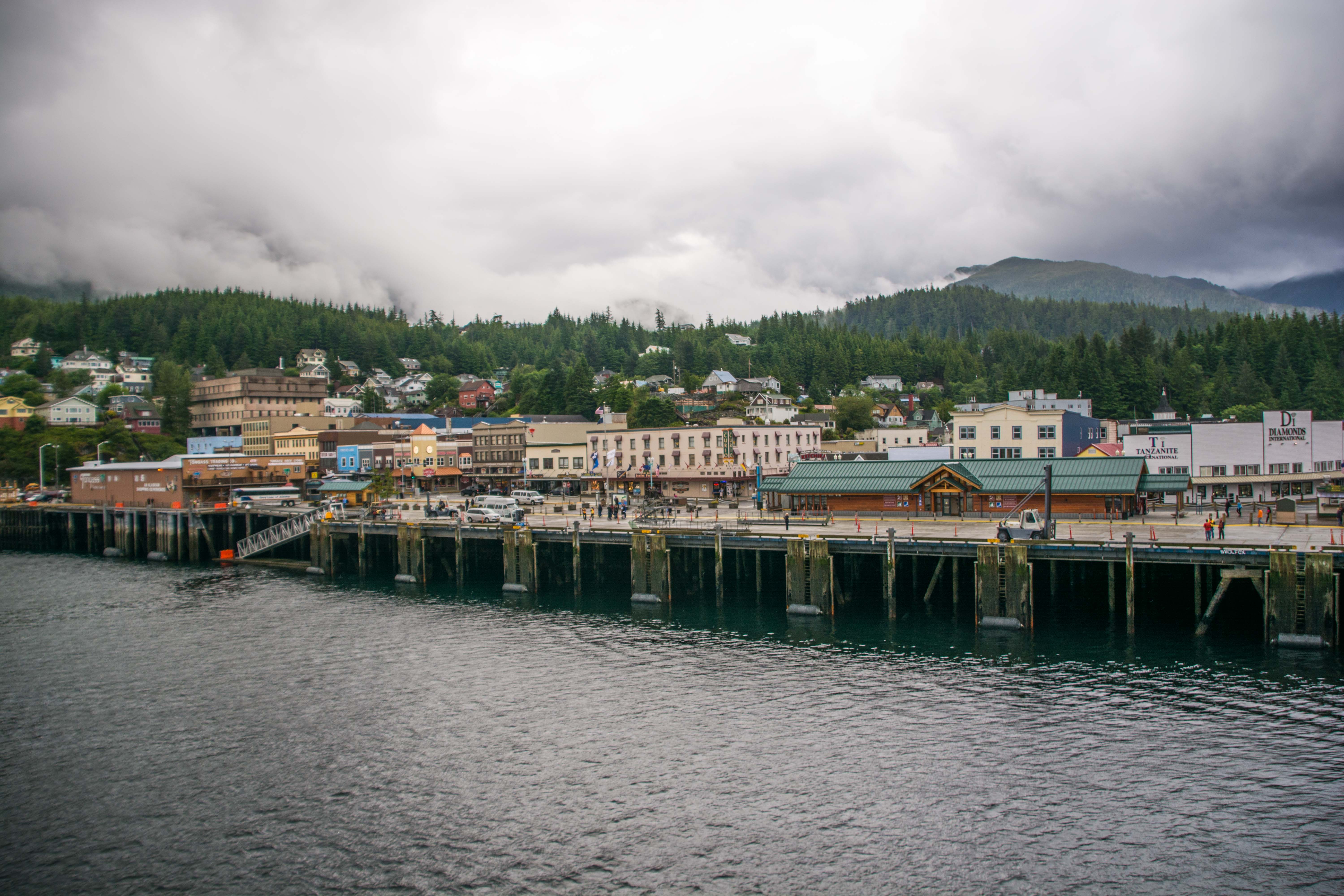
Today started our exploration of Alaska. We were up early enough to watch the docking of the boat at Ketchikan. The day was cloudy overhead, something we are beginning to get the idea is the common weather pattern here. We got our breakfast at the Italian Restaurant, which was very tasty. I had an omelet, and Gwen had oatmeal. The food here is quite good — something we were used to from our first cruise, and this trip has so far only furthered. Our excursion started at 10:30, so we got off the boat and decided to walk around Ketchikan ahead of the excursion. We did a bit of walking, but it started raining almost immediately, so we quickly got the the point of the walk (the candy store: Kechi-Candy), bought some (got to have our chocolate!) and then waited for the excursion to begin.

Blog-0301

View from our cabin before we got off in Ketchikan.

Blog-0286

Ketchikan docking area. Overcast is going to be the theme on this trip.
Blog-0340

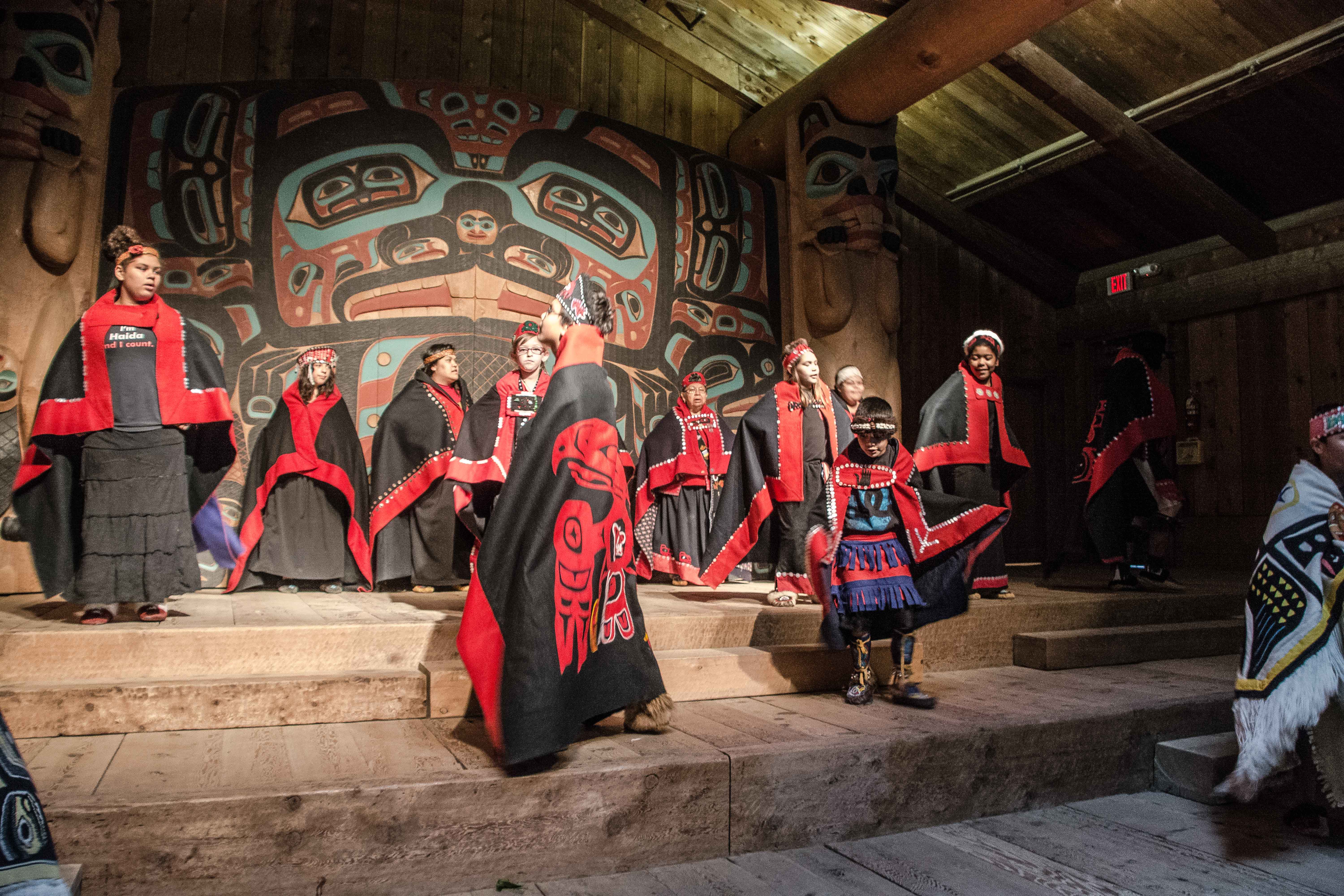
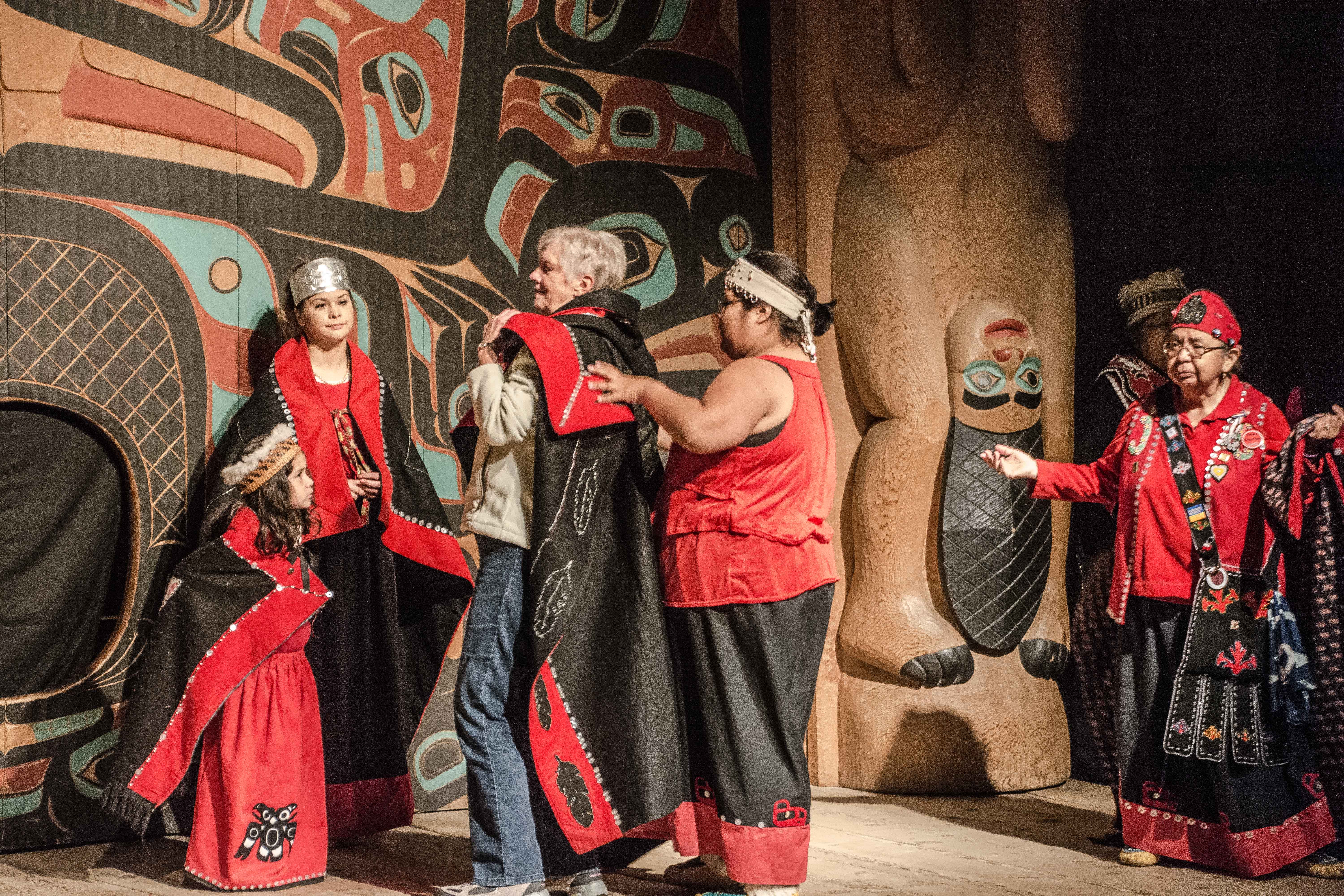
Dancing to the beat of a hand-held drum, and chanting their welcome for us.
Blog-0348

When a dance is complete, the dancers turn their backs to the audience, showing off the clan symbol.

Blog-0355

Preparing for Gwen’s dance participation.

Blog-0370

Gwen studying her mentor carefully.

Our tour was to an area just south of Ketchikan on the island we are on to a place where the largest of the three native populations has their central community. This native population is called Tlingit (pronounced “clinket”), and the location is called the Saxman Village. The village was established in 1896, combining a number of smaller such Tlingit villages into one. It is named for the priest who organized the establishment of this area, although he died before it could be completed. Apparently the native populations were suffering a small pox epidemic, thus the need to combine villages to enable a sustainable population to be maintained. Since the Alaskan gold rush was fairly close in time to this, I can only surmise the connection, but I’ll have to do some investigation to sustain my suspicion. The central part of Saxman village is the family lodge (beaver family, it turns out). This was built in the late 1890’s out of red cedar (one of three local species that are commonly available, the other two are spruce and alder). The cedar was fragrant as we walked in. Inside we were seated on wooden chairs (also made from cedar), and treated to a traditional dance and song ceremony. The singing and dancing was done by a group of Tlingit family members spanning ages 7 to 77,   It apparently is traditional for the Tlingit to welcome visitors in this way. For the last dance they invited anyone who wanted to participate, and Gwen volunteered. She was loaned a costume (or regalia, as they called it) and found a youngster who served as her mentor and guide.

Blog-0325

The Tlingit elder greeting one of the passengers.

Blog-0380

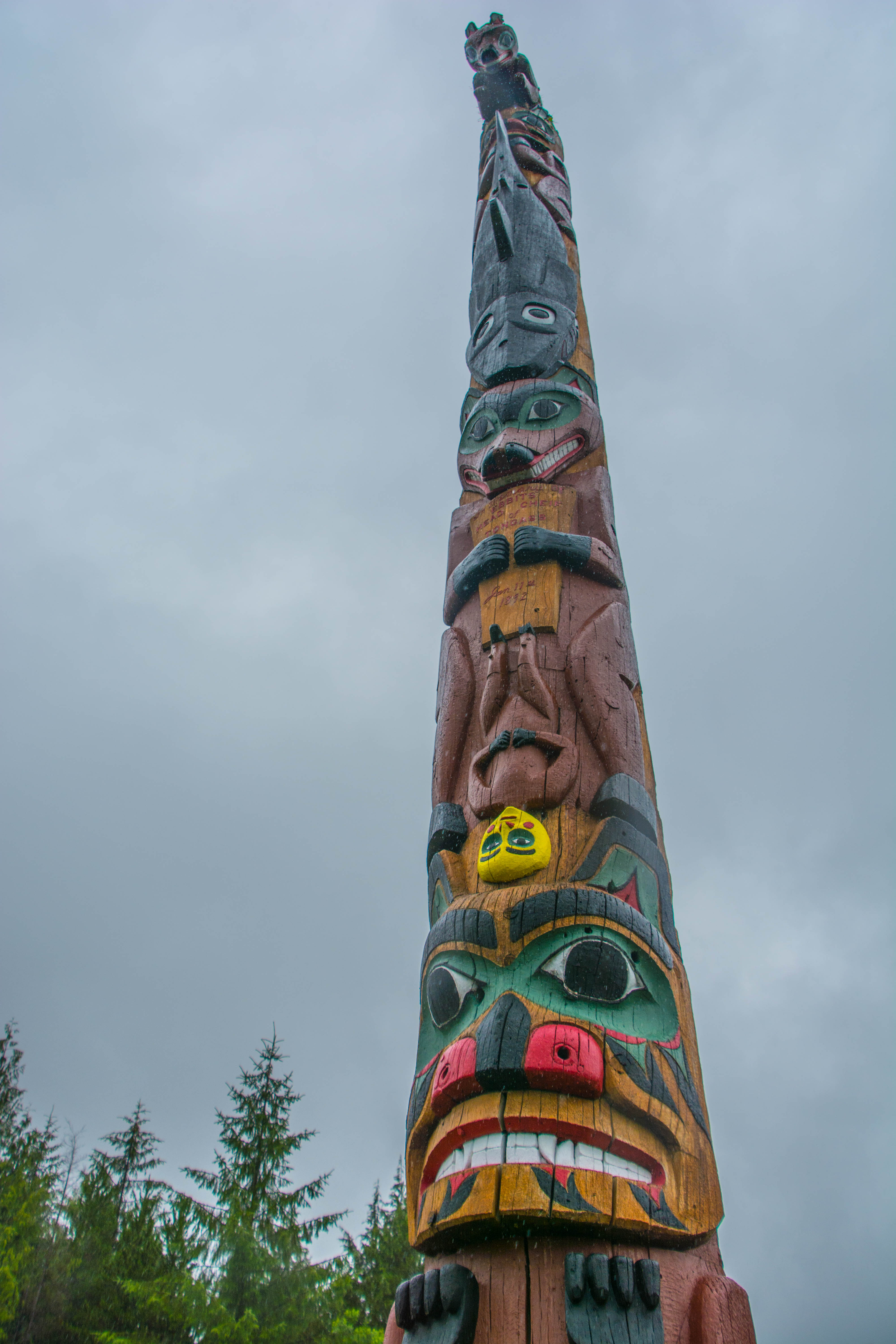
Totem poles are Tlingit tradition.

Earlier we were given a short film shown by one of the Tlingit leaders explaining who they were and giving us some background, and then introduced to one of the elders who was doing traditional beadwork.

Blog-0396

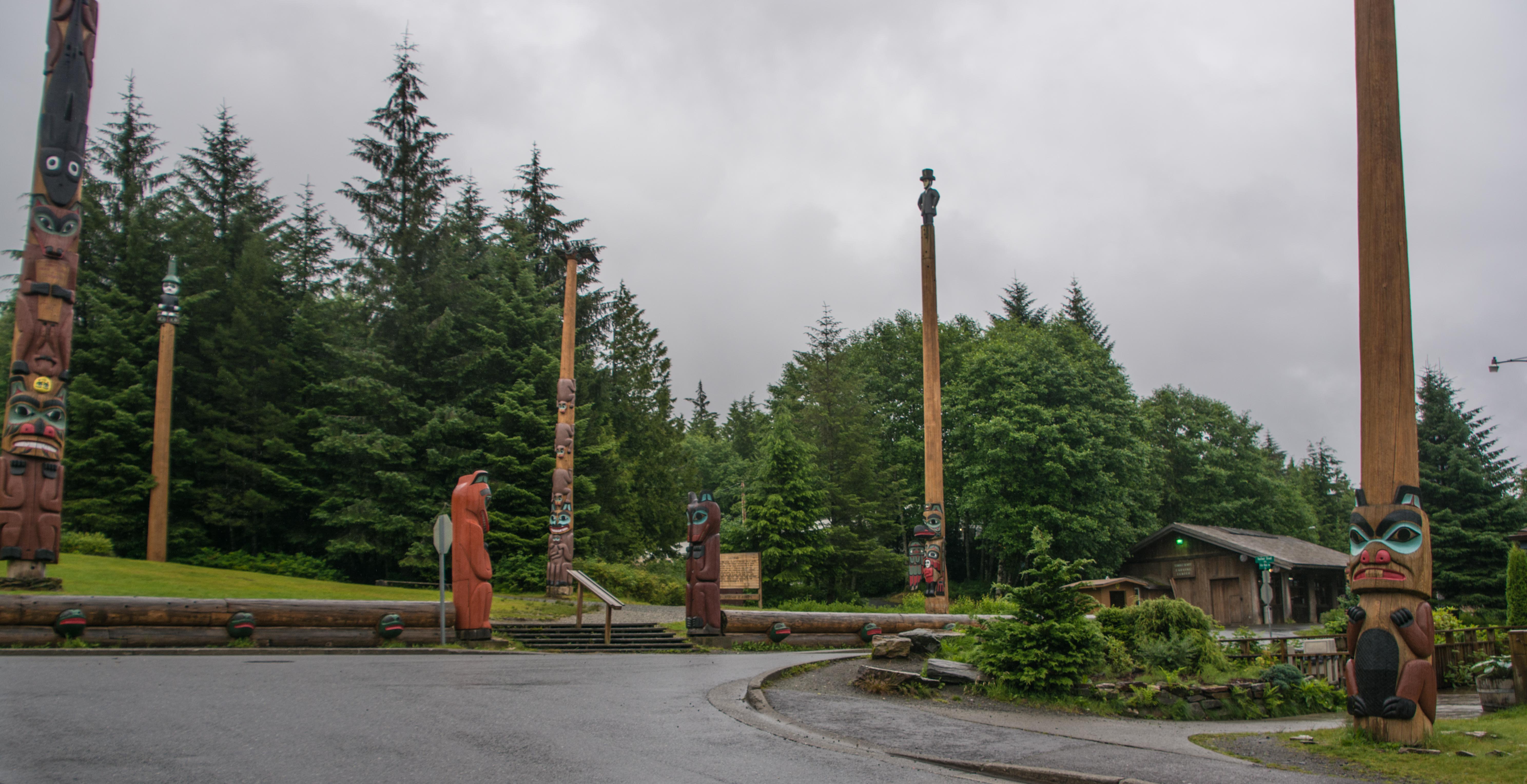
Saxman village green, marked by totems. The totem carver’s workshop is on the right.

Blog-0400

Abraham Lincoln’s totem, carved from a picture of his head and shoulders. The carver had no idea of his proportions, so we were told.

After the singing, we were taken to the local Totem carving shop, operated by one of the more famous Totem carvers (Nathan Jackson). Another of the Tlingit leaders gave us some information on the carving, and showed us some of the traditional tools. She told us that Totems cost anywhere from $1500 per foot to $4-6,000 per foot, depending on the skill level of the artist (apprentice to master craftsman). There were some interesting totems around the entrance area to the Tlingit house. Most had animals (birds such as eagles and ravens) on the top, but one had a likeness of Abraham Lincoln, and another had Seward’s likeness. The Lincoln one was carved to commemorate a visit from an American ship during Lincoln’s time as President, while the Seward one commemorated a visit by him to see his acquisition. He had apparently been the recipient of four different Pugwash events (large party where the local tribe invites all the friends and neighbors nearby to join in, and in the process spends loads of money). The idea, is that these Pugwashes are reciprocated, and as Seward didn’t do so, his totem is actually a totem of shame! It is colored as such with red ears and cheeks. The Tlingit folks were at great pains to help us understand their culture, and to feel their appreciation for our visit, and for our interest in their culture.

Blog-0553

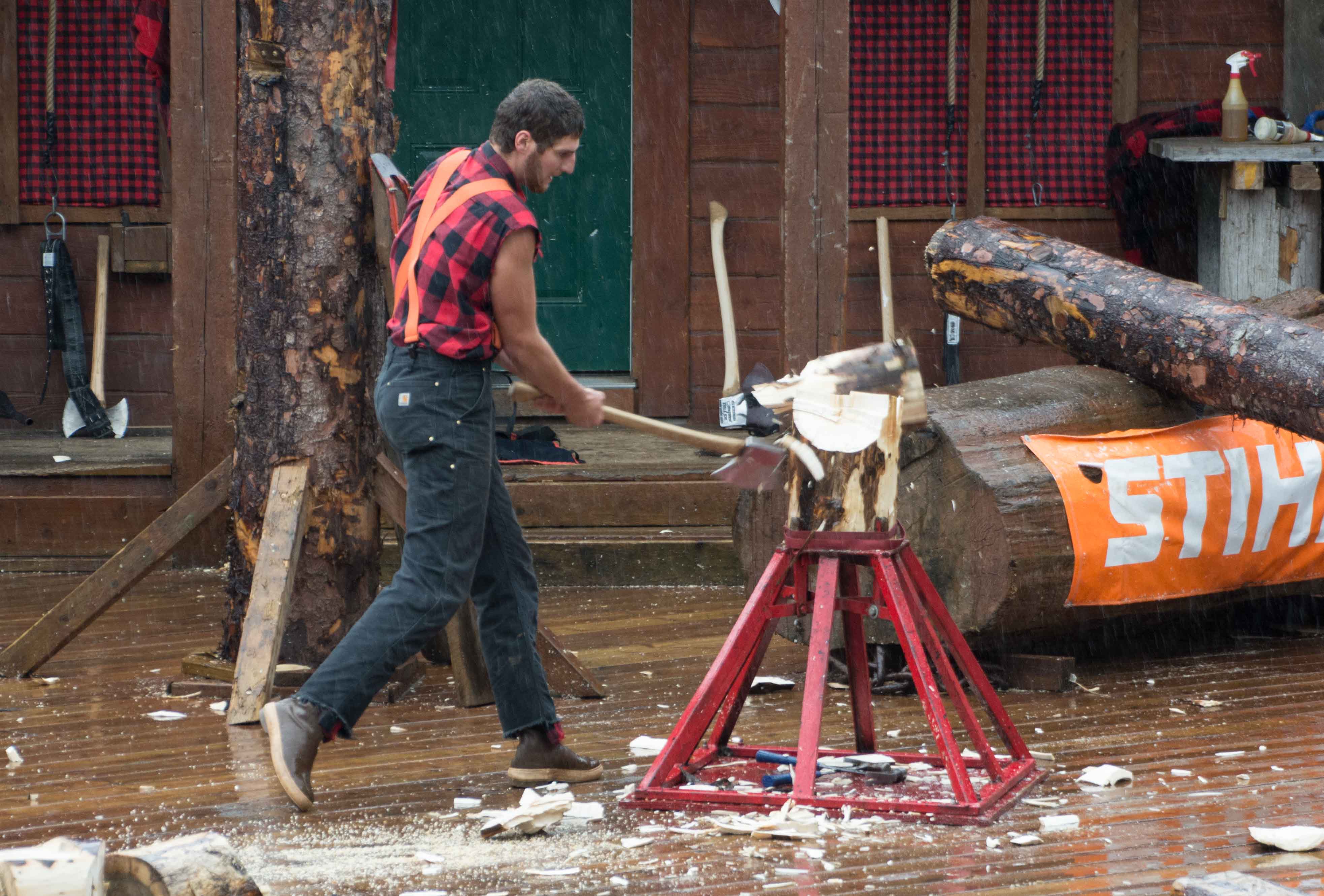
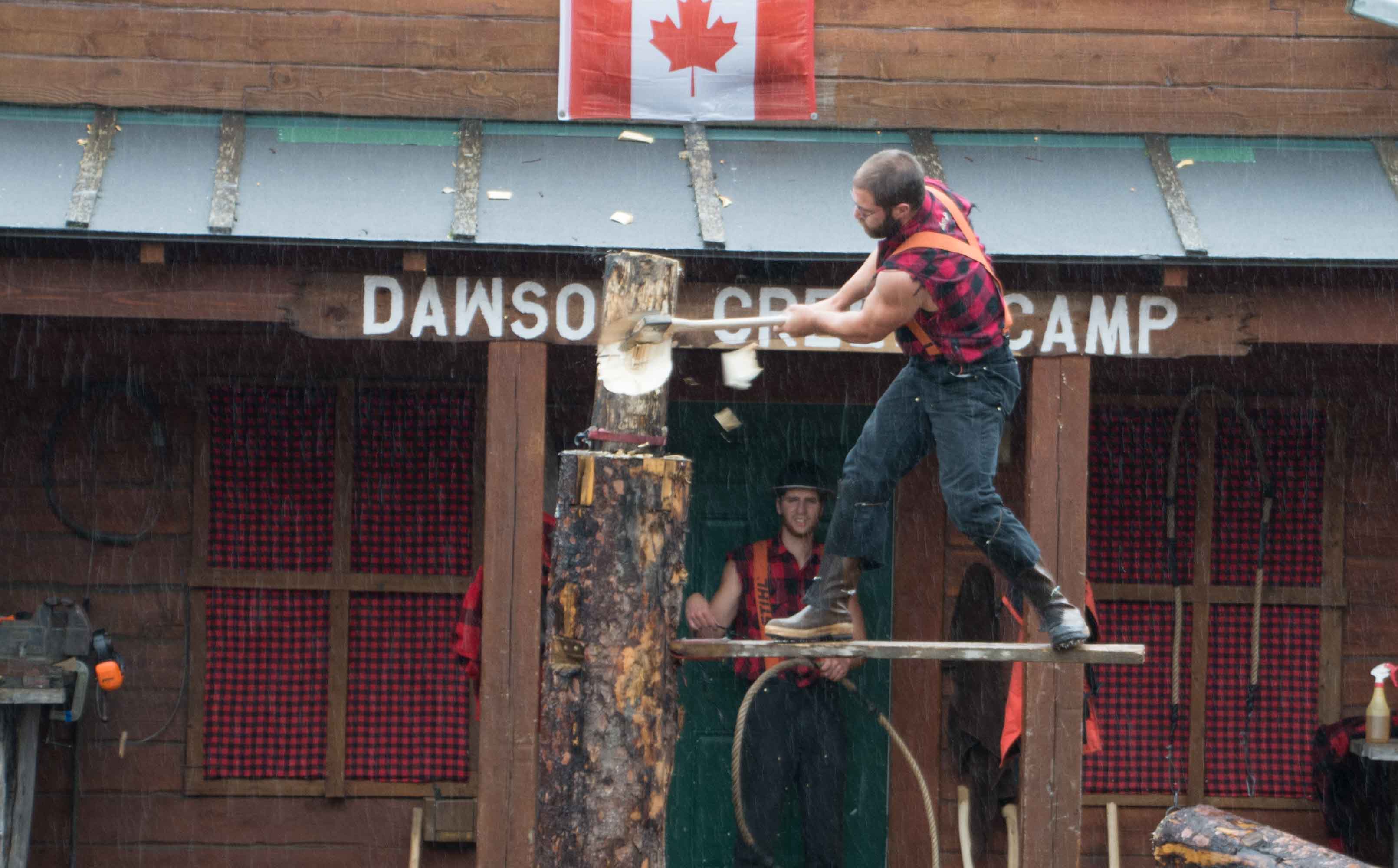
Chopping into a vertical post. The top part is falling behind.

Blog-0587

Chopping a vertical log as he is balanced about 10 feet above the ground on a simulated tree branch.

Blog-0651

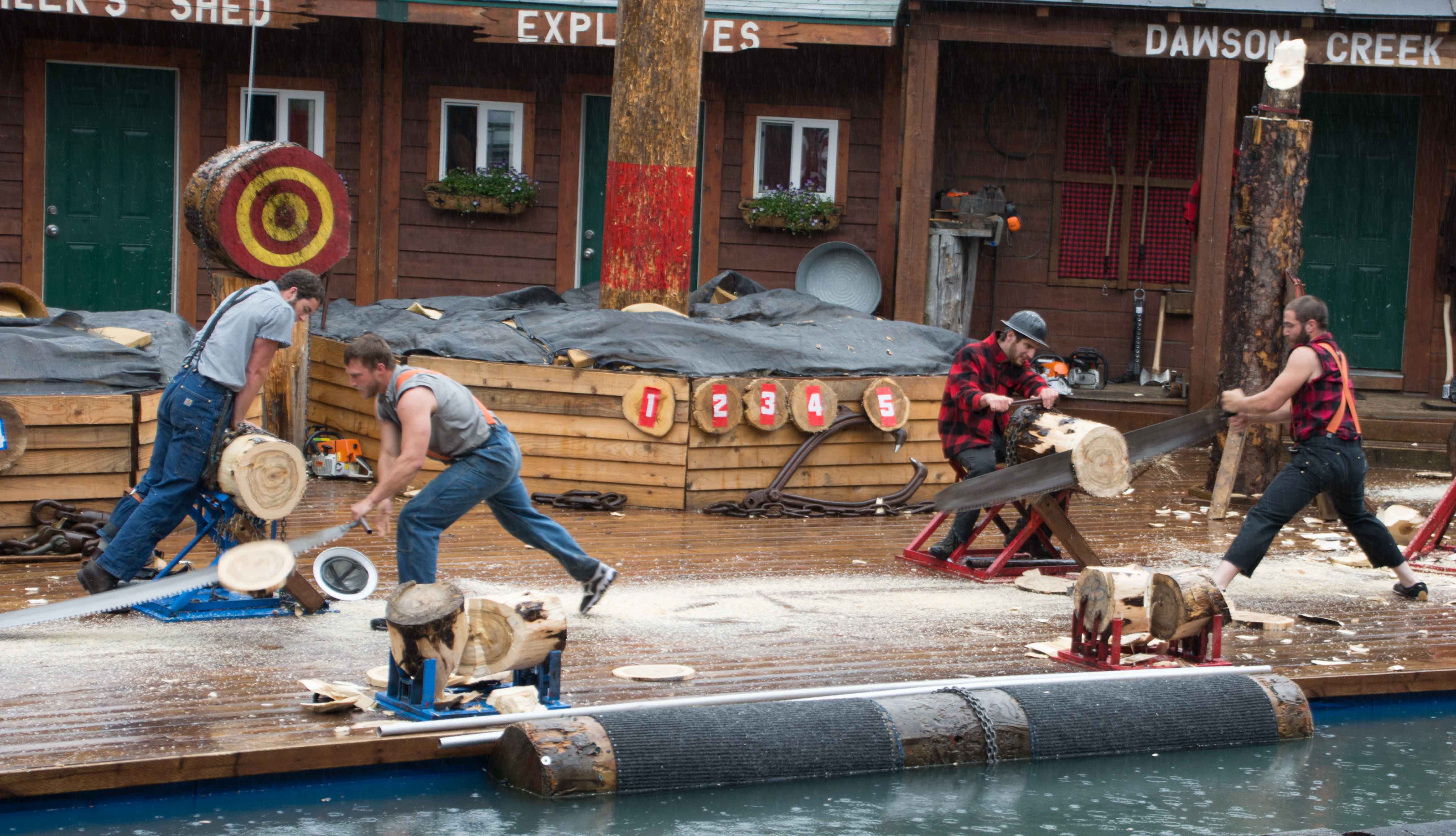
Single-man cross cut saw competition.

Blog-0666

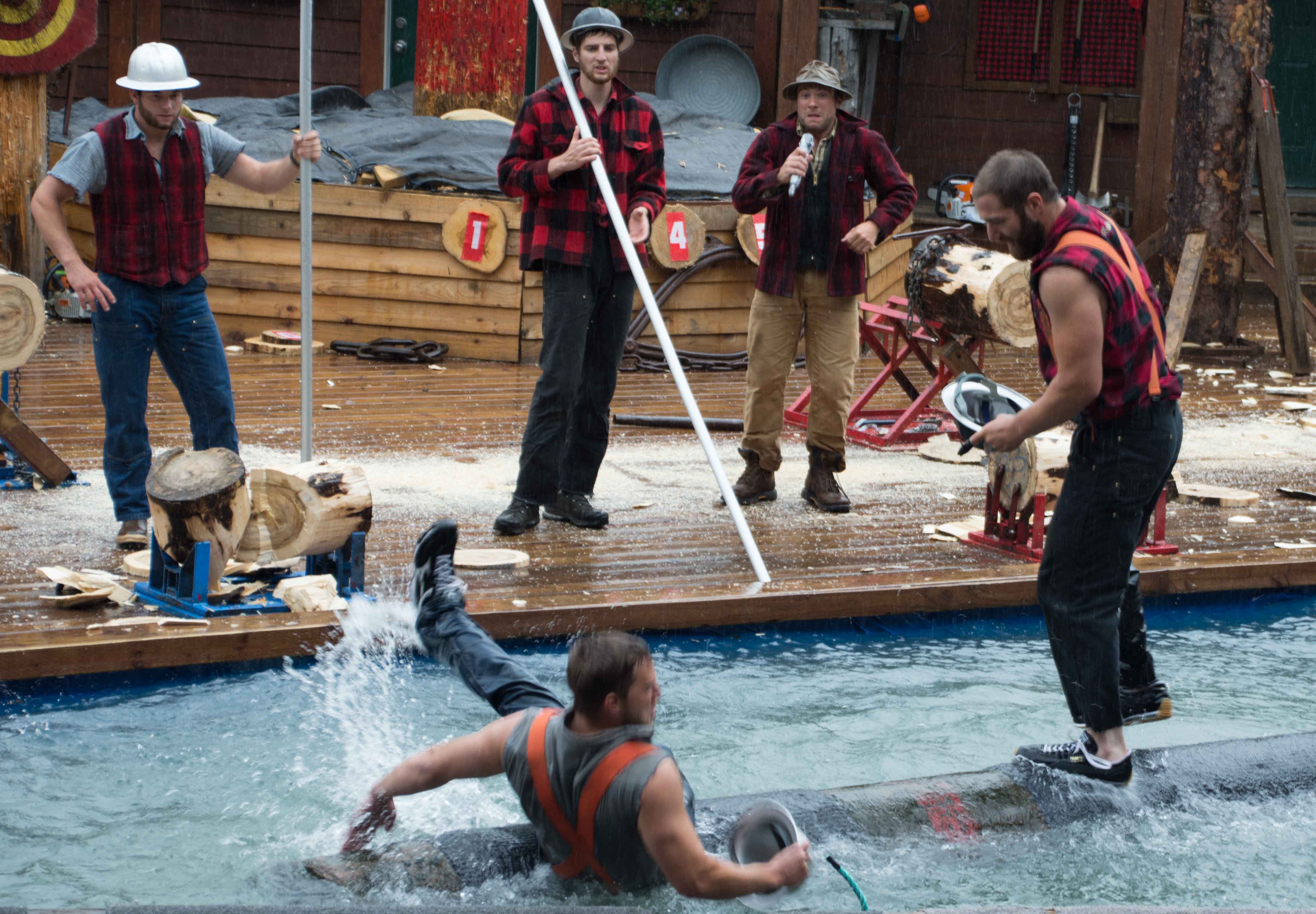
Splash!

The second half of our excursion was to see the lumberjack show. I thought this was going to be a part of a greater competition (you know, like a summer series), but it was a one-off for our fun, done twice a day. There are two two-man teams, one team member competing in each of eleven events. We as the audience are divided into two groups and cheered for our team while booing the opponents. The competitions apparently are real enough, and I believe they are doing their best to win, but it is nicely staged.  The eleven events are as one would expect of lumberjack competitions.   The competitors chop wood logs in half, both vertically and horizontally, and up high on top of a vertical log balancing on a beam wedged into a vertical “tree”.  They saw off disks with a single and double-man cross-cut saw, as well as with a chain saw, and throw axes at a wooden target. There are competitions to tie up and belay a log from one place on stage to another. The final event is the log-rolling, where one man from each team has to get his opponent off his log two out of three times. It came down to the end, but our team won (cheer, cheer!).

We then walk back to the ship and re-embark. We’re now on our way to the next stop, where we’ll visit and go on a wildlife watching tour in the afternoon. One thing that is noticeable to me is the number of float-planes that share the waterways we have been cruising in (especially the ports). They apparently look for clear water (and air, presumably), gun the engine and they are off.  Some are fast to get up, and others take their time.

2 Comments

Filed under Blog