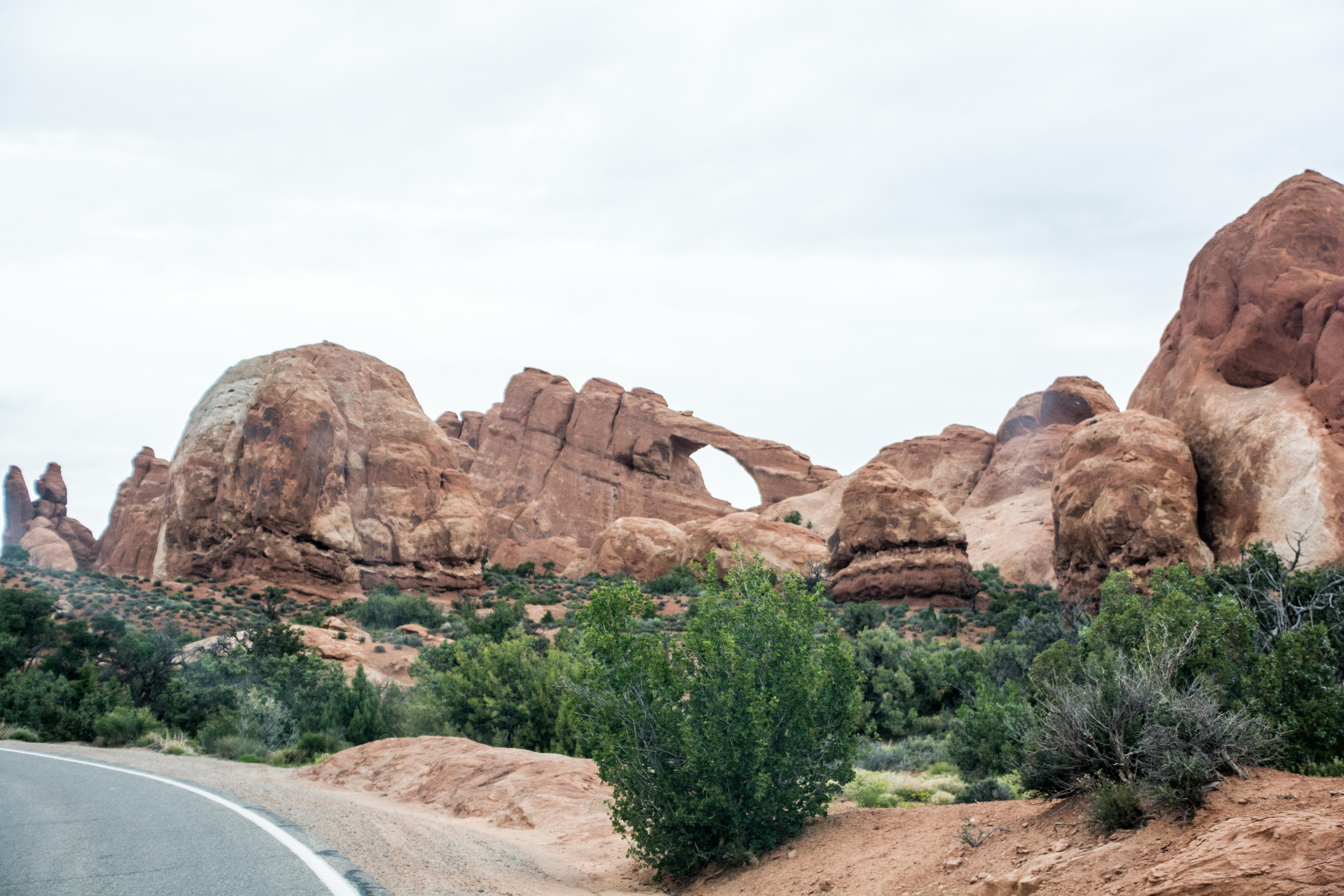
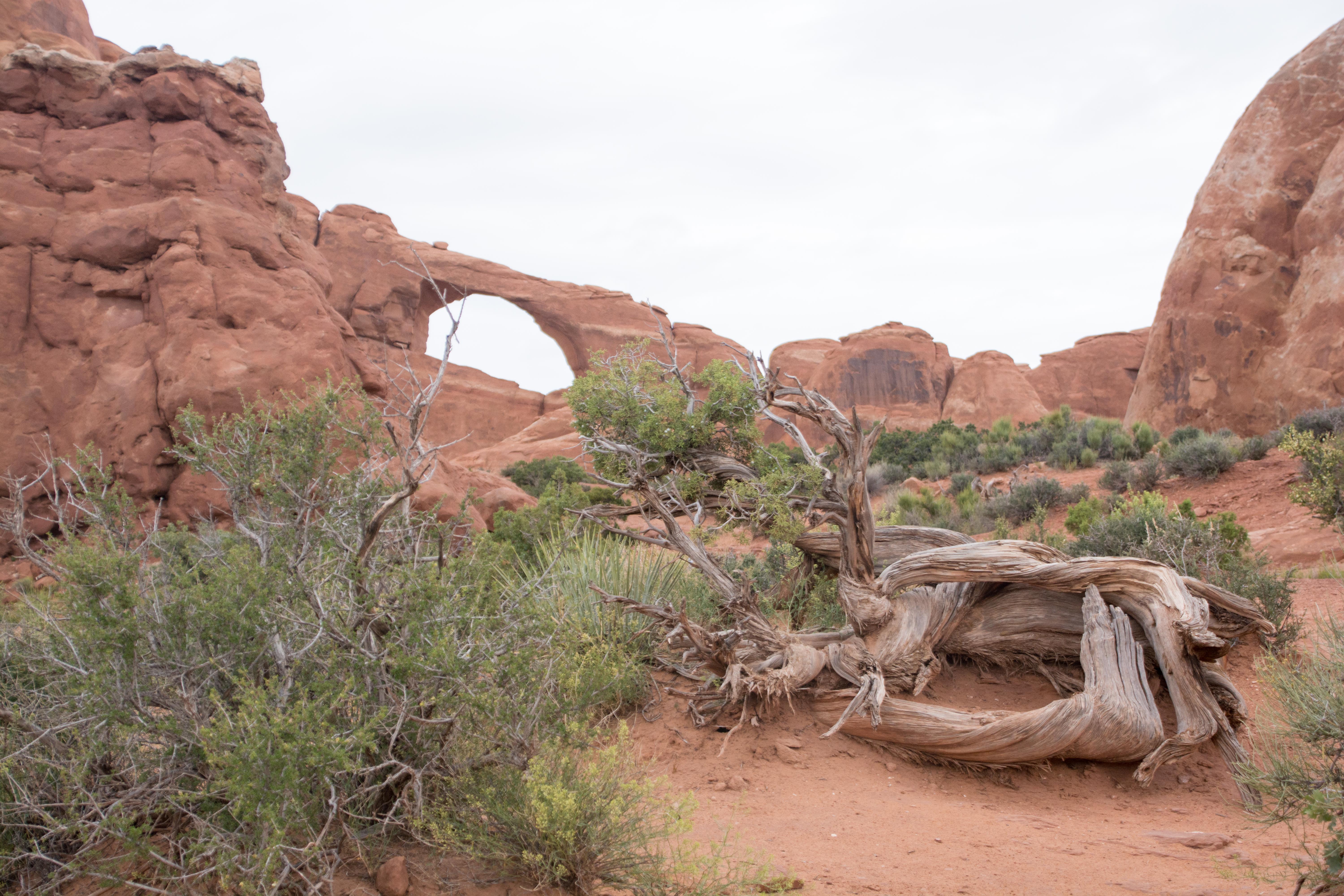
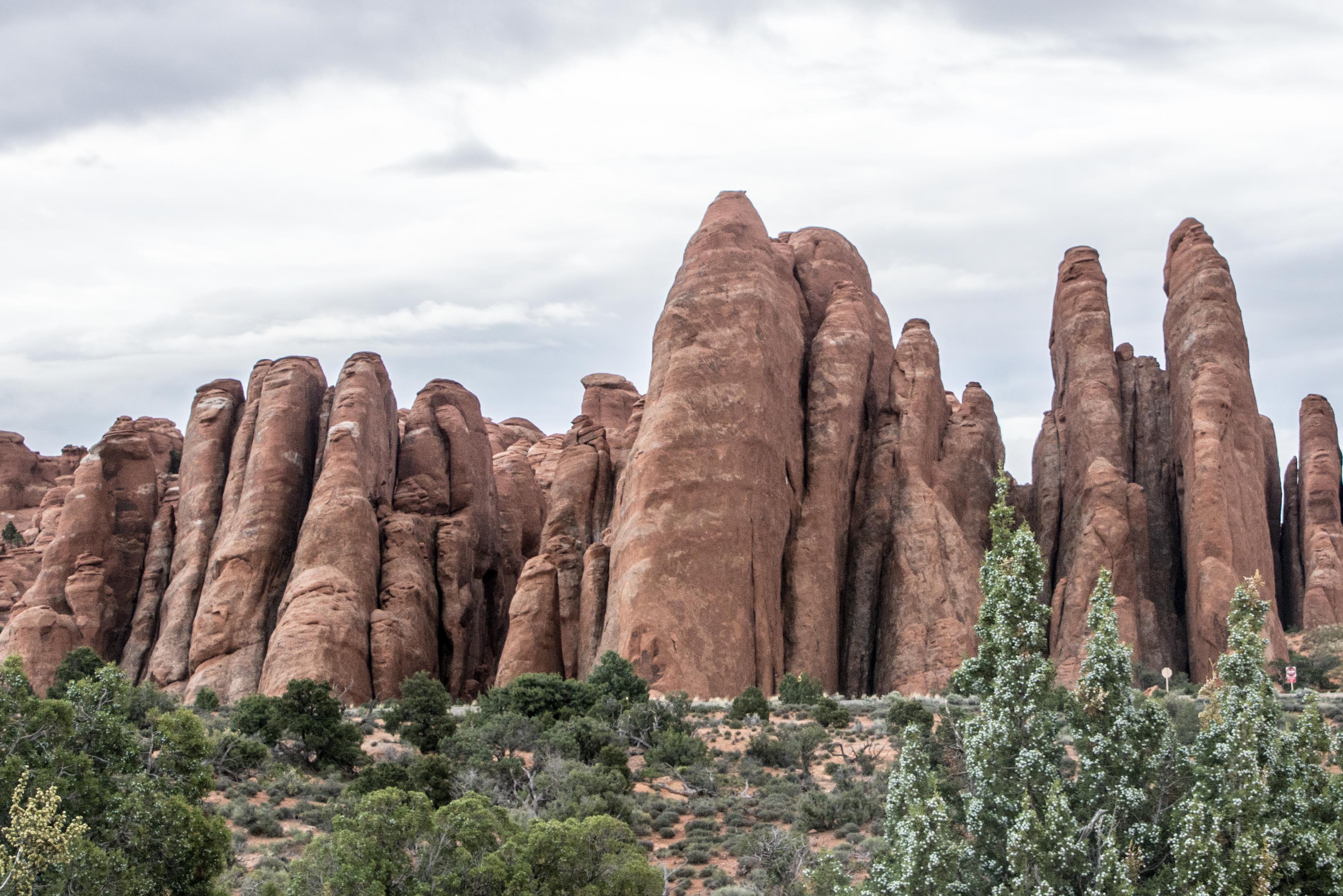
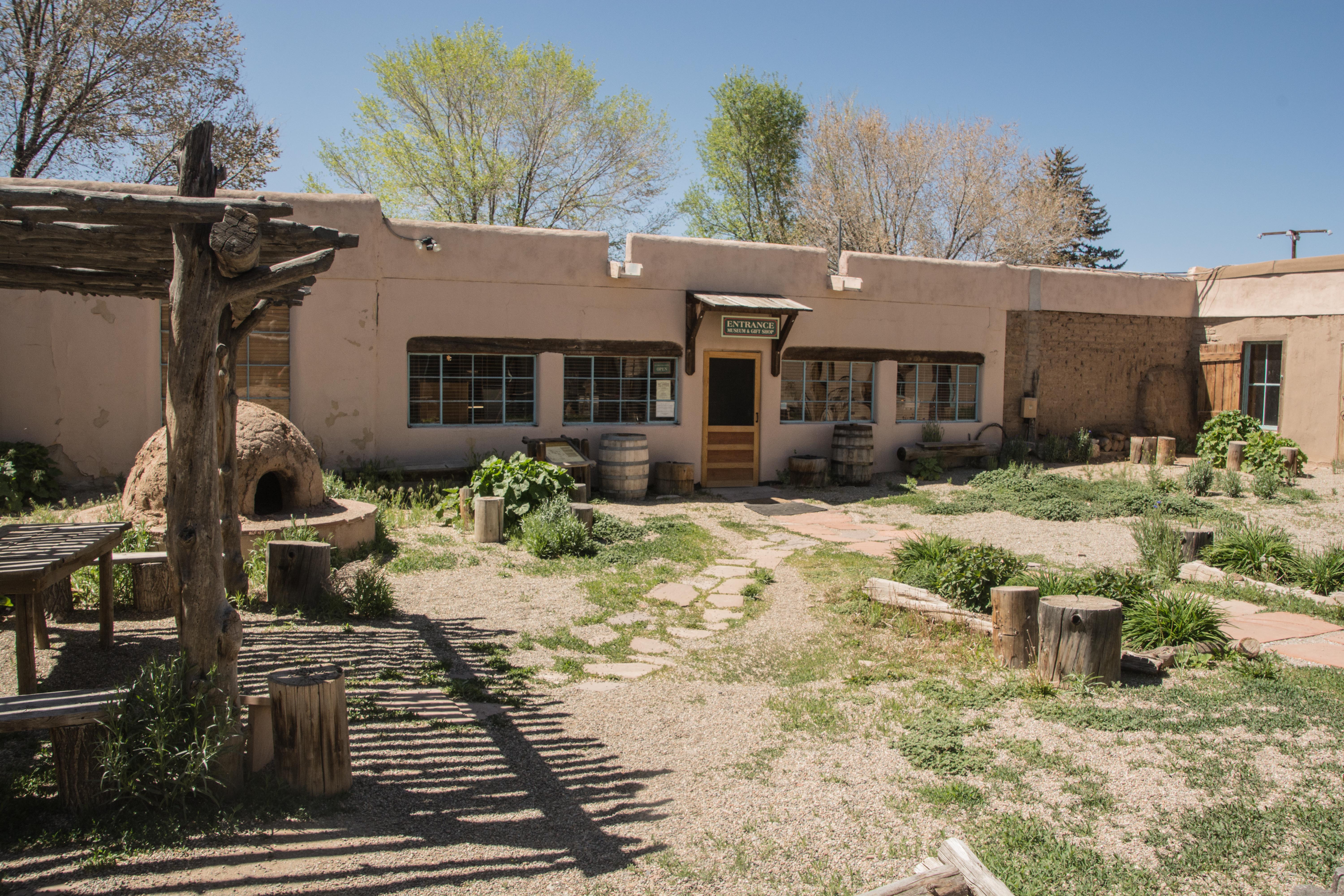
Category Archives: Blog

Palm Springs, CA to Clarkston, MI, Day 7 May 12

We start out this morning with breakfast at the Bent St Café and Deli, noting that this is not a town of early risers. The deli is located in a mall area with a dozen or so small business shops, all closed. We find the café will not open until 8:00, and as we are there ten minutes before, we wander around until they open. The other shops open at 9:00, or 10:00, or …, but that is OK, as we are complete alone as far as customers are concerned even as we left the café and head back to the hotel (at 8:45). Good food, though! We say goodbye to the waitress and chef, who at that point are talking, clearly just waiting for the day to really begin.

Steve Bundy is a local photographer who conducts tours for the likes of us who are interested both in the best spots to take pictures and a day’s worth of instruction in the complexities of photography, as well as willing to pay for the privilege of his inside information. We arranged the tour before we left, and today is it! We are to meet him at 10:30, and then spend the entire day at the better spots. That’s next!

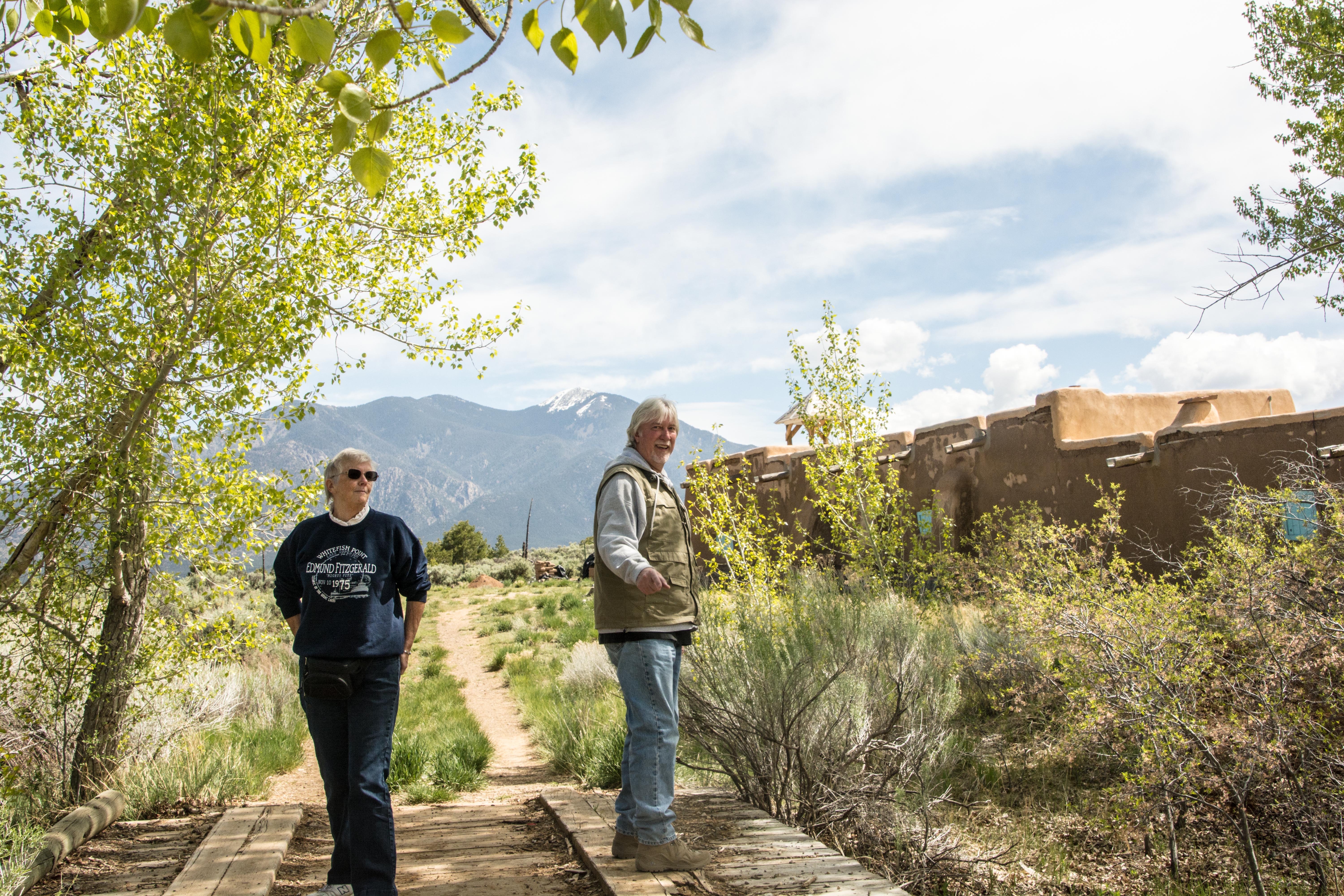
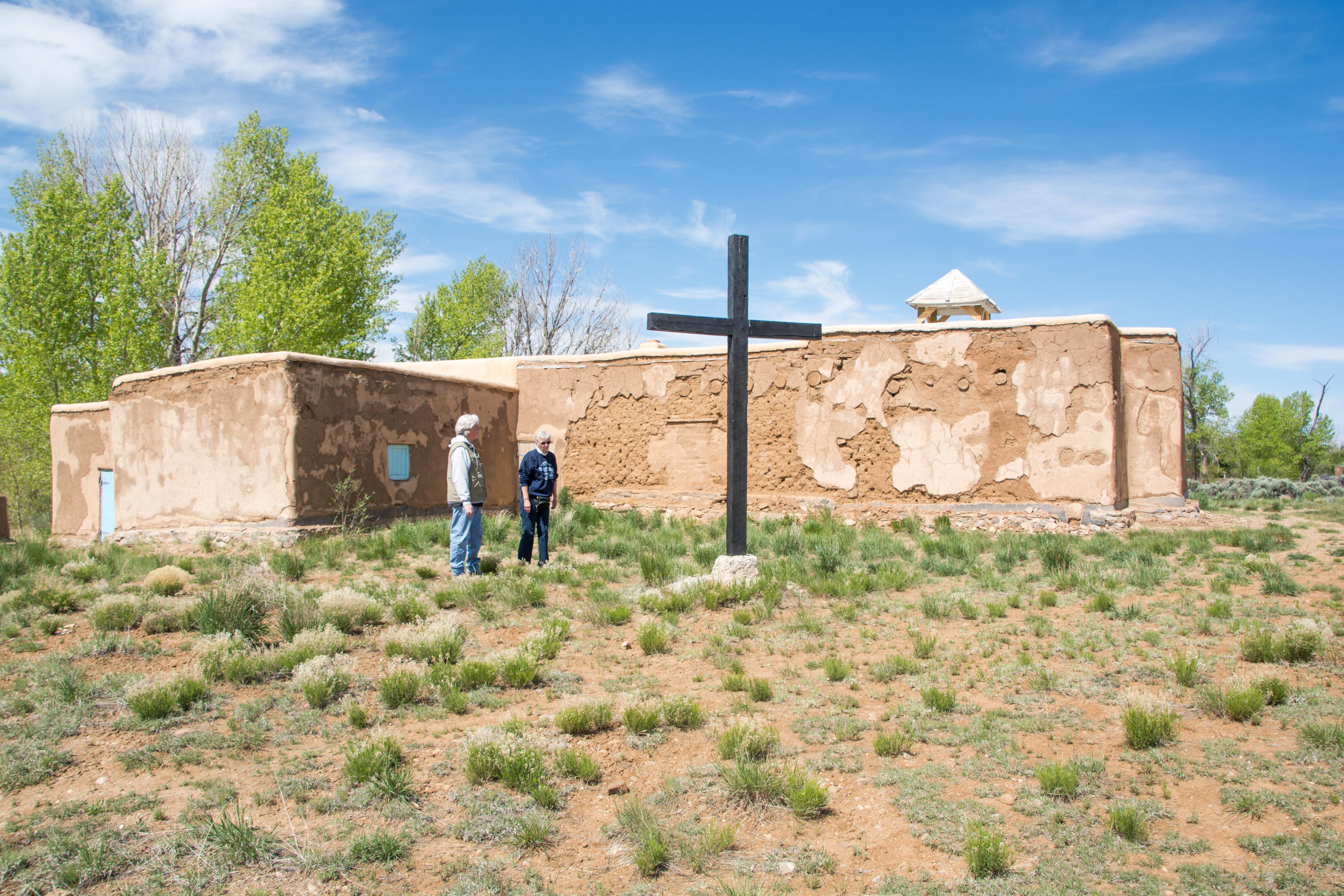
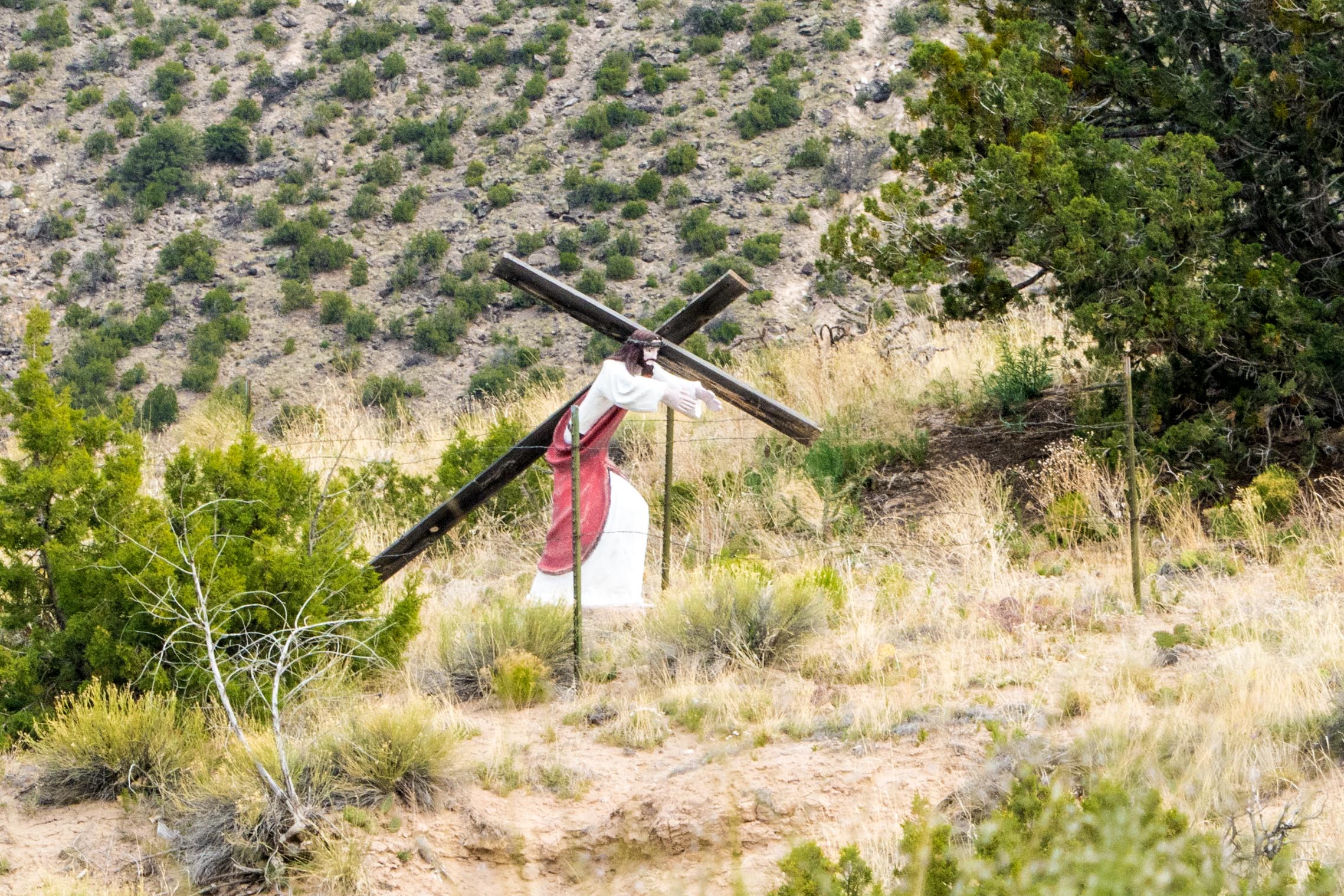
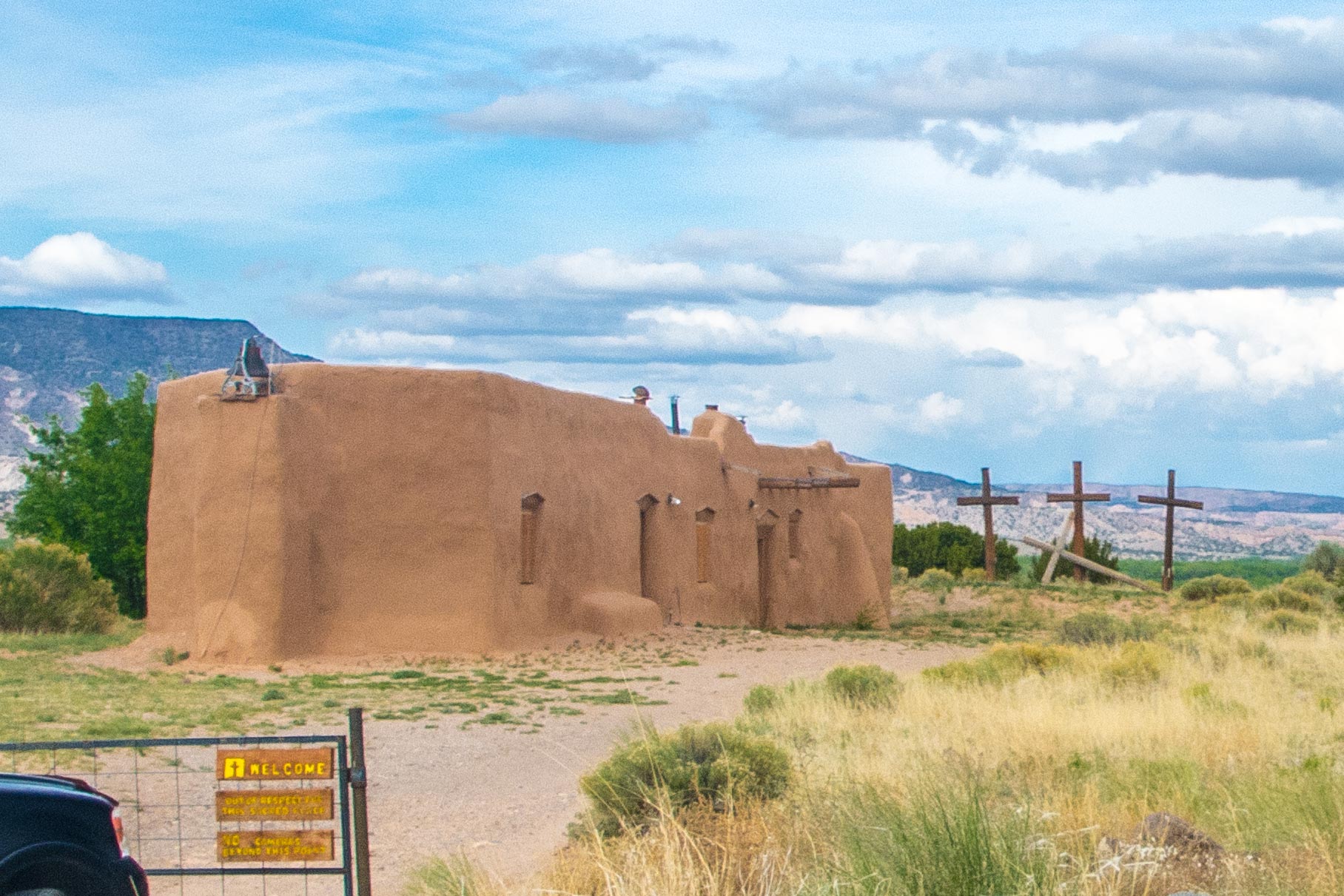
May 2015-8612Steve is to do the driving, so we agree to meet him at our hotel’s parking lot.  He shows up in a black four-door pickup truck with lots of enthusiasm.  After a short get-to-know-you period, we start off on our adventure.  The first stop is the Taos Morada, an adobe house built in the early 1800s by and for the Hermanos Penitantentes, and was used for religious study of ancient Catholic lay practices.  May 2015-8636The site is now under the ownership of the Catholic Archdioceses of Santa Fe.  The grounds are open to the public, but the building itself is private. We will be visiting another such structure later on.

May 2015-8666

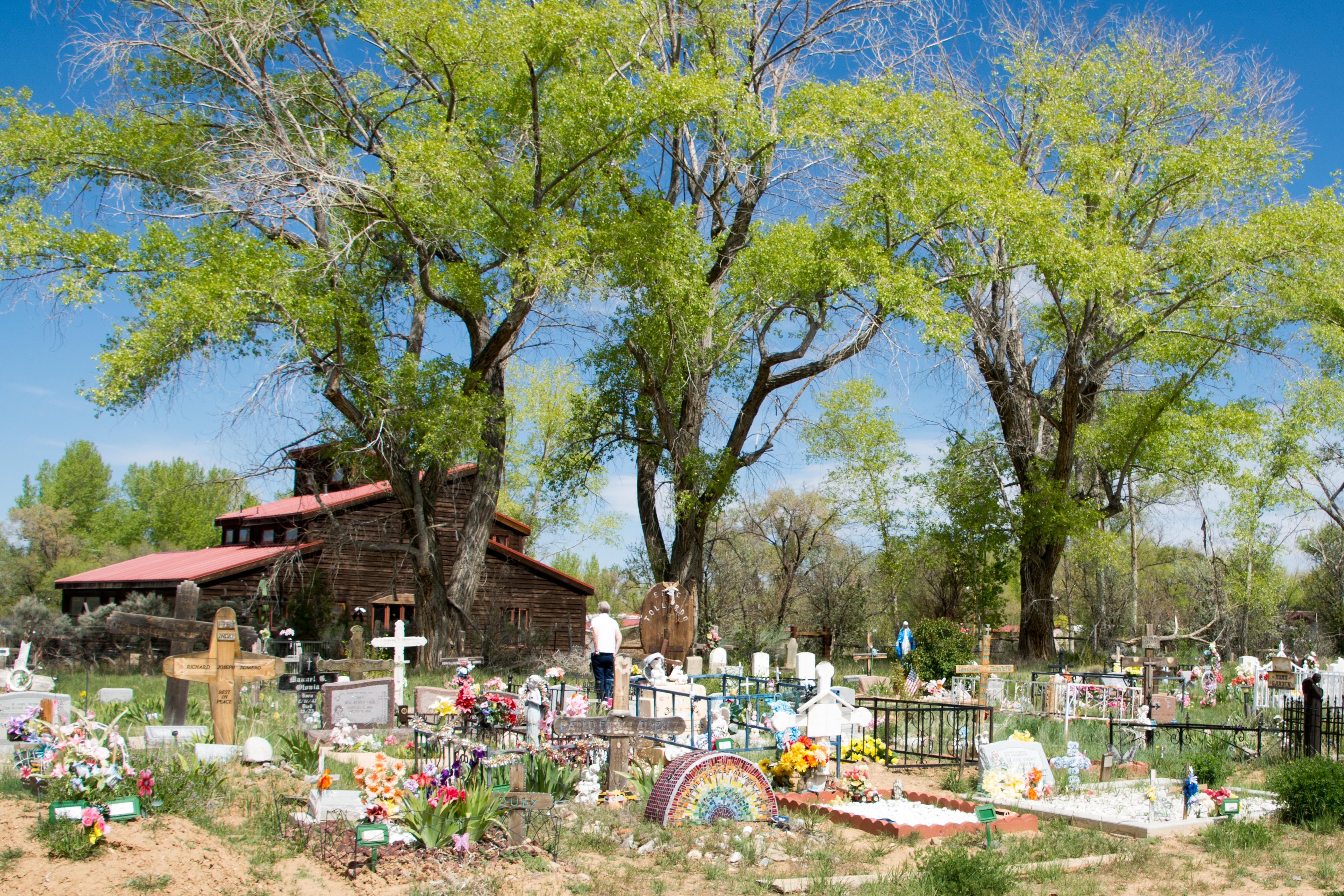
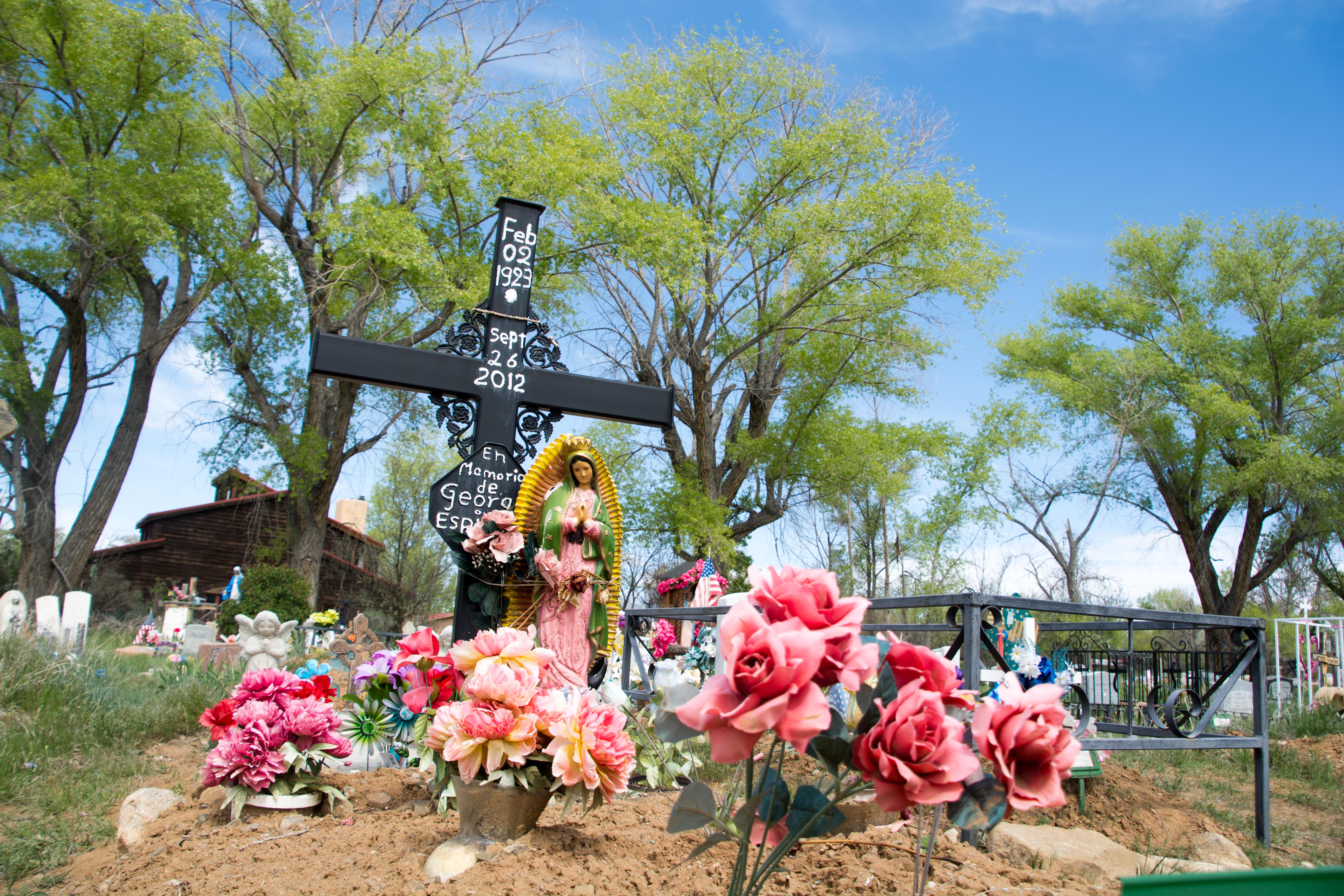
Nearby is a cemetery used by a similar group.  May 2015-8675I’m immediately struck by the attention paid to these graves, with much ornamentation maintained.

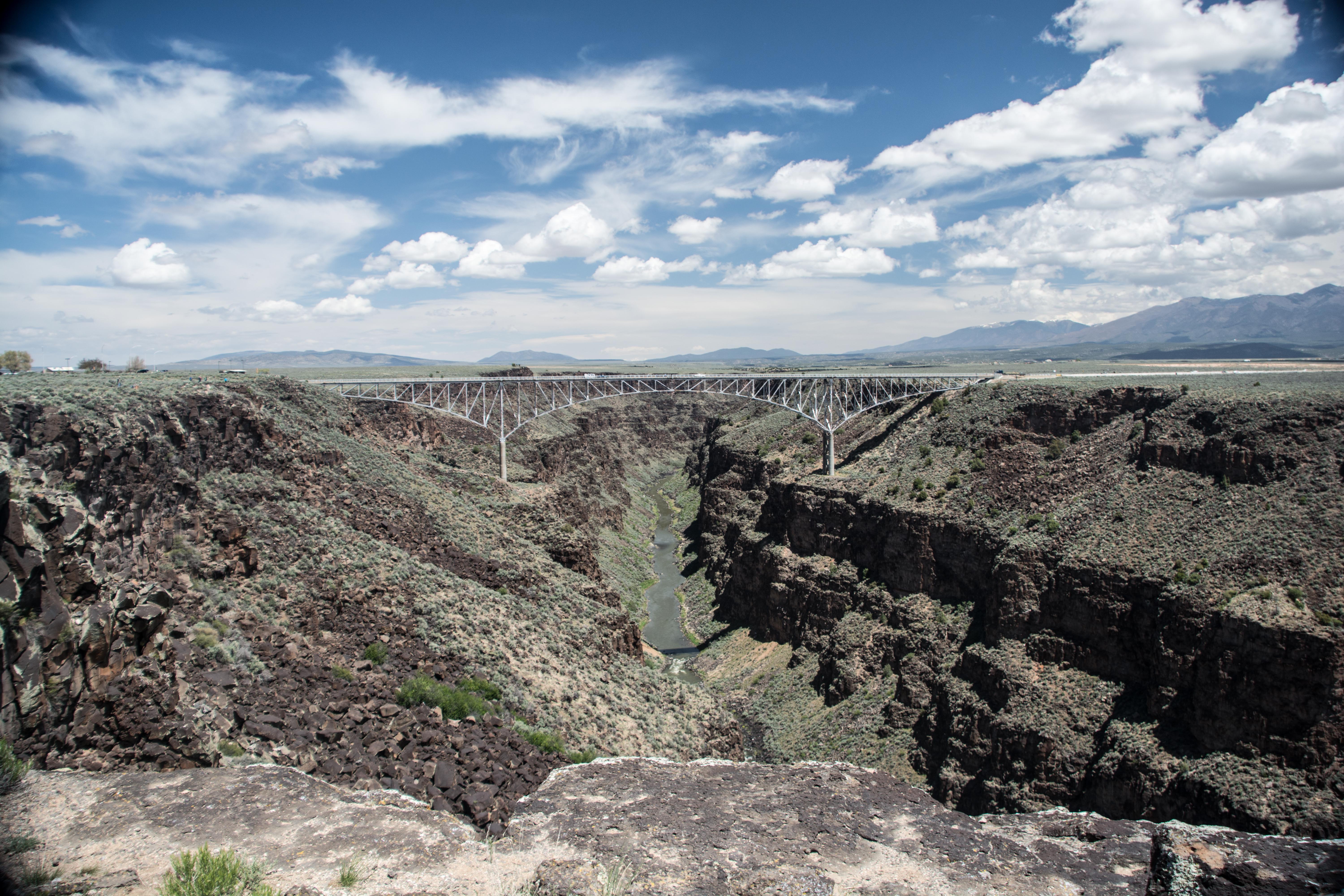
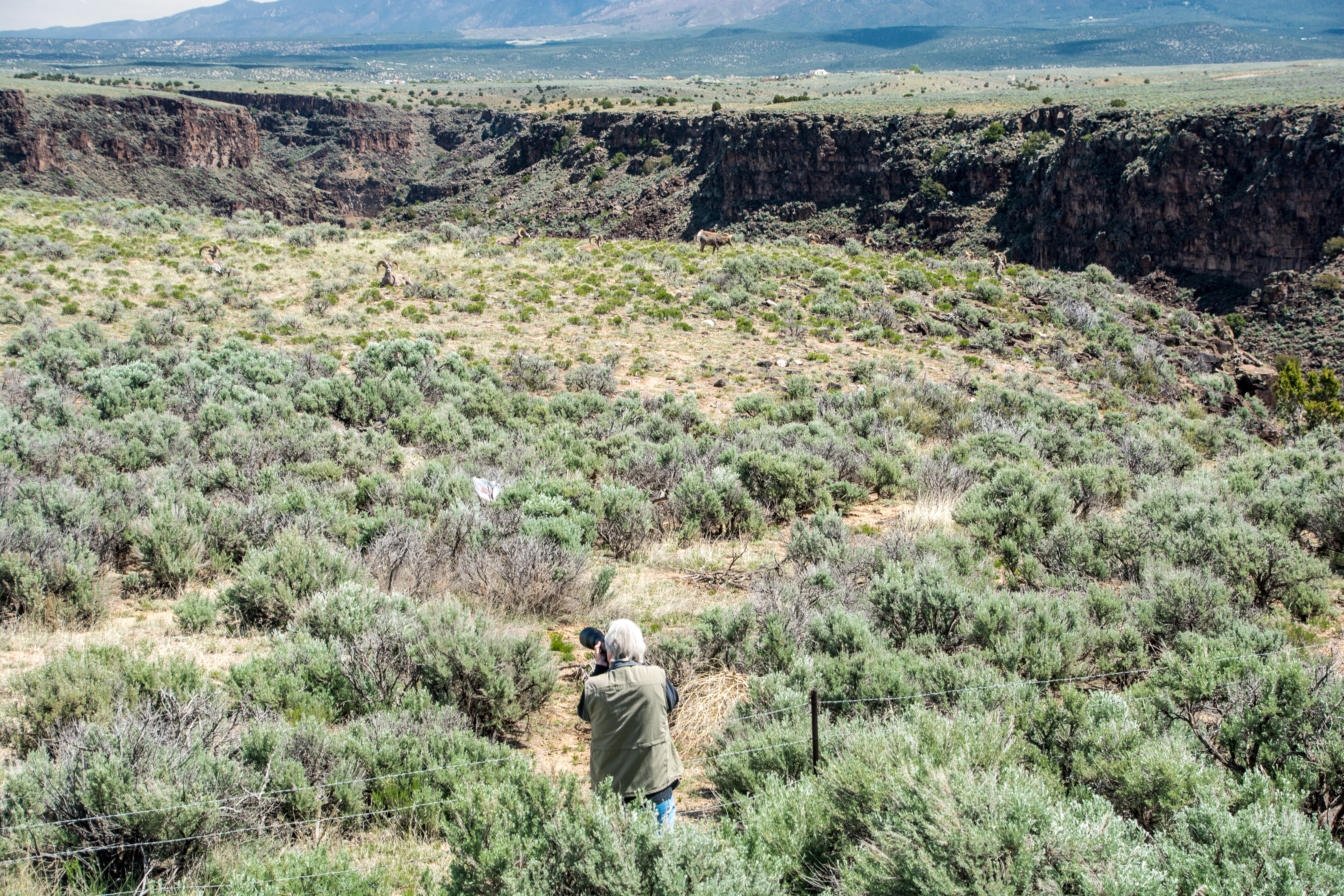
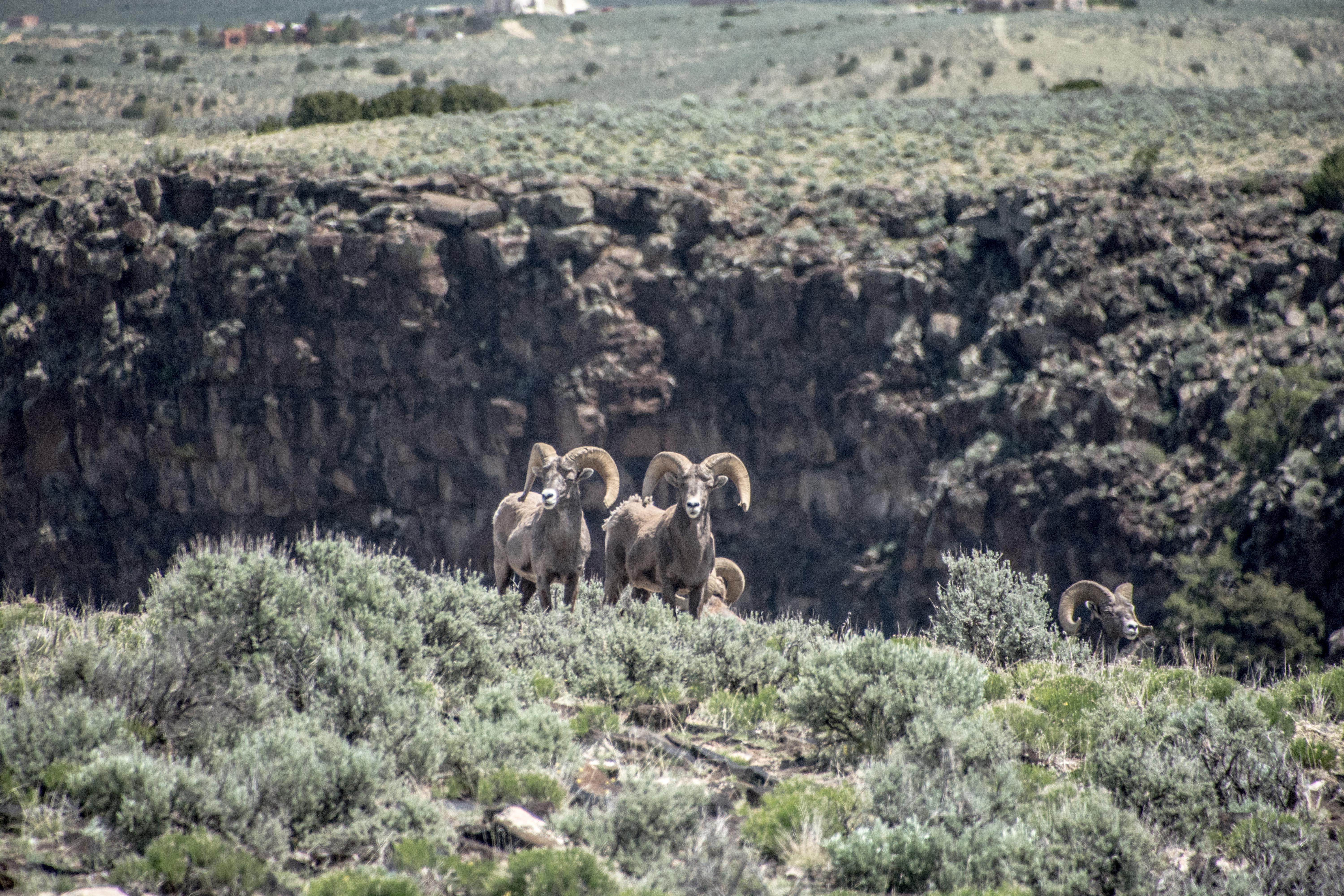
May 2015-8752Next we head to the Rio Grande Gorge Bridge, where we discover a herd of bighorn sheep just off the road on the far side of the bridge.  May 2015-8695Stopping there, Steve gets out his camera to get some shots.  I count 10 sheep in the picture at right.May 2015-8707 May 2015-8724He’s retired from his day-job, he tells us, but enjoys photography originally as a hobby.  He also enjoys meeting new people, so it makes sense for  to do these tours as a way to pay for his hobby.  It is more than a hobby for him, though, as he sells his photographs online.  He gets notification while we are traveling around that the third of three pictures he offered to the state of New Mexico has been accepted for purchase and display.

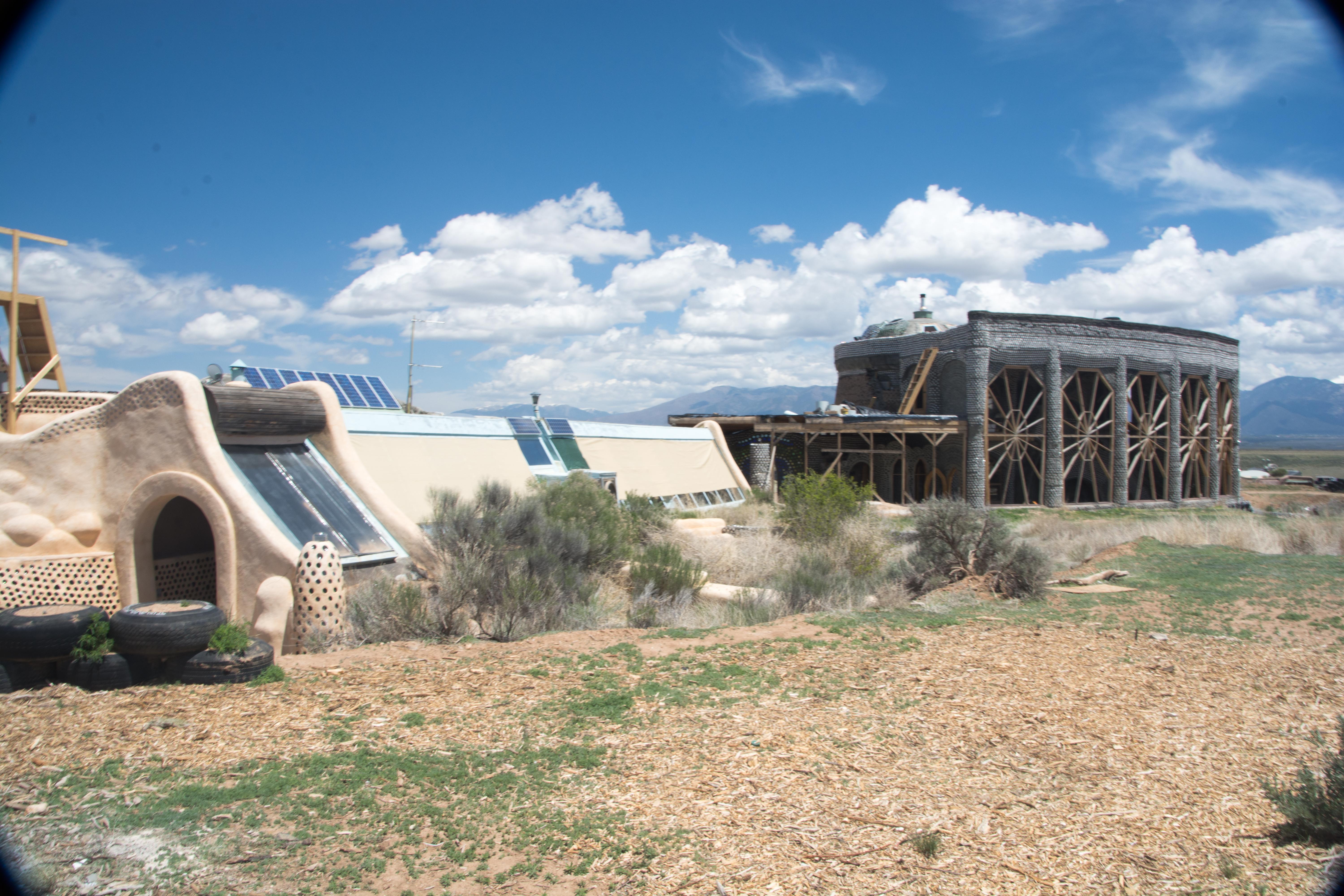
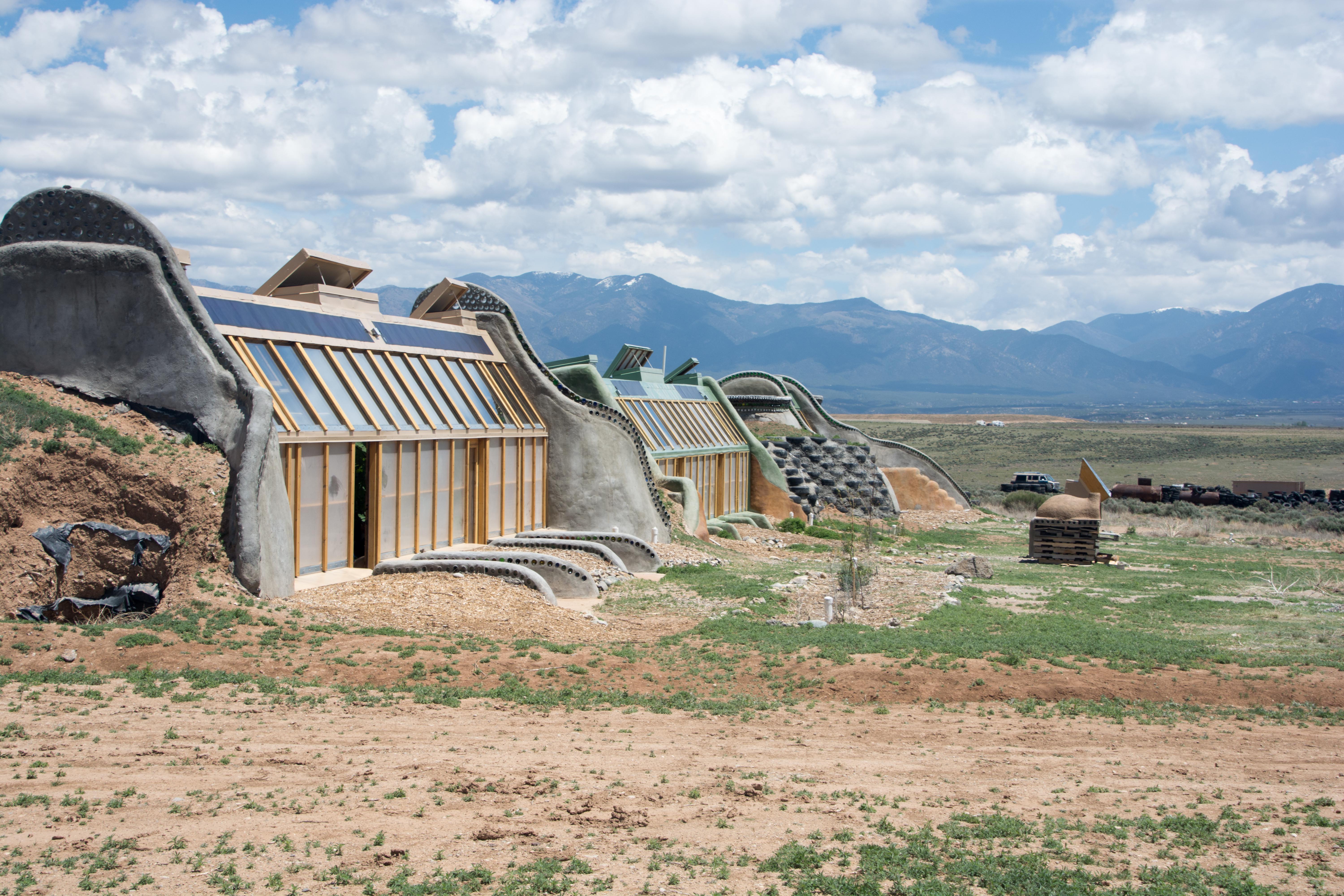
May 2015-8813Our next stop is the Greater World Earthship Subdivision, a bit further out from Rio Grande Gorge Bridge.  May 2015-8815 May 2015-8846This is a community dedicated to living as sustainably as possible.  According to their documentation their goals include:

“- Produce our own energy
– Harvest our own water
– Contain and treat our own sewage
– Manufacture our own bio-diesel fuel
– Grow much of our own food
– Our buildings heat and cool themselves
– Made utilizing discarded materials of modern society”

We came away from that with a greater appreciation for how mud, old tires and bottles amongst a wide variety of other discarded articles as well as recent technologies can be used and reused to assist in enabling sustainable housing in a desert environment.

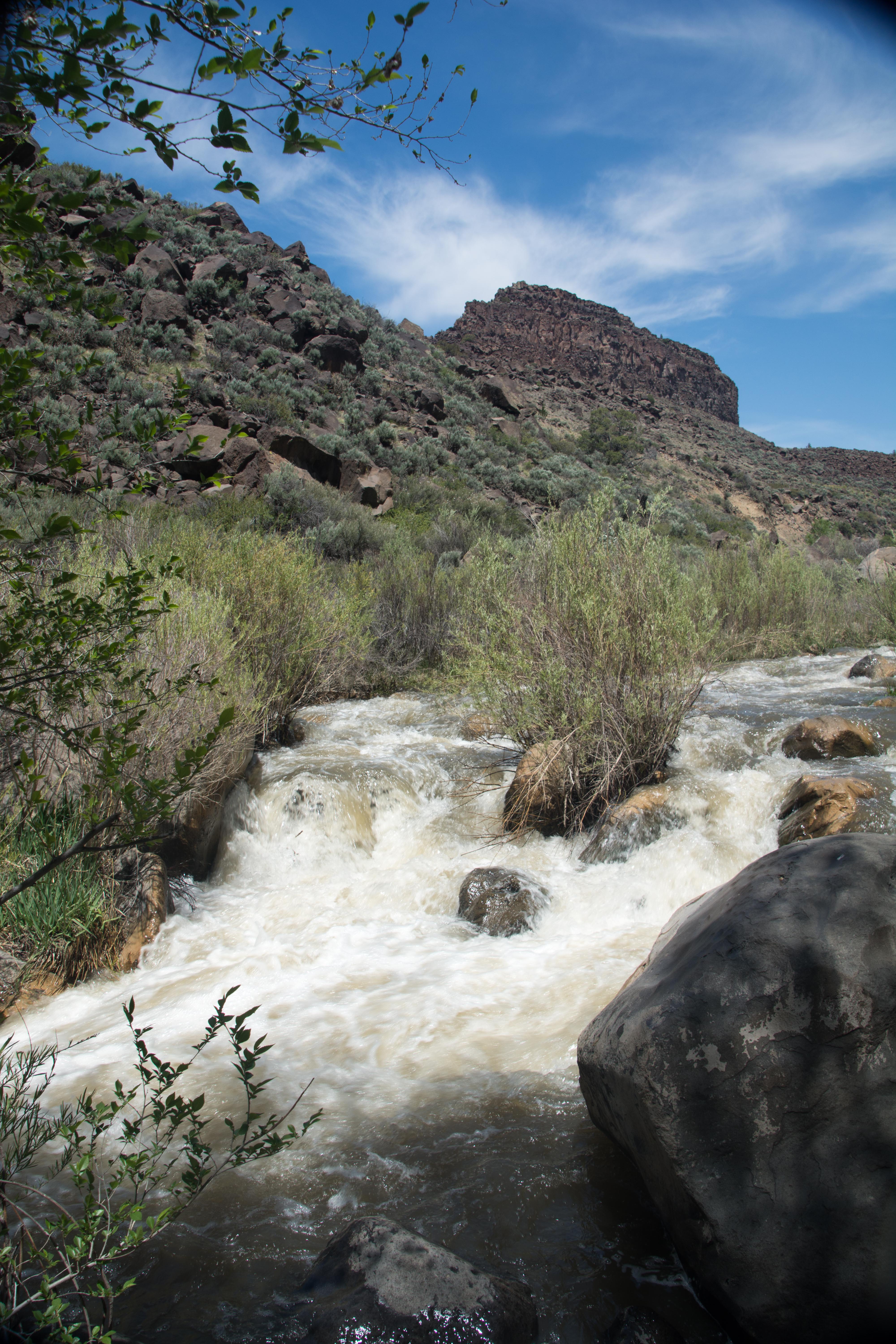
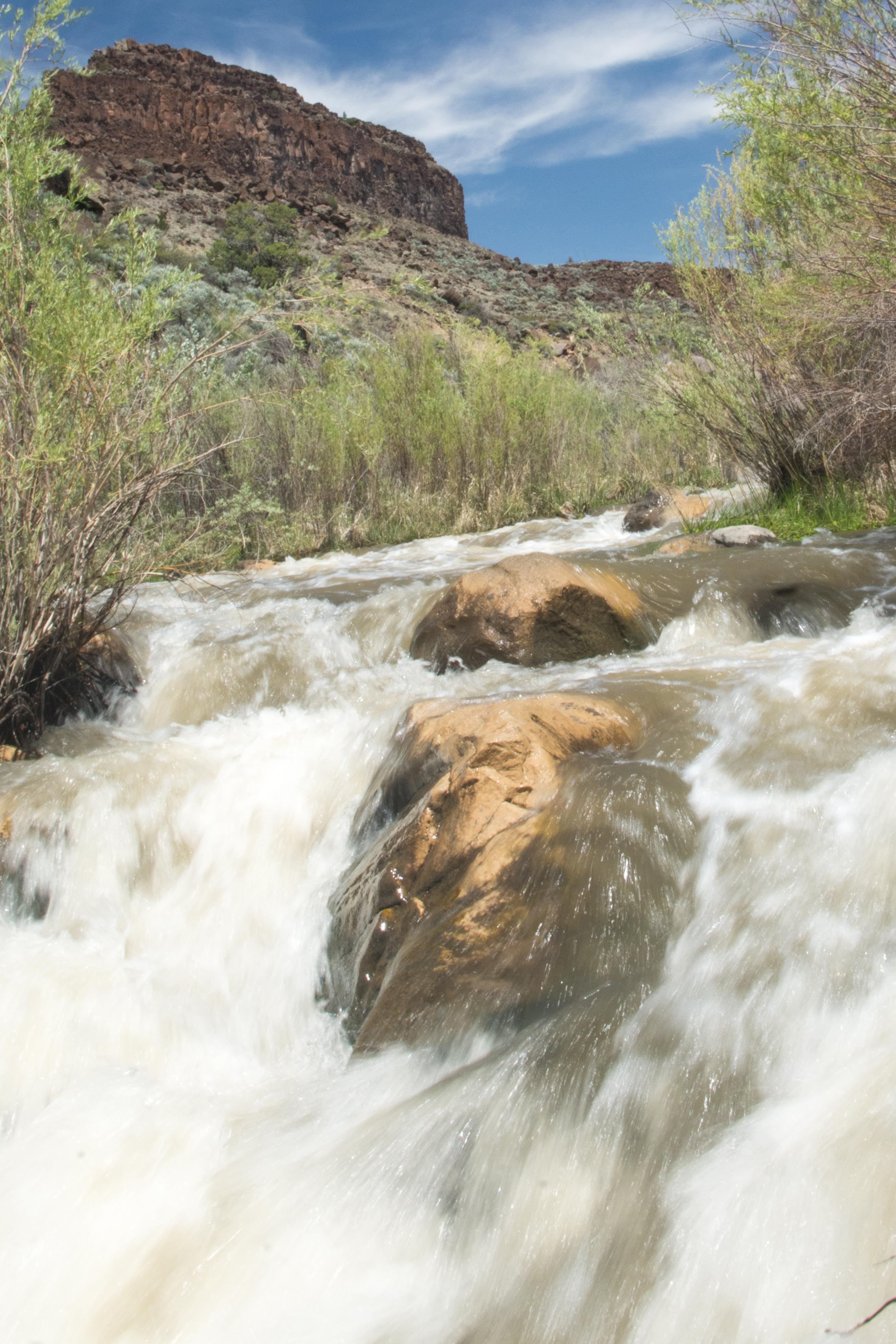
May 2015-8907 May 2015-8915We next go down to the Rio Grande River itself to get a closer look.  We stop at a number of places, at various levels to see views high and low of the river and some of the colorful plants that are to be found around it.May 2015-8889May 2015-8958 May 2015-8968

May 2015-8974 May 2015-8981

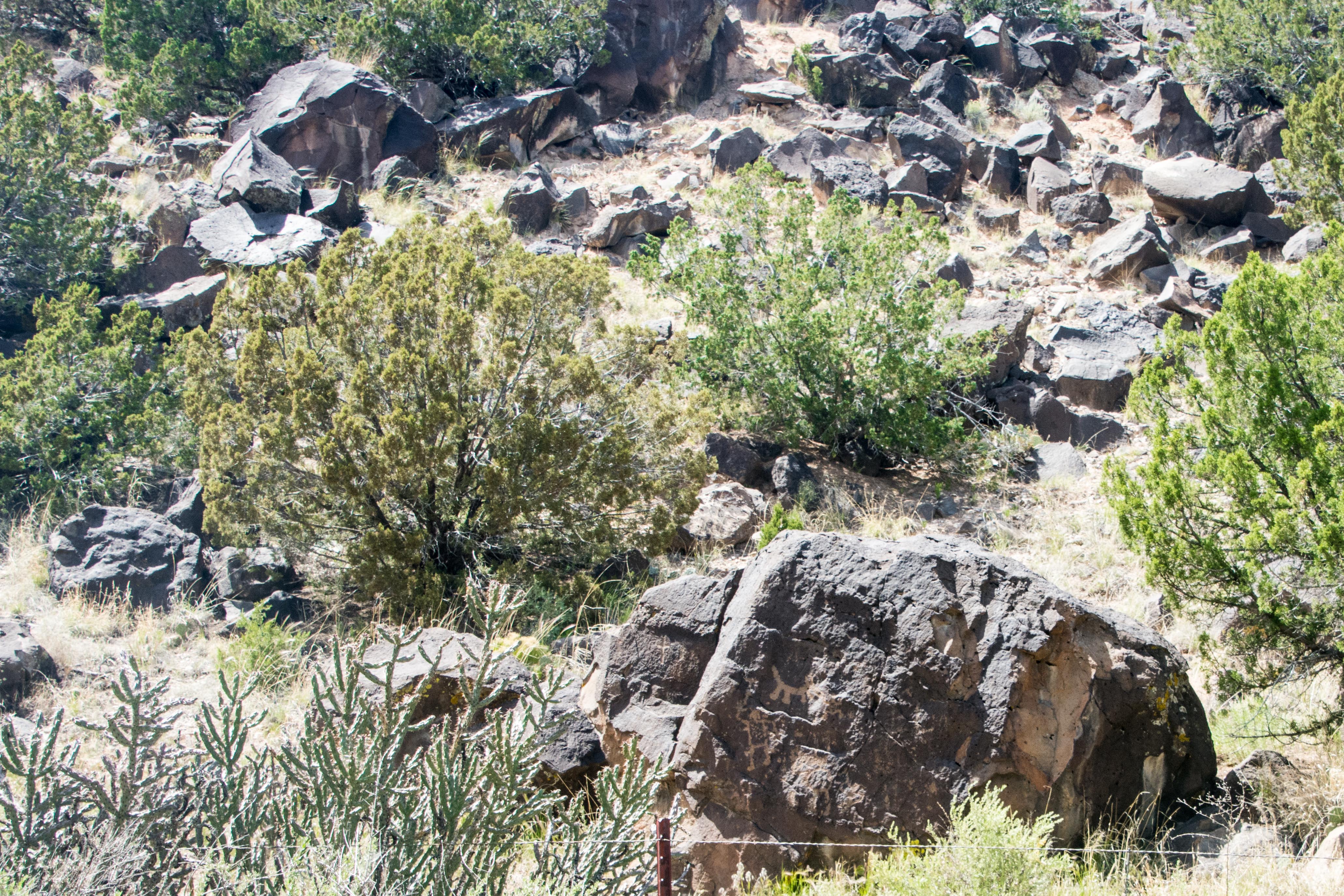
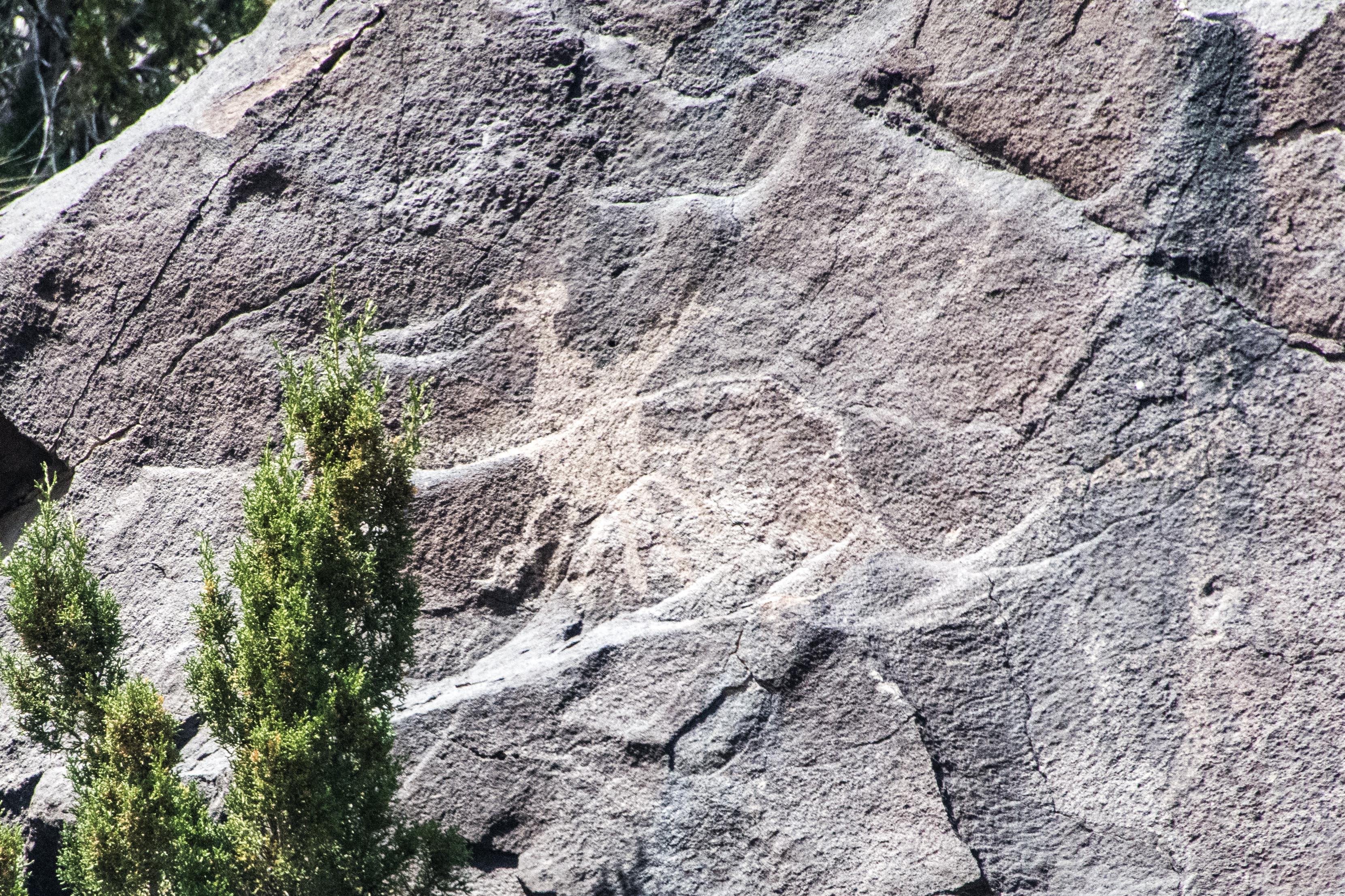
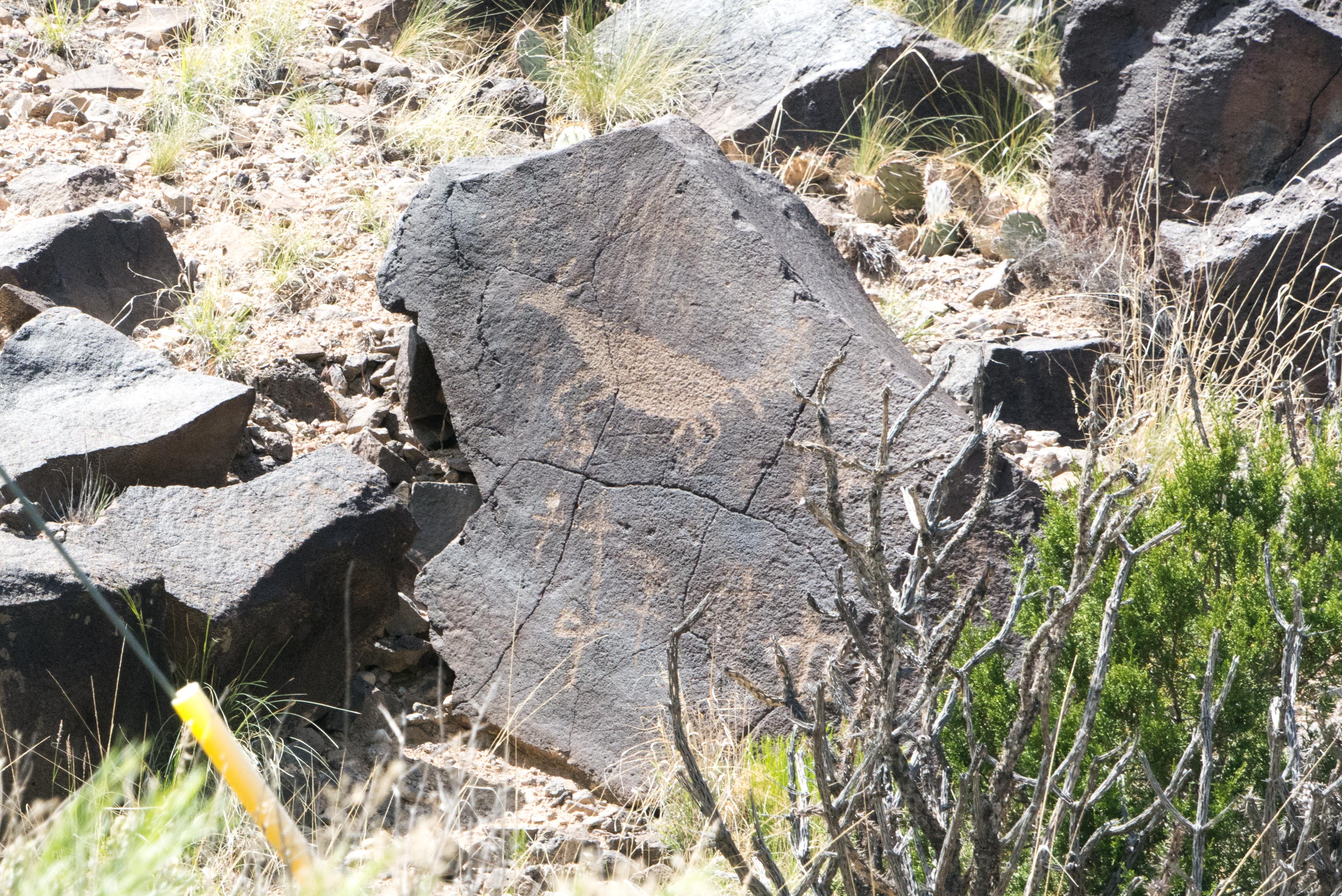
Heading out in another direction, May 2015-9004 May 2015-9015 May 2015-9010Steve takes us along one of the backroads where just to the side of the road is a hill full of rocks with petroglyphs inscribed.  We don’t have to get out of the truck to take pictures of these drawings, it is just “point and shoot”.

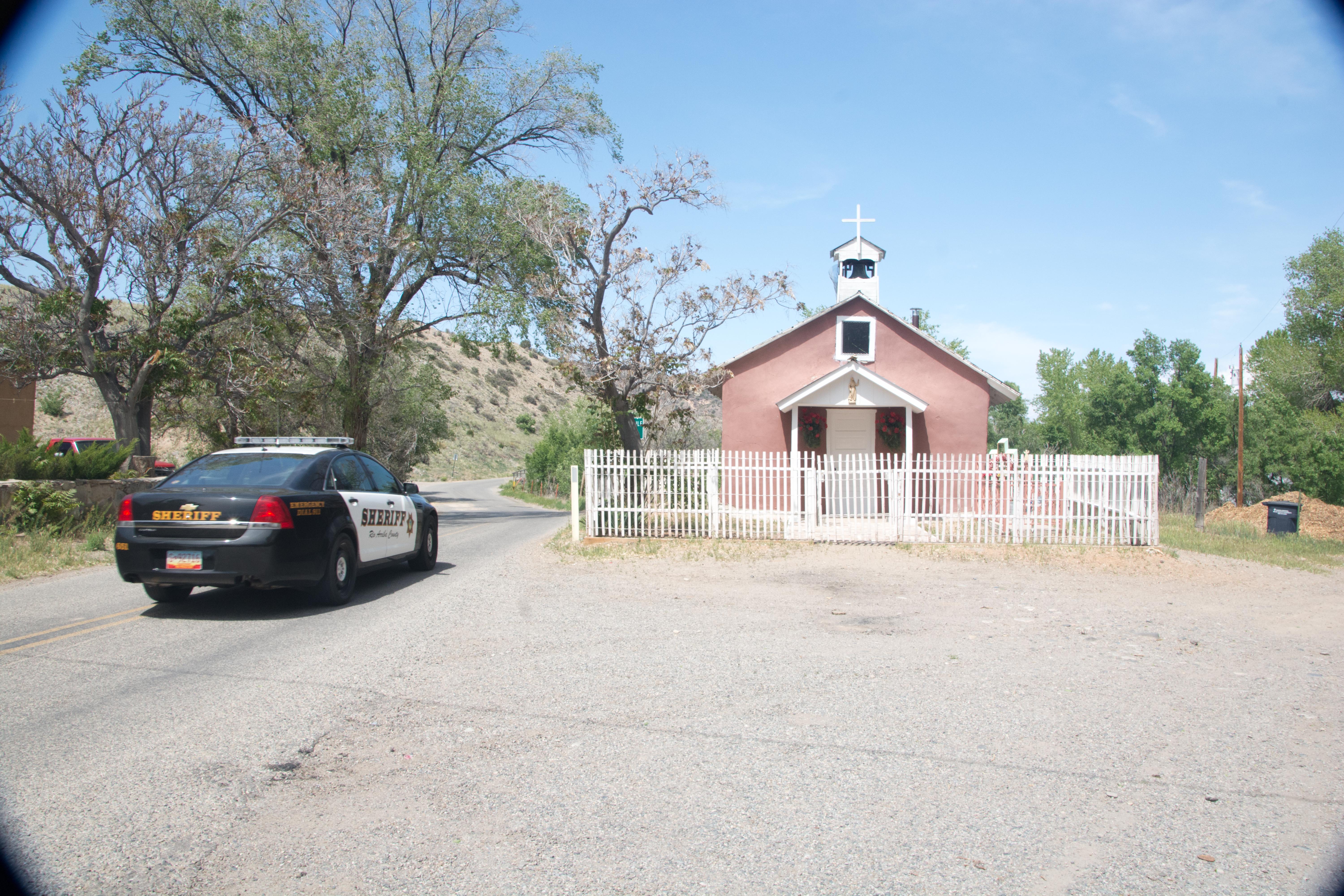
May 2015-9031Driving up into the hills, we comes to a junction where two roads come together into a “Y”.  In the patch of ground between the upper arms is a small church.  Just as I am taking a picture, the local Sheriff’s car comes by.  He doesn’t stop, however, so I guess he doesn’t object to our taking pictures!

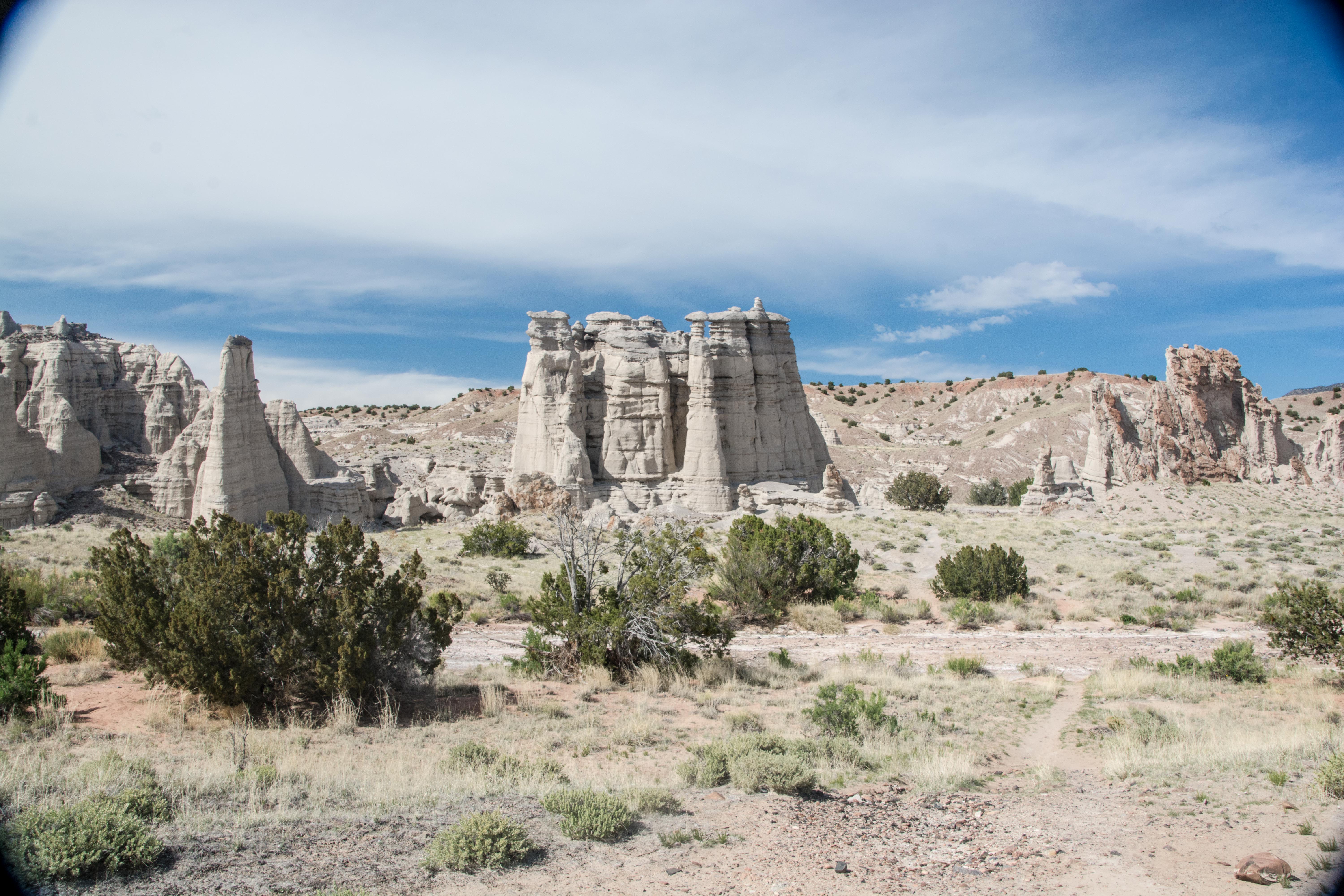
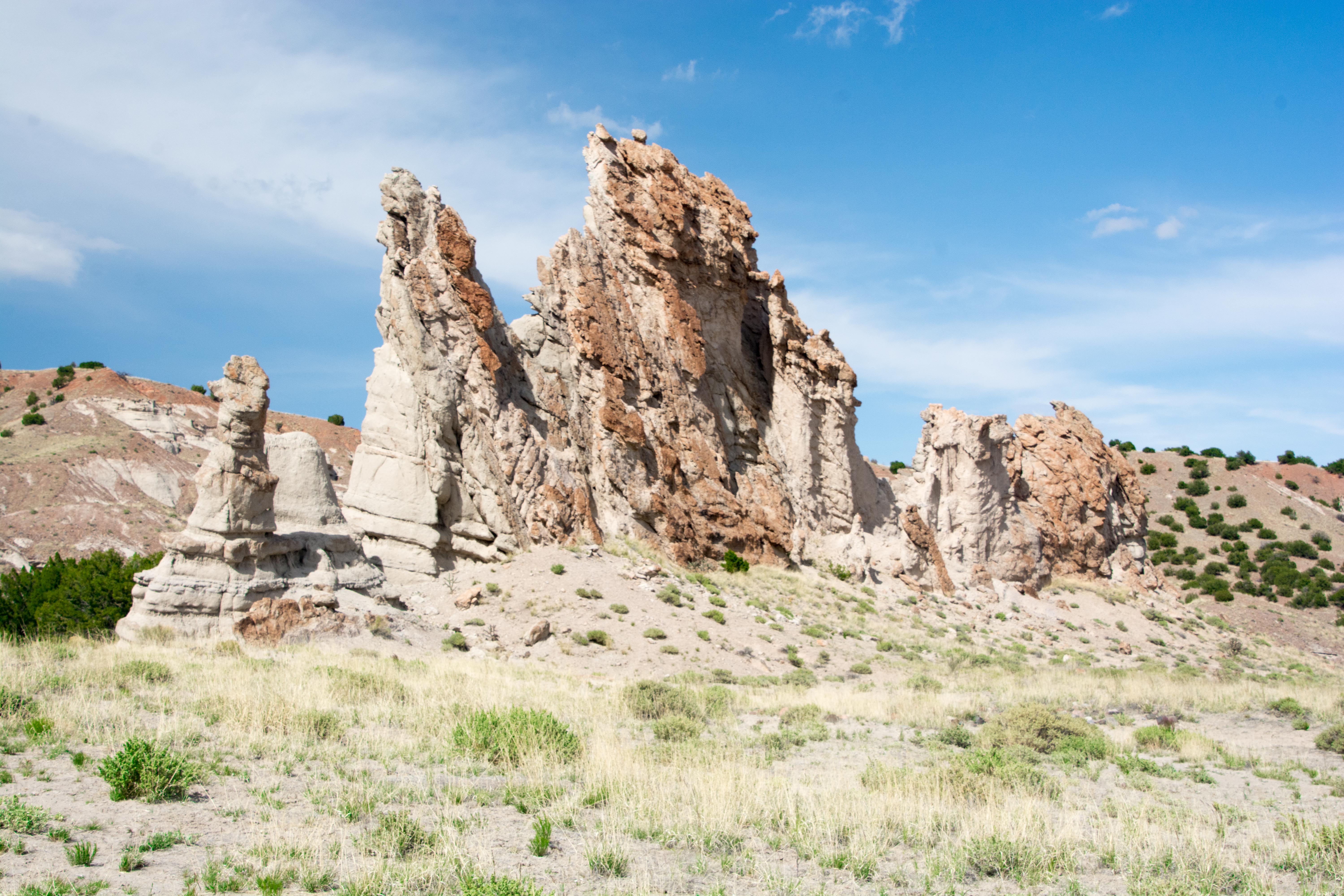
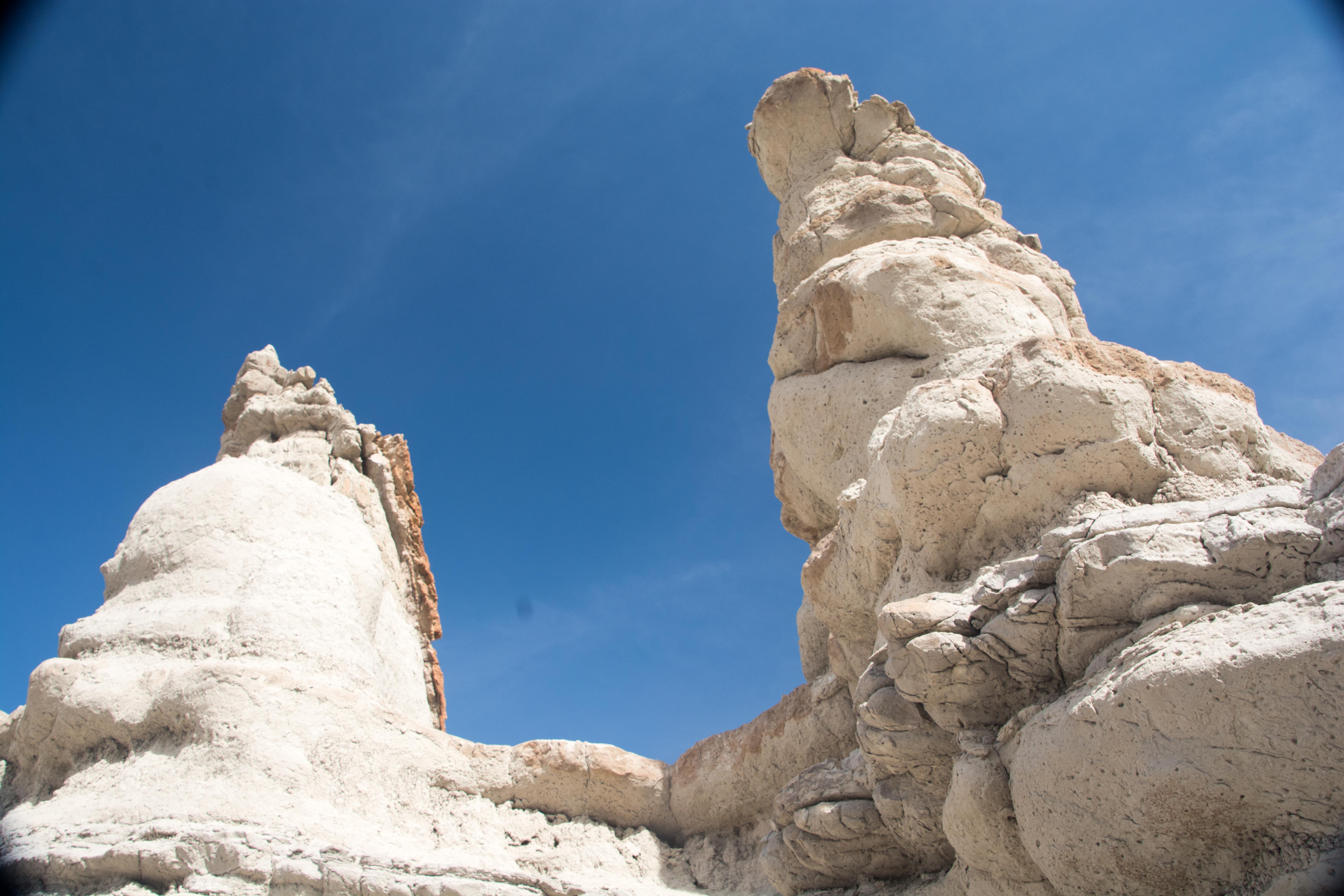
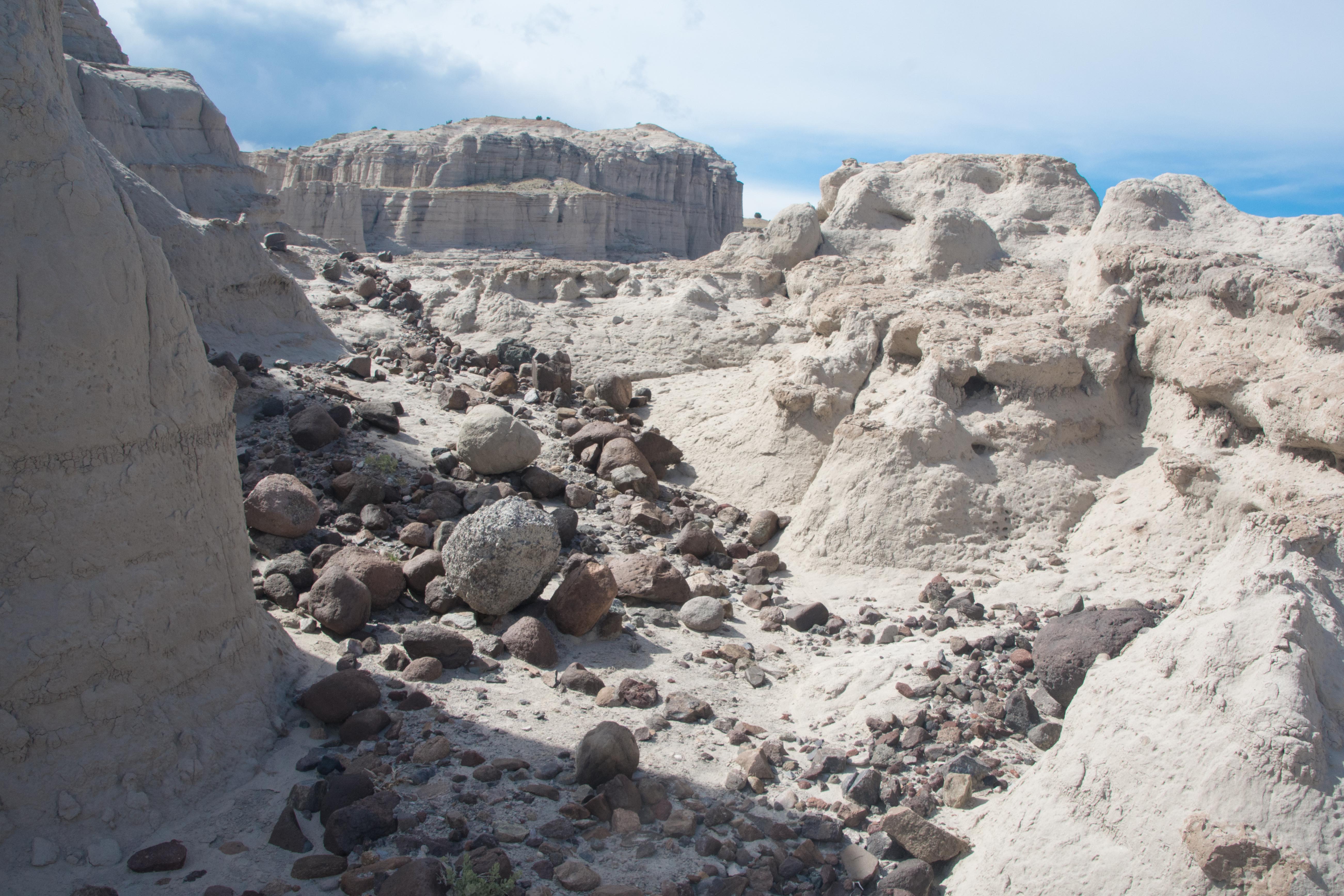
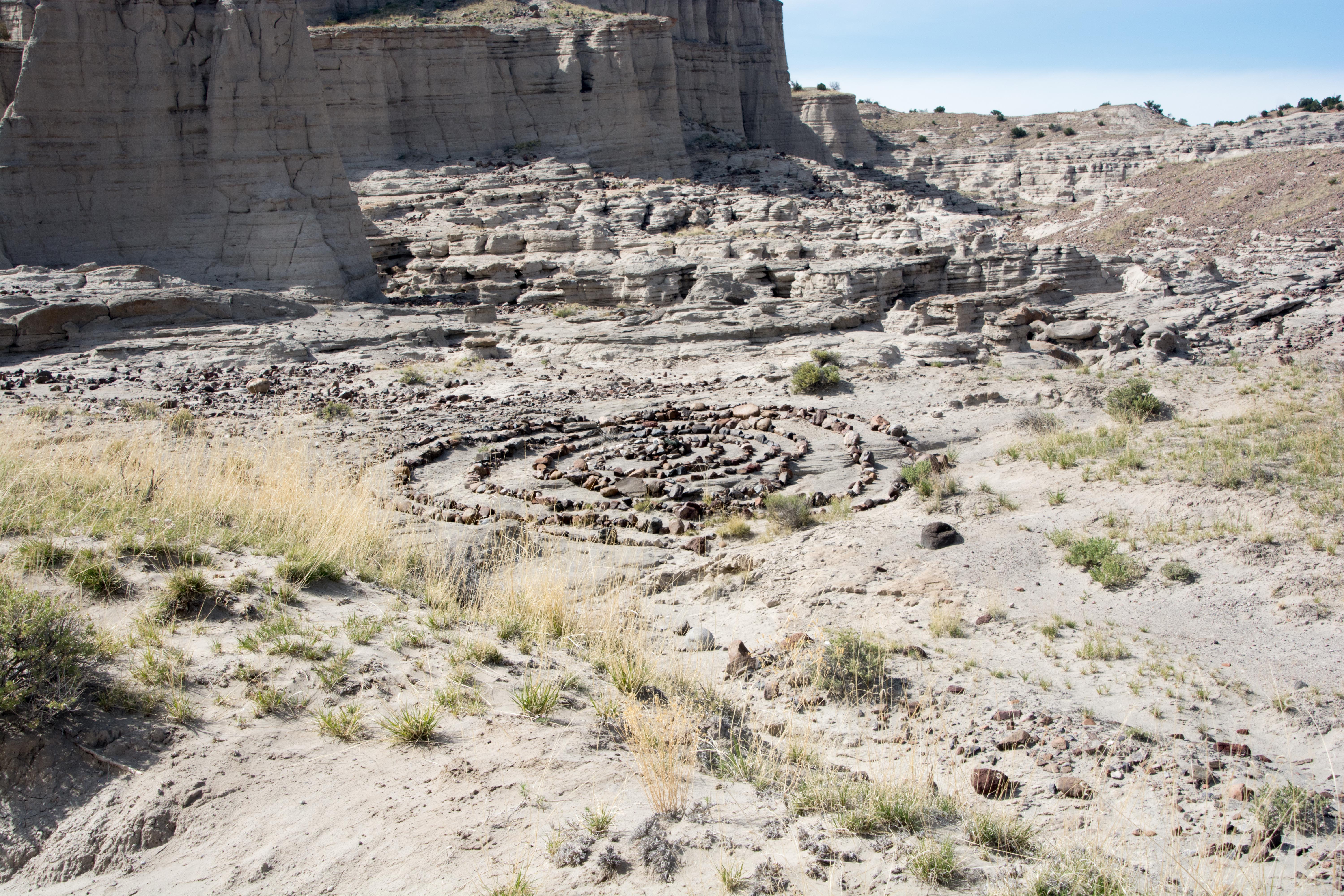
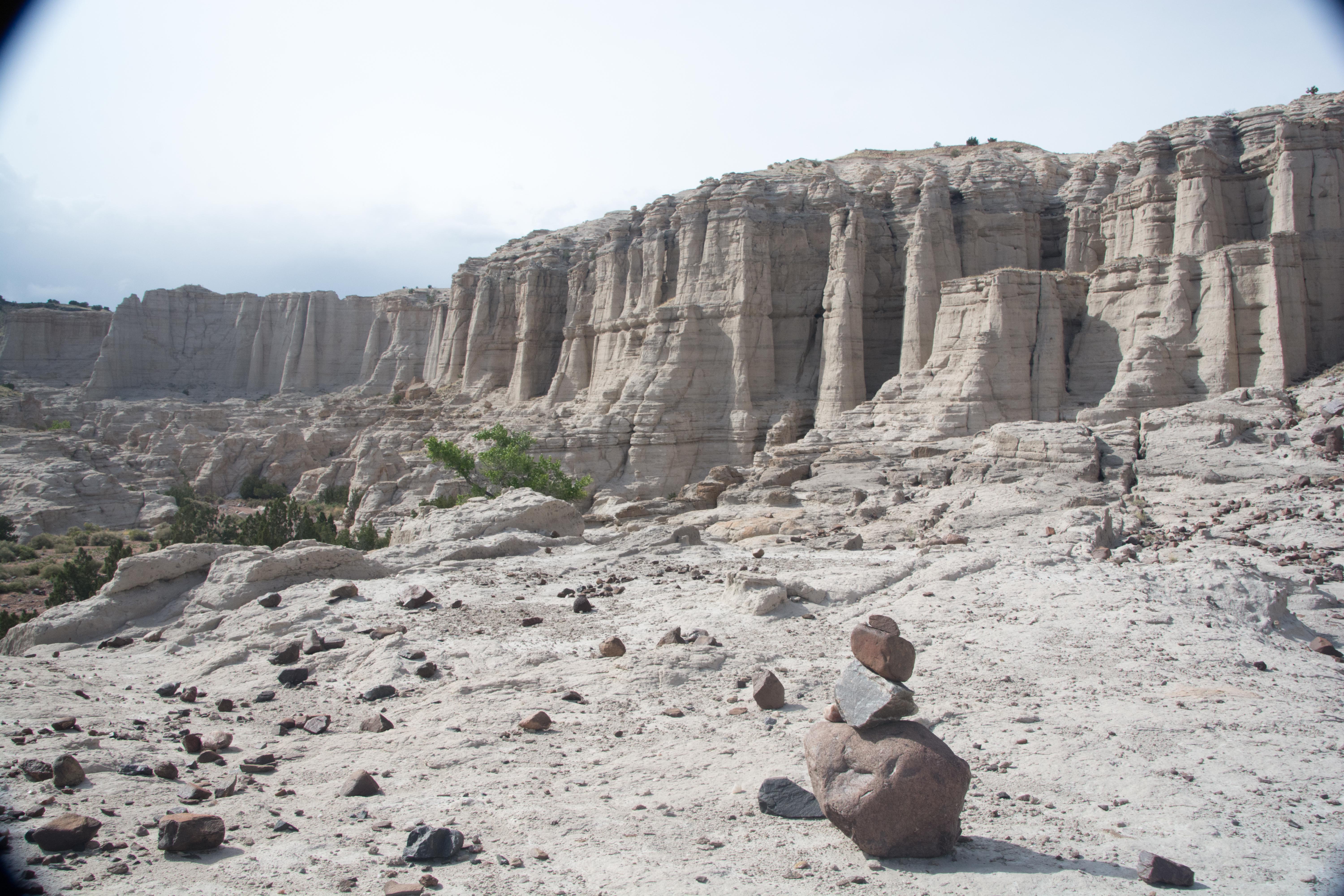
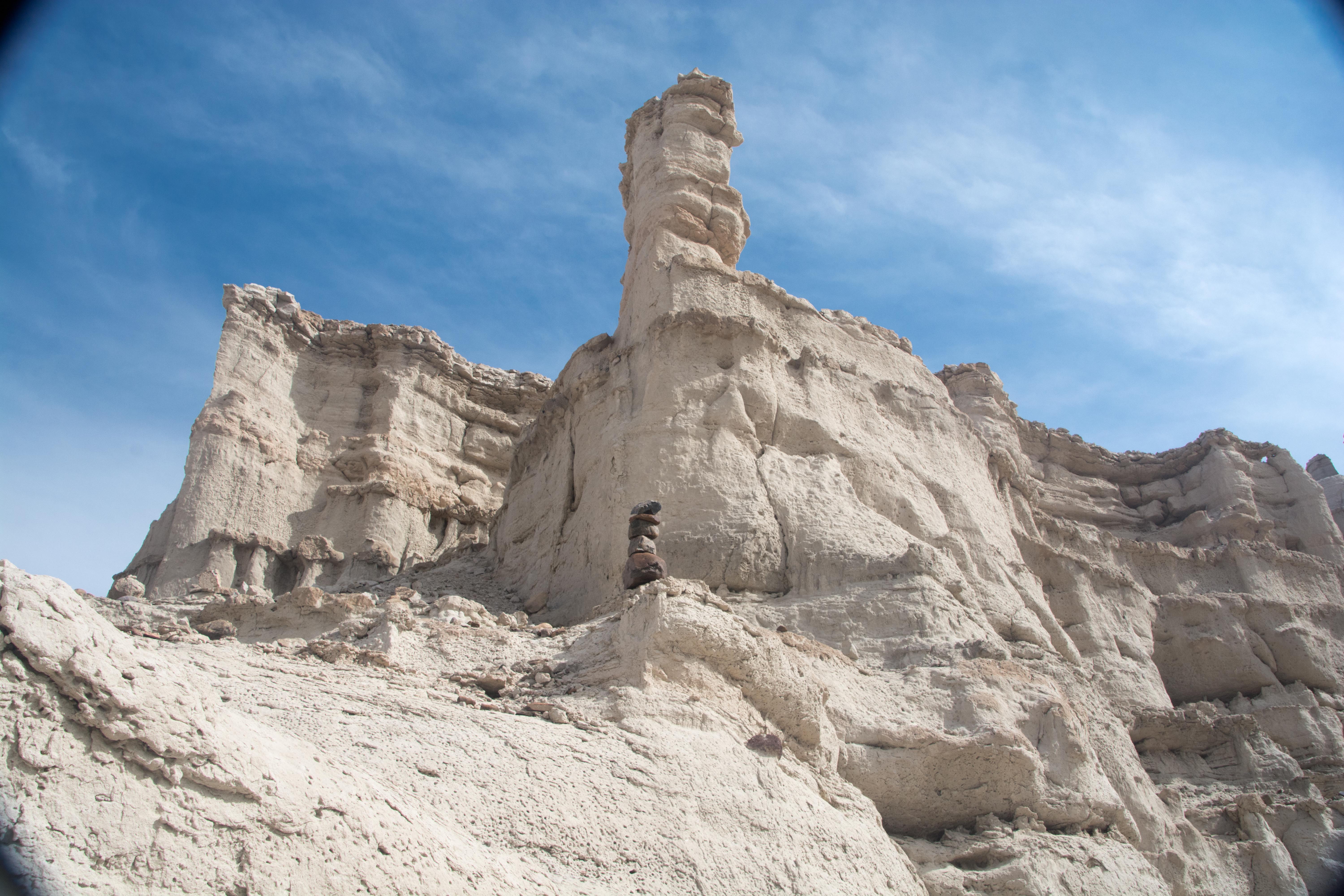
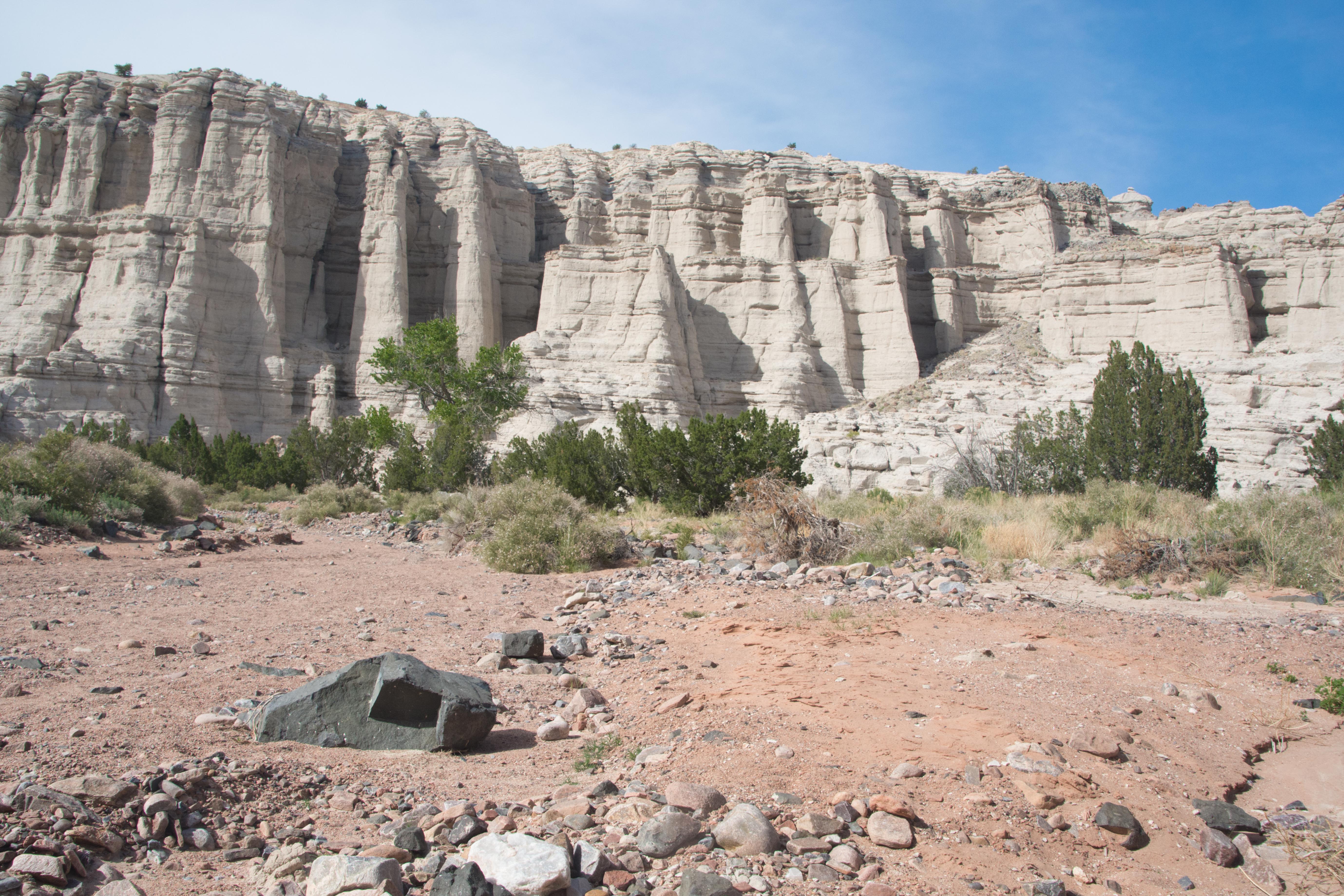
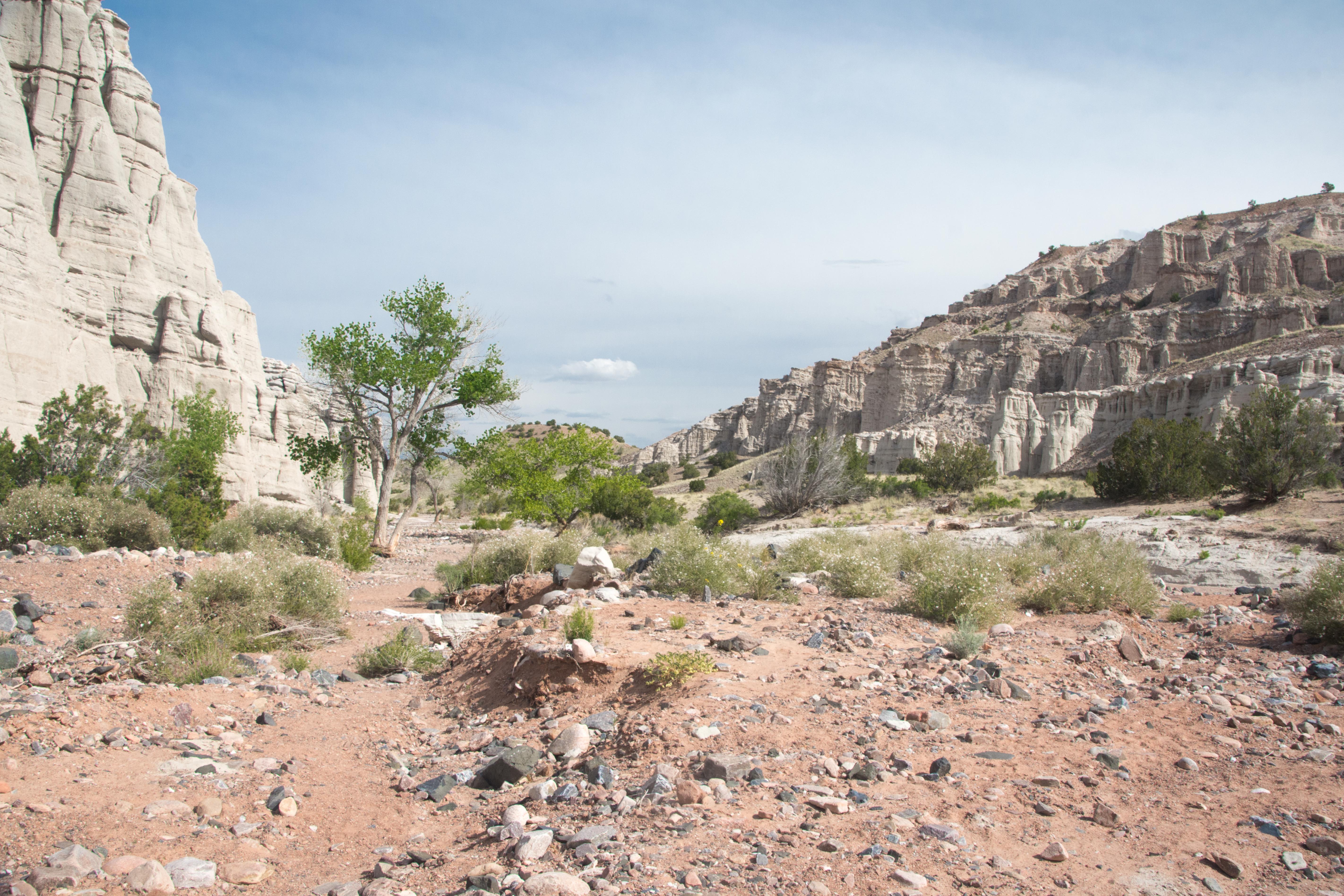
The next stop is Plaza Blanca.  May 2015-9045This is a river bed with a spectacular set of white limestone canyons near Abiquiu NM.  Georgia O’Keeffe made the place famous with a series of paintings called “White Place”.  May 2015-9050 May 2015-9058 May 2015-9064She lived for many years at the Ghost Ranch nearby and eventually bought and renovated an old hacienda in Abiquiu.

The limestone has been shaped into spectacular formations, reminding me very much of our recent visit to Monuments and Arches parks in Utah.  Like the formations there, many of these have names, but I only found out about this after we got back. One bank has vertical columns along it, while the opposite bank has more of a sloping side.  Where we enter the canyon, there is a middle section where the water, when it is running, runs around both sides of it.

May 2015-9072 May 2015-9093 May 2015-9110

The spiral rock formation, Steve tells me, is maintained by unknown hands, as he has seen it as it appears here most of the time, but occasionally he sees it disrupted.

May 2015-9115 May 2015-9119 May 2015-9129

Steve and I walk completely around the central limestone formation getting pictures in every direction.

May 2015-9134 May 2015-9141 May 2015-9144

After Plaza Blanca, we stopped at Bode’s General Store, one of the significant landmarks in Abiquiu.  It was significant to us because they have restrooms there.

On our way back we visit another native american-maintained religious adobe buildings.  May 2015-9156 May 2015-9162 May 2015-9166

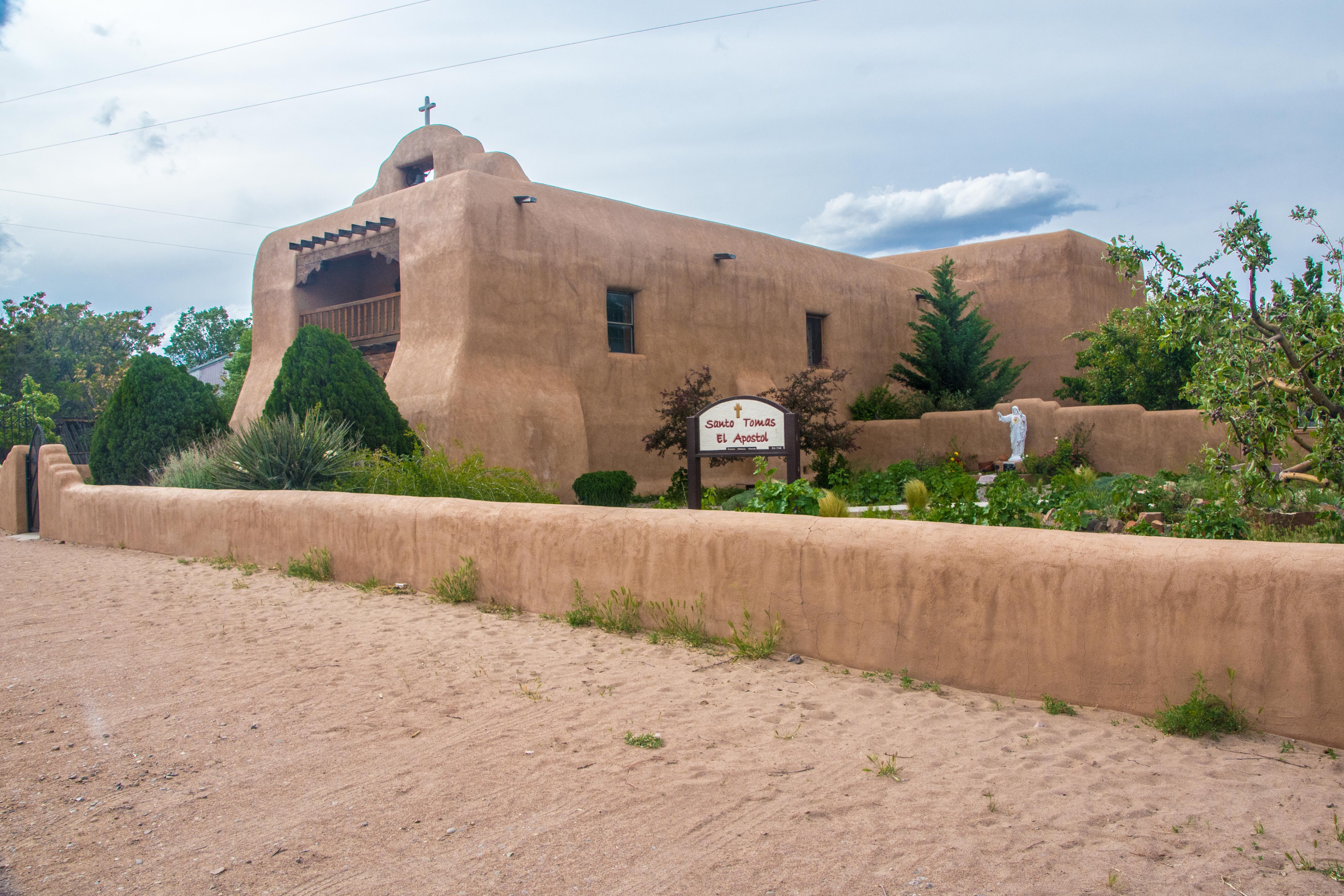
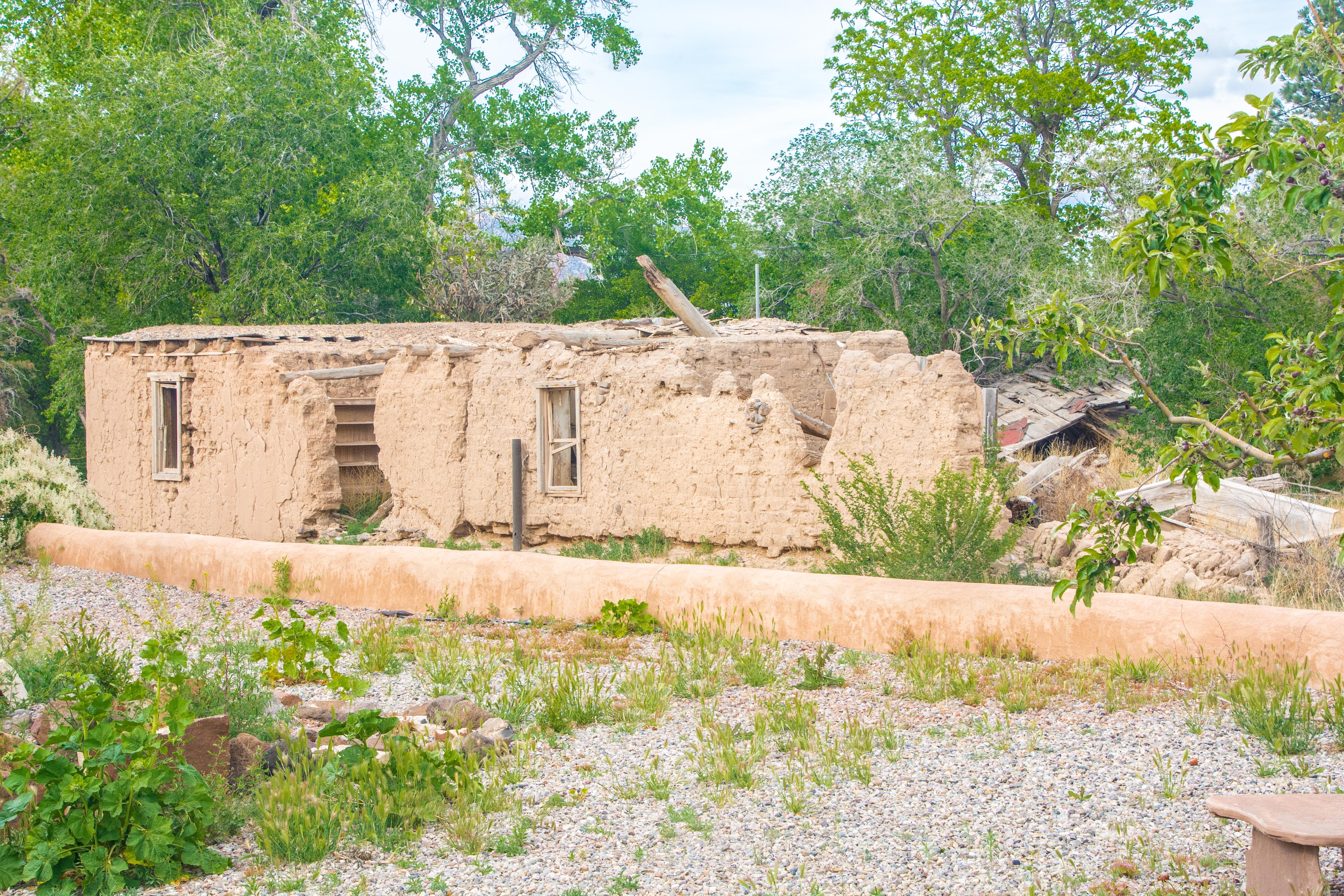
The next stop is the Santo Tomas El Apostol Church.  May 2015-9179 May 2015-9181On the side of that nicely maintained mission building is a beautiful example of how an adobe structure that is not in maintenance mode crumbles.  I hadn’t appreciated how much maintenance these buildings required until I saw this place.

May 2015-9199It is getting on in the day, but we are heading back up in altitude.  This view overlooks the Rio Grande again.  Steve tells us that he occasionally sees kayaks making their way around the bends here.

Next stop is the Ghost Ranch Education and Retreat Center, a much larger complex than I anticipated.  As indicated above, Georgia O’Keeffe lived there for awhile.  We drive in and tour around for awhile.  May 2015-9215 May 2015-9245 May 2015-9272The views, like some of the other places we visited are magnificent, but the clouds limit the photographic possibilities.

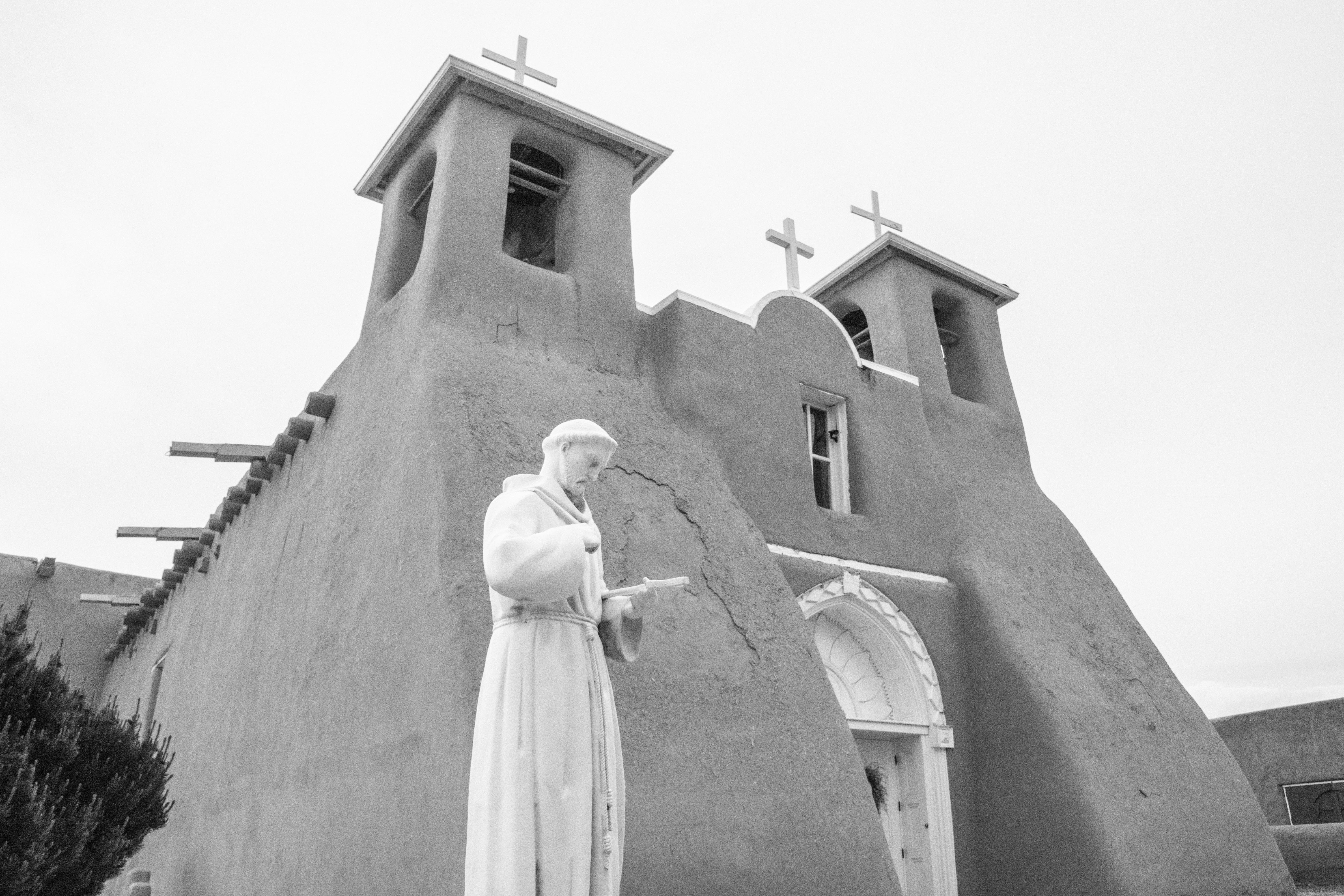
May 2015-9282The last stop is the San Francisco de Asis church in Taos.  Quite beautiful, but the sun has truly set, so the picture gives me the opportunity to see how Ansel Adams would have tried to capture it!

Well that was quite an adventure! Steve took us to a number of spots, and I learned so much. He is someone who believes in Aperture priority as the best way to control how to get the picture you want. So, along with the marvelous sights he has shown us, he has helped me understand how to structure how I take pictures to do much more effectively what I want to do.

May 2015-9259Amazing stuff. He also was able to help me see pictures in what I was looking at, finding the interesting things to focus on (in groups of three, preferably), and then getting them into a framed pattern.

While this was great fun for me, I’m afraid Gwen got rather bored.  She was a good sport though, and she enjoyed the variety of scenic views.

Leave a comment

Filed under Blog

Palm Springs, CA to Clarkston, MI, Day 5-6 May 10, 11

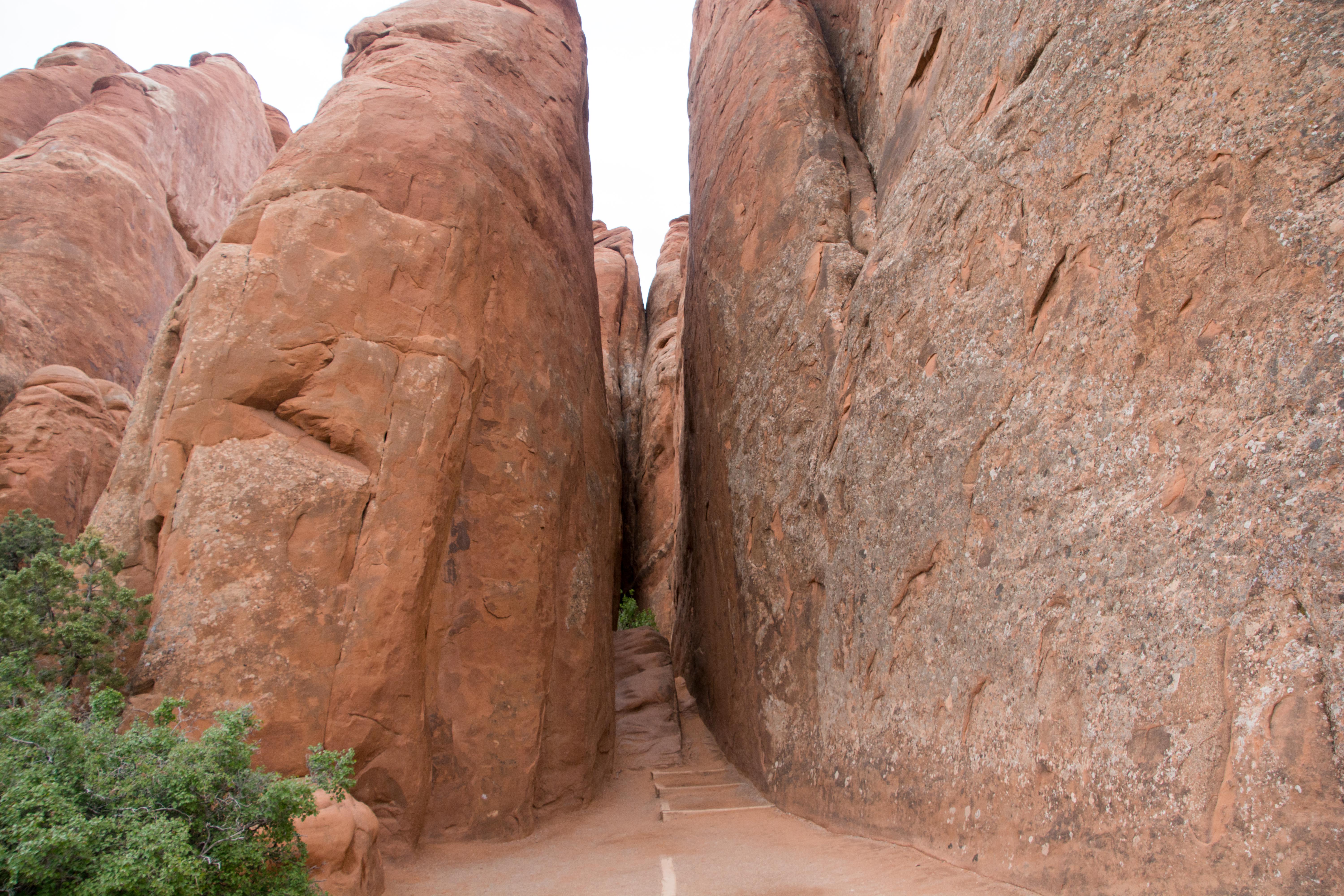
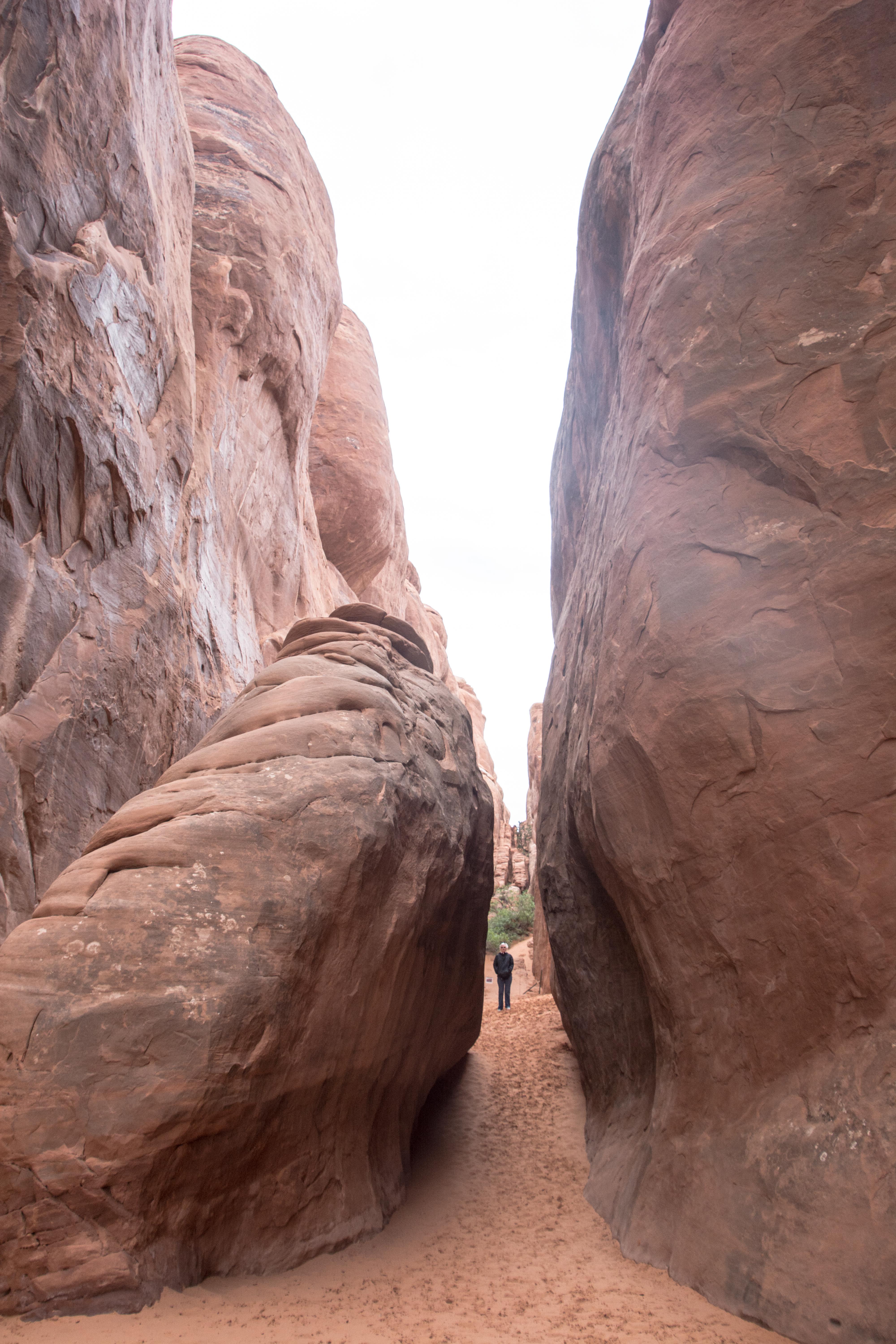
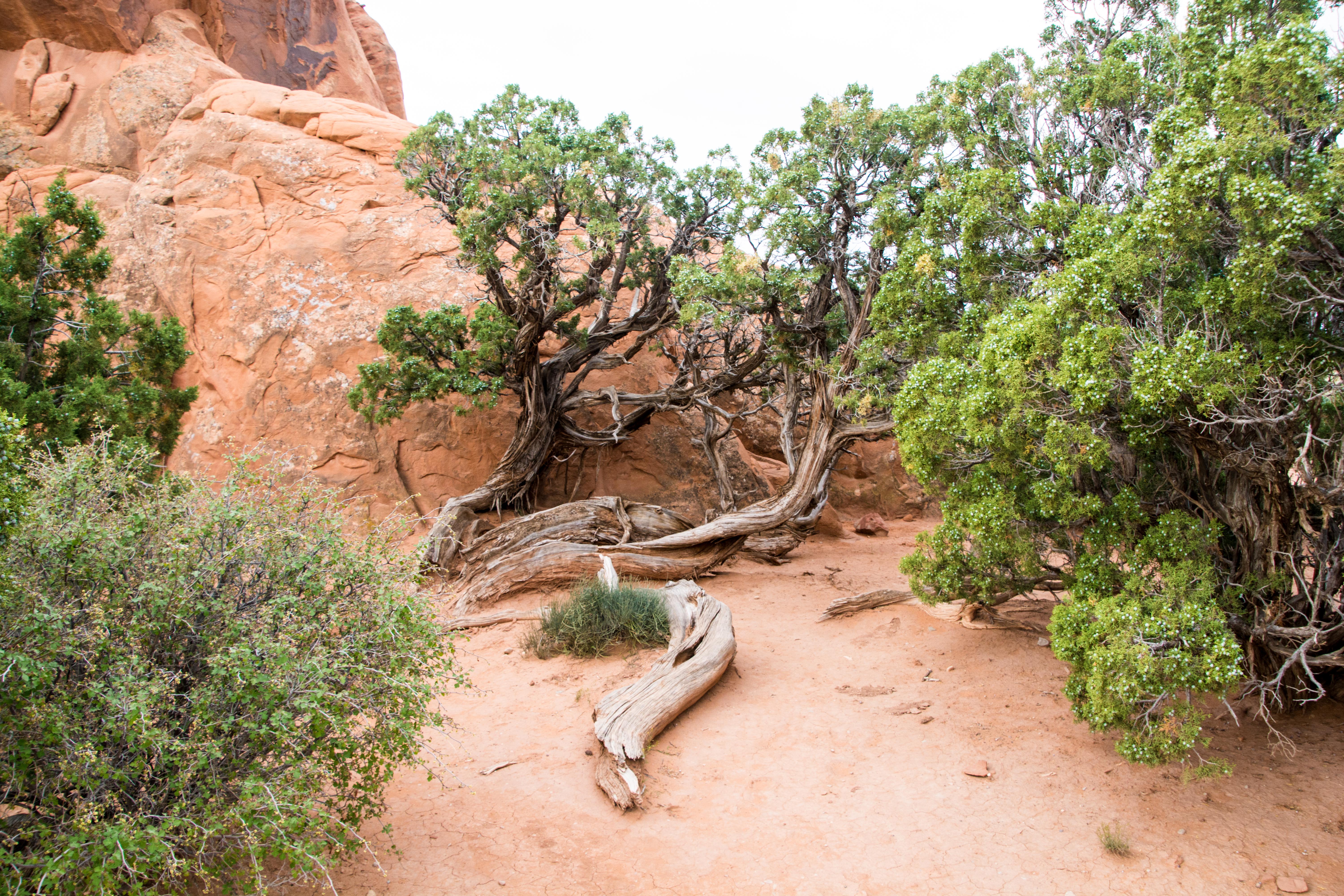
This morning it was up early, as we wanted to see the rest of Arches before we started out on our next segment eventually taking us to Taos, NM. The sun yesterday had been mostly bright with some clouds in the sky, but today it was very much a cloudy day, at least at 7:00 as we started out. We travel our way up to the Sand Arch parking lot (the one above Wolfe Ranch), and walk to May 2015-8403the huge sandstone slabs standing vertically side by side with little space between. May 2015-8408There is enough to enable easy passage, and the Sand Arch is only a third of a mile inside, so Gwen accompanies me. Actually, she leads me in, navigating the sandy ground without a problem. May 2015-8419She is happy to be inside the area without anyone else (indeed there were no other people there while we are) until I show up. May 2015-8405 I have been noticing the juniper “driftwood” pieces that provide very interesting sculptural counterpoint to the smooth lines of the rocky spires that project into the skies from the sandy ground wherever we stop. So I get a number of pictures, and am able to get May 2015-8422Gwen’s picture from a distance as she climbs around near the Sand Arch.

We get back in the car and keep going to Devil’s Garden, enjoying the various rock formations there as well.

May 2015-8446 May 2015-8451 May 2015-8454 May 2015-8490That was the end of the trail, however, so we head back out. I take some more pictures where I think the light contrasts with the light from yesterday, but in general, we make our way out fairly quickly.


After a rather disappointing breakfast at Denny’s, we clear out of the hotel and head toward Farmington, NM, about half way to Taos. Along the way, Courtney, Sandy and Kyle and Suzie call to wish Gwen a Happy Mother’s Day, and in general catch us up on their happenings. We thoroughly enjoy the conversations.

We get to Farmington, and the first order of business is to get the laundry done. Oh, happy day! Gwen gets that done in a reasonable amount of time, putting us on fresh footing for the rest of the trip. Our trek out afterwards is to find food, as we hadn’t had any lunch, and it was getting toward 5:30 pm. After some false starts, we ended up at the St Clair Winery and Bistro, which turned out to be quite a find. We are relatively early, but it is Mother’s Day, so the crowd quickly catches up. We share a very nice rib eye with sautéed mushrooms and onions, along with some very nicely done vegetables, including Brussels sprouts, and mashed potatoes with onion bits mixed in. In the process of introducing us to the winery, Lisa, the waitress brought a couple of white and a couple of red samples for us to try.  They are all good enough that we end up ordering six bottles to go.  We will join their wine club after we get back to MI. After dinner, we go back to the hotel and have a quiet night in so I can catch up with my log and try to work out the picture workflow.

Monday, May 11

Today, we get up and take our time getting out of Farmington. There is no need to rush as we don’t want to get to the Historic Taos Inn before check-in time (nominally at 3:00 pm). We leave about 9:30, and while we don’t set any land speed records, we get here about 1:30 pm. Along the way there are few things to distract; the scenery is greener than the deserts of Palm Springs area, but not so varied as we were used to seeing in Utah (with the sandstone buttes, towers and ridges all over the place). We pass three times into the Carson National Forest, and out twice, or is it the other way around? I do remember the first “National Forest” sign we called each other’s attention to was a “leaving” sign. We get well above the snow line while in the Carson forest, crossing over the higher elevations of our trip there. The snow is not near the road, nor are the temperatures below 40, but there are many obvious patches of snow below our elevation while we are doing our crossing. As we come into the area of Taos, one thing we do notice are a group of homes, spaced out from each other, and standing a couple of hundred yards off the road. They are each surrounded by their own version of a junk yard, usually with quite a few older cars/trucks, as well as trash cans, wood (broken), metal (rusted), and some kind of covering over all or part of the central area.  The houses themselves are some sort of trailer or portable living accommodation (sometimes more than one). There are quite a few of these dwellings spotted along the road. The land in the immediate vicinity has lots of green, but is basically scrub brush.

After checking in, we eat our late lunch in the hotel’s restaurant (named after Doc Martin, who started up his practice in the building where the restaurant is located in the late 1800s). His wife, after his death in the 1920s, turned this lot into a hotel for visitors, and through several revisions and some new owners recently, it remains a staple of the town.

May 2015-8600

Kit Carson’s House

After lunch, we walk to the Kit Carson Museum, just around the corner. This was Kit Carson’s house in Taos. Taos is the place where Kit and his third wife Josefa lived, and were buried after they died in 1868. Josefa died as a result of complications from giving birth to their sixth child. Kit died a month later, finally succumbing to an aneurysm with which he had been suffering for several years. He was 59 years old, and she was 40. The museum is well-presented, bringing out his early days as a trapper, hunter and “mountain man” of no small reputation as the result of his navigating James C. Fremont on his adventures in the western US.  Fremont was generous in his praises, assuring for Kit a place in history. His place in lore was secured by the authors of books about mountain men in the old west who claimed for him credit for deeds of daring do in dozens of stories. These claims made the stories more exciting but the reality didn’t match. Between the two, however, Kit Carson was the most well-known mountain man around. He was not proud of this reputation, and in fact did what he could to discourage it.

The other part of his life emphasized by the museum was his family life. He married early to a young Indian woman. She died of complications following the birth of their second child. He married twice more.


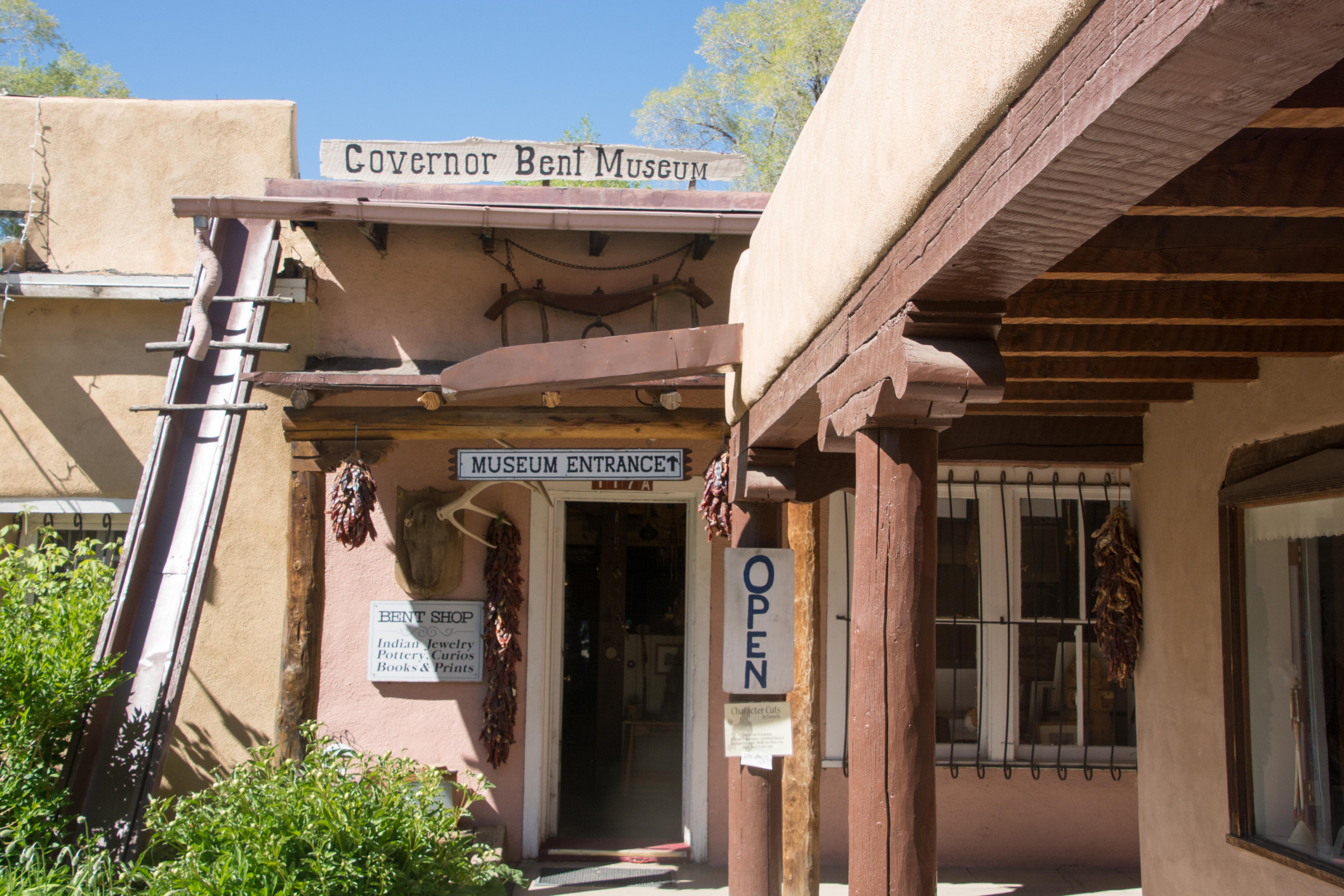
The museum gives us both a better understanding of the man and the life he led. We walk next to an old house not far away where Governor Charles Bent was killed by a group of unhappy Indians and Mexicans.   May 2015-8608He had been appointed as territory Governor in September of 1846. In January of 1847, he was awoken with his family in the house because the Indians and Mexicans were upset about now being governed by the US rather than the Spanish. Bent went out front to talk to them to try to calm them down and to give time for his family to leave. He was not successful.  He was wounded by both arrows and bullets, and was finally killed by being scalped alive. As a result of this gruesome episode, the military came in and killed a number of people including hanging those believed to be responsible. The museum included a number of artifacts of the period, including rifles, tools and other implements. There were a number of newspaper articles about the episode as well.

We walk back to the hotel, and have been resting ourselves since. Tomorrow, Steve Bundy meets us out back to take us out on our day around Taos.

Leave a comment

Filed under Blog

Palm Springs, CA to Clarkston, MI, Day 4 May 9 part 2

If you are going to visit Arches on the weekend (as we are), the rangers recommend doing so in the evening and early morning. So we decided to get started today, even after our long drive from Monuments Park. We arrive at the park entrance at 4:00 pm, and the rangers are right — it is easy to get to whatever we want to see. The afternoon light creates some fascinating views, and I do my best to get every one I can.

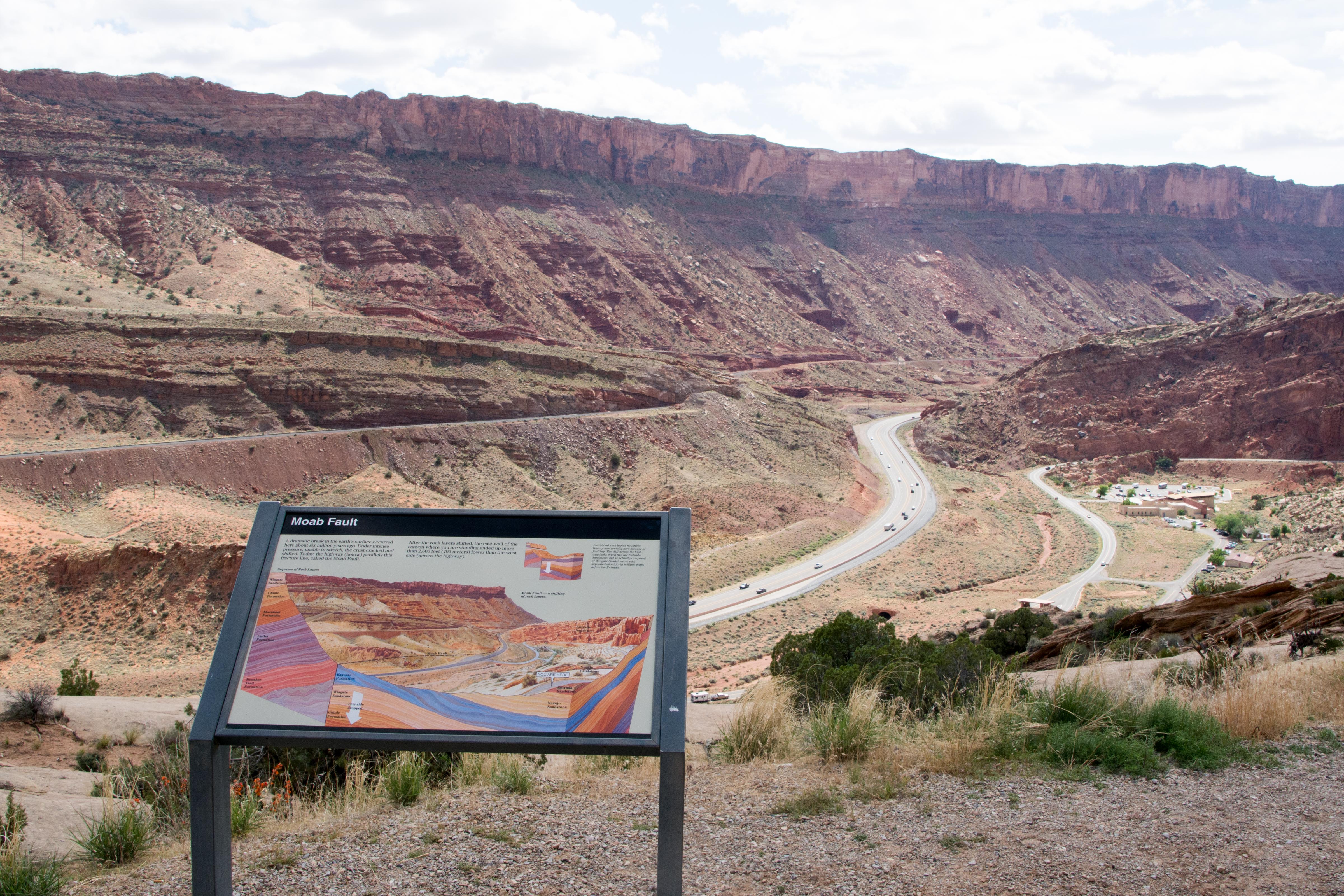
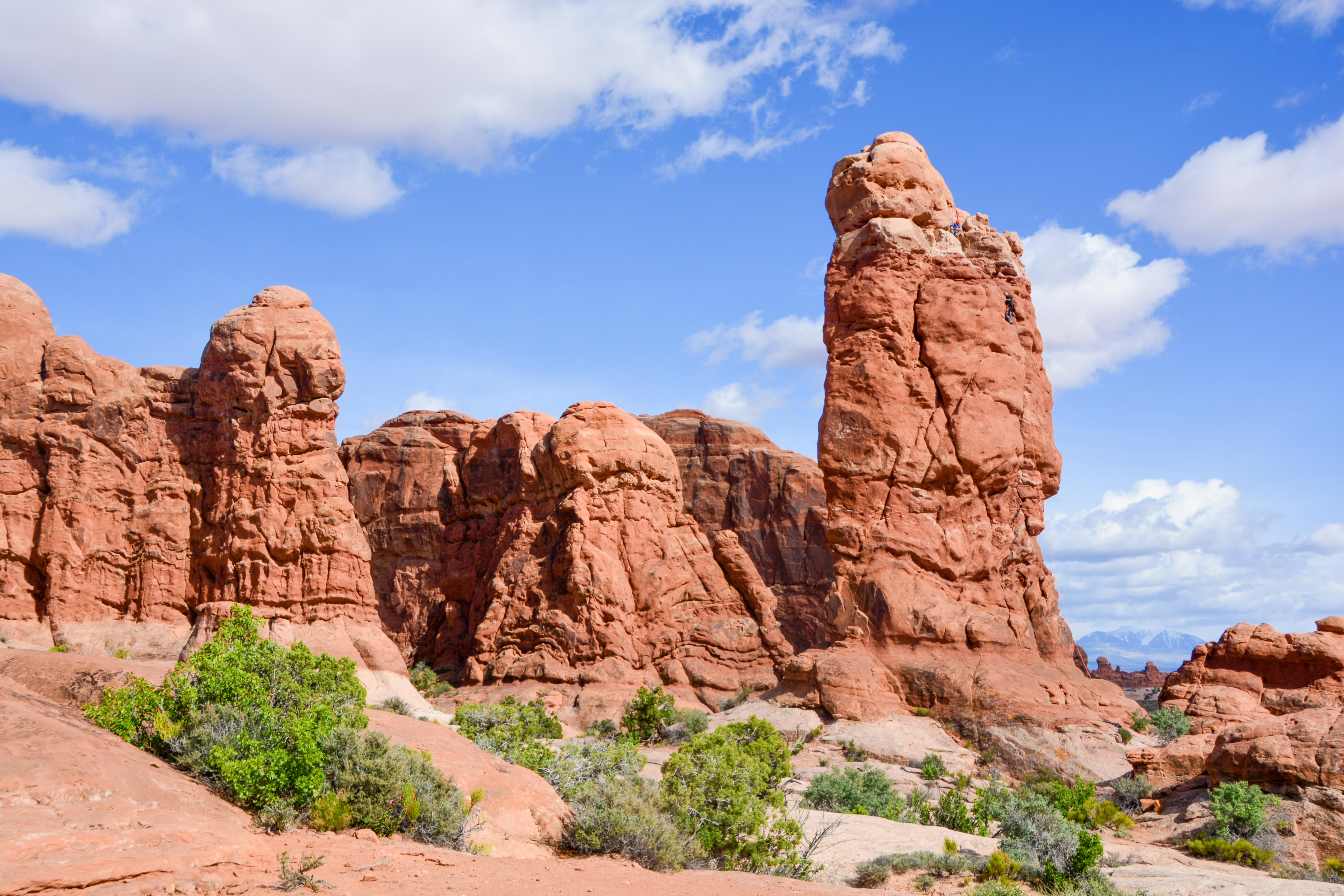
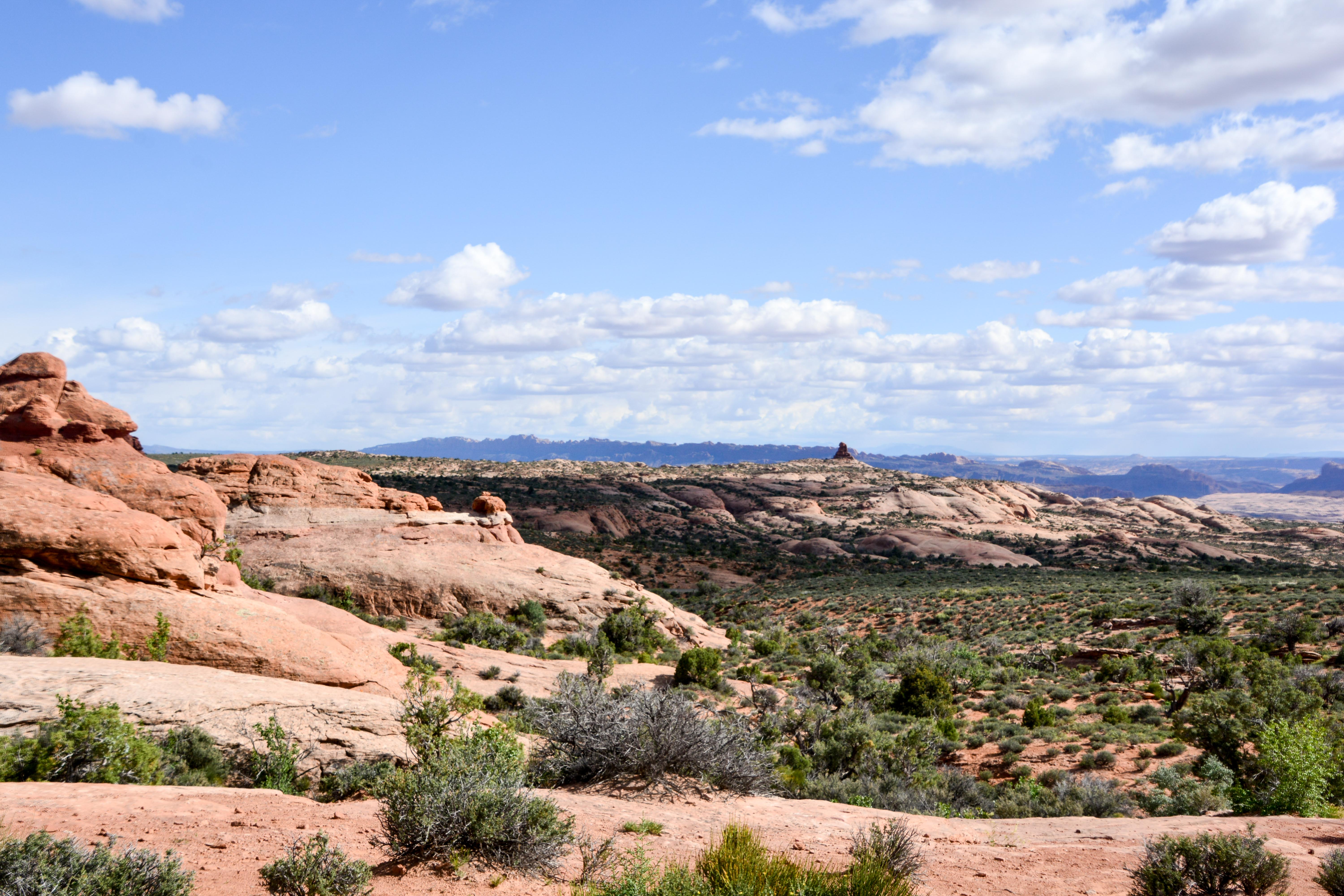
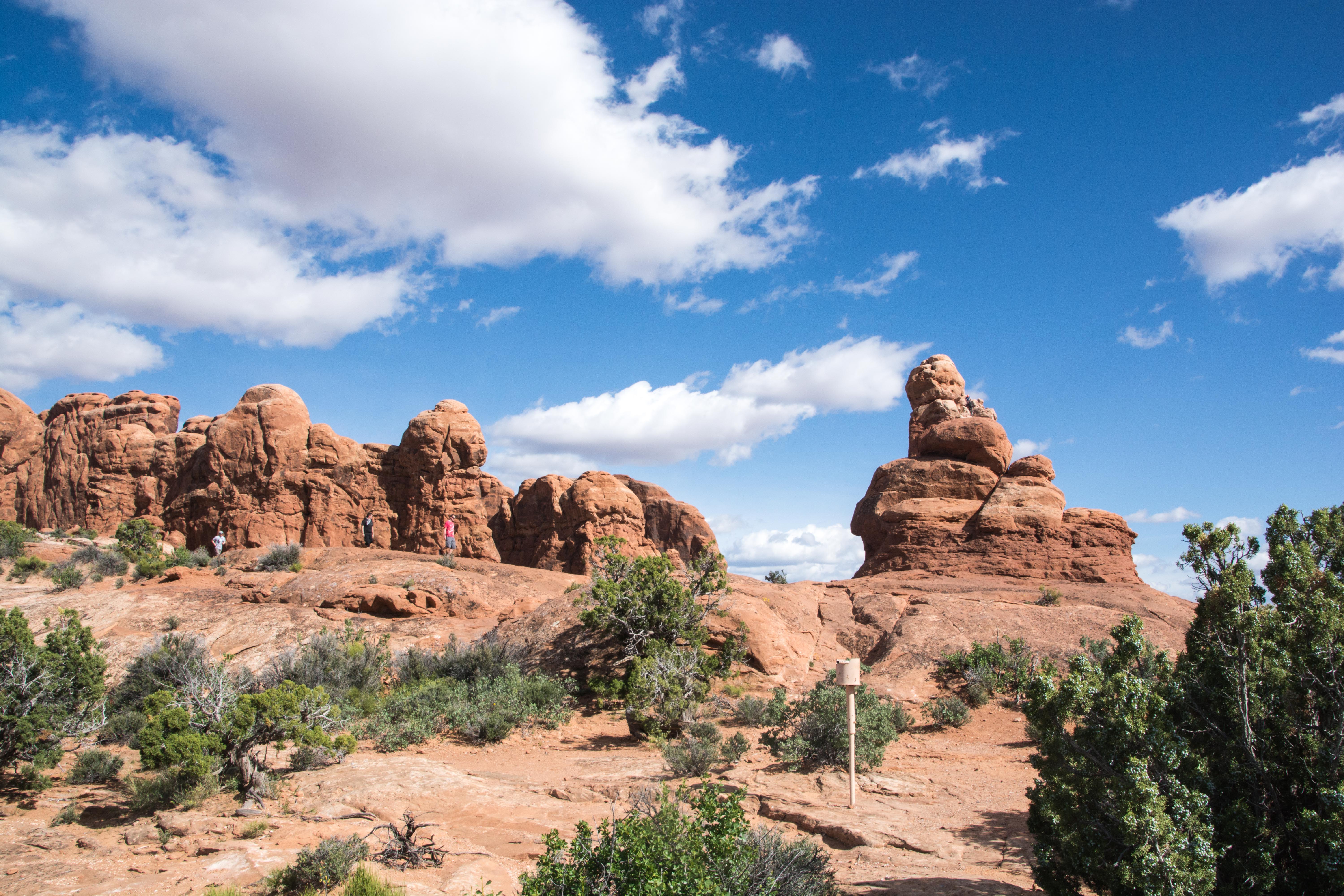
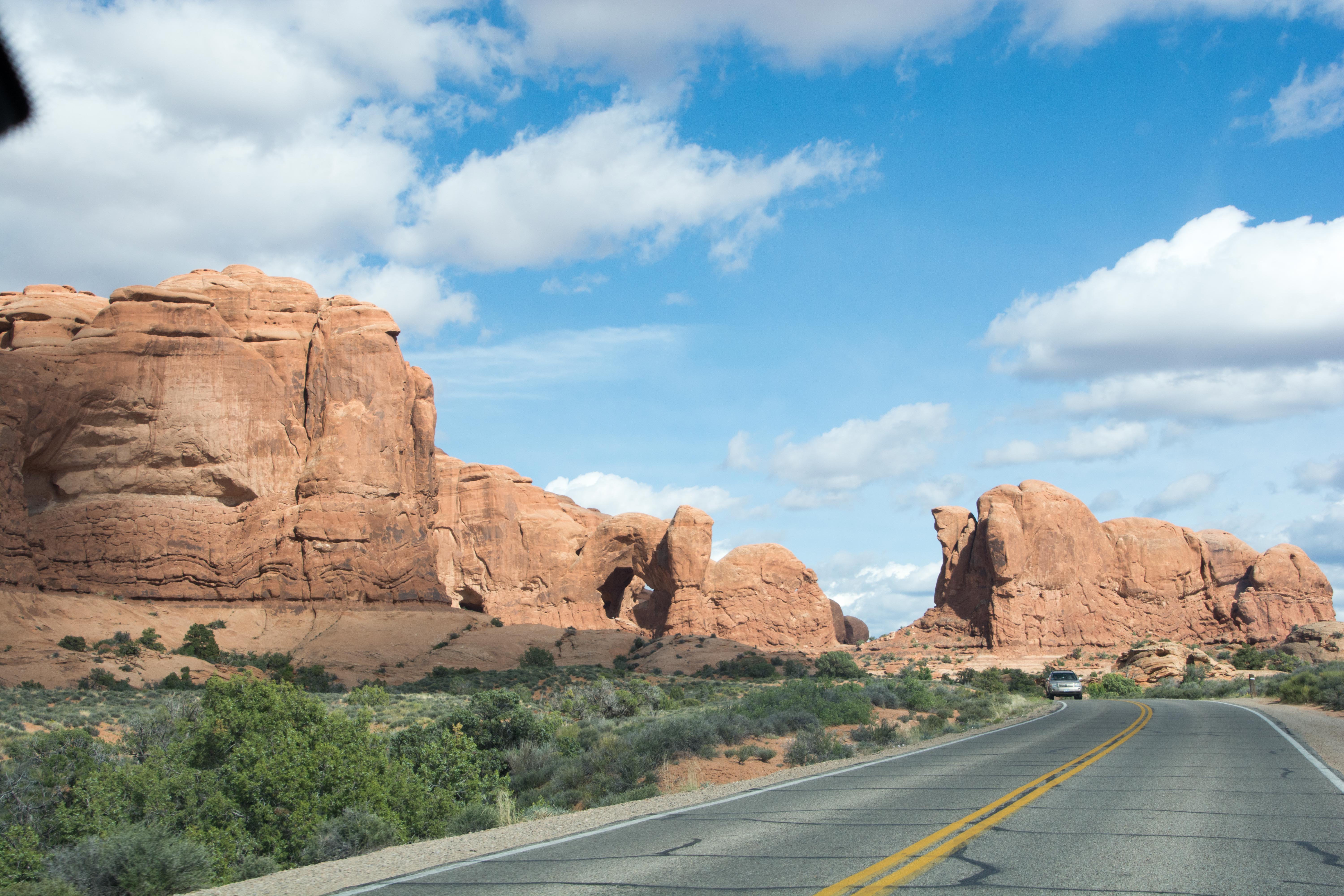
Coming into the park, there is a visitor’s center which does an excellent job of describing the attributes of the place.  May 2015-7978Beyond that there is a uphill climb, which takes us to the first stopping point, the overview of the Moab Fault.  The fault follows the road down below.  According to the sign, when the fault occurred about 6 million years ago, the side of the road we are standing on dropped 2600 feet below the side across the road.

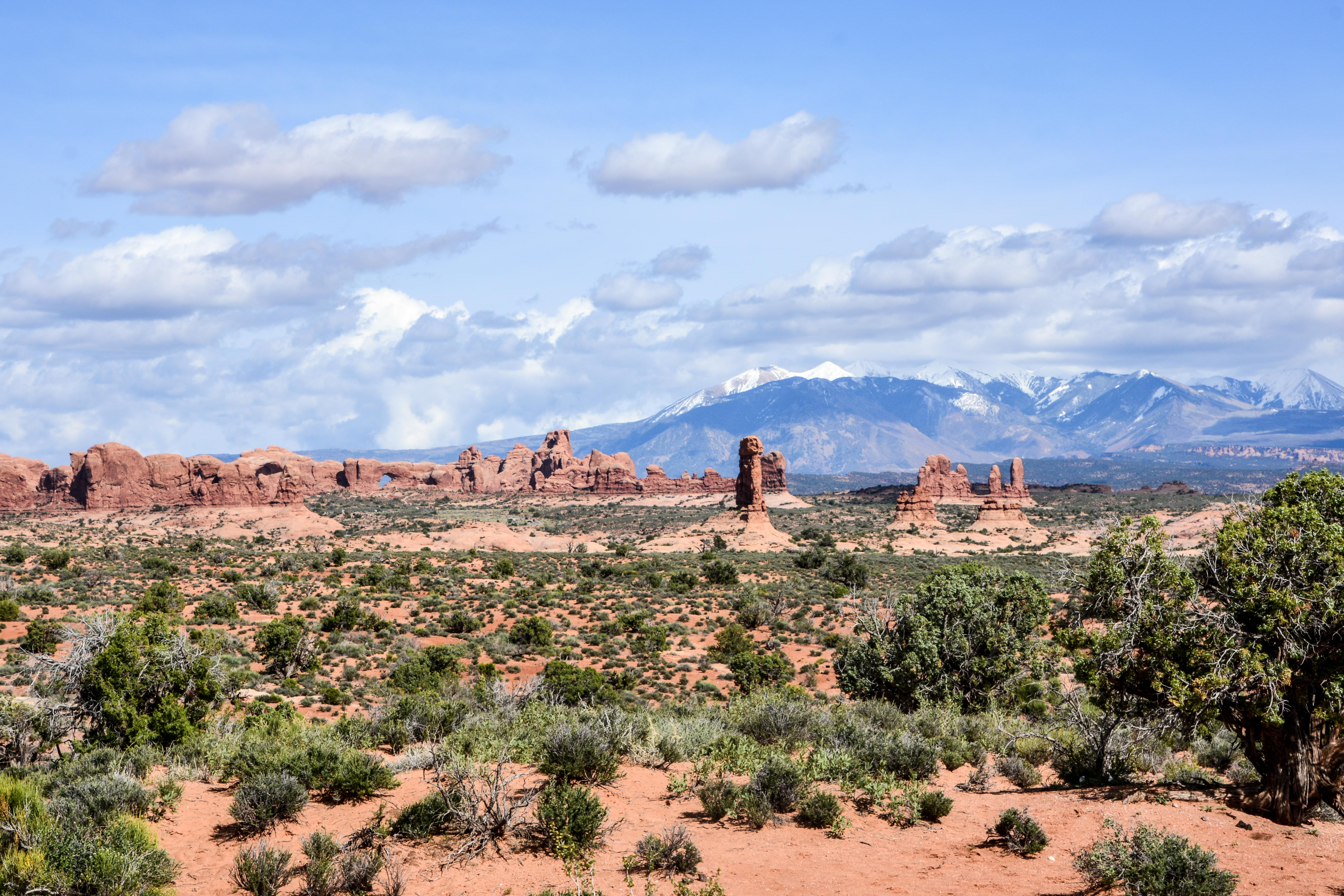
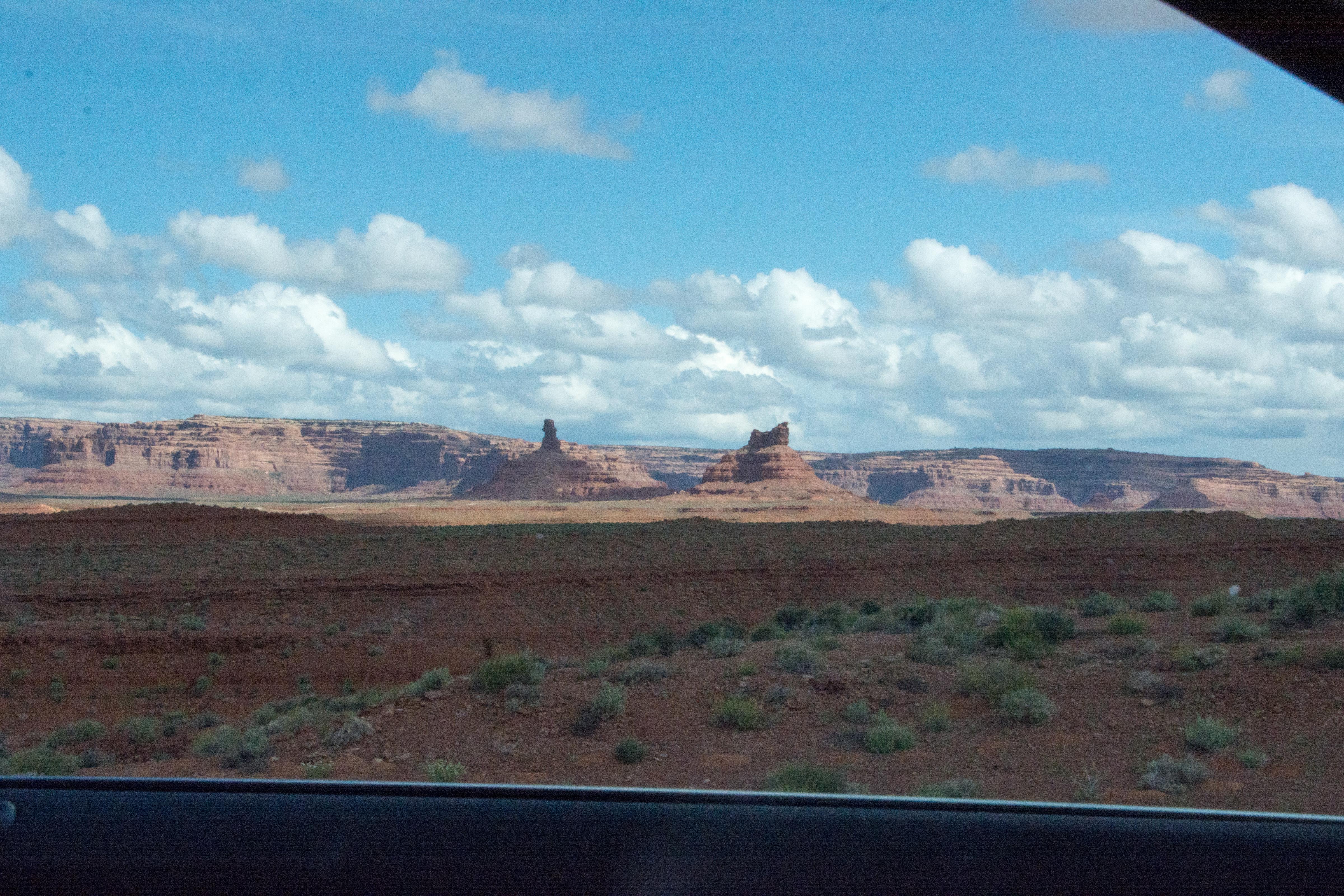
Just as in Monument Valley, the main features of the place have been created due to the wind and rain eroding the softer sandy soils away from the harder materials creating buttes and towers, some quite spectacular.  Other geologic activity, like the Moab Fault, have contributed.

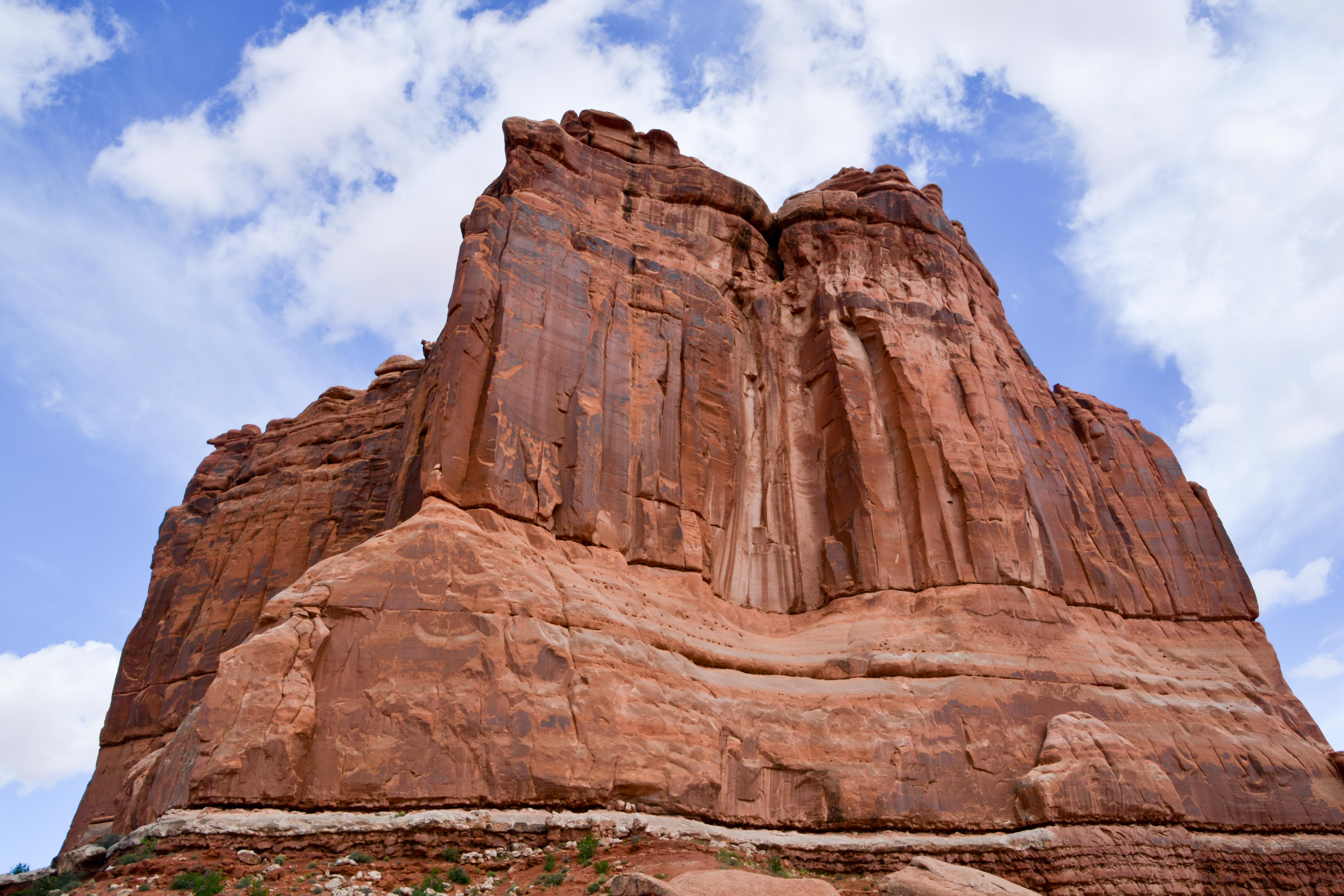
May 2015-8002Some of the more interesting features are named.  In the picture at right, in front of Gwen you can see three towers, which are called the “Three Gossips”.  To their right at roughly the same depth is “Sheep Rock”.  The most prominent butte on the right hand side of the picture is “Tower of Babel”.  To its immediate right, is “The Organ”.  May 2015-8011The picture on the right is a view of the “Three Gossips” from a different vantage point.  It’s a bit like looking into the sky and seeing pictures in the arrangements of the stars; you have to have a good imagination.

May 2015-8016Another view of “Tower of Babel” is on the left. May 2015-7993


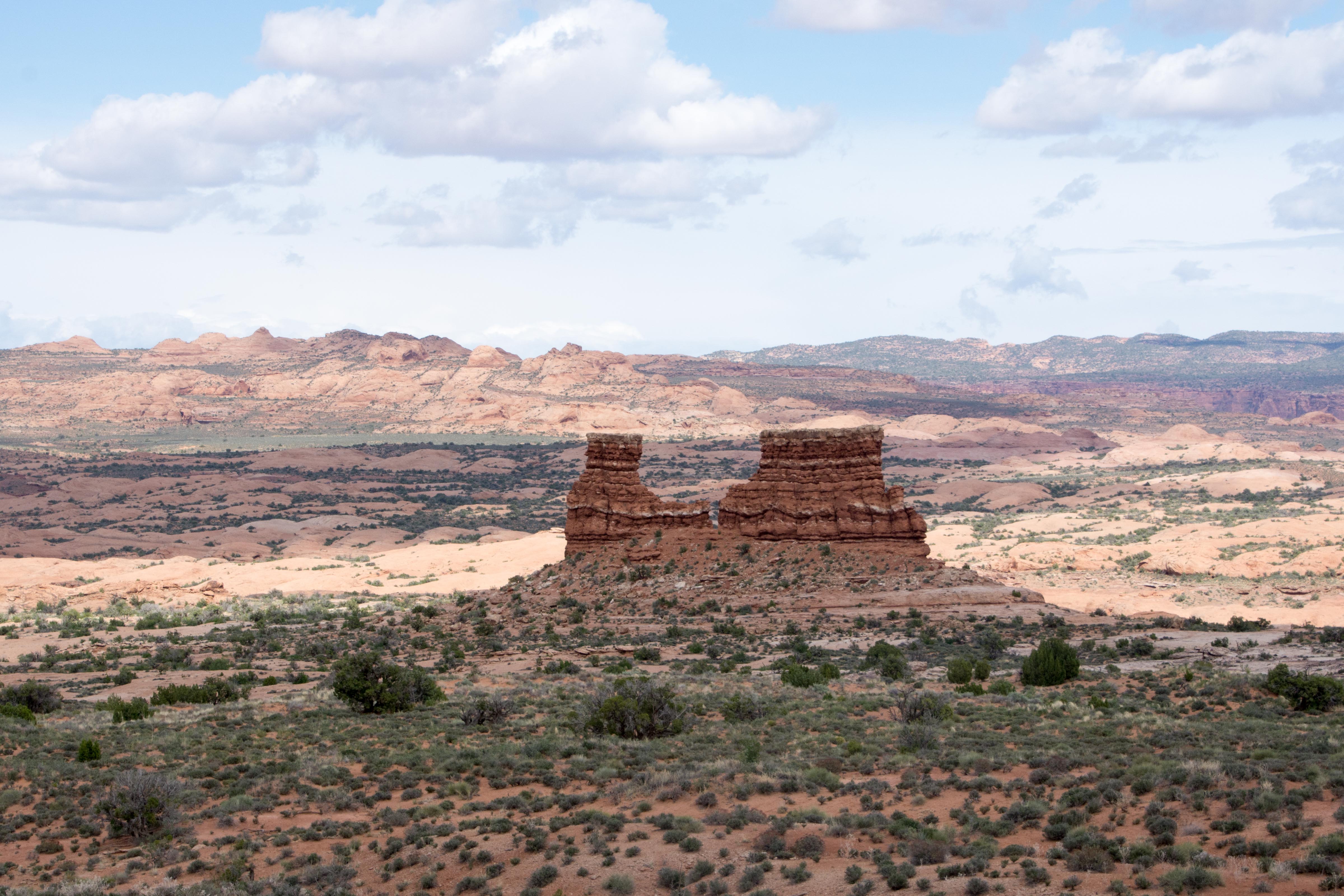
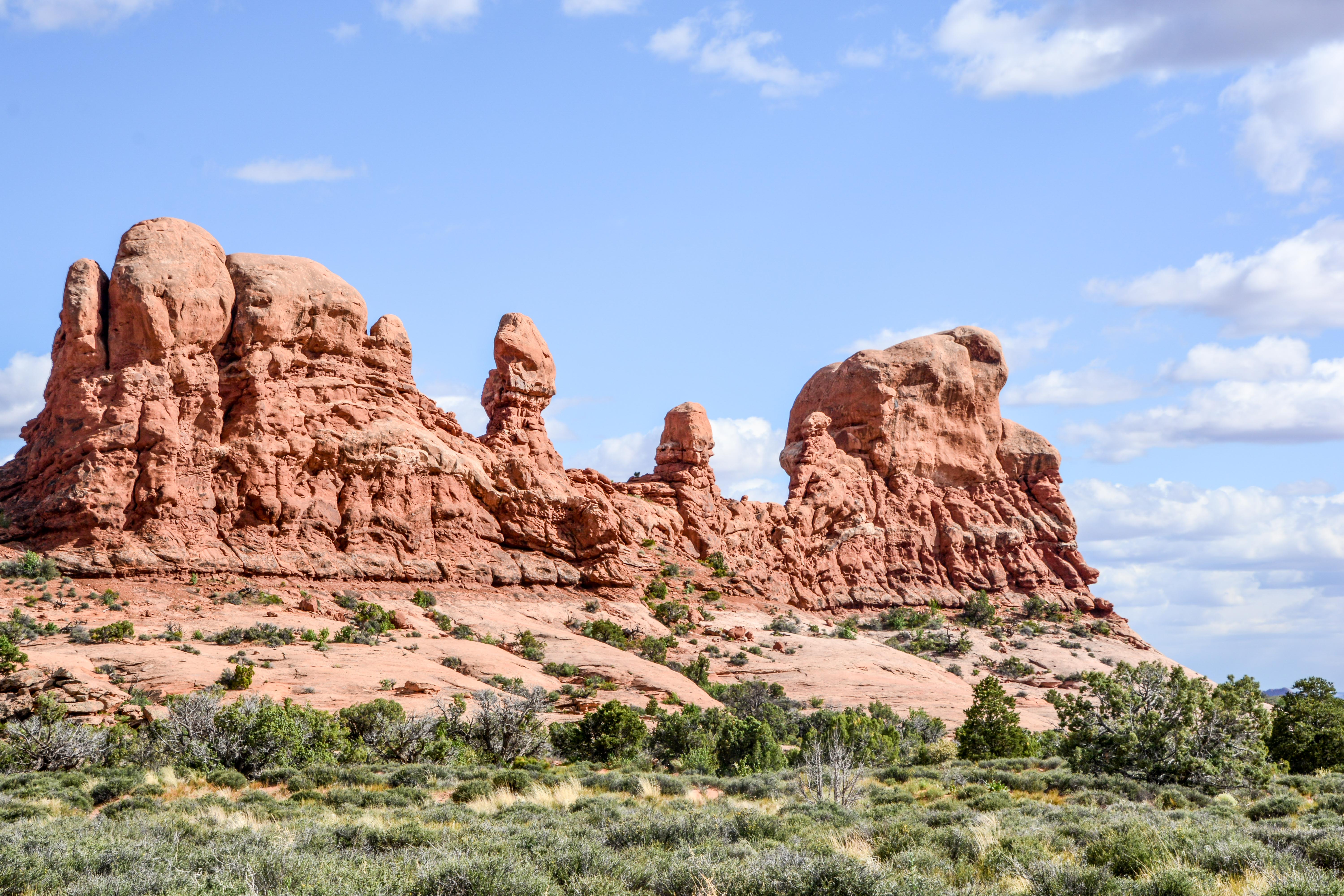
On the right is a picture of an unnamed butte formation, but behind it are the “Petrified Sand Dunes” formed as a result of a layering of sand some 200 million years ago covered by layers of other sediment including quartz and calcite and compressed over time.  The additional layers have been eroded away, and the petrified sand dunes are the result.

May 2015-8046

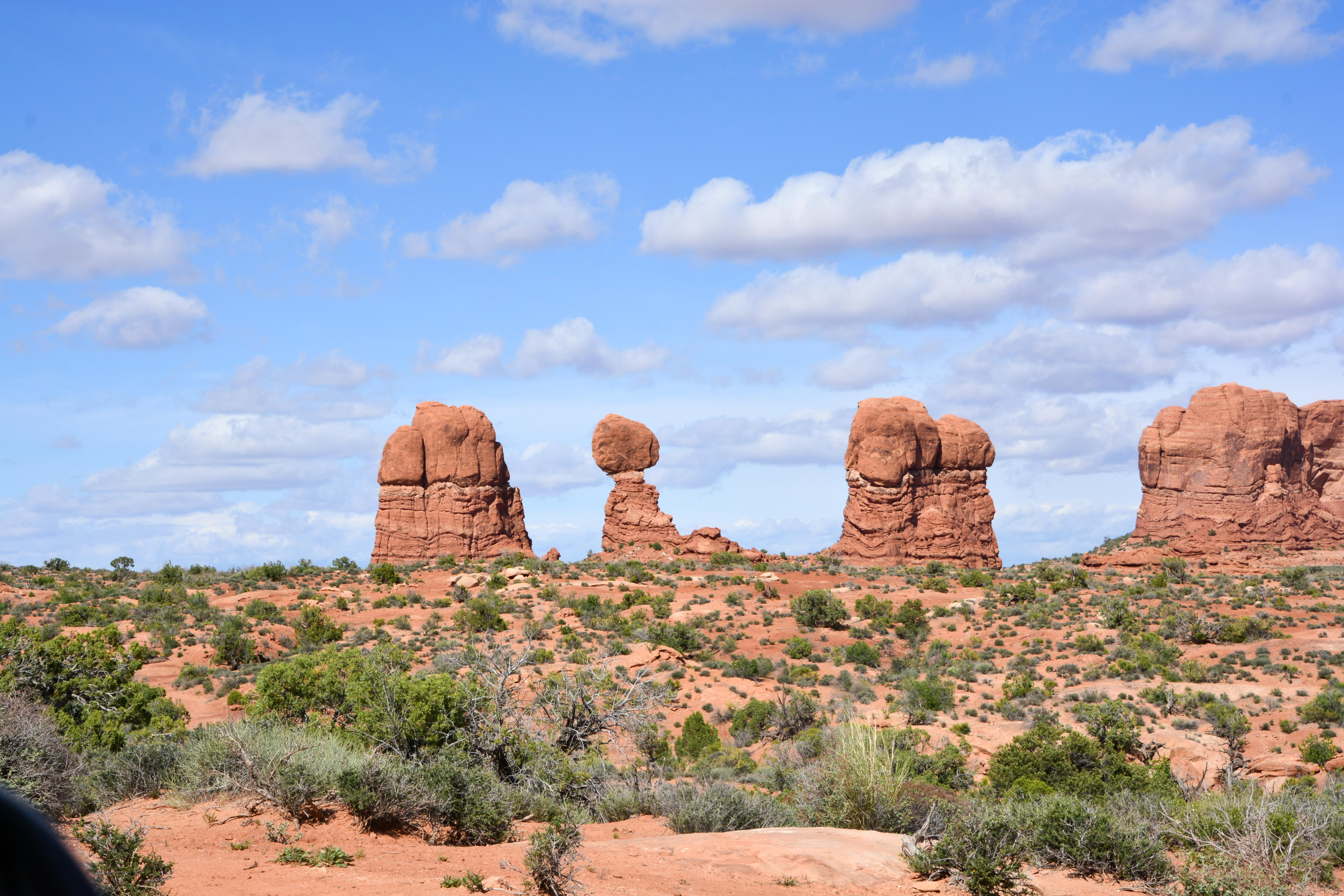
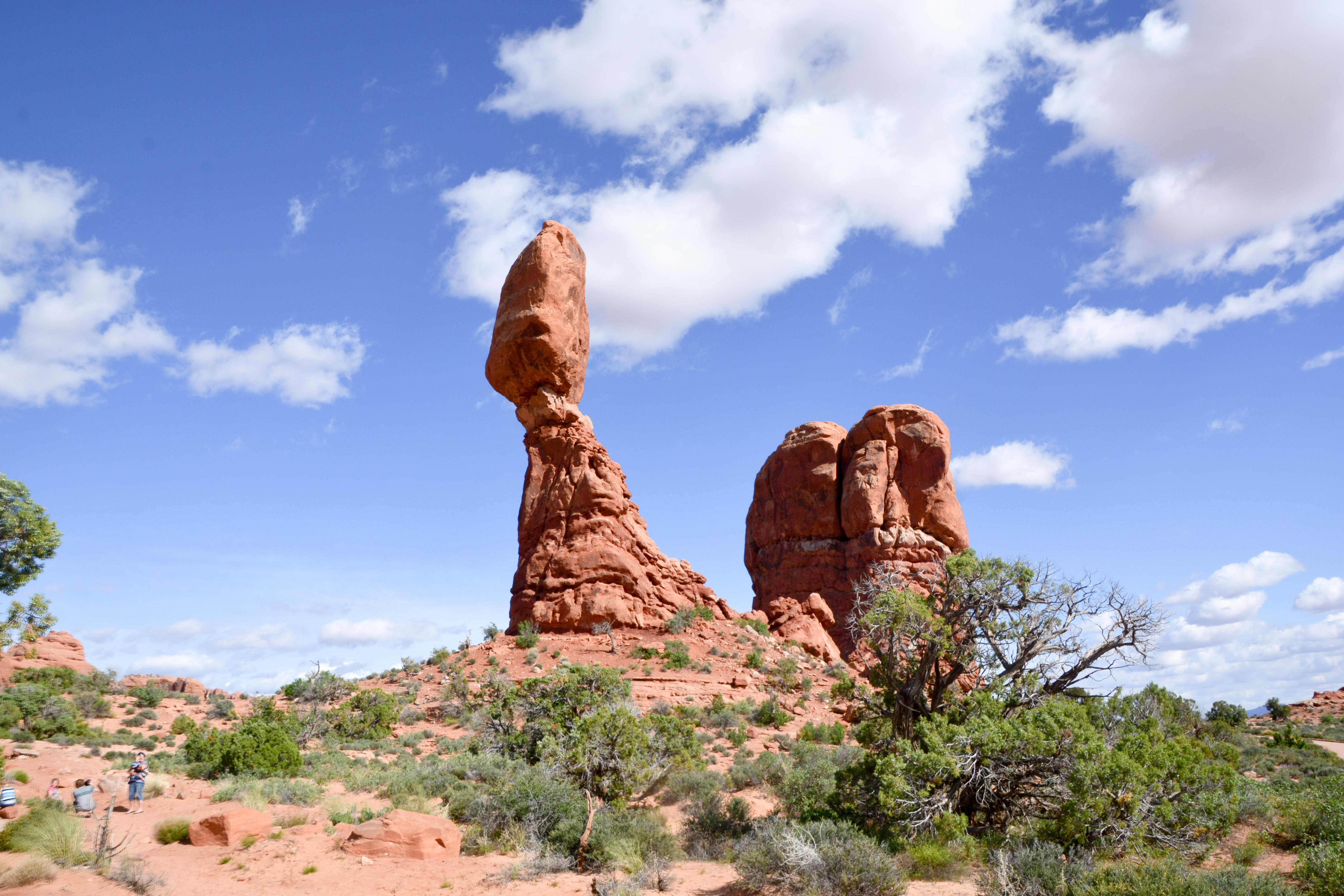
One of the most unusual formation is this “Balanced Rock”.  You’ll remember a similar formation from the last post called “Mexican Hat”.

May 2015-8048

The picture at right shows a number of other towers which were in the same area, but not quite as dramatic as this one.

May 2015-8070Another angle on “Balanced Rock” can be seen here.  They let you walk up right next to this rock; I guess they don’t expect it to topple in the near future.

May 2015-8083 May 2015-8085 May 2015-8090

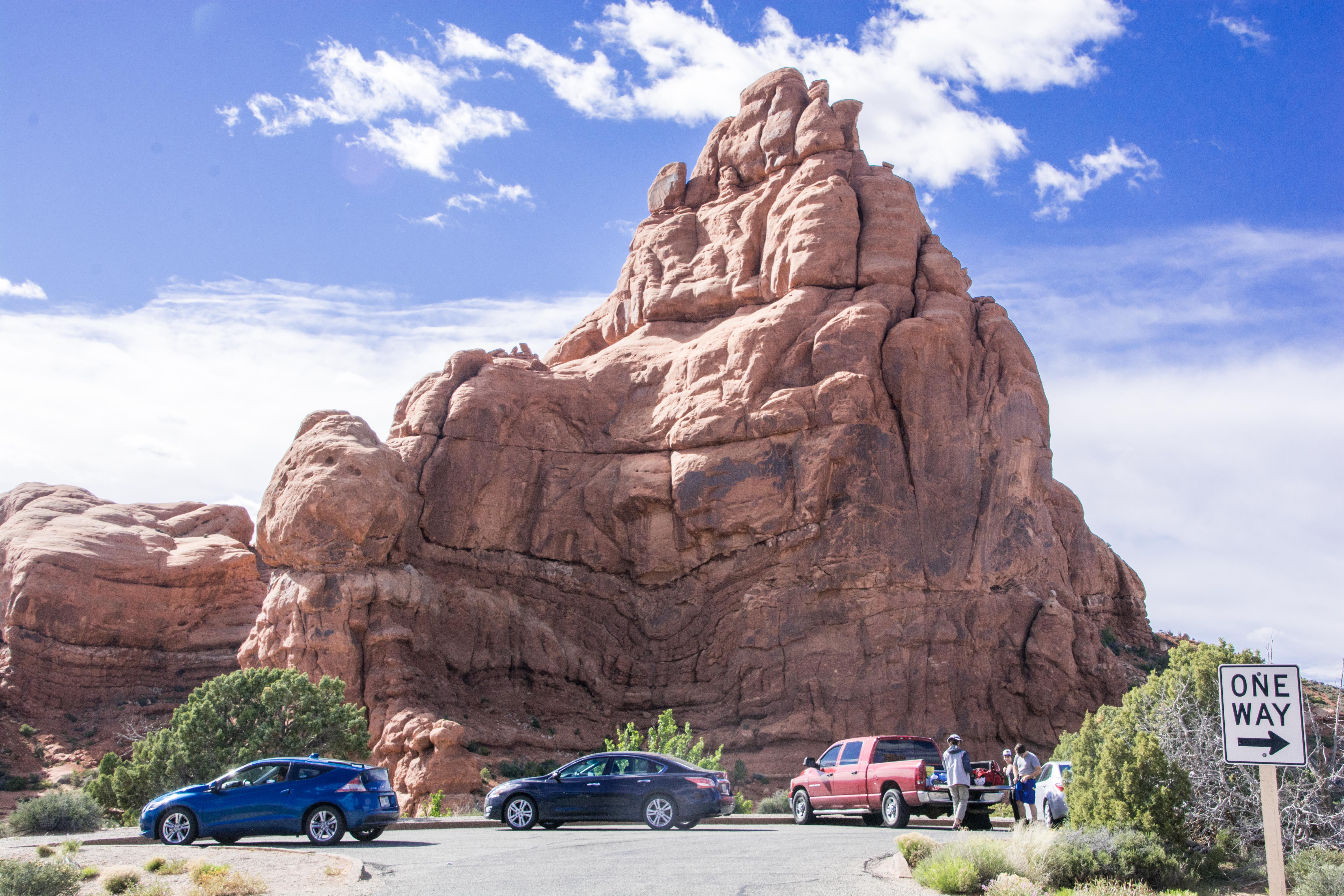
The next pictures are not named (as far as I know), but are examples of the formations to be seen.

May 2015-8099 May 2015-8107 May 2015-8129


The park has a number of pullovers and parking lots to enable safe stopping and viewing.  Often excellent pictures are available directly from these designated parking areas, but there are two in particular that require walking along paths to get to the best picture-points.

May 2015-8133 May 2015-8148

May 2015-8175 May 2015-8172

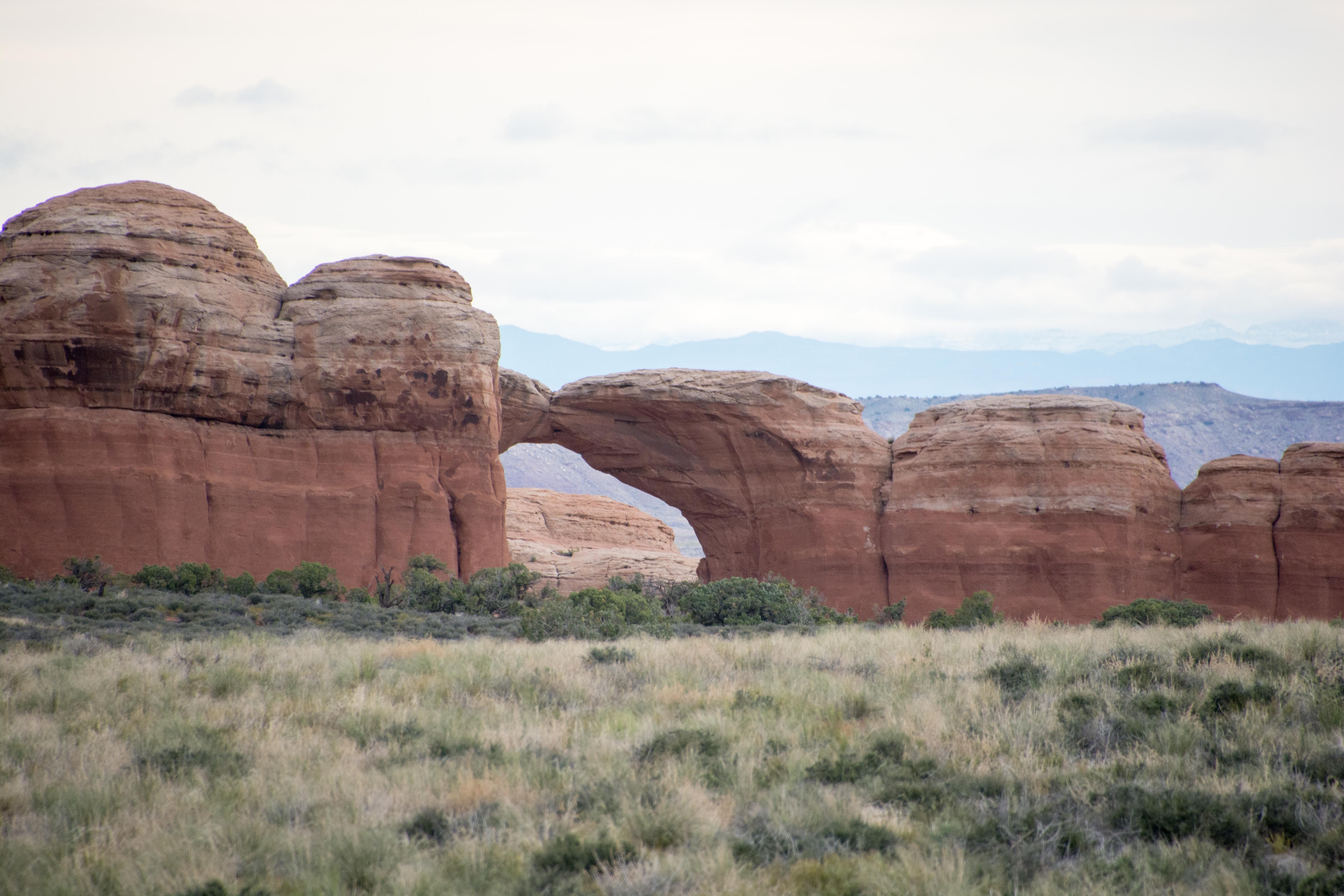
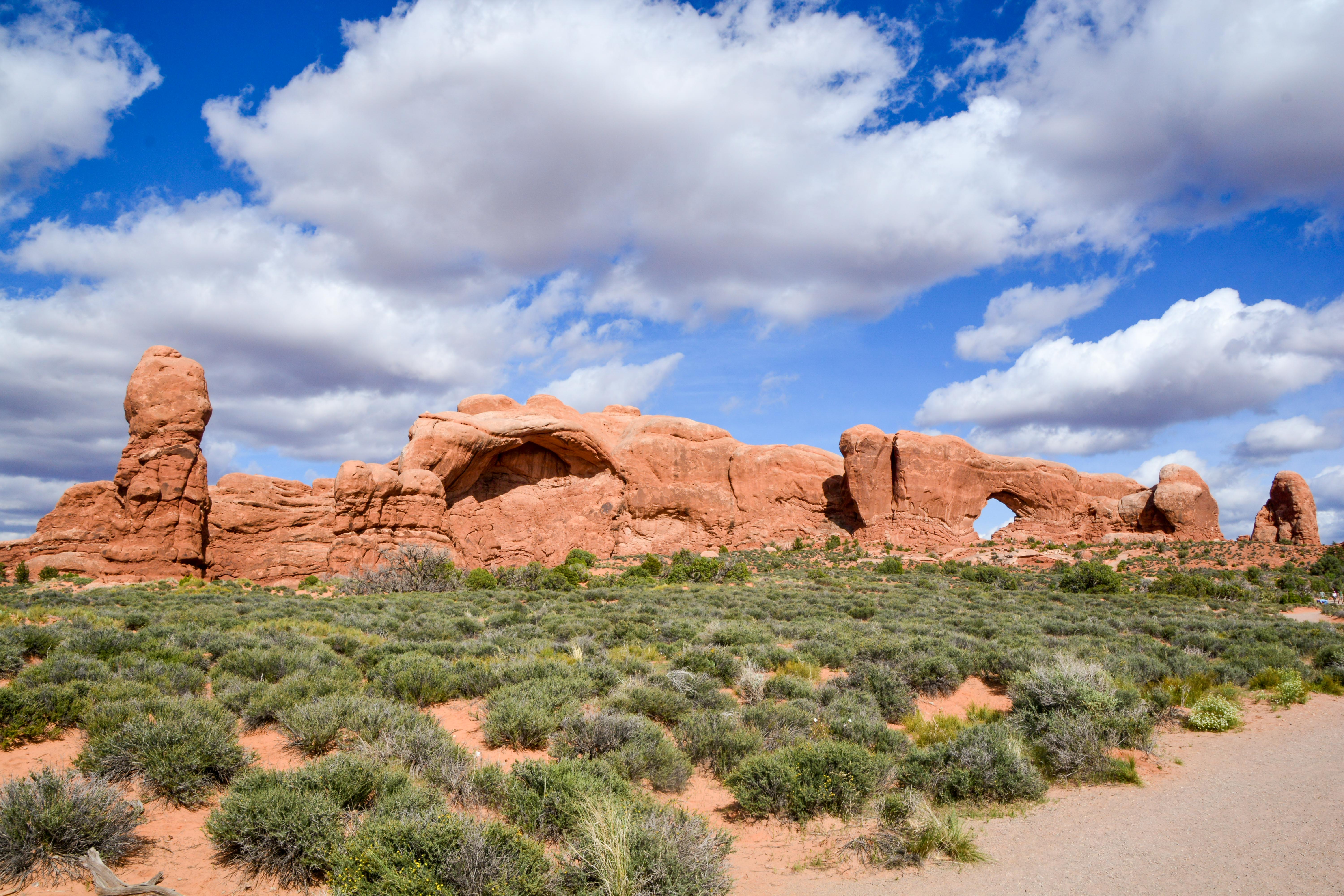
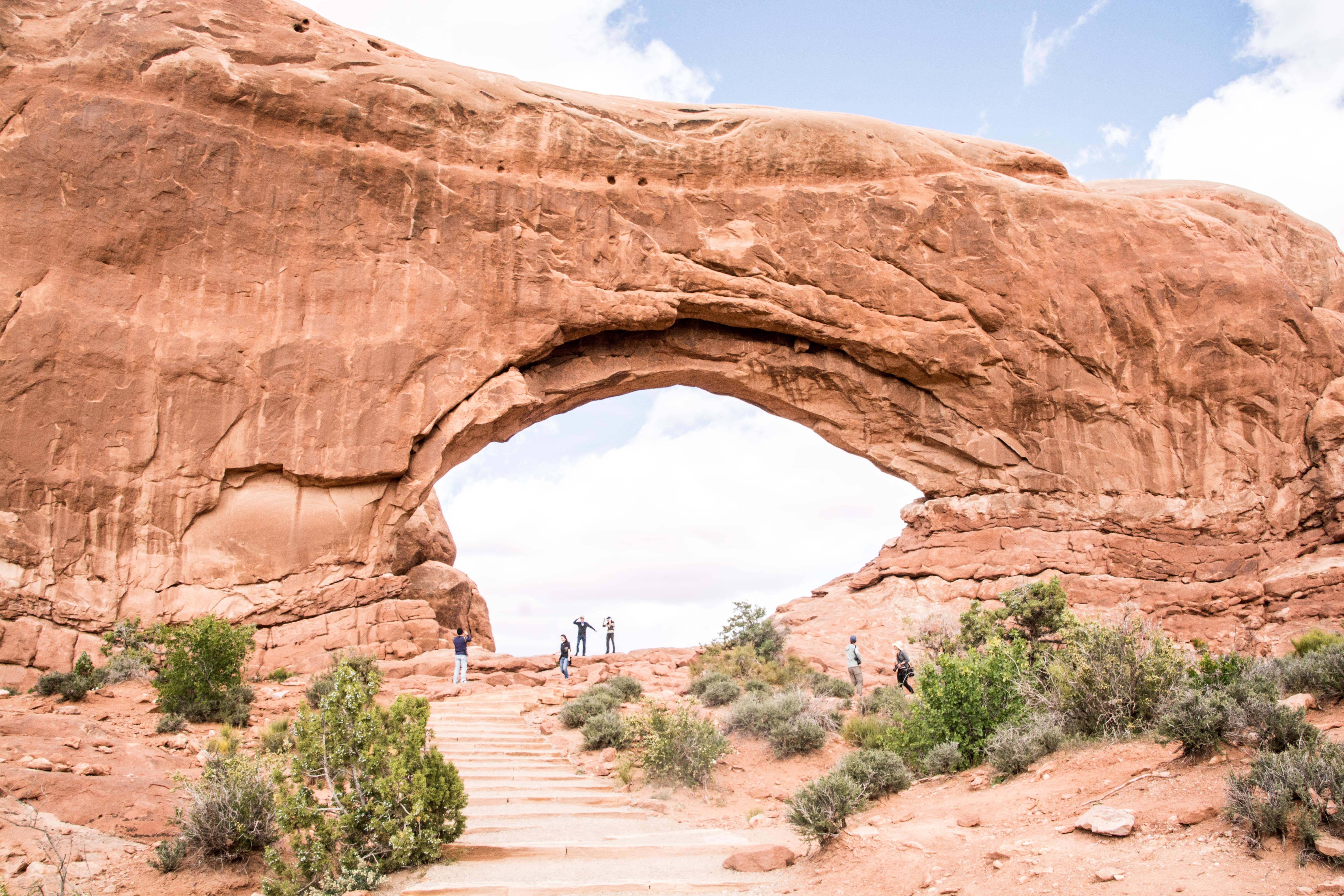
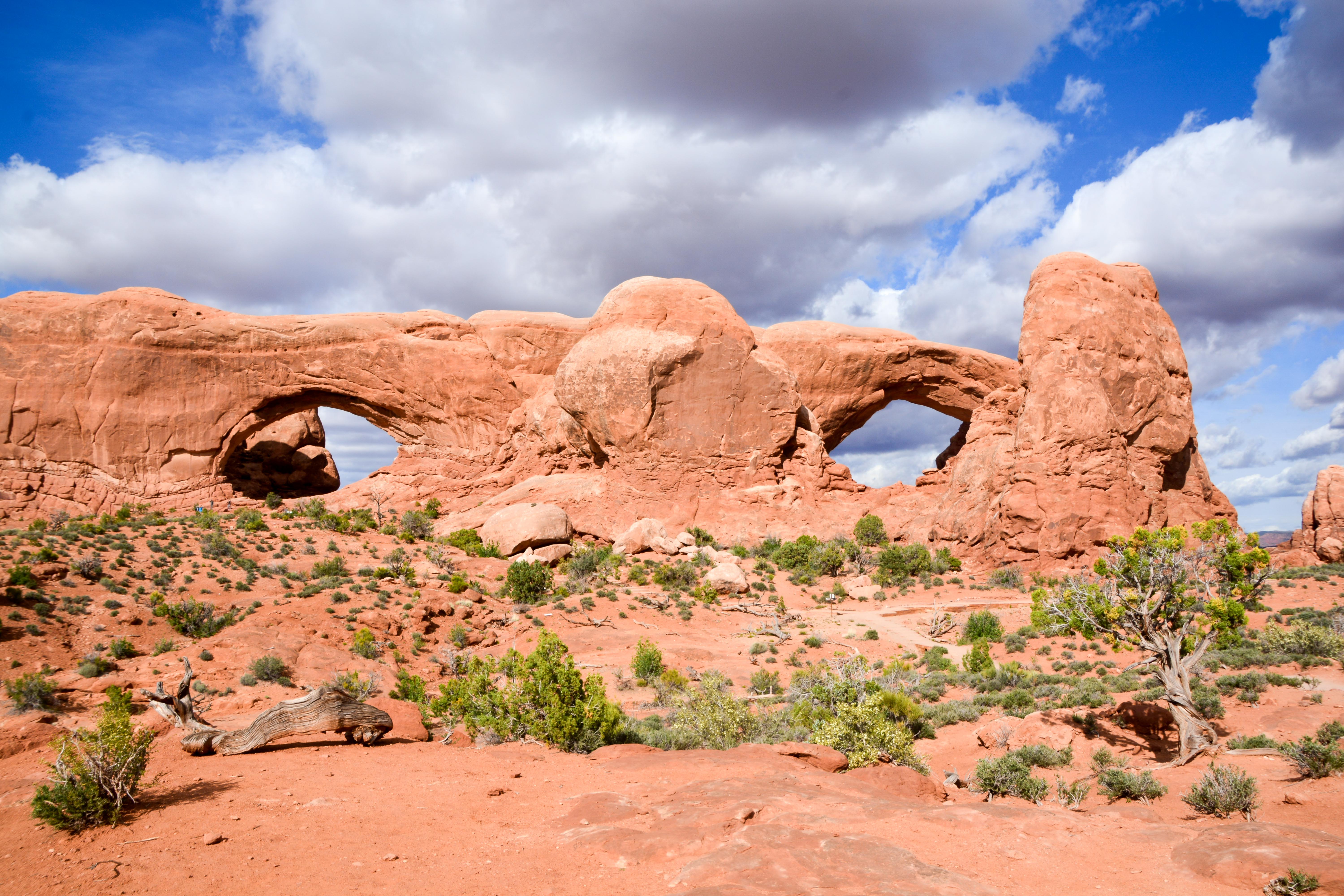
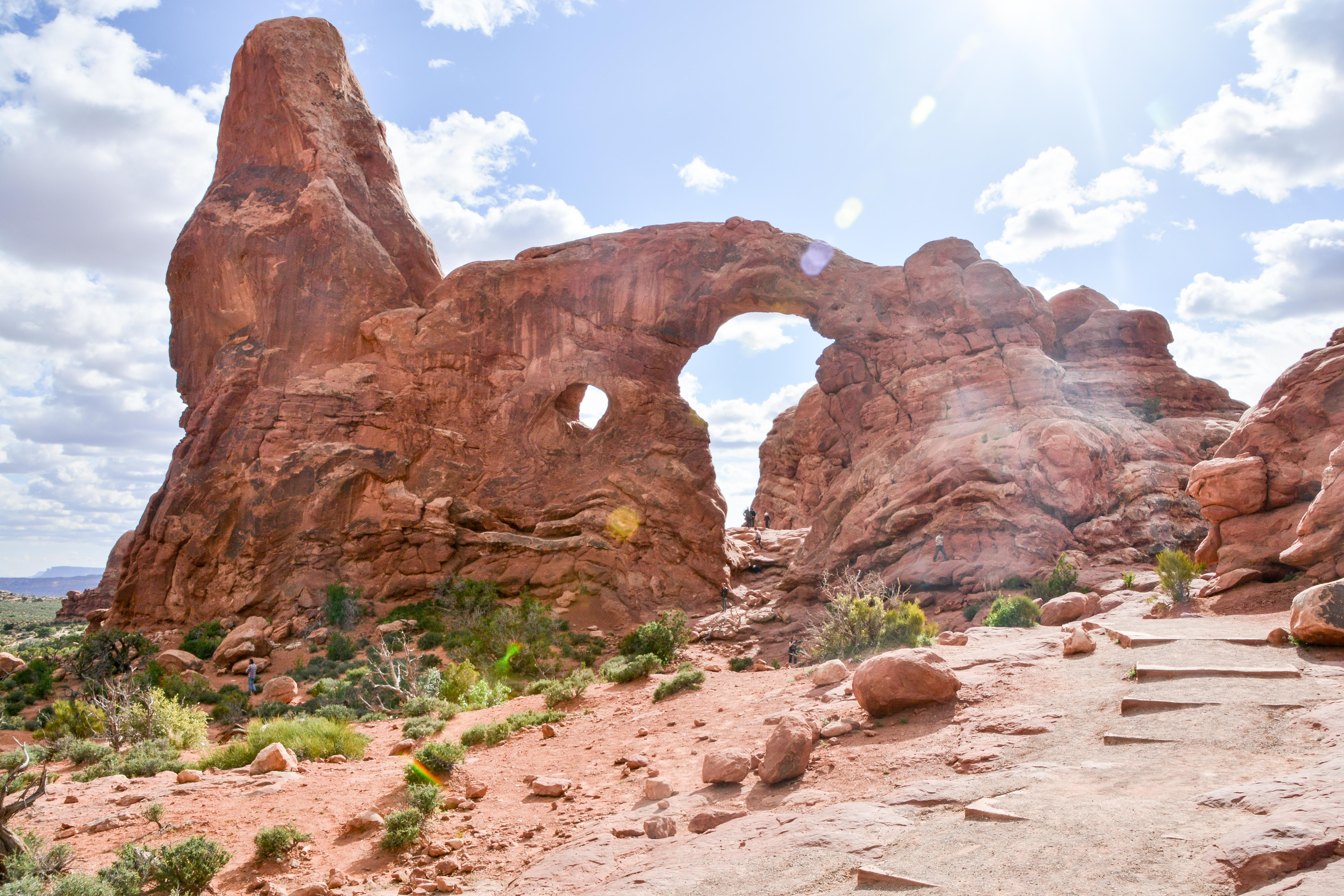
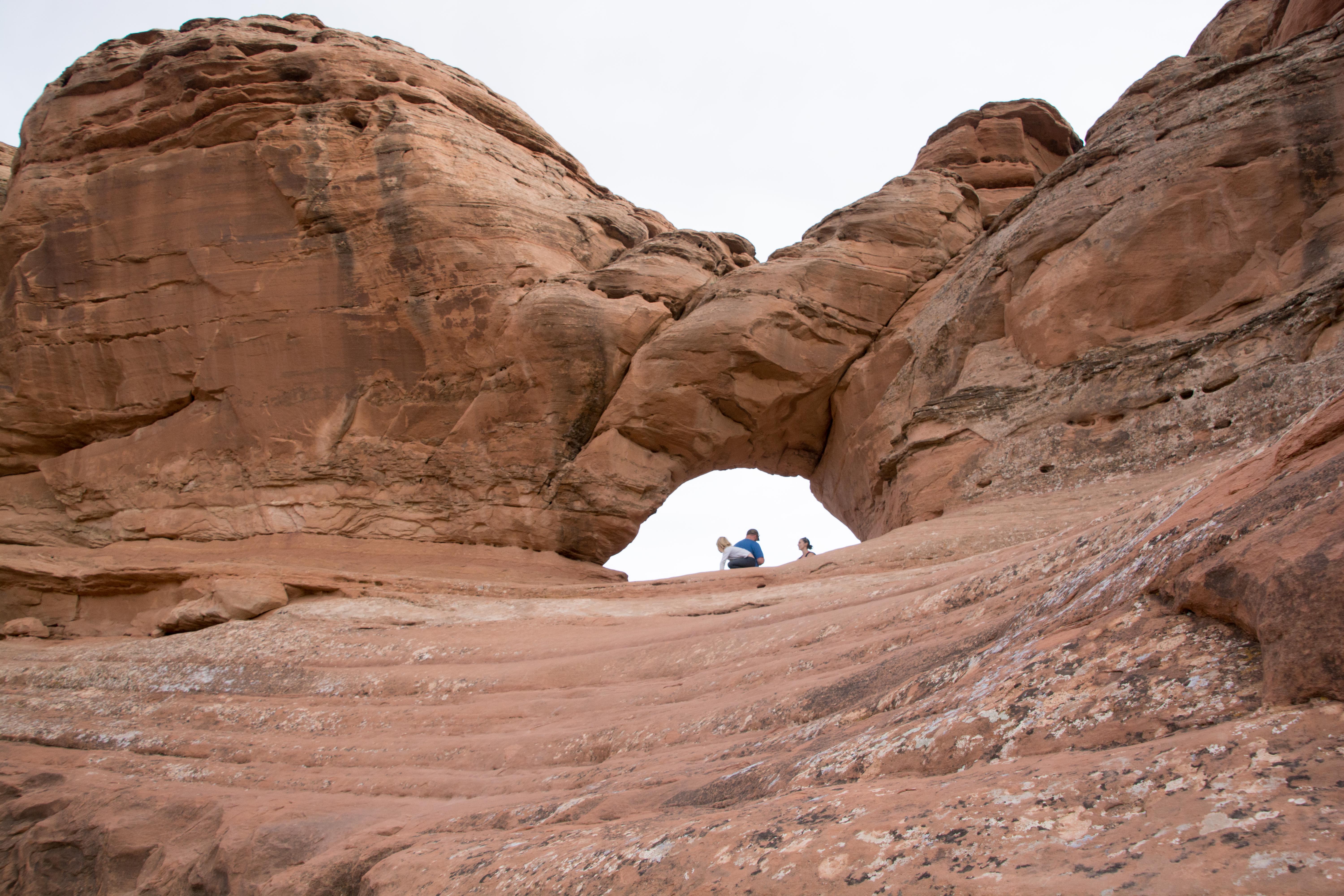
The first, at Windows arches, does not require us to walk that far, perhaps half a mile all told and Gwen kindly accompanies me to the “North Window”, the one with people in it enjoying the view beyond.  I go on from there to the “South Window”, and take more pictures, including the one of the two windows together.  Behind me as I take that picture is “Turret Arch”.

The second and  longer walk from the parking area is Delicate Arch, out beyond Wolfe Ranch.   Delicate Arch is the iconic Arches National Park Arch, and therefore one I have to take a picture of.

Wolfe was a Civil War veteran who came across to this area in the late 1860s with his son to try and recover from a bothersome leg wound he sustained during the war. The two of them lived at this location for 10 years before his sister, her husband and their children came out to live with them. Wolfe and his son had been living in a one-room shack, which was not big enough for the newly reunited family. Within short order, they built a bigger cabin, which is the one that stands today. Wolfe eventually returned to Ohio (from whence they came) in 1890, and died four years later at the age of 84.

The walk to Delicate Arch is 1.5 miles from the parking lot, and probably over 1000 feet in elevation climb. Described on the sign as moderately strenuous, it is all of that and more for this out-of-shape 66-year-old. One section, which as I get to it, I desperately hope is the last, consists of climbing up a 20% slope for probably 1000 yards.  Definitely “moderately strenuous”. Half way up that slope, I decide I just have to sit down and rest, so I find a nice step on the side of the main slope and sit down.  Its getting late, and I had been thinking as I walk that I am one of the last ones going up today.  May 2015-8261Boy was I wrong!  As I sit there, I get passed by group after group, all happily climbing their way up without stopping. After about 15 minutes, I resume climbing.  It isn’t the end of the journey, of course, it is only about half way along the path.


There are a number of people to follow now, so I join in. As we get closer to the goal, the path narrows, and I realize that we are being funneled up an ever-narrowing ledge that is climbing slowly around a hill rising out of the landscape.

May 2015-8265

May 2015-8262The path continues to narrow; it is not more than a couple of yards wide with a sheer drop of at least 500 feet off the outer edge. Those who know me know I have an absolute terror of such unfenced edges, but I’ve got to get to this Arch and get its picture.  I concentrate on keeping close to the inner wall, and keep going on. Every time I think about looking over the cliff my stomach clinches. Eventually I get around the hill and there in front of me is the Arch. All the people who had passed me up on my trek up are there and of course a lot more.  Some are resting, the younger ones playing, some moving in and amongst the Arch, and some taking pictures. I quickly find a spot to take my own pictures. I do not have the time to wait for the people at the Arch’s feet to go away as Gwen has to be wondering where I’ve gotten off to by now.  Besides, they provide scale!

May 2015-After taking my shots it is time to start the trek down. It is much easier than the trek up, except for the first part where I have to walk that narrow ledge again.  The traffic pattern suggests the down-walkers should be on the outside closest to the cliff edge and away from the relative safety of the inner wall. I don’t trust myself walking there, of course. Fortunately there aren’t any people behind me that are in a hurry, so I just hug the wall and wait until a group of up-walkers go past, then quickly make my way to the next group, and wait for them. Soon enough I am past this obstacle, and headed on my weary way down.  Gwen is calmly waiting in the car when I return perhaps an hour and a half from when I started.

May 2015-8339As the sun was going down, we go one more stopping point beyond the Wolfe Ranch parking lot and then turn around heading back to the hotel. We get back and spend a quiet evening recovering from the long day.

Leave a comment

Filed under Blog

Palm Springs, CA to Clarkston, MI, Day 4 May 9 part 1

Today started off well. We get up, go to the restaurant for breakfast, go back to the room to finish packing, and hit the road to Arches National Park. Our breakfast waiter, Pascal, recommends we stop at Goosenecks State Park on the way, so we are on the lookout for it.

May 2015-

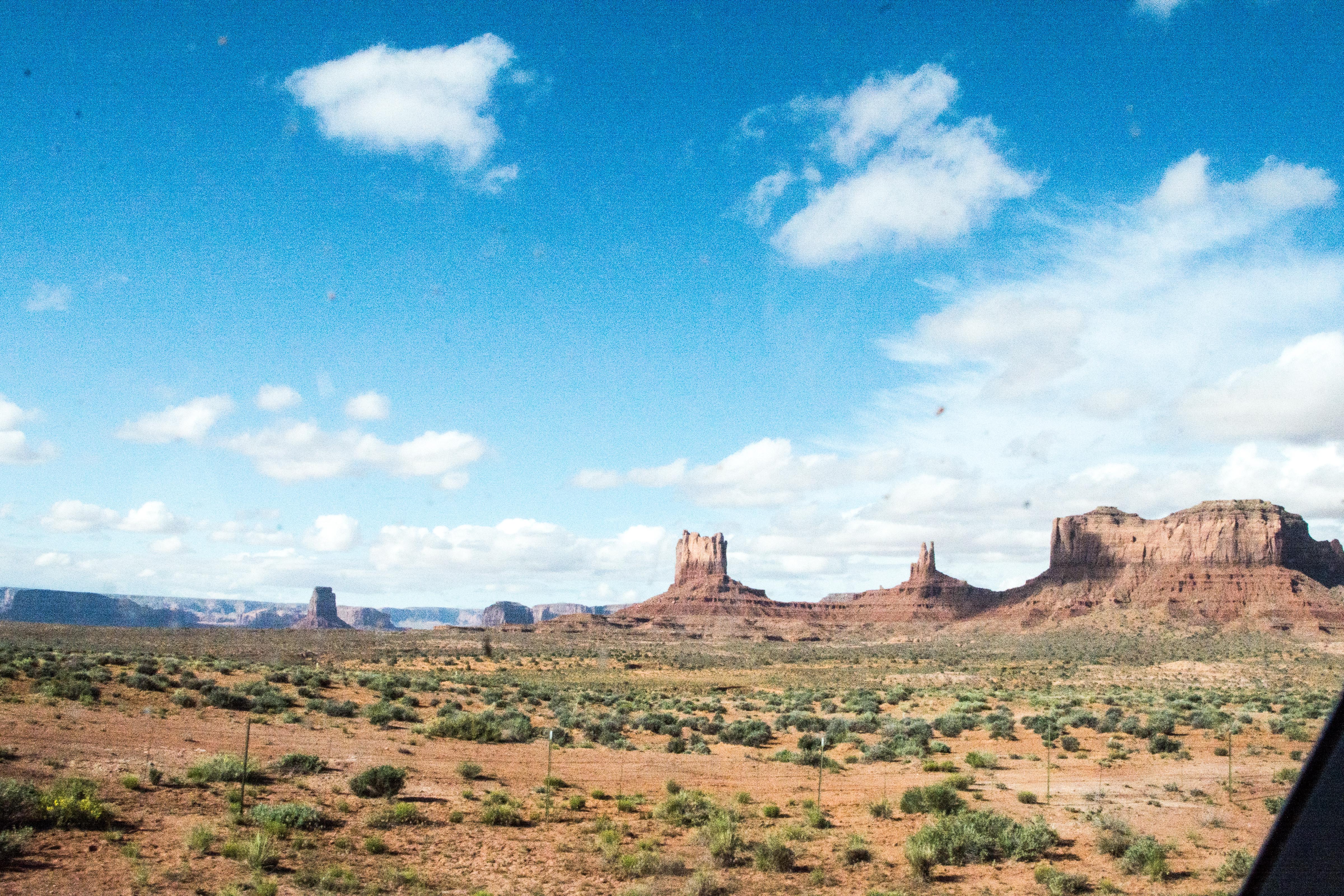
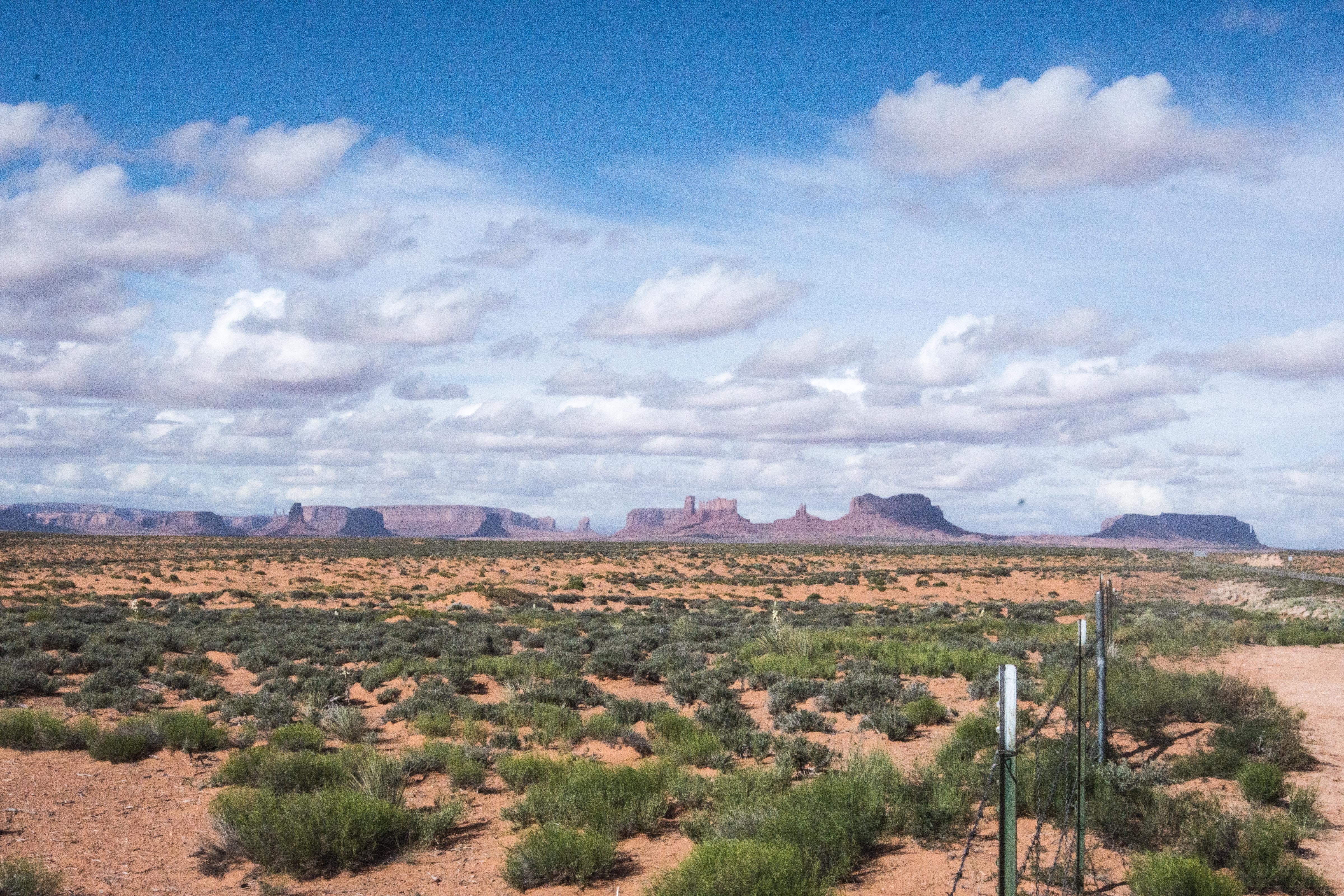
The scenery is fabulous. There seems to be no end to the “monuments” visible, and as we drive along, we keep getting different views of them. Gwen drives so we don’t have to stop so much for me to take pictures.

May 2015-7803As the light changes, the views change as well, so that means more pictures. May 2015-7804As we continue north, I notice that the vegetation gets more bountiful, although it never really gets out of the desert variety nor the desert look.

May 2015-7823May 2015-7808

Also the altitude rises, and soon we are seeing juniper bushes as well as the occasional tree interspersed.  Before Gooseneck National Park, the most spectacular landscape element is Mexican Hat.

Mexican Hat

Mexican Hat

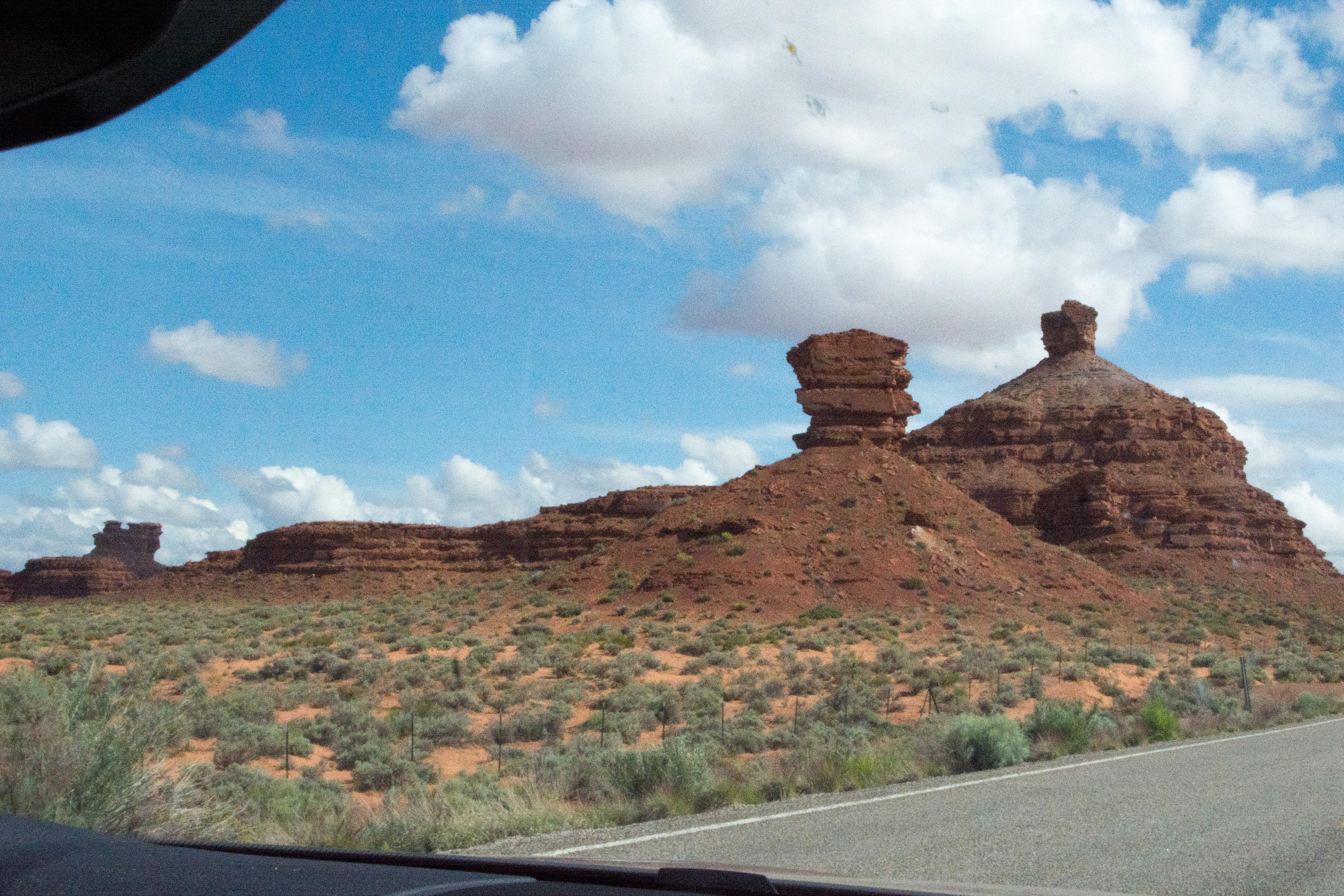
It is indicative of the strange results that occasionally are possible as the wind and rain erode the softer underlying layers of dirt leaving a large, harder stone balanced on top.

May 2015-7865


We soon reach Goosenecks State Park, about three miles off the main road we are on.

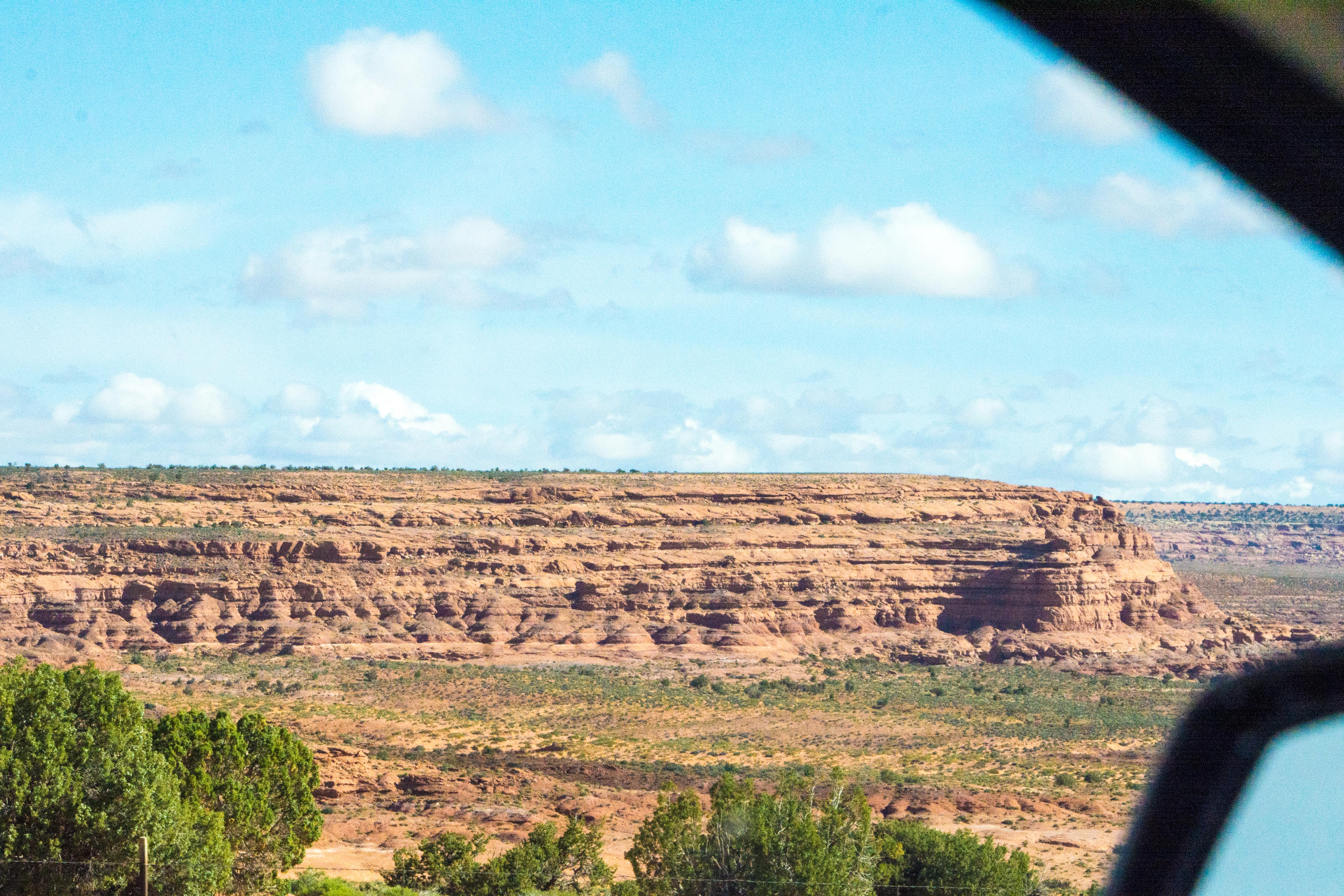
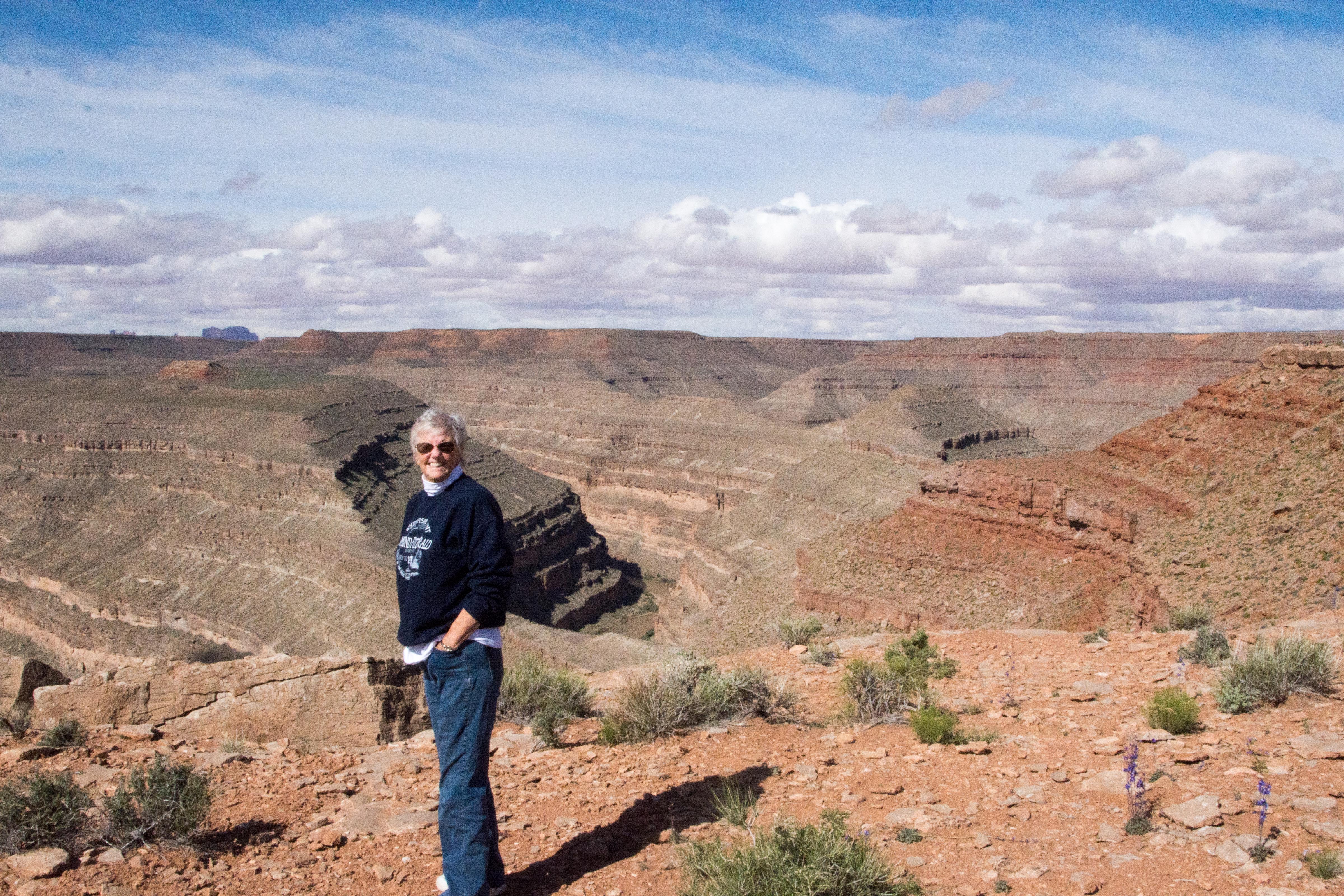
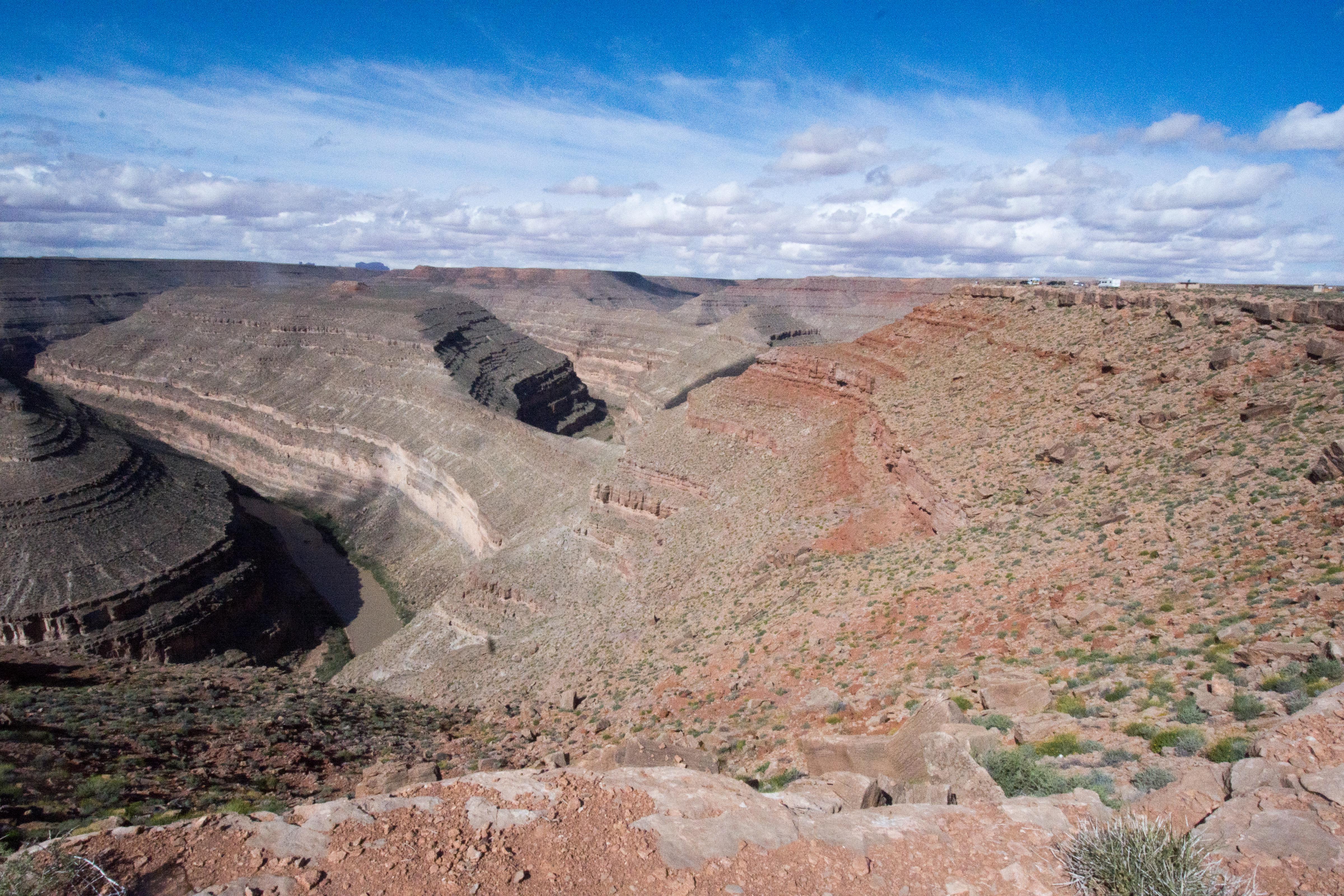
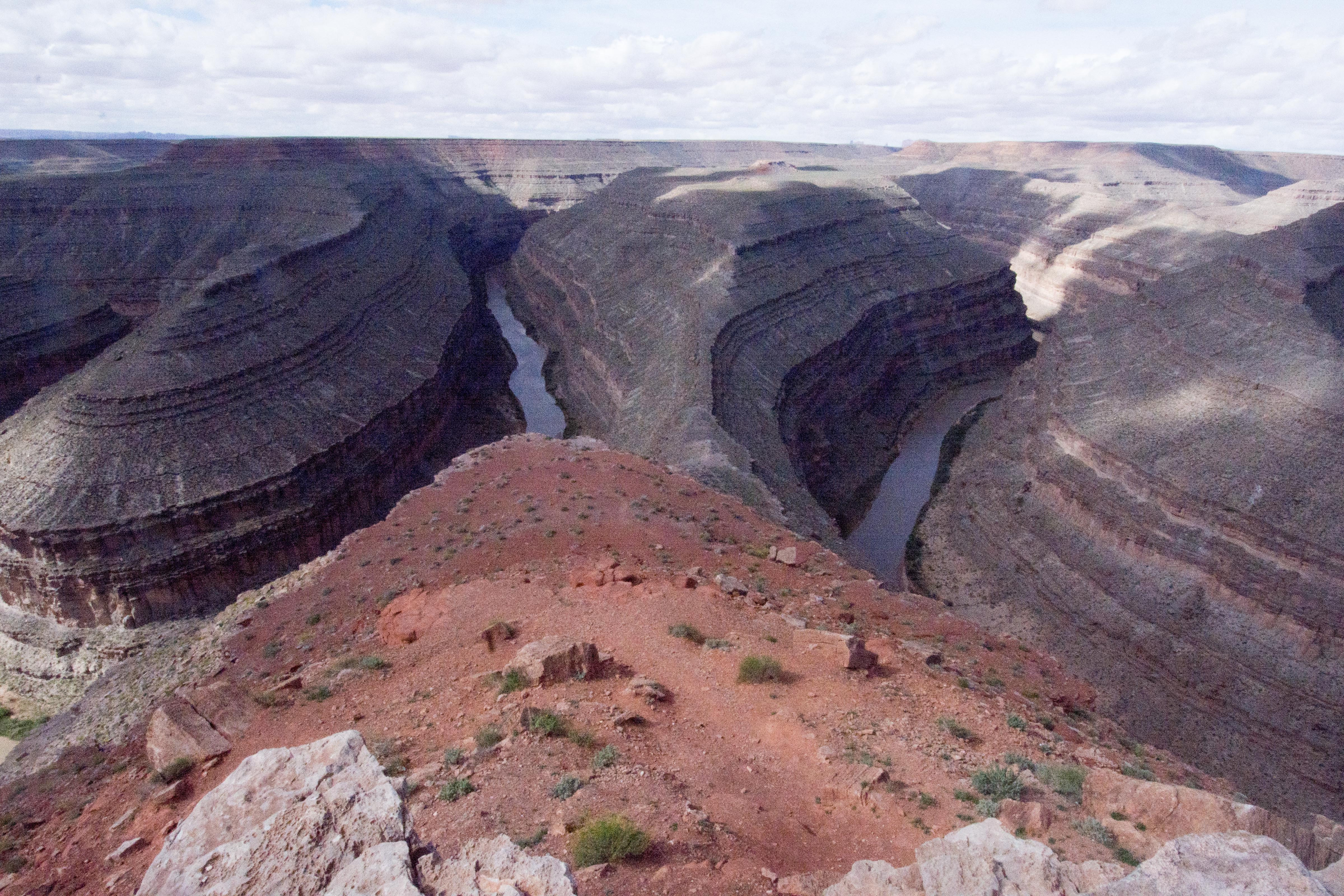
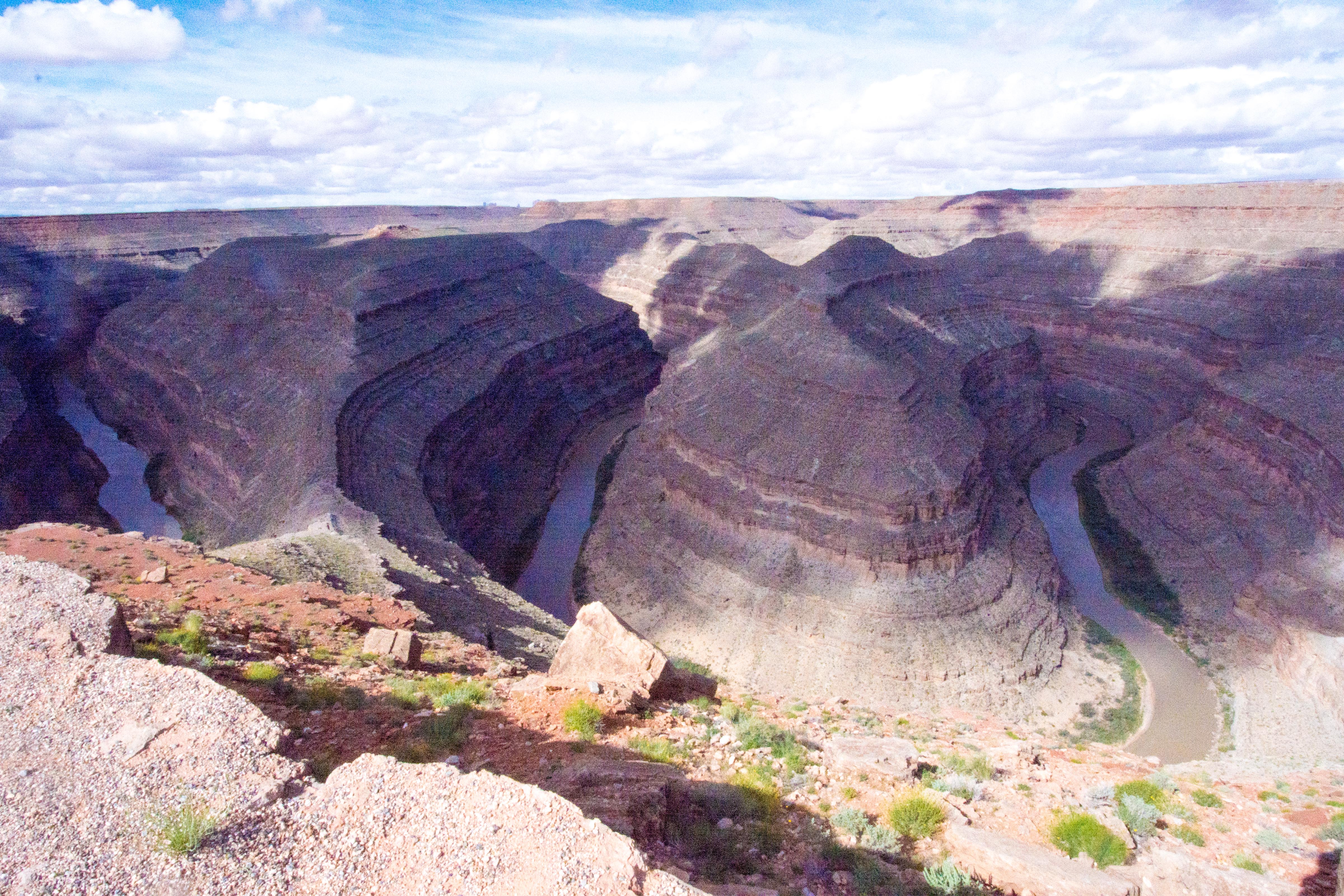
May 2015-7878The prominent feature when we get there is quite a surprise, even though Pascal did his best to describe it to us. Like a mini-Grand Canyon, at the bottom of a thousand foot drop is a river, muddy brown. (Note the camper on the ridge at the right of the picture at left.)  May 2015-7900The goosenecks themselves are created as the river’s path flowed back and forth winding its way from one end of the basin to the other. Once in that pattern, the river cut through the layers of the basin floor creating the almost vertical drops It had more of the aspect of a long snake than goosenecks, but what are you going to do, the name “Snake River” was already taken. May 2015-7895It has the aspect of the river leading up to Victoria Falls in Africa, winding back and forth having worn vertical views down through the underlying rock.  h

The views are no less spectacular as we continue on from Gooseneck on toward Arches.  The buttes get even more unique, and the vegetation even more diversified.

May 2015-7918 May 2015-7926 May 2015-7935 May 2015-7937May 2015-7945

May 2015-7963May 2015-7964The most spectacular aspect of the drive is the falling snow that we drive through once we are in and past Blanding, Utah. May 2015-7958It is more like mini-hale, and it didn’t stick, but it occasionally made the visibility hard.


Our next stop is Moab, Utah. This is just five miles from Arches National Park, and seems to be also a recreational hub for all kinds of adventurous sports. The signs call this “Canyonlands”. In addition to the canyons associated with Arches, there is a recreation-sized river where people use kayaks, canoes and boats of a variety of configurations. There are lots of trucks and camper-vans pulling 4-wheel drive jeep-like vehicles, so I presume there are also lots of places to use them, although we didn’t see one close enough to the highway for us to recognize.

May 2015-7971The first “Arch” we come across close to Moab is the Wilson Arch.  A nice preview of what is to come!

We get to our hotel, check in, and then head out to do our first visit to Arches.


Leave a comment

Filed under Blog

Palm Springs, CA to Clarkston, MI, Day 2 May 7


We are up early and on the road after a breakfast of Holiday Inn Express’s usual offerings. It takes us a bit over three hours, but we eventually arrive at Goulding’s Lodge just outside of Monument Valley National Park, just over the border from Arizona into Utah.

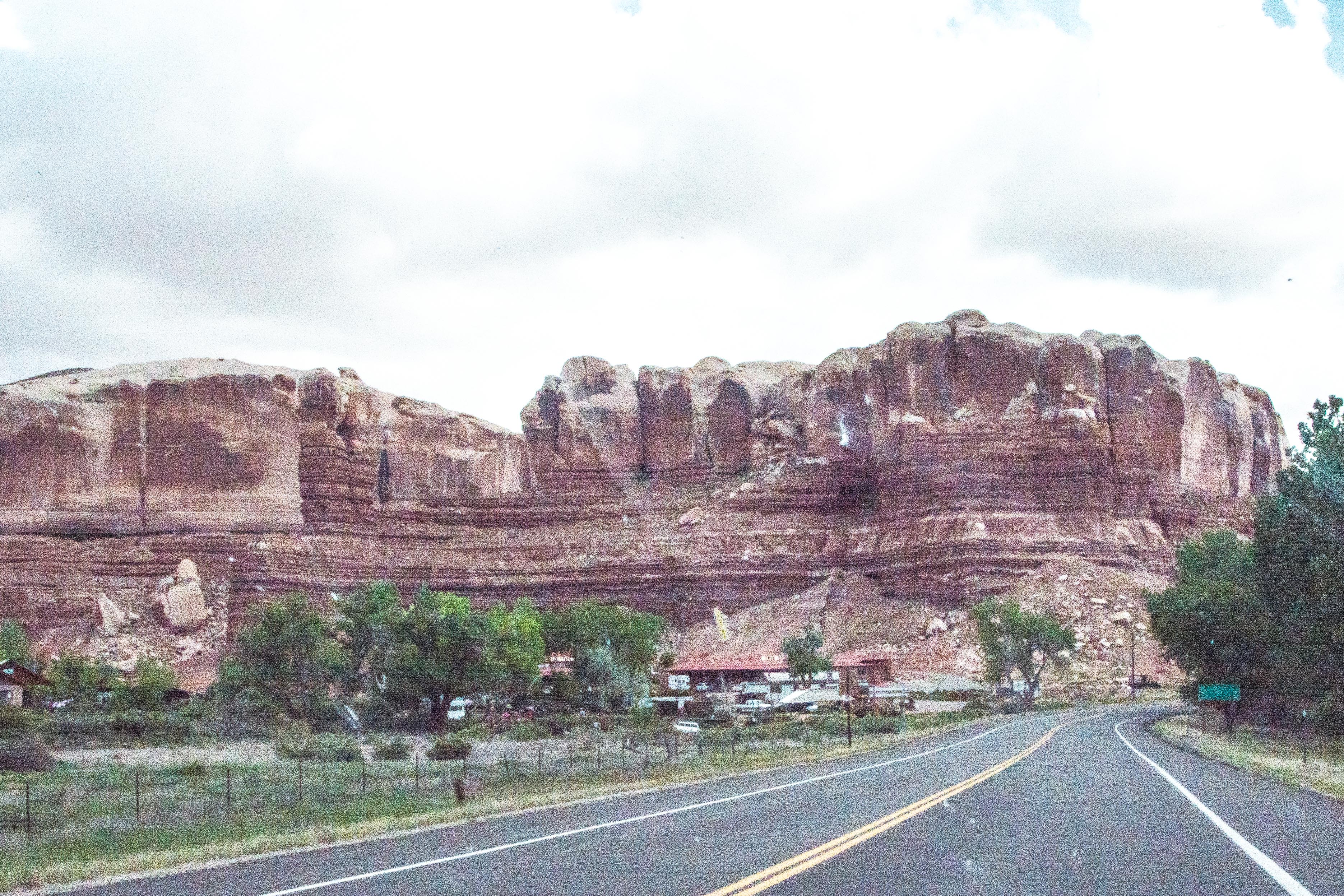
Main St; Kayenta, AZ; Monuments everywhere!

Main St; Kayenta, AZ; Monuments everywhere!

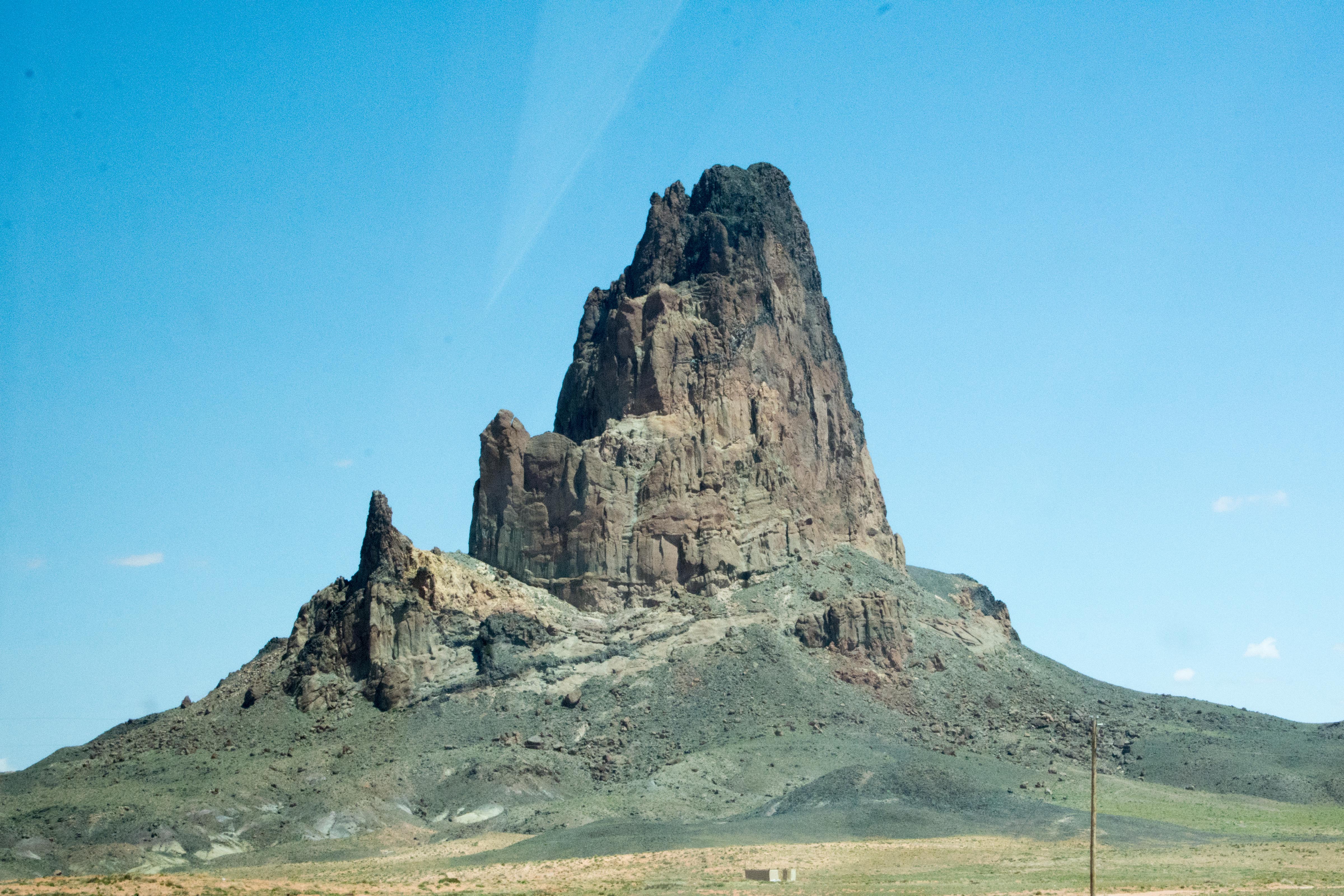
As might be expected, the buttes that rise above the ancient basin floor are not limited to the national park area.

Our room is not ready, so we go to their restaurant and have an excellent lunch. After that, we go back to the registration area, get our room keys, unload the car and settle in our room.


May 2015-7143May 2015-7149May 2015-7151

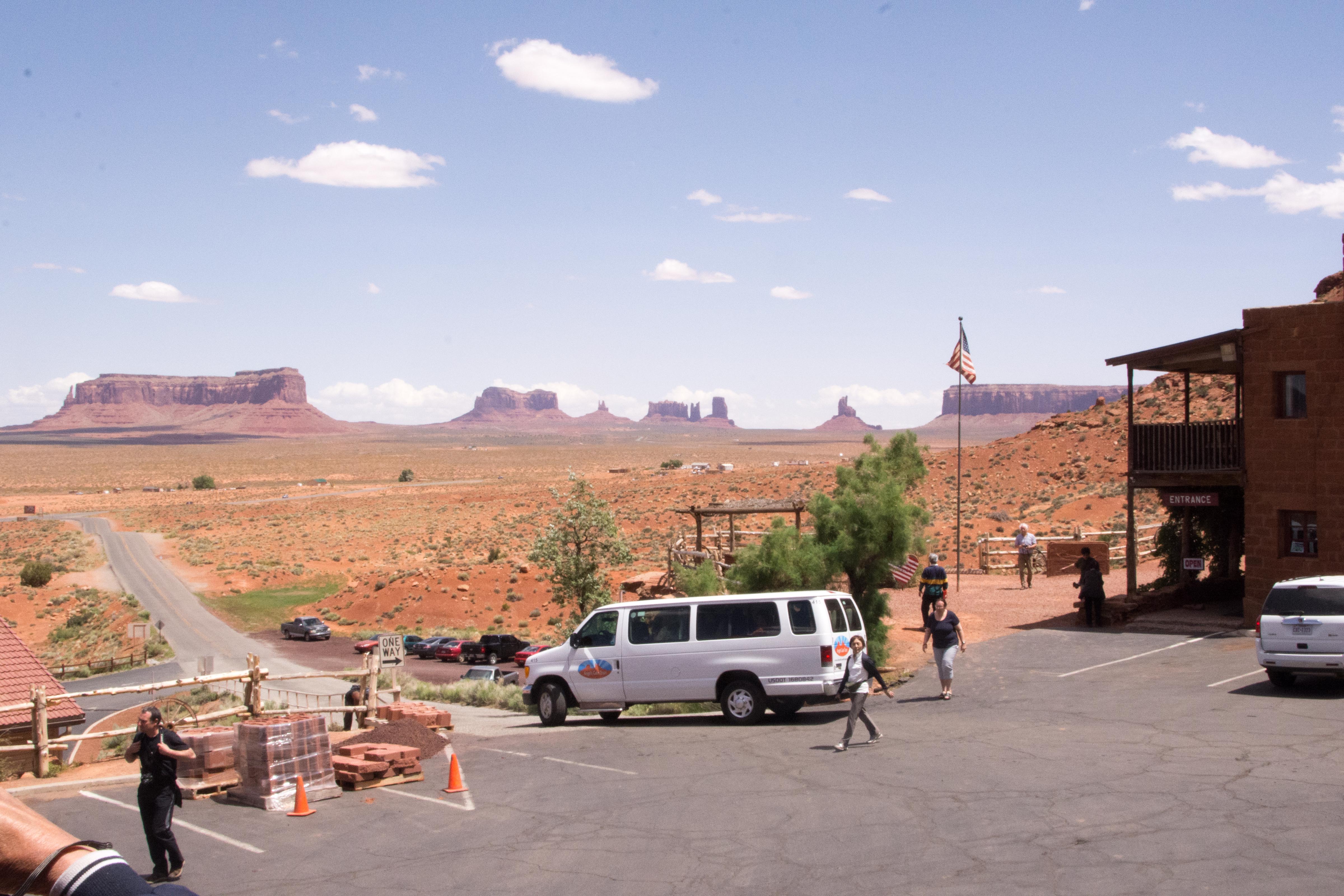
Monuments as seen from Goulding's Lodge

Monuments as seen from Goulding’s Lodge

At 4:00pm, we catch the bus tour of the park, where we see a lot of the monuments that make this place so famous.  On boarding the bus, we meet our tour guide, Carol.  She drives us the four miles to the park entrance, and gets us onto the circular tour road that enables us to get excellent views of the monuments.

Monuments as seen from first stopping point

Monuments as seen from first stopping point

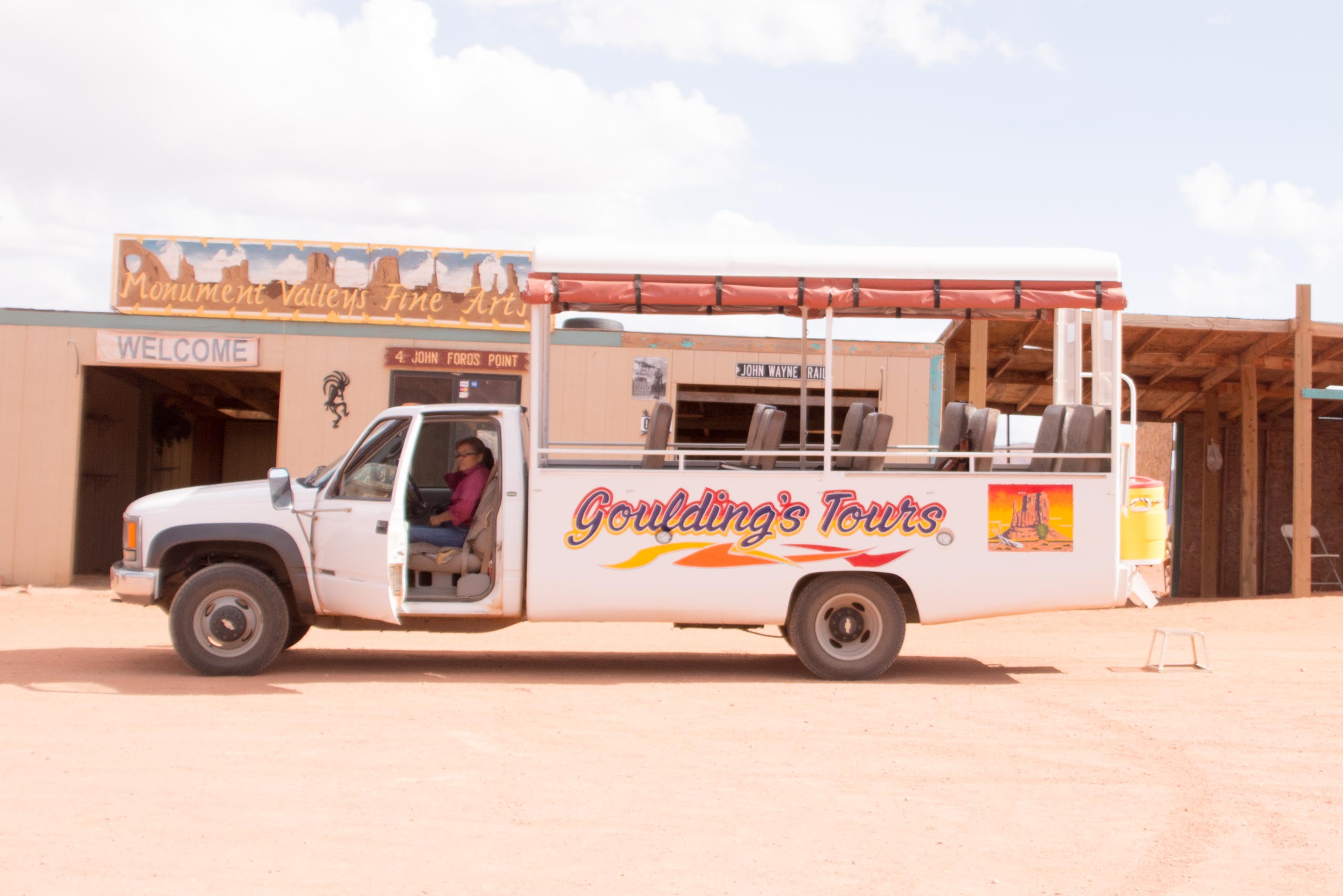
The tour bus

The tour bus

This is the deluxe tour, meaning that the tour takes us into an area where the regular tour does not go, a homestead with dwellings for a family.  Also on this site are three Navajo hogan structures that look like mud-covered igloos.

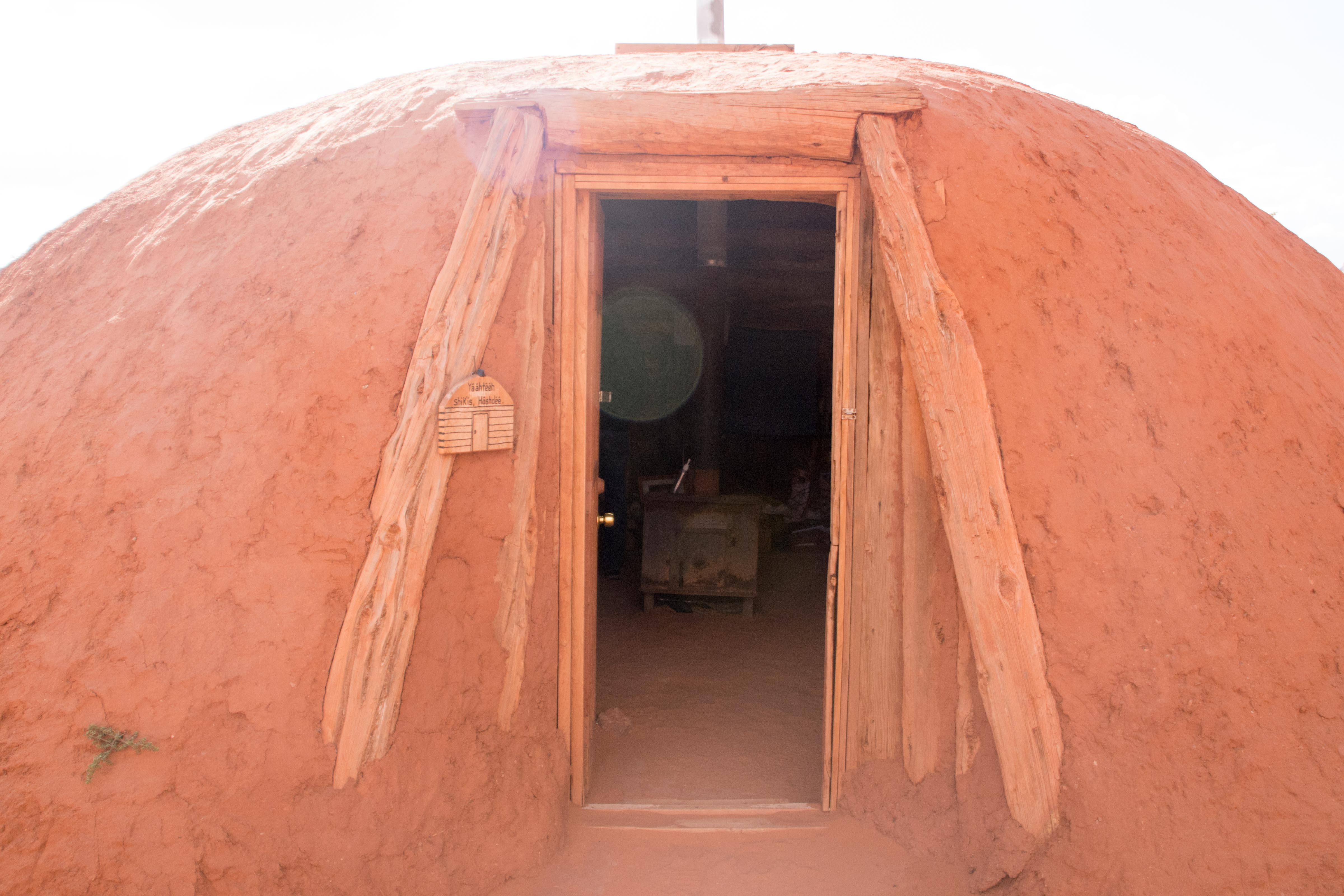
Navajo hogan entry

Navajo hogan entry

Hogan's interior

Hogan’s interior

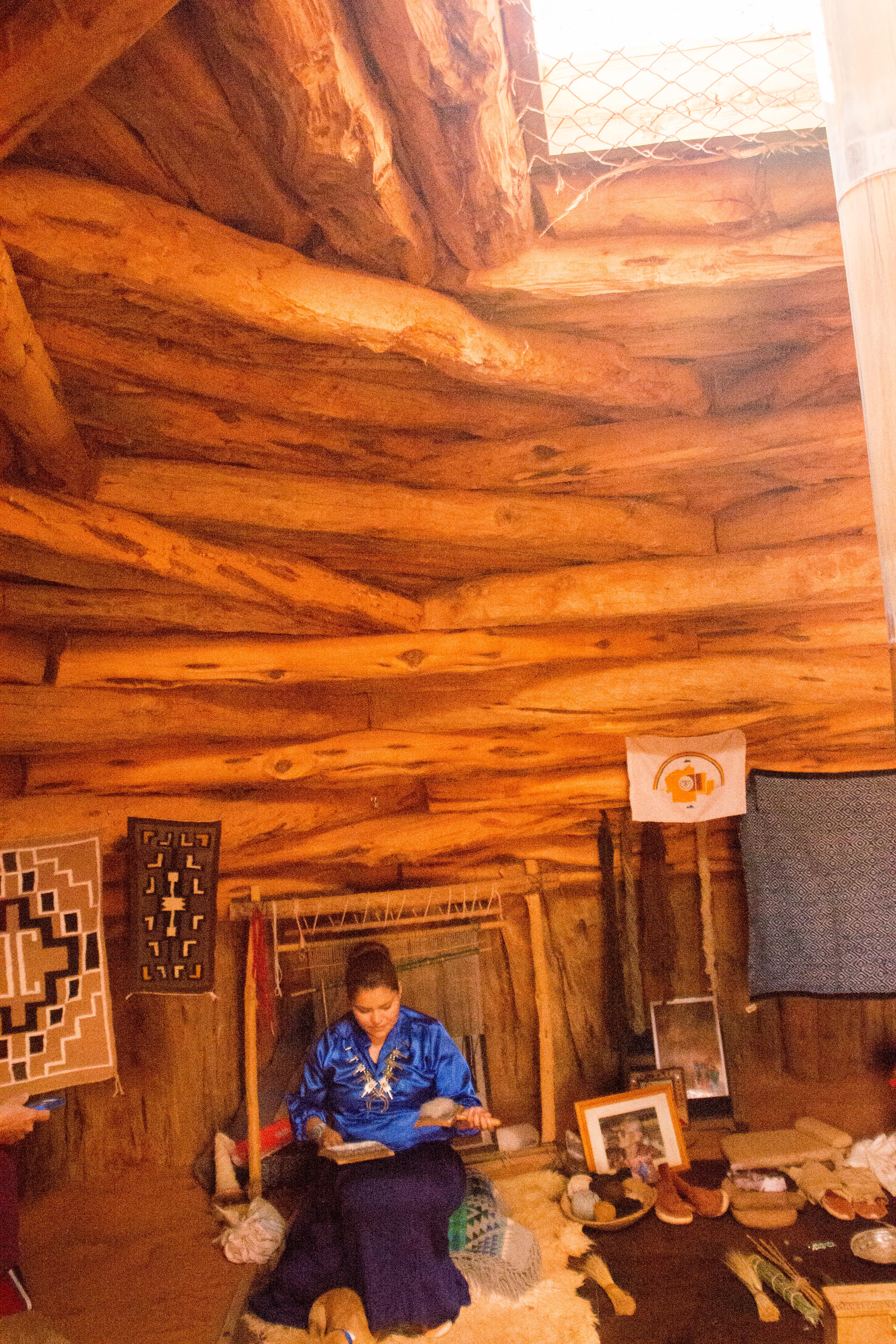
We are invited to visit one of the hogans to get a but of an education concerning Navajo life(the other two are set up as outhouses). The hogans are circular in shape with mud covering the entire outside surface except for the door and a circular hole in the center of the roof for a smoke stack. Once inside the hogan, we see that it is built of cedar logs, each 4 to 6 inches in diameter. At ground level the logs are set vertically, each about five feet high, formed into a circle about 10 feet in diameter. There is a gap for the door facing east. On top of this base are slightly thinner logs woven horizontally together at seemingly random angles resulting in a curve upward.  This curve comes together at the hole in the center of the ceiling through which a chimney pipe runs to a wood burning stove sitting immediately underneath.

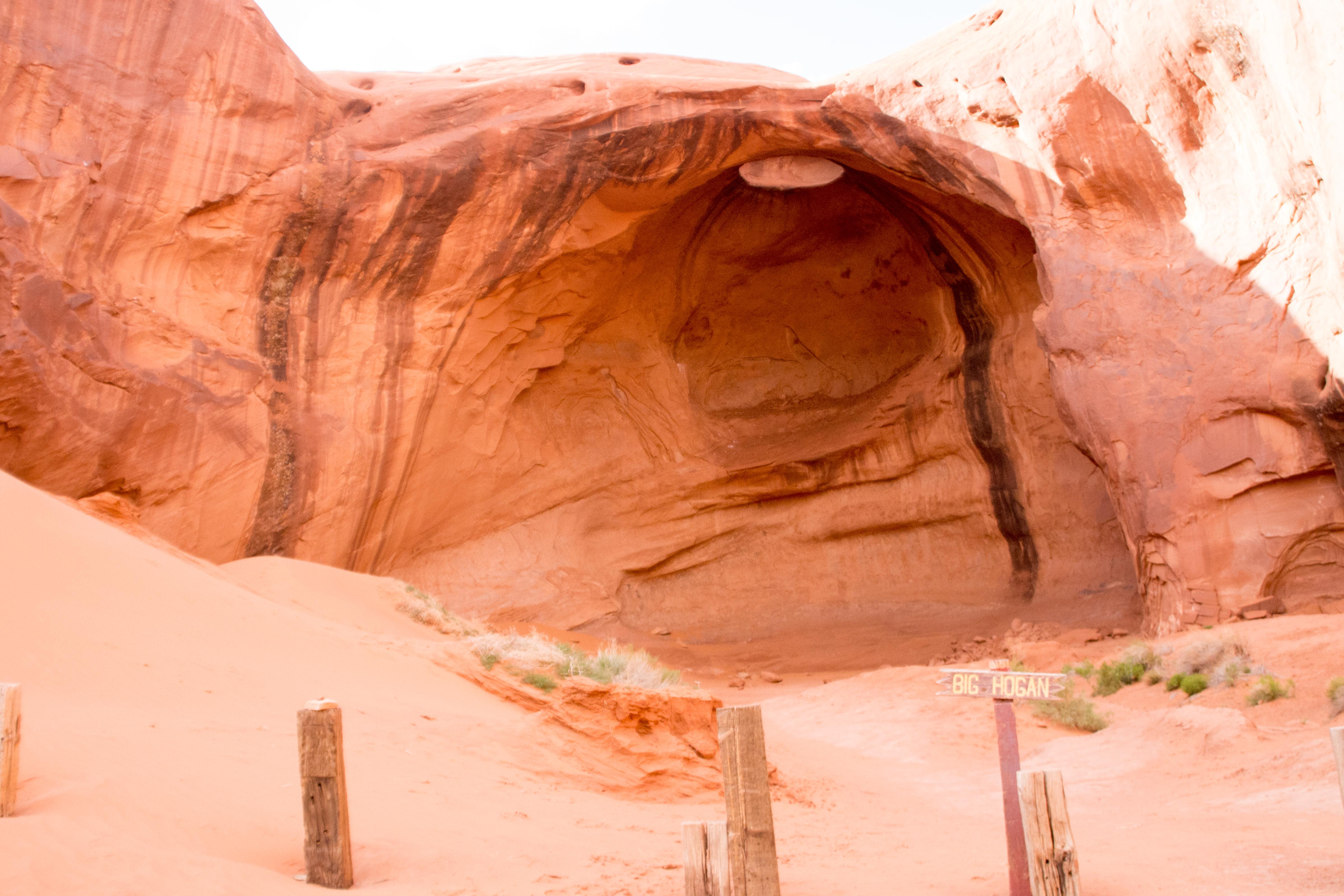
Big Hogan natural shelter

Big Hogan natural shelter

The interior is set up to show a variety of practical Navajo products used in their everyday existence in years gone by. Our tour guide Carol uses these items as props to explain aspects of Navajo life in the times when hogans were the homes of choice.  Sheepskins for sleeping are laid out on the floor half way around the wall. Tools for the weaving of woolen cloth are on display, including a standing frame, a device for turning the carded wool into threads for use on the frame, and of course the cards themselves. Also on display are skeins of wool of several different colors.

May 2015-7657Two baby’s backboards are there, used by the mother to tie the baby in until they are about a year old or when they are beginning to be capable of standing and walking on their own.  There are grinding stones for the corn, and a variety of other things visible. The main things the Navajos are known for are their wool weaving and the silver and jade jewelry that they make.

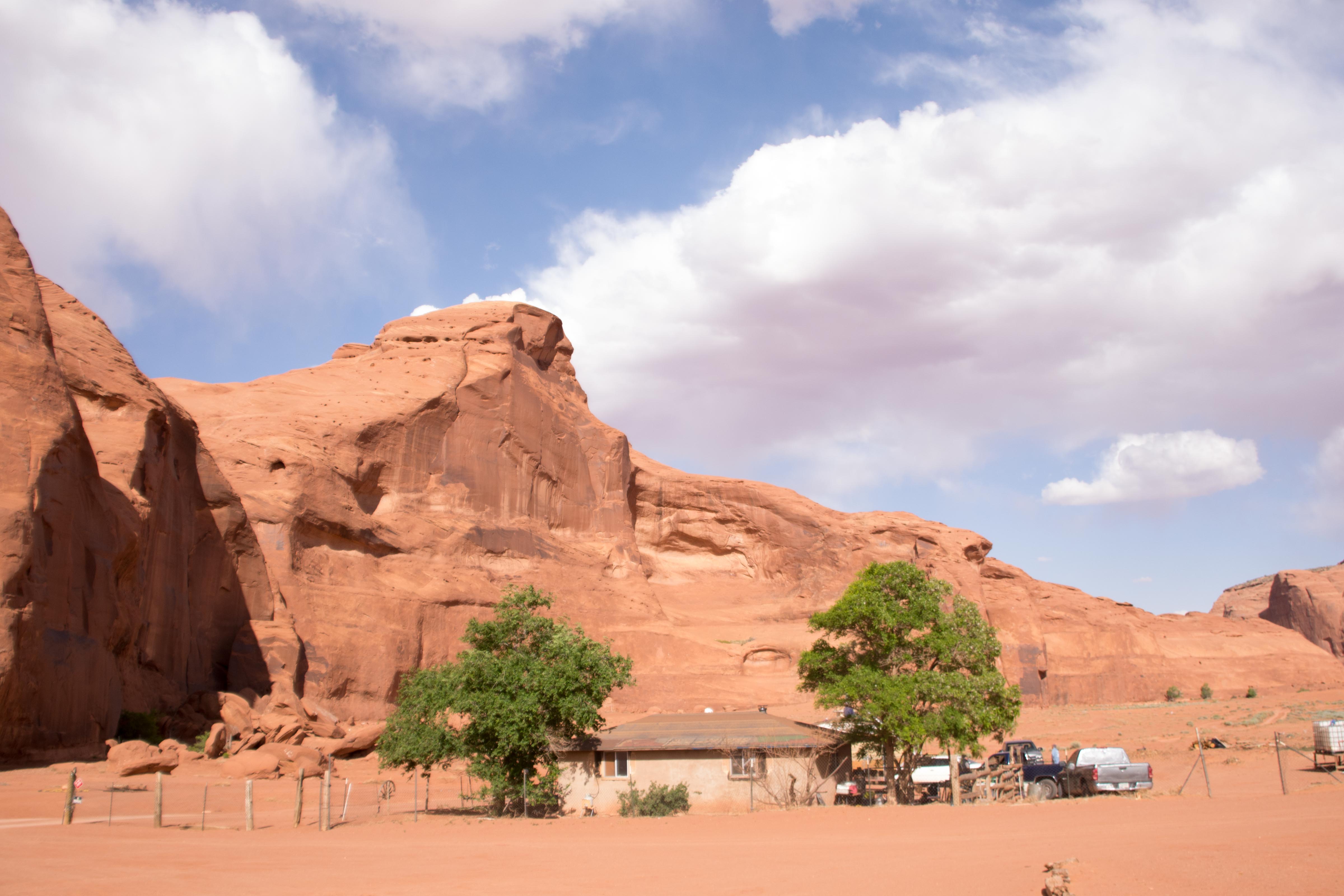
Main homestead site

Main homestead site

From there, Carol takes us back into the area behind the homestead, and there we visit up close a number of the monuments.

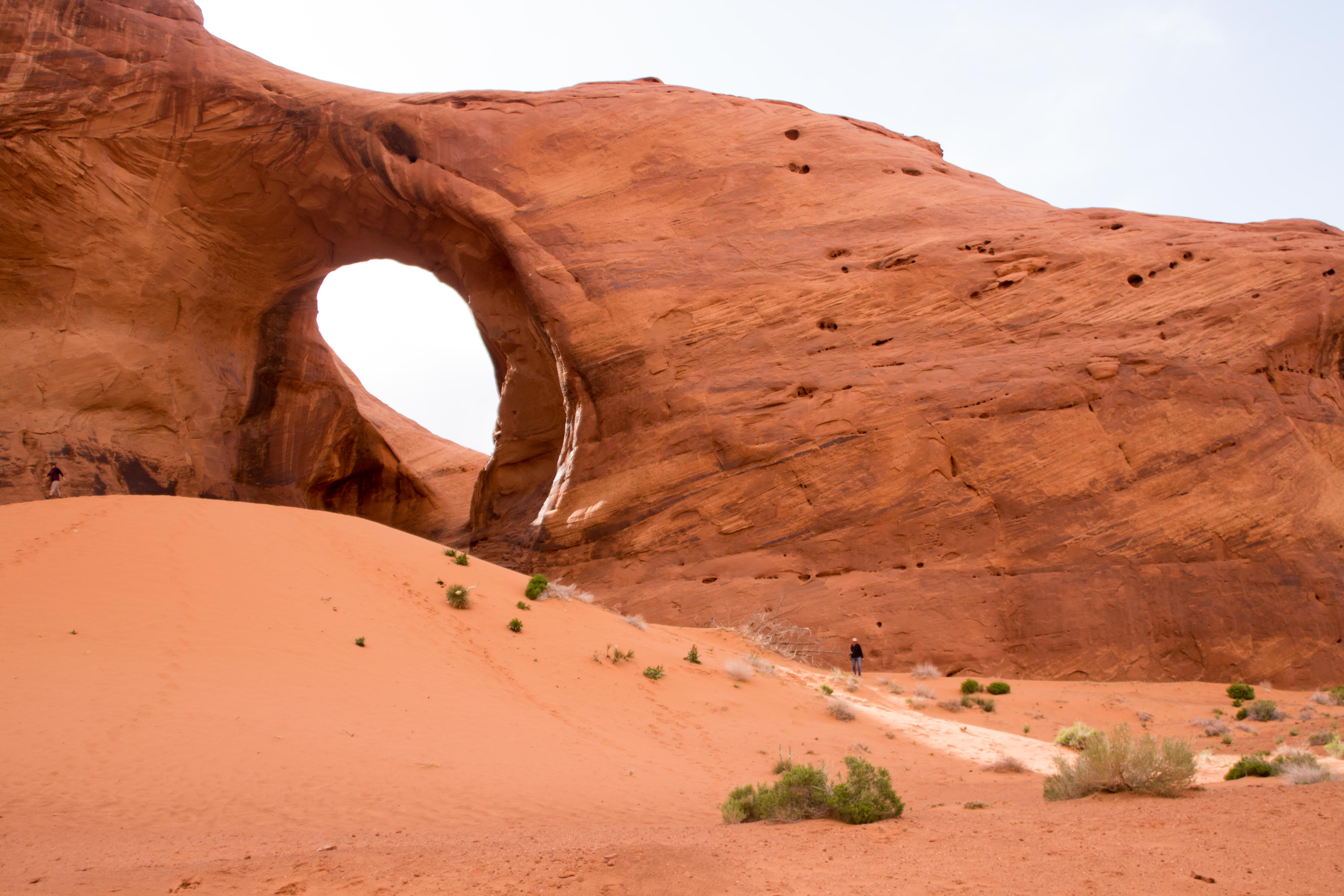
Eye-like depression carved out of a sandstone wall by wind and rain

Eye-like depression carved out of a sandstone wall by wind and rain

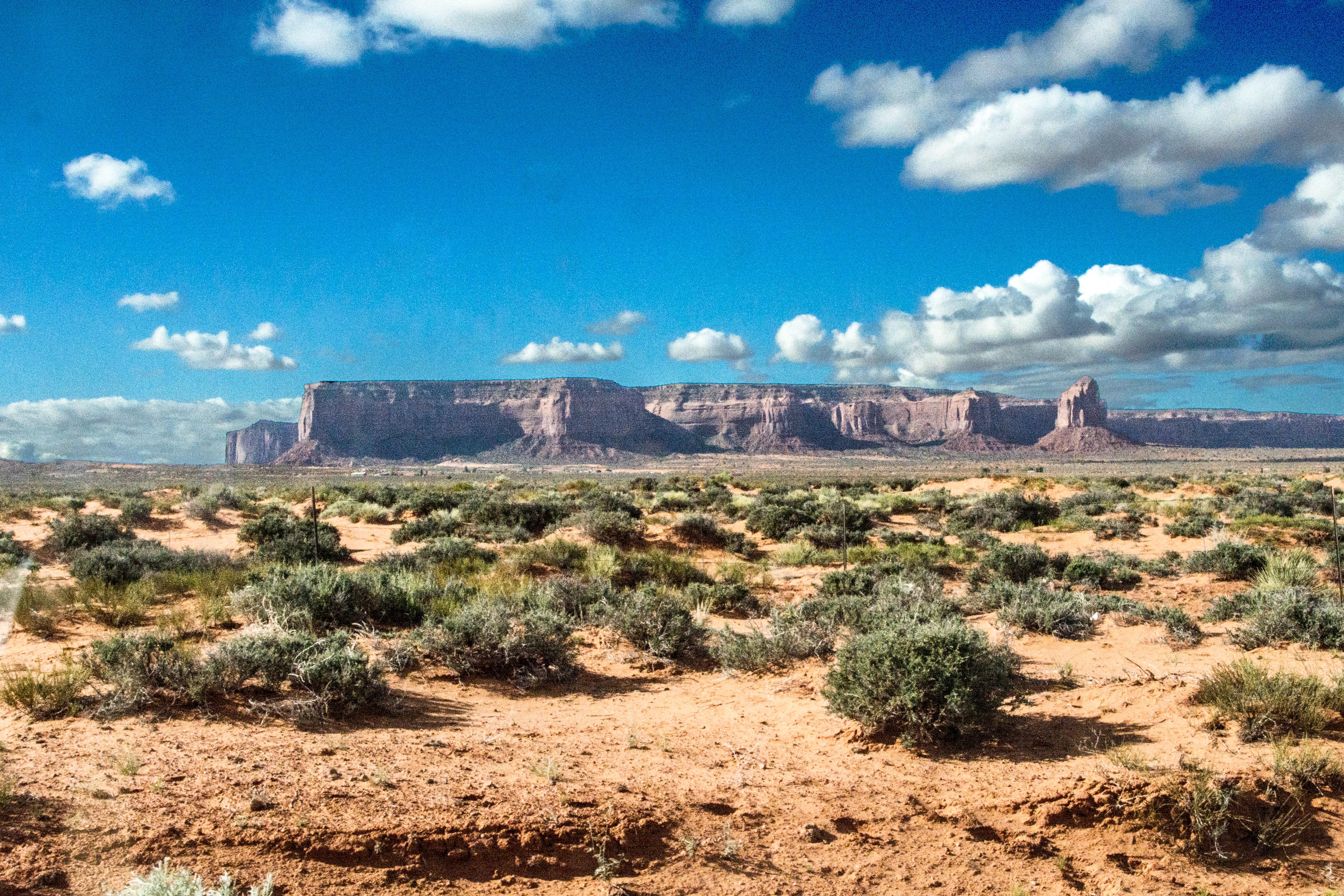
The “monuments” are sandstone buttes created by the wind and rain over the last 50 million years by separating the softer sand from the remaining, harder stuff. The buttes are indeed monumental in size. They are usually banded horizontally in color, standing out as much as 1000 feet vertically from the surrounding plain.

Moccasin Arch

Moccasin Arch

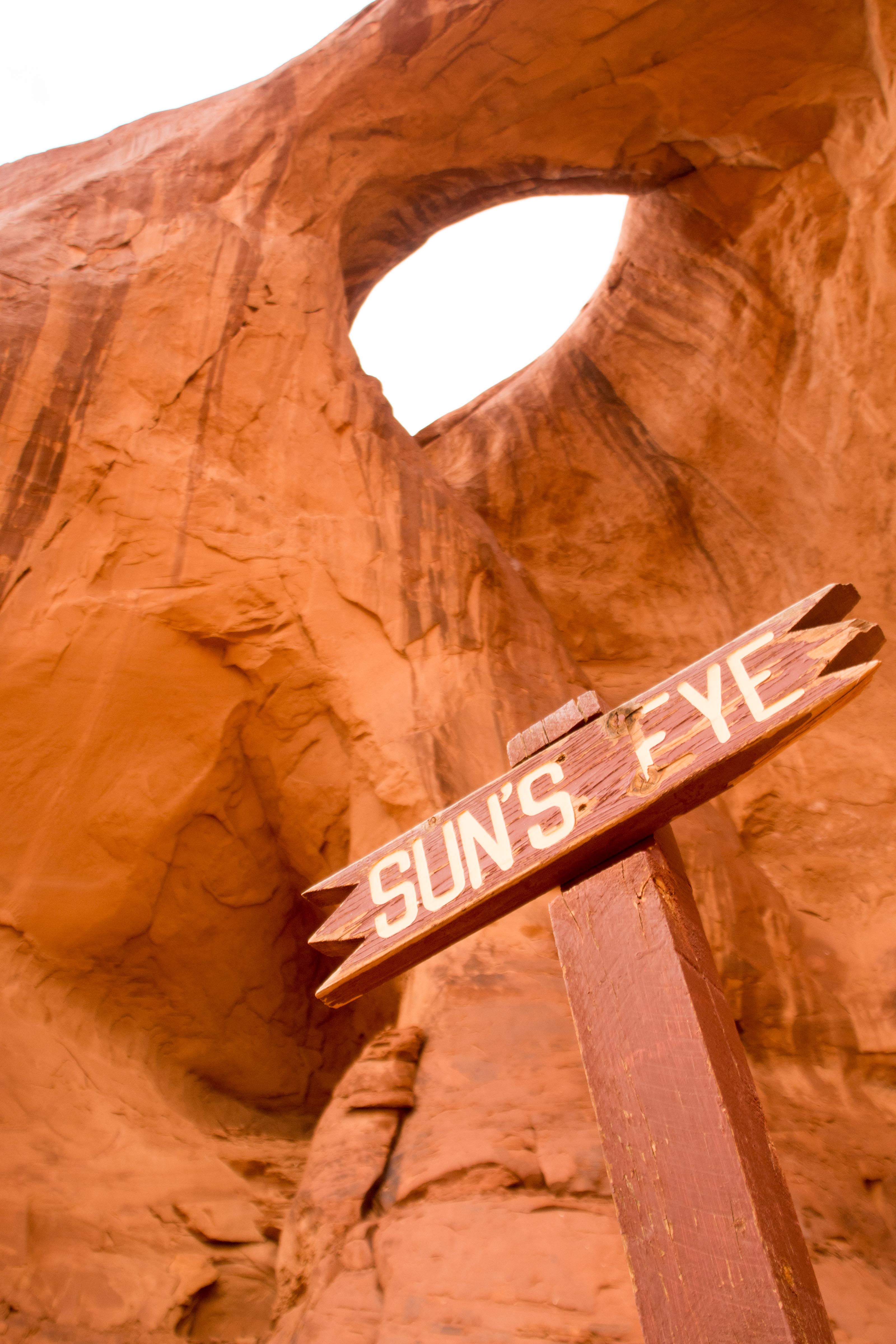
The most unusual features are the holes in the rocks. In places it is possible to see where there will be holes in the future. These take the form of indentations in the side of a butte or butte wall that look like eye sockets when the sun hits them just right.  But the holes themselves, showing the sky behind and letting the sunlight shine through, are the most spectacular.

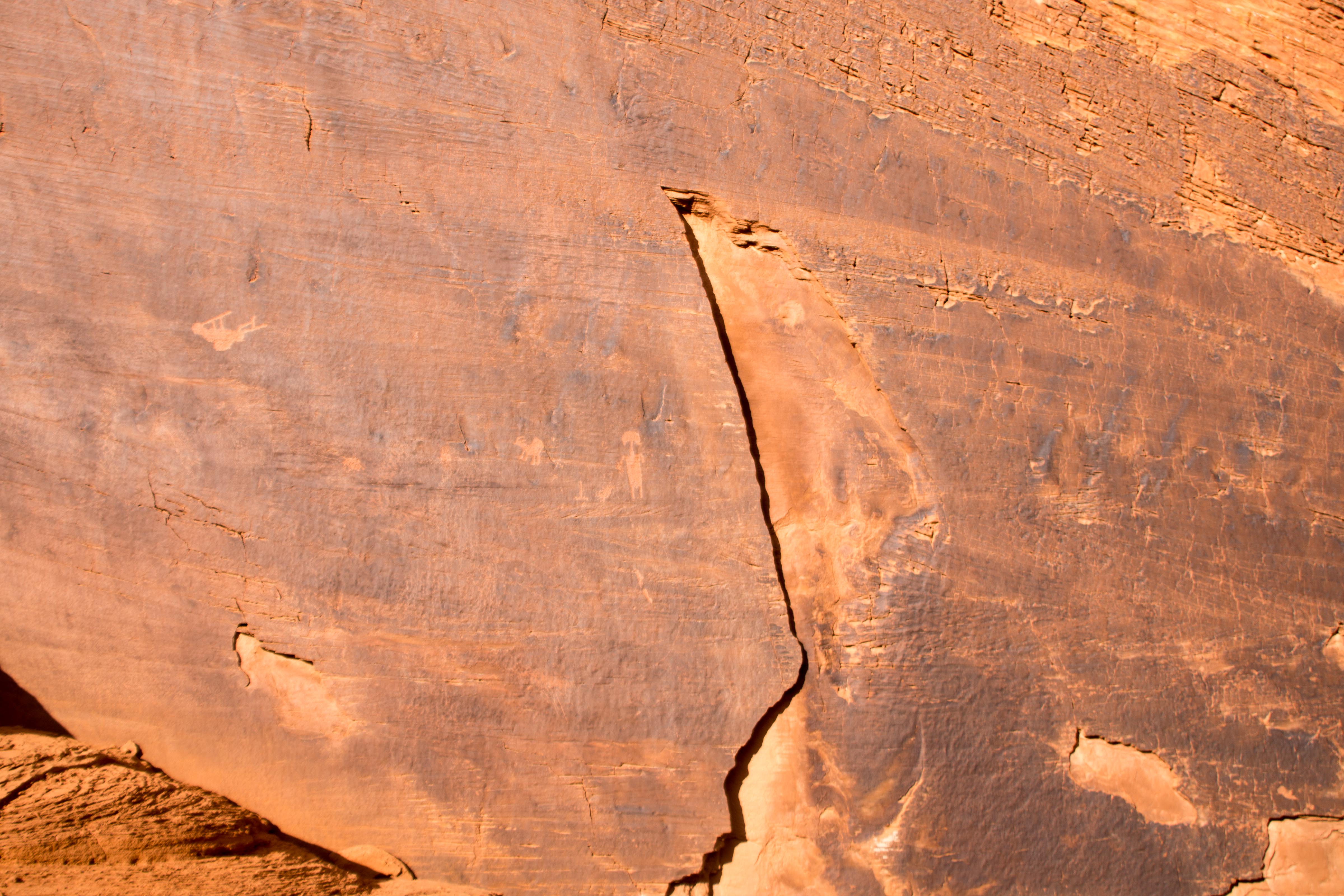
Petroglyphs; actual size of each is less than a foot tall

Petroglyphs; actual size of each is less than a foot tall

Carol also takes us to see a few petroglyphs carved in the rocks. How ancient these rock drawings are is hard to say, and Carol does not hazard a guess.


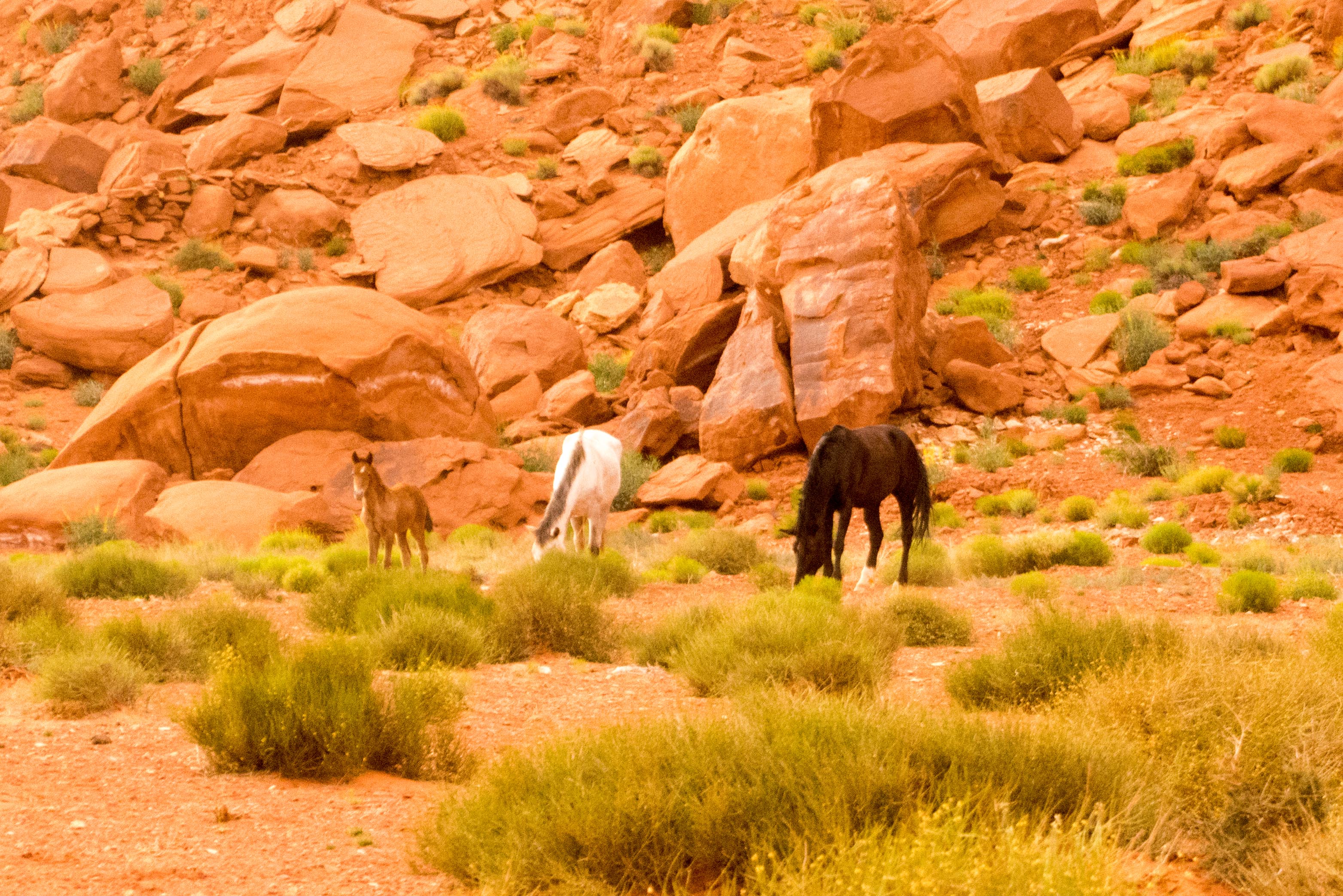
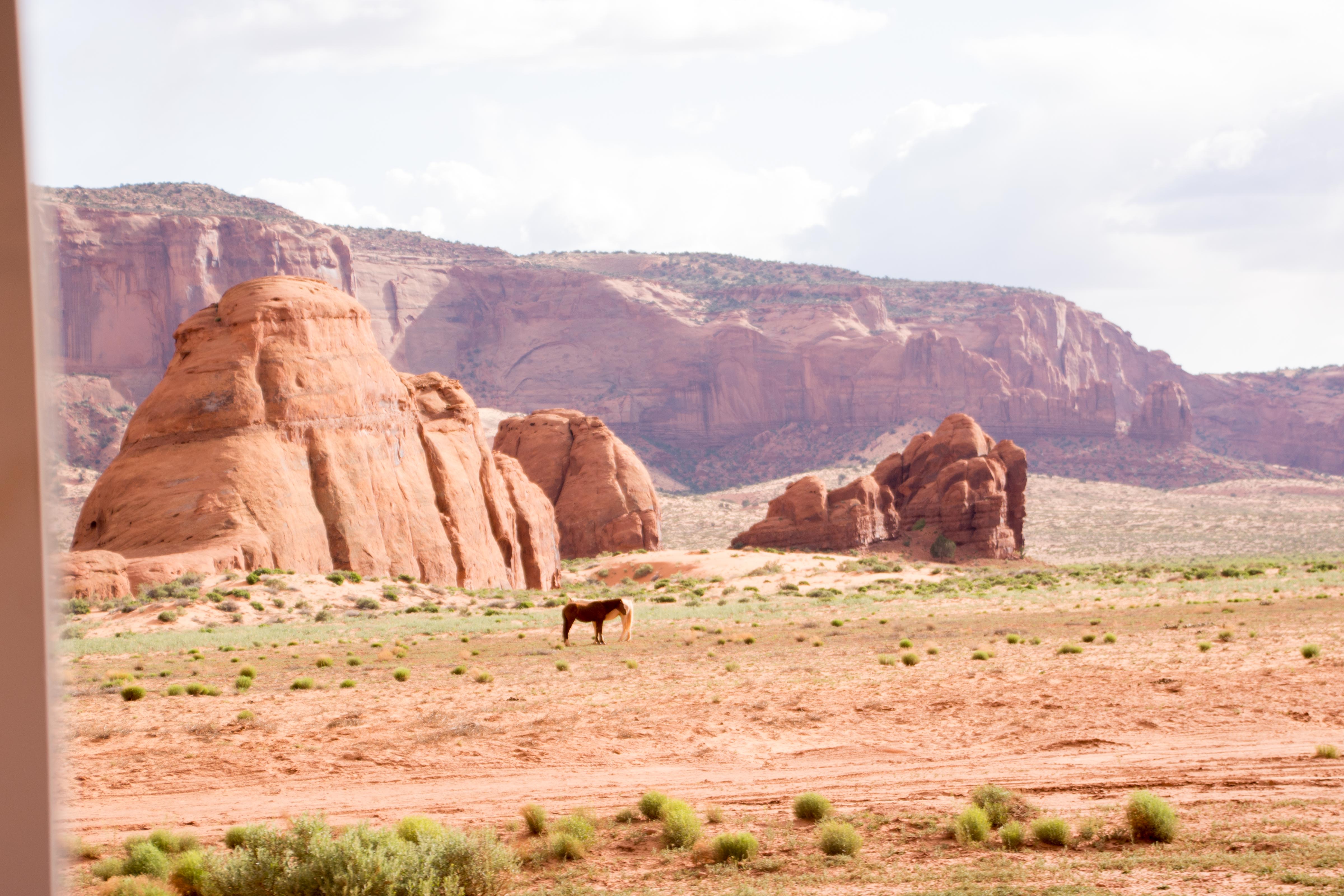
Horses foraging

Horses foraging

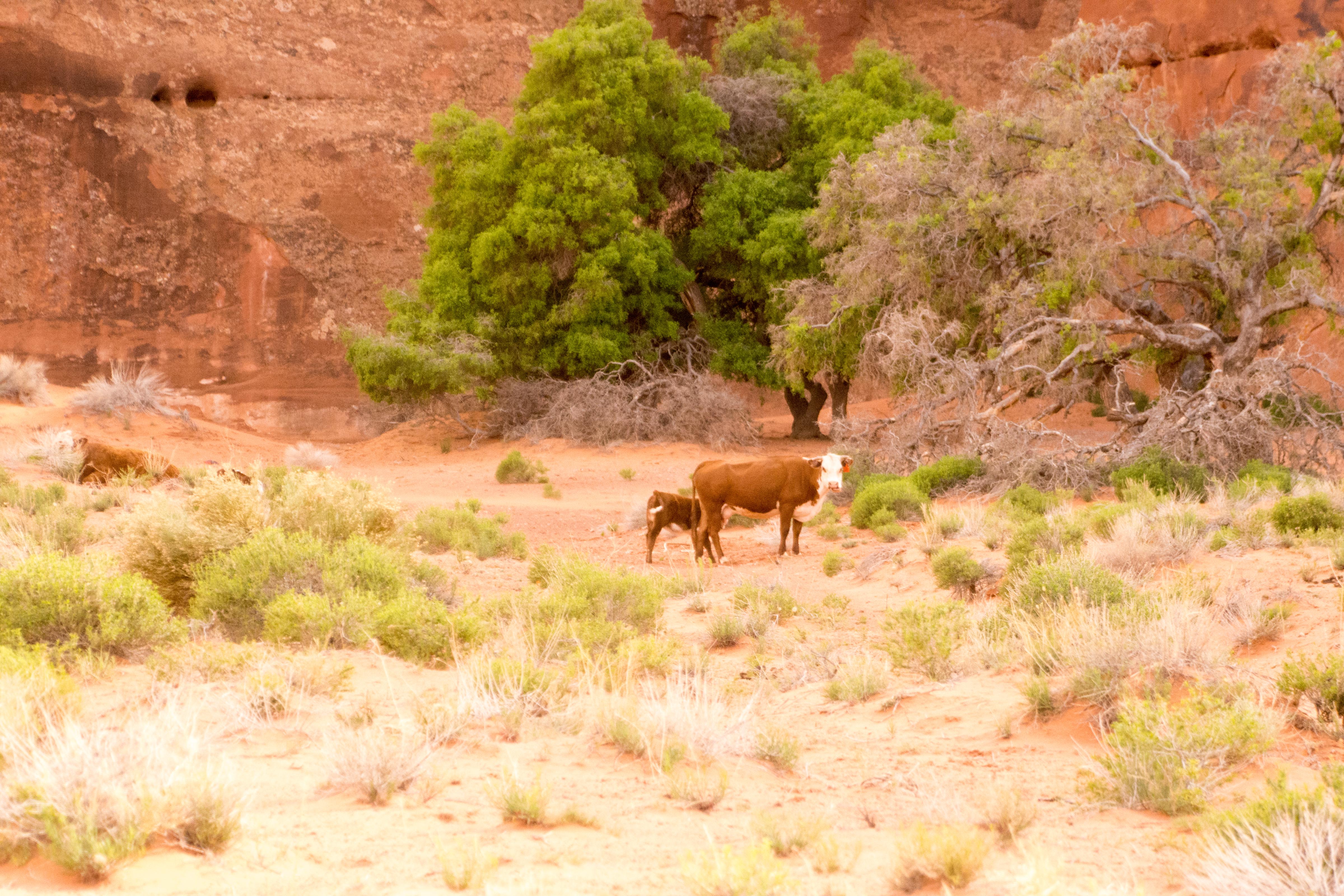
On the plains as our tour bus passes by are wandering horses and cattle. Navajos own the grazing rights, and usually use it for cattle.

Cattle foraging

Cattle foraging

Lands are fenced, and any private roads (leading to a homestead, for example) have the in-road barriers to discourage cattle from using them to get outside the fences. The horses are not really wanted, as they are not usually owned by the homesteaders.


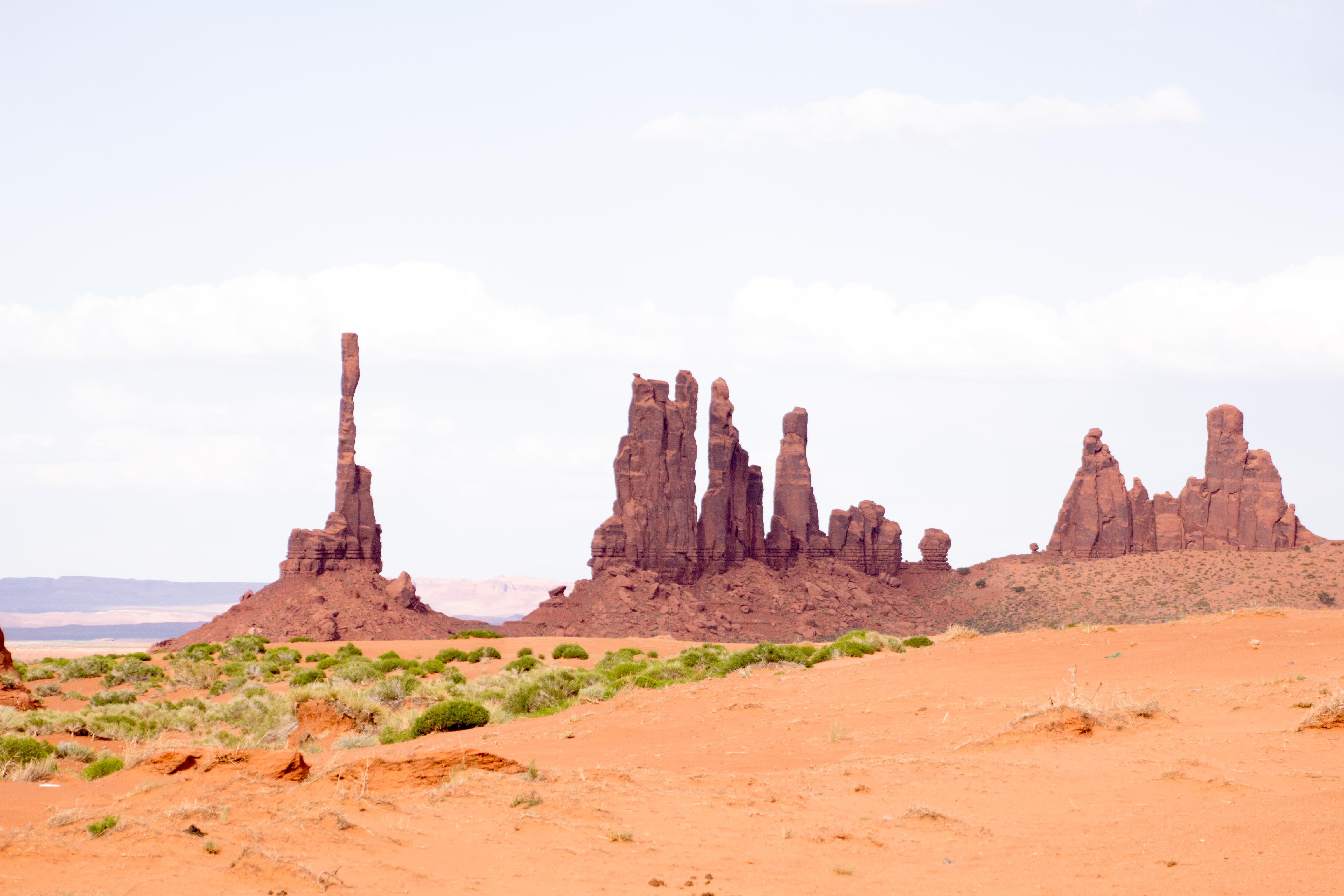
Totem Pole

Totem Pole

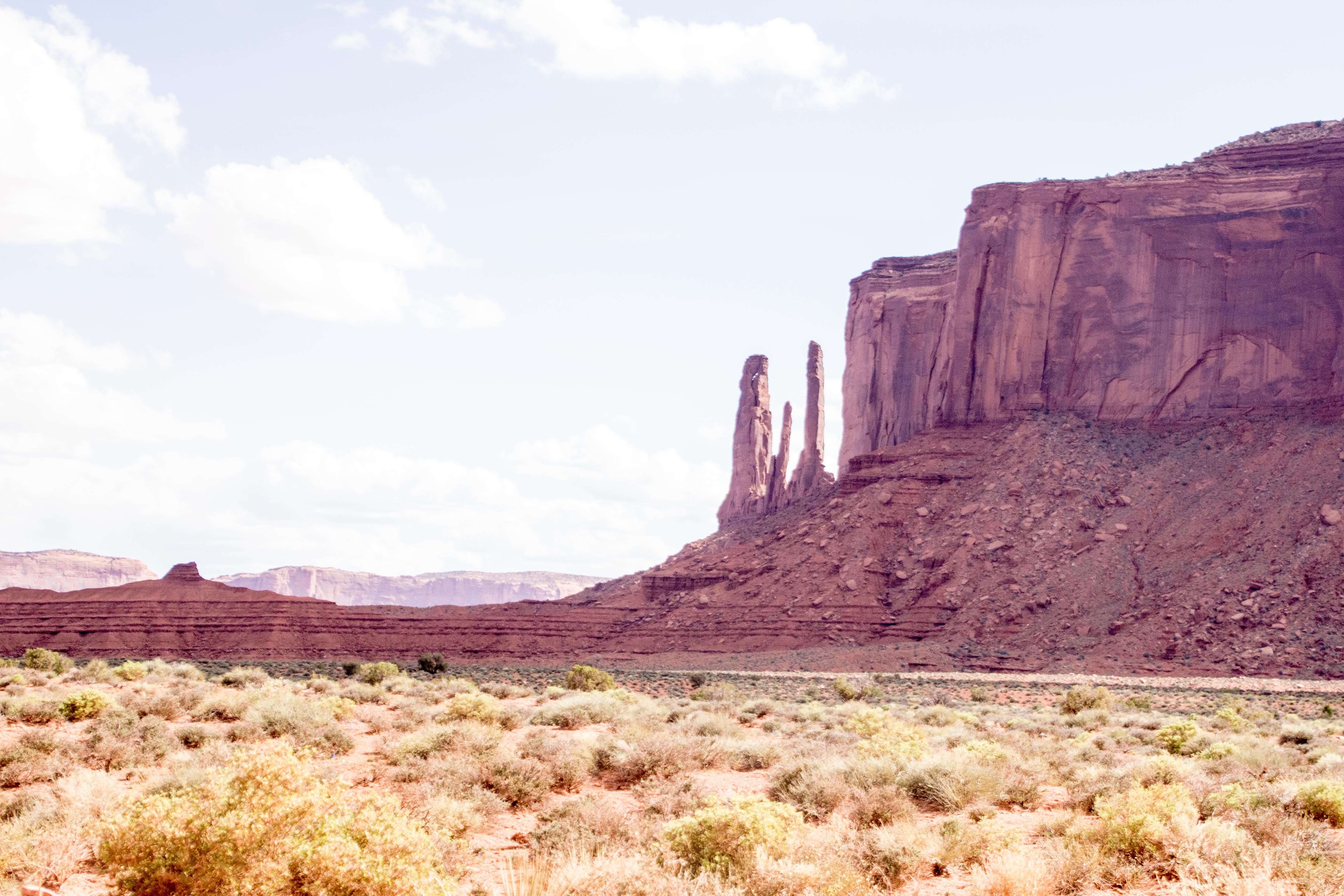
Three Sisters

Three Sisters

Carol told us the story of the Navajos being given their land back by the last treaty (in 1863, she said, by General Sherman), but they had to keep animals on it and thus make use of it to keep their ownership up to date.


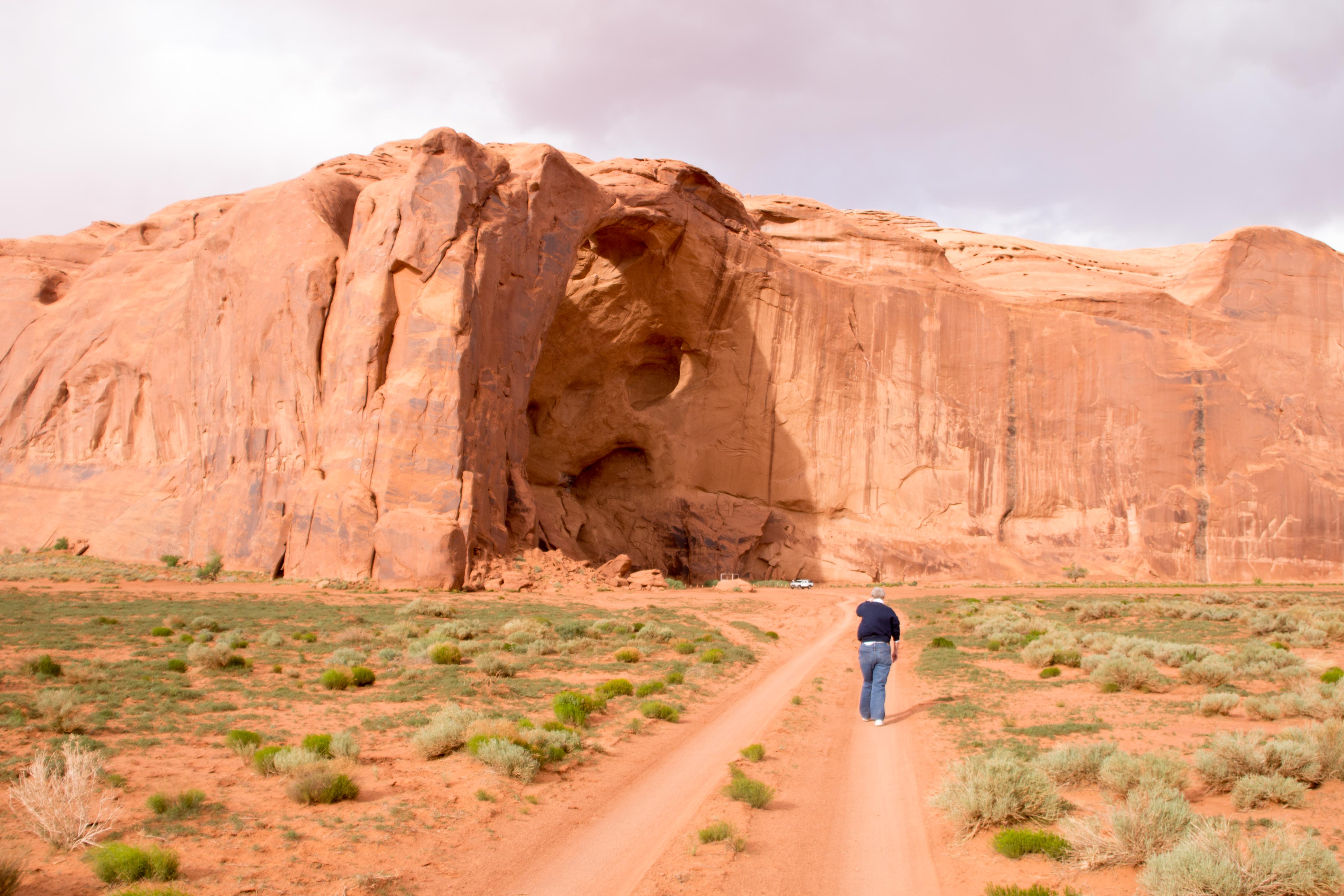
Gwen headed toward Sun's Eye

Gwen headed toward Sun’s Eye

The owner-Navajos grazed sheep and cattle primarily. However, horses have been brought in to support the horse-tour business done on the land, and they are not so easily controlled.

Looking up at the Sun's Eye

Looking up at the Sun’s Eye

The result is now the current Navajo owners are starting to round up the stray horses and eliminate those that are not claimed by the tour businesses.


Hogan turned into crypt with the death of inhabitant

Hogan turned into crypt with the death of inhabitant

Toward the end of our tour, the wind kicks up, blowing a lot of sand at us. The tour “bus” is an open set of seats set on the bed of a pickup frame, with the tour guide comfortably seated in a normal driver’s cab.


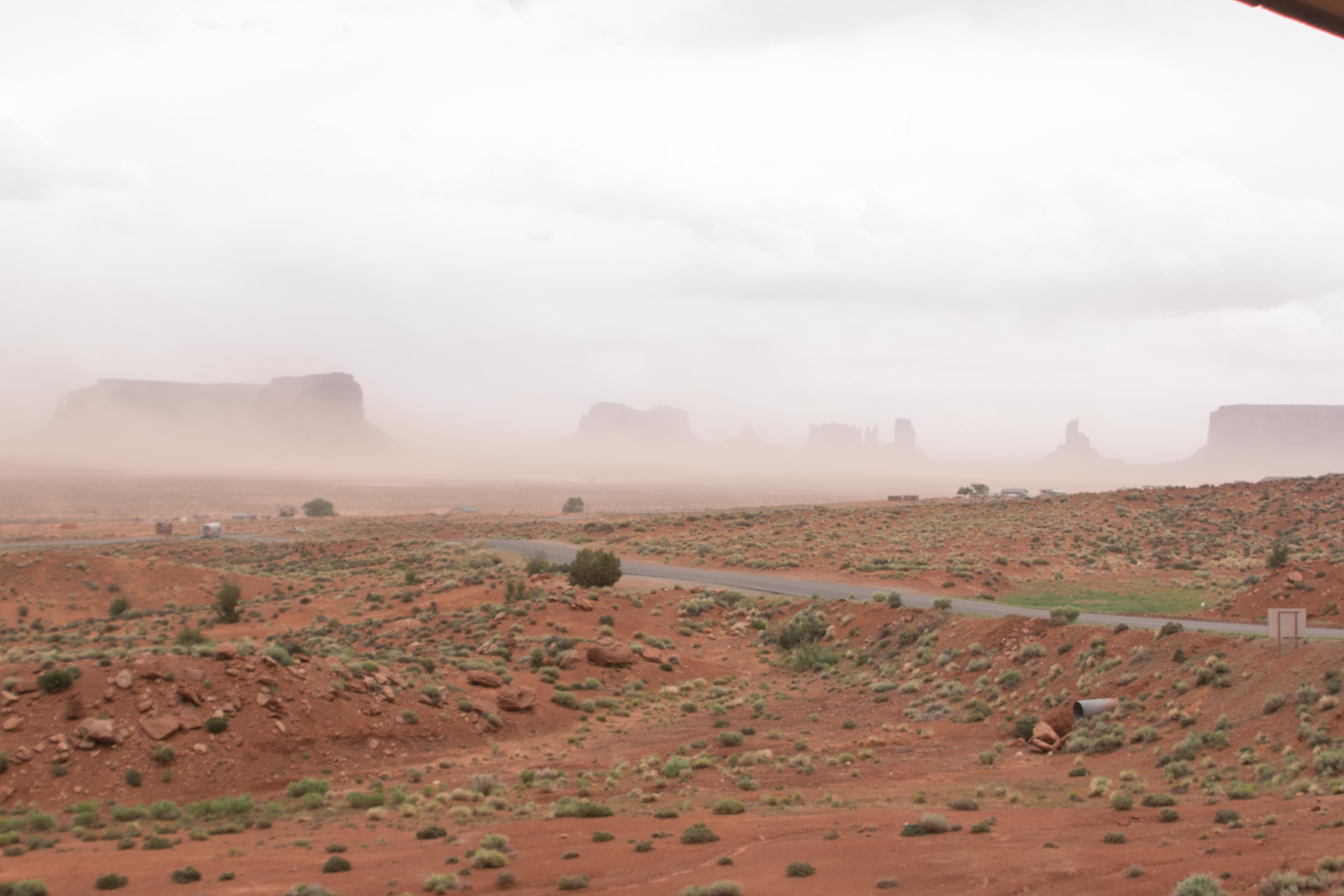
Wind-whipped sands beginning to obscure views

Wind-whipped sands beginning to obscure views

There is little wind protection for the us poor customers except for some plastic drop-down screens which are not dropped down. The windstorm keeps up for the rest of the tour, but for the most part it is over anyway.

Back at Goulding's Lodge, sand blown up obscures views

Back at Goulding’s Lodge, sand blown up obscures views

We get back to the Lodge and quite happily unload, retreating to our room. We shortly head over to the hotel restaurant to eat dinner. All the employees at the hotel are Navajo, and we noticed as well that they didn’t serve any alcoholic beverages. We clearly are on reservation land.

Leave a comment

Filed under Blog, Uncategorized

Palm Springs, CA to Clarkston, MI, Day 1 May 6

Wed, May 6: PS to Flagstaff, Az

Well, it’s “on the road again”! We’re starting our annual drive back from Palm Springs to Clarkston. Today is a long day – clean the house until it sparkles, give away the food that’s going to spoil before we get back, and finally drive the six hours to Flagstaff.

Rear view, PS house

Rear view, PS house

The Travelers

The Travelers

That’s the plan, and that’s pretty much how it is happening. Our neighbor Clayton was kind enough to take most of the food, although Johan is on a diet, so his choices had to be limited. The last snafu is the antifreeze we picked up was wrong for our use (in the toilets to maintain the water in place), so Gwen has to go out and procure some of the “right” kind.

Once we are on the road, things calm down and we drive straight through. We go along the I-10 almost to Phoenix, and then turn north through Prescott and finally arrive in Flagstaff. Gwen and I are sure we took a different road last year, a much more scenic route. The I-10 is mostly desert with the only highlights coming as we get near Phoenix and see some saguaro cacti. We look them up on the internet, and find that indeed they can get tall (up to 60 feet). They can live up to 150 years, and their rate of growth depends on the precipitation.

Flagstaff is always fun to visit. We enjoy the closeness to Mt. Humphreys and the Grand Canyon. Our hotel reception person recommends that we go to Black Bart’s for dinner, as it was close by, and serves American cuisine. So, following their directions, we find it about five minutes away. It is the restaurant associated with the local large camping ground, right off one of the main roads. The hotel person who recommended the place didn’t tell us about the association with the camping ground, so we were a bit surprised. We are somewhat uncertain about this place, but finally figure “how bad could it be?”. We are a bit early so it is not crowded. Our waiter, Michael, helps us pick wines, and allows us to share a full rack of ribs for only a little extra, so we are set for food and drink. The piano player at the end of the large dining area set on a raised stage-like platform then starts to tinkle the keys. Very shortly, two waiters (including Michael) and two waitresses joined him. They commence singing a very nice vaudeville-like song basically introducing the evening’s entertainment. After they finish, the waiters and waitresses disband (to applause, of course), and go back to their duties. Quickly one of the other waitresses joins the pianist, and starts singing a beautiful rendition of “On my own” from Les Miserables. This sets the pattern for the set. Each of the waiters and waitresses come up in turn to sing renditions of their chosen songs. Occasionally the pianist is left to his own devices, but he is quite able to handle it. Four of the waiters at one point get up on stage and offer up a lively rendition of the “Caissons Go Marching Along”. All and all, we were very entertained, and the food and wine turned out to be excellent as well. A very good evening for us, and an excellent way to start this trip. We then got gas and went back to the hotel for an early bedtime.

Leave a comment

Filed under Blog

Disneyland and DCA visit April 2015


Disneyland DCA 2015-6521


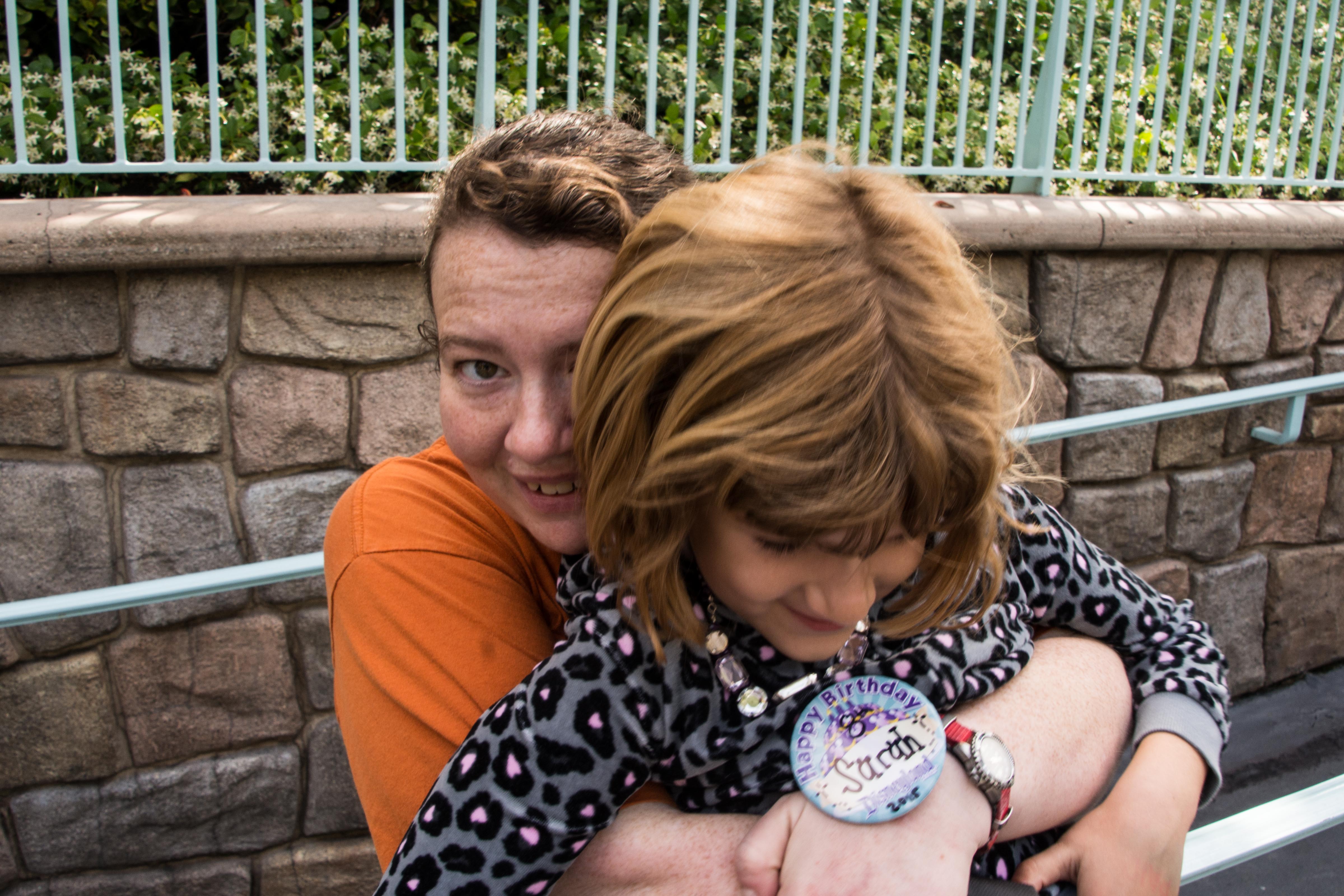
This past weekend, Gwen and I joined Courtney and Sarah to celebrate their birthdays at Disneyland and Disney California Adventure.


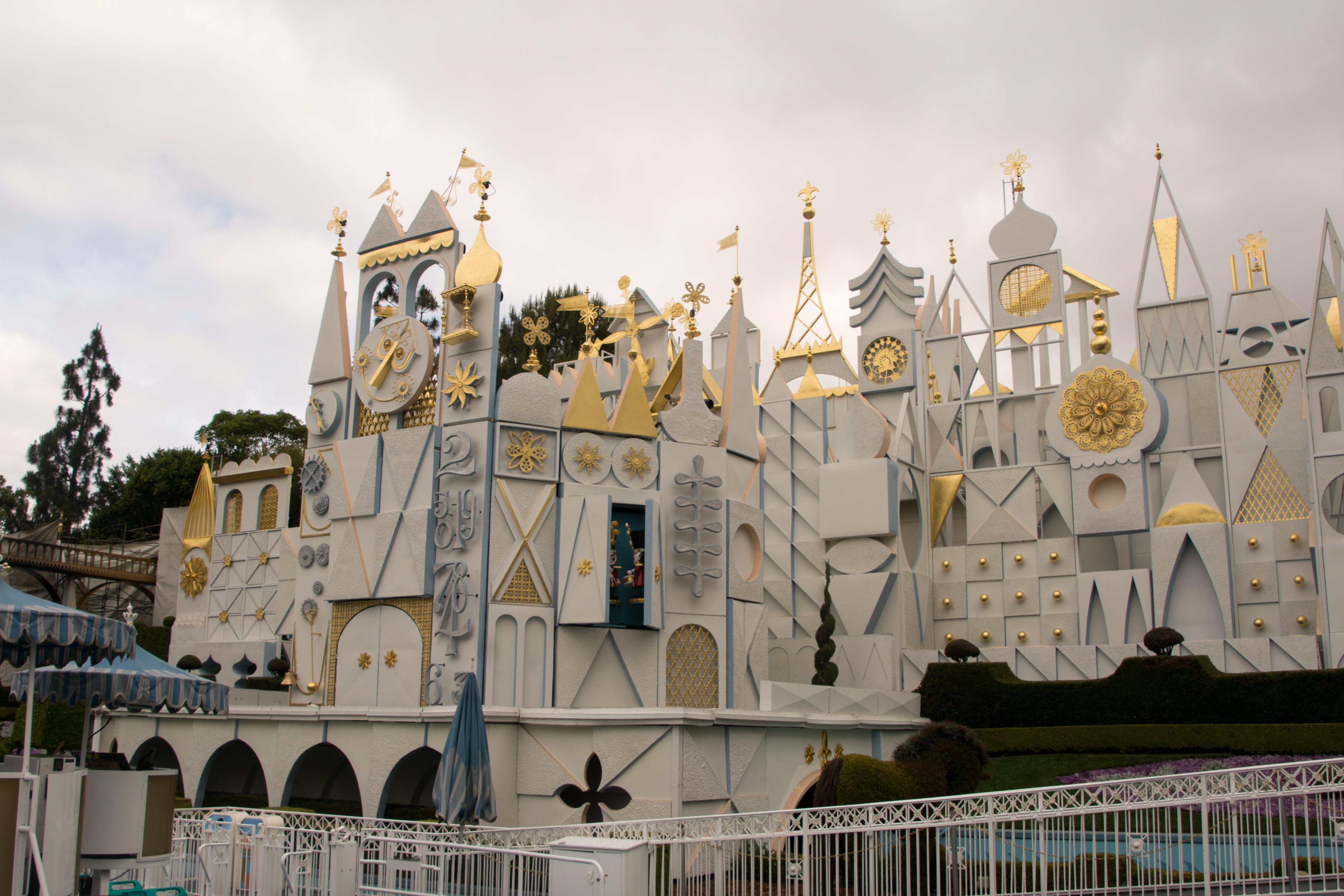
Saturday was Disneyland, and after going through the preliminaries of getting in, we made our way to Toontown, which unfortunately didn’t open until 10:00.  So, close by was “It’s a Small World”, and that is where Sarah and I went.

Disneyland DCA 2015-6530 Disneyland DCA 2015-6531


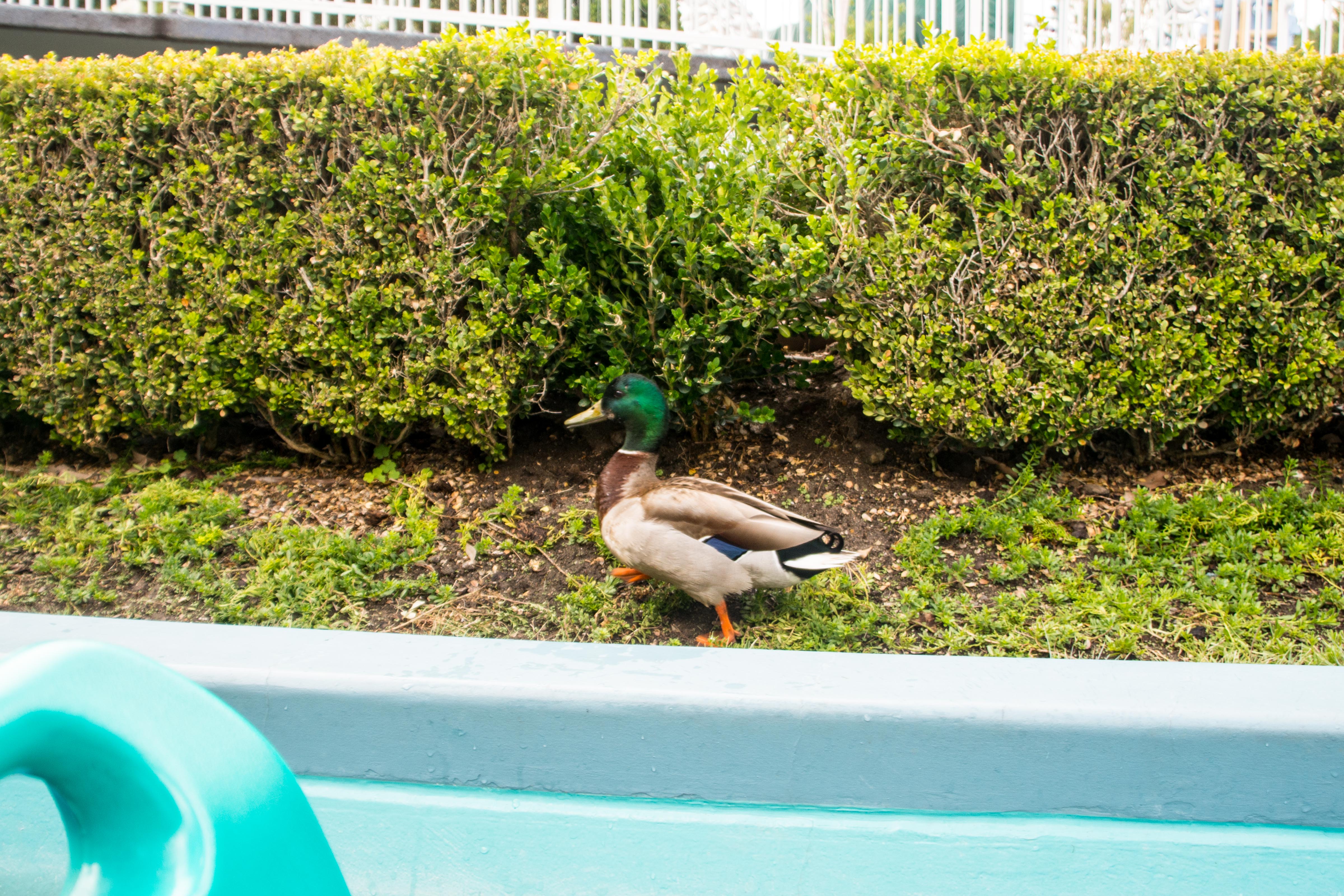
Going into the Small World building, Sarah noticed a duck in the ride’s fringes.Disneyland DCA 2015-6538


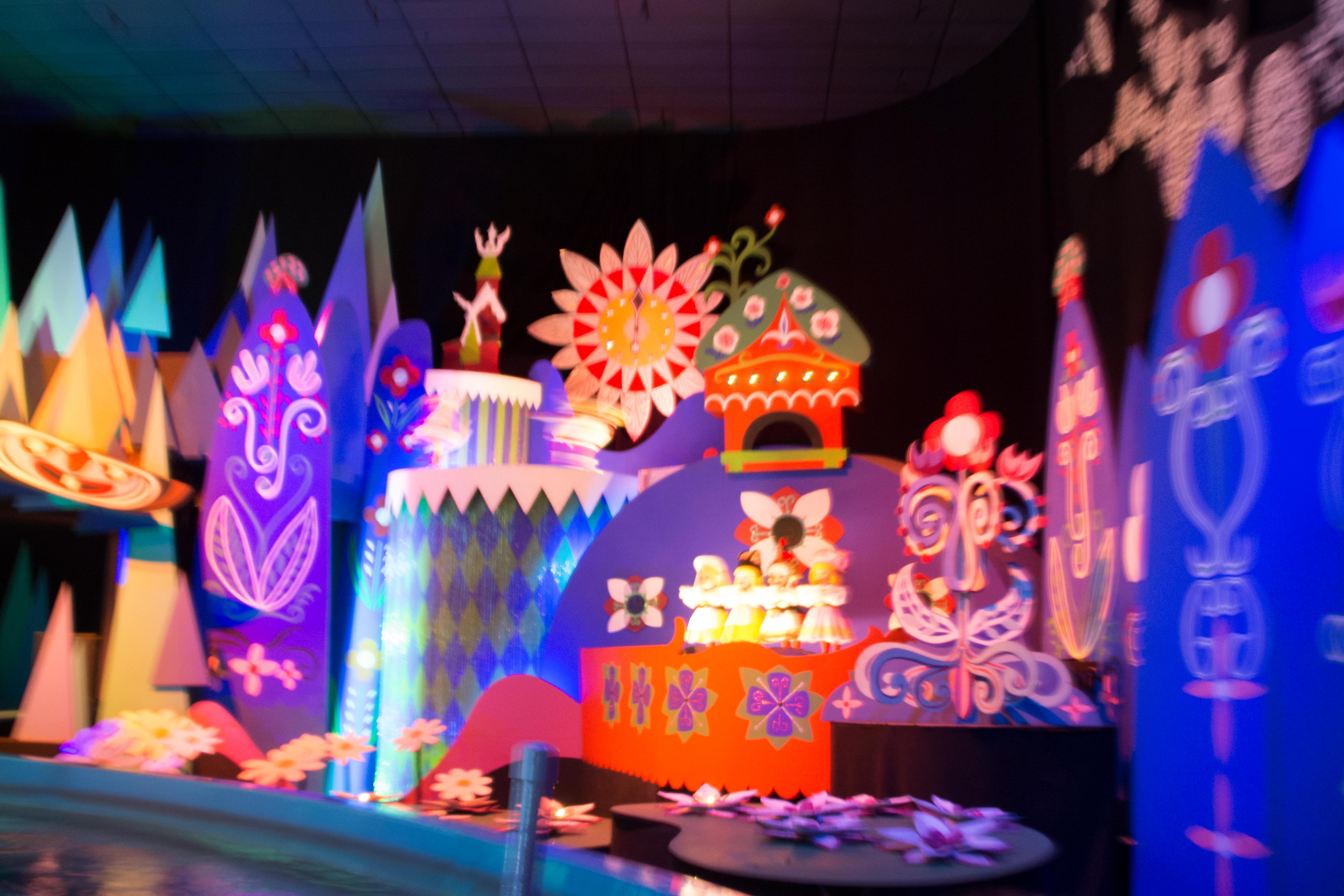
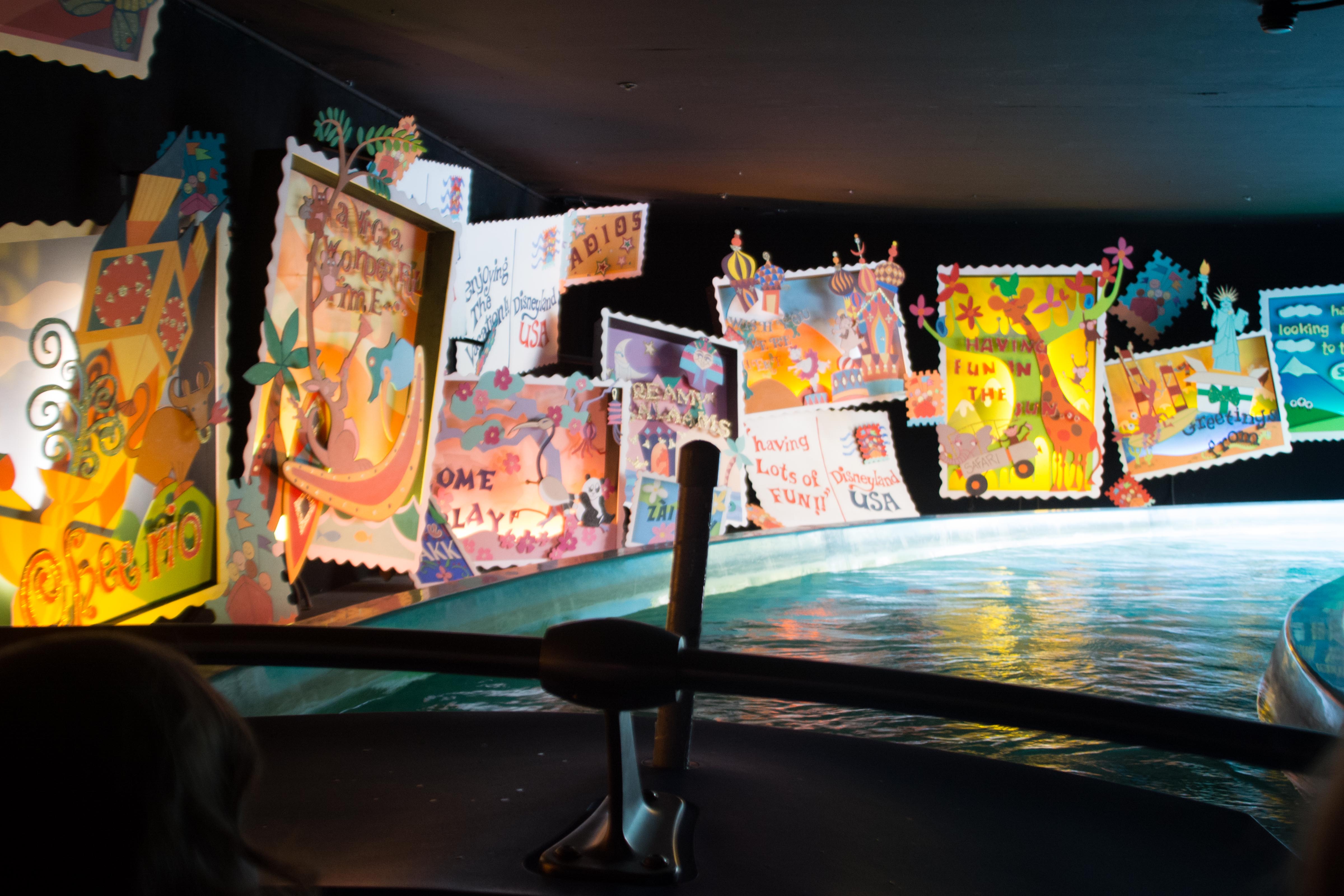
The ride was as bright as ever; I didn’t even mind the song as much as I remembered.Disneyland DCA 2015-6541 Disneyland DCA 2015-6549


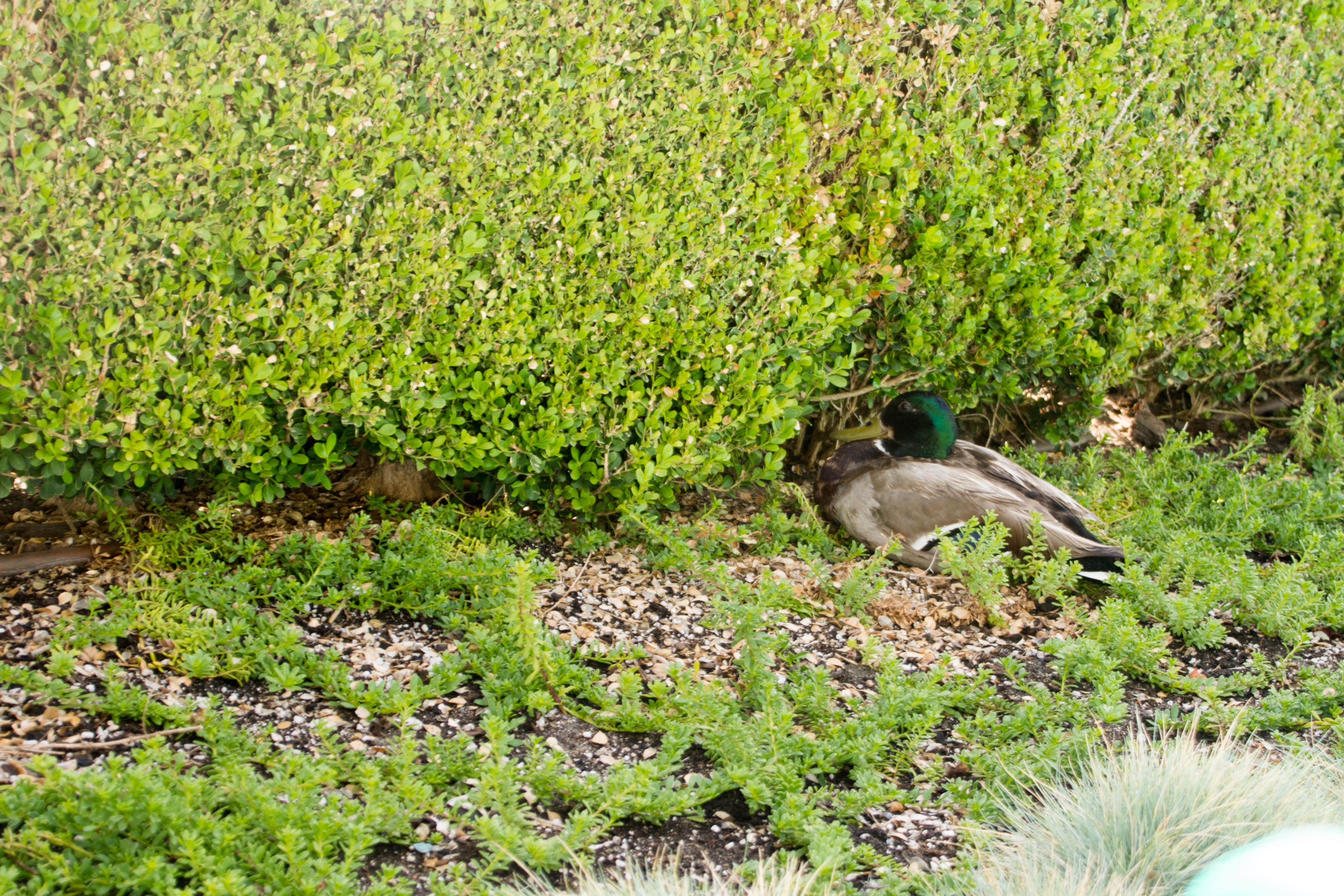
And, in addition to the topiary at the end of the ride, there was another duck.Disneyland DCA 2015-6553 Disneyland DCA 2015-6554


Back to Toontown!Disneyland DCA 2015-6560
Disneyland DCA 2015-6566
Disneyland DCA 2015-6567


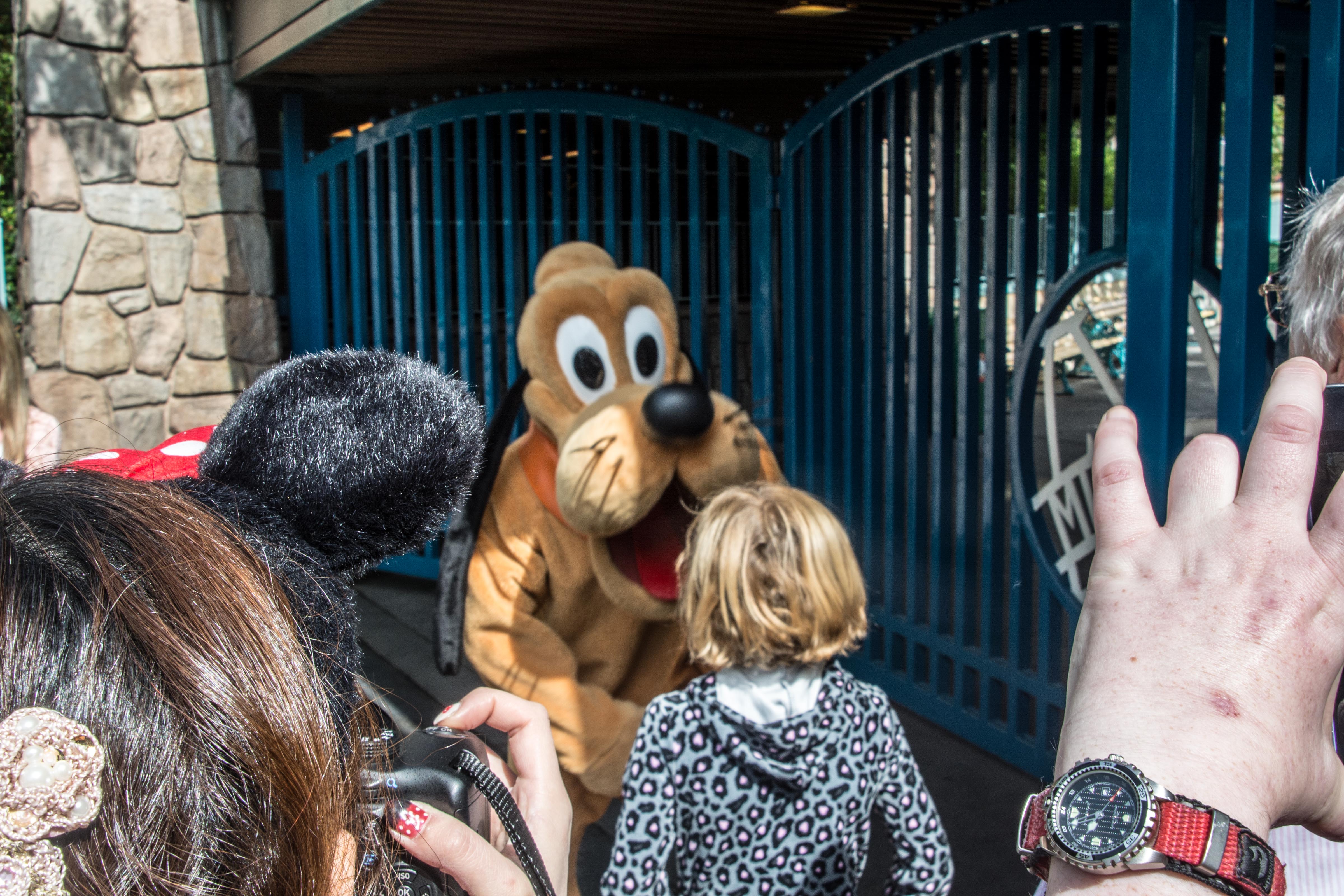
While we were waiting, out came Minnie Mouse and Pluto.Disneyland DCA 2015-6572 Disneyland DCA 2015-6578


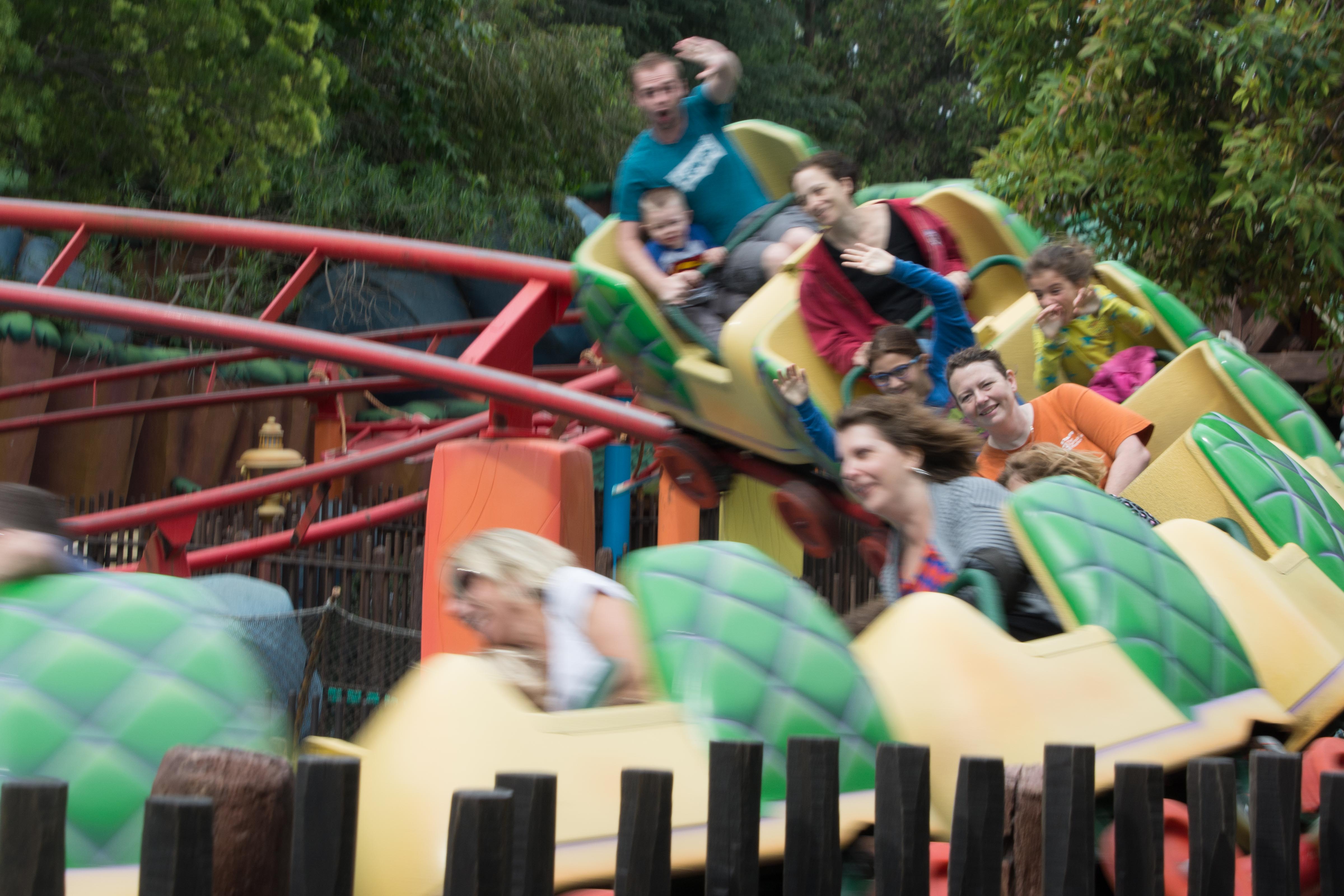
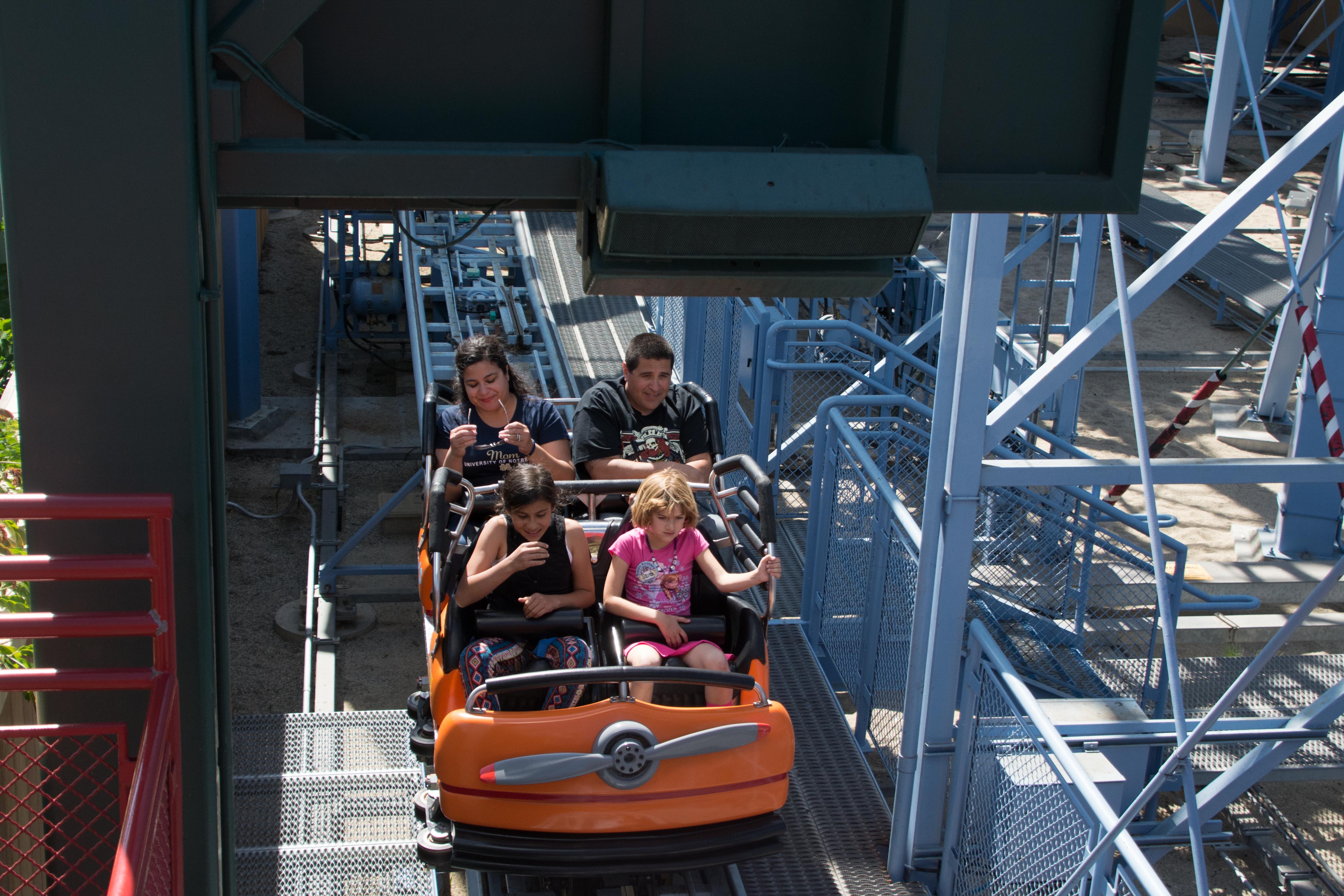
Once inside Toontown, the first stop was at the Toontown roller coaster.  But what’s this?  Another duck!Disneyland DCA 2015-6597 Disneyland DCA 2015-6619 Disneyland DCA 2015-6608


The roller coaster is so much fun, it has to be done twice.Disneyland DCA 2015-6636 Disneyland DCA 2015-6635 Disneyland DCA 2015-6625


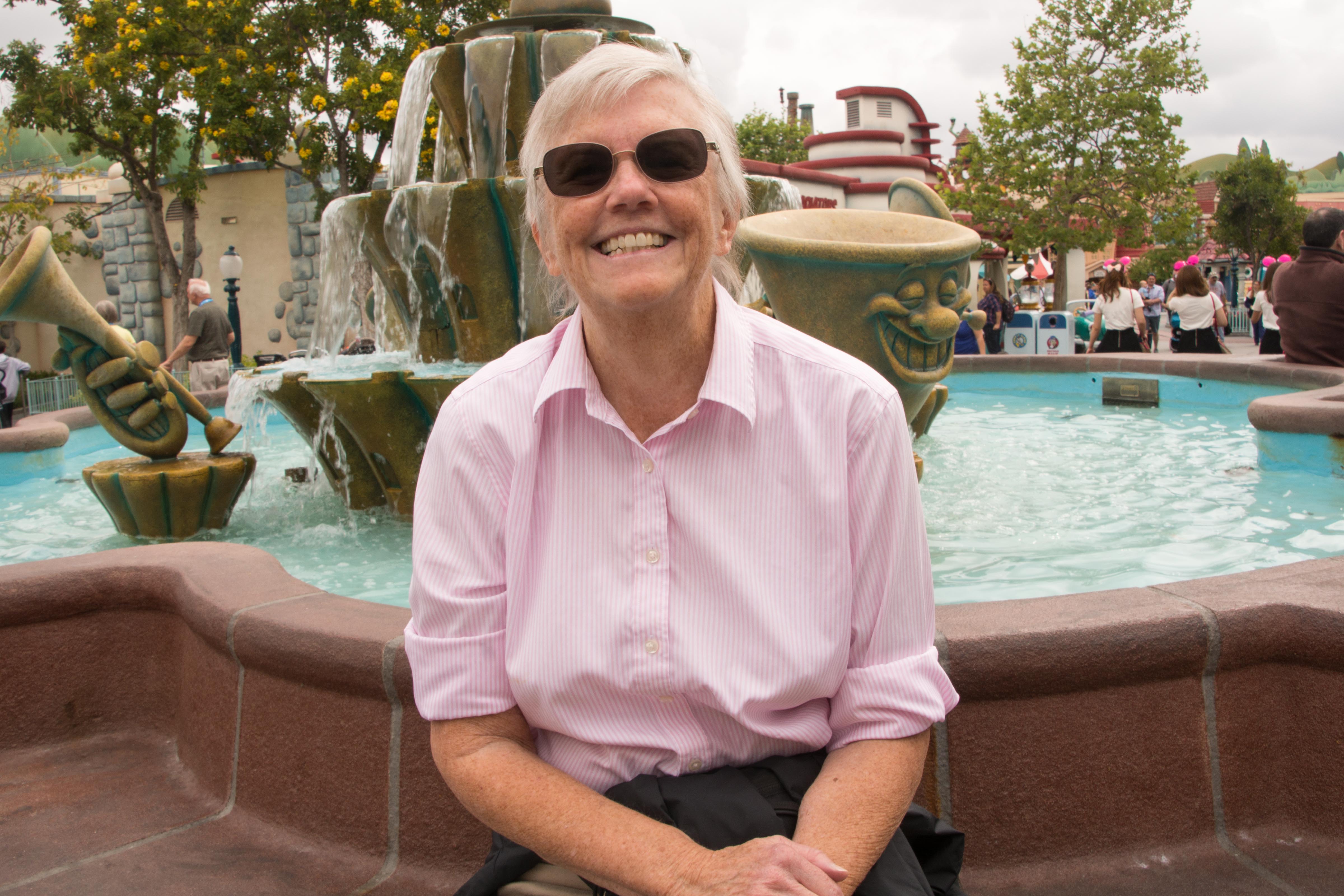
Gwen at the Toontown fountain.Disneyland DCA 2015-6640


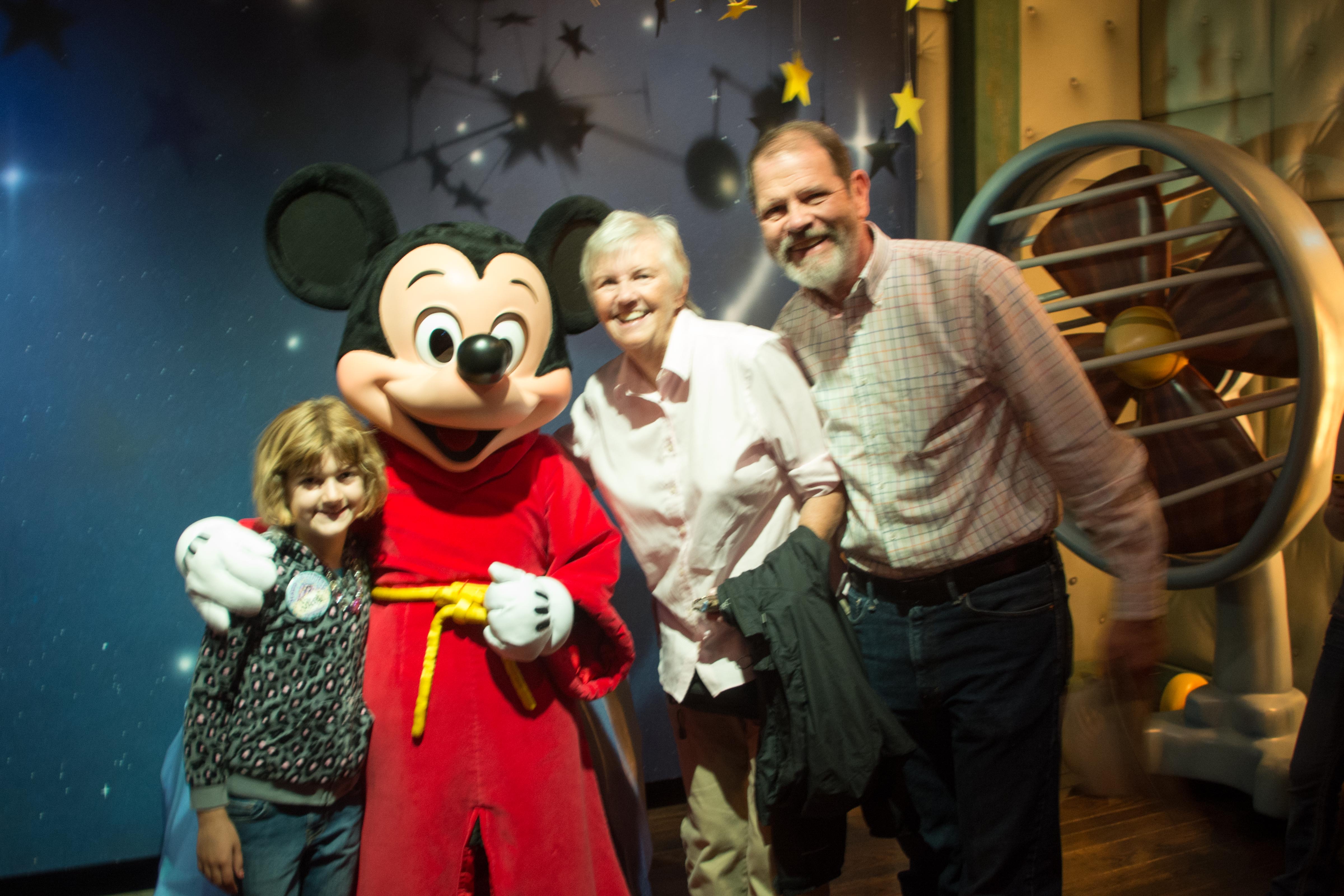
A visit to Mickey Mouse.Disneyland DCA 2015-6646 Disneyland DCA 2015-6654


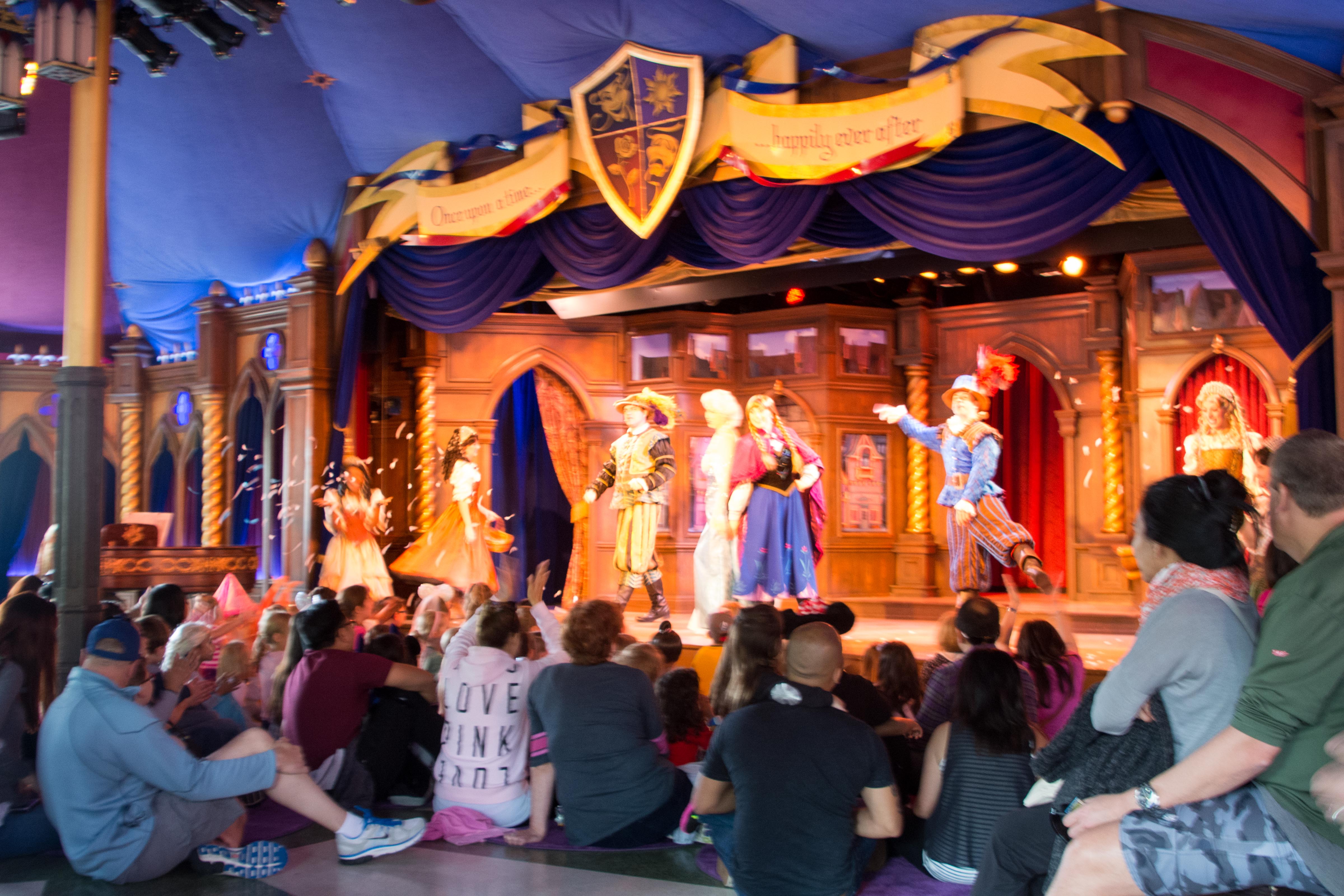
The Frozen play.Disneyland DCA 2015-6663 Disneyland DCA 2015-6670


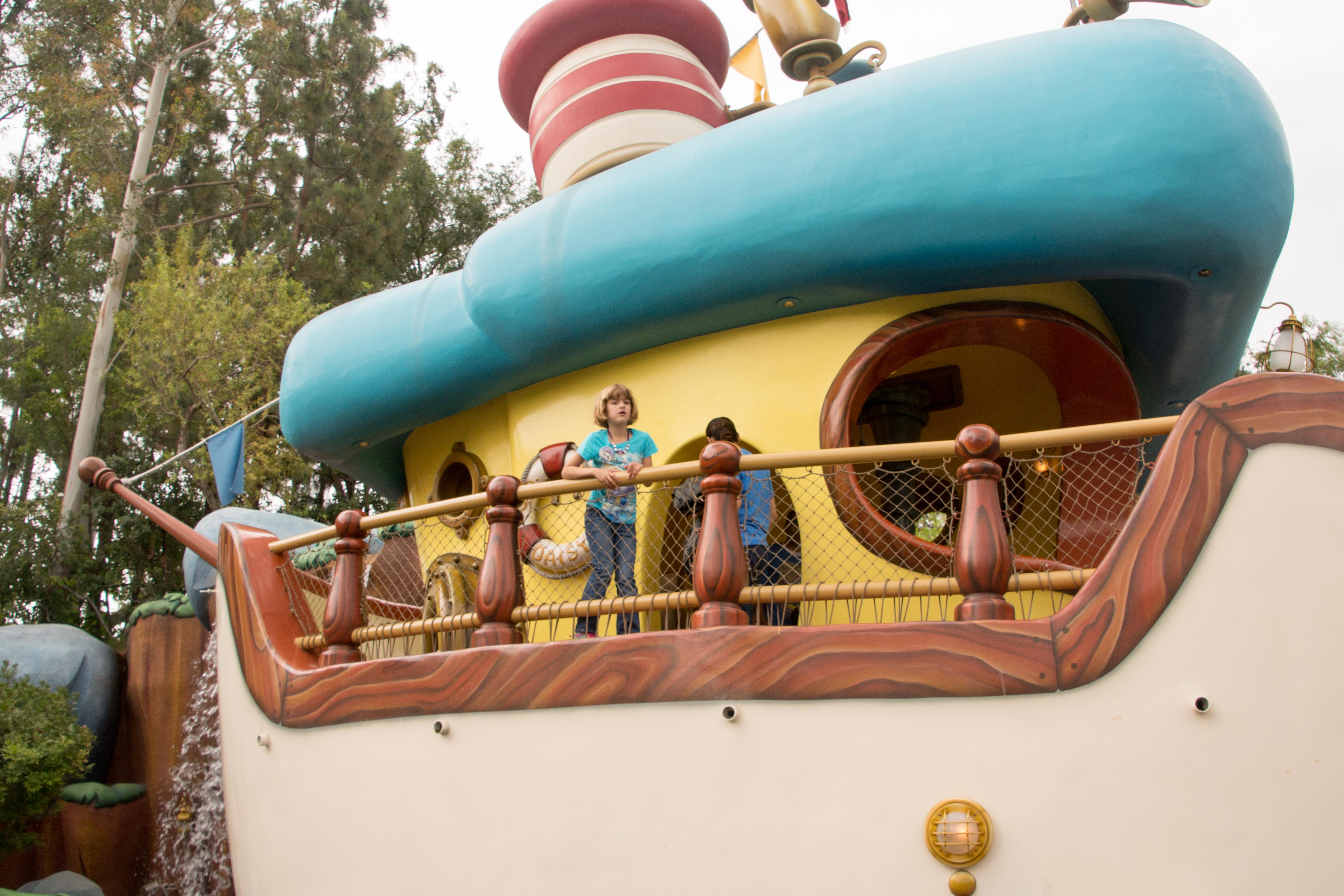
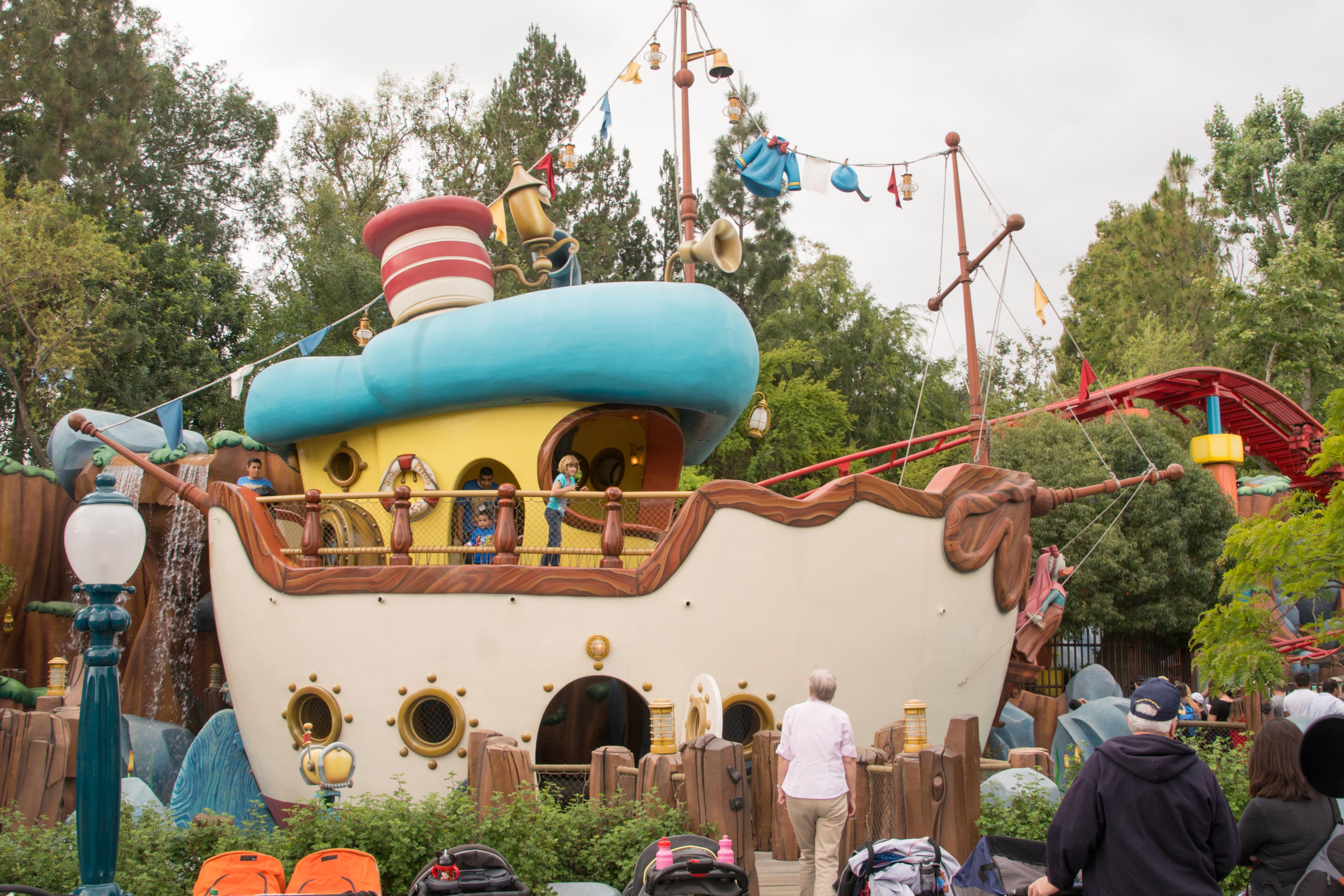
Back to Toontown’s ship.Disneyland DCA 2015-6678 Disneyland DCA 2015-6693 Disneyland DCA 2015-6682


Has to be seen from all angles.Disneyland DCA 2015-6696 Disneyland DCA 2015-6709 Disneyland DCA 2015-6701


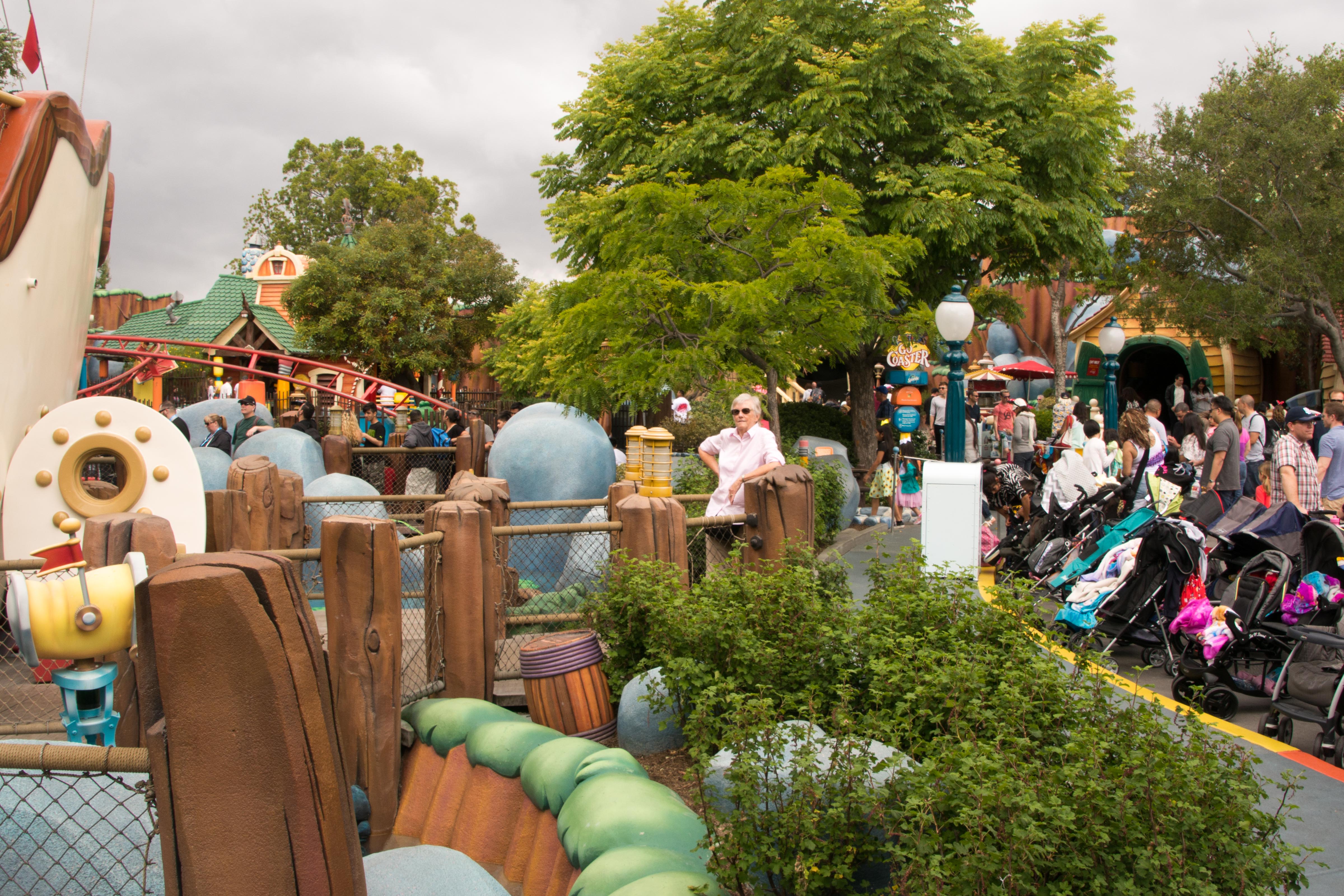
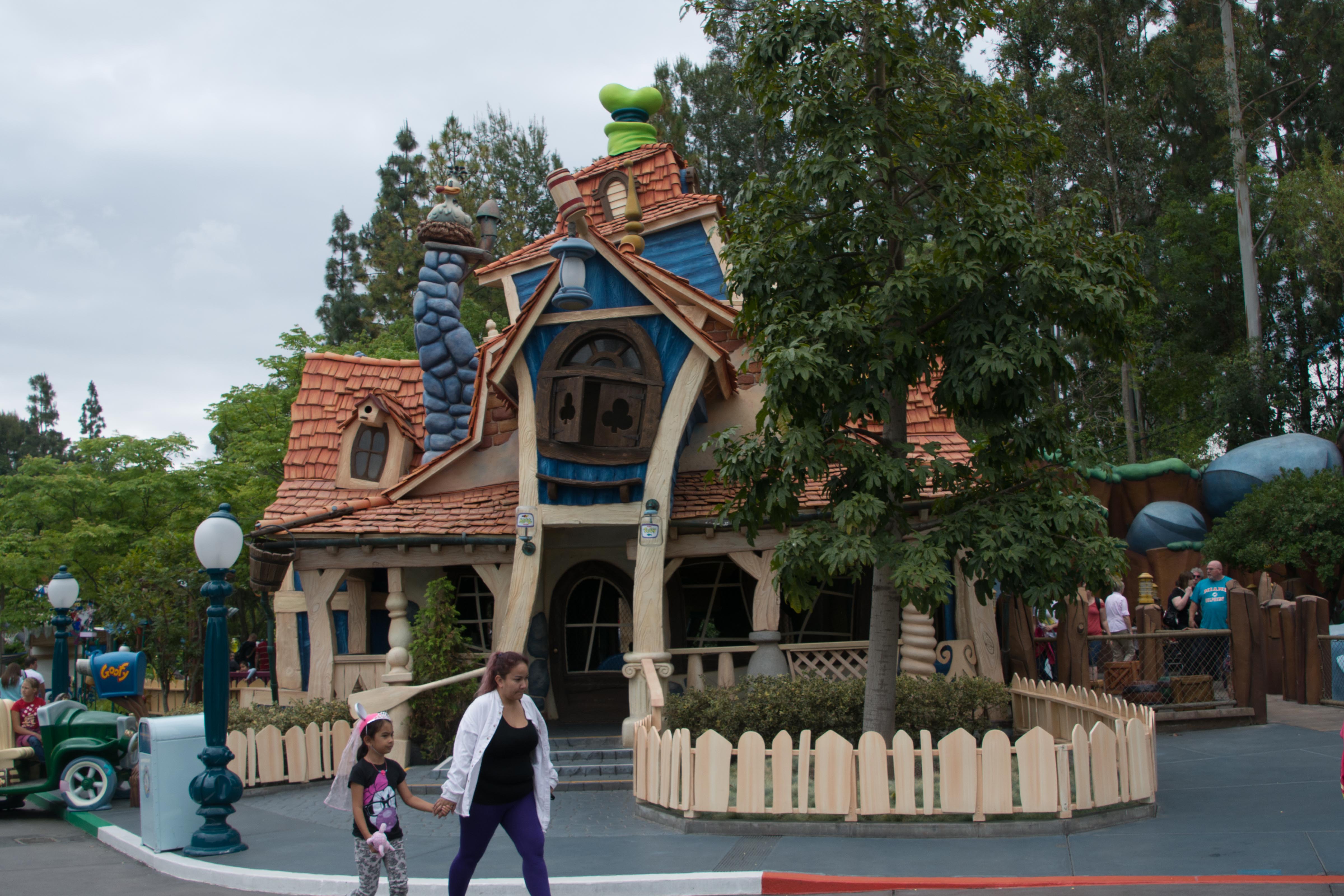
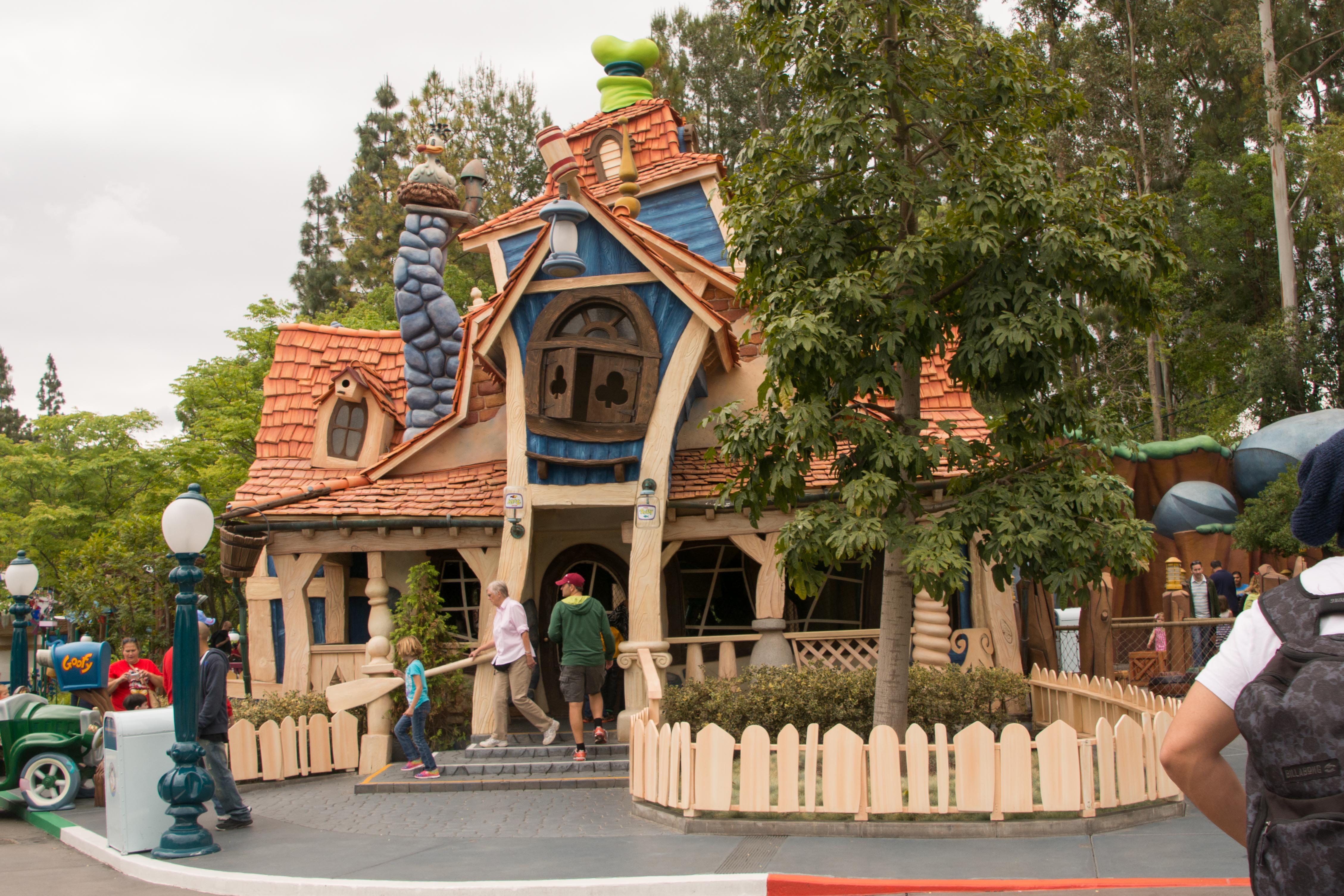
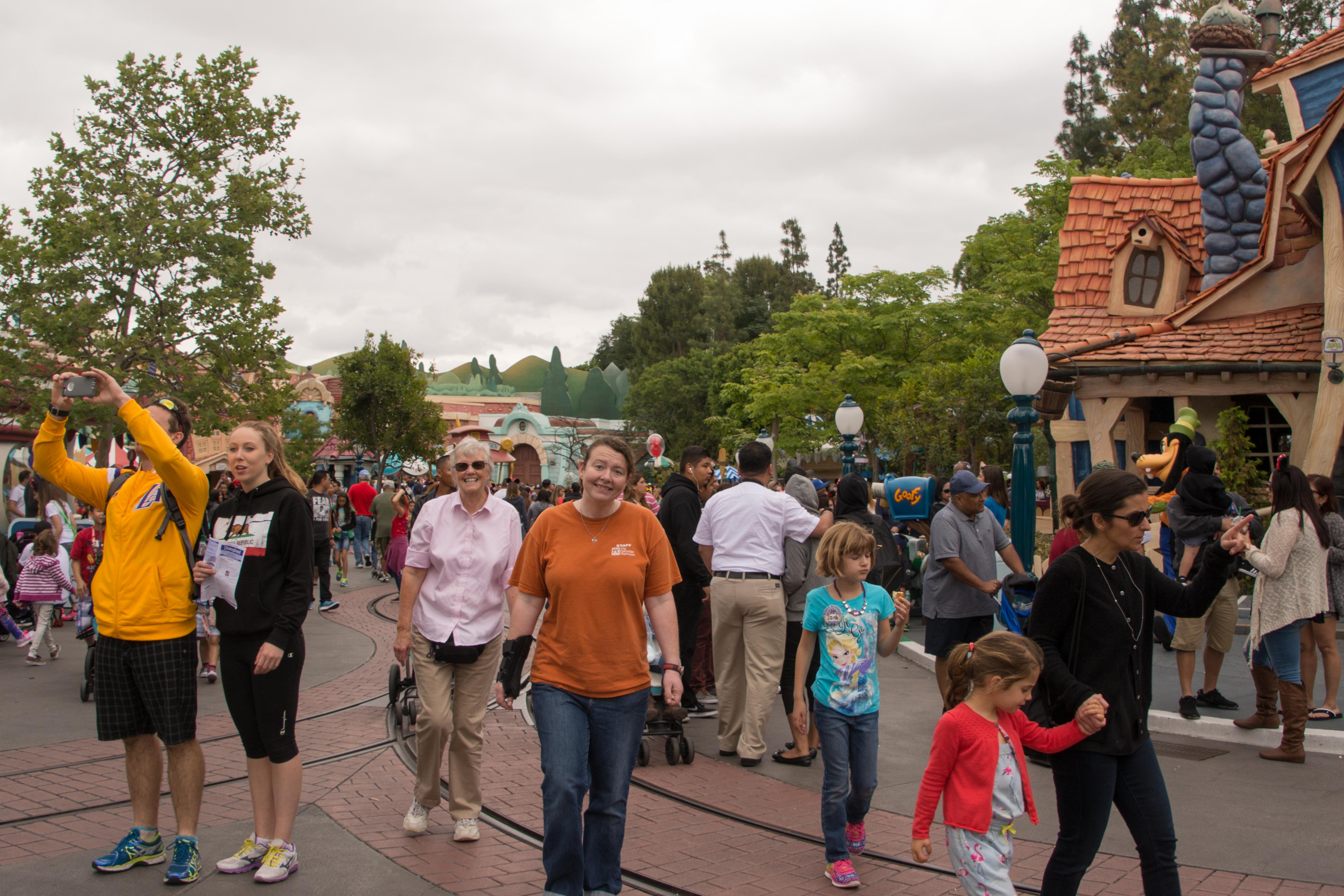
The Toontown building looks amazingly like a David Winter cottage…Disneyland DCA 2015-6715 Disneyland DCA 2015-6719


Coming back to the fountain.Disneyland DCA 2015-6720


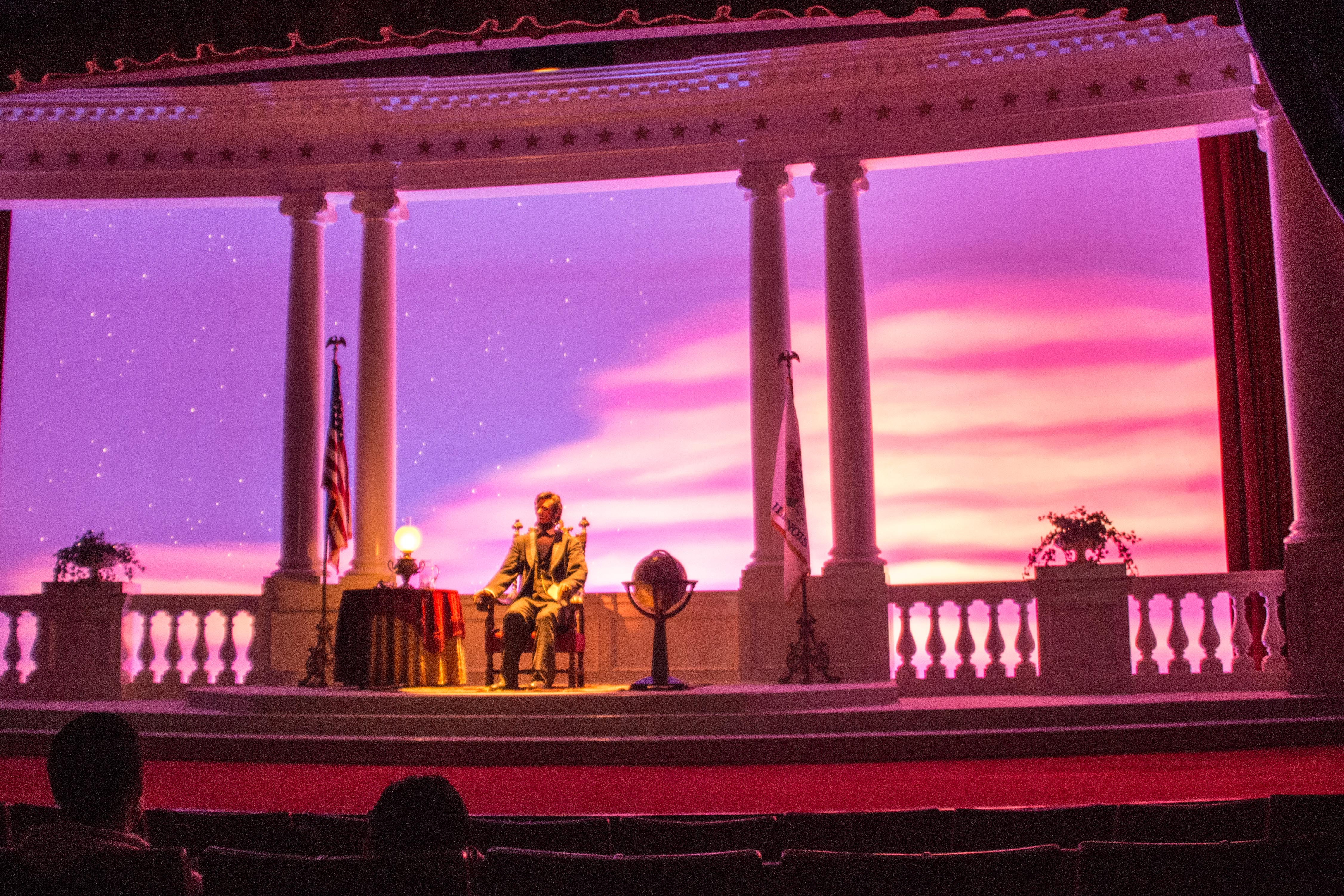
A visit to Mr. Lincoln — it just keeps improving!

Disneyland DCA 2015-6727


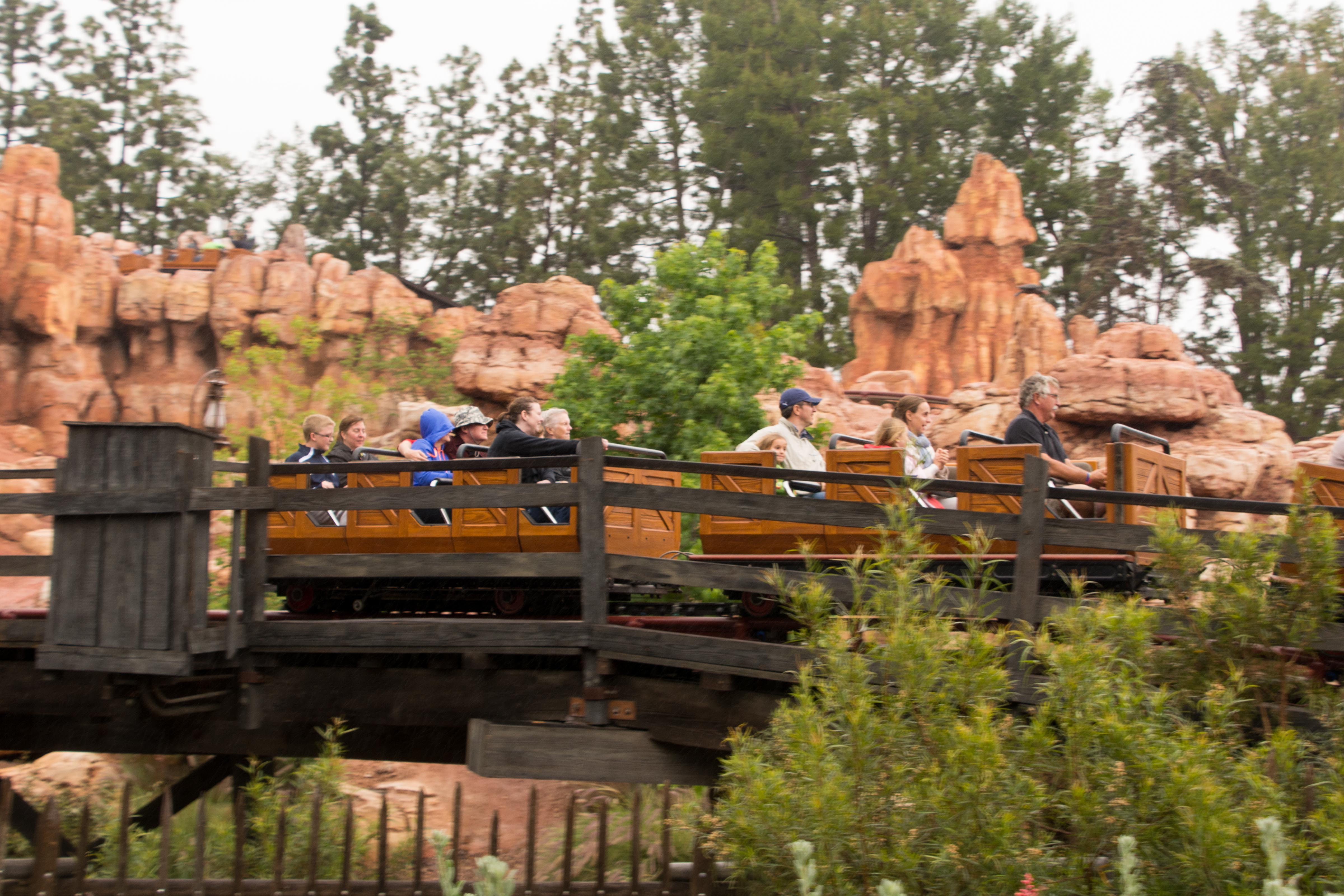
The Thunder Mountain roller coaster…

Disneyland DCA 2015-6787


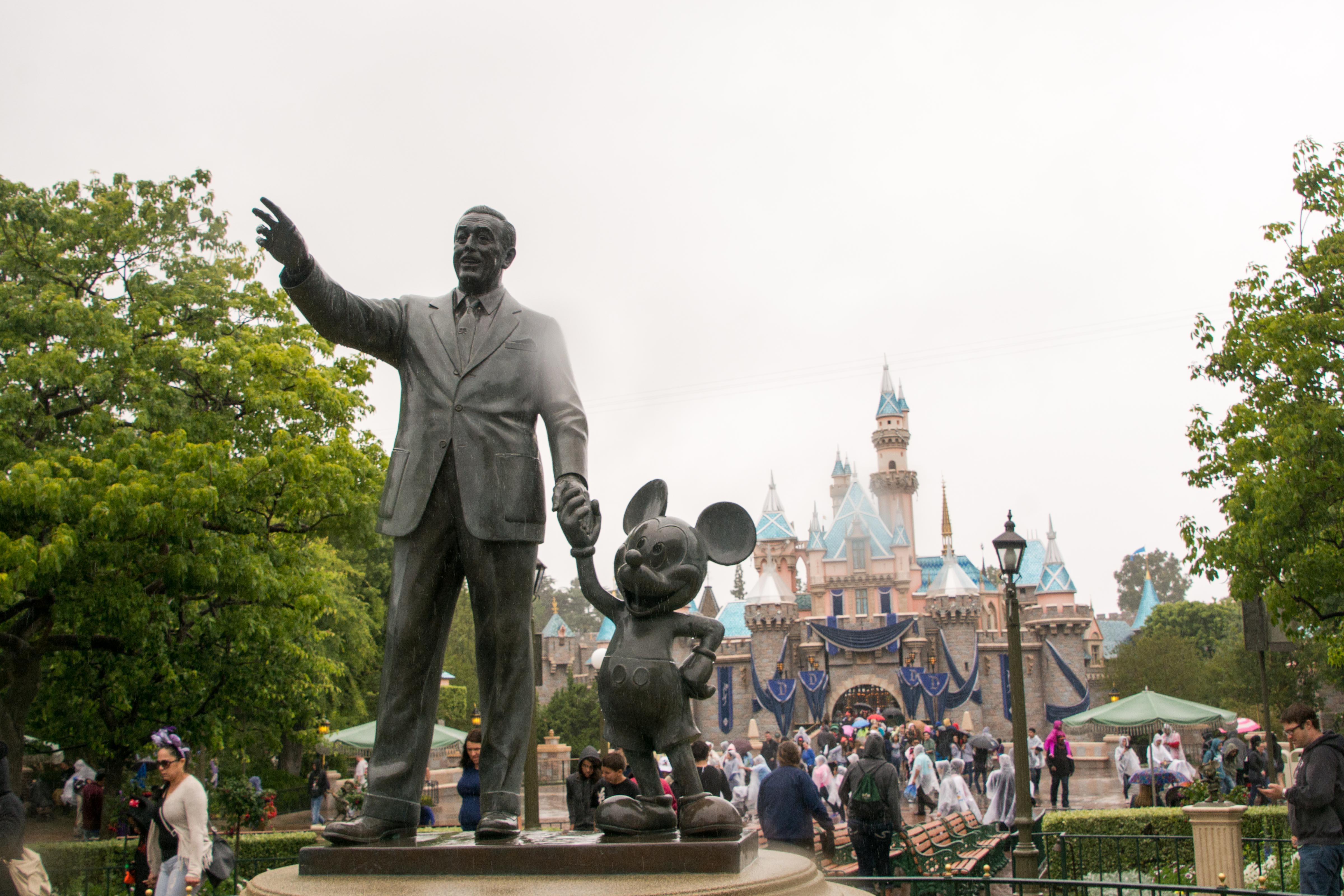
Walt with Mickey looking down Main Street with the Fantasyland Castle behind.

Disneyland DCA 2015-6789


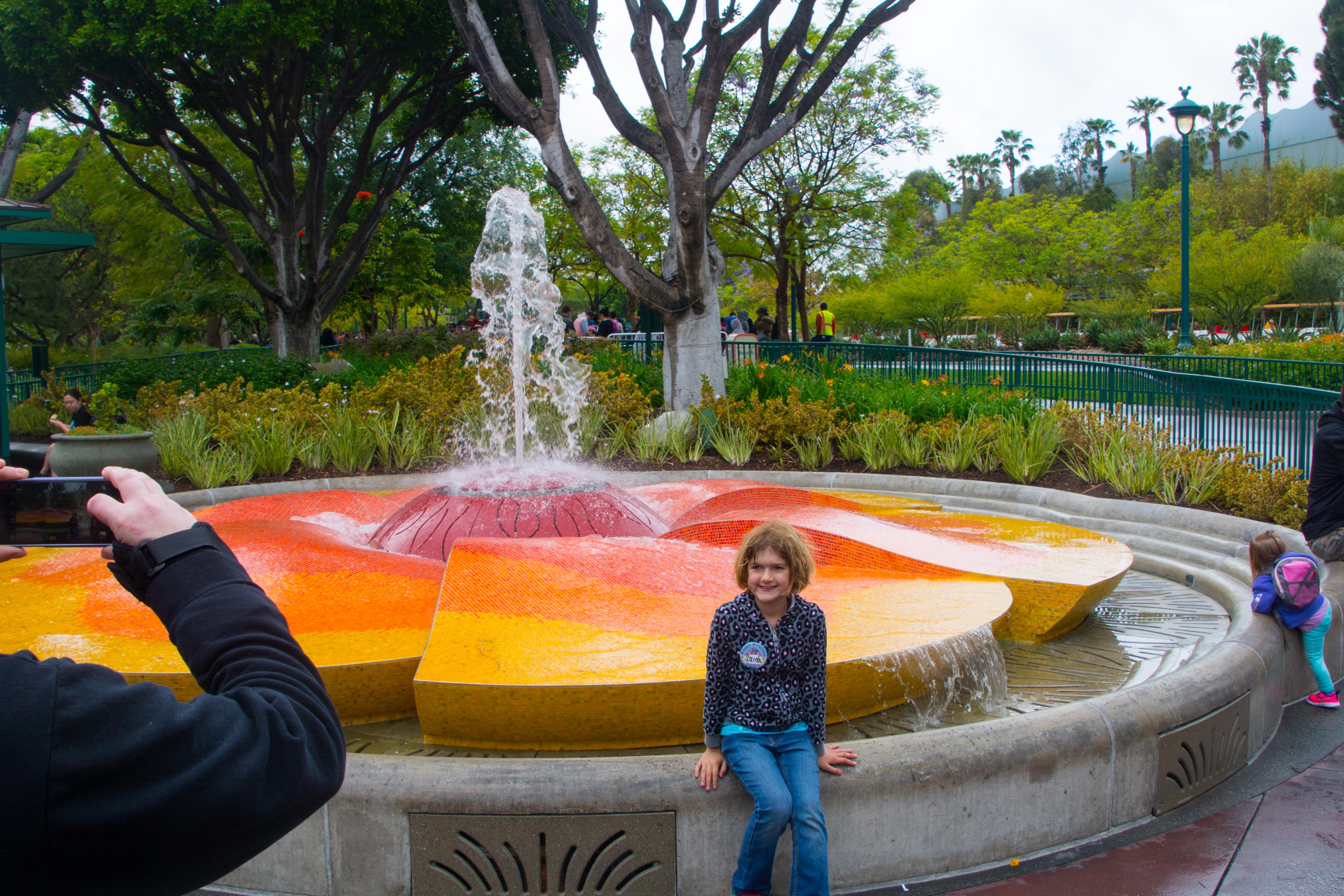
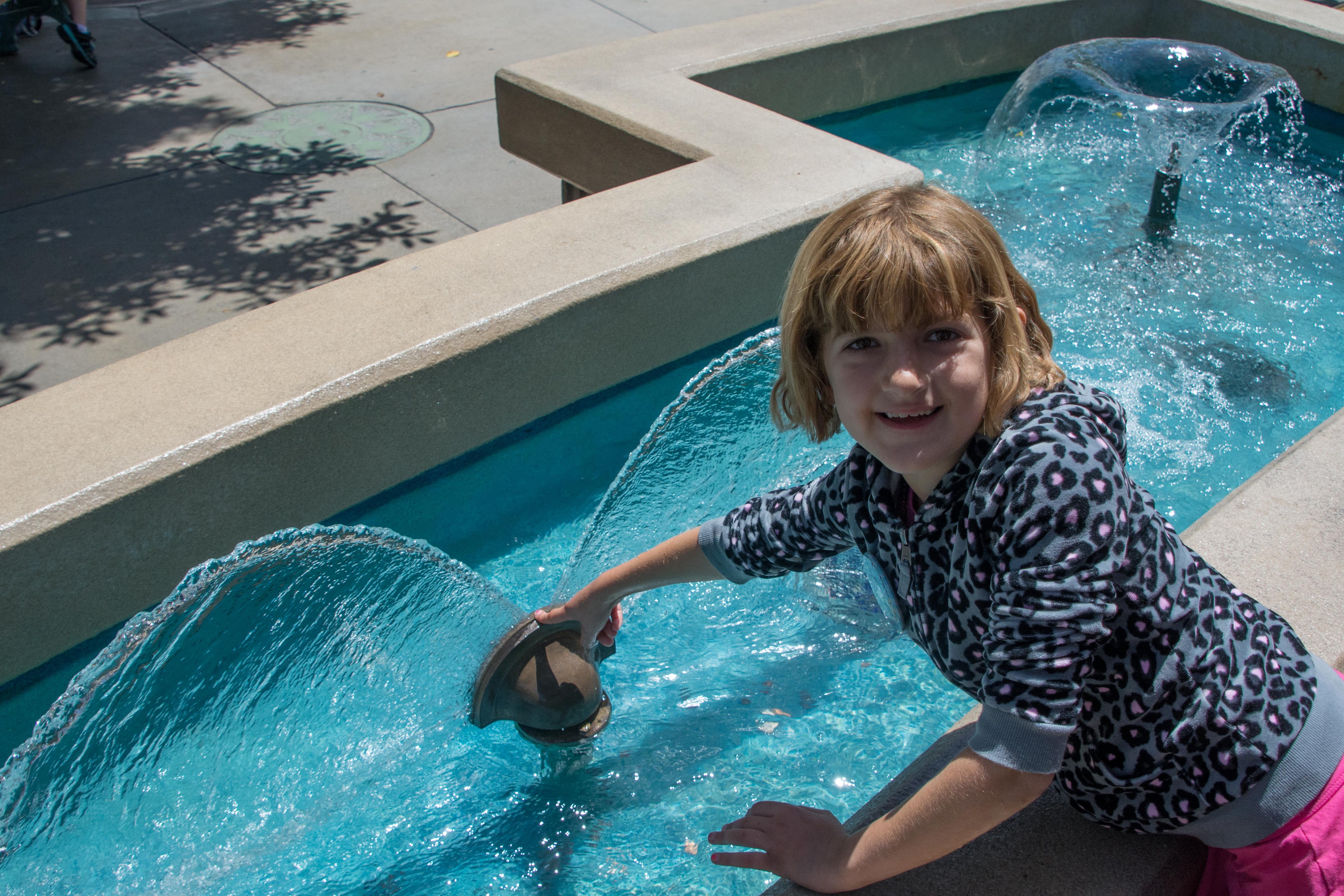
Sarah at a colorful  water fountain, and  Gwen smiling.Disneyland DCA 2015-6791 Disneyland DCA 2015-6794


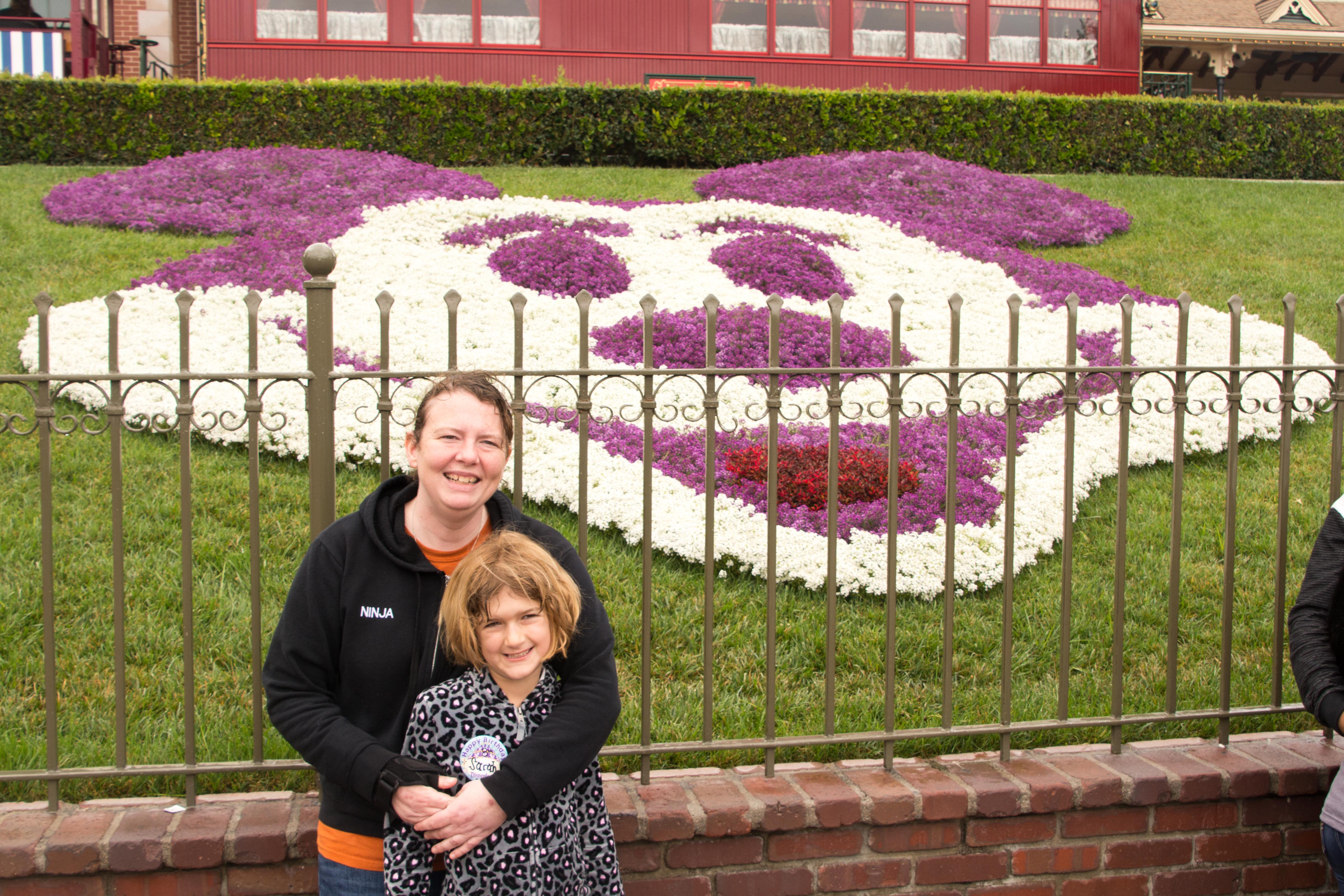
Courtney and Sarah standing in front of Mickey’s face rendered in flowers.

Disneyland DCA 2015-6796


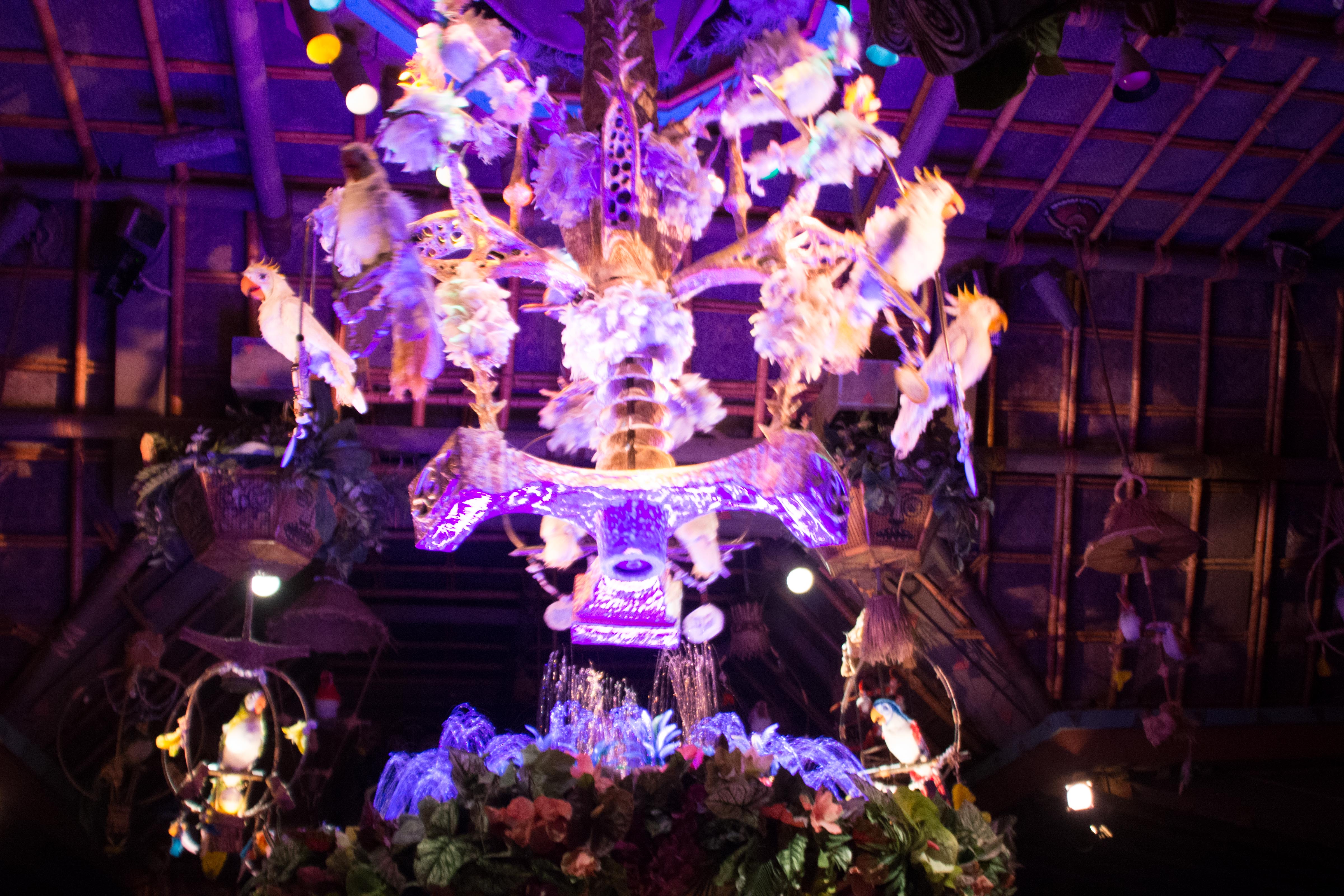
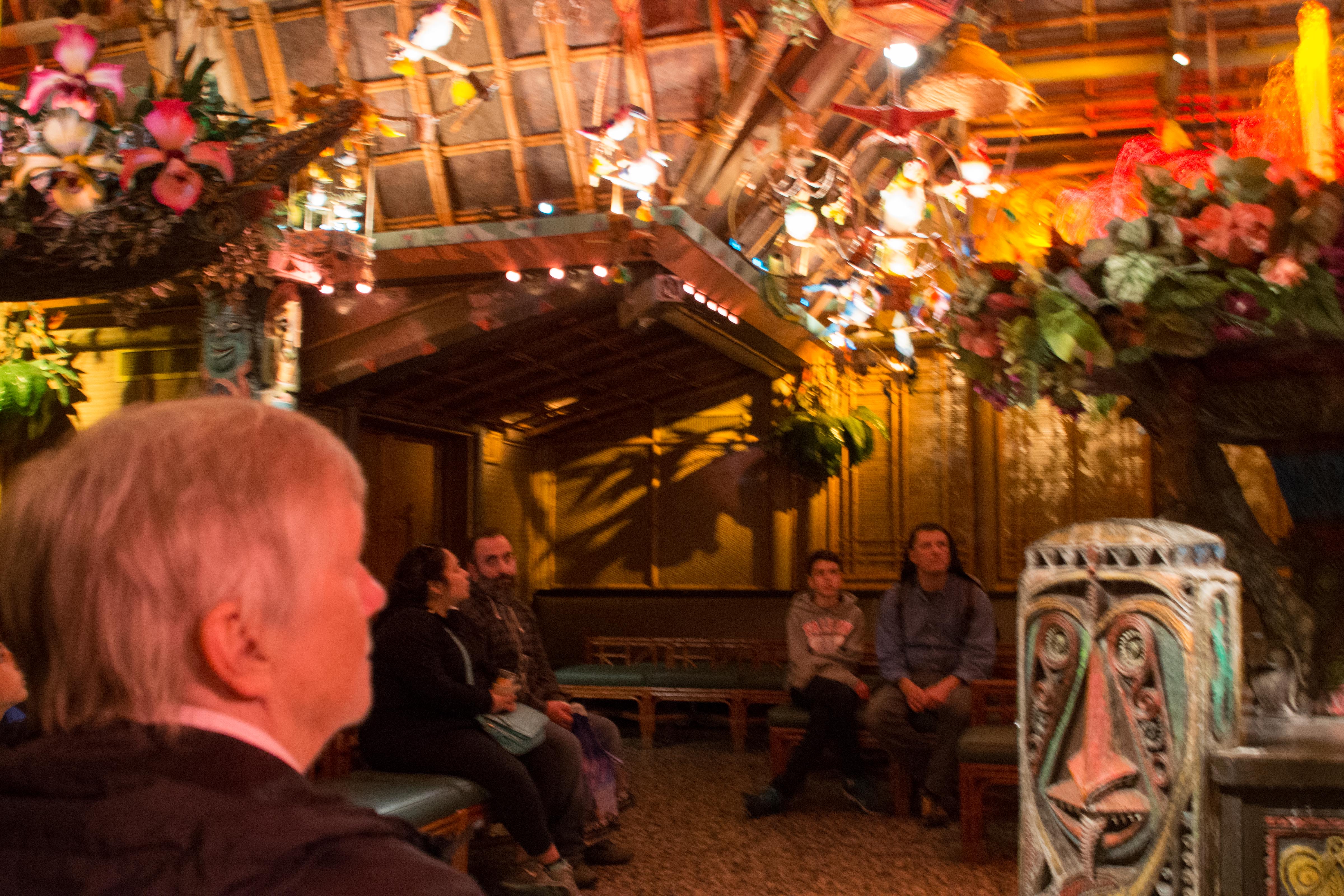
The least changed exhibit at the park: The Tiki Room!

Disneyland DCA 2015-6810 Disneyland DCA 2015-6814 Disneyland DCA 2015-6812


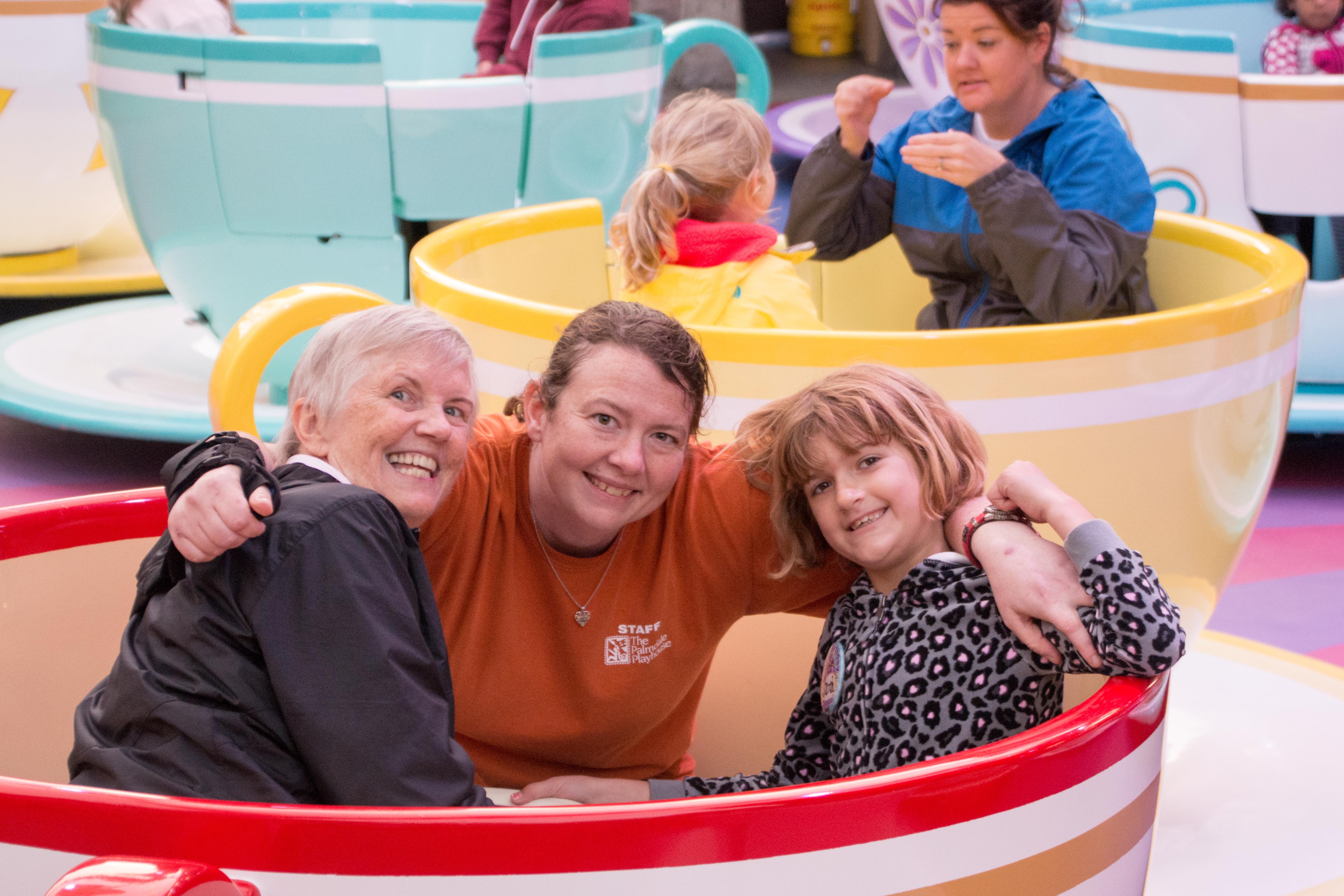
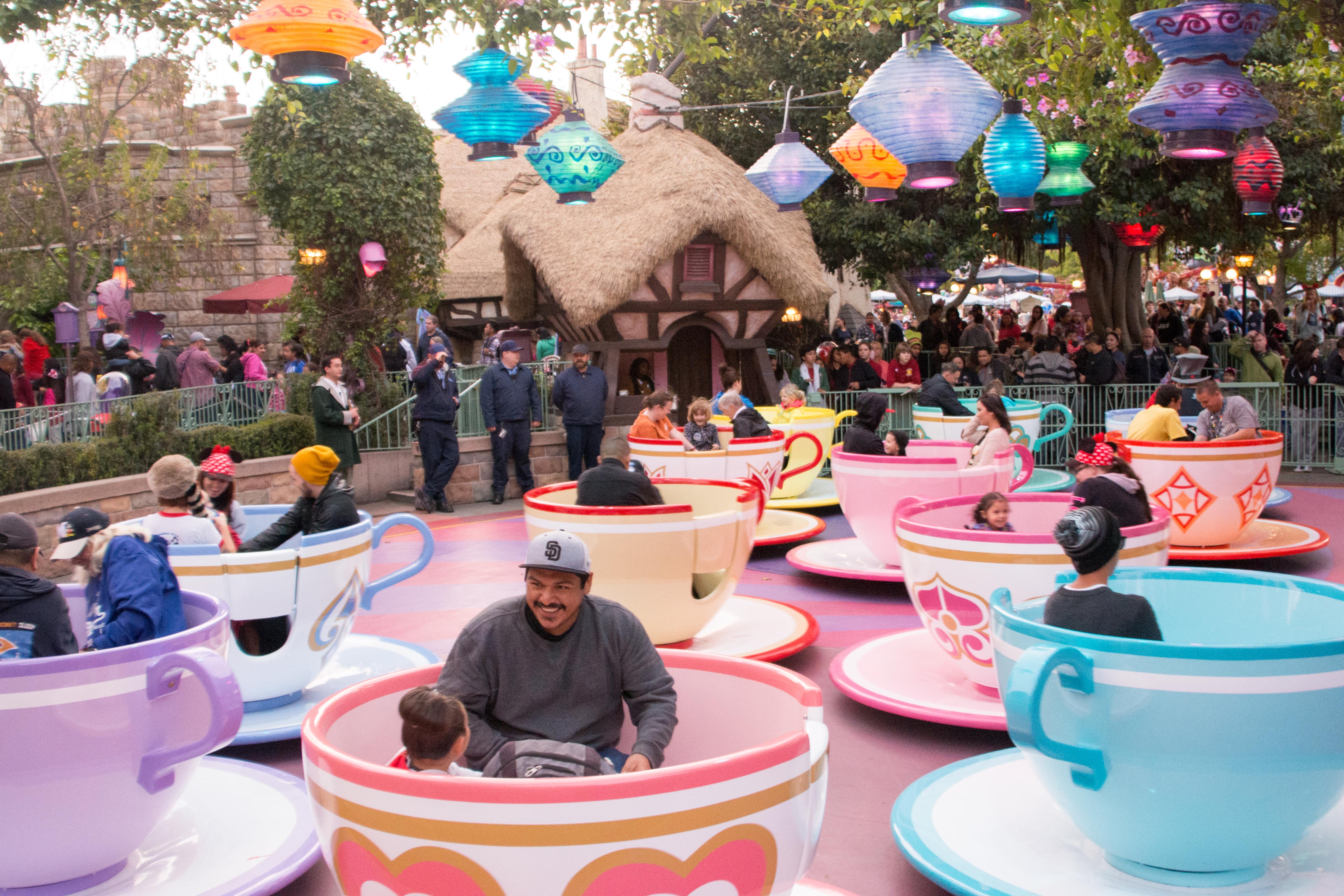
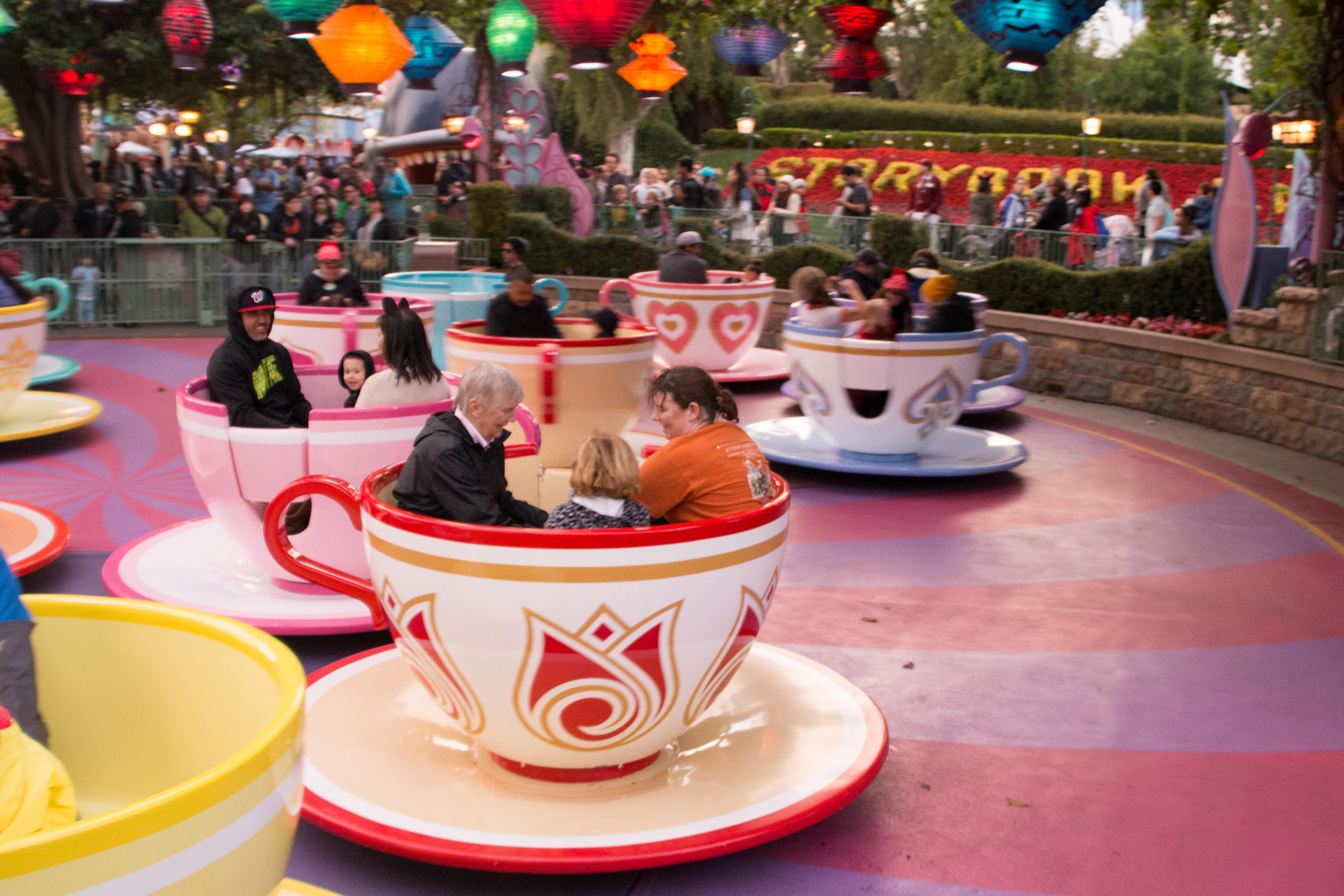
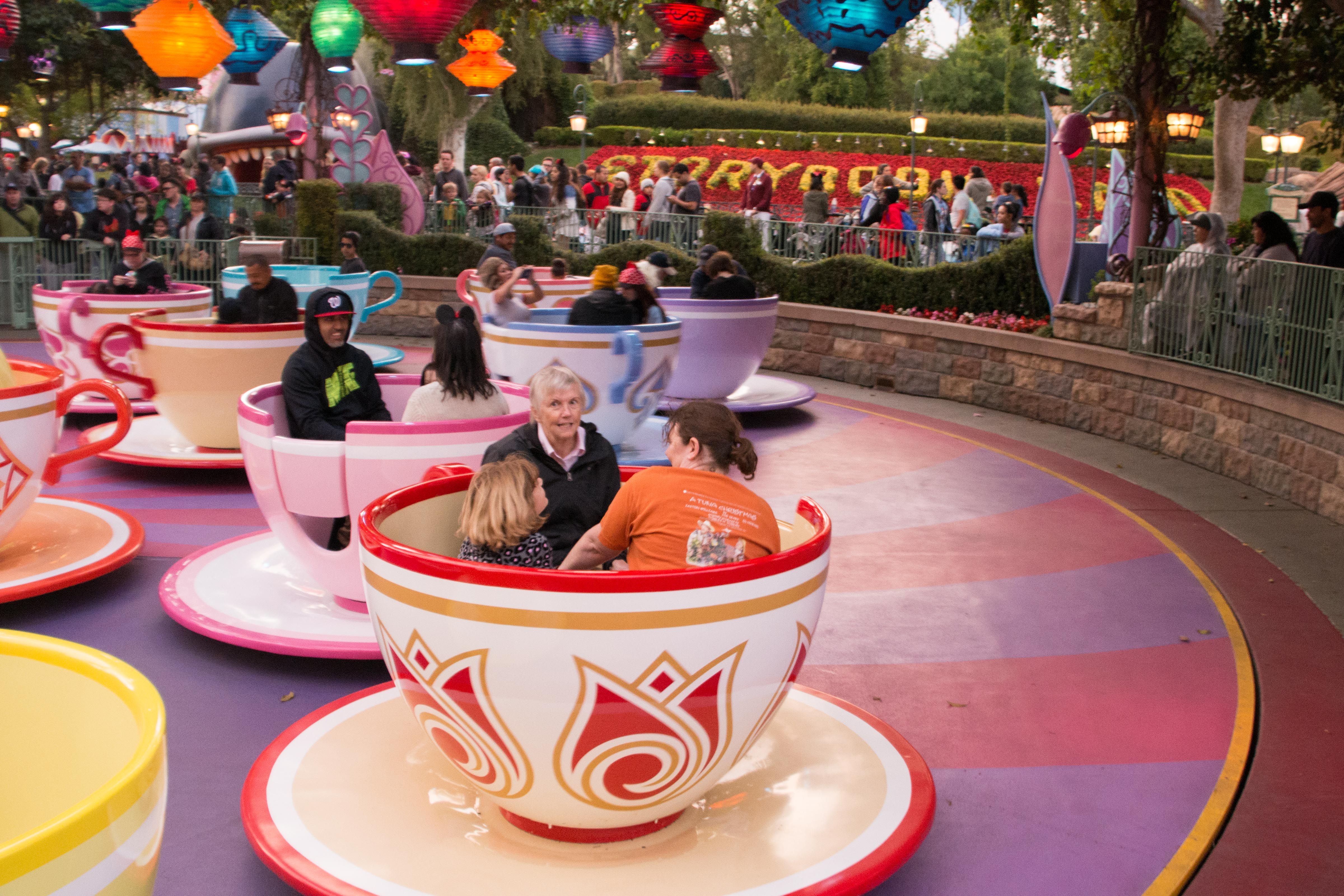
The Tea Cups.  Long awaited (it rained during the day, which knocked this ride off-line for quite awhile.)

Disneyland DCA 2015-6824 Disneyland DCA 2015-6829 Disneyland DCA 2015-6830


And more Tea Cup pictures

Disneyland DCA 2015-6832 Disneyland DCA 2015-6834 Disneyland DCA 2015-6839


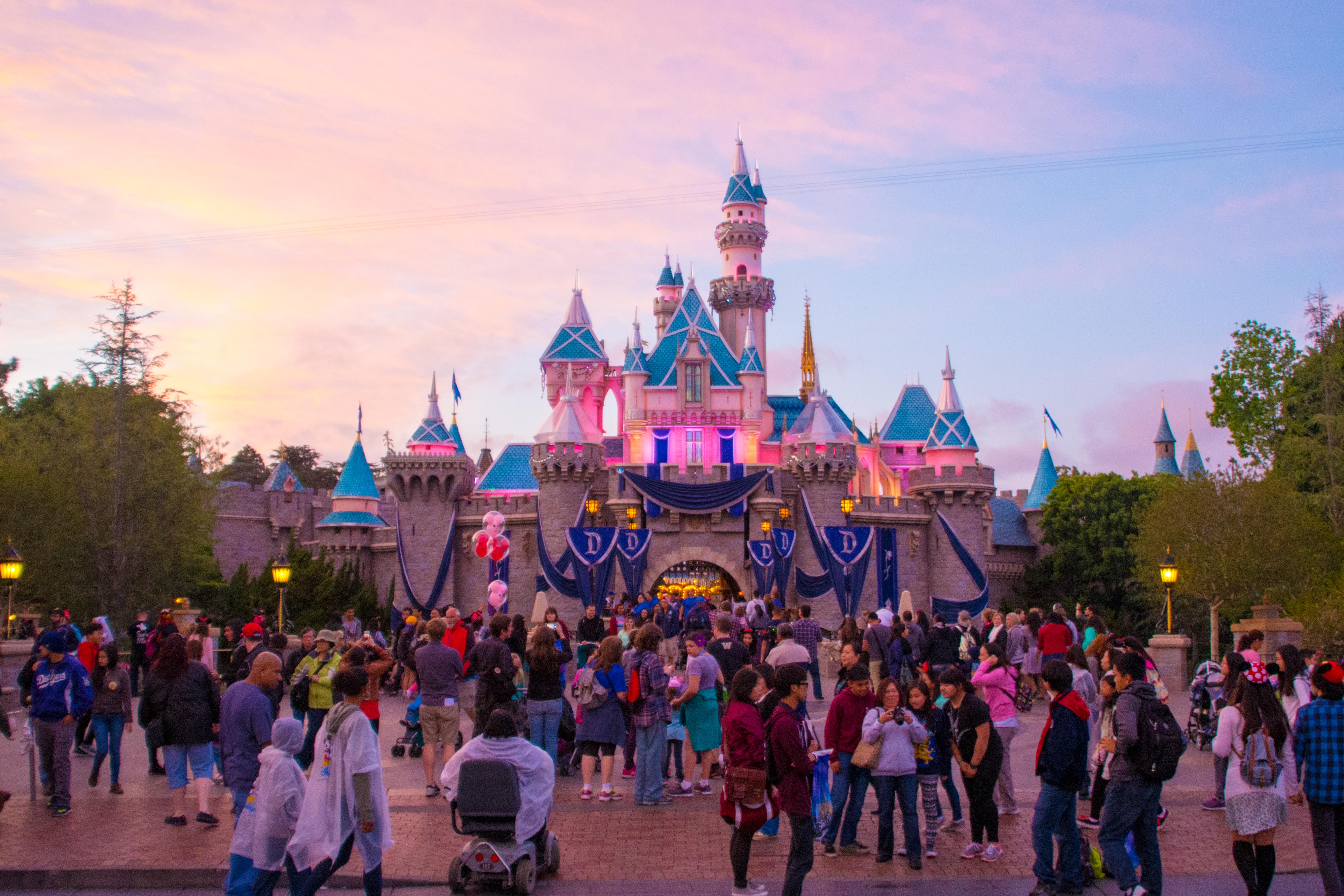
Fantasyland Castle at dusk.Disneyland DCA 2015-6847


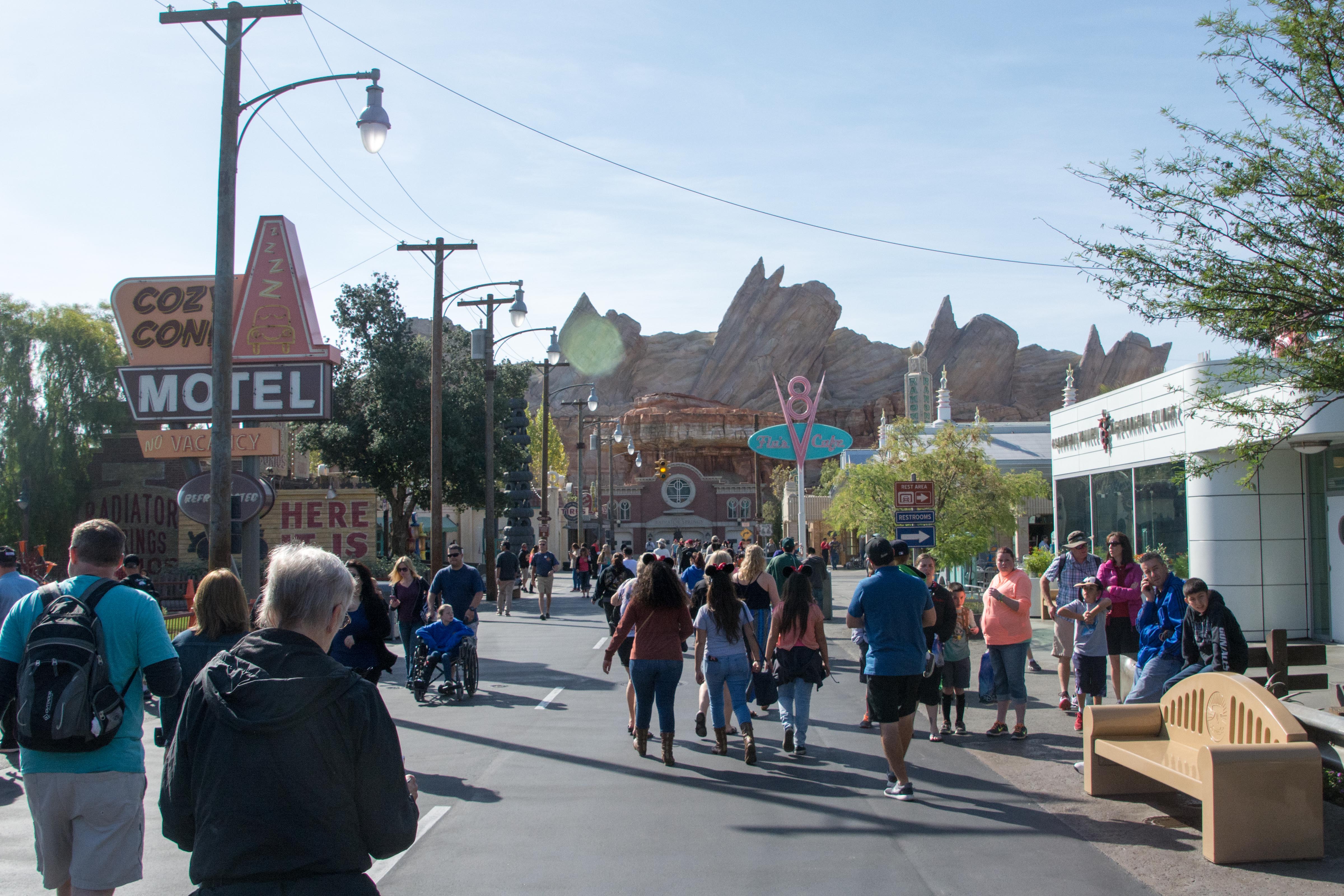
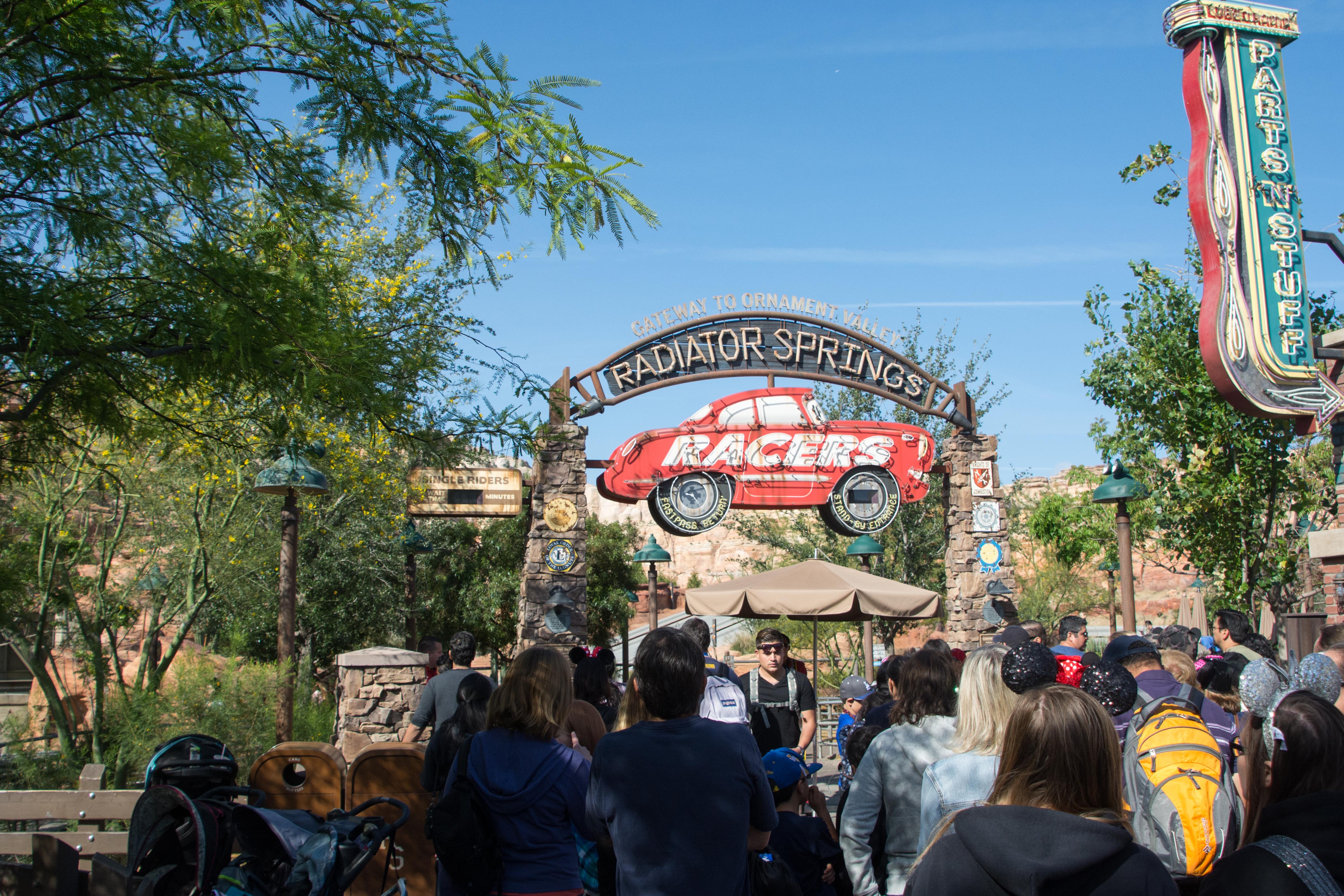
Sunday was Disney California Adventure day.  Sunnier than yesterday, it started with a stroll down the Cars main street (“Radiator Springs”)

Disneyland DCA 2015-6859 Disneyland DCA 2015-6860


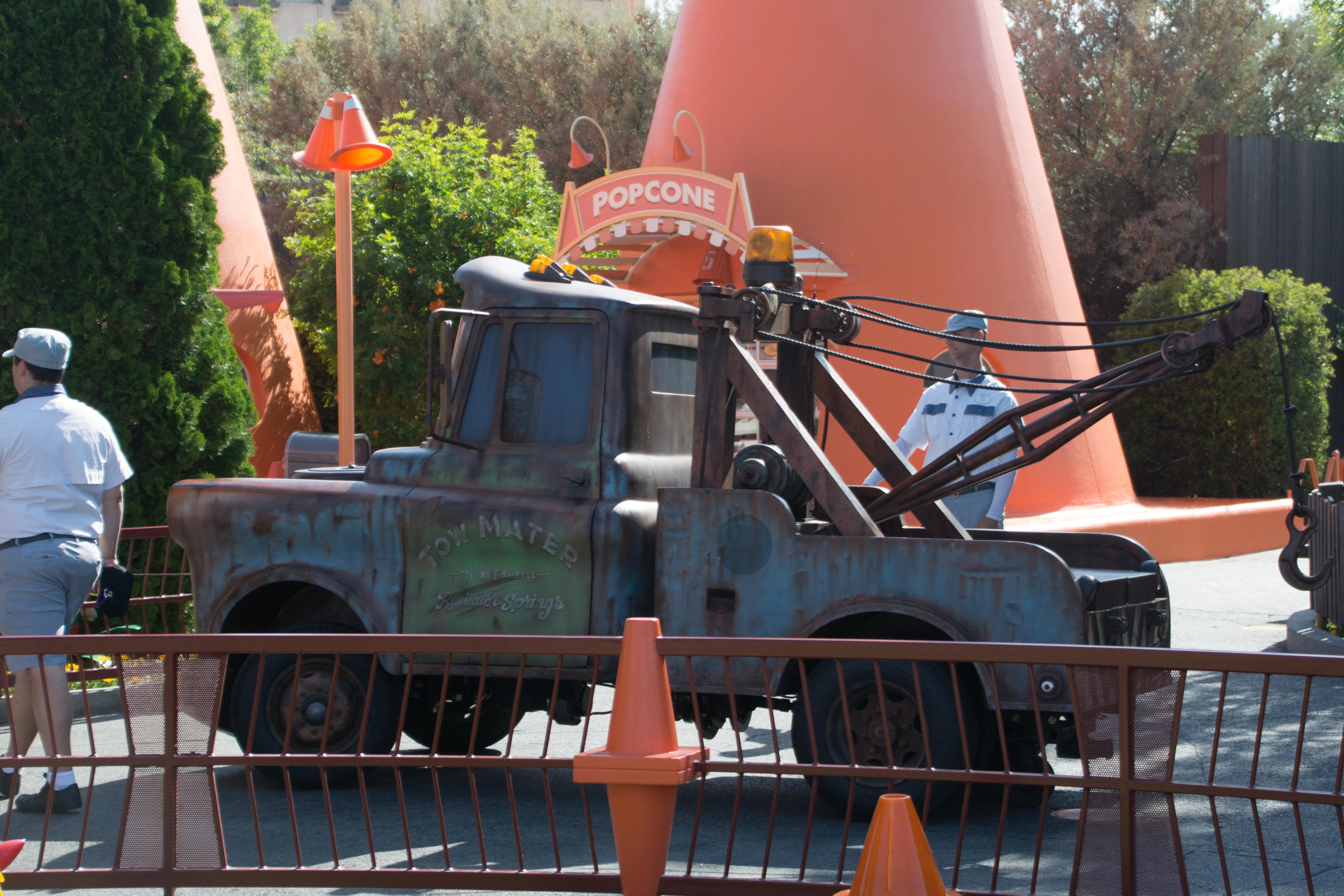
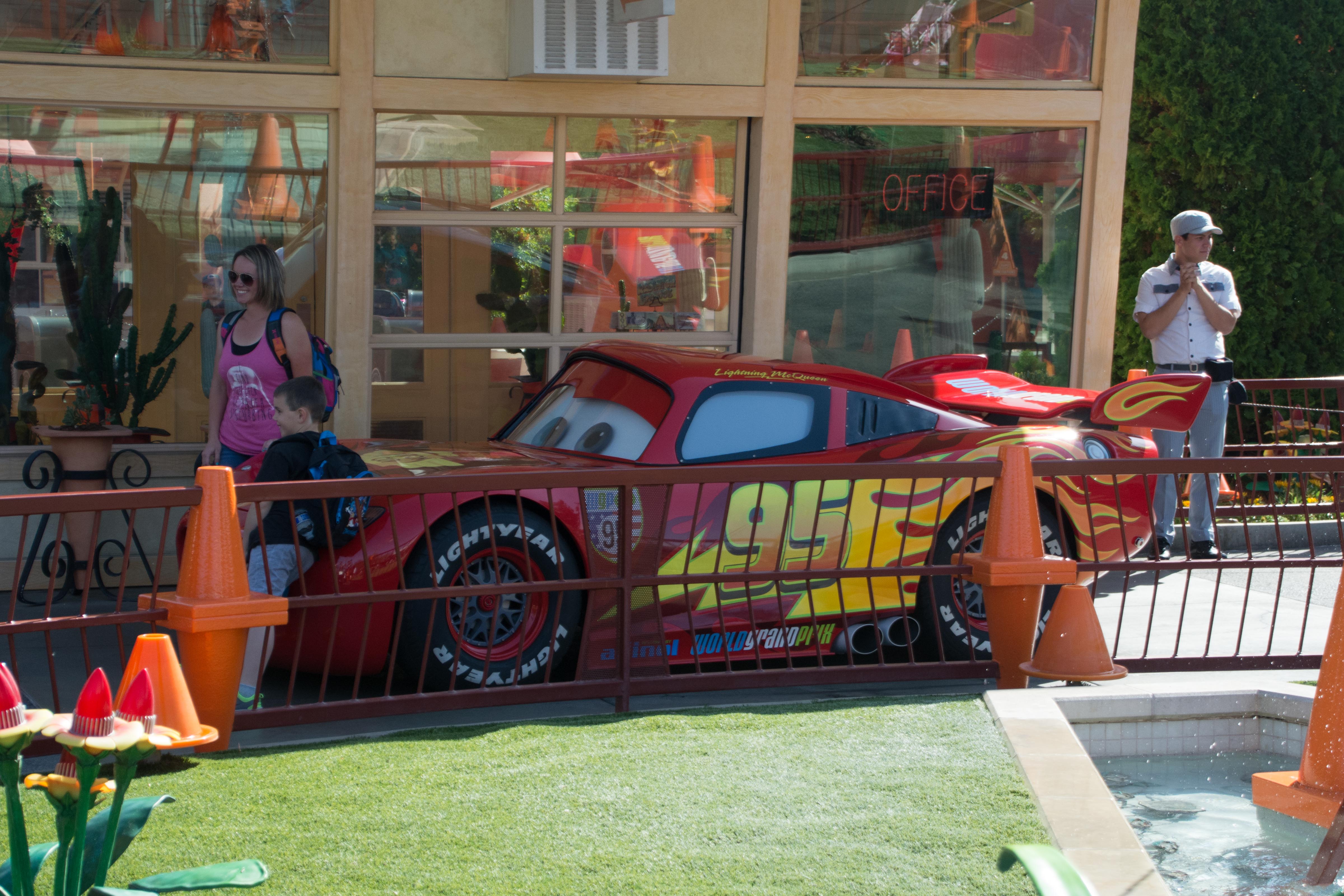
Waiting for pictures to be taken were Lightening McQueen and Mater the tow truck.

Disneyland DCA 2015-6869 Disneyland DCA 2015-6870


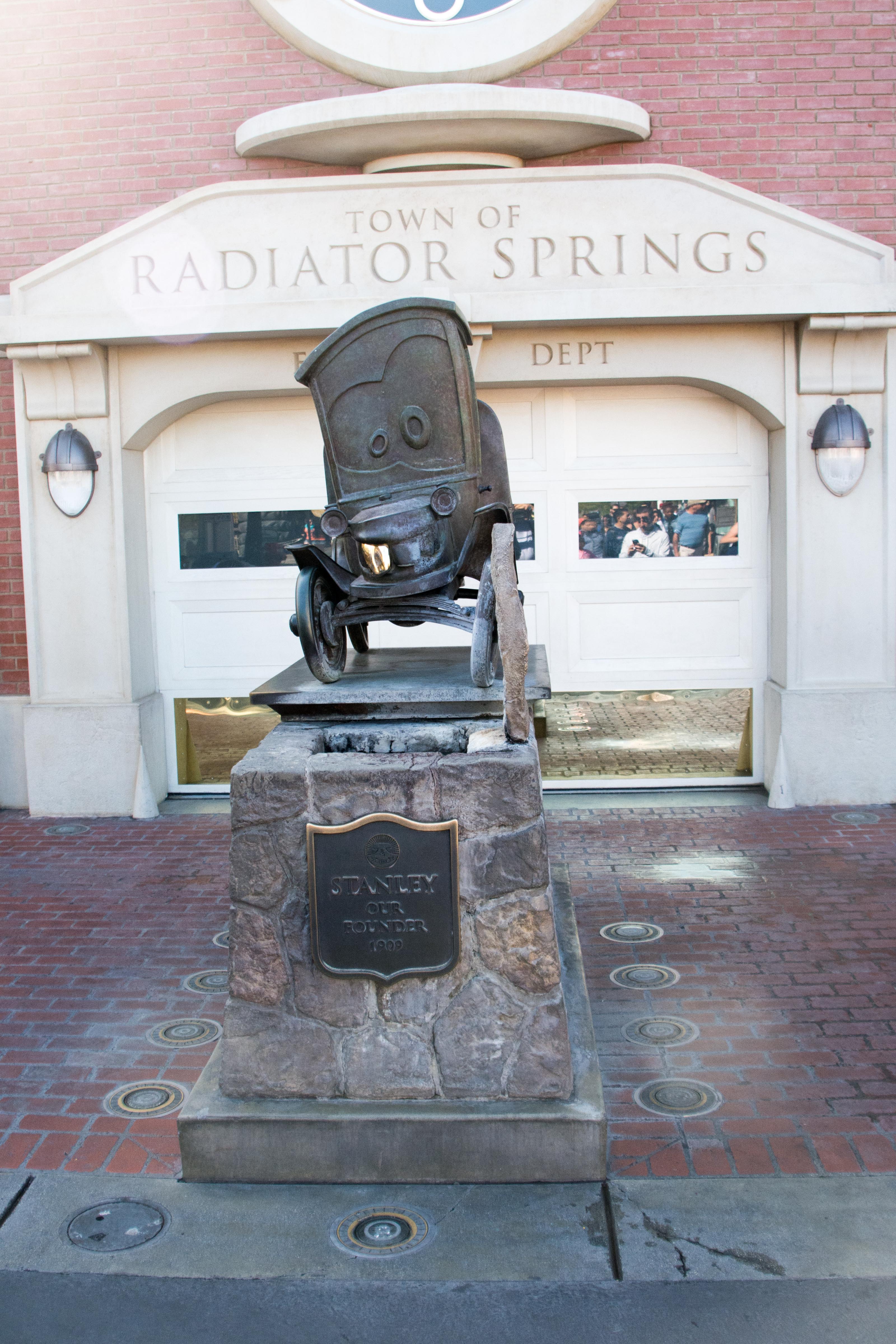
Stanley Steamer — a favorite!

Disneyland DCA 2015-6863


The Cars Roller Coaster — entrance and exit

Disneyland DCA 2015-6862 Disneyland DCA 2015-6891


Getting our pictures taken on the Cars main street.

Disneyland DCA 2015-6894


Looking at the results of our efforts at drawing moving cartoons.  Sarah drew a cookie flying out of a cookie jar!

Disneyland DCA 2015-6901 Disneyland DCA 2015-6905


In Hollywood Land, there is a Carthay Circle Theater.  Gwen used to teach in LA at the Carthay Center School.

Disneyland DCA 2015-6908


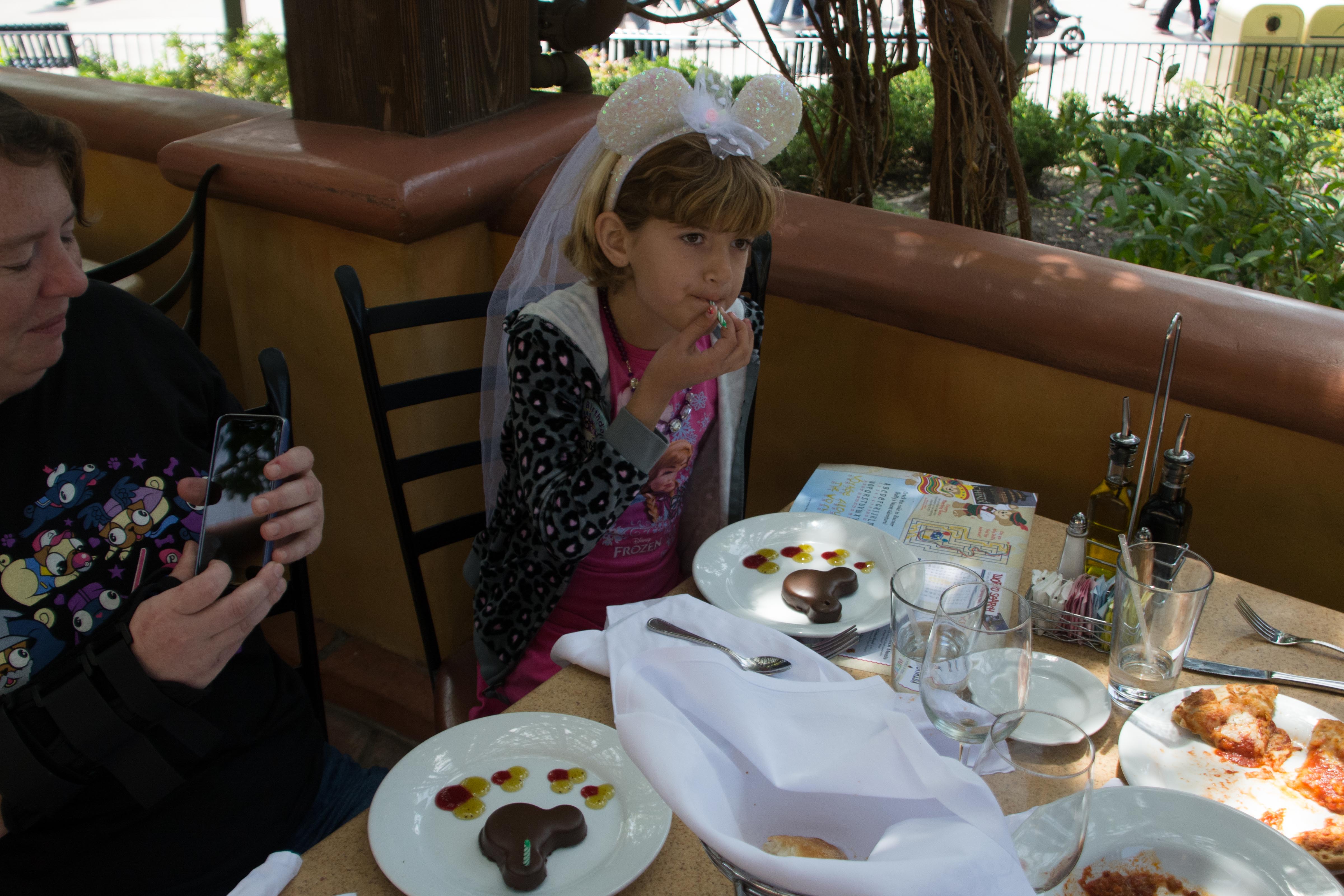
We ate a great lunch at the Italian restaurant.  They recognized Courtney and Sarah’s b-days with a special dessert.  Gwen and I got Courtney’s as she doesn’t tolerate chocolate very well.

Disneyland DCA 2015-6915


Another colorful ride…

Disneyland DCA 2015-6921

The Merry-Go-Round.

Disneyland DCA 2015-6924 Disneyland DCA 2015-6943 Disneyland DCA 2015-6933 Disneyland DCA 2015-6926


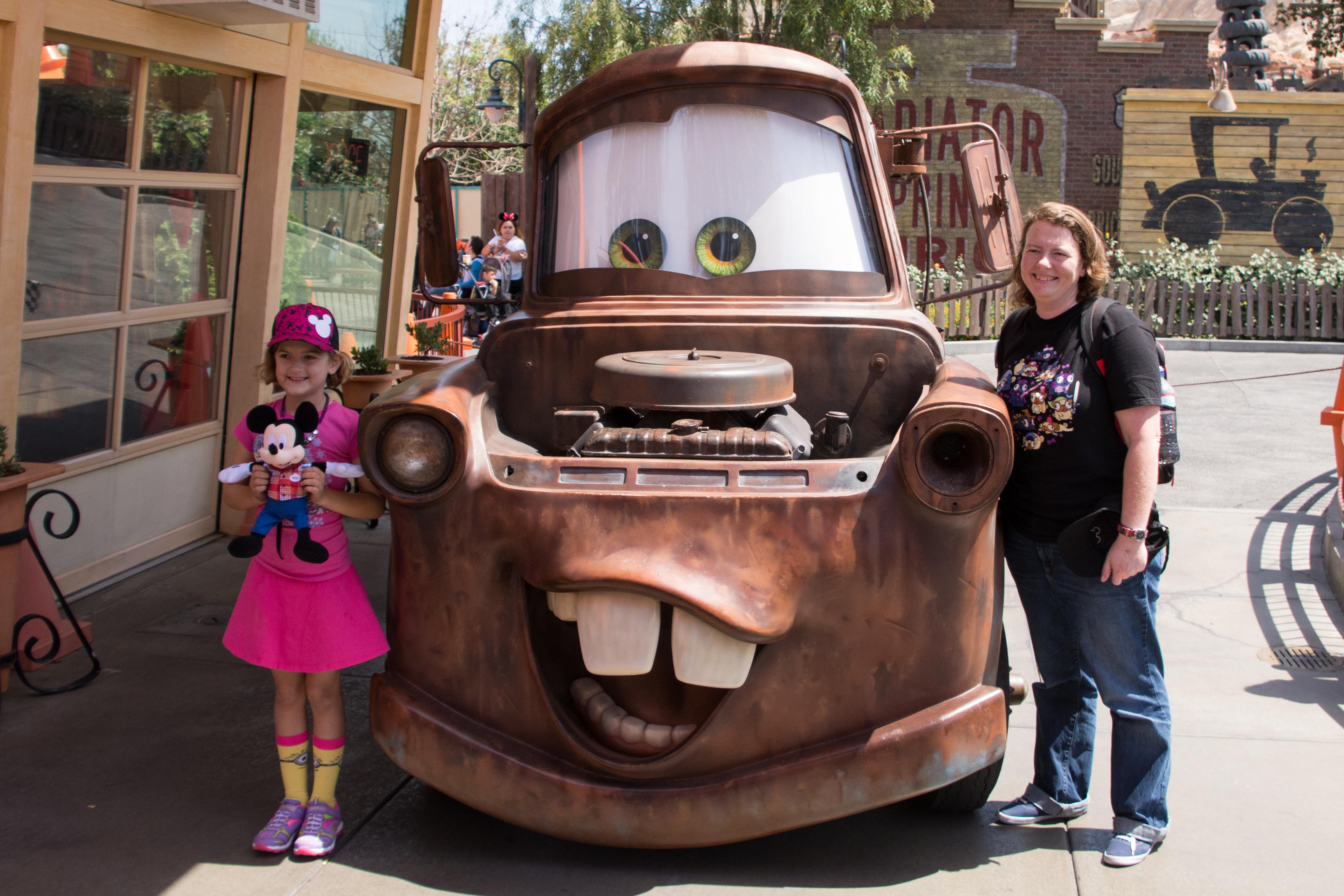
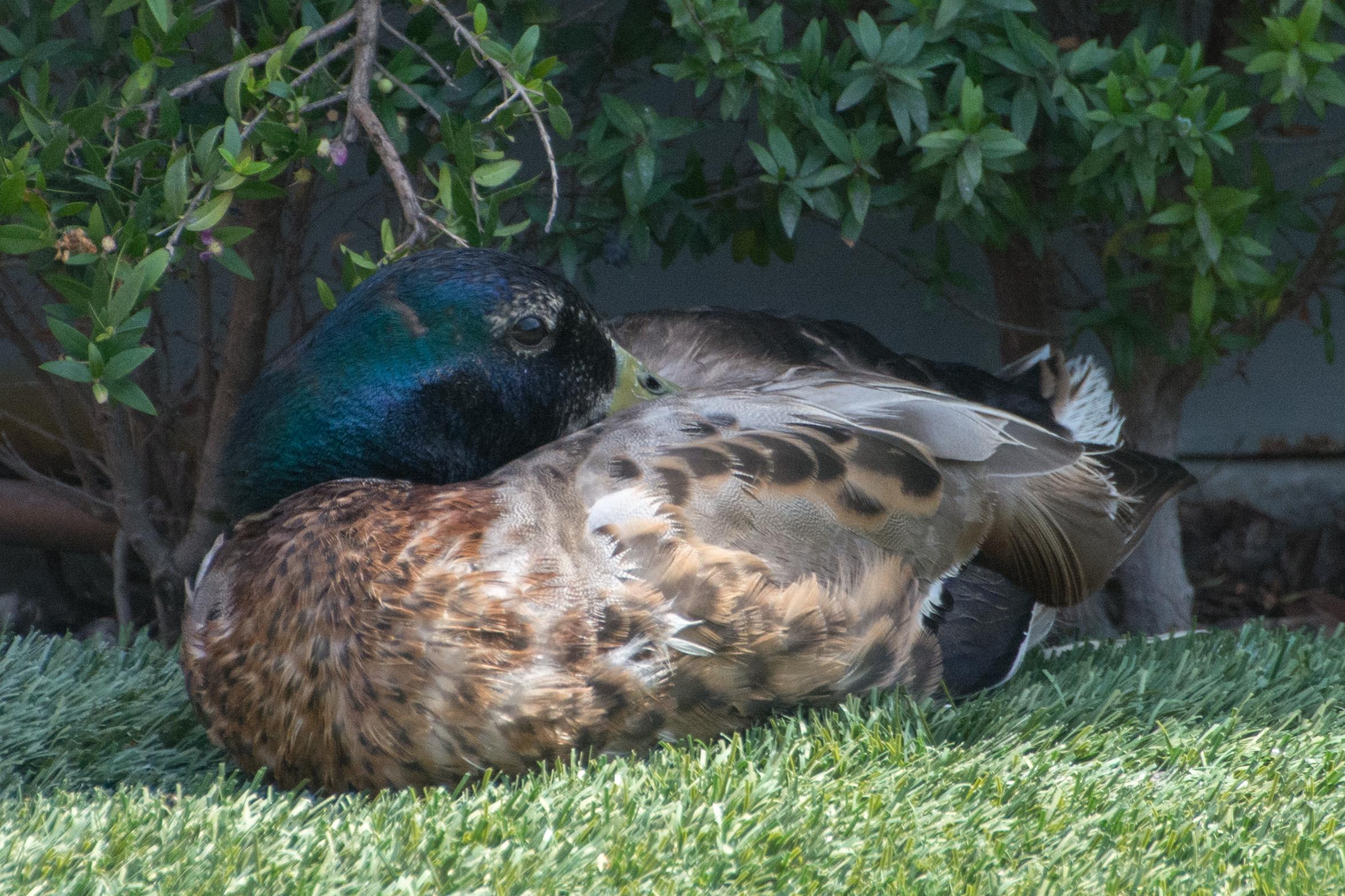
Our turn to get next to Mater, and yes, another duck…

Disneyland DCA 2015-6960 Disneyland DCA 2015-6955


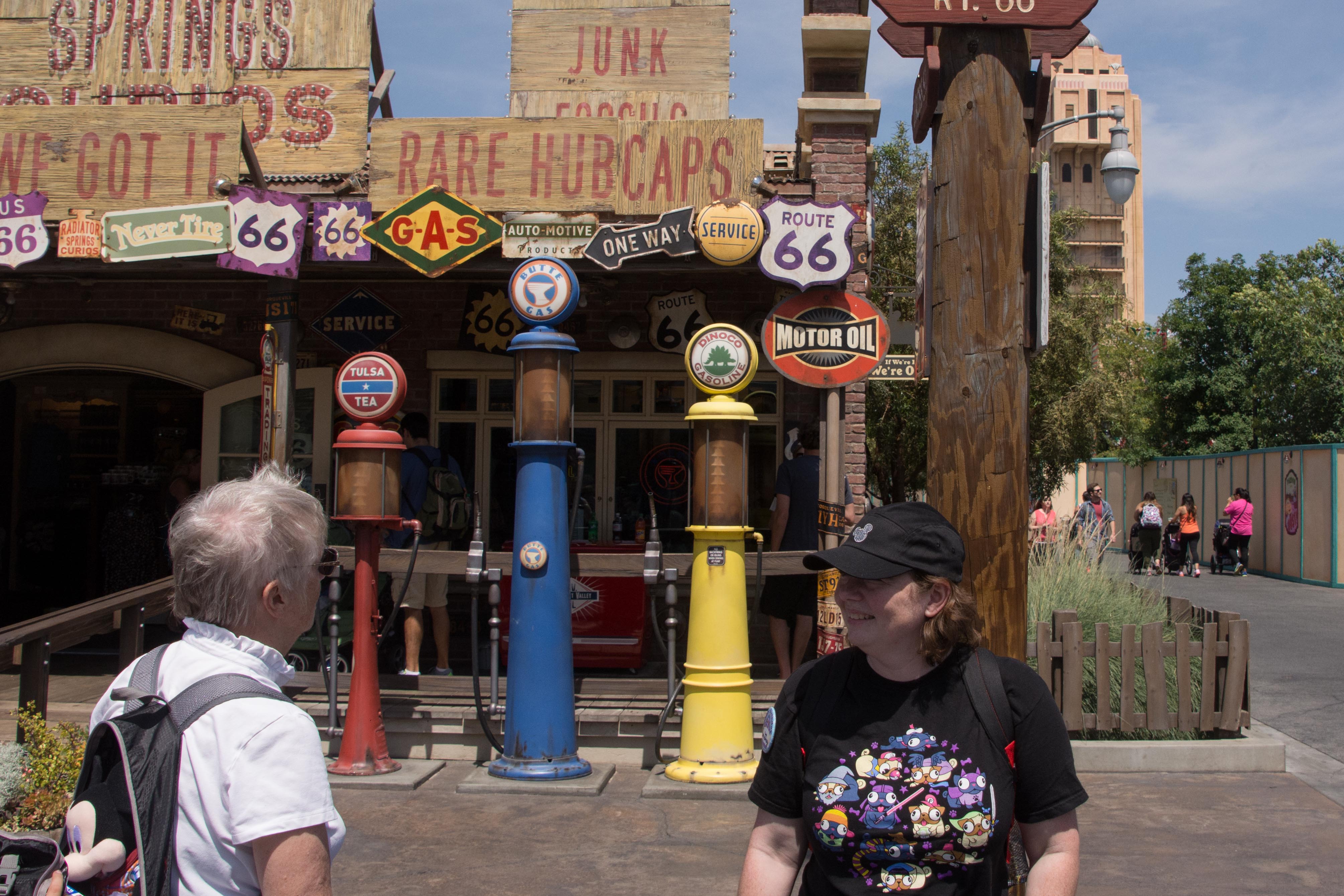
Cars homage to route 66

Disneyland DCA 2015-6971 Disneyland DCA 2015-6972


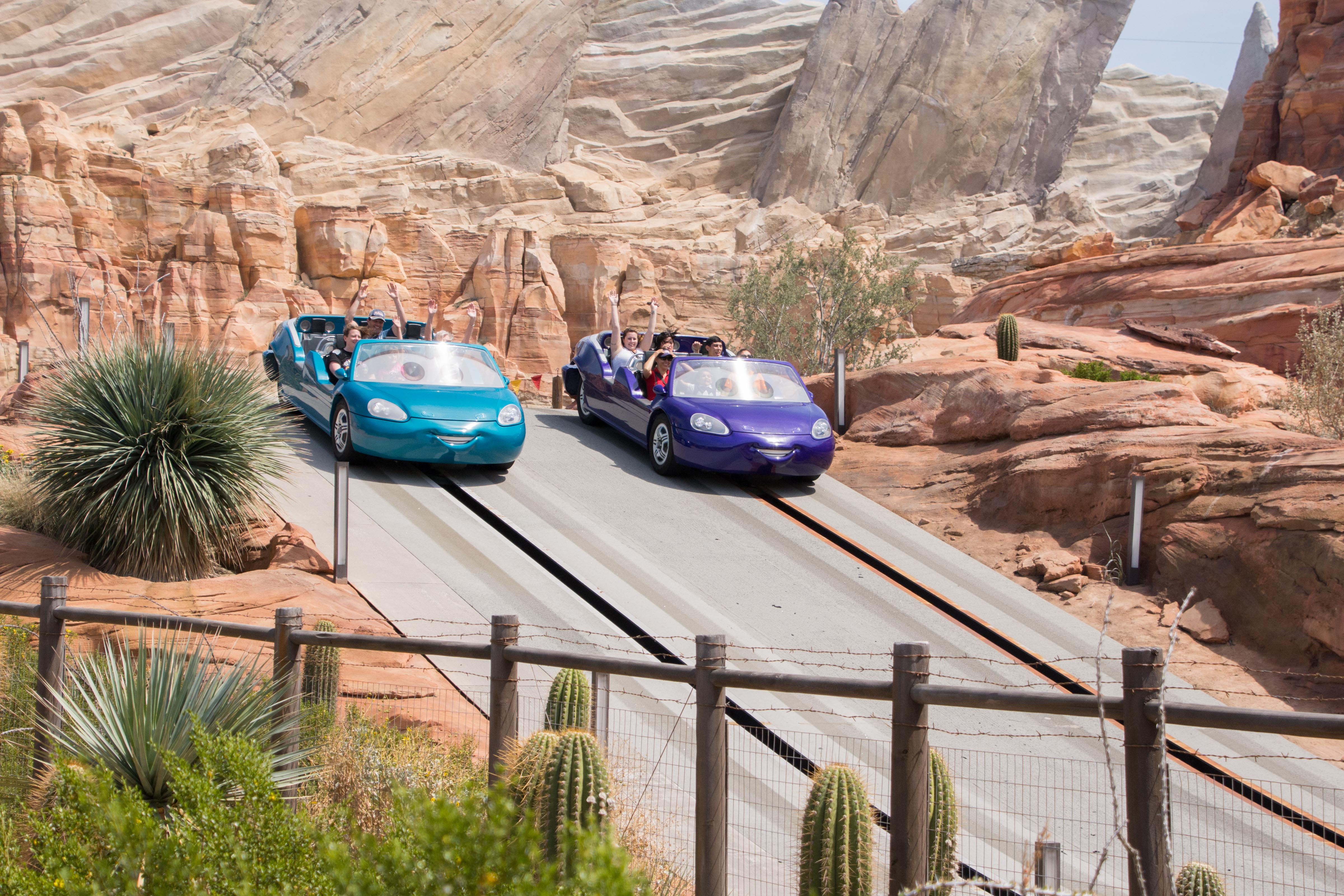
Back to the Cars Roller Coaster — the vehicles are certainly appropriate!

Disneyland DCA 2015-6987 Disneyland DCA 2015-6989 Disneyland DCA 2015-6990


Oh, well, they didn’t win this race either…

Disneyland DCA 2015-7002

The Scream — the largest Disney roller coaster; not a favorite of Sarah’s.  I was able to catch Courtney’s picture.  Can you find her?

Disneyland DCA 2015-7019 Disneyland DCA 2015-7021


Yet another roller coaster — this one was a Sarah favorite!

Disneyland DCA 2015-7027 Disneyland DCA 2015-7037 Disneyland DCA 2015-7052


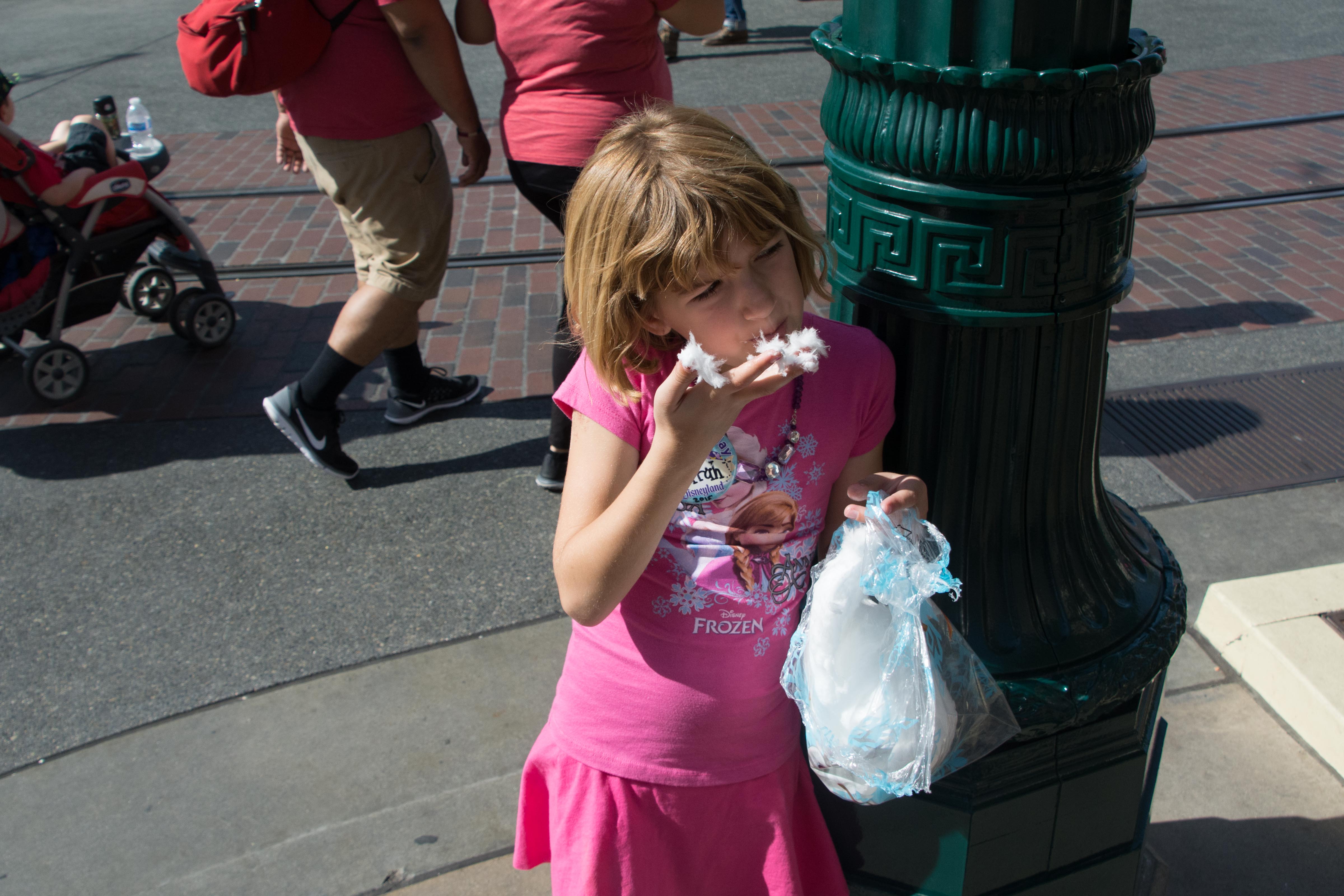
Miss Sarah and the cotton candy…

Disneyland DCA 2015-7057


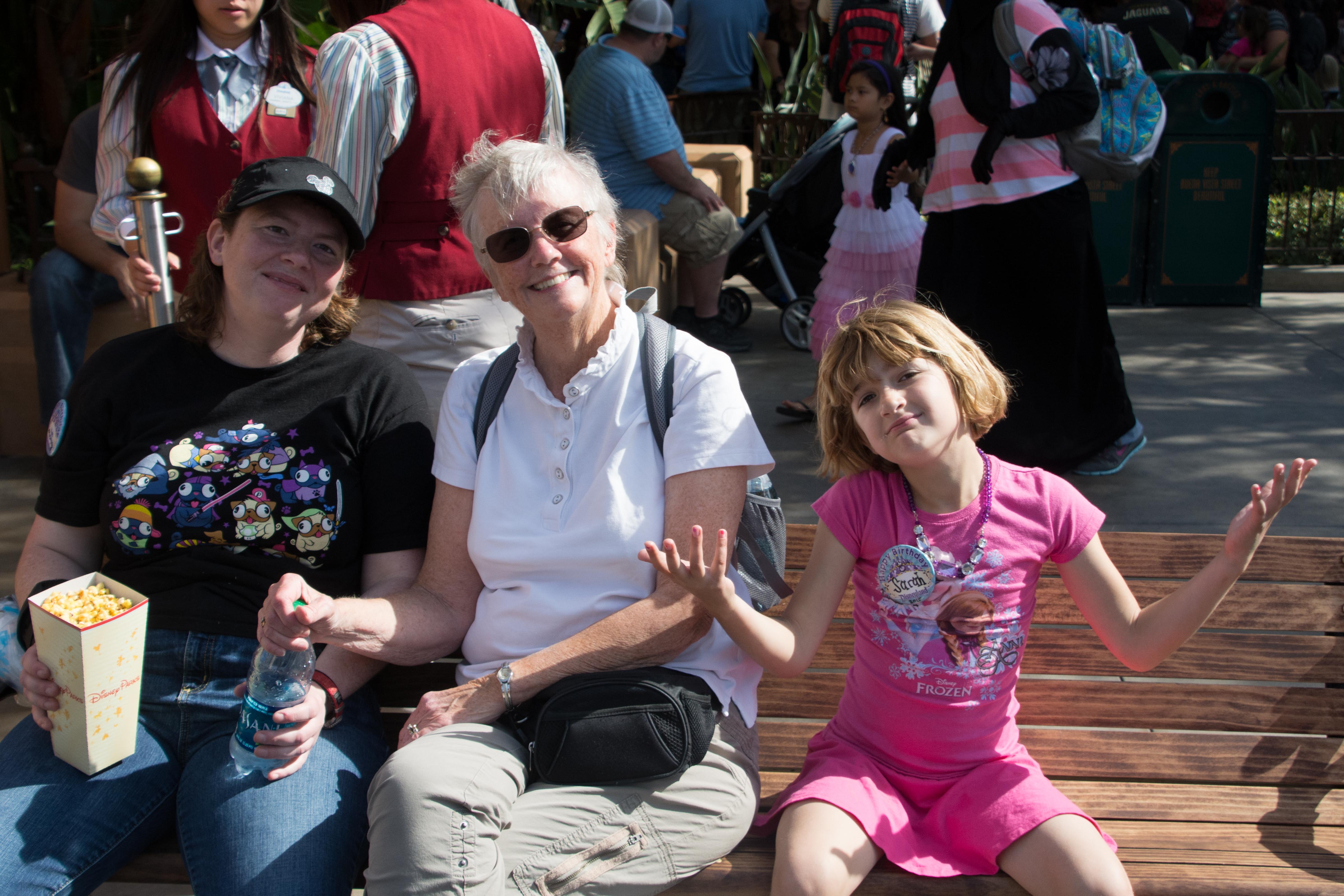
Sitting on a park bench in Hollywood Land…

Disneyland DCA 2015-7065 Disneyland DCA 2015-7073 Disneyland DCA 2015-7076


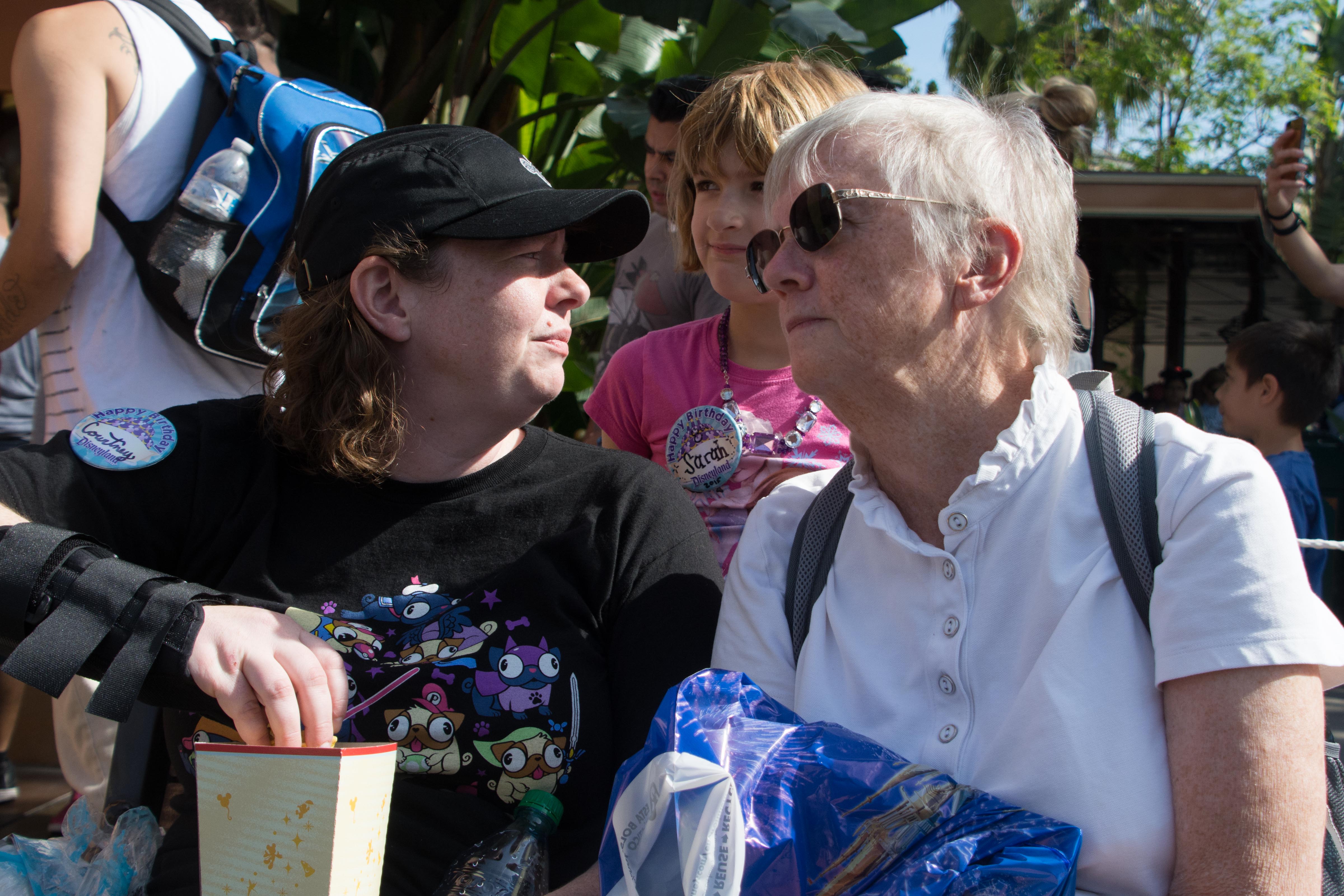
Sarah took these pictures just before we took off back to Palm Springs

Disneyland DCA 2015-7069 Disneyland DCA 2015-7071 Disneyland DCA 2015-7080


Bye, Disneyland, until next time.  As Bob Hope used to say: Thanks for the memories!

Leave a comment

Filed under Blog

Trip to Alaska — July-August 2014: Anchorage Attractions in and out of the Rain

7 August 2014 — Air history, and animal conservation
Blog-4310

1928 aircraft

Blog-4309

Such a variety of aircraft skis

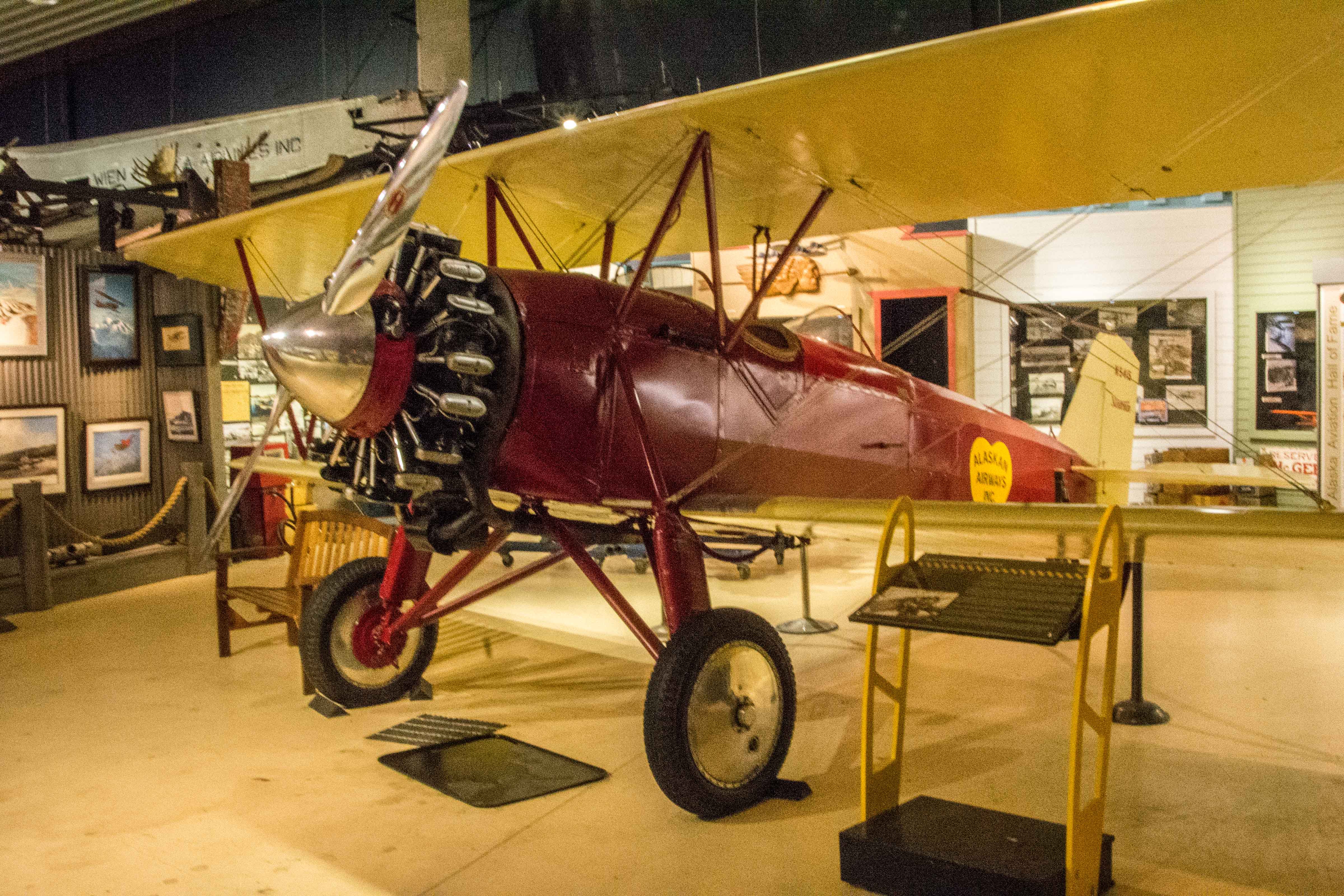
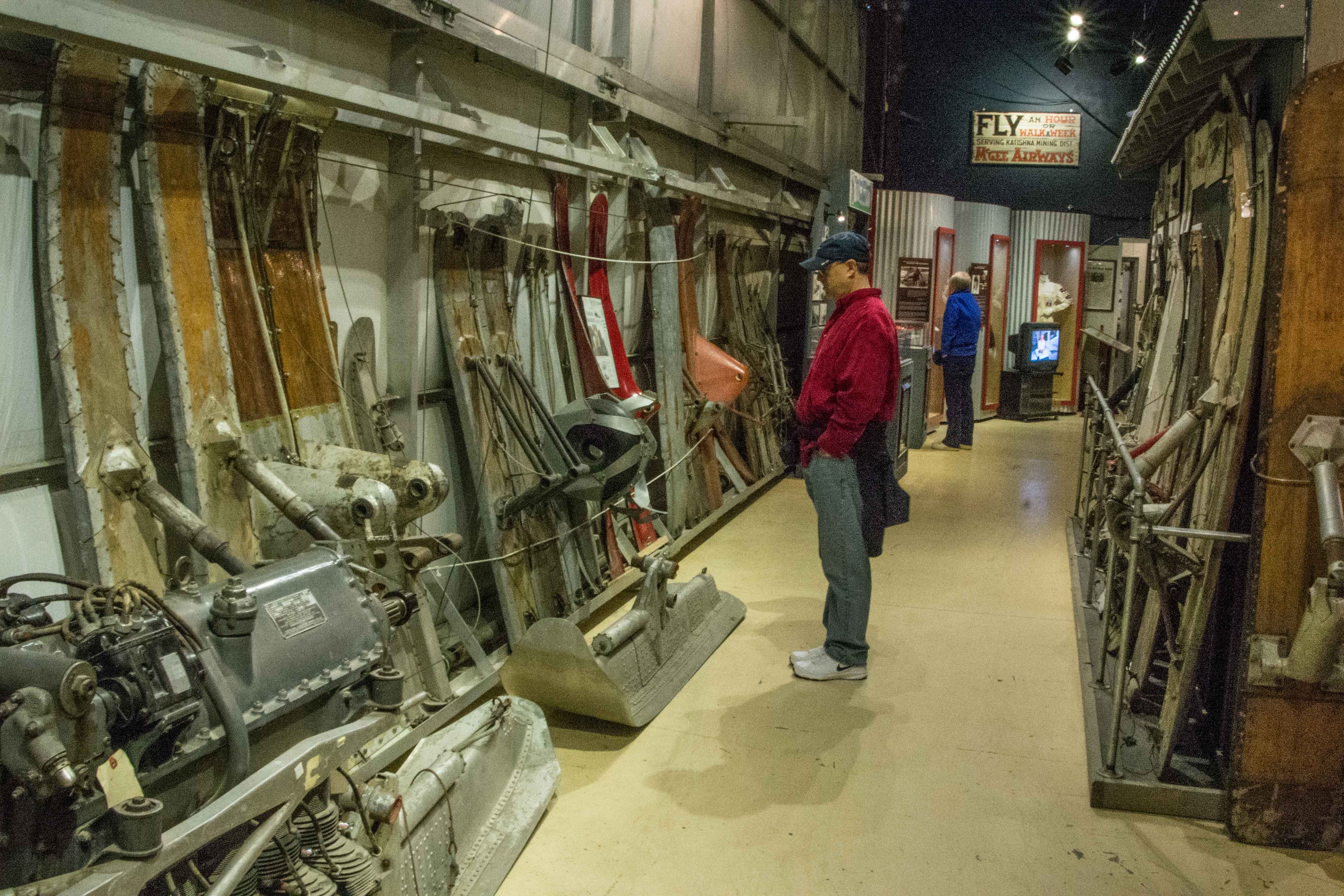
The first thing we did today was go visit the Anchorage Air Museum. This is smaller and more colloquial than the Palm Springs Air Museum, but really quite well done. The focus is on the early air pioneers in Alaska, starting with the first airplane brought here.  This was in 1913, when James V. Martin and his wife Lilly were invited to bring their airplane “show” to Anchorage for the July 4th celebration.  Flight was not established enough for them to fly their machine to Fairbanks, so they disassembled it and shipped it piece by piece.  The “show” was the plane being flown for short-duration flight demonstrations for three days in July, starting on the 4th.   The Martin entourage and the plane got to Anchorage well ahead of time, and the Martins were feted by the locals.  In between fetes, the plane got put back together, and after some adjustments, it flew.  It took several trips (none longer than 20 minutes), and the demonstration was over.  Martin tried to sell the plane locally, but got no offers, so he and the team disassembled it and sent it back to the lower 48.  Commercial aviation finally came to Alaska in 1923, and thus began the era of the bush pilot, which continues to this day. The museum in its main building had several examples of these early planes as well as early engines, wings, propellers, skids, floats and assorted air service costumes.
Blog-4339

Gull winged airplane circa WWII

In addition to the bush pilot information, the museum has an eclectic collection of planes, all previously in use in Alaska.  Outdoors, the museum had an F-15 (without engines), a commercial 737 which was called the “guppy” (presumably named for its remarkable resemblance dimensionally to the fish by that name), and several other larger airplanes.  In a second hangar, the museum has some planes from the WW II.  These are small planes which were in use in the Alaskan or Russian area at that time.   Elmendorf Air Force Base is near Anchorage, and I suspect the planes were flown out of what would have been Elmendorf field at the time.
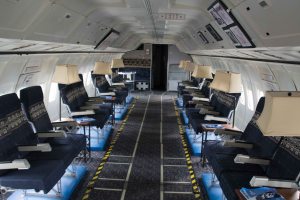
Guppy interior

Guppy interior

In a third hanger, there are two or three disassembled planes, mainly fuselages with their wings taken off.  The wings are set in wooden frames so that they were resting on their front or back edge, waiting for reconstruction.  These wings had obvious bullet holes in them, like they had been shot down.
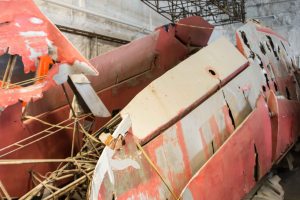
Blog-4350

Wings waiting to be repaired. Note the gunshot holes

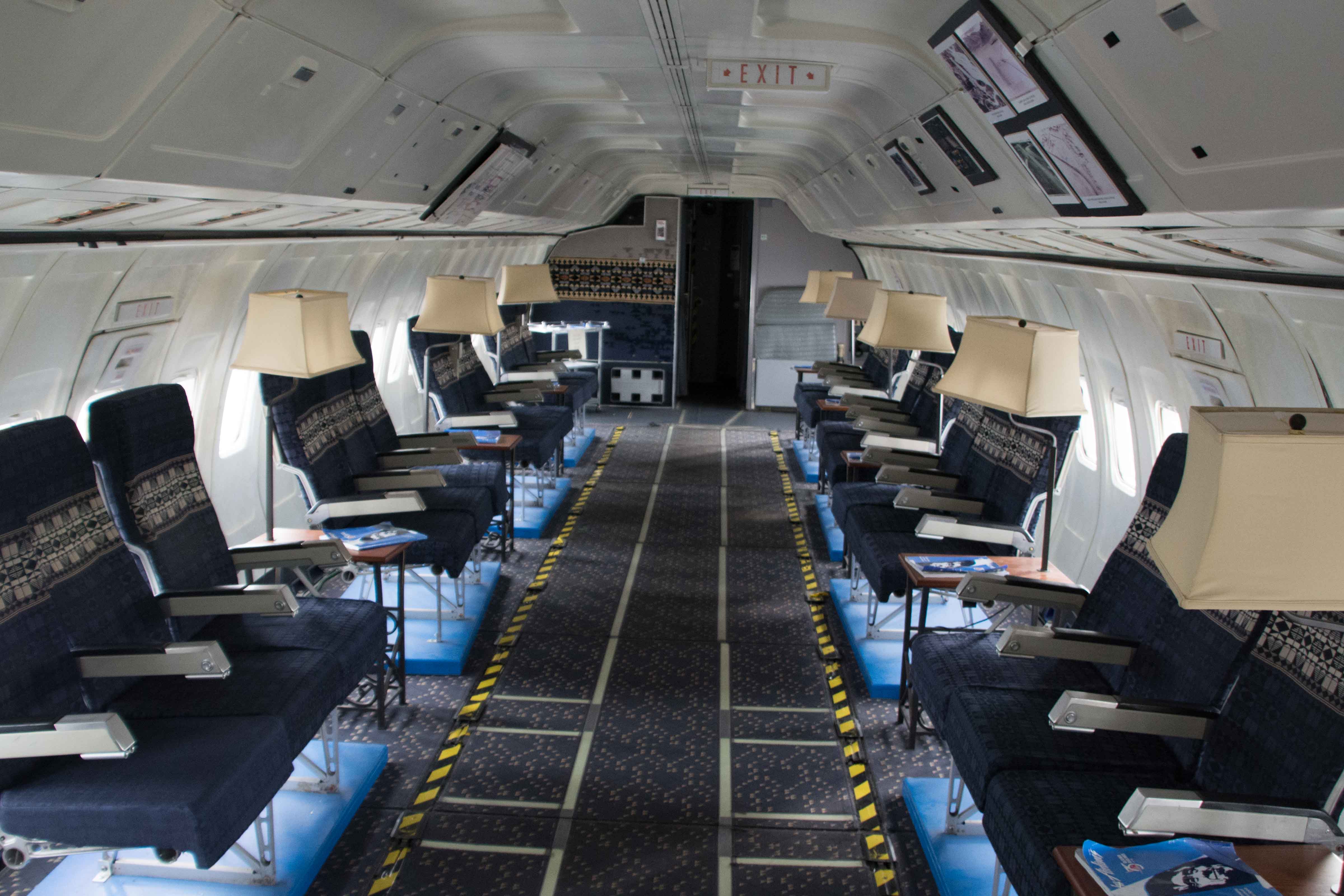
The Guppy is parked outside the buildings with a stairway allowing entrance into the craft right behind the pilots’ seats.  Inside, the pilot and copilot chairs are on the right, and as you turn to the left, there is a kitchen area, and then the seats.  The seat chairs sit facing each other, with perhaps eight seats on a side.  Each has a floor lamp behind it giving it the look of a number of living room set side-by-side and face-to-face.

There are several informative films located in theaters throughout the museum.
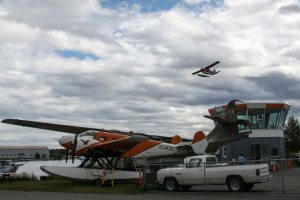
Aircraft tower

Aircraft tower

There are even blue prints for local planes hanging on the walls in one hallway, including a Sopwith Camel. They are in the process of rejuvenating the original control tower, which is located on the grounds of the museum.  I assume it has been replaced by a more modern version at another site as there are no people in it today to guide the number of sea planes that periodically take off down the channel area in front of us.

It is short (a couple of stories) but for the geography of the channels, I guess a taller building is not necessary.

This afternoon, Marlene drove Gwen and me to the Alaska Wildlife Conservation Center, about an hour out of Anchorage.
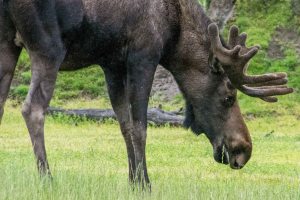
Moose munching

Moose munching

They care for wild animals, bears, moose, linx, caribou, and bison that are brought in with injuries. The goal is always to restore the animal to the wild, but where that is not possible, they will either keep it for public viewing, or move it on to other zoos where it can be well taken care of.

Caribou in the Alaska Wildlife Conservation Center
Caribou in the Alaska Wildlife Conservation Center

Blog-4413

Alaskan Brown Bear

The first animals we came across are the caribou. Wow, even though I have taken quite a few pictures of these animals in the wild on this trip, I didn’t realize how big they really are.  We walked into a barn like structure open on one side where the caribou were walking in for a feeding.  The ones there are easily the size of a large horse.  And with the antlers, they take up a lot of room.

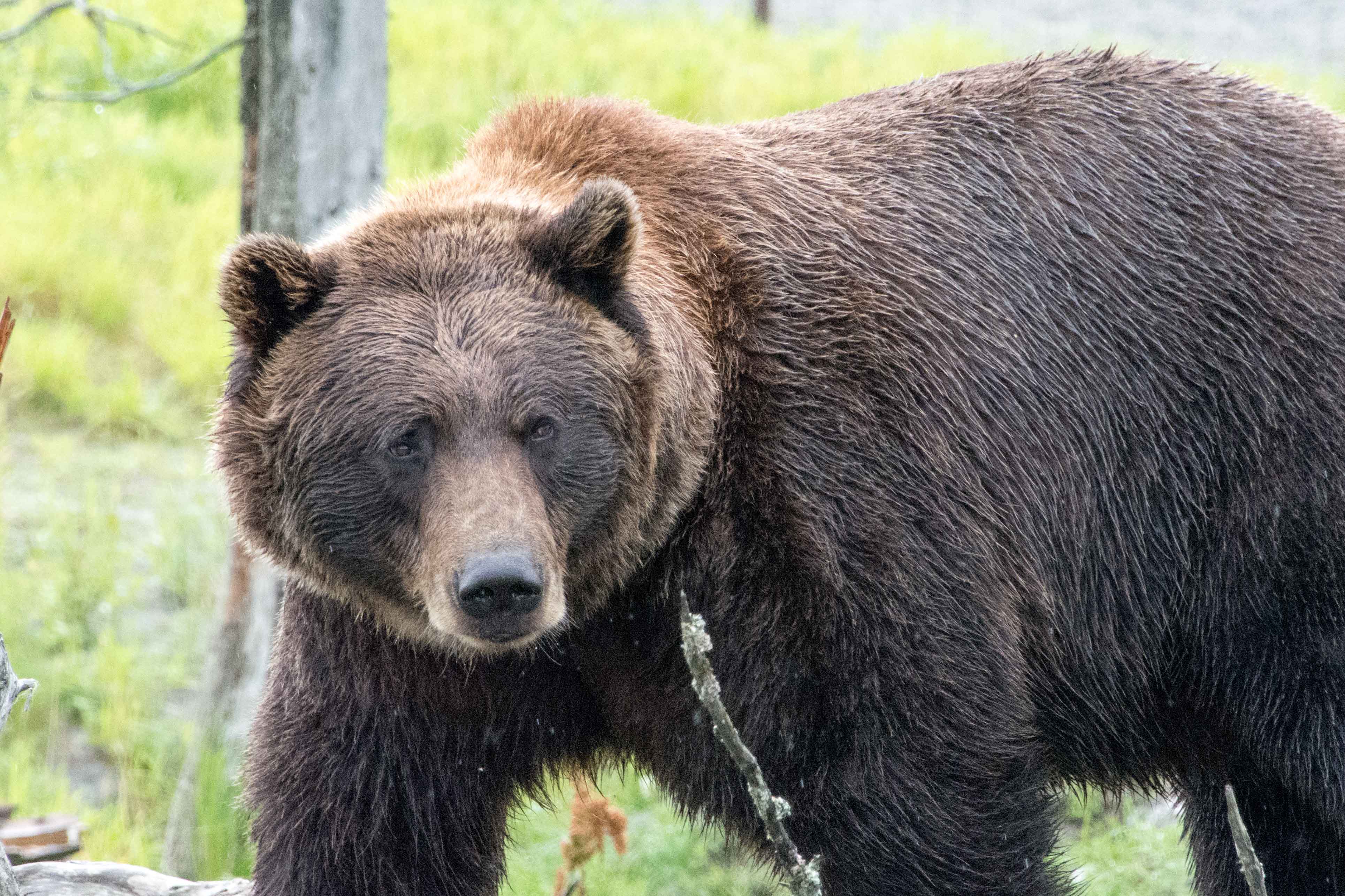
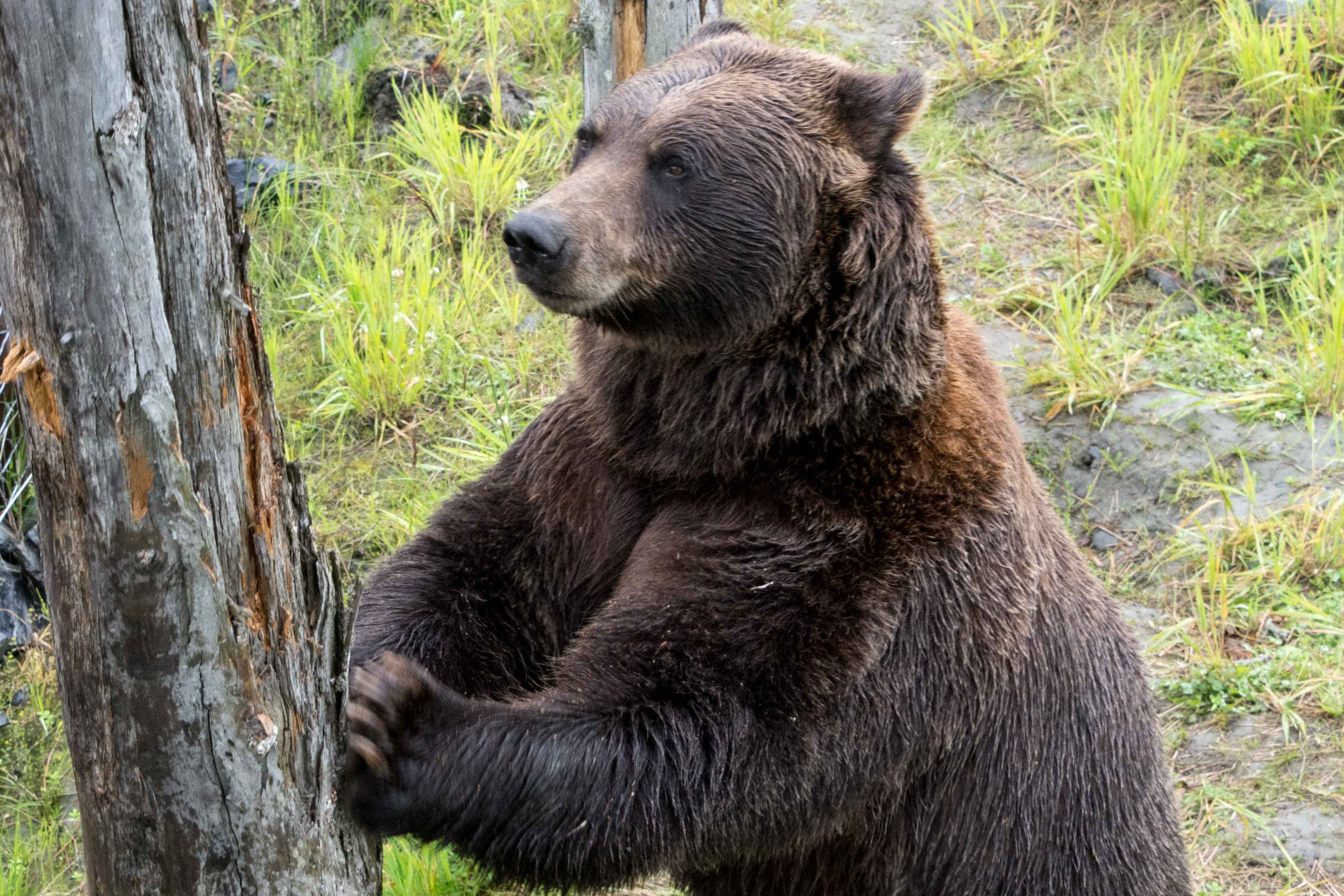
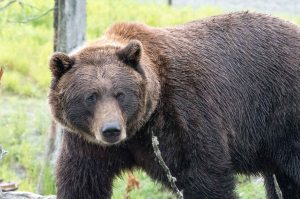
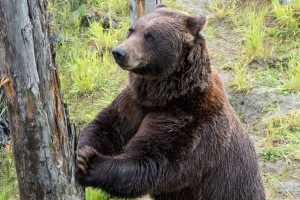
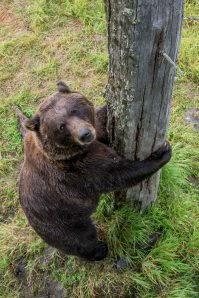
In the next area were the musk ox, They stand, slowly chewing their cud, not paying attention to the paying customers at all. Next up, the bears, black and brown.  There is only one black one we see, and he is eating with his head facing the other way, so we really don’t get a good look at his face.  There are three brown ones however, and they are quite active and entertaining.
Bear scratching post
Bear scratching post

Blog-4466

Is he going climb it or push it?

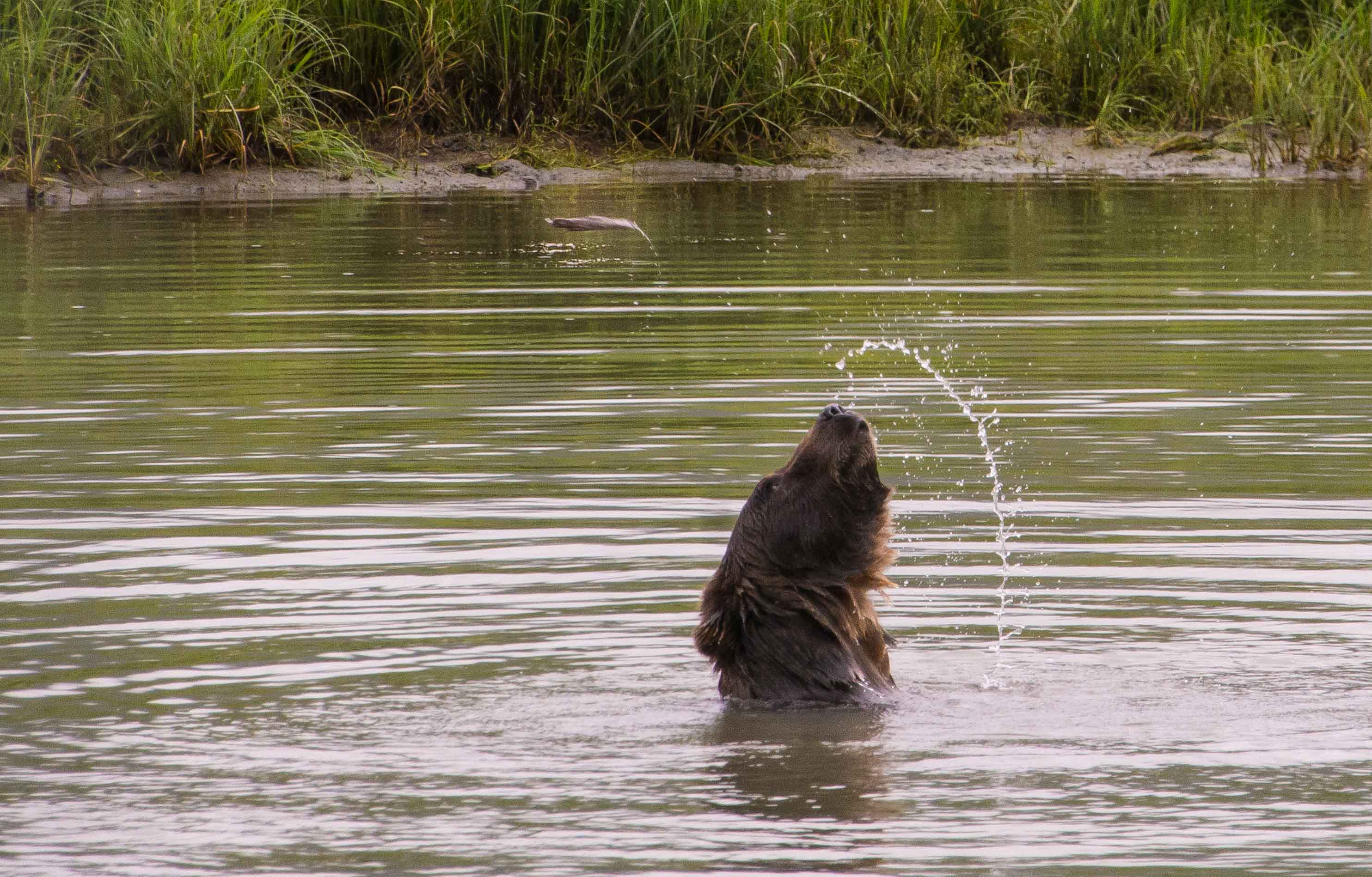
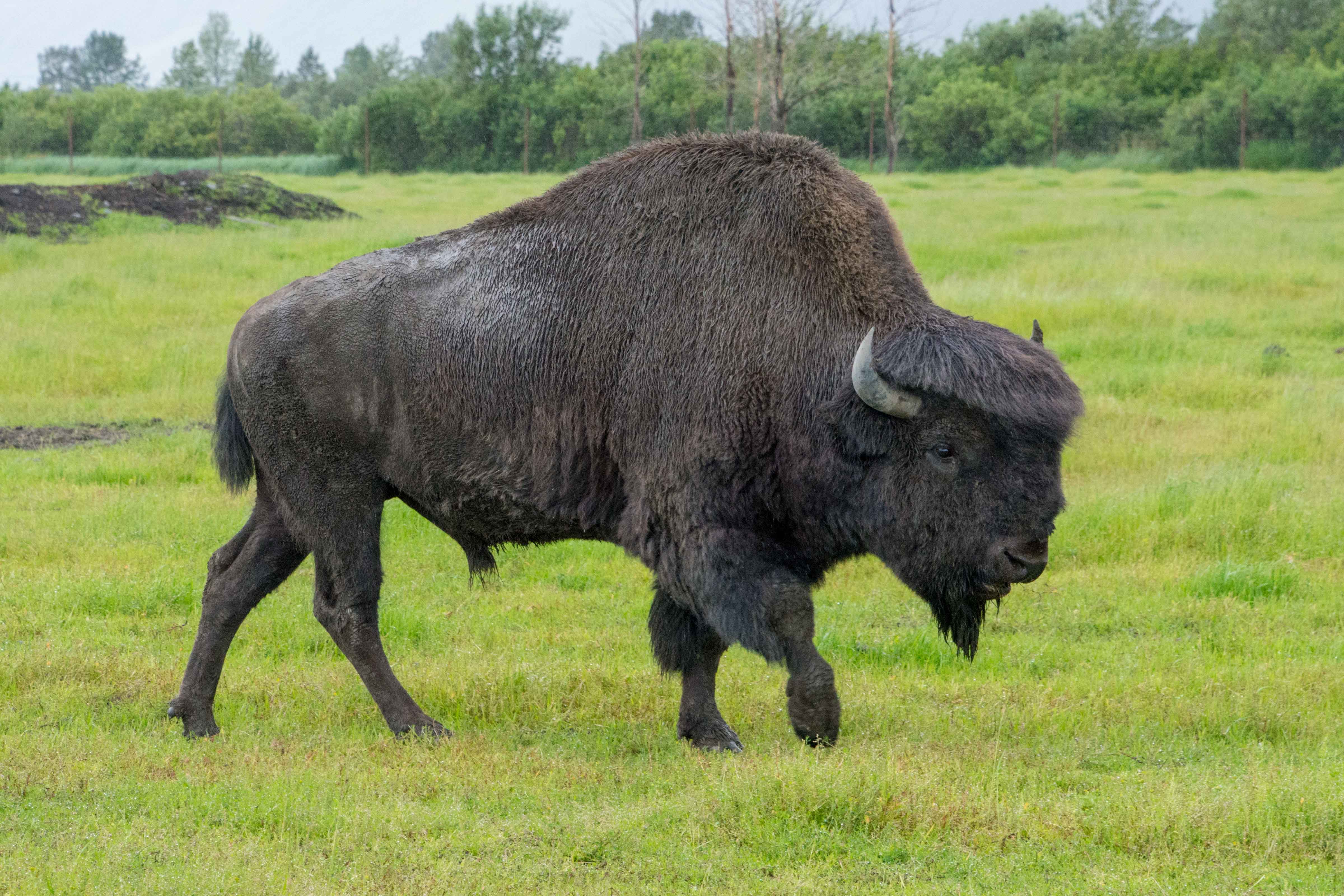
They have a number of medium size trees in the enclosure available for the bears to use.   O ne of the brown ones used two of the trees near the fence as a combination scratching post and vertical wrestling bag.  He would  alternatively push into one of them, and then grab it around trying to push it over.   Another brown bear was in the large pond, entertaining himself by tossing a stick up in the air and then retrieving it.  It was fun to watch.  A separate enclosed area contains got a couple of moose, lazily munching the patch of grass they are standing on.  Another large animal the Conservation Center works with are North American Wood Bison.  We saw a whole lot of these, as they are breeding them for release back into the wild next year. The first release site is in the interior of Alaska, but not too far in.

Blog-4480

Where did the stick go?

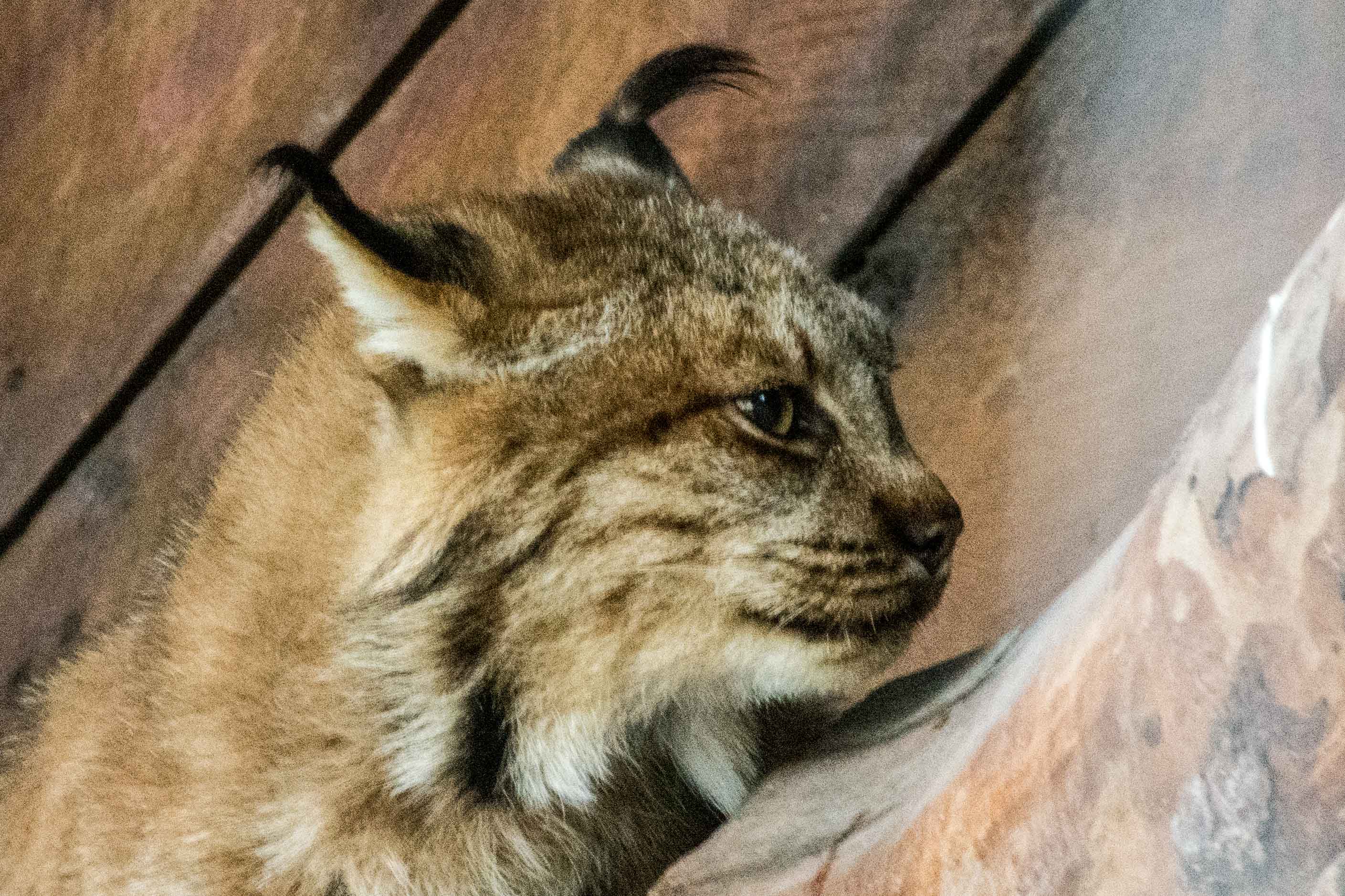
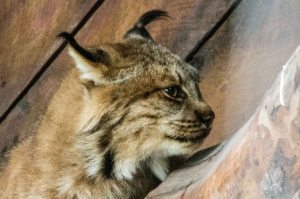
There are two linx in a cage we got to see, watching them as they were fed. One is a youngster, just being introduced to the older one, who has just lost her sister of many years. In the another large cage nearby is a fox who looked very much like the one we had seen in Denali walking along beside the bus.
Blog-4568

Linx

On the way to and from the Conservation Center we went along beside Cook’s Inlet which is very wide, but not very deep.  Lots of the bay area was sand, as it was closer to low tide than high tide, but we could see on our way back an hour or so later that the water was coming back into the bay. The weather was strange, although perhaps not so strange for Alaska. It was cloudy and dull in Anchorage, but not raining much. As we got to the Conservation Center about 50 miles south of Anchorage, the rain was really coming down. Coming back to Anchorage, the rain eased off, and disappeared altogether by the time we got back to the hotel. The clouds climbed down the mountains that surrounded us, showing a low ceiling we could see as we approached. We passed by Beluga Point where the whales of that type are supposed to be easily seen at the right time of year. We stopped, but didn’t see any.
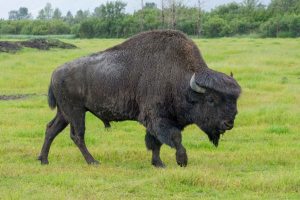
American Wood Bison

North American Wood Bison

This evening, we’re going to eat with the Sherman family across the street at the “Famous Aviator” restaurant where we ate breakfast. It should be fun. Milton, the father, has an interesting structure for a science fiction novel he plans on writing, and we look forward to discussing it.


8 August 2014 — Rainy and cold, cold and rainy

Today is the rafting trip at and around Spencer Glacier. This is just a little bit further than the Conservation Center, but out the same way, along Cook’s Inlet.   But today’s trip is to be by railroad.  We had of course seen the track yesterday as we had driven along.  Since we had ridden the Alaskan RR before, we also knew that it was not a fast trip compared with travel by bus or car.  So it was no surprise as we started out at 8:30 am that it would take us until at least noon to get to our destination.  The train was very comfortable, and was similar to the other rides in that there was a talking conductor who was happy to describe for us what we were seeing along the way.  The company we were taking the trip with showed up at one of the first stops.
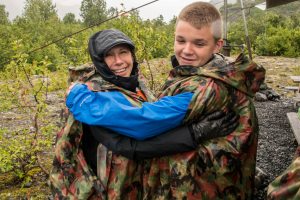
Enough padding?
Enough padding?

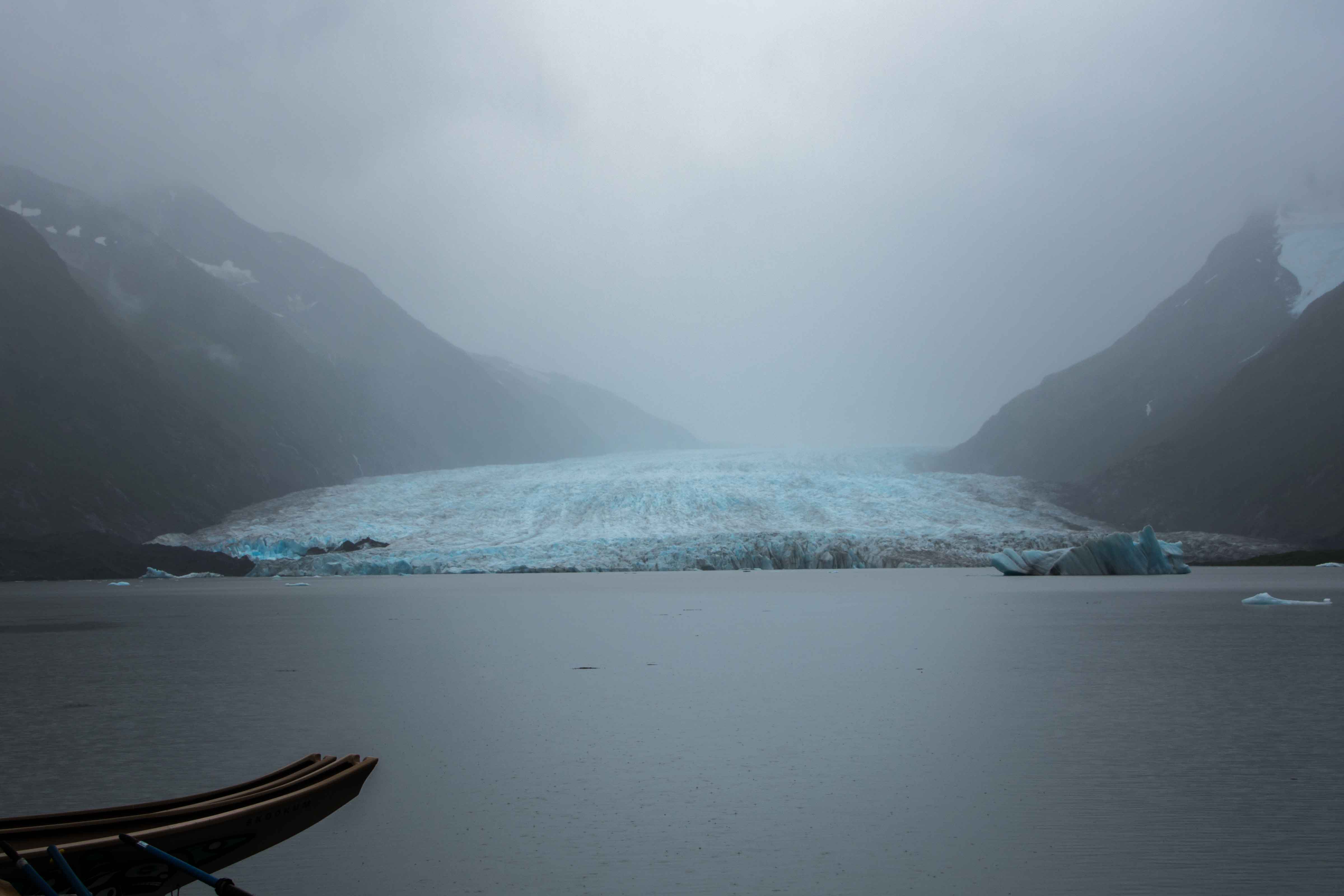
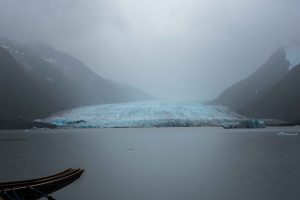
Spencer Glacier, in the rain

Spencer Glacier, in the rain

Their representative started to fit us for boots, and answered questions.  One of the questions had to do with the weather, as where we were at the second stop was windy and rainy, cloudy and dark, oh yes, and cold! The guide equivocated: the weather around the next mountain (where our destination apparently was) could be quite different than the obviously difficult weather we were seeing. When were we going to be there? Oh, in about an hour…

Well, it was two hours and three more stops before we got to the Spencer Whistle Stop, our goal.  And the rep was right, the weather has indeed changed somewhat for the better.
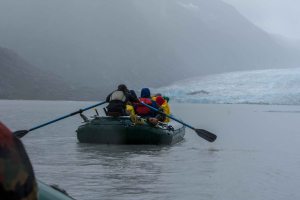
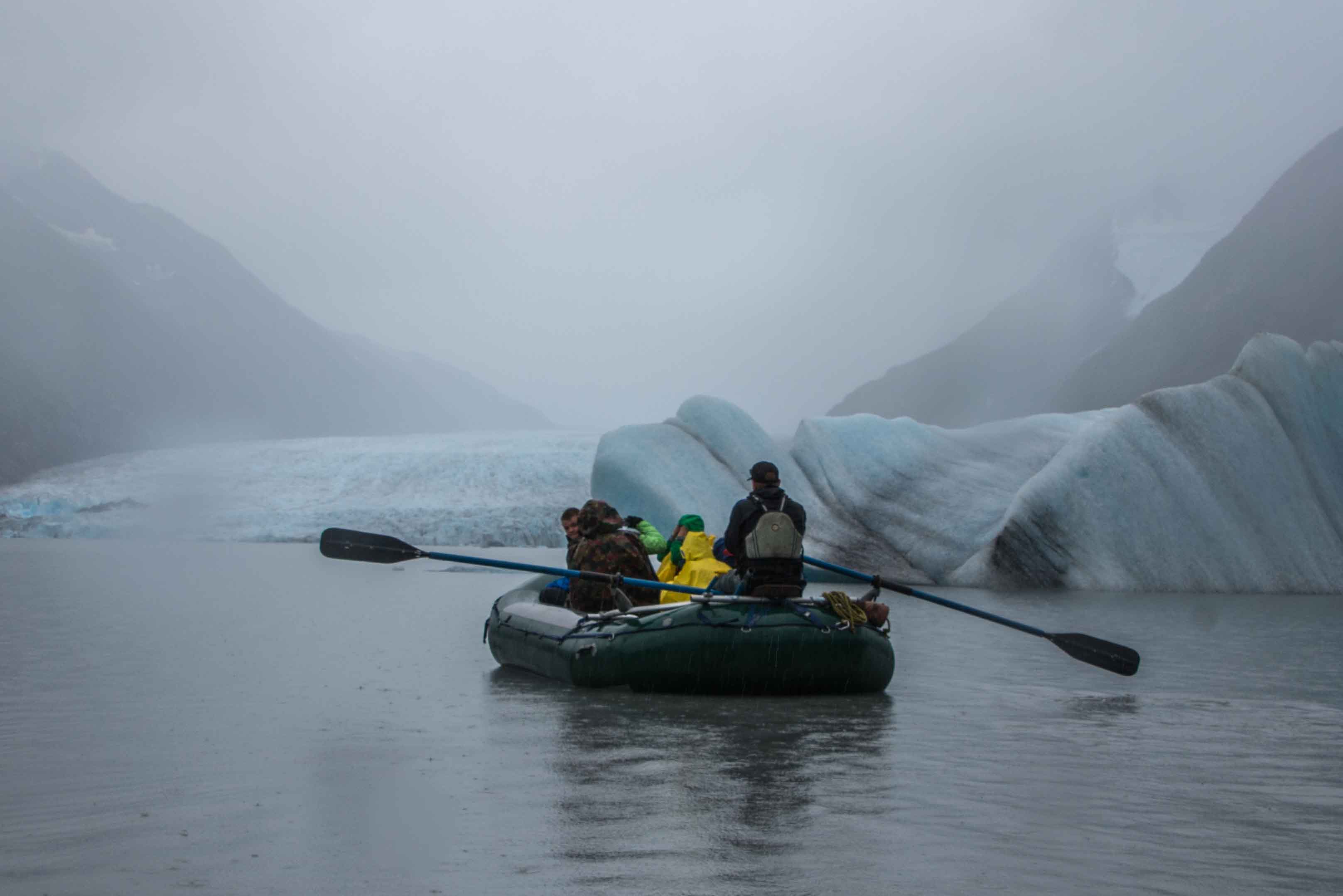
Out on Spencer Lake

Out on Spencer Lake

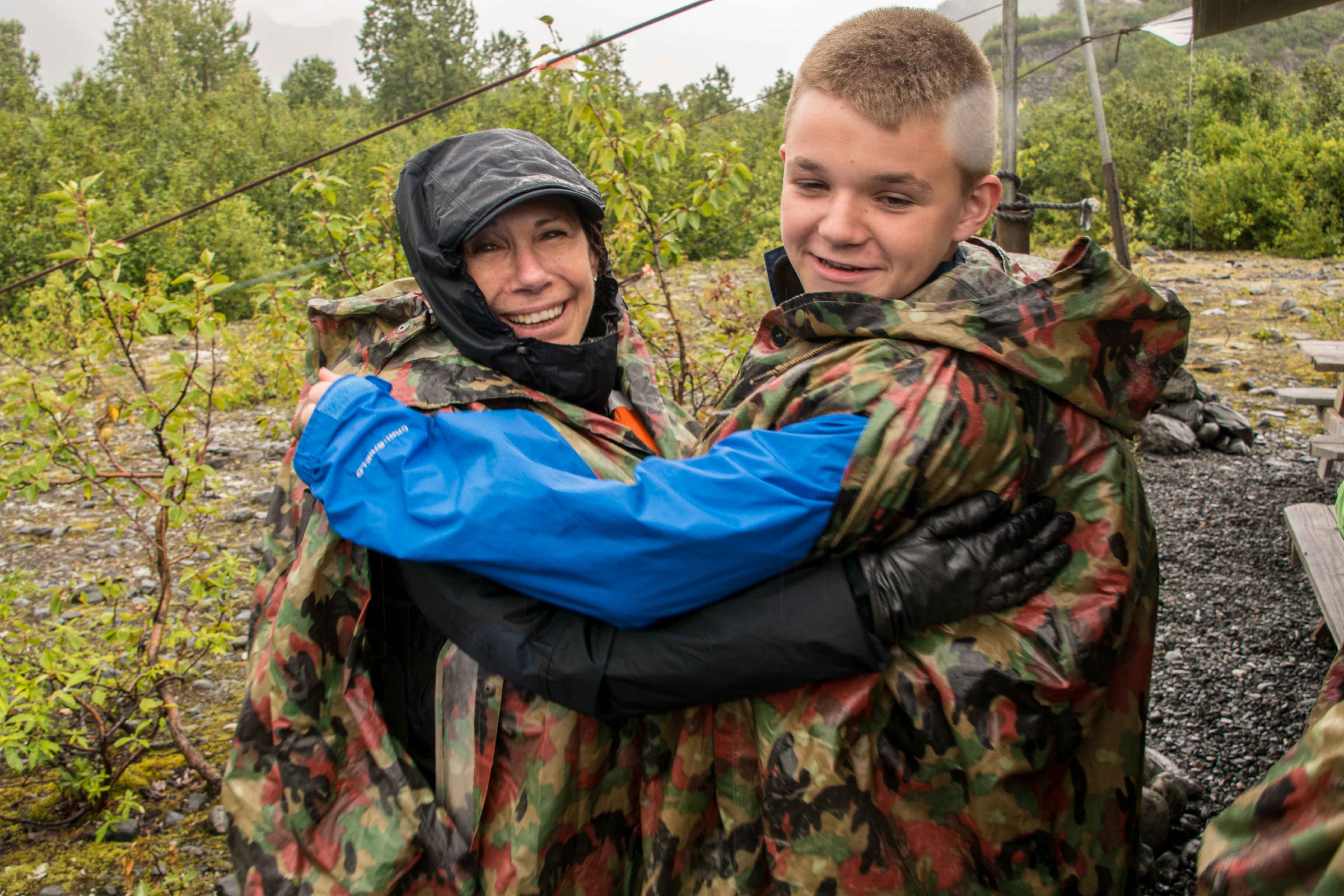
It is brighter and while not clearing, the whiter clouds appear to be higher.  So off we get, and dutifully go to get our life preservers, and eventually ponchos on as well. We are already wearing the boots we received on board the train. So to our bus we go, and it takes us a couple of miles to the shore of Spencer Lake. The lake is populated with icebergs, large and small, clearly calved off of the glacier which dominates the opposite shore. Immediately in front of us, however, were rubber rafts, five of them. They are our immediate transportation, and the task at hand is to get on board without getting too wet. Our party of 12 (now among a group of about 30) is divided into two rafts, six each, with Adam volunteering to share a raft with the Herrens.

Plenty of icebergs to steer between

Plenty of icebergs to steer between

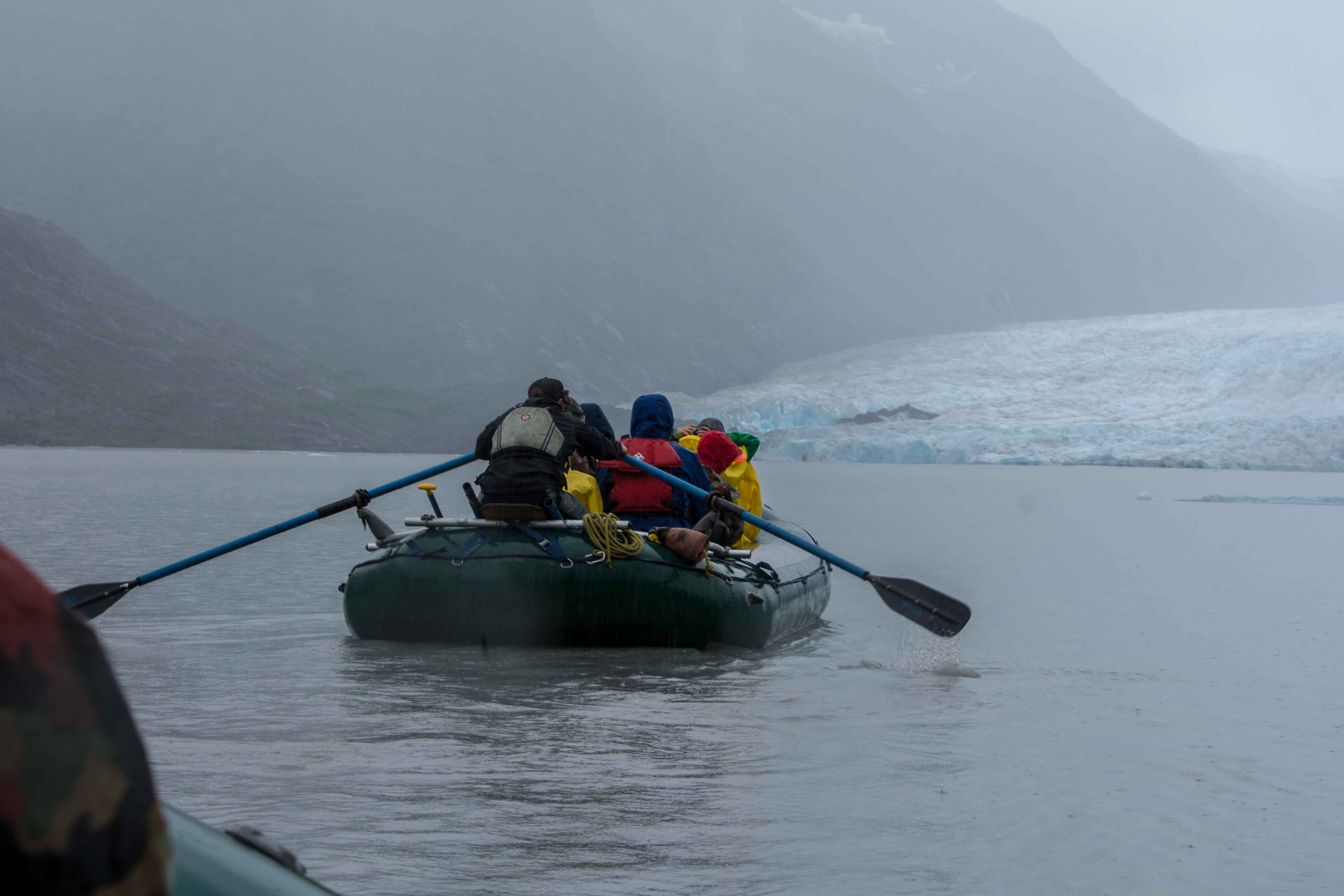
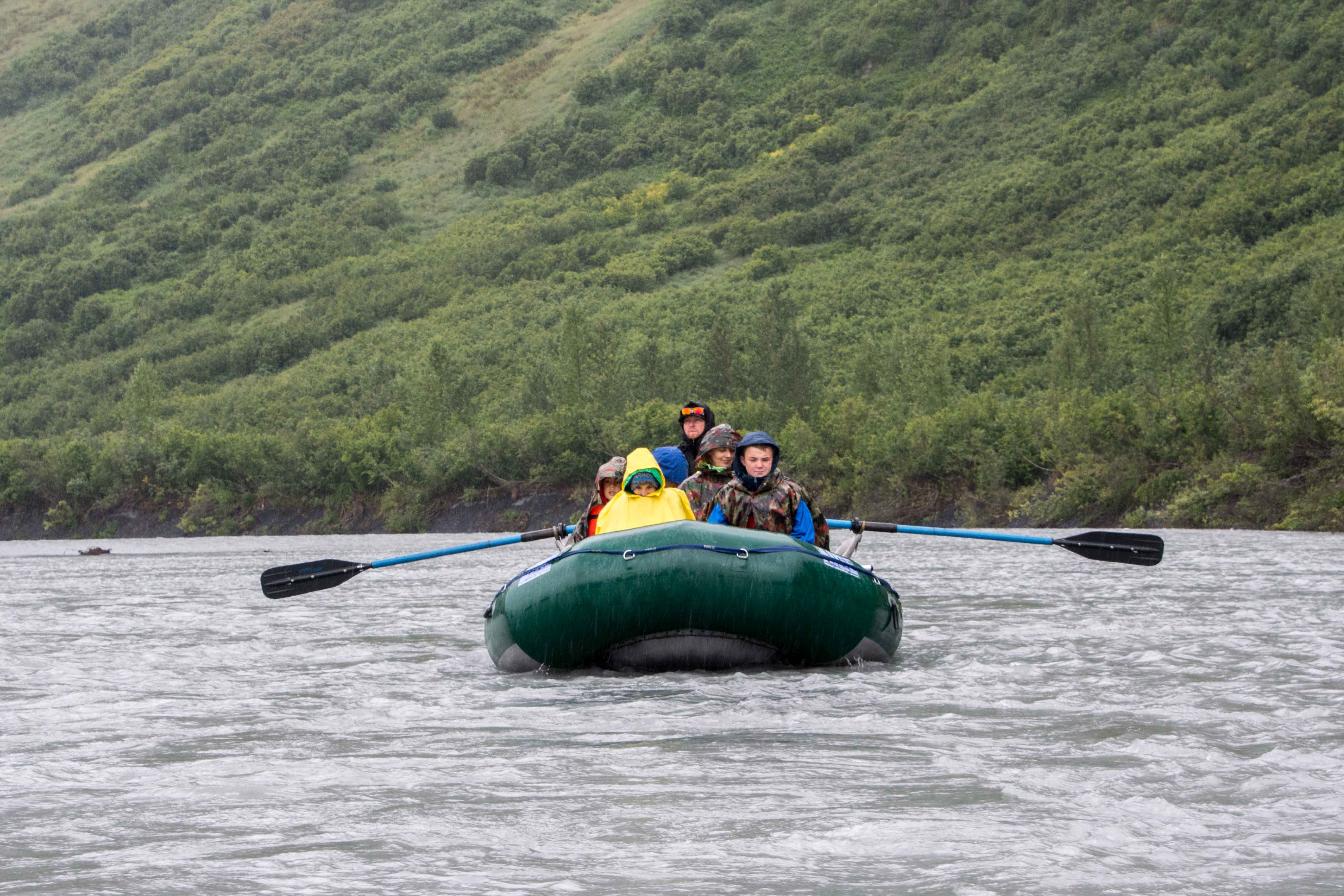
The guide in our boat, Gus, is the acknowledged rookie, this being his first season doing this. No stranger to outdoors living, nor to the area, he tells us he grew up within 30 miles of here.  He tells us he qualified very easily for his current job.  This quiets our fears a bit. The large rubber raft has three rubber cylindrical seats set across the middle, with a large rubber oval frame surrounding a heavy bottom underneath it all.  Mitch and I took the rear-most bench, so Gwen and Robin had the central one, and Chris and Joy the front one. Gus sat on a wood and aluminum platform which put him above the rear end of the raft, with a long oar to each side.  From this position, he steers and when necessary, powers the boat with the oars.  As it turns out, he really is quite expert at maneuvering the craft.  He took us up to several of the larger icebergs, giving us a good look, and at least a couple of times allowing us to touch the ice. The rubber rafts bounce off of the icebergs without a problem, and give us close looks at the blue ice.  We don’t approach the glacier itself for some reason, but probably to avoid getting clobbered by calving ice chunks.
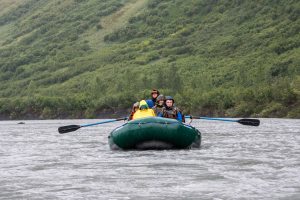
Running the rapids below the lake

Running the rapids below the lake

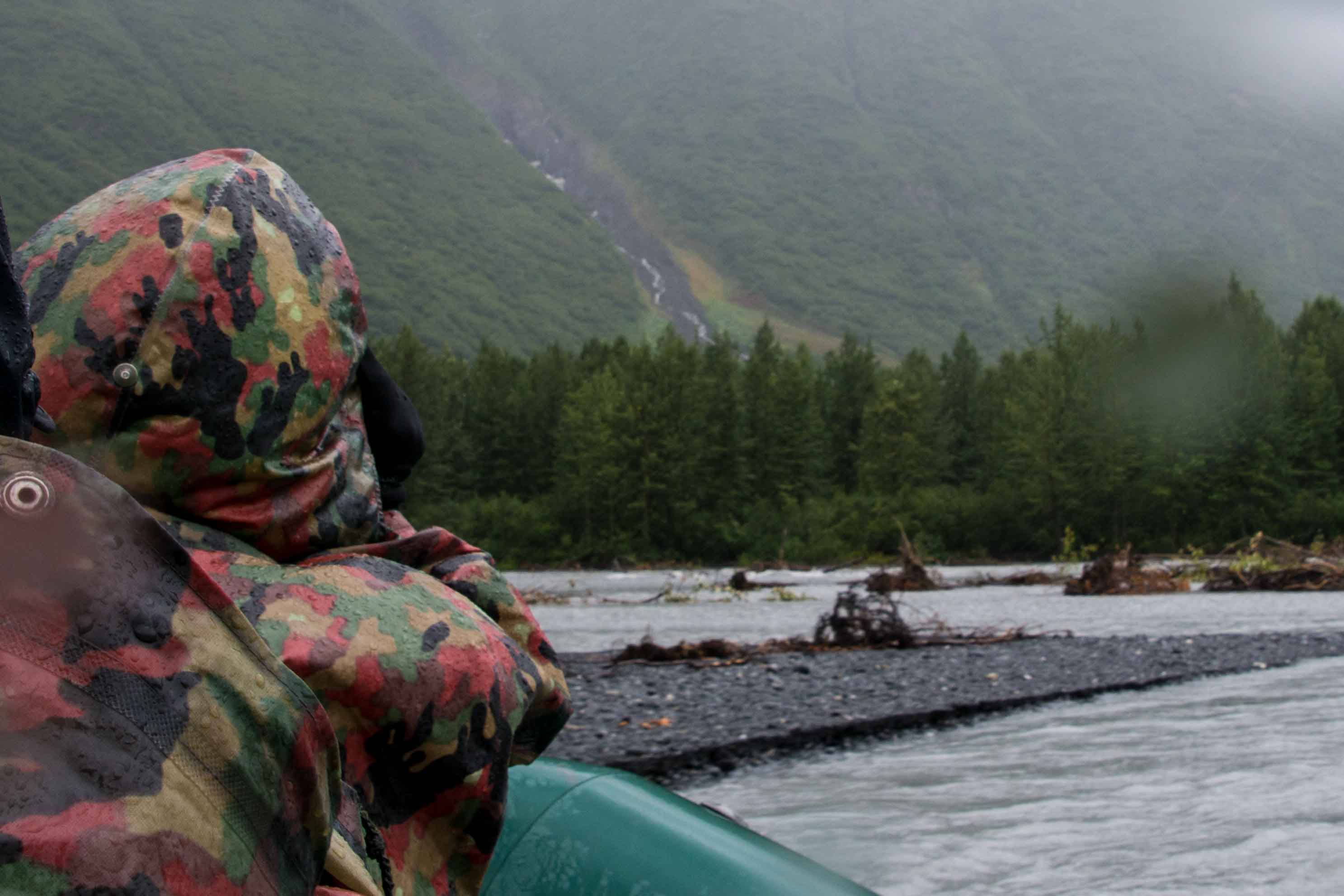
After about 45 minutes floating around among the icebergs, we ‘find’ the river mouth and float into it.  Almost immediately into this leg of the trip, we encounter mild rapids (class 2-, we were told).  This bounces u a bit, adding some excitement to the day.   The extra stimulation is a useful diversion, as the weather is worsening, the rain is getting more insistent, and the wind is picking up.  The dark clouds are back, and my feet are freezing.  I have the uncomfortable feeling that maybe I have water in my boots, although that turns out when I finally get to take them off, not to be the case.  The difficulty was simply that the rubber boots were very good conductors of heat away from my feet into the cold water collecting around the edges of the raft.   Just about this time, Gus announces that we have about another hour to go.  This didn’t make anyone particularly happy, but there is nothing to be done. Gus did a good job navigating us, as well as trying to describe what we were able to see around us, in part I think to help us keep our minds off the rain.  At a point down the river, we come upon a beaver dam on the left hand side. It is clear that the beaver is still manning it, as the part of the river to the left of the dam is about a foot higher than the part we were traveling through. Unfortunately we don’t see the beaver, although Gus assures us that others before us have.

Gus announces the half hour and fifteen minute marks, to increasing cheers as the rain is getting heavier and heavier.  We end up at a piece of shore which is very close to the railroad track (about 20 feet of shore separates water from track).
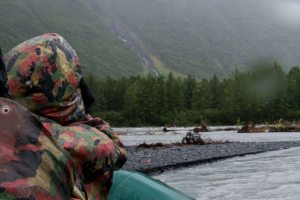
Falls coming down into the river.  Note also the number of trees in the water

Falls coming down into the river. Note also the number of trees in the water

There is no platform for the train, only a set of aluminum steps by the side of the track.  This whistle stop is not far from Portage where we got off.  On the shoreline, there is a set of purpose-built steps laid down to help people get off the rafts.  After each raft unloads, it is disassembled (the oars taken off and the aluminum and wood frame guide’s seat is detached), and the rafts are piled up on the side of the unloading area.  We await the train, which comes up along the track where we are standing around shortly after the last raft is unloaded, stopping at just the right point to allow us to get back on board.  The train takes us back to Portage, and from there, we got on a bus which in about an hour brought us back to the train station we had started from in Anchorage. Albert and Marlene are there waiting for us, and they bring us back to the hotel.  After we have a chance to change our clothes and warm up a bit, we all go out to Nova’s, a restaurant nearby where we get some exceptional Italian food, and a chance to celebrate the great adventures we have had.

We say our goodbyes at the hotel once we get back, and prepare to go back home.


9 August 2014: Home again

Gwen and I get up early, and after meeting Albert and the Sherman family downstairs in the hotel main room, make our way to the airport bus. The plane rides back are uneventful, although we get a bit of a scare when the plane from Dallas to Chicago is delayed due to storm activity in the area. We get back to Flint airport at 11:30 pm, but our bags have not accompanied us, so we have to deal with the paperwork necessary to have them tracked down.  Our driver is very kind about the delay, and we make it home shortly after 1:00 am.  Fortunately the bags do show up the next day, and so we are truly home and dry.

Leave a comment

Filed under Blog

Trip to Alaska — July-August 2014: Dog Sledding and Matanuska Glacier

5 August 2014 — A day of leisure and dog sledding

Blog-2

Mt McKinley over the Talkeetna River

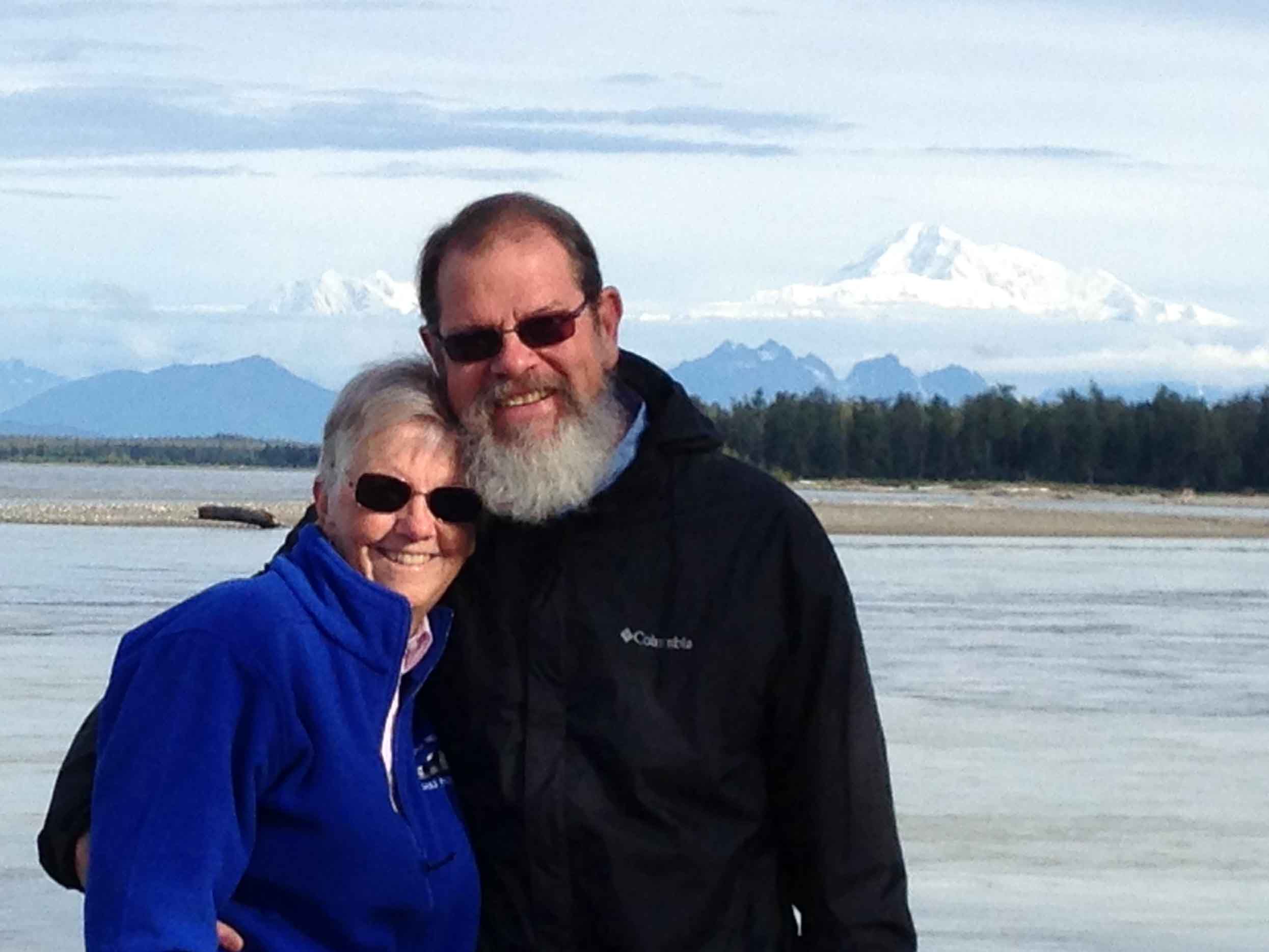
We got up late, got dressed and were just about to go out of our room to walk into town for breakfast when Marlene knocked on our door. They were looking for the mosquito netting to give to the Herren family for today. Yesterday’s adventure for us is this morning’s adventure for them, as Dennis only has enough ATVs for half our group at a time. Unfortunately we don’t have the nets, but Marlene offered to take us into town. The Herrens were already in the van, so we joined and Marlene drove us to Dennis’s ATV place to drop them off. She then took us through town to the Talkeetna River, where the view of Mt McKinley was bright and clear. What a sight! S he was kind enough to take our picture with the mountain in the background. She dropped us off at the Roadhouse, where they served pancakes larger than the plate, and we got the chance to taste not only the blueberry pancakes, but reindeer sausage as well. Excellent breakfast.
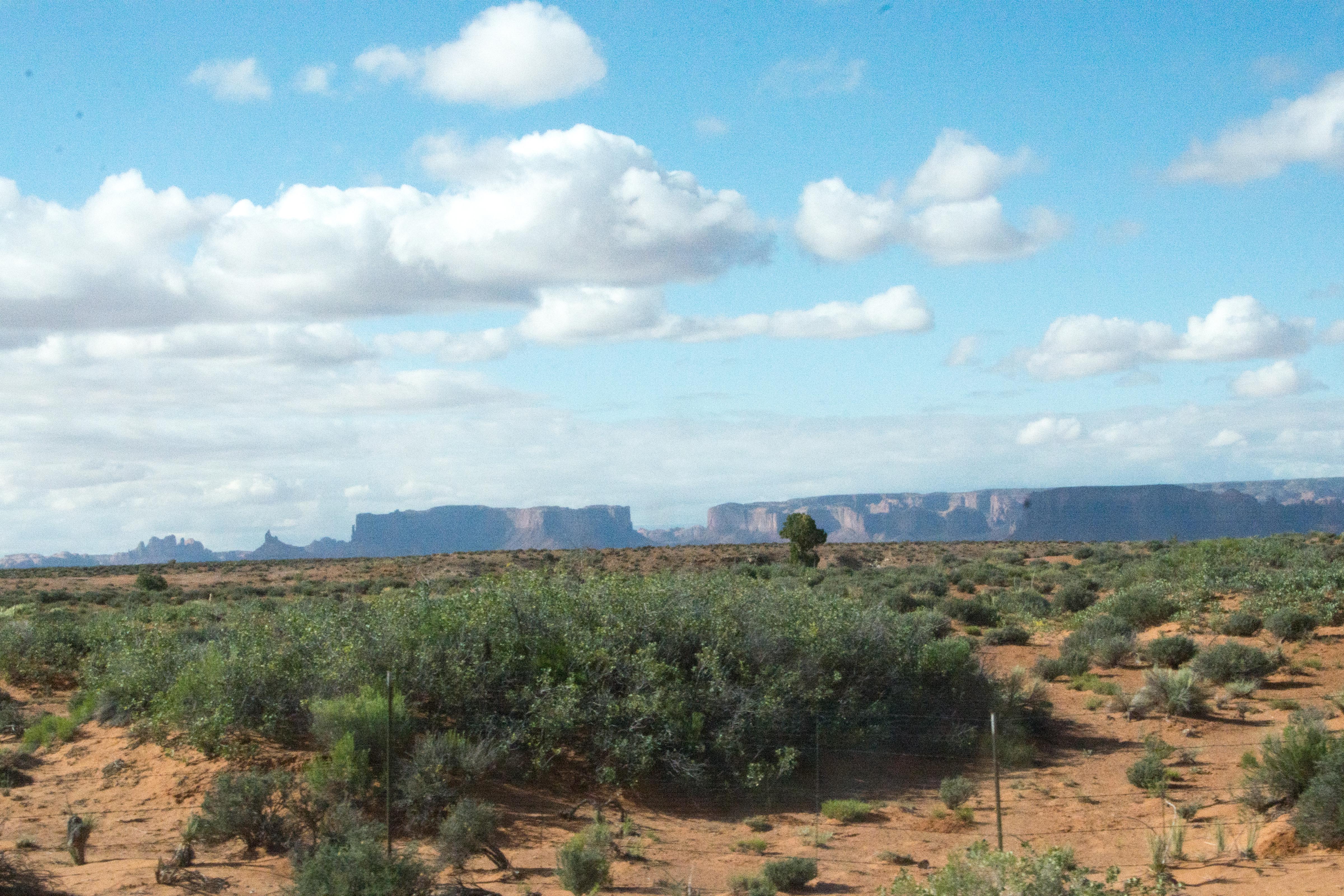
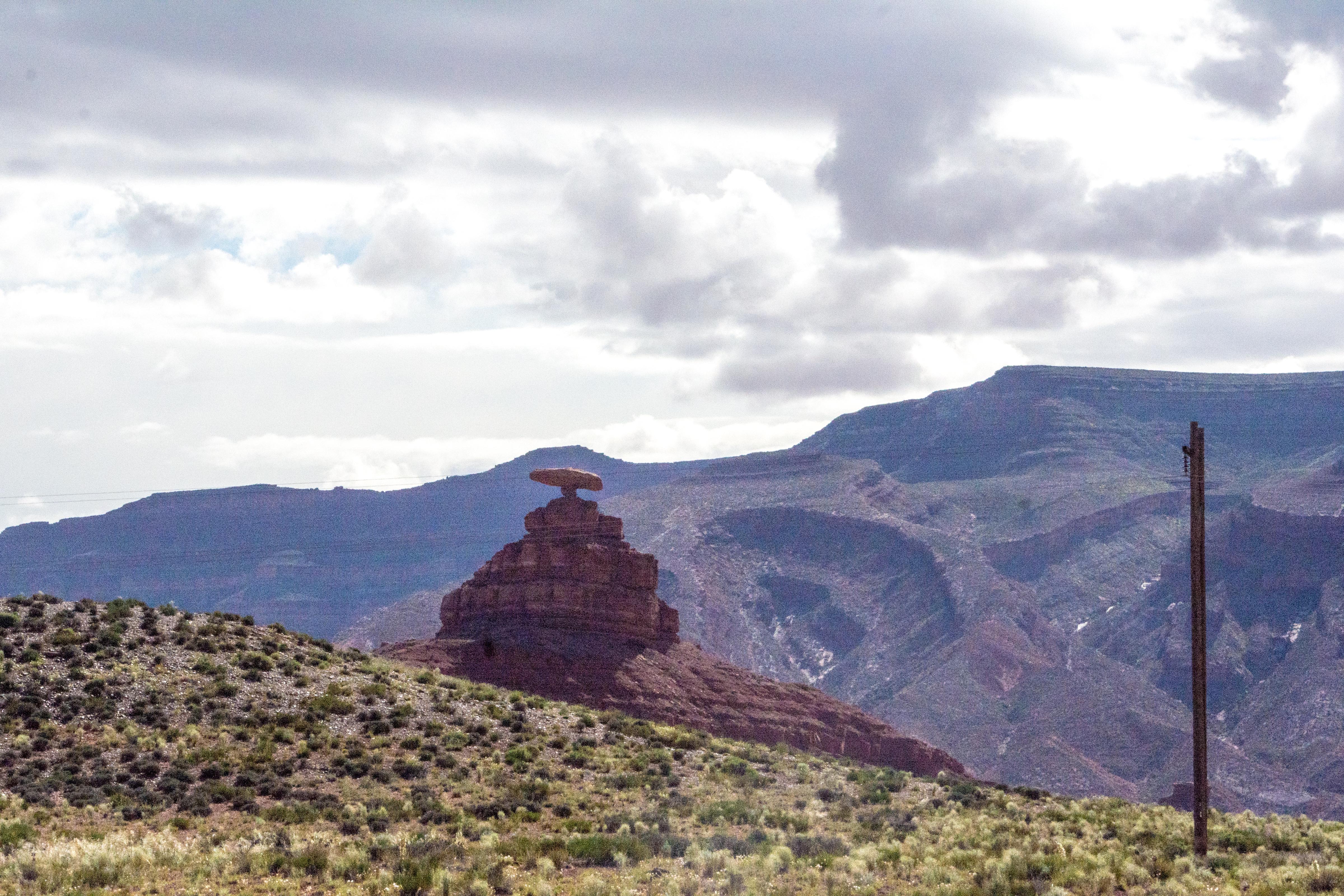
We walk back to our hotel, check out of our room by noon, and get picked up at 1:30 to go to the dog sledding place.

Blog-3966

The pack leader telling his partner what to do…

Blog-3977

Grabbing a dog or two to help solve a problem.

Blog-3957

Getting the dogs on the line

Blog-4015

Pulling the Quad

The dog sledding place: Dream a Dream Dog Farm (Willow, AK) is owned and operated by Vern Harper and a woman whose name I have forgotten. Linda, one of the folks who works there, gave us a good half an hour’s presentation on the Iditarod, the “how” of the run, the “dress” one needed to survive, and the details of Vern and the lady’s history with the various races that have been spawned off of the success of the Iditarod.  The race covers just over 1000 miles, running from Willow to Nome, in March of the year.  The race has a ceremonial start in Anchorage, and then the actual “for the money” start in Willow the next day.
The race traces its roots back to dog sled races for money in the early 1900’s and the famous 1925 “Great Race of Mercy”.  A diphtheria epidemic in Nome in early 1925 required antitoxin to be shipped from Seward, and as there were no other alternatives at the time, it had to be done by dog sled.  The serum was sent by train from Seward to Nenana, and then relayed by dog sled (using 20 mushers and over 100 dogs) over the remaining 674 miles, arriving five and a half days later on February 2, 1925.  In 1967, a 25-mile race to honor the early mushers and their dogs, and the Mercy run was successfully held near Anchorage.  In 1973, a much extended race, running along the Iditarod trail (originally marked out in 1908) was held, and has been run every year since, growing into the largest competitive sporting event in Alaska.  It has reawakened interest in mushing and in raising sled dogs, having spawned a number of other dog sled racing events.  It has more than succeeded in counterbalancing the decline in interest in dog sledding brought about by the advent of motorized skimobiles in the 1960s.

Blog-4064

As seen from the Quad — heading down the trail

Blog-4076

The water was pretty deep, but the dogs were able to keep pulling

Blog-4115

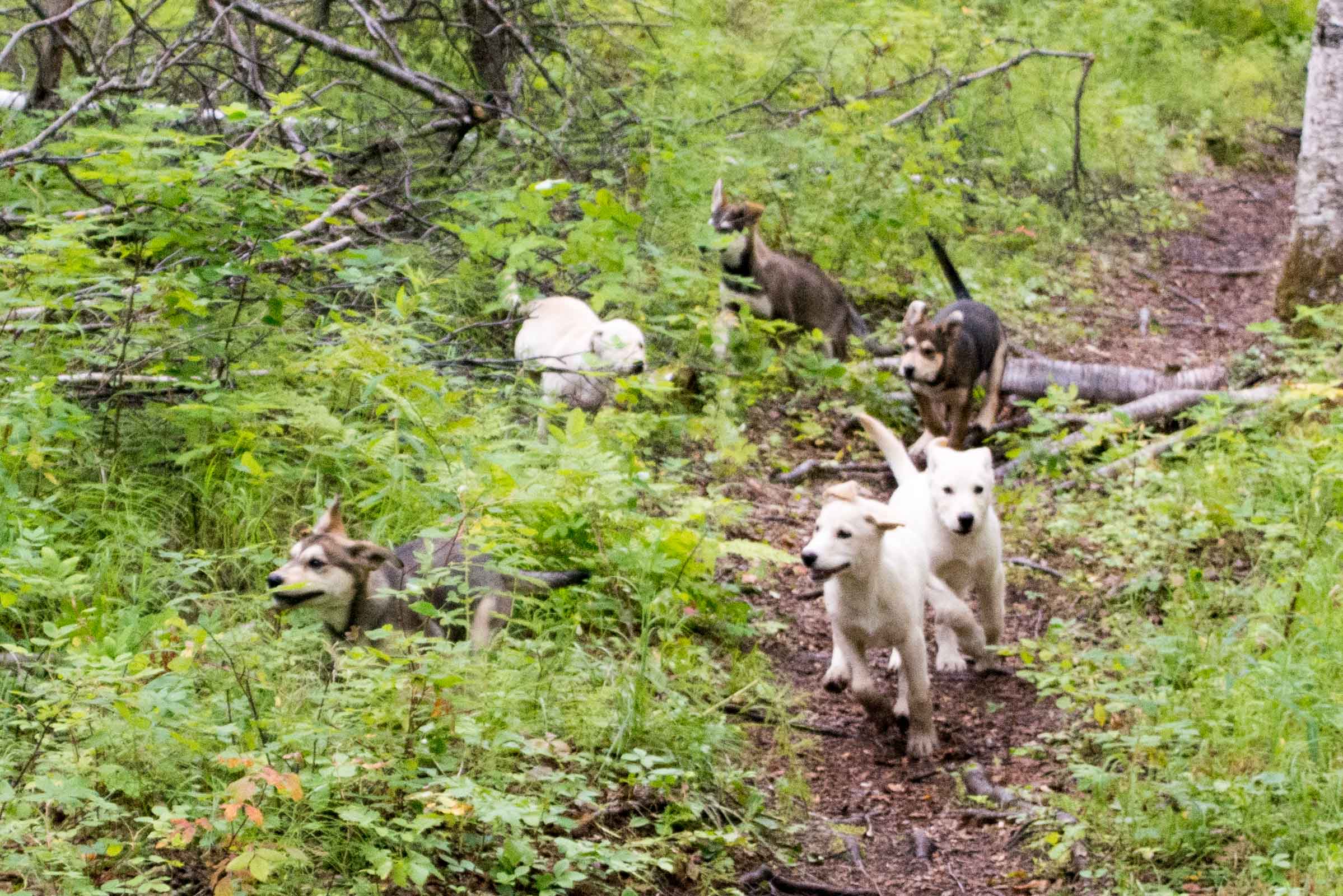
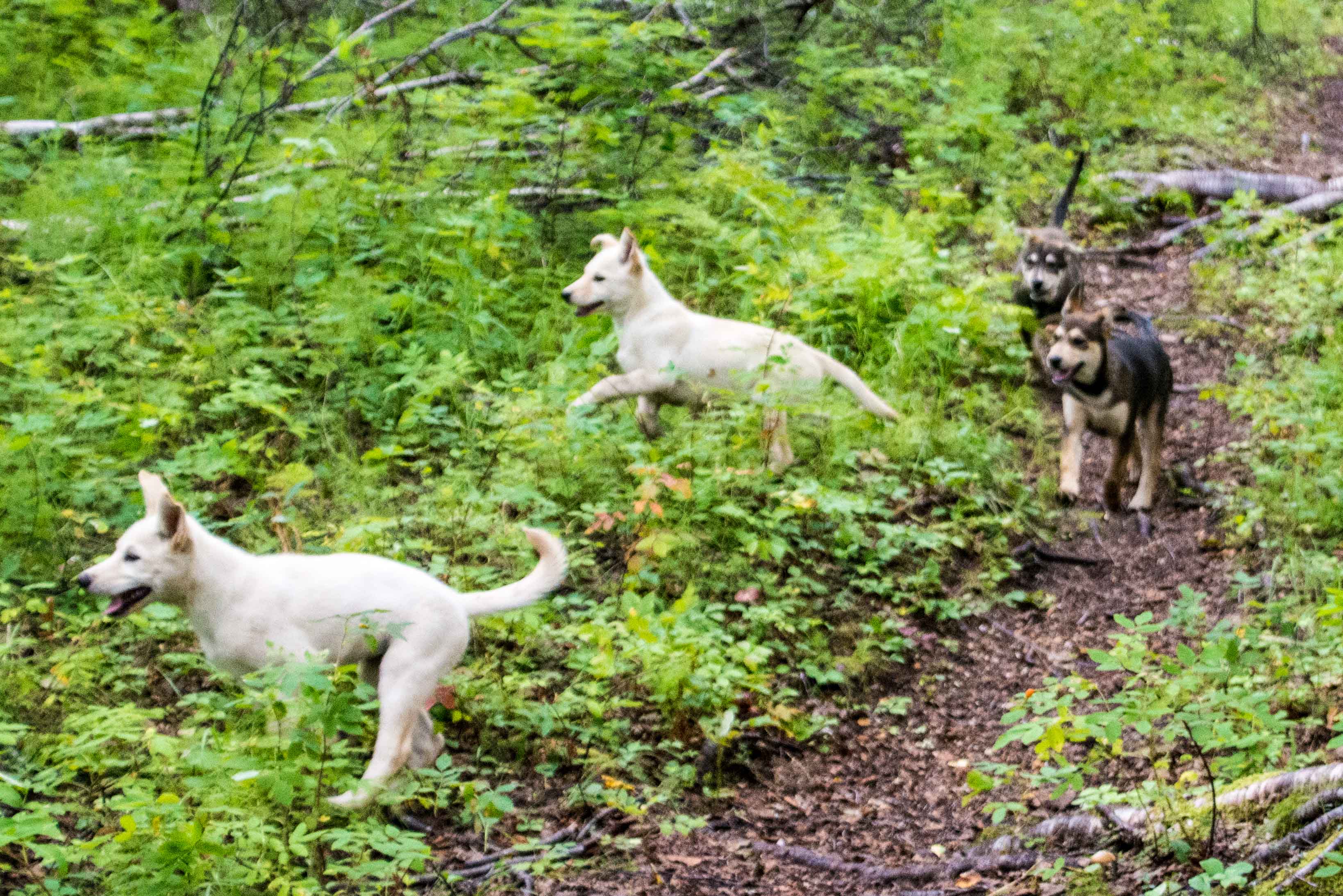
The puppies coming out of their enclosure

Blog-4133

Puppies in the woods

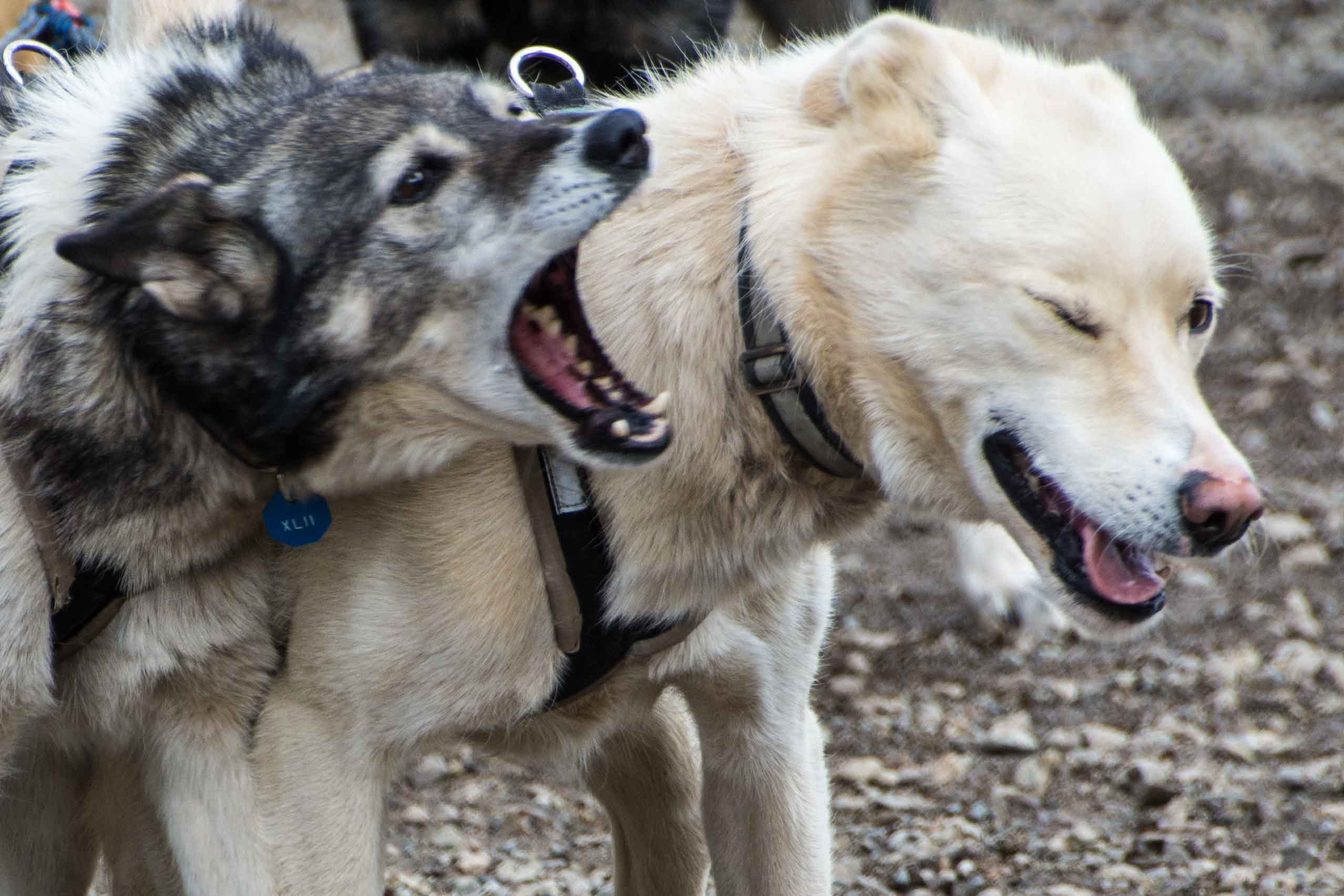
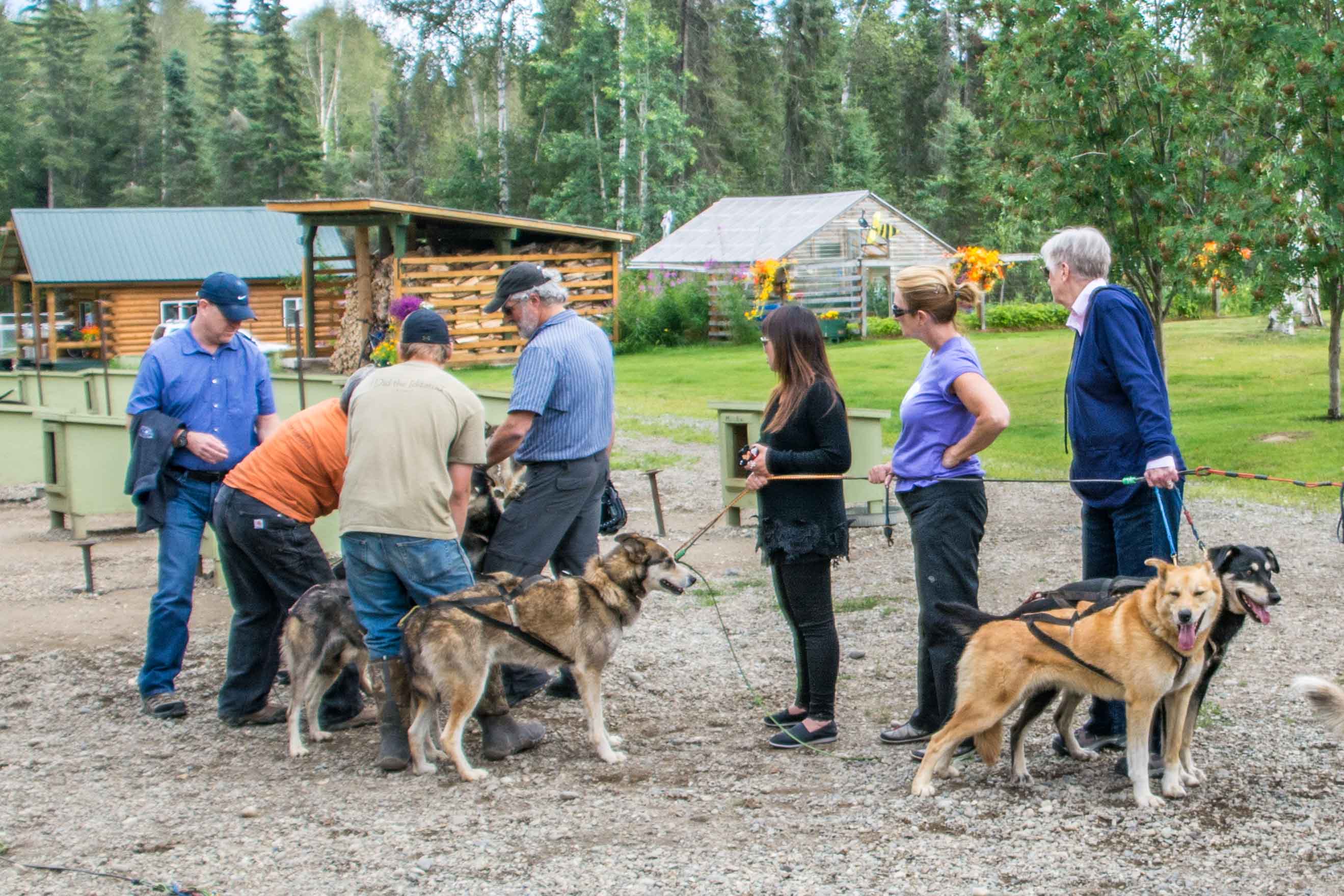
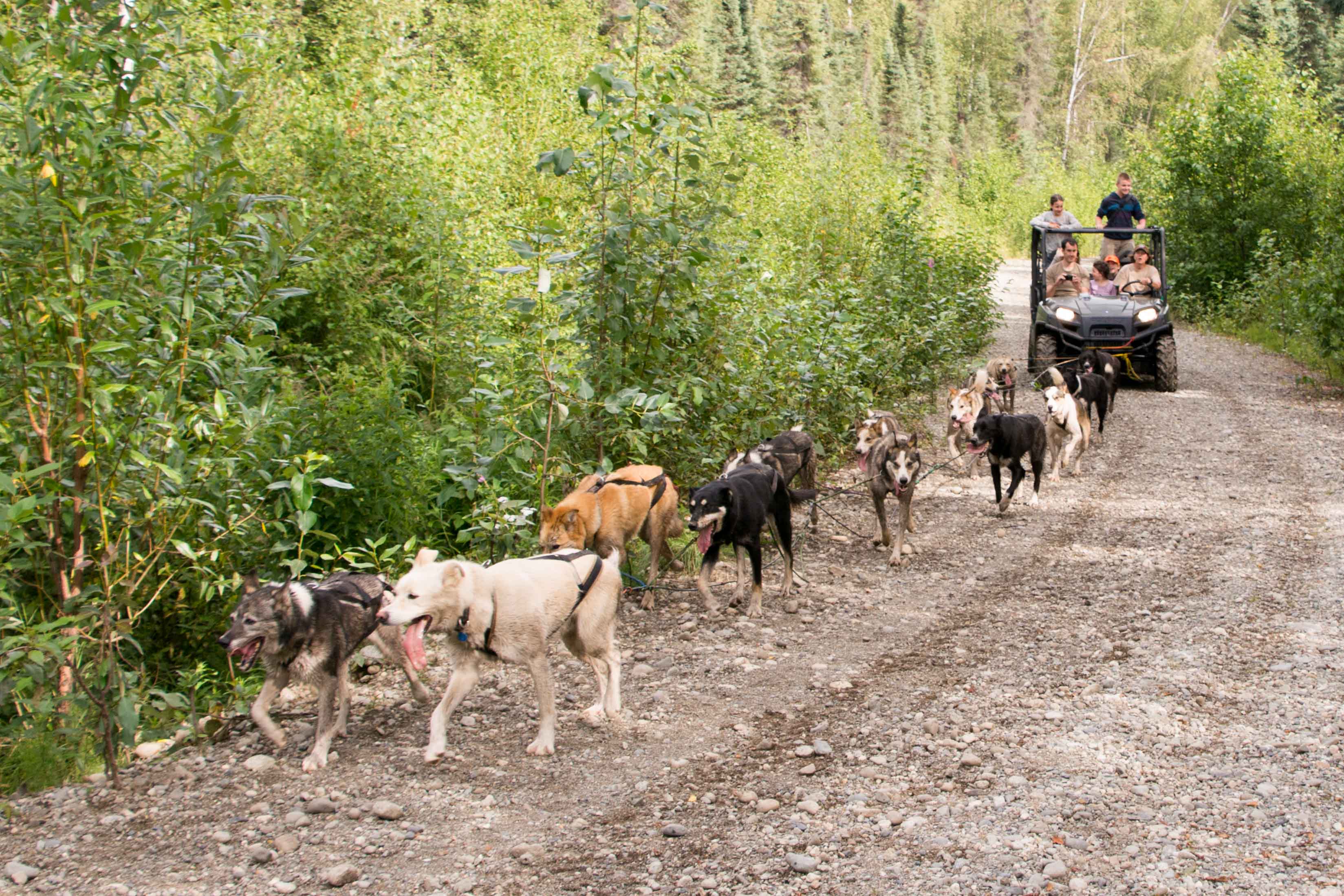
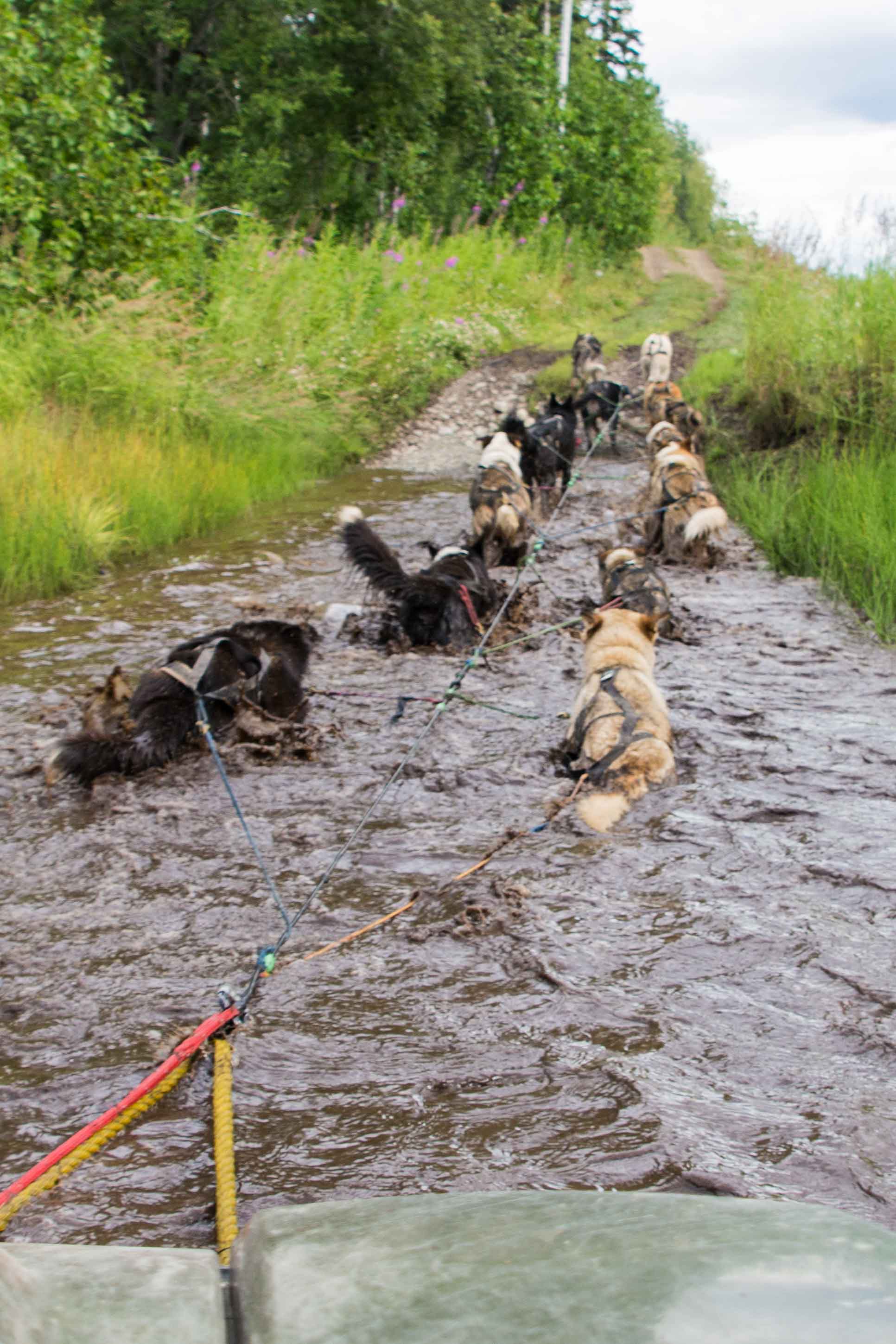
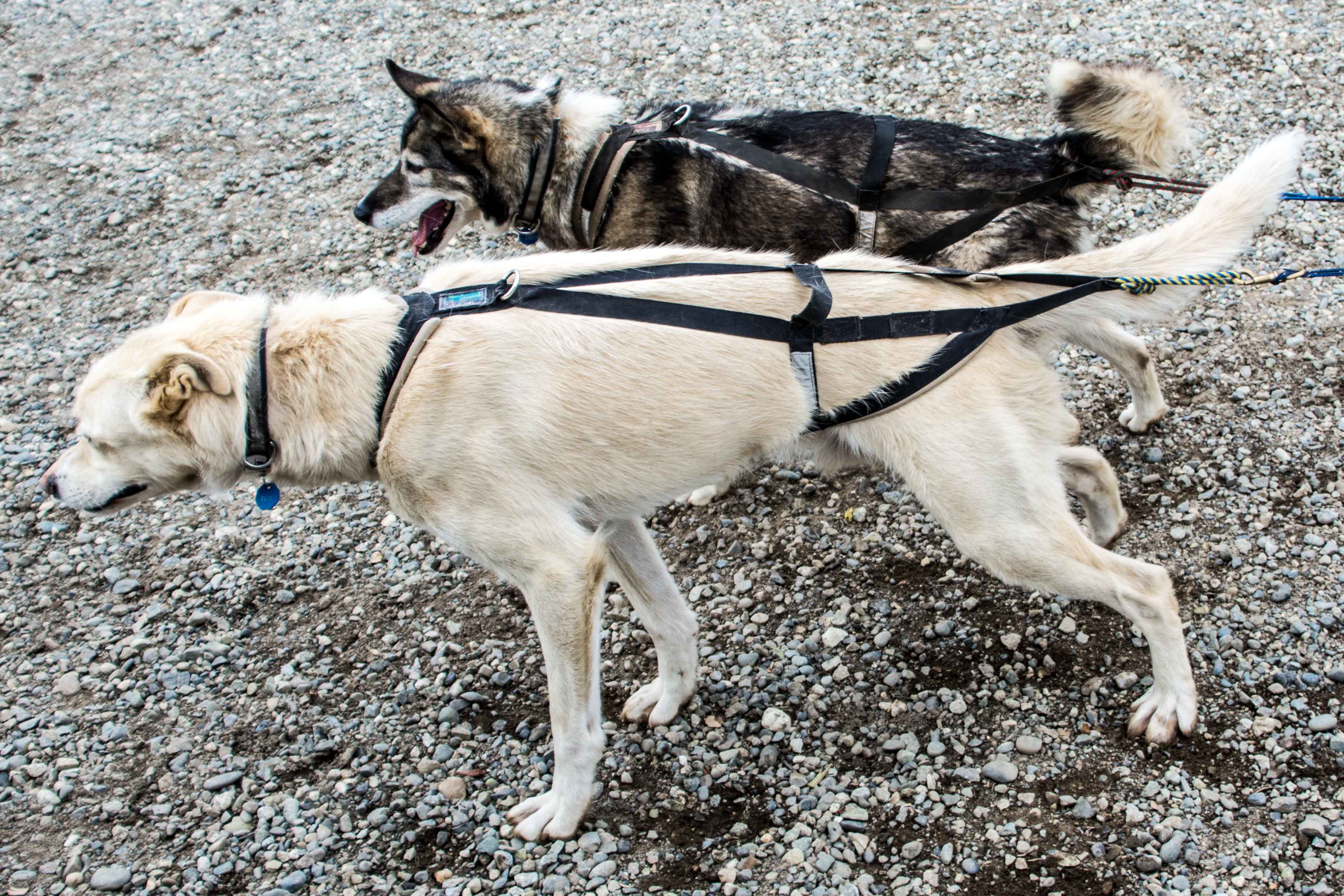
After her presentation, she took us out into the back yard where there were about 40 dog houses, 4 rows of 10 each, with dogs outside of most of them. They are very energetic, jumping around, and clearly they know they are going to be out pulling. Sure enough, out comes the line to which 16 of them would be attached, and they went nuts, tugging, barking, whining, baying, bumping into those near by, and in general making themselves known. Three of the people started moving the dogs they identify as the most energetic from the leads from their dog houses to the leads on the line.   There are two connections to the line, one at the collar, and one at the back of the pulling harness. Just as we were told, once they get hitched, their first instinct is to pull on the harness line. And pull they do.  About half of them are connected, and all of a sudden, one of the harness hitch lines to one of the dogs breaks. All hands are called to help (including ours) to restrain the dogs so that none of them get hurt. Once under control, the line is replaced, and the dogs are reselected to go onto the new line. Soon all is well, and there are 16 dogs connected to the line. Oh, yes, what is the line connected to?  As it is summer, and there is no snow, It is connected to a large motorized quad vehicle with enough seating space for 6 to 8 people to be pulled along.  The driver uses the engine to keep the line taut, thus giving the dogs exercise without overly straining them. The family Herren and Adam are the first riders. The rest of us ride in a van to the half-way point, where we traded places to get our chance to ride back to the kennel area.  The ride covered about two miles each way. The dogs were given two rests along the way, and on this particular path had several puddles (one deep enough to get water on the floor boards of the Quad) to navigate through.

Blog-3972

The dog leaders struggling to get going

Blog-4136

What’s over there?

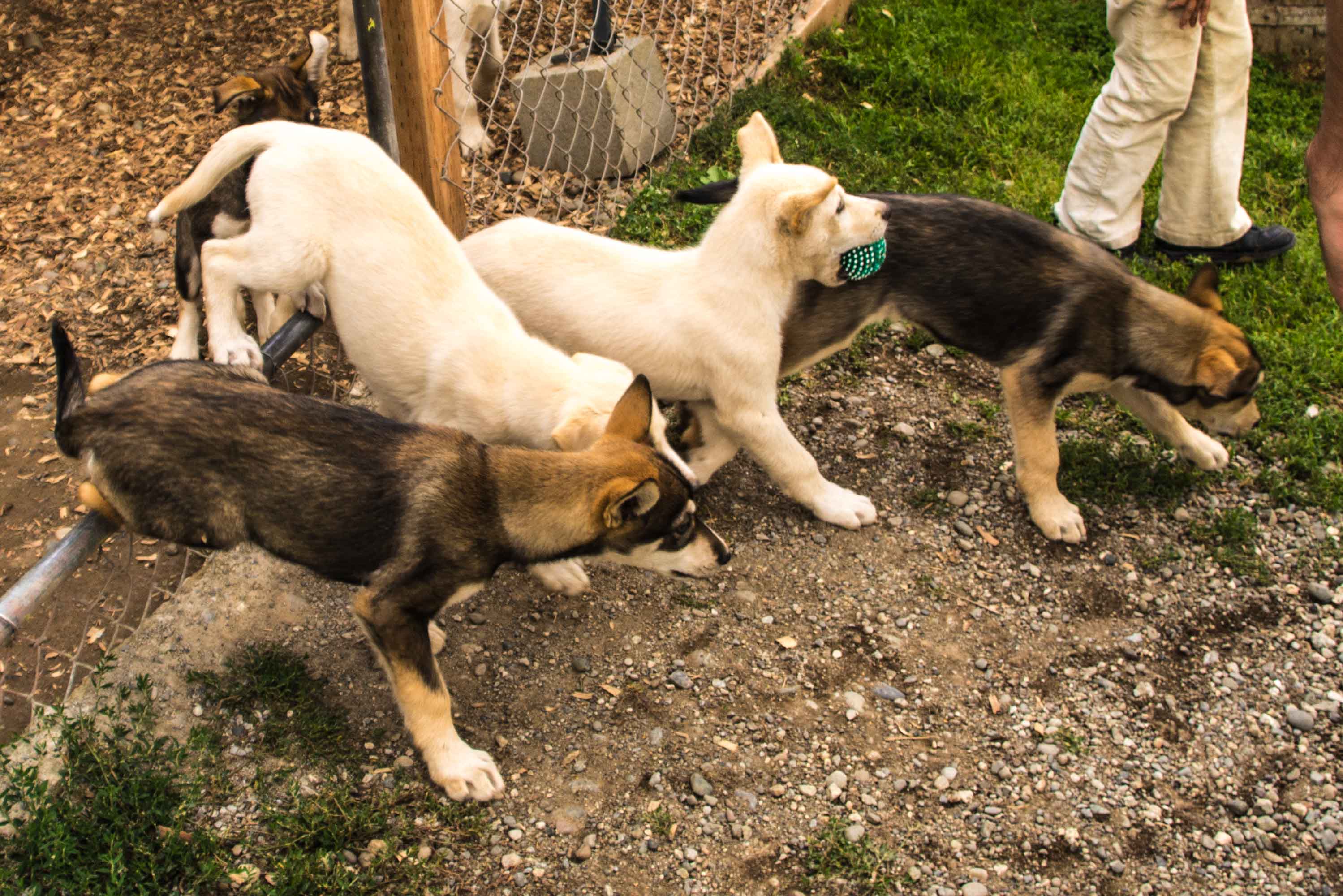
The dogs were great, and riding behind them was fantastic. After the dogs were unhitched, they were given a piece of frozen salmon to eat (a treat for them).  Two ‘retired’ dogs (ex-Iditarod runners who are now too old to compete) were given some as well, and I think the rest of the dogs eventually got something, but I may be wrong. Anyway, we then wandered down to see the puppies. Linda unlocked the gate and let them out to take them on a walk through the woods nearby. We walked along behind, and although the dogs ran into the woods, out again, and back in again, we kept going down a path that eventually wrapped around and came back to the kennel yard. It was especially fun as the older Herren daughter (Chinena, aged 10) was practicing her English with Gwen, who was practicing her German back to her. All and all a good time was had by all.

We got back to the hotel and had dinner at the Bistro, a version of Starbucks within the hotel. Not the best, but close by…


6 August 2014 — A walk on a glacier

Blog-4162

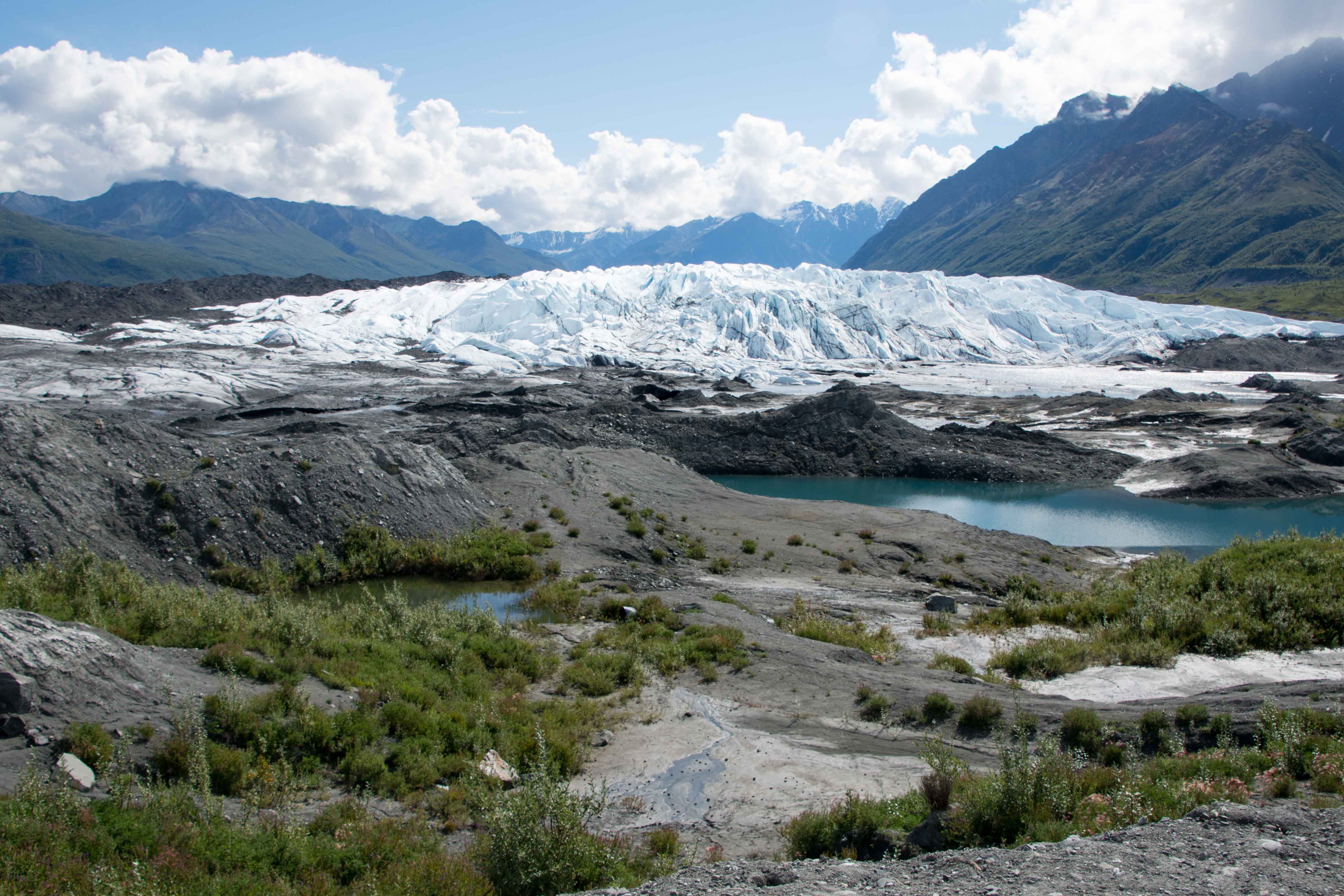
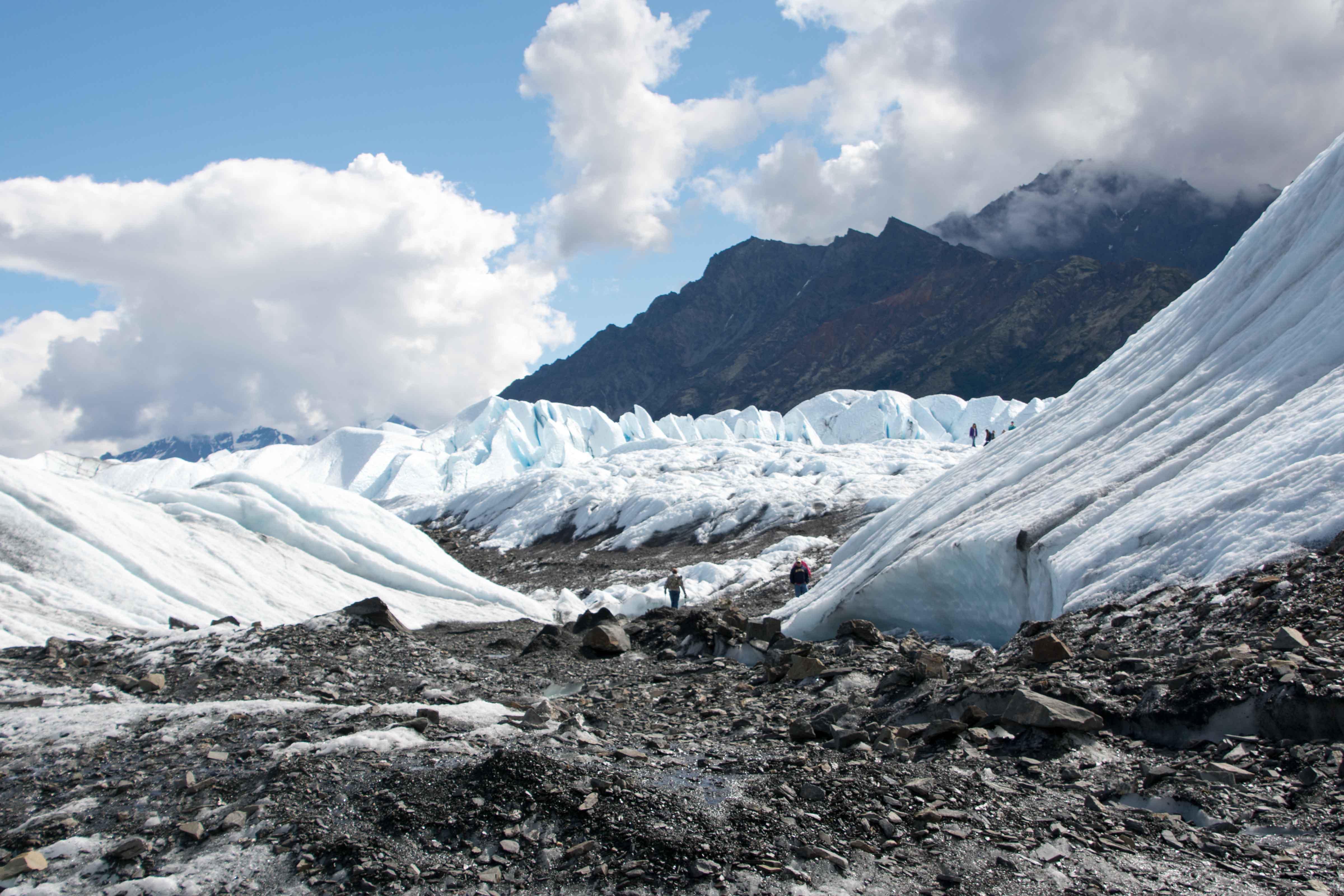
Matanuska Glacier is in the background

Blog-4173

The glacier from the parking lot

Blog-4193

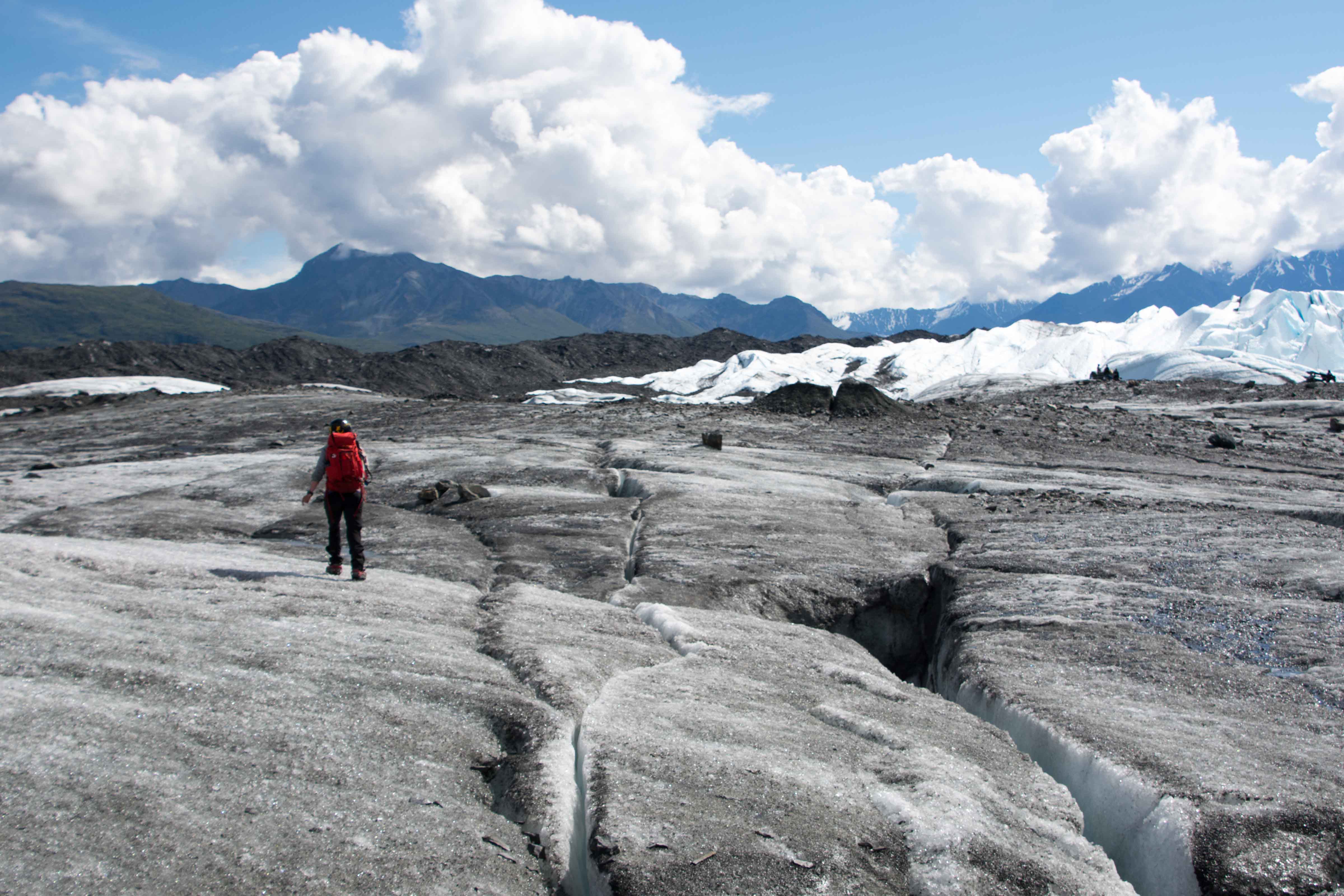
The glacier has numerous grooves carved by running water

Blog-4291

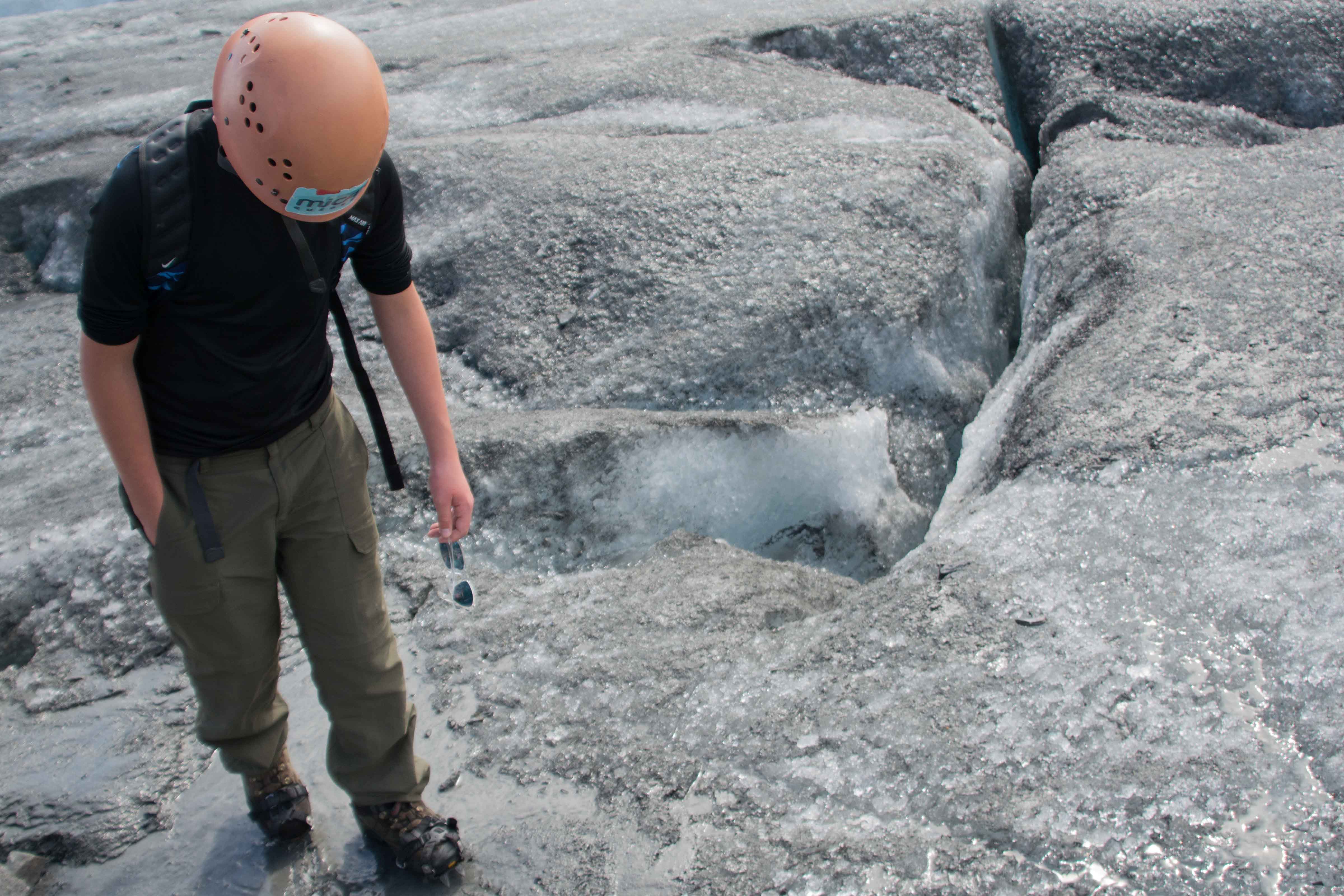
Careful not to step into the water tracks, they may be deeper and wider than you suspect…

Blog-4244

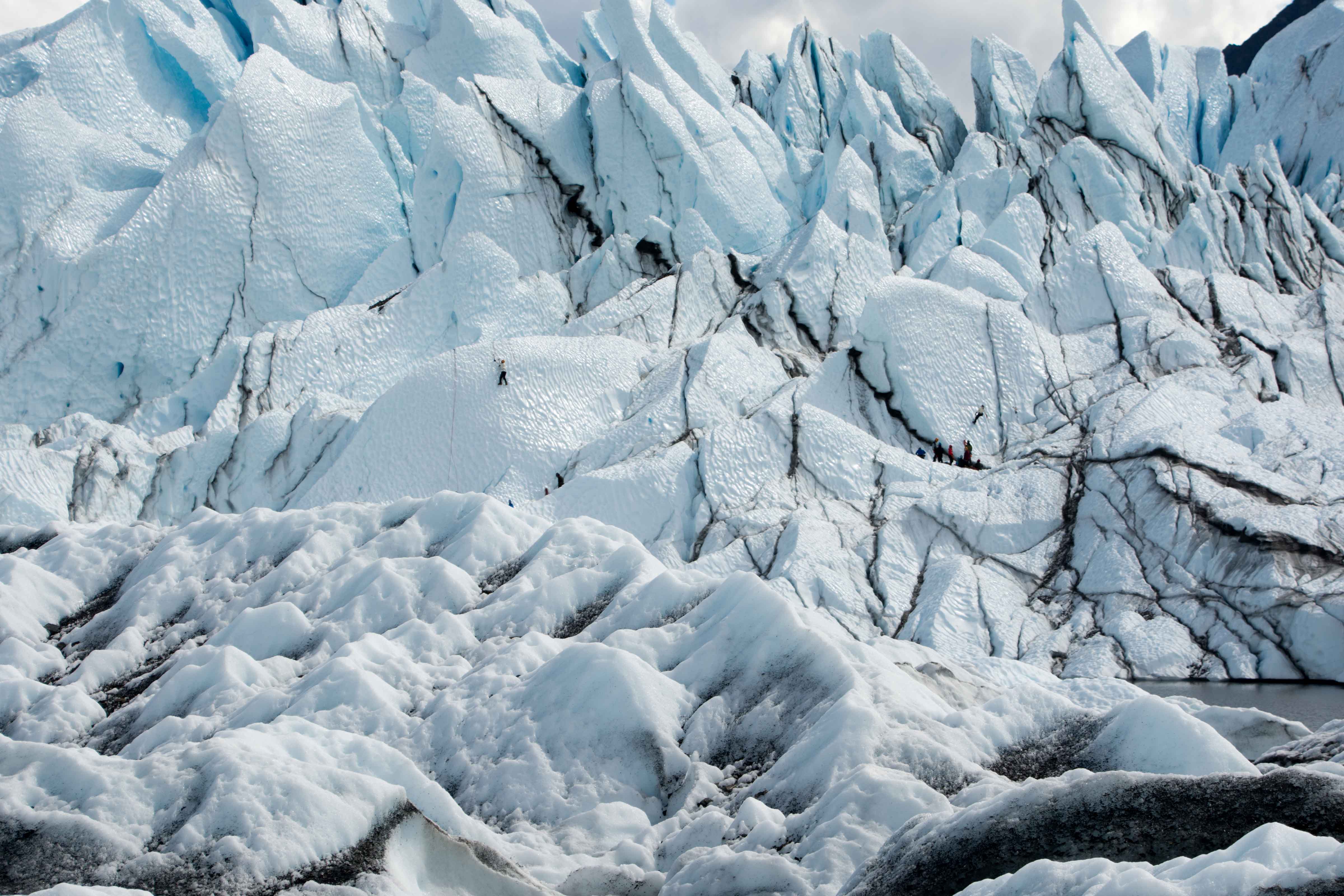
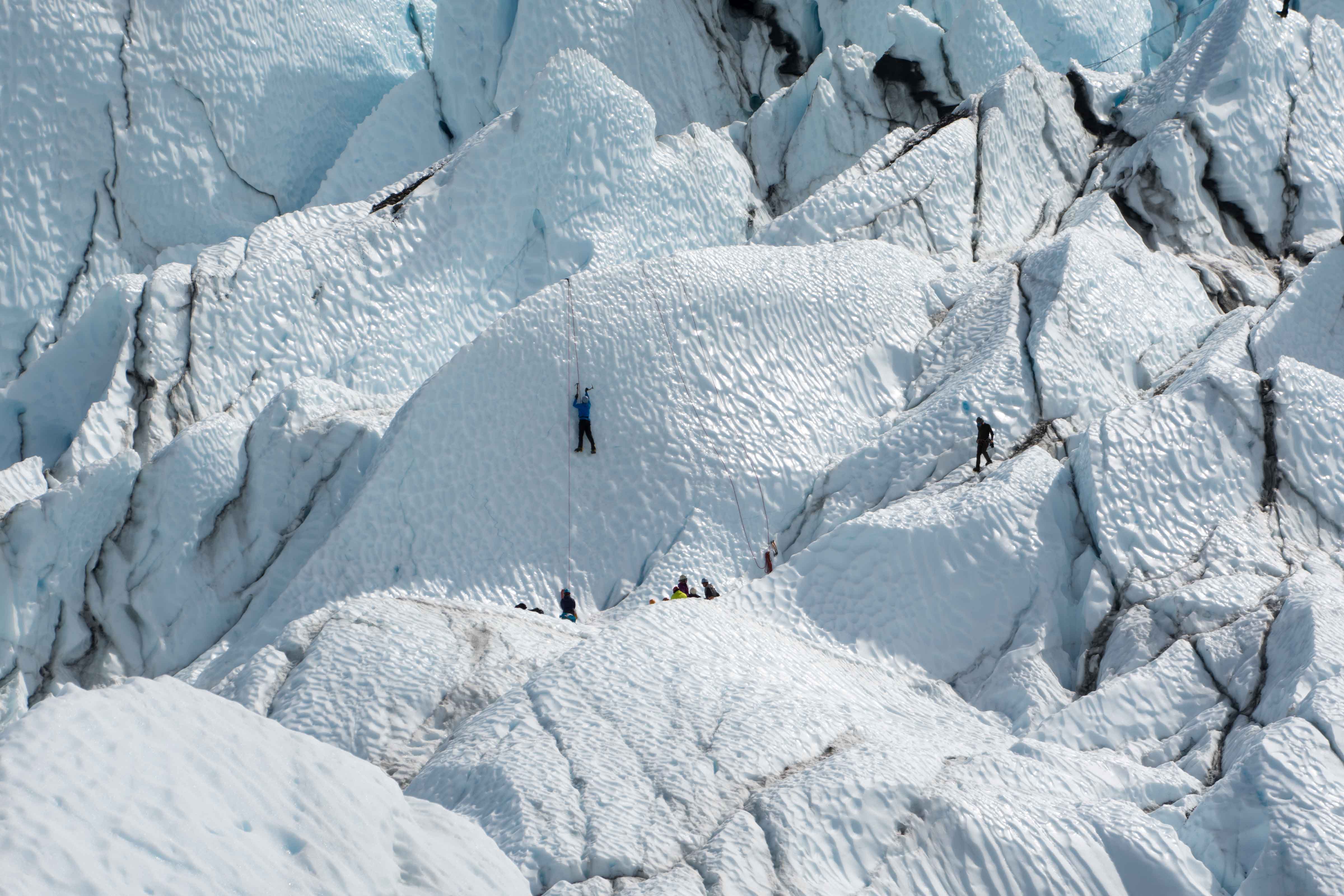
View of the face of the glacier. See the climbers near the center?

Blog-4265

Here’s a closer look…

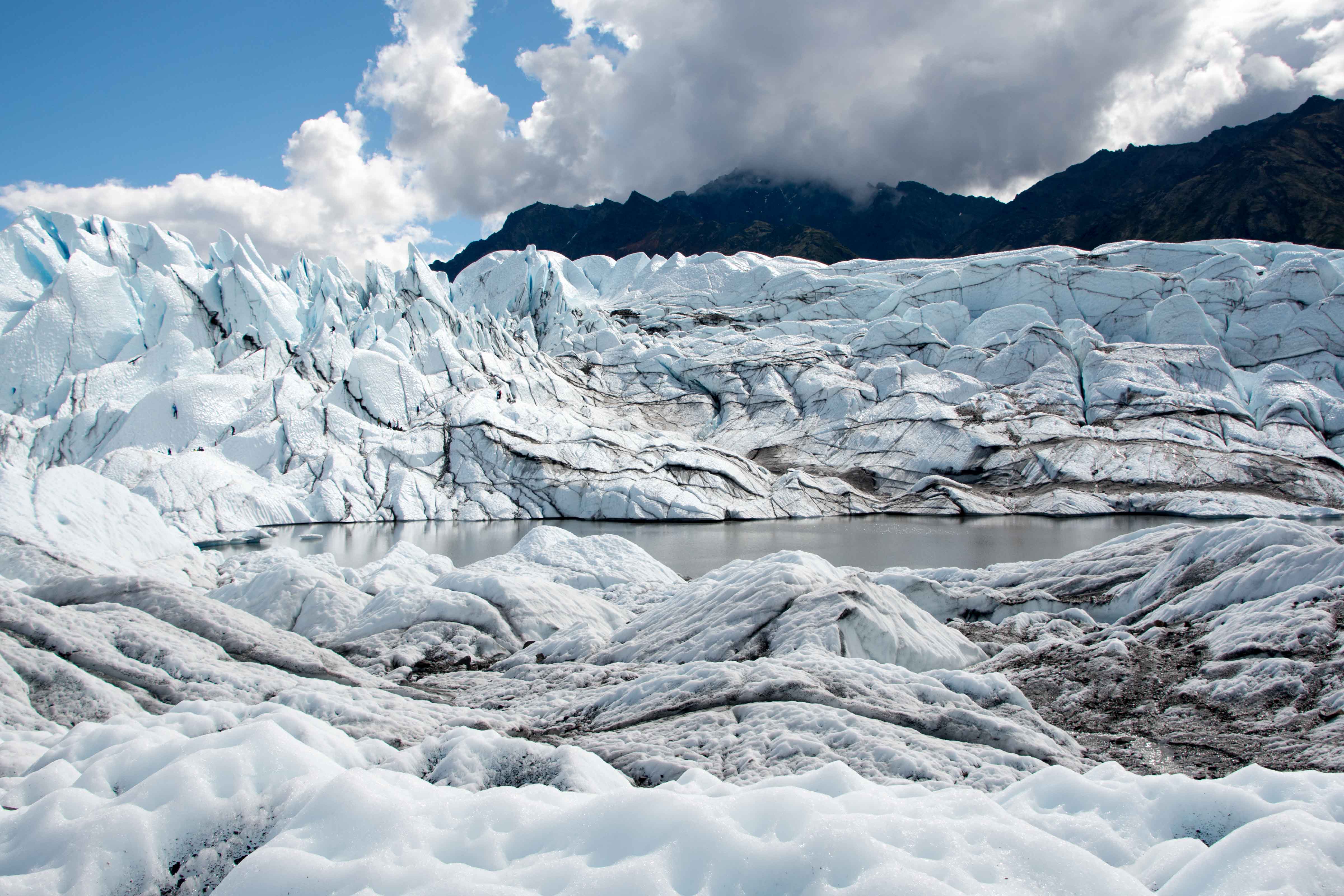
Today we started out at 9:00 am on a two hour van trip to the Matanuska Glacier. The glacier is 4 miles across the front, and 27 miles long. We have a very kind guide, Abbie, who leads us through the process of getting our crampons for our shoes, and a check to be sure our bags had the right stuff in them.  The glacier trek was fun — walking with crampons was not as hard as it seemed, and with the crampons, it was easy to keep from slipping on the ice. The ice was intermixed with dirt and rocks of every size from small pebbles to large boulders. Melt water ran in groves created as the glacier melted, creating lines and crevices in geometric patterns. The ice when the sun shown in the right places came out the blue color we had seen on the other glaciers we had seen. There were several other parties out on the ice. Two guys were on an easy slope practicing climbing, while in another area there were people practicing more difficult maneuvers. It was fun. Abbie was very helpful, pointing out the aspects we didn’t know about before, and helping set the path for us so we didn’t have difficulties.

Blog-4286

A look back as we were leaving the walking area

Blog-4266

Glacier lake with the mountains behind

We had a late lunch at the Long Rifle Lodge next door to the glacier walk area. It provided great views of the glacier, and as it used to be a hunting lodge, had lots of stuffed animals inside to help set the atmosphere.

Tomorrow is an opportunity to explore Anchorage — we’re going to the air museum and the animal conservatory.

Leave a comment

Filed under Blog

Trip to Alaska — July-August 2014: Talkeetna back-country

4 August 2014 — ATVs and Back Country living

Blog-3761

Off on the 4X4’s

Bloga-3764

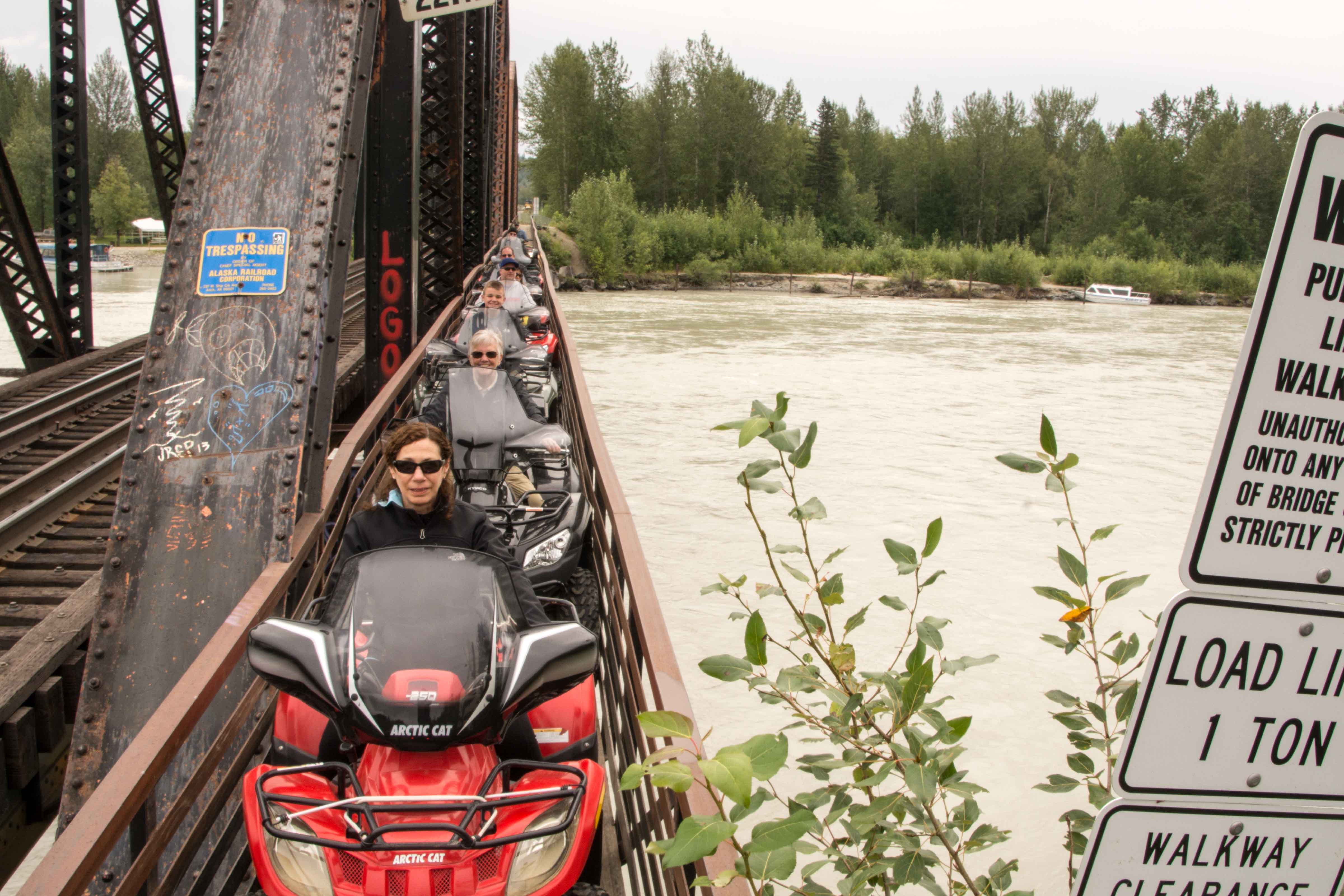
The railroad bridge across the Talkeetna River has a separate path just wide enough for the quads

Today’s activity was to get on ATVs and drive ourselves back into the (close by) back country with Dennis. The first step was learning how to drive the ATVs, as most of us (including me) had never driven one before. Dennis was patient and a good guide in our learning, and soon we were all riding along the side of the road, and where possible off the main roads. We learned a bit of the history of Talkeetna from him, and shortly were headed down a strictly ATV trail that ran along the railroad tracks. Two bridges were our most challenging parts, as the ATVs were as wide as the area on the bridge beside the railroad tracks fenced off for us to use. Keeping going in a straight line was harder than I thought it would be as it was hard to keep the tires from rubbing on the rails that marked the borders of our path. But after the bridges, the path was wide enough for two ATVs to pass each other going along, so there was plenty of room. The road was very much like the dirt part of Bridge Lake Rd in Clarkston, with potholes and occasional washboarding all along it. It was fun to ride the quads. If you let the person ahead of you get a fair distance away, you could gun the engine and get up to 35 mph to catch up. For the washboard parts, it was easy to stand up on the foot boards and use your legs as shock absorbers.

Blog-3796

Dennis’s family’s original homestead

Blog-3787

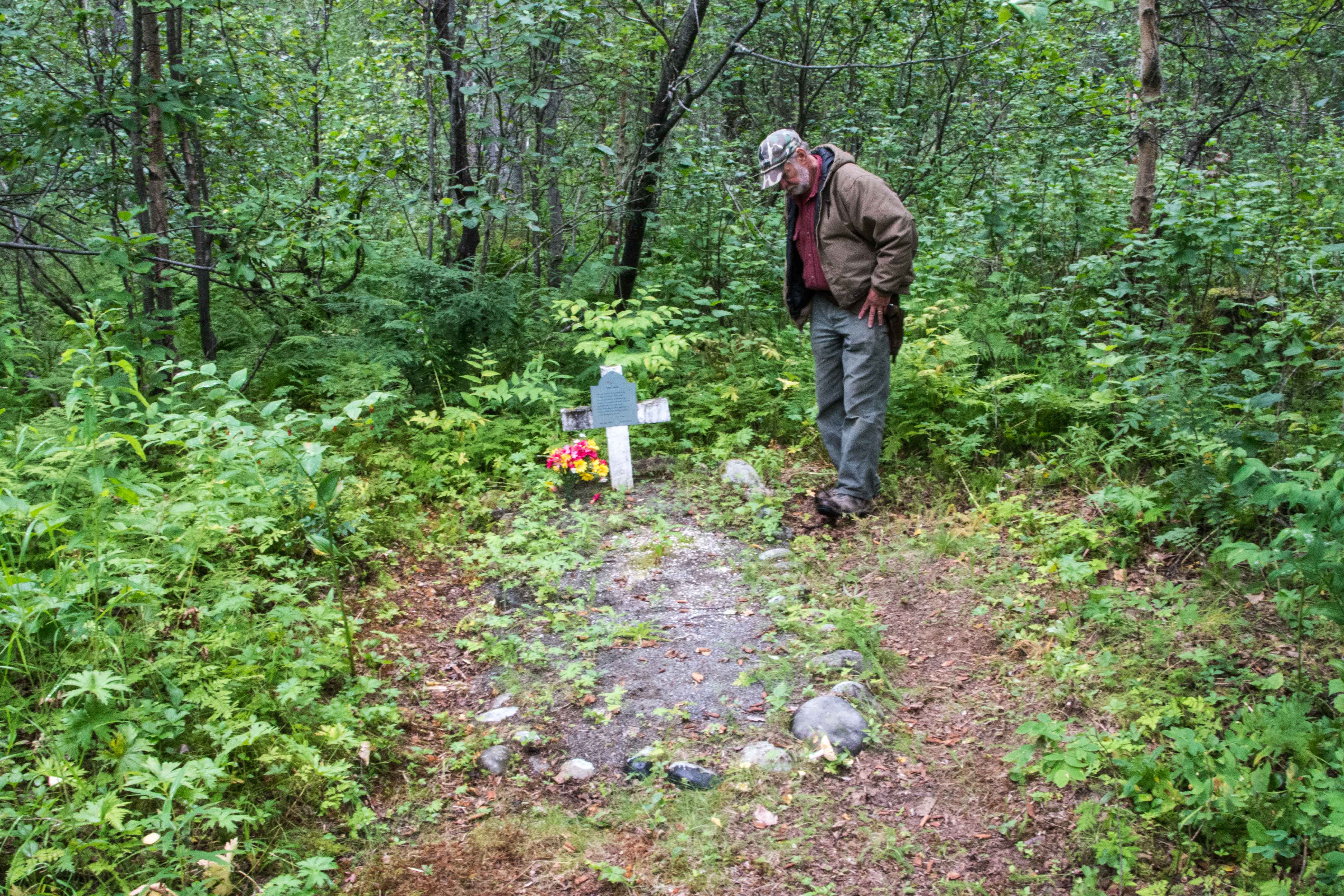
Dennis and his father’s grave

Blog-3791

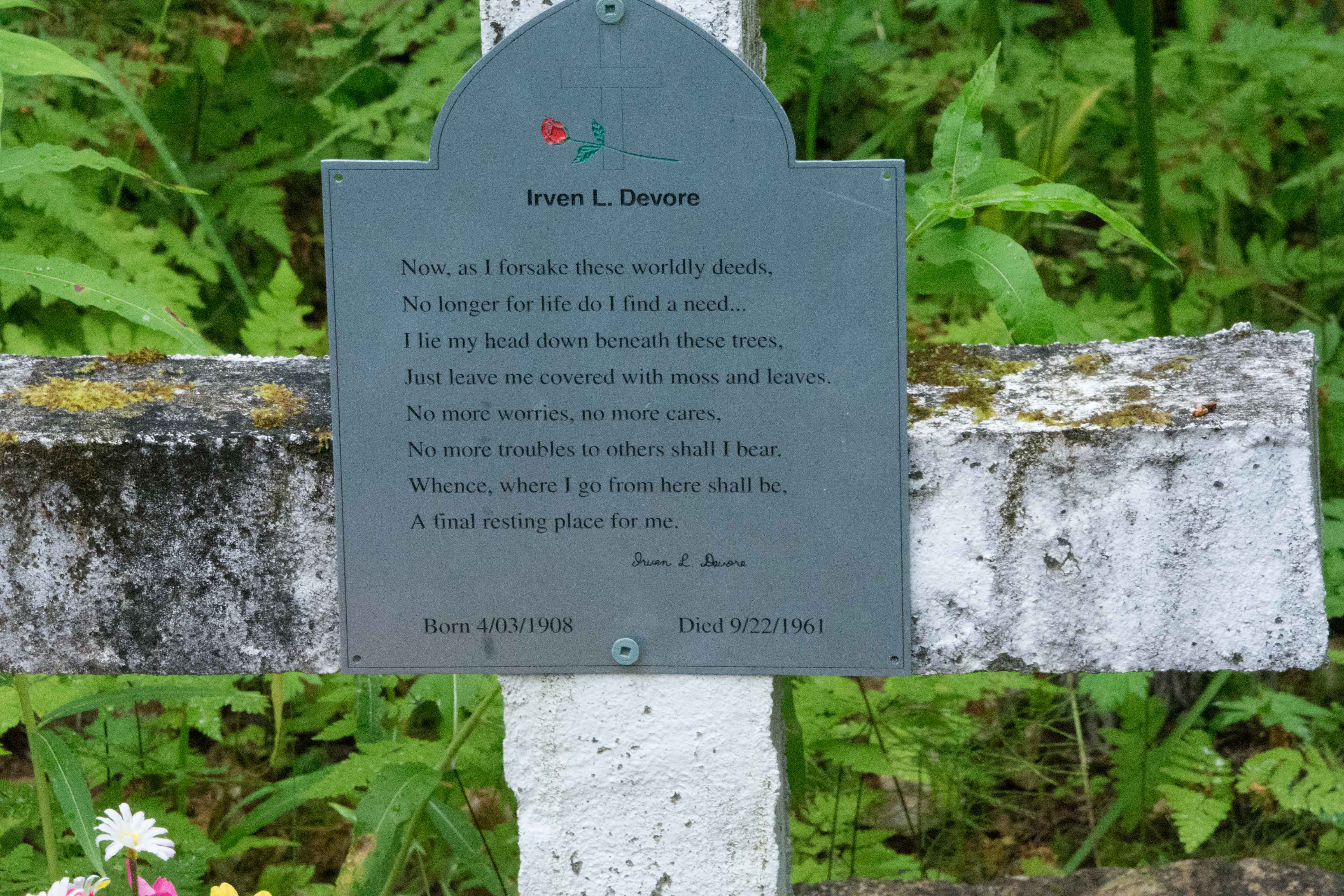
The poem his father wrote as his epitaph

Our first stop was the old homestead, where Dennis’s father and mother brought their family (he and his 3 brothers and a sister) to live when they first came to Alaska. It was 1959, and they came from Detroit where the jobs had gotten scarce with a group of families.  Alaska was just coming to the end of its land-grant days, where if you staked out an area (of as much as 160 acres), farmed it for three years, and built you home on it, the state would grant you title to it.  A group of Dennis’s family friends banded together for the trip, a modern version of nineteenth century wagon trains. It took them three months moving slowly as breakdowns, arguments concerning which way to go, and health issues interfered.  Dennis’s family lived in a camper sitting on the back of a pick-up truck, which made for very crowded conditions.  When they got to the Talkeetna area, Dennis’s family marked off their land (160 acres bordering the railroad track) and started the process of homesteading. They cleared some land, started to build a log cabin, and planted barley. The crop didn’t take, but they were able to find work in the town and surrounding homesteads, and thus got enough money to get the materials to finish the cabin. The homestead now has the old pick-up based camper and the remains of the cabin itself.  It is falling in on itself, but the highlight of the site is the grave of his father 100 yards off away in the woods.  His father was a poet (like Gwen’s father), and he wrote his own epitaph.  We spent a few minutes cleaning the weeds off of the grave in remembrance.

Blog-3804

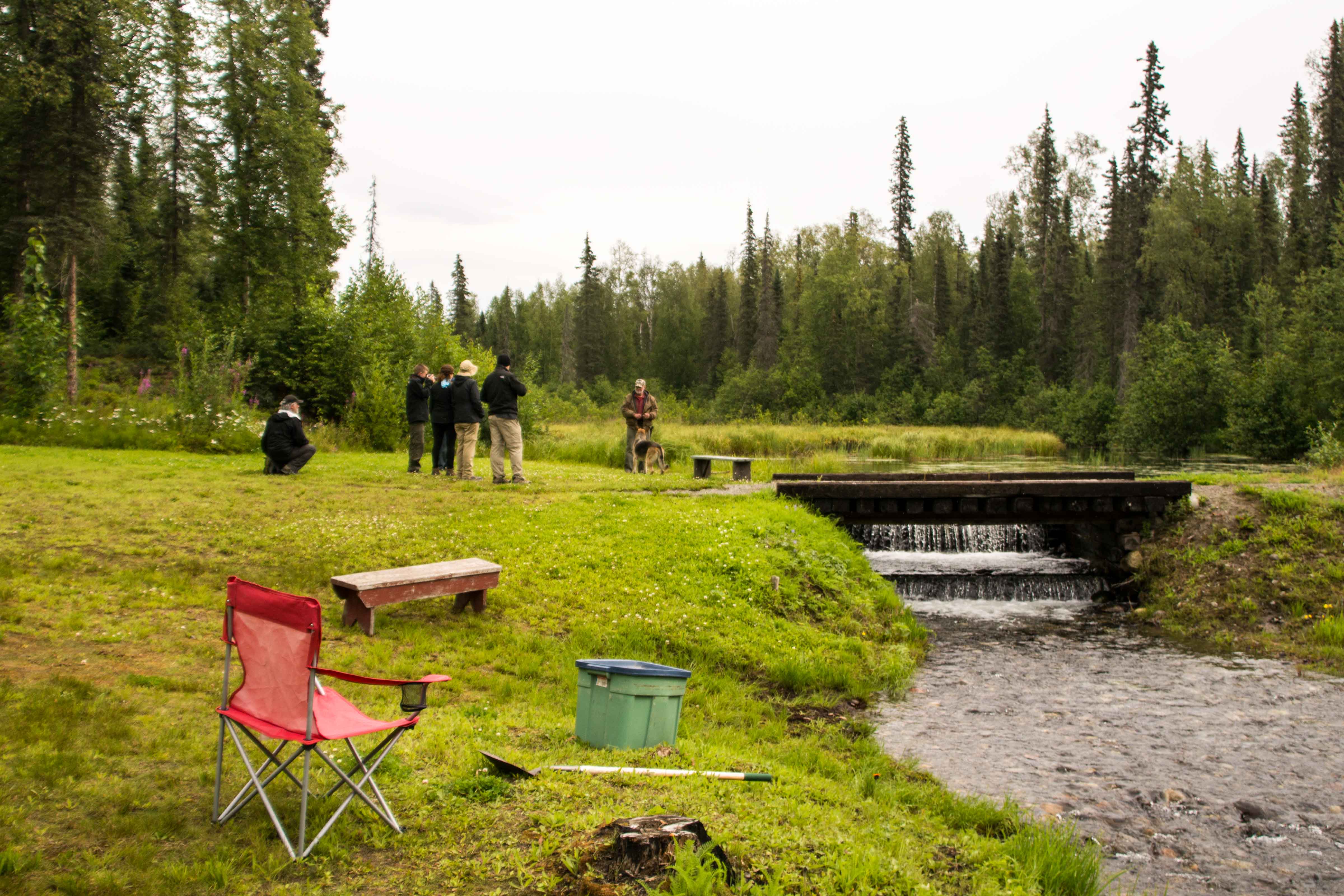
The stream at the bottom of the lot he currently homesteads has a falls fed by a pond

Blog-3829

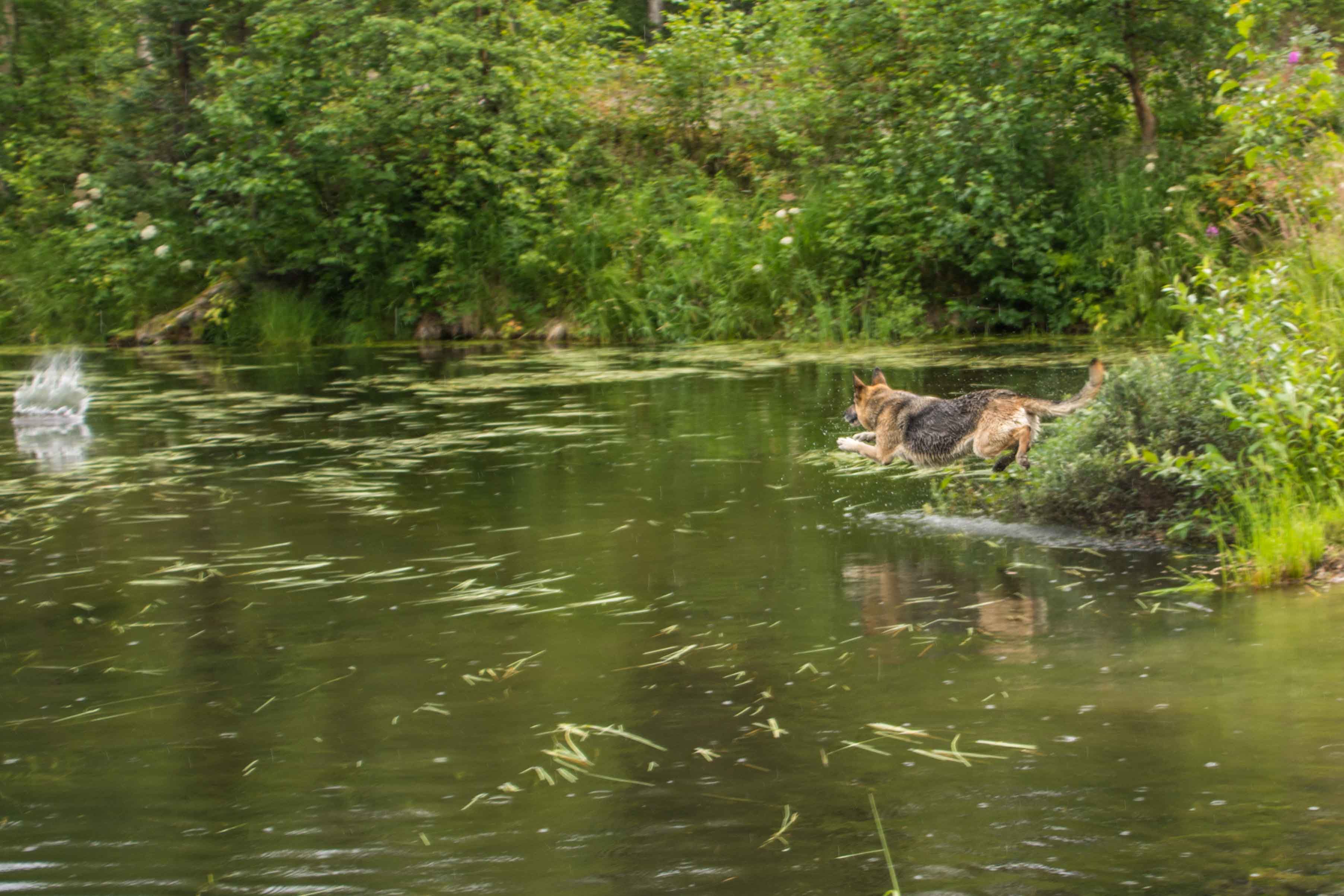
The pond gives Chena plenty of opportunity for exercise

Blog-3839

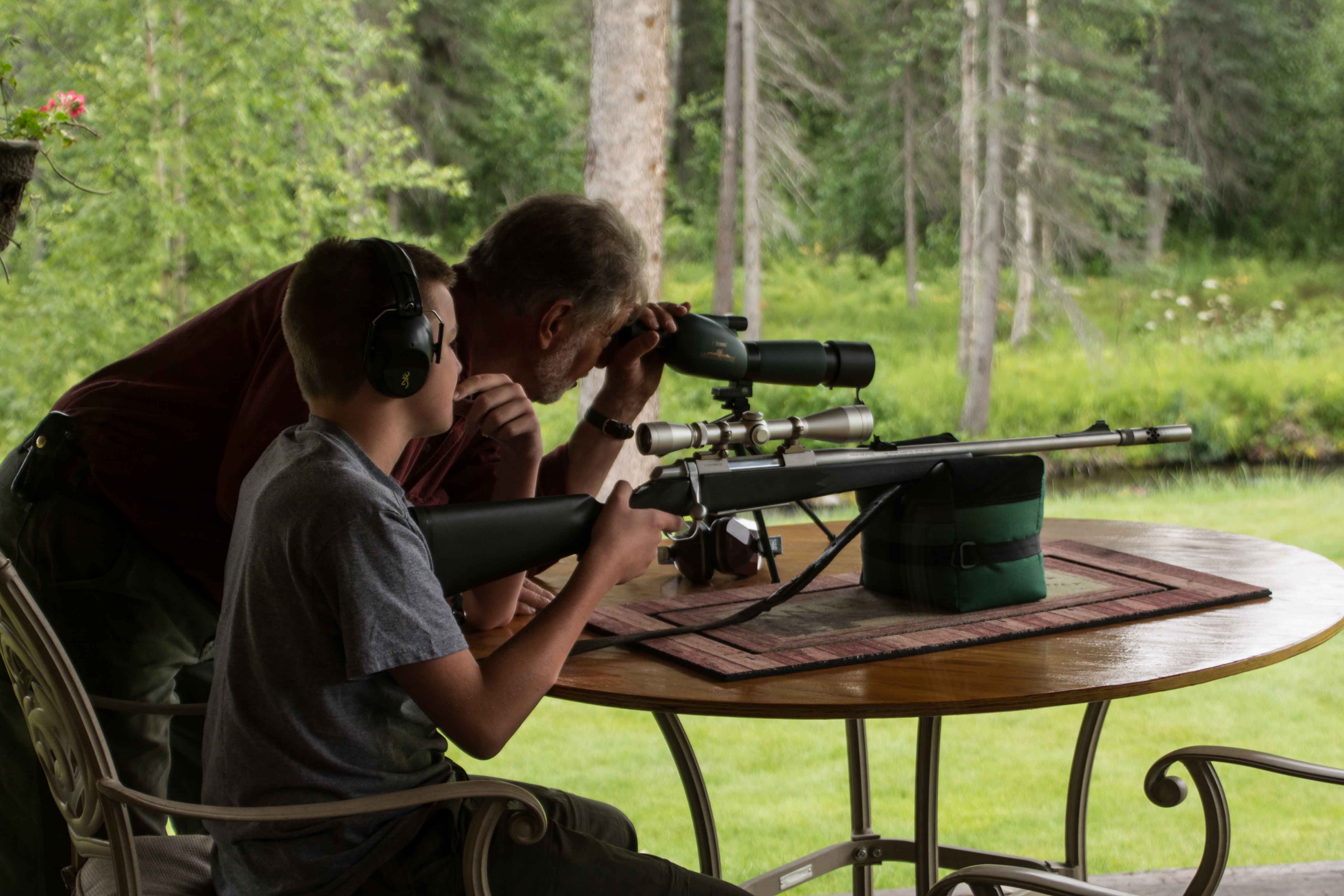
Adam gets some training on shooting a large rifle

Onward we went, and eventually we came to Dennis’s current homestead. This one has been cleared for several of acres around the much newer main house, and there is a clear creek including a small waterfall with a pond behind running though the back of the property. It’s a log cabin, like the original, but much more spacious and very up to date. He uses a gasoline powered generator for electricity (it runs only when he needs it, mainly in the evenings).  He pumps his water from a well, and uses propane for his other functions.  Heat comes from a central pot stove, which burns wood.  It is enclosed and captures the byproducts to ensure there are no stray sparks to set the place on fire. The house is very well insulated and is comfortably warm, even though the fire only has one log burning.  Besides, we were warm from our ATV trip in.

We ate lunch there (hauled in by Dennis on his ATV), and met his dog Chena, an 8-year-old german shepherd who loves to chase sticks thrown for him. The lunch was set out by Dennis’s close-by neighbor Patricia (she, her husband and son live 5 miles away).  She had baked a marvelous banana bread which we eagerly consumed for dessert.  Dennis took us to the creek, to a small lake area where he threw the stick and Chena dove in to retrieve it.  A few of us took up Dennis’s offer to let us shoot one of his rifles at a target he had set up along the creek bed.  Given the choice of shooting the “man’s gun” or the “ladies rifle”, you can guess which one we chose: the one that shot .375 shells, at a target about 200 yards away. Adam was the first to go, and of the four of us who tried, he was proved to be the best shot.  I enjoyed the opportunity, and managed to get close to the center. It’s harder than it looks, but Dennis is a good teacher.

Blog-3845

Adam came out best of the four!

Blog-3874

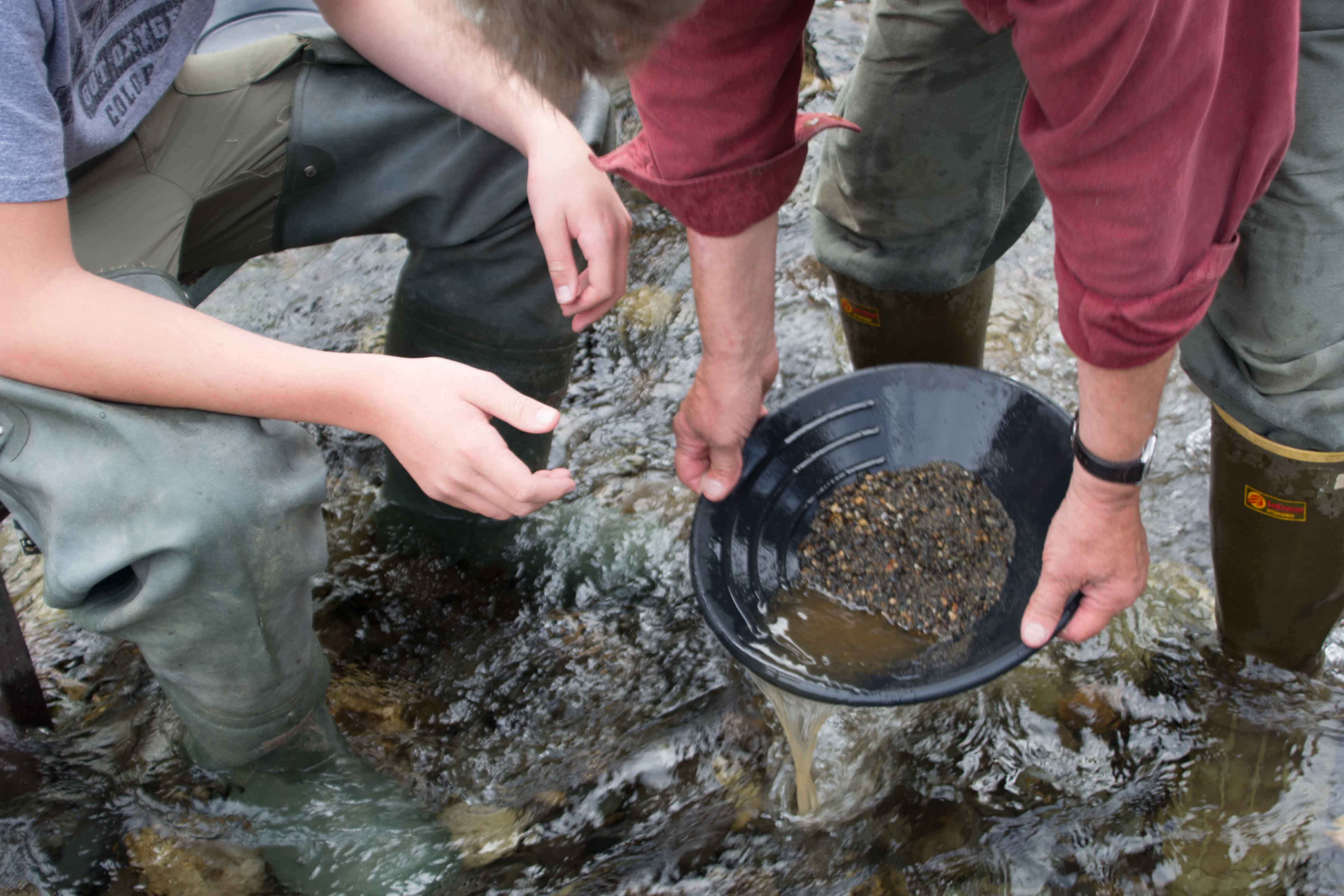
Dennis helped each of us learn to pan for gold in his stream

Gwen and the ladies hung around the cabin talking to Pat.  Her family’s cabin is much more primitive than Dennis’s.  They don’t have running water, nor any sewage system.  They have an outhouse, which serves their needs even in winter.  Gwen says they were from Nebraska, came here about eight years ago, and are quite happy about it.  Their son (13 years old) is home-schooled, at least for now.   Outside, Dennis helped us pan for gold in his stream while telling us stories and answered questions about himself and life on his back country estate.  This was a great opportunity and we learned a lot.  About 6:00 we got back on the ATVs and rode back to Talkeetna. The trip each way was about an hour. We dropped off the ATVs and Albert conveyed us back to our lodgings.  We walked into town for a nice dinner at the Denali Brewing Co, then it was back to the lodgings and good night’s sleep.

Leave a comment

Filed under Blog