Category Archives: Uncategorized

October 8, 2013

Today the goal is to get to Madison, only about an hour and a half away.  Big decision: should we go to Talieson or not?  Talieson is another half an hour beyond Madison.  It is where Frank Lloyd Wright lived and worked while in Wisconsin with his second wife, and the place to visit is his workshop/home here.  In the end, we decided to forego it, but partly that was because of the other things we found to see and do.

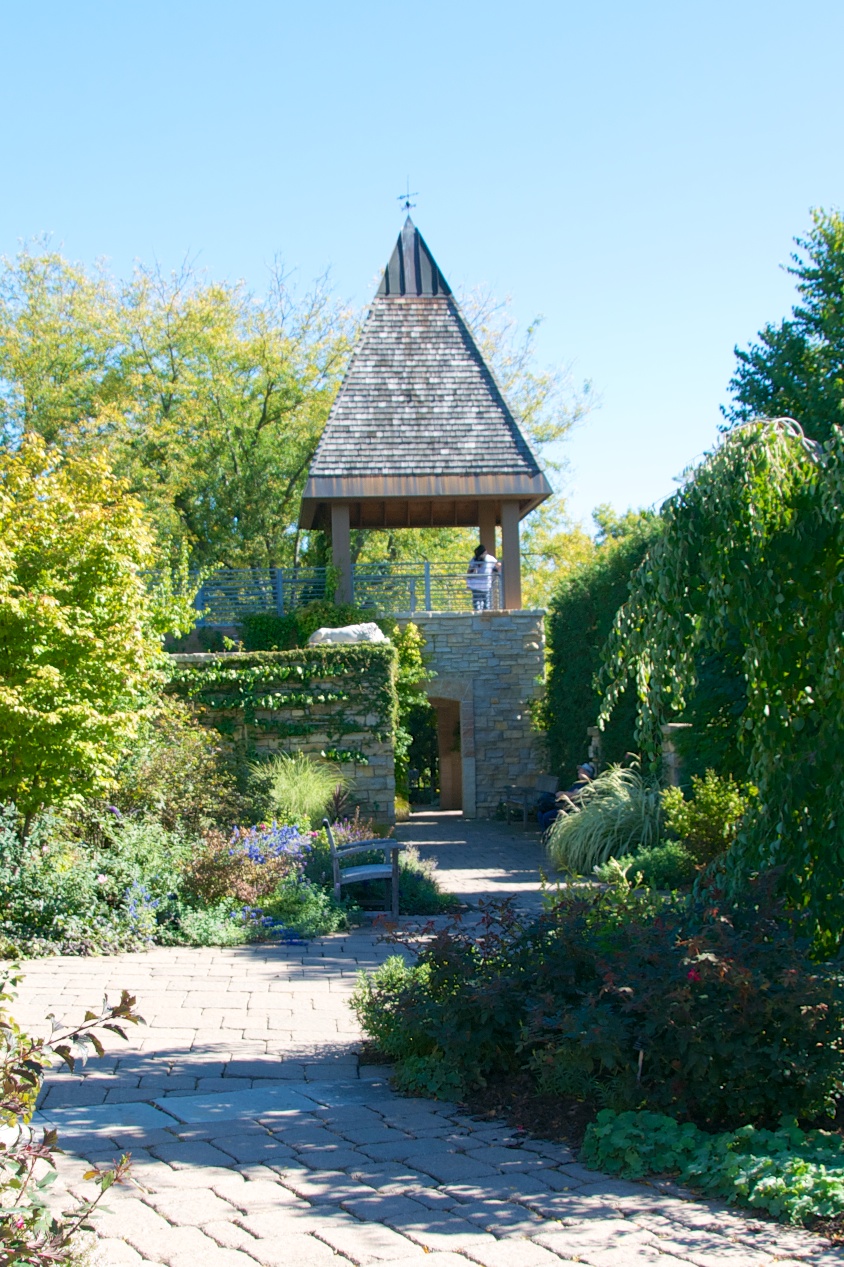
After checking into the hotel here, we head to the Olbrich Botanical Gardens, one of the highest-rated tourist attractions in the area.  Once we get there, it is clear why.  The gardens are not huge in area.  Upper Pen trip 7 Oct  006 Upper Pen trip 7 Oct  008

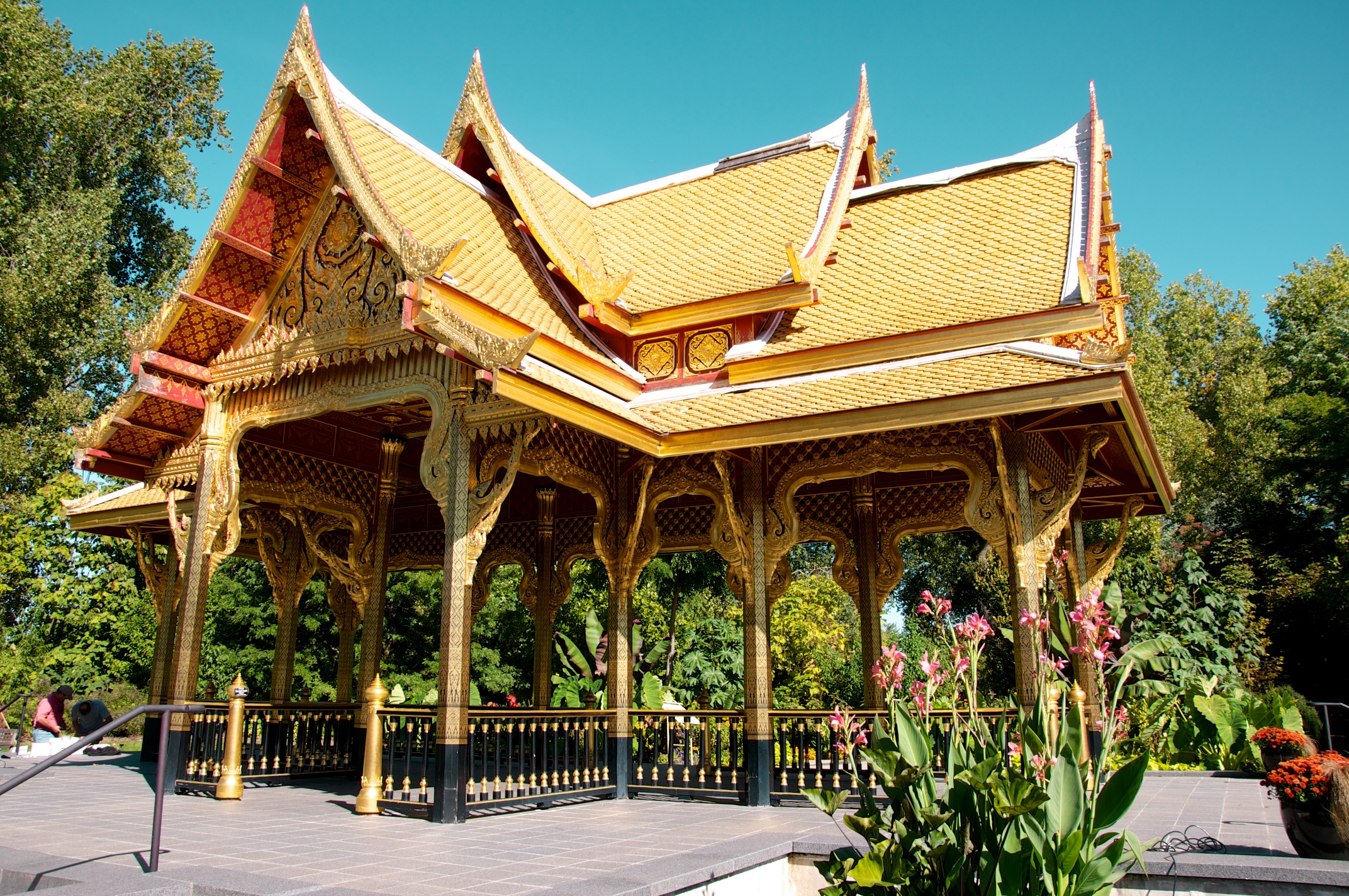
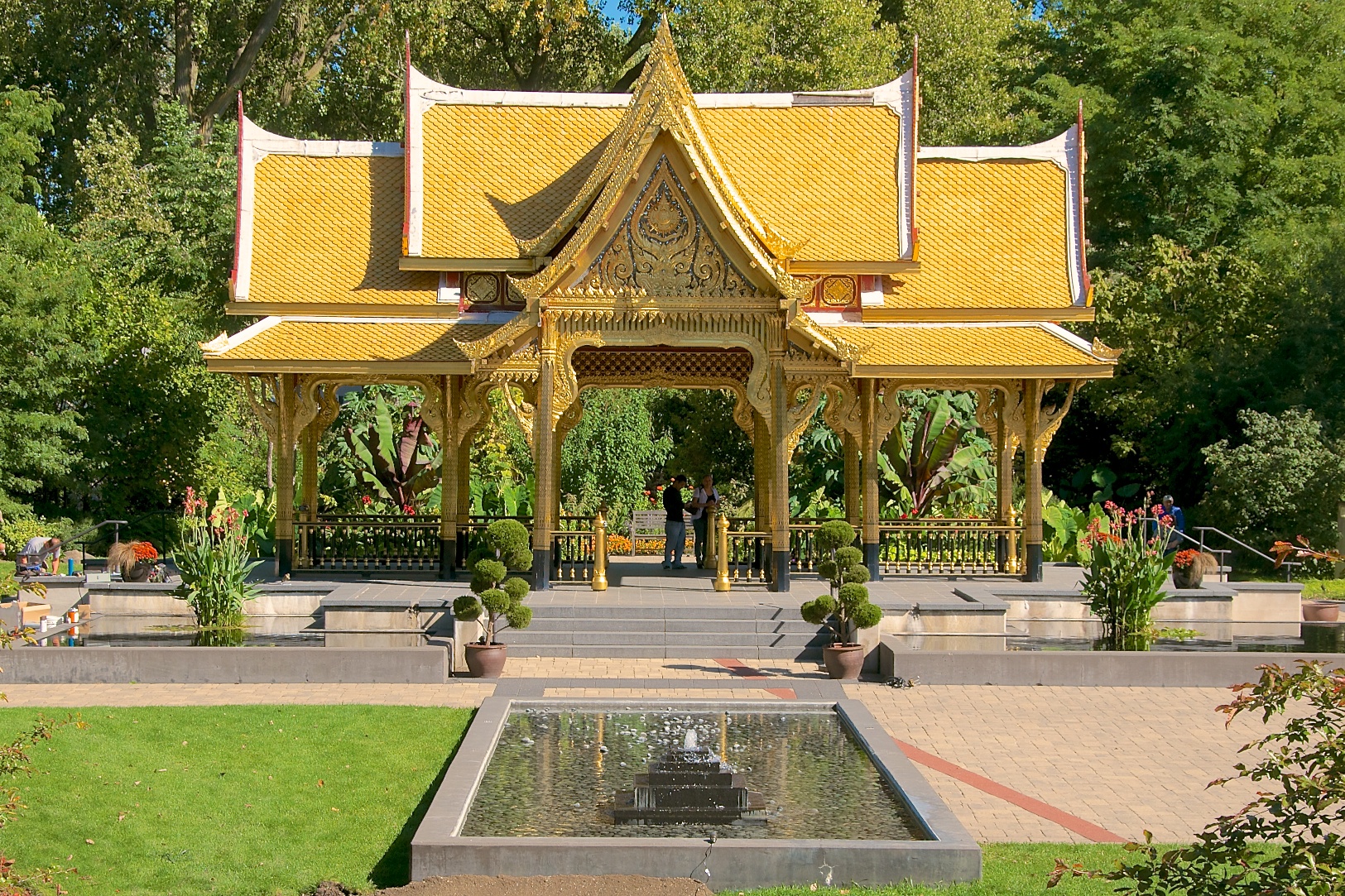
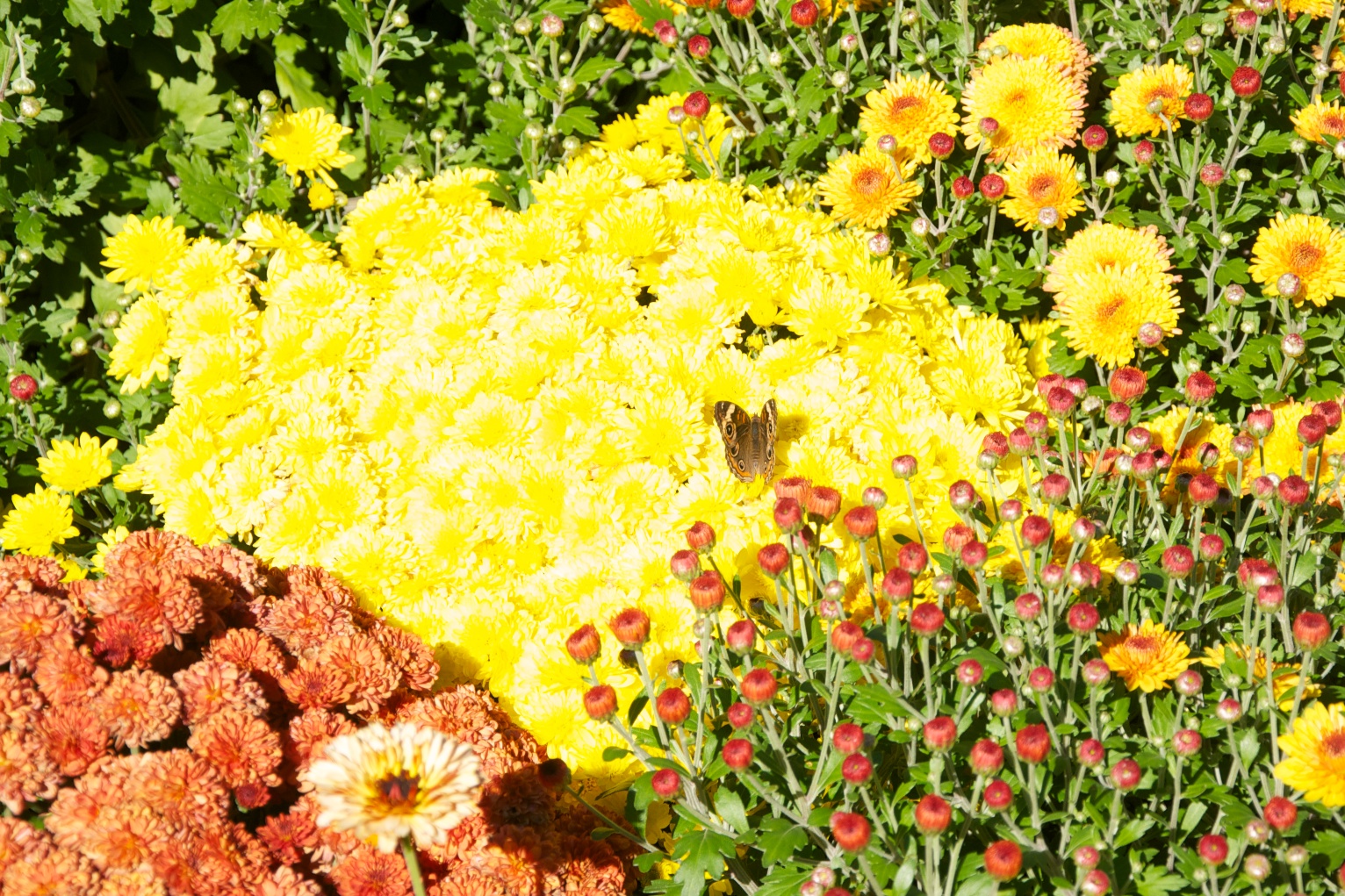
They cover a reasonable expanse  (16 acres), however, and they are certainly large in variety of plants and settings, color, and butterflies which are enchanting, and beautiful to see.  Starkweather Creek borders one side, although the Thai Garden is on the other side of the creek from the main garden area.  In addition to the gardens themselves, there is a large conservatory (which strangely is the only part of the complex for which there is an entrance fee).  Within the gardens are the aforementioned Thai Garden with the Thai Pavilion  Upper Pen trip 7 Oct  021

as its central feature, a central circular grassy expanse, and a very large convention-center-like building complex.

Upper Pen trip 7 Oct  026We spent a couple of hours wandering around in the garden areas, enjoying the color and variety.  Upper Pen trip 7 Oct  016 Upper Pen trip 7 Oct  018

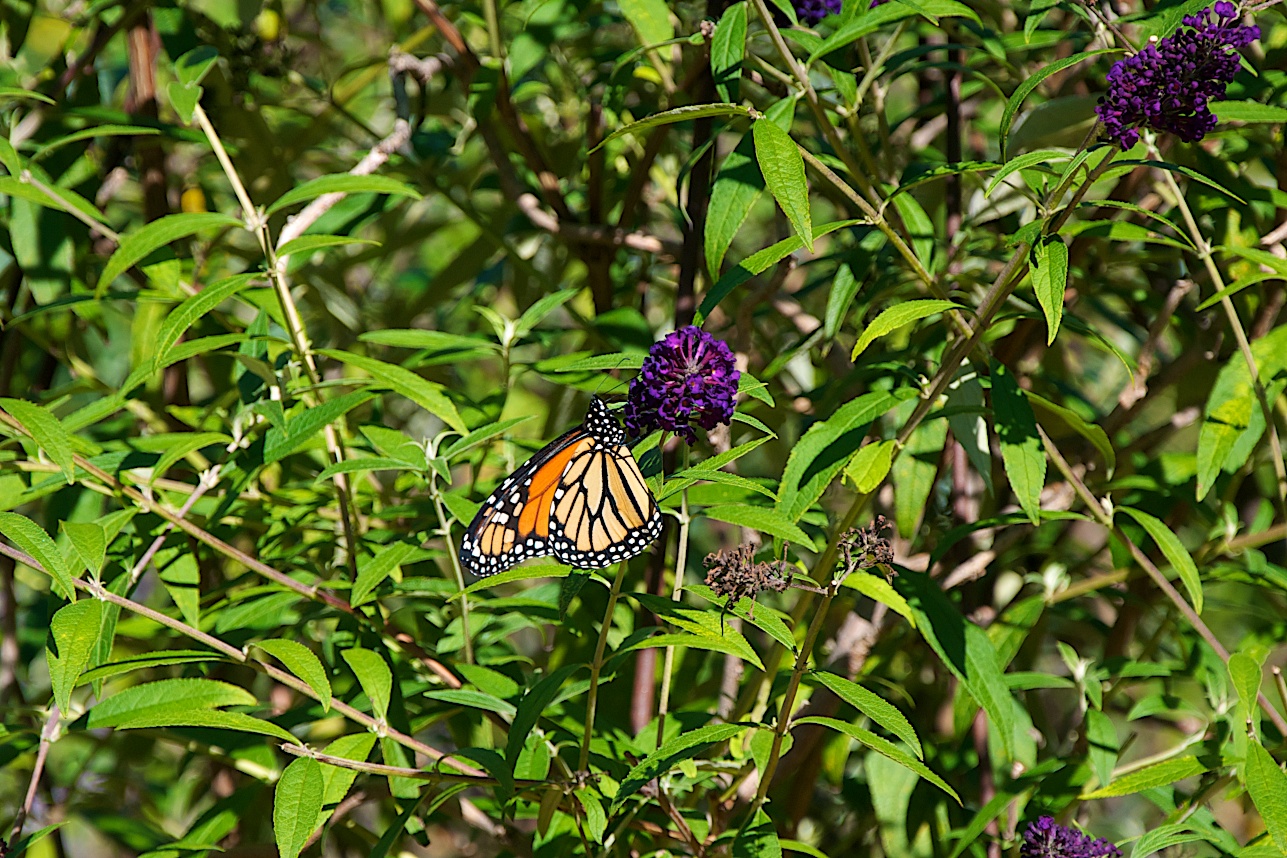
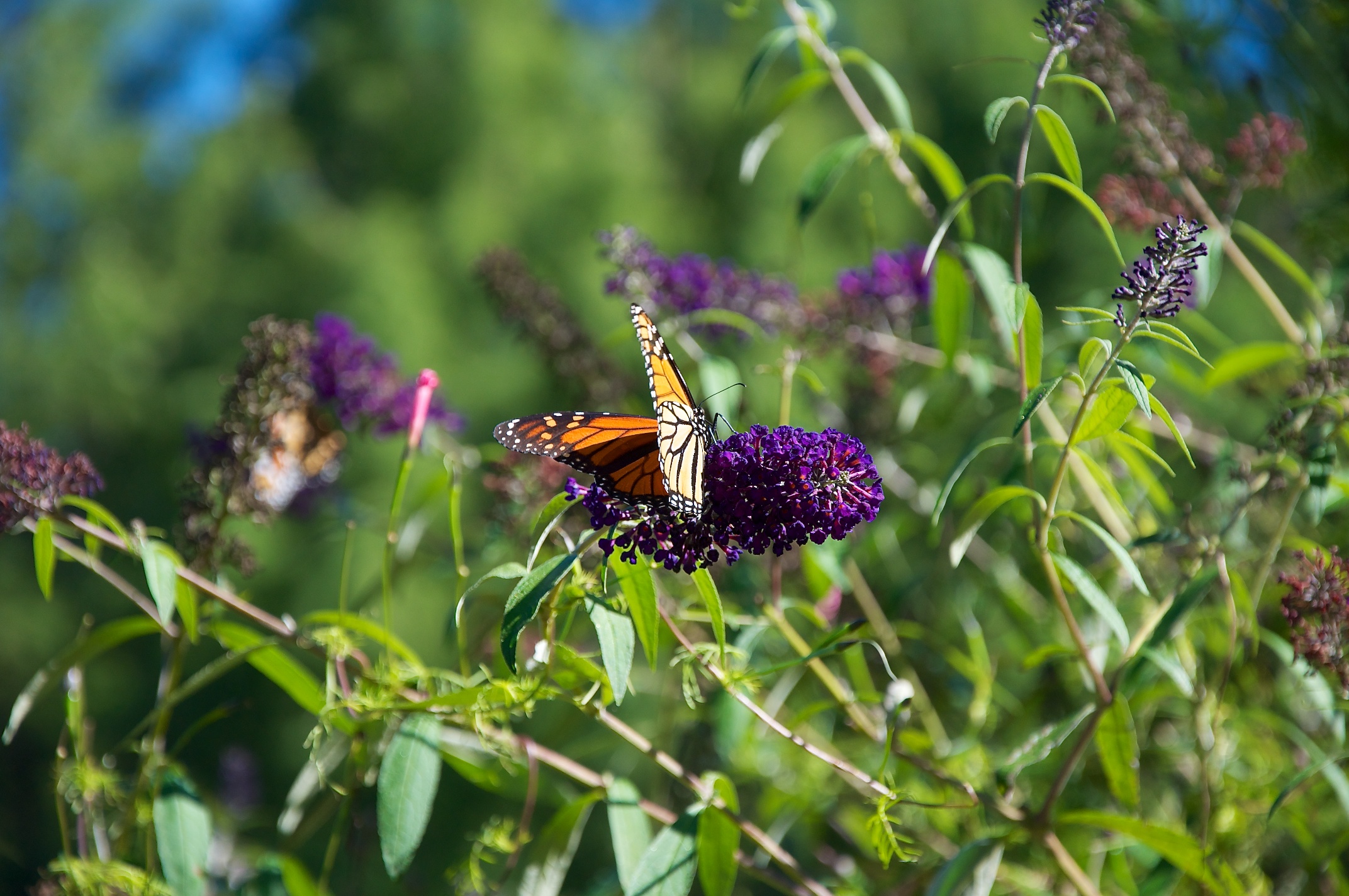
The herb garden was especially remarkable for the numerous butterflies and bees which inhabited the flowers.  I really enjoyed the rock garden, with a small stream flowing through it, and several pools formed as the water made its way along.  Alongside were a variety of juniper and pine trees, emphasizing the number of different shades of green there are.  The herb garden was nice for the ability to take pictures of butterflies especially in the purple flowers.

Upper Pen trip 7 Oct  009 Upper Pen trip 7 Oct  014

The Thai Pavilion was a gift to the Orbich, installed by a group of Thai workers who came over specifically to establish the work of art in place and to plant the gardens around it.

Upper Pen trip 7 Oct  019 Upper Pen trip 7 Oct  023

Back in the garden, one of the highlights is the tower, which gives a second-story view of the garden as a whole.

A beautiful day; a really nice way to spend it.

Upper Pen trip 7 Oct  028 Upper Pen trip 7 Oct  027

We ate dinner at the restaurant in the hotel, enjoying a pizza (Gwen), and a small steak with truffle-béarnaise sauce.

Tomorrow, Madison itself!

2 Comments

Filed under Uncategorized

October 7, 2013

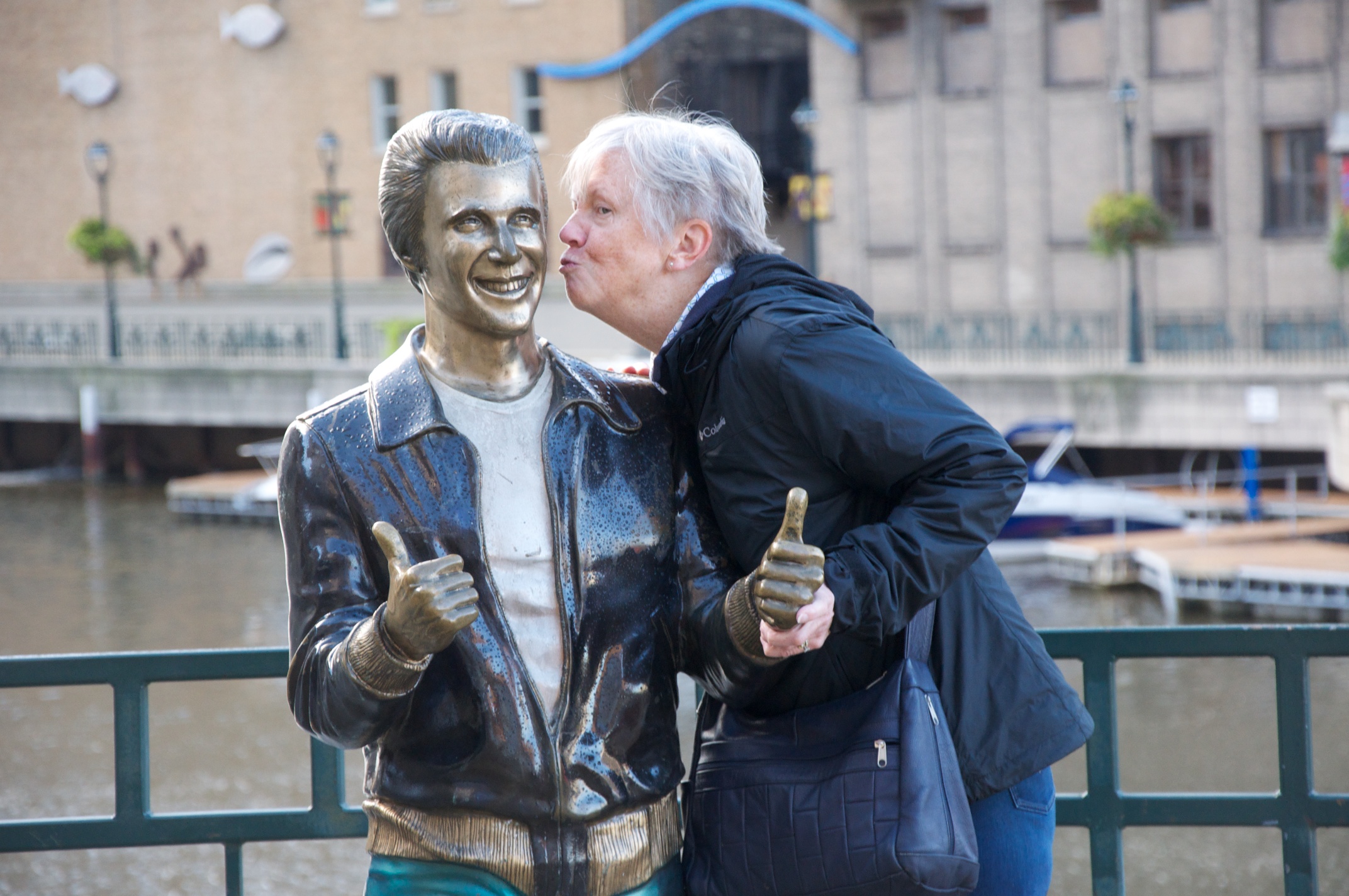
Well, the morning is cold, but the weatherman promises clearing, so we’re going to take the chance and walk to the Historic Third Ward.  The (Milwaukee) River Walk is indeed unique.   Upper Pen trip 6 Oct  002Notice the sculpture on the wall.   Along the way, a bronze Fonzi is available to kiss.Upper Pen trip 6 Oct  001   Even the manhole covers are each a unique design.

The gate to the Historic Third Ward is (on the side we came from), the Public Market, not yet open when we first come through.  When we come back later, it turned out to be a grocery store of yesteryear, with many individual stalls not quite demarcated from each other, but each an independent purveyor of foodstuffs.  Kyle and Suzie would like it – there are spices in all sorts of combination and mixture for use in cooking.  Chocolates of every variety overwhelm the senses to the point where it is impossible to choose just a small assortment.  (An interesting thought – how about a chocolatier that interviews the client about their desires in chocolate and then presents only those that fit the description: for me, it has to be dark chocolate, so immediately all milk chocolate is gone.  Then I say I like cherries in combination, and so all chocolate that don’t involve some cherries are not visible, and so on until the chocolates presented are few enough that a selection could be made.  Would this decrease the desirability of the experience?)  Anyway, meats, cheeses, noodles and a variety of fruits and vegetables; all are available in great abundance.  But that is later.

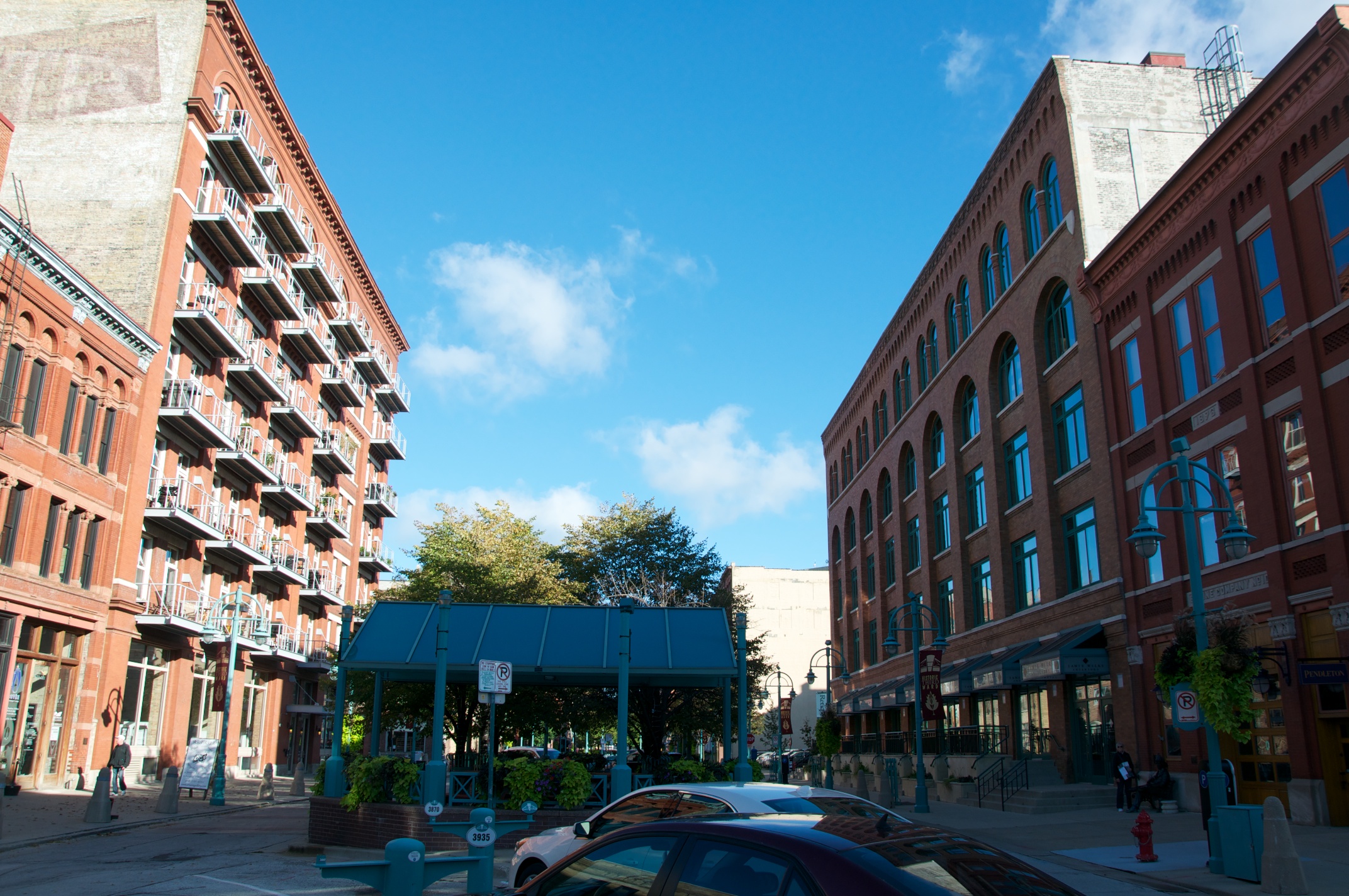
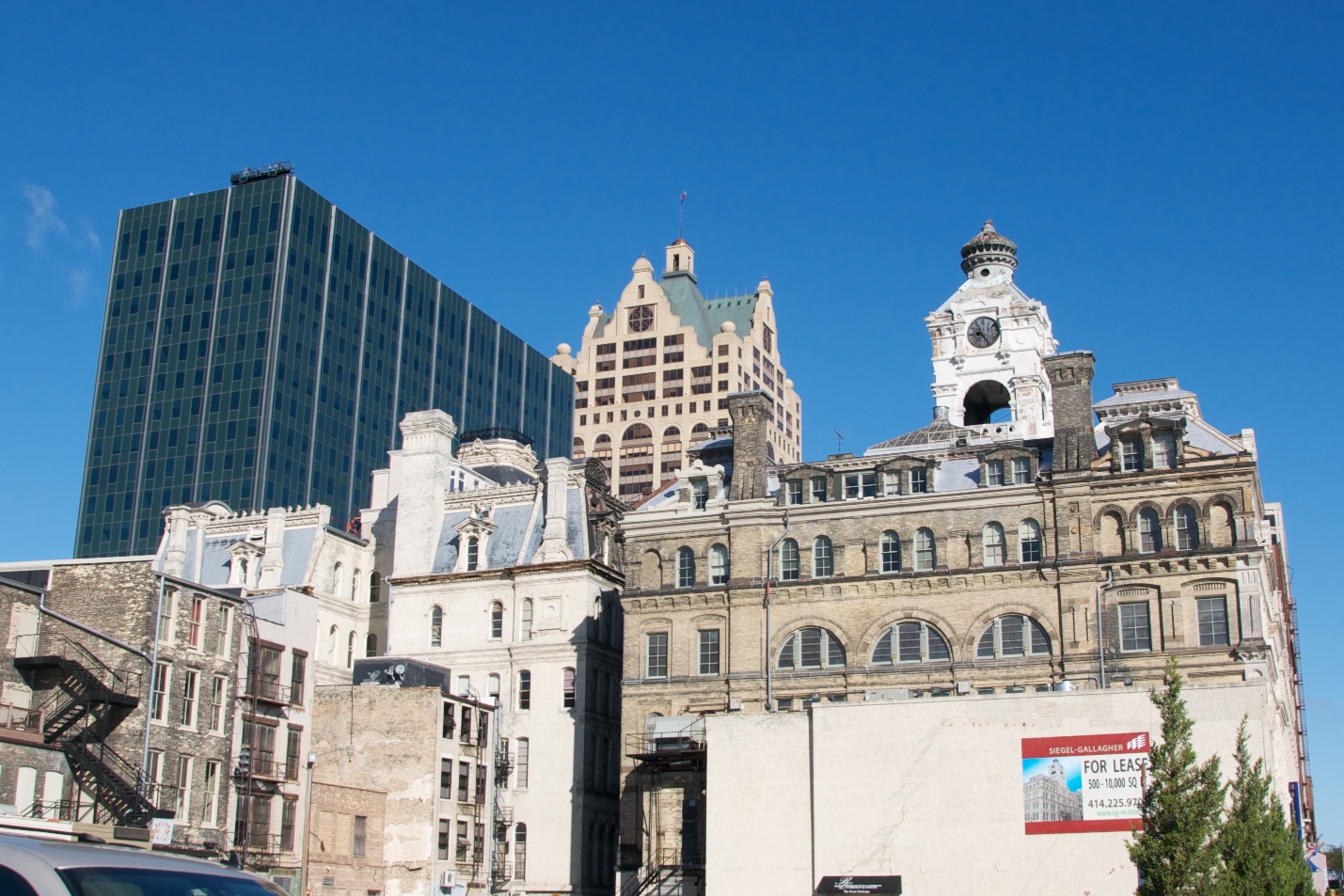
We are in the Third Ward to see the architecture – that is what the it is famous for.  It is perhaps four streets wide by four deep; not a very large area.  The area is plenty large enough to house a variety of business fronts, and buildings.  However, it is the seemingly similar building structures that make it unique.  But as we walk through, the similarity is not as clear as I had imagined.  Yes, there are lots of brick fronts (and rears).  The buildings rise vertically from the sidewalk, none are set back; none have overhangs.  But the window treatments, the height, the cornice decorations, awnings, balconies, front doors all work together to establish uniqueness in the similarity.  Upper Pen trip 6 Oct  006 Upper Pen trip 6 Oct  005 Upper Pen trip 6 Oct  003

Gwen finds a friend to ask directions of, but he is mute.  Upper Pen trip 6 Oct  004  On one side of the district is the Milwaukee River view, much more vivid now that we have become attuned to the minute differences in the district itself.  Upper Pen trip 7 Oct 50 We walk back to the Market (not open yet), and then beyond to see a bit more variety in architecture.  Upper Pen trip 7 Oct  020 (1)

Where to eat an early dinner?  We ask the bellmen at the door, and they are all anxious to help.  The consensus is a pub on 3rd St, which serves authentic Wisconsin fare, and locally sourced beer.  When we arrive, we are practically the only ones there, but we are a bit early.  Something we never do is order a “starter” – we don’t typically have enough room for it.  However, we have been anxious to try cheese curds, and the only way it is available is as a starter, so we order it.  Their specialty de jour is a jalapena cheddar brat, so I order that, and Gwen has a  large chicken salad.  The cheese curds are deep fried and come with a ranch style dressing.  It is really good!  As is the bratwurst, complete with pretzel dough bun and sautéed onions.  It was excellent as is, but then I added the hot mustard, and it got even better!  Such a large meal left us gasping a bit, but we did manage to make it back to the hotel.  The weather had brightened considerably, so we have high hopes for the rest of the day, and tomorrow.

After lunch, we take the car out to the Pabst Mansion, really the retirement home for the great entrepreneur and his wife.  Captain Frederic Pabst, best known now for the beer which bears his name, was a Captain-pilot on Lake Michigan before he decided that business was too dangerous for a long career.  He bought into his father-in-law’s brewery, and found he had not only a head for brewing beer, but the business sense to make it one of the largest such companies of its time.  He didn’t limit himself, however, buying and running a resort on Whitefish Bay, buying up and rebuilding Milwaukee theaters (the Pabst Theater is still open for business), and helping to start the Wisconsin National Bank.   The Pabst Mansion is in the middle of what is now the Marquette University campus, although at the time it was built (between 1890-1892), it was in a rural area.   The house is not the size of some of the more ostentations businessmen of his era, but it is certainly large enough for the Captain, his wife, and their granddaughter.  They had eight children, but only four made it to adulthood, and one of those didn’t survive long after having her first child.  The Captain persuaded his son-in-law to let him adopt the girl.  The son-in-law was an immigrant, but without further reason to stay, ended up going back to Germany, his country of origin, to live out his days.  He doesn’t come back into the story again.

English: The Pabst Mansion on Wisconsin Ave in...

English: The Pabst Mansion on Wisconsin Ave in the Avenues West neighborhood in Milwaukee, Wisconsin. (Photo credit: Wikipedia)

The house reminded me of the mansion we visited in Chicago not so long ago, in that it was almost the quintessential “four up, four down” arrangement (well, maybe better described as “six up, six down”), with wood everywhere and everything finished in a highly decorated style.  The music room is paneled in mahogany, but the dining room next door is white oak, so the pocket doors that enable separation is two-sided, with mahogany and oak on their appropriate side.  The ceiling decorations are of the period as well, with tin panels in the music room, and painted motifs on the other ceilings.  The floors are wood parquet with multicolored woods arranged in various designs depending on the room.  The stairs up to the second floor are wider than one expects, leading to a landing half-way up that is projected back into the room, with no apparent reason other than that it was possible to do.  Off the room with the stairs up was the Captain’s “retreat”.  In addition to his desk the walls were paneled in dark woods, hiding something like 14 cabinets in which he “hid” his beer steins, his cigar humidor, his paperwork, and somewhat surprisingly for a beer baron, his wine racks.  The dark wooden ceiling was partitioned into four triangles, each with a word, and then an explanatory sentence in German expressing the four tenets of his philosophy.  The kitchen reminded me of the kitchen in the Frank Lloyd Wright house we visited in Chicago last time we were there.  There are lots of work areas, not too many appliances (I’m sure there were the appropriate ones for the day, but they were not in evidence).  It does have three ice boxes, and the place where the large stove and oven was located is now the location of a breakfront cabinet.

Not too long after he and his wife died, the estate was purchased by the Catholic Archdiocese, and for 67 years, the place housed the Catholic Archbishop and church officials.  The rooms (and all their decorations) were painted white.  One of the bedrooms upstairs still was in that condition, I suppose just to show the difference.  In the 1970’s, the place was sold to the Wisconsin Heritage, Inc., which has over time converted the rest of the house ito its historic colors and decorations.  A very interesting house of its time, and while the tour was not very articulately led, it was fun to see the details of the place.

Tomorrow, it’s on to Madison!

1 Comment

Filed under Uncategorized

October 6, 2013

The rains have not quit.  We don’t have a long drive to Milwaukee, so we don’t start very early.  The B&B provides its second day’s large breakfast, and we sit and enjoy it leisurely before we pack the car and set off.

Before we get too far, we notice a cheese place called Renard’s on the right.  Without too much hope, we stop just to check it out.   Does this place have cheese?  Sure enough they did!  Like most of the other shops we have visited, they have plenty of foods of all varieties to entice us, but the cheese is clearly the main draw.  They have lots of cubed cheese in labeled containers right as we come in available for us to try.  So we did, of course. Gwen ended up liking the Monterey jacks the best, while I also enjoyed the cheddars.  They had plenty with mixed in flavors to add to the enjoyment – the best was the Ghost Chili Pepper Jack, which has quite a kick to it, and lasts a long time after it’s gone, if you know what I mean.  So we buy a bit and moved on.  We finally have found Wisconsin cheese!

One other stop awaited us prior to getting to Milwaukee – the American Club in Kohler, Wisconsin.  Suzie had this on her list, and said it would be a good place for lunch.  We stop by, and this is quite a place.  First of all, Kohler is like Bennington, Arkansas, a company town.  Bennington is the home of the Waltons (not the fabled TV family, but the Sam Walton family – the creator of Walmart).  That town has received many of its civic amenities through their association with the Walton family, and it shows.  Kohler is a bit different, but the results seem to be similar.  The Kohler Company is famous for its plumbing products.  In 1912, the company moved from nearby Sheboygan to land it owned in what was at the time rural land nearby.  The American Club is a golf resort that is right next door to the Kohler plant, and is owned by the company.  It has a marvelous set of ivy-covered brick-fronted buildings with plenty of public areas ready for walking around in.  The place is pretty, and definitely worth the look around.  In the end, we are too full from breakfast (and cheese tasting) to eat there, however.

Into Milwaukee we drive, getting to the Intercontinental Hotel just after noon.  As this is Sunday, we looked into what was open for us to go to.  Horror of horrors – the museums (and most of what we were interested in) are not open on Mondays!  The top of the list is the Milwaukee Art Museum, so we head over there quickly to at least get that in today.

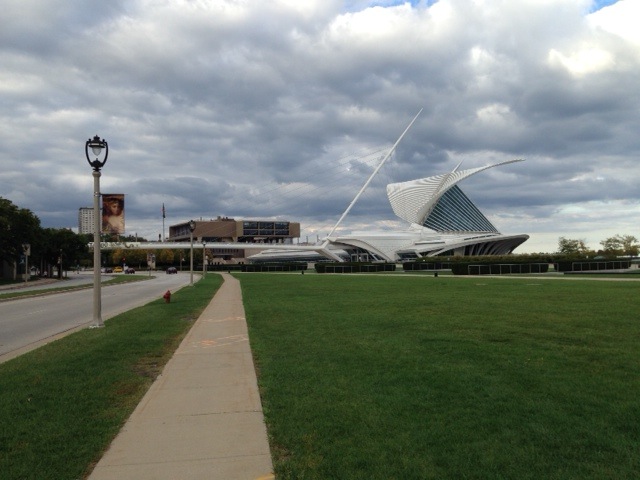
It is architecturally one of the most dynamic buildings I’ve seen this side of the Sydney Opera House (which, to be honest, I’ve only seen in pictures).  Milwaukee Art Museum

The Milwaukee public television station has artfully taken the white building and drawn the wings as if they came up from the body of the main part of the building to their current position as a signature background every time they show the station letters on screen.  You enter the museum by going up the stairway “under the winged beast’s tail feathers”.  After paying your admission, you walk down a long hallway to the left, and into the main part of the building (the brown stacked structure).  Once in the main part of the museum, you are on the first floor, with many numbered rooms in a rectangular pattern.  Each room has a theme.  The lower numbered rooms start with their small collections of historical artifacts, going back to a pharaoh’s casket lid, Greek statues, masks and a small number of other carved elements.  Quickly you go through Renaissance art, icons and other religious objects, then 18th and 19th century examples of French, German and other European art, and finally, in room 11, you’re into the Impressionists of the late 1800’s.  The museum’s collection up to and including this room is as sparse as my description.  For example, their only Monet on display is of Waterloo Bridge at one of its darkest and most foggy states.  The Museum is much more about German art rather than French, and even more about contemporary art.  I enjoy parts of their contemporary collection which fills almost the entire rest of the three floors of the museum.  They have two of Andy Warhol’s Campbell’s soup cans, and what to many people is the quintessentially “modern art” piece of the late 20th century: a panel (in this case, three 3’ X 6’ panels) of a solid color (red, yellow and blue).  They have many other pieces, some of which interested me greatly.  In one room, they have the figure of a janitor leaning against the wall.  He is so life-like that both Gwen and I had to go over to him to assure ourselves he was indeed one of the exhibits.

The rooms that interested me most focused on art from Germany in the 19h and 20th centuries.  These painters showed quite a variety of talents.   For example, almost the opposite to impressionism, the photographic realism (a skill I cannot even begin to achieve) of one of the groups of pictures was astounding.  One I remember specifically is of a pre-teen girl sitting sideways with her feet up on a bench squeezed between the kitchen table and the wall with a book open on her lap.  She is looking over the book with her eyes directly on the artist.  Her expression is exactly the one I get every time I ask one of my children (or Gwen) to take their picture (before the face drops into resignedness).  How do you capture that expression on canvas?  This artist did it, and so clearly!

There also is a large area of “folk art”.  This kind of work always gives me encouragement.   It is typically done by those who are untrained, or perhaps not as gifted / skilled, but who nonetheless enjoy what they are doing.  It may not be as visually appealing as the girl on the bench, but art is in the enjoyment, both for the artist and the viewer.  The folk artists enjoy their work, that is usually clear, and sometimes there is a message as well.  An example: a corner is taken up by ¾ life size carved wooden figures set near and on a western open-air stage.  Many of the figures are moving (a ballerina fronts a pole and is rotated by it, another one is sitting on a bicycle peddling for all she is worth), and over the speakers comes a voice attributable first to one character and then to another. Some of the figures had labels on them with names of famous people.  This scene is part of a whole town of such carvings established outside a desert town in the mid 20th century all done by Charles Black and his wife.  He did the carving and the voices, while she did the clothing.  What’s the message?   I’m not sure – he just liked to carve the figures (that’s clear) and the town gave them a setting, like model trains in a scene.

One of the exhibits was done by a local artist.  She held a series of workshops with veterans of Iraq and Afghanistan.  Each one resulted in a book of remembrances, experiences, artifacts, and quotes, which she gathered together.  The series of books that she thus obtained (one from each workshop) when stacked together was at least three feet high.  The whole of the series is available for free download, but if a printed book is desired, that is also available for a nominal fee.  The museum has a room devoted to the series, with the books laid out on the center table to be thumbed through at leisure.  There are a lot of pictures of life in-country, while on duty and off.  There are stories of people the soldiers had met, and gotten to know.  One book is devoted to a reporter who was born to American parents who (if I remember correctly) were missionaries in Afghanistan.  Her story, I suspect, would be worth the read.  The scenes of the personnel on assignment, working with the local people, caught my eye most of all.  Overall, this work will be an invaluable resource in years to come.

We walk ourselves back to the hotel — the rain has retreated — and went to bed early.  Tomorrow, assuming OK weather, we’ll do the river walk to the Historic Third Ward.

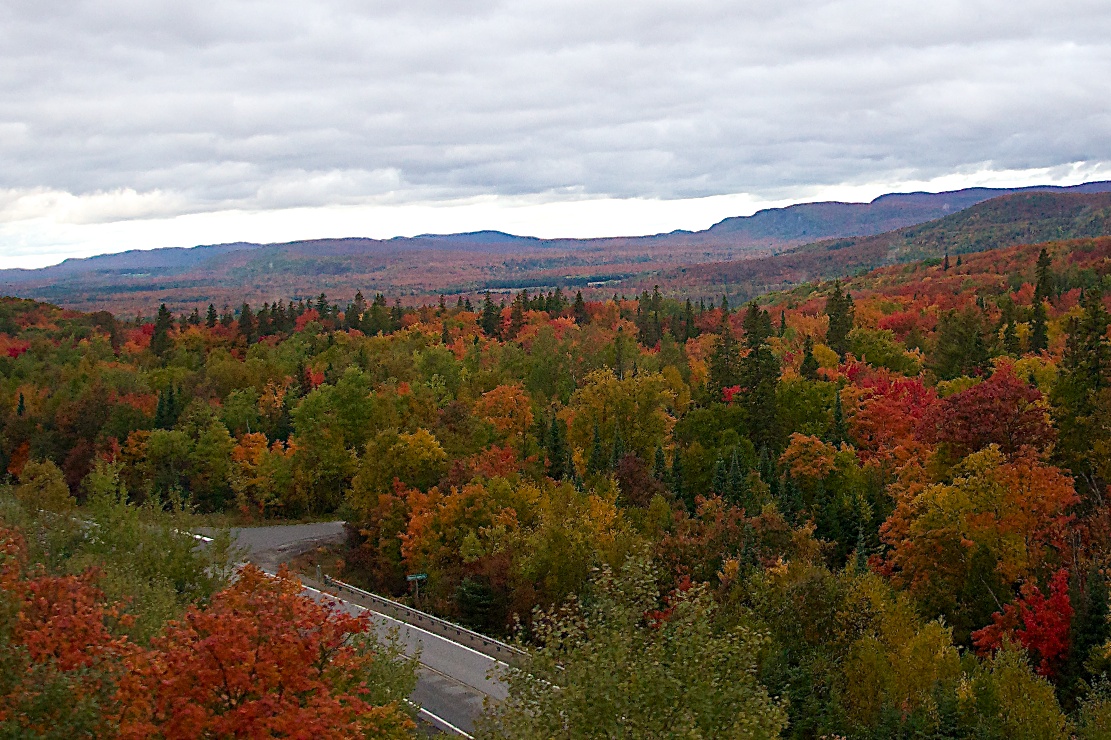
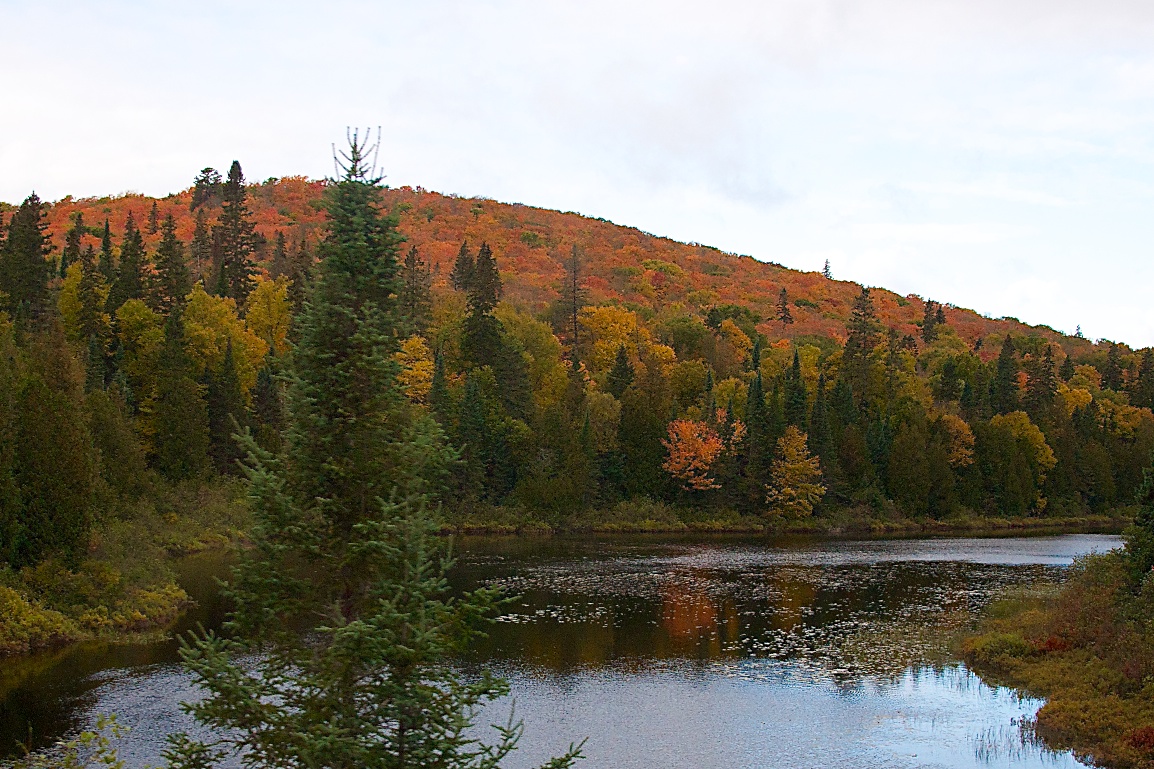
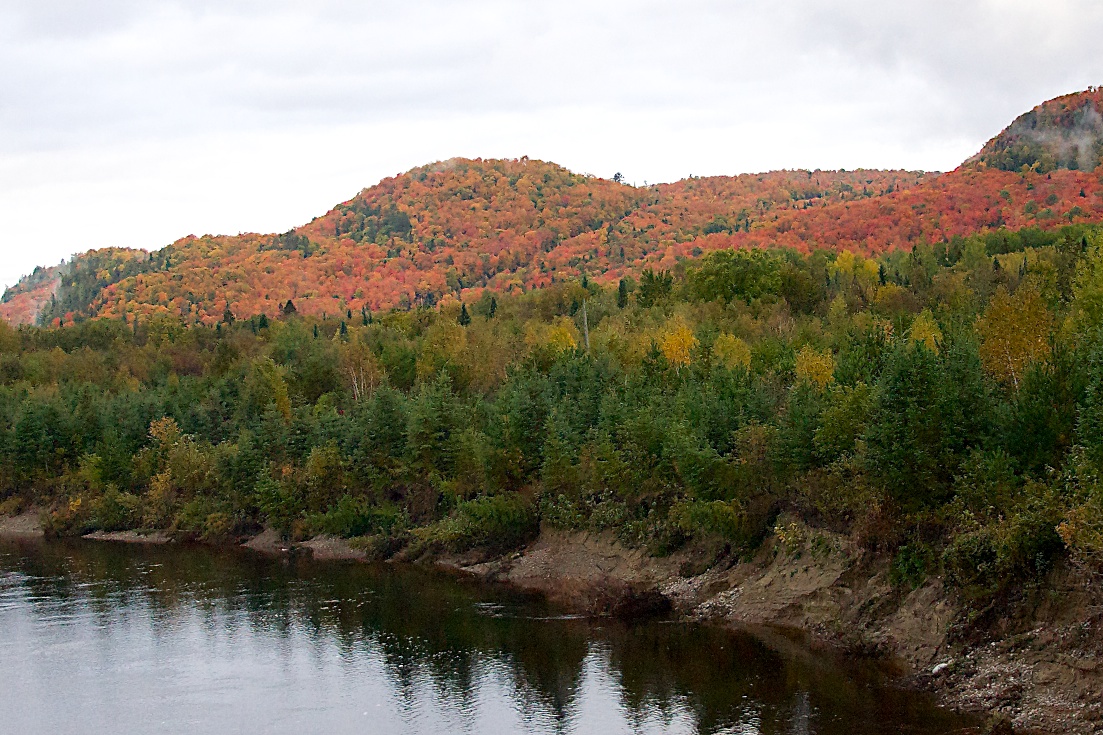
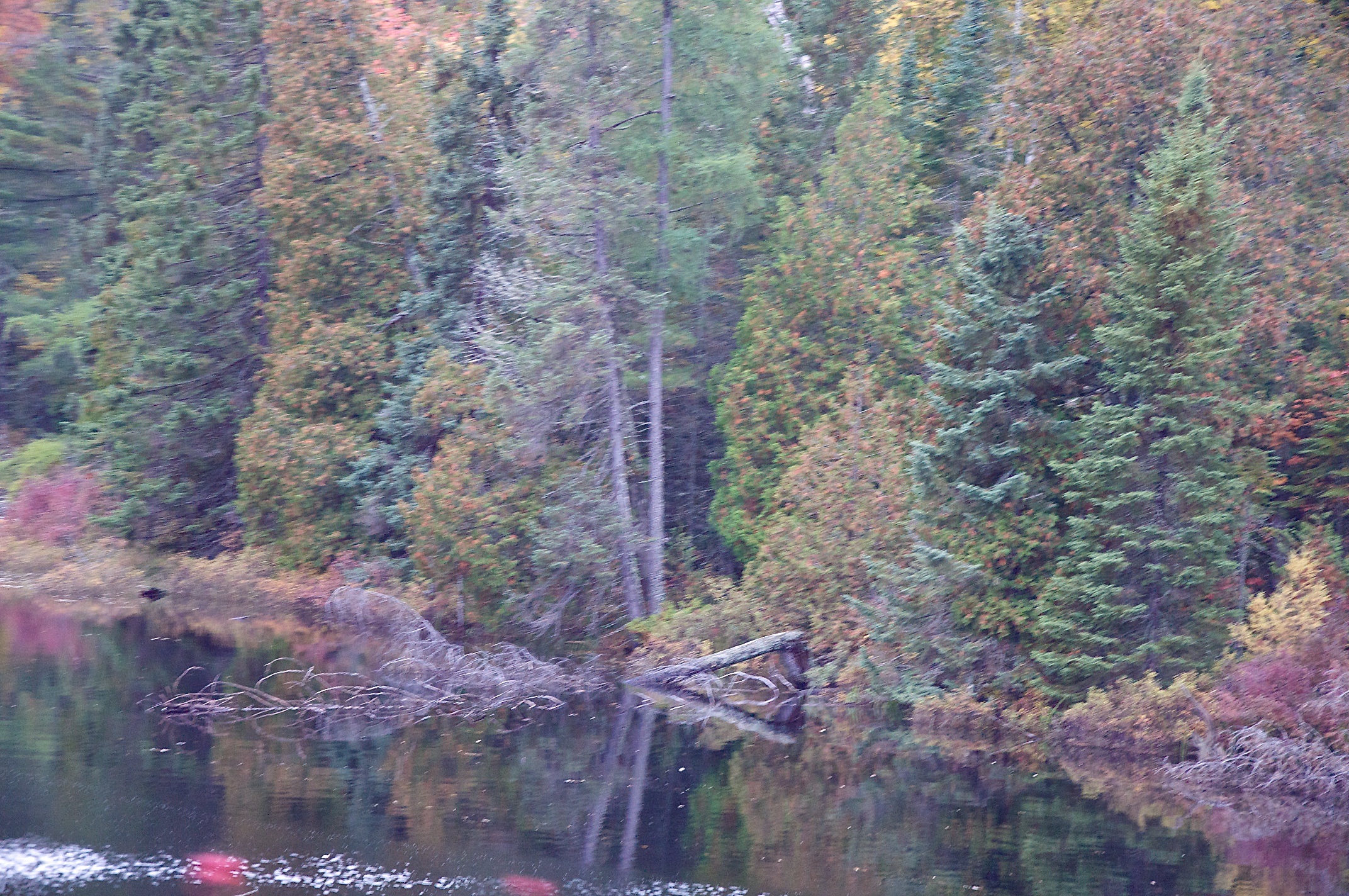
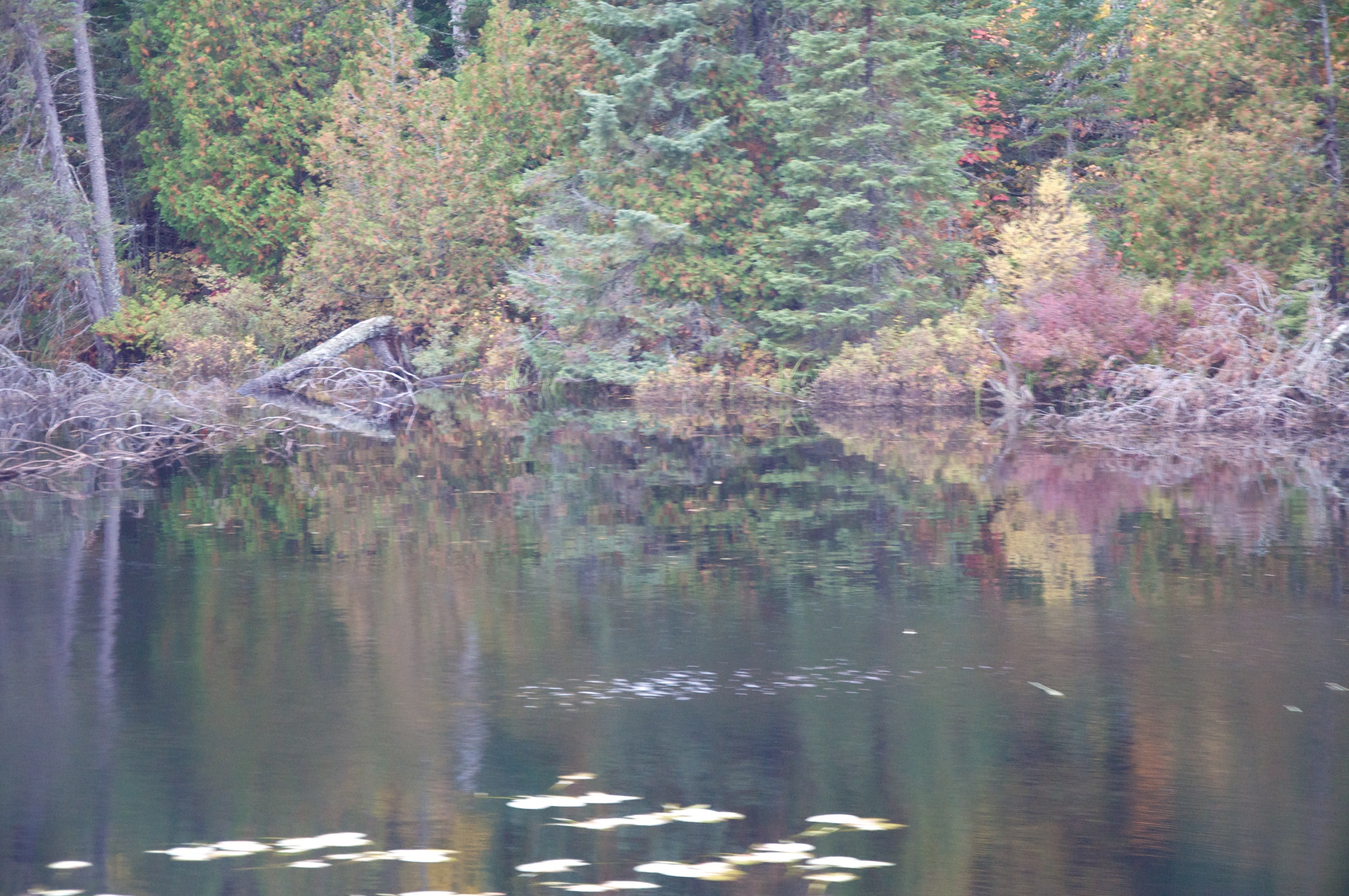
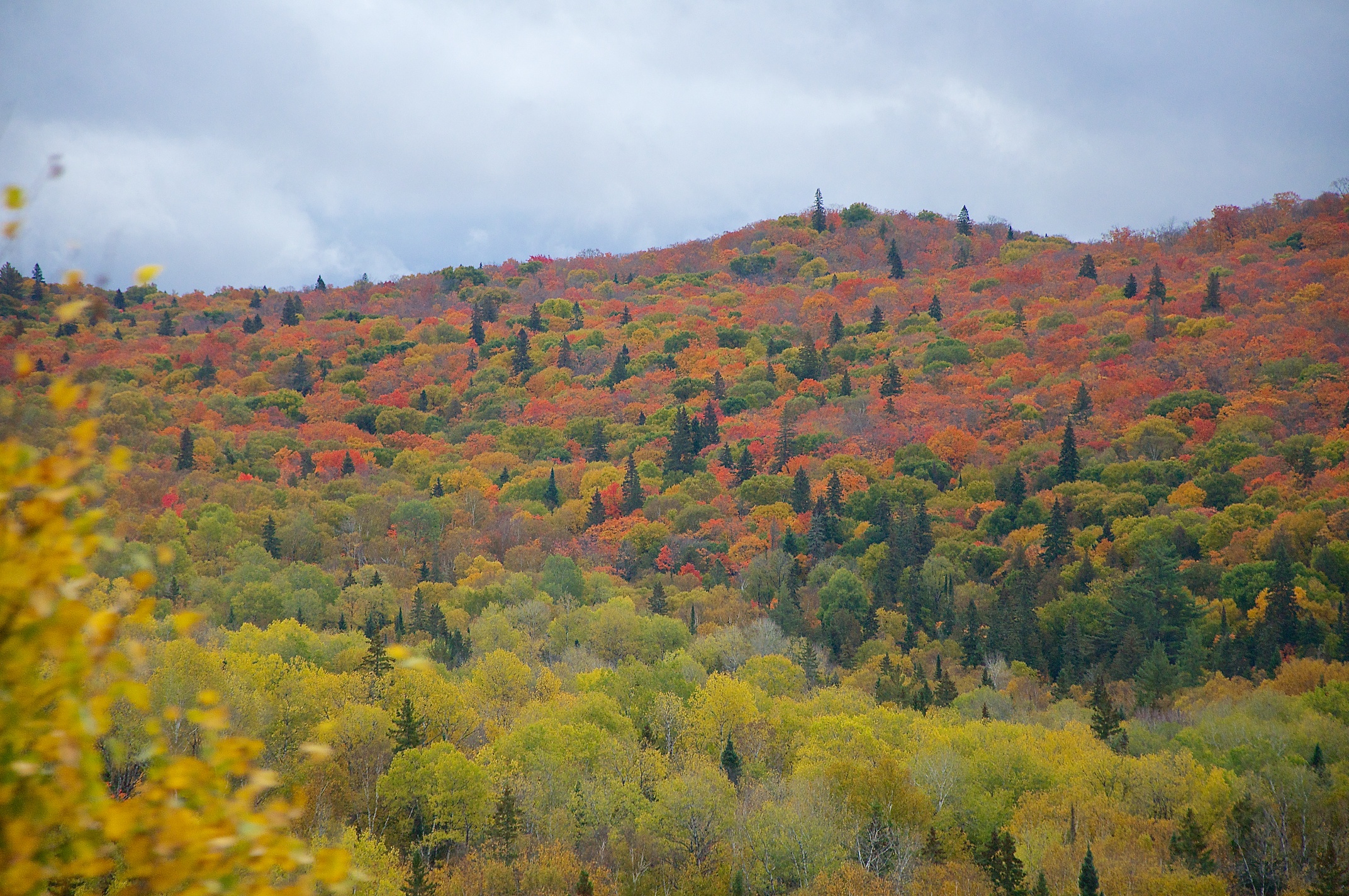
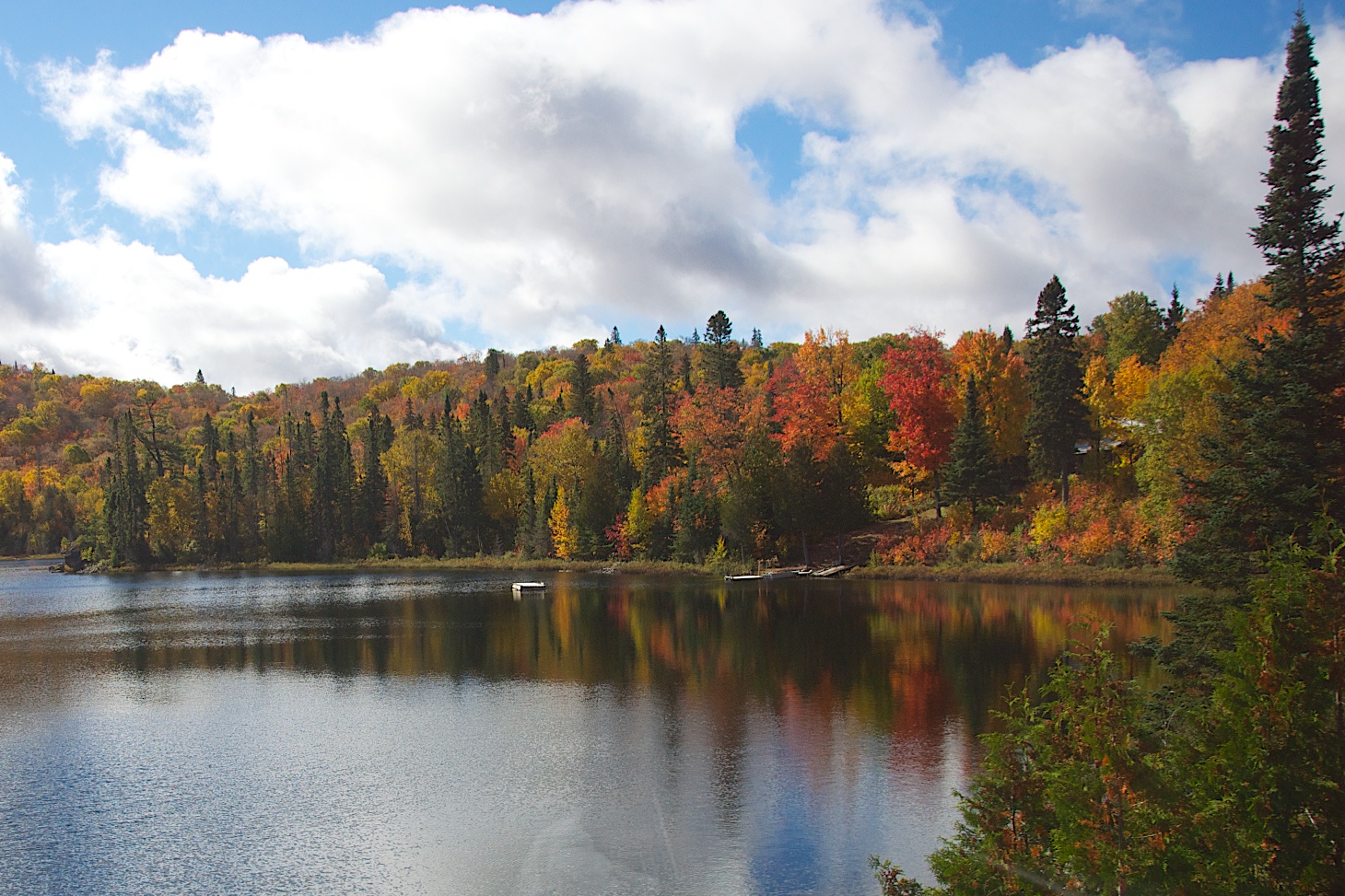
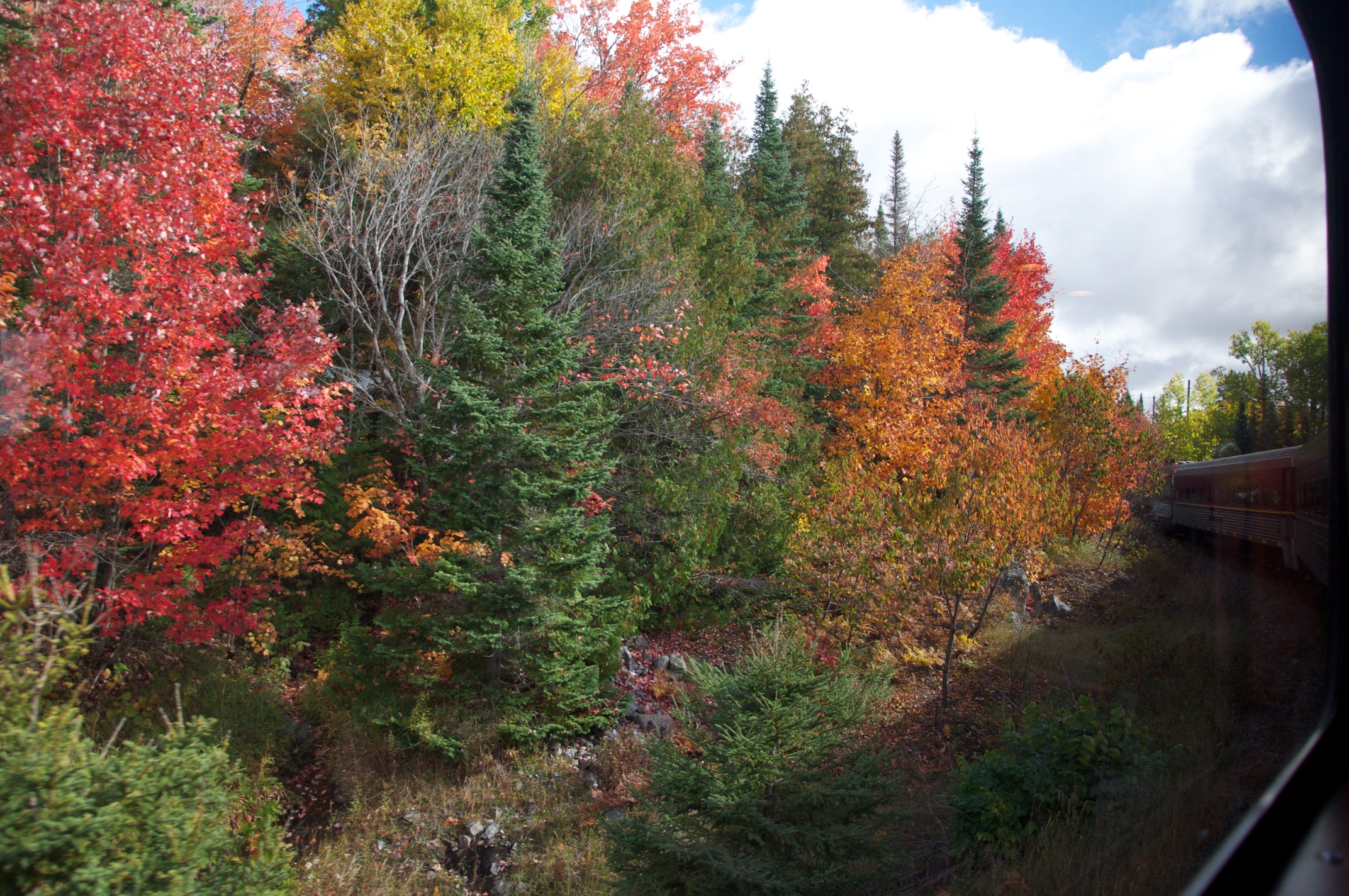
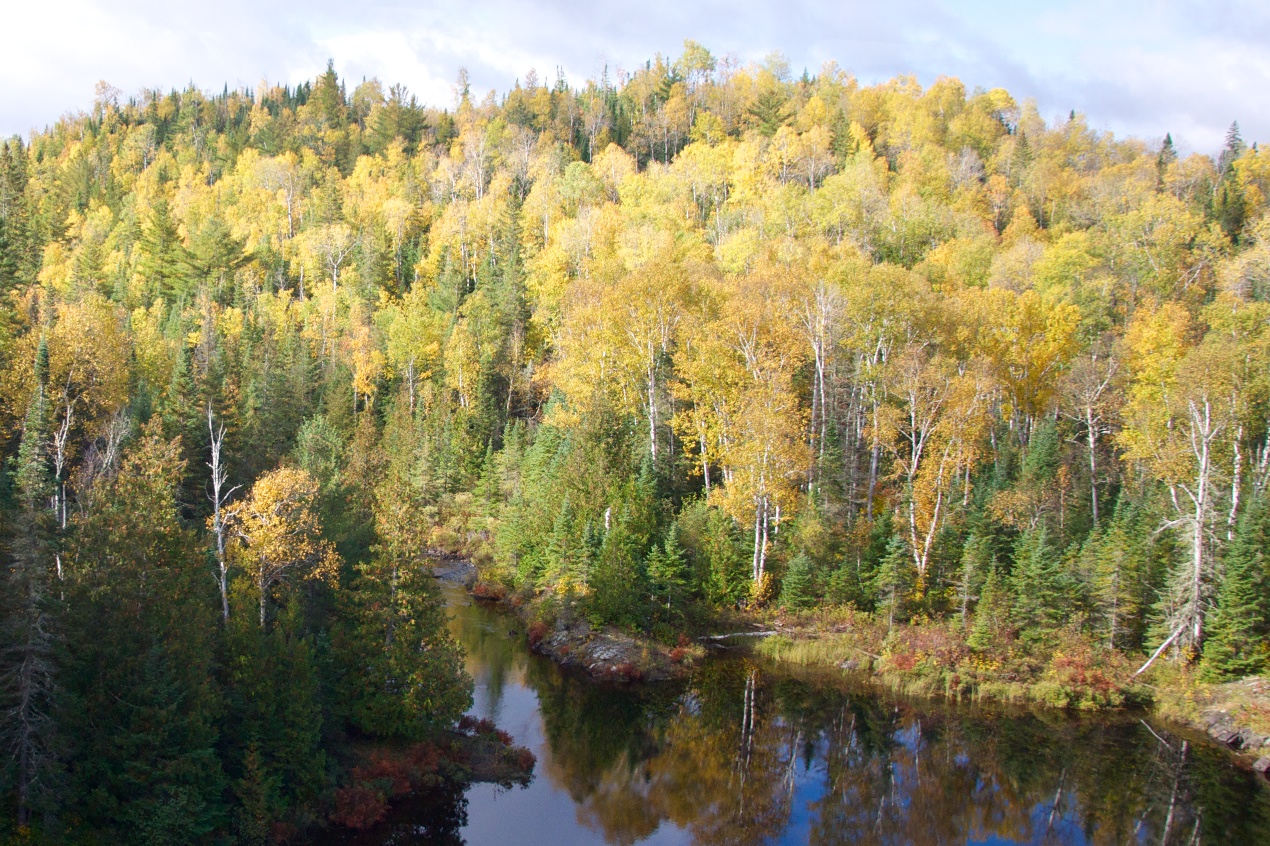
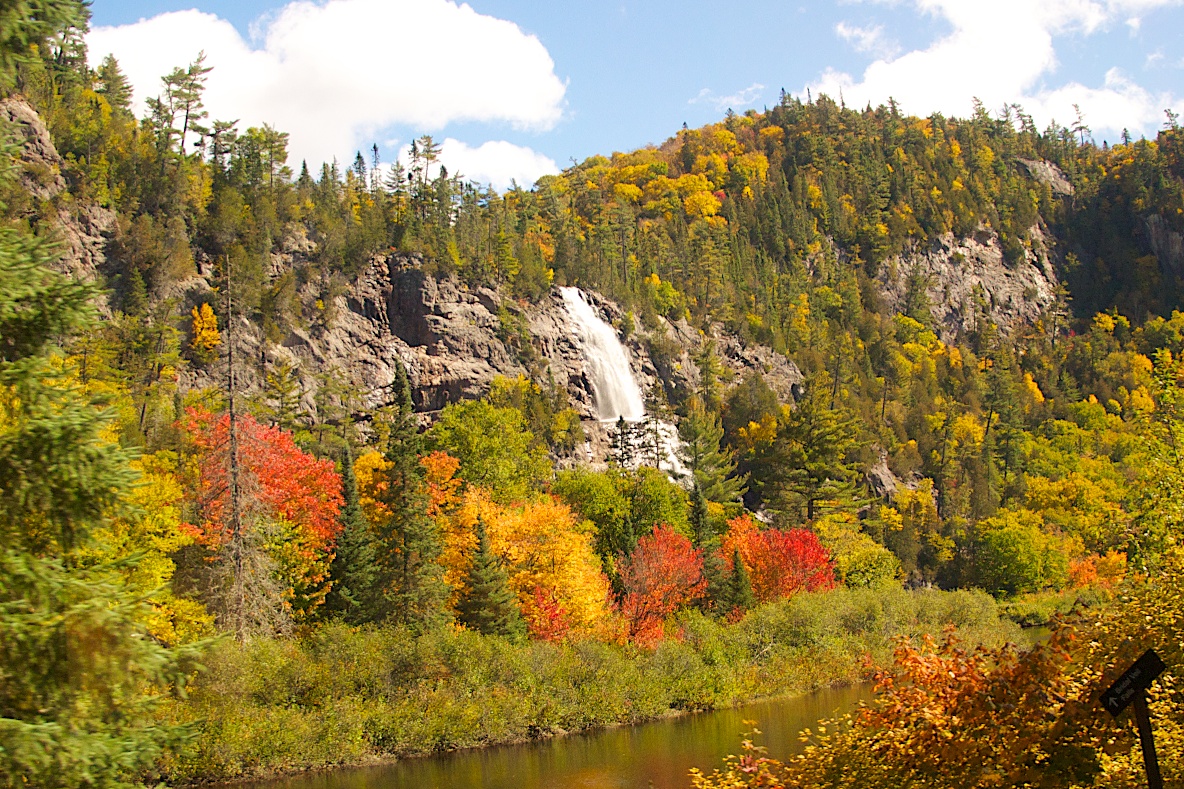
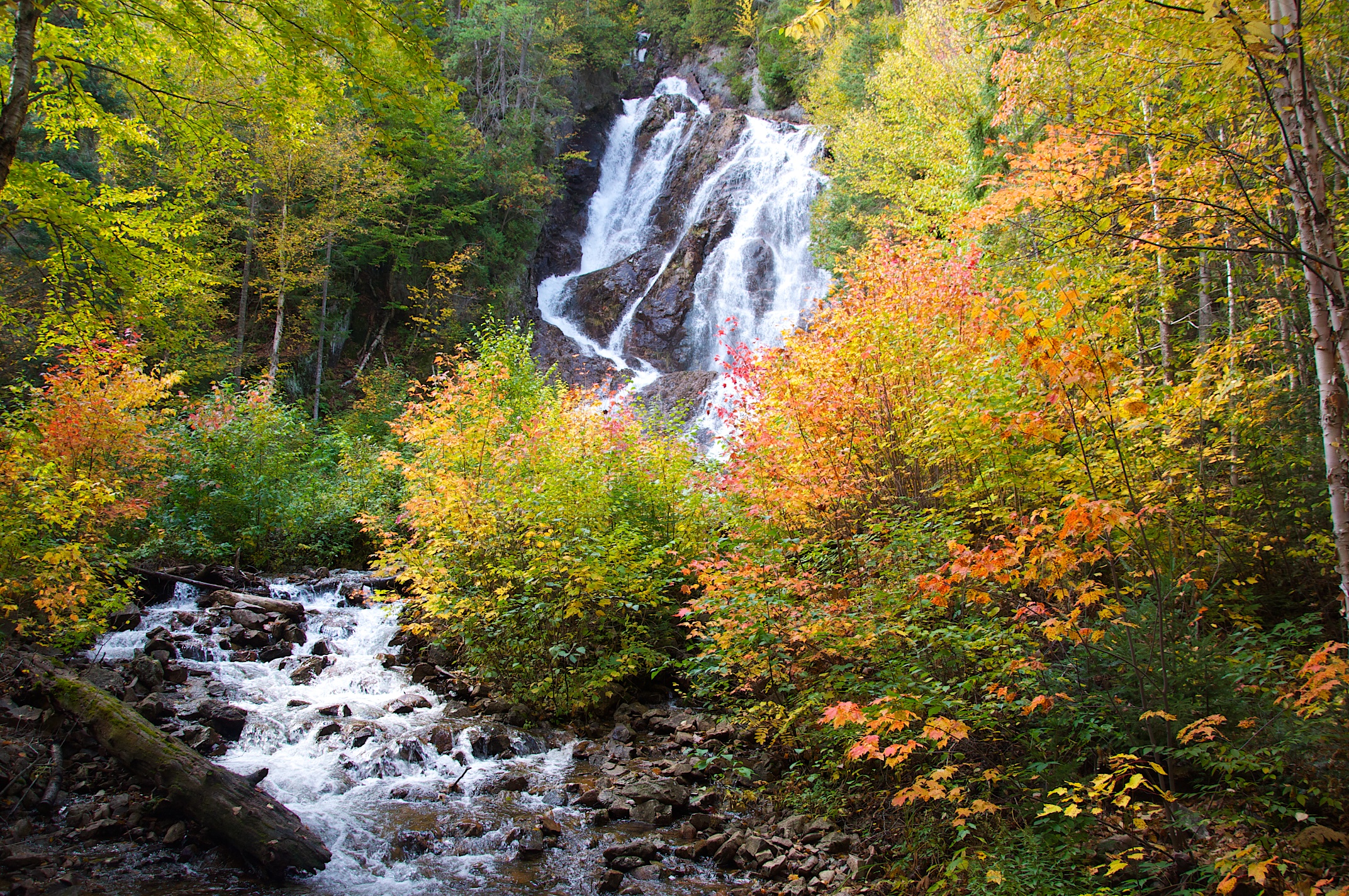
The last few of the pictures from the Algawa Canyon train ride follow.  My favorites are those seen from the advantage of height, showing a wide variety of intermixed color near and off into the distance.  Gwen likes those showing lakes and streams with the varied colored trees growing back from the banks.  The train ride turns out to have some of the best such views we see on the entire trip.

Upper Pen trip 30 Sep   009 Upper Pen trip 30 Sep   013 Upper Pen trip 30 Sep   012 Upper Pen trip 30 Sep   011 Upper Pen trip 30 Sep   010

1 Comment

Filed under Uncategorized

October 4 and 5, 2013

October 4.

Today is a travel day – from Bayfield on Lake Superior to Sturgeon Bay on Lake Michigan, about a 6 hour drive.  The drive is leisurely, and wet.  Most of the way, we are able to see color in the trees, but the going is as happy as long, boring road trips usually are.  We get to Sturgeon Bay in the late afternoon, checked into the B&B Gwen had reserved for us, and then went to a local restaurant (John Martin’s) for dinner.  It turns out to be OK; fish-based soup for a starter, and then a kobi-burger with cherry BBQ sauce for me, and a very warm chili (chemically, that is) for Gwen.  It made for a nice start to the evening, and to our visit.

October 5.

Today the rain continues.  We decide to go out and see the local museums, a winery, and (if we can find it) a cheese place – it is Wisconsin, after all!  The rain does dampen the color visibility, so it is fortunate our tour goals for today are mostly inside.Upper Pen trip 4 Oct  010
The first stop is the Door County Maritime Museum.  This is a specially-built building on the south side of Sturgeon Bay, just below the bridge across the bay as it narrows.  The town of Sturgeon Bay is just north of this bay, and the B&B we are staying at is just two streets up from the bridge itself.

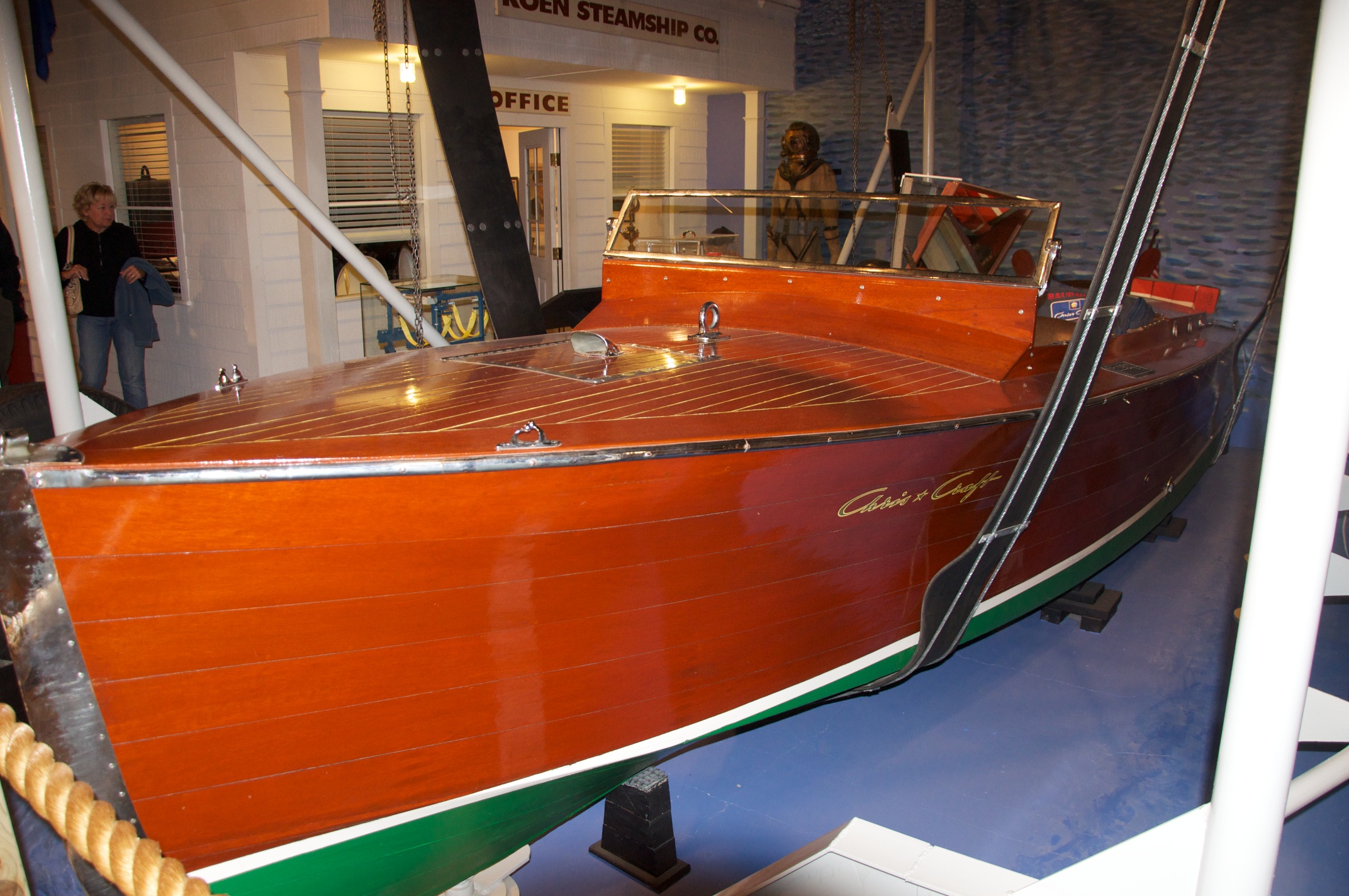
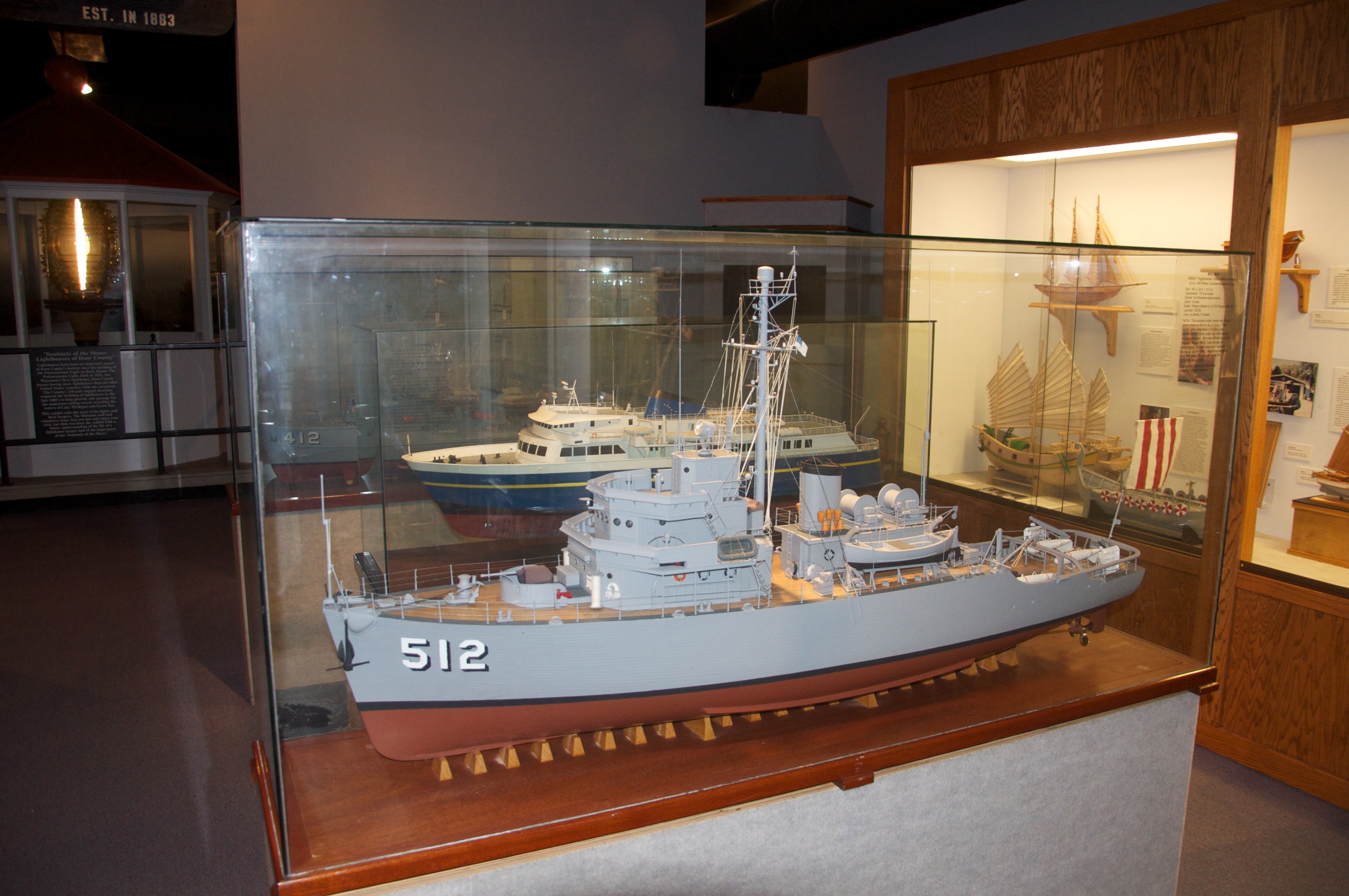
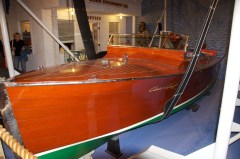
The Maritime Museum has a number of great exhibits each focused on a theme.  The first one I spend time in is about the boat-building businesses around Sturgeon Bay.  Two major ship-builders had grown up over time, the first one of the 20th century ones was the Bay Shipbuilding Co (1918), and the second the last being the Peterson Boatbuilding Co (1933).  Upper Pen trip 4 Oct  001  They built wooden boats but once WWII started, the Peterson company built primarily minesweepers and small craft of many different varieties for the US Navy.  Displayed were materials and scenes concerning the various elements of shipbuilding from architectural prints to engines.  One of the displays was about the wooden boat building industry, and Chris-Craft, one of the most famous names in elite-type boats in the early to mid 1900’s.
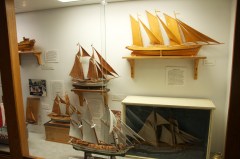
Upper Pen trip 4 Oct  003In another area, there were a variety of model ships, built to enable the boat designers to see what they were headed toward before they built the real thing.  These models are small, but in many cases artistic.  The picture shows some examples of sail boats, but many of the models were of powered ships, including everything from tugboats to ore carriers.  Upper Pen trip 4 Oct  002
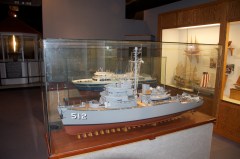
Another display area (upstairs) is all about pirates, including a series of paintings about pirates, descriptions of the pirate life, and detail on Blackbeard, one of the more famous (and infamous) pirates to stalk the Caribbean.  Each time I see one of these exhibits I learn something.  This one talked about the democratic way the pirates ran their operation.   The ship’s captain was elected, and rules were written up so that each man (and in a few cases, woman) knew what they could expect from the venture.   Each role on board was defined, with the quartermaster as the one who divided up the spoils of the captures according to the agreements made.  The exhibit includes games for children, and the opportunity for them to ring the bells and blow the foghorn, both of which could be heard all through the museum.

After our visit there, we go back up to the north side of the Bay, and visit the Door County Museum.  This is a much more eclectic collection, including everything except ships and shipping-related things.  The first room you go into as you go into the museum is a marvelous woods-and-stream theme diorama with many animals, deer, wolf, otter, and  many, many birds.  A local taxidermy artisan provided the whole diorama including all the animals.   It was very well done, including laminated-page booklets describing each animal and bird distributed around the exhibit.

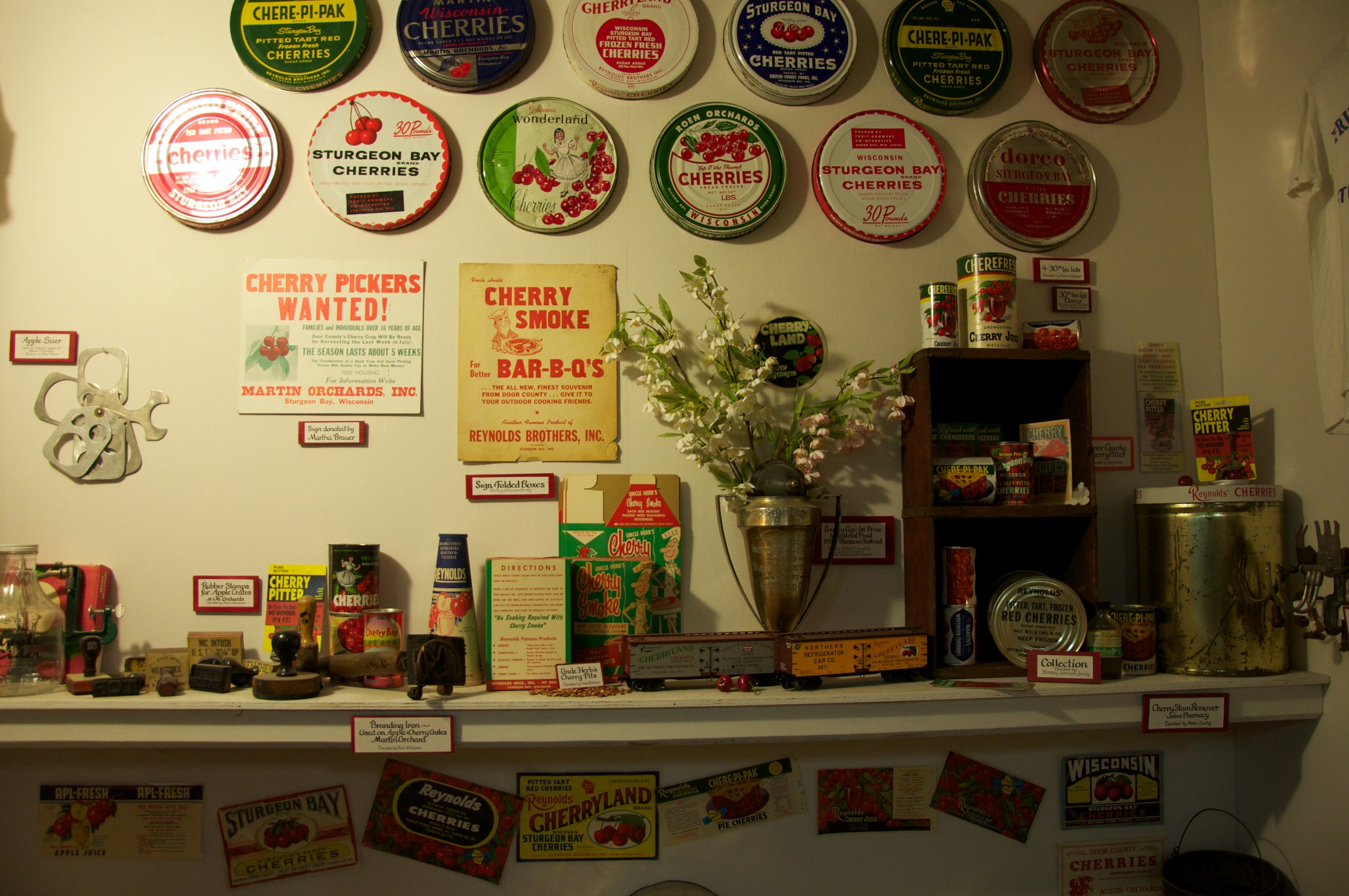
After this exhibit, I stumbled upon a video presentation concerning the cherry-growing history of Door County.  And here I thought MIchigan was the cherry capital of the US!  In the late 1800’s, after exhausting the fur trade and cutting down all the virgin timber in the area, the newly arrived citizens were looking for a profitable use for the land.  The land is not very useful for normal farm crops, as the topsoil is thin and covers a limestone base.  One lucky farmer started planting fruit trees, and sure enough, this worked.  In the very early 1900’s, a pair of agricultural professors came through, tested the soil, and suggested cherries might work.  They bought some acreage and tried it.  Sure enough, the harvest of cherries turned out to be very profitable.  The area has grown cherries ever since.  The business has had its ups and downs, of course.  The best years were the 1920’s and the 1950’s and 60’s.  In the ‘20’s, the cherry was a real treat, and with the advent of canning, the product of the area could be sold all across the country.  The depression hit the cherry industry hard as it was not considered a necessity.  In WWII, the Door County area was home to one of the many German POW camps here in the US.  Upper Pen trip 4 Oct  004 Upper Pen trip 4 Oct  005The POW’s were ideal cherry-pickers, and that helped improve the availability of the product.  After the war, Mexican braceros came in to handle the cherry picking, which lasted until the cost increased beyond what was economically feasible.  Fortunately, a device attached to tractors provided the answer.  Two tractors come up to a tree from opposite sides.  Each one has a rubber-based landing platform that when overlapped completely covers the ground under the tree, with a conveyor belt.  One of the tractors provides the shaking ability to drop the fruit from the tree. The fruit is then conveyed to a container for transport back to the processing plant.  It’s about this time, Michigan determined it had good soil conditions for cherry orchards as well, so the competition arose.  Expansion of the cherry market through the development of new ways to eat use them (dried cherries are a large and growing segment of the product line) has enabled Door County to continue to be one of the largest economically profitable cherry growing areas in the country.
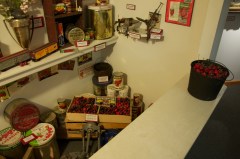
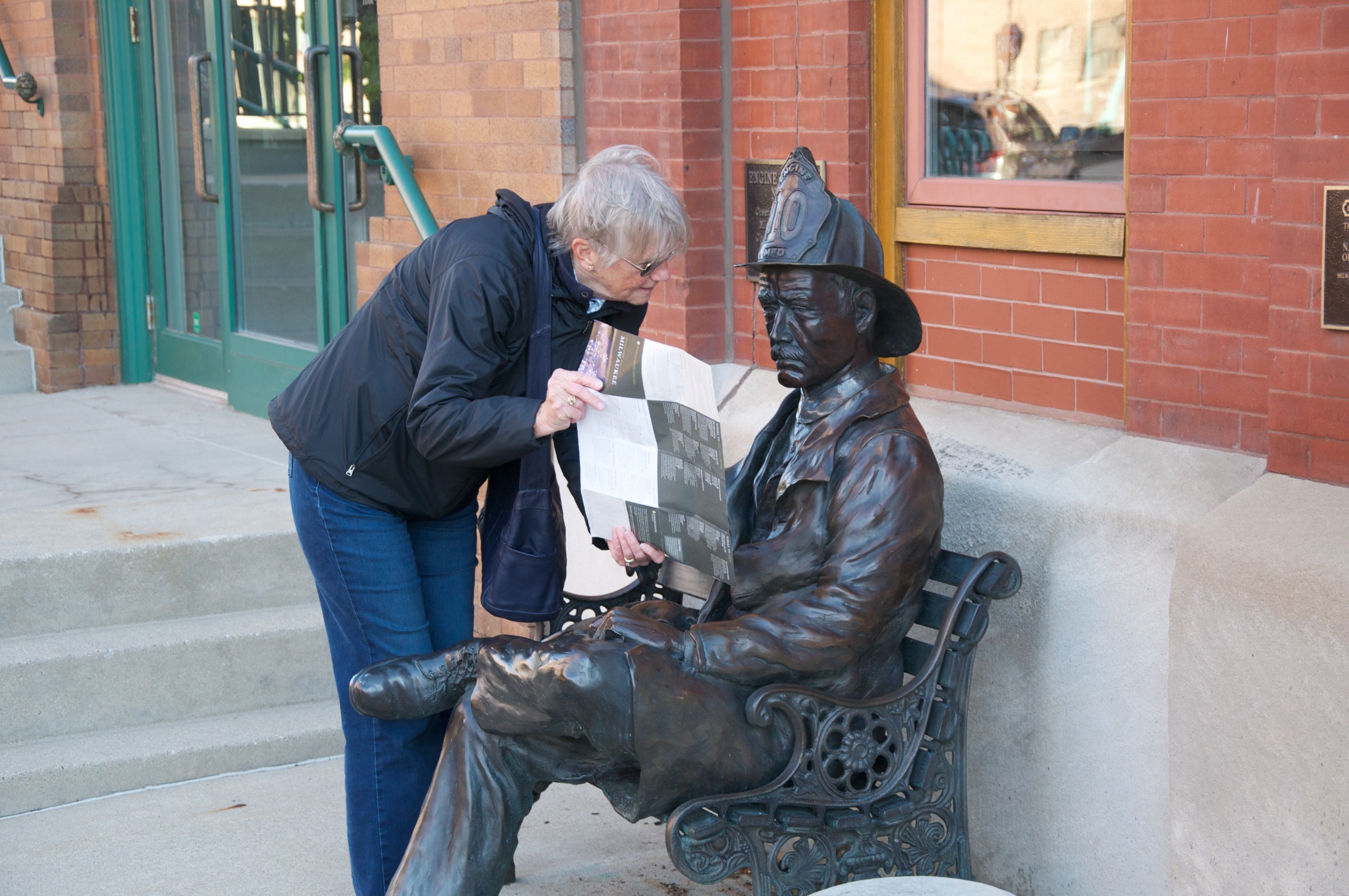
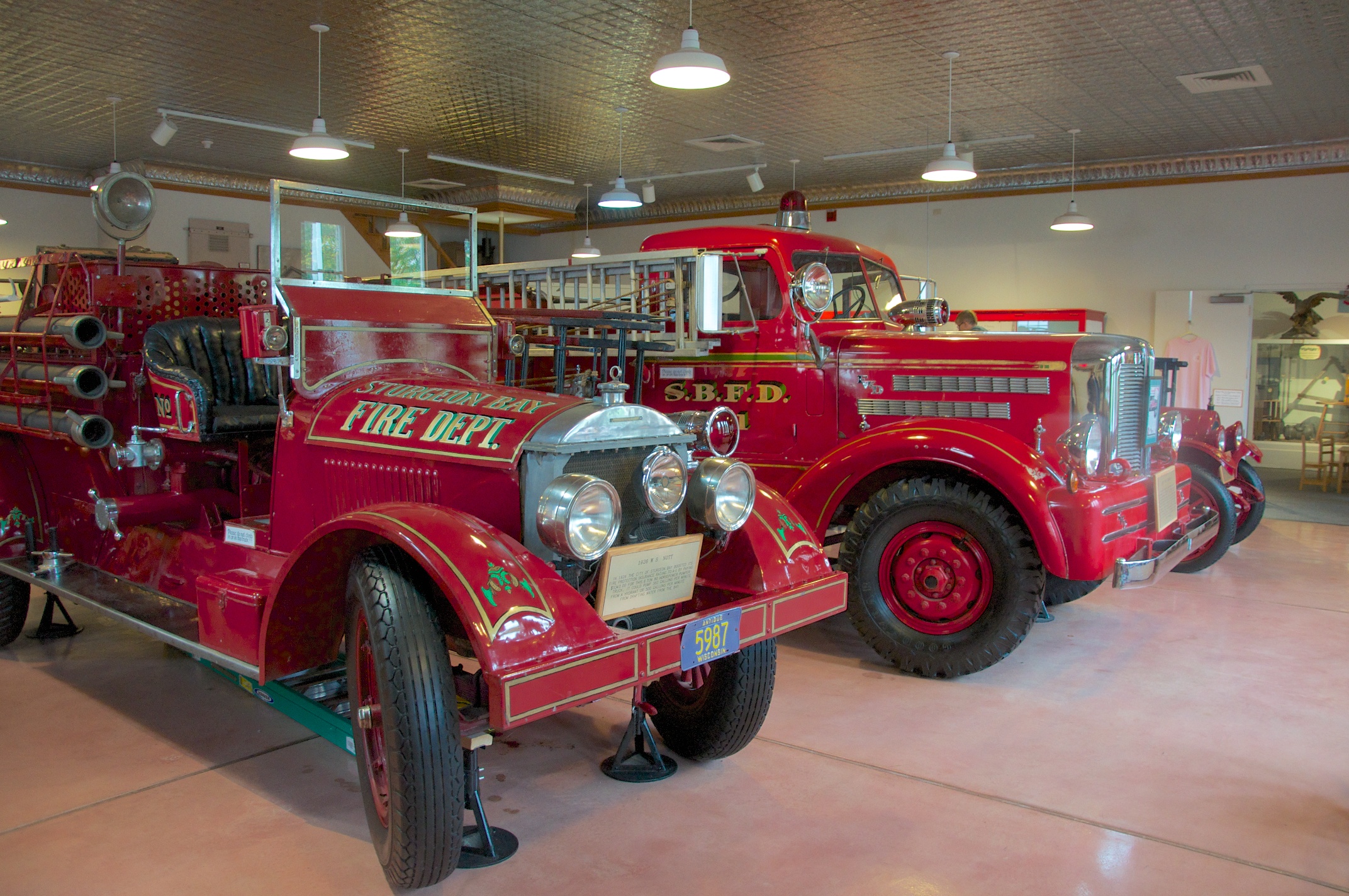
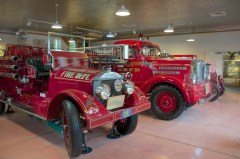
On one side of the building is an old firehouse, recreated from the one that sat across the street from the current museum location.  Inside are three old model fire trucks, as well as displays of fire fighting equipment both old and more recent.  (Again, I learn something new every time: early fire trucks often specifically carried fire-retarding chemicals to be mixed with the water they sent jetting through the hoses.)  Upper Pen trip 4 Oct  011
Upstairs was a video of a uniquely Wisconsin fish-fry called a “fish boil”.  An enterprising restaurant owner came up with an idea for this approach to cooking fish in large quantities.  In a large metal pot set in an outdoor BBQ pit, he put potatoes for 10 minutes in water already brought to a boil over a cedar-wood fire.  He then dumped in cut up onions, and then put in a wire basket with the sturgeon filets.  Letting that boil for 12 minutes, he then dumped fuel oil on the fire to burn off the scum on top of the water.  He then removed the food from the fire, and served it to as many as 700 at a time, along with roll, vegetable and of course a piece of cherry pie.  This area includes displays about the various men (and now women) who have gone to serve in the military and the equipment they use in their jobs.

Downstairs in the basement were displays of all sorts of antique paraphernalia.  Old typewriters, musical instruments, woodworking tools, coins, medals, pictures of various events, and all of it related to Door County in the 20th century.  It was fun to see, but too much for a quick tour.  For a small museum, it contained much that I would like to go back and see in slower time.  This is one of the best museums we have seen.

We are getting hungry, so head towards what we thought was a cheese factory about 20 minutes further north.  The Rusty Tractor turns out to be a great restaurant, but not a cheese factory.  Gwen has a patty melt, and I have a chicken salad.  Very good food, and they do specialize in signs of all varieties, and that other ubiquitous product: chocolate.  Many market stores we’ve visited here sell chocolate on the side.

From there we go to what we had heard was the best wine seller in the area, the Simon Creek winery.  It is clearly popular.  We get our glasses at a crowded bar, and try several of the reds and whites.  Gwen finds a couple of the whites she likes, and I find a couple of reds, so we buy one each, and move on.  On our way back down to the B&B, we stop at a “pumpkin patch” store, with a country band out front (playing while they try to dodge the rain) and what is getting to be the usual variety of fruit-related products, again in hopes of finding cheese unique to Wisconsin.  Nope, not here!  We do get to see how they milked their cows.  In a room at the end of the building where the store is, the back wall has floor to ceiling glass.  Through this, we saw two lines of 10 cows each with the automated utter-suckers ready to be attached.  While we watch a man goes down the line on one side, washing the utters and then attaching the tubes and starting the machinery.  Milk started to flow almost immediately, and we were informed by the signage that they could milk 60 cows an hour with this technique, as opposed to the 6 cows an hour possible using hand milking techniques.  Amazing!

Tomorrow we travel to Milwaukee.

2 Comments

Filed under Uncategorized

October 3, 2013

Today is supposed to be wandering around Bayfield, but the weather is not supposed to be good, so we’ll see.

After breakfast, we decided to go out to see the town, as the promised rain appears to be holding off, even though it is overcast and dull.  It’s the fruit harvest season, and in fact the annual Applefest celebration in Bayfield is happening this coming weekend (we’ll just miss it).  Based on Sharon’s recommendation, we are going to Erickson’s orchard and miscellaneous shop first, then to Hauser’s Orchard, and finally to All Sister’s Winery.  We didn’t want to buy much, as we are not even half way through our trip, and anything we buy at this point we’ll have to carry for the rest of the way.   Erickson’s turns out to be a good (and interesting) shop.  They have (as does Hauser’s) a variety of fruit-based jams, jellies, and dips.  The nice thing was they had bowls of some of these products available for tasting.  A couple of the sauces were good enough to entice us to buy them (admittedly they were the ones at Hauser’s).  In addition to the products of the season, Erickson’s had on offer a variety of apples, and an antiques store.  While we enjoy looking, there is nothing we found that we convinced ourselves to buy.  We left there, and headed to Hauser’s.  This place has a similar variety of offerings, including the antiques.  They also have wines for tasting, but they are apple-based, so we elect not to do so.

On to All Sisters, and this turns out to be a bit of a hidden gem.   They have a variety of grape-based wines, which we are happy to sample  We find that some of their products (especially two of the whites) are very good indeed.  We bought a dozen bottles, and I’m sure we will be hearing from them about more as they mature (they are only a year old now).  We later found out (from Sharon) that All Sisters is run by Hauser family members, even though the winery is financially independent of the Hauser Orchard.

We decide to stop in town on our way back to the B&B and see how the preparations for Applefest are coming along.  There’s an excellent used-book store which Gwen kindly let me spend an hour in.   We then go to the mercantile – cooking store on the main street.  They have even greater variety of fruit-based sauces, jellies, jams, etc., and they also (salesmanship be praised!) offer the opportunity to sample some of them.   Like the good customers we are learning to be, we take advantage of the ability to taste, and buy those we really like.  It’s then back to the B&B with our bounty before we venture back out to find dinner.

Dinner is at the Portside restaurant, right on the Bayfield docks.  This place was recommended by Sharon, and with her help, we got a free glass of wine each.  Of course we had to celebrate our anniversary a bit early, but what the heck!  Gwen had the steak, and I had blackened lake whitefish (excellent, both of them).  After dinner, we got dessert from Sharon (mint-flavored, walnut-topped, fudge brownies – delicious!).  The B&B had internet connection, but no TV, so we spent the evening reading.  A much better day than we anticipated.

Not a very bright day for picture taking, so here’s a few more from the trip to Agawa Canyon.

Upper Pen trip 30 Sep   014 Upper Pen trip 30 Sep   015 Upper Pen trip 30 Sep   013 Upper Pen trip 30 Sep   012

Leave a comment

Filed under Uncategorized

October 2, 2013

The next morning, we cleaned up, and with sincere thanks for the opportunity to stay and spend time with Hank and Beth, we head for Bayfield, Wisconsin.  Our destination is a B&B called the Thimbleberry Inn, happily situated on 400 feet of shoreline just west of Bayfield.  It is a very pleasant place with only four guest rooms.  Sharon and her husband Craig run the place, and while they are trying to sell it (they would like to retire), they still run a classy operation.  Each evening, we get dessert in the form of some freshly backed goodie, and then at 8:00 am each day, a pot of coffee and tea is brought to our room with a muffin of some kind (again, freshly baked) to whet our appetites for the full-on breakfast served in the dining room upstairs half an hour later.  Sharon, in addition to being an excellent baker and chef, is very informative about the town, and environs.

After we got there, we took off straight away to get the ferry out to Madeline Island, one of the many Apostle Islands that surround the Bayfield area.  We parked and got on board just as the ferry was leaving.  The island is one of the larger ones in the grouping, and has a bit of history about it.   Almost immediately after getting off the ferry, we saw the museum of the island’s history, so of course we had to investigate.

It is an interesting museum, with many artifacts found on the island, a film of the island’s history, buildings from its historic past (taken apart and rebuilt on the museum grounds), and more exhibits of a historical nature.  The one that caught my eye was a whole corner and wall devoted to showing step-by-step how to build a birch-bark canoe.  As birch trees are common to this area, and water is so prevalent, this was in times past the best material to build transportation out of.  The four old buildings from the past were built together so that we could walk from one to another without going outside.  As Gwen said, this took away from the authenticity (and confused the visitor), but it made the going easier in inclement weather.  Inside were antique tools, lamps, furniture, weapons, and household artifacts.

The film on the history of the area was not your straight-forward sequential first-this-happened-then-this happened story.  It talked and sang about the people who lived there, and if we hadn’t gotten a good lesson in the Indian-French-British sequence of time and occupation built around fur trading and exploitation of other natural resources from Ft. Michilimackinac, it would have been exceedingly difficult to follow.  The main difference was the coming of the wealthy folks from further south in Wisconsin (Milwaukee, for example) who used the island as a summer vacation spot.  This reminded me (although not Gwen, surprisingly) of the winter visitors to southern California (Pasadena in particular) around the same time (the end of the 19th, start of the 20th century).  These wealthy families devoted time to making the place entertaining for themselves and their children while they were there.

We found ourselves closing the museum at 3:30 (central time – we had forgotten we were no longer in the eastern time zone until we reached the B&B), and then meandering around just long enough to catch the next ferry back to the mainland.  We went out to dinner at a restaurant recommended by Kyle’s friend Suzie, the Rittenhouse Inn.  The maitre d’ gave us the menu verbally, something I have never experienced before.  He waxed poetic about each element on the menu, and easily convinced me that the 5-course option was preferable over the 2-course option.  Gwen had the 2-course, as her stomach just doesn’t stretch to five courses any more.  Indeed, the food lived up to the superlatives used by the maitre d’.  I had a cup of their cream-based chowder, with whitefish and trout, a trout-sprinkled salad, leading up to a generous filet of trout sitting on a bed of Israeli couscous.  For dessert, I had a rum-drenched butter pecan ice cream.  There was a raspberry sorbet before the main course to clear the palette.  Gwen had a spinach salad (followed by a donated sorbet just because I got one), and lamb chops on a bed of basil-flavored risotto.  The vegetables were carrots in a honey glaze and asparagus spears.   Of course Gwen was saving herself for the dessert served at the B&B afterward.  And well she should have been, as Sharon’s baking skills fully met the advertising as well.

When we got back, sure enough, Sharon had baked us a marvelous treat for my second dessert.  Yeah, too much food, but how can you say “no” to such a treat?  Oh, well — that’s what vacations are for!

Not too much to picture today, but I still have more of those pictures from the Agawa Canyon train trip.

Upper Pen trip 30 Sep   021 Upper Pen trip 30 Sep   020 Upper Pen trip 30 Sep   019 Upper Pen trip 30 Sep   018 Upper Pen trip 30 Sep   017 Upper Pen trip 30 Sep   016

Leave a comment

Filed under Uncategorized

October 1, 2013

The government shutdown.  The biggest story of the day, but we didn’t know about it until we went out to get to a scenic area up the M-58, only to find it blocked with construction.  We decided to stop at the National Park Service center that we happened to see on our way back to see if there was another route.  The center was closed, and a sign indicated why.  Sigh…

Upper Pen trip 30 Sep   015 (1)

We came back to the cabin, and spent time reading.  The cabin is very comfortable – two bedrooms, one bath, a kitchen, living room, with enclosed back and front porch.  It is pleasantly furnished, and easy to sit around and talk.  It doesn’t have any electronic communication devices (TV or internet).  Hank was kind enough to cook breakfast in the morning, making Swedish pancakes with strawberries and raspberries to put on top, as well as maple syrup.  Excellent!  The picture at right is the view from the window at sun-up.

Upper Pen trip 30 Sep   013 (1)

In the afternoon, we went out on the Pictured Rock cruise.  Pictured Rocks are carved from the sandstone that lines Lake Superior on the UP side from Munising up for over 40 miles.  It is much easier to see them from the water than from the cliffs above, and we got to see quite a bit of them in our almost three-hour tour.

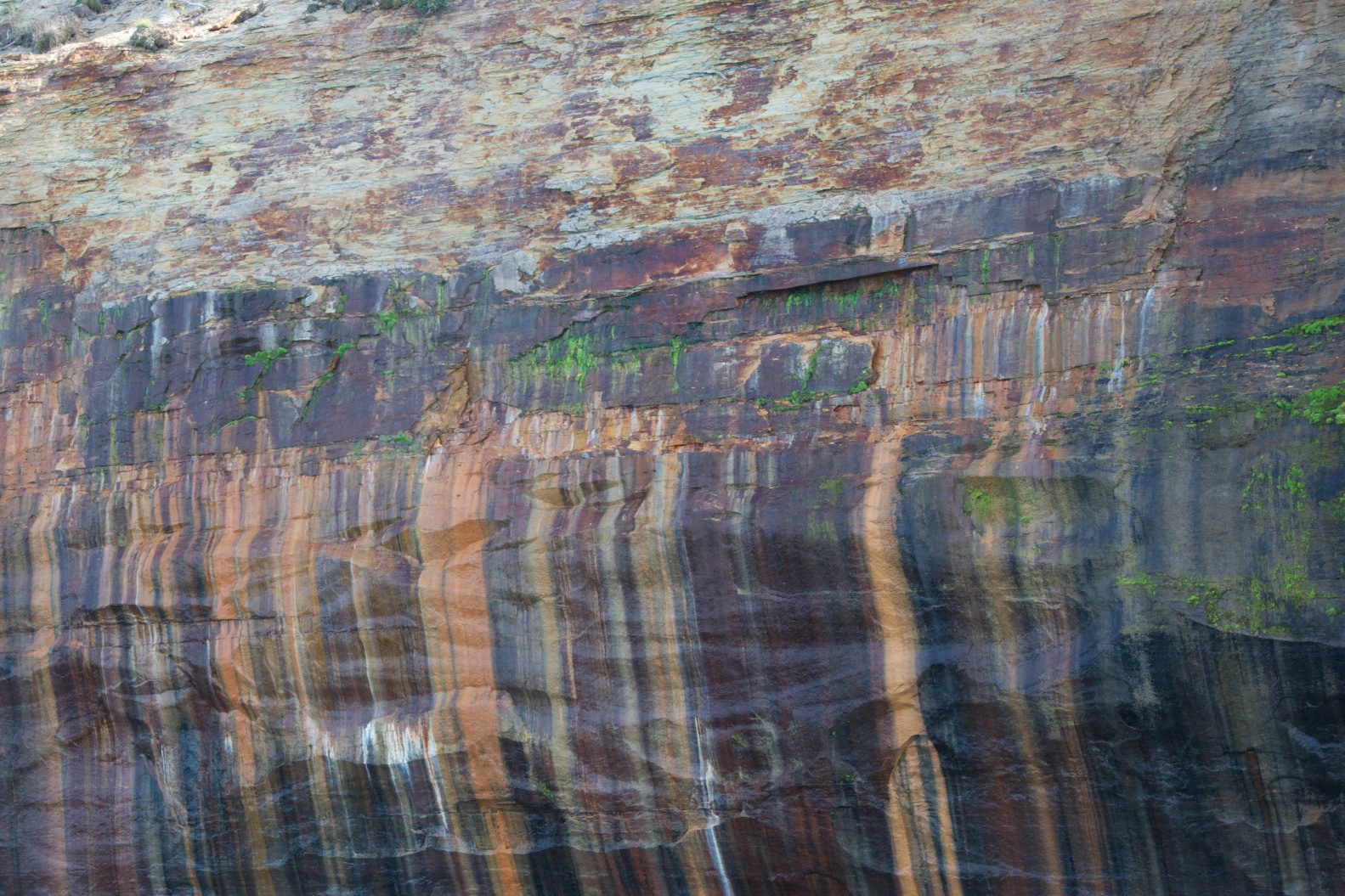
A lot of the pictures are created by water seeping out from the rocks, having leeched minerals from within, to create colored “stains” on the cliff face beneath.  Most prevalent are the iron stains, creating various shades of reds, oranges and browns.  Other minerals include copper (greens), cobalt (blues), manganese (black), and calcium (white).   Upper Pen trip 1 Oct  010 Upper Pen trip 1 Oct  016

The way the stains mark the rocks can sometimes create images that resemble petroglyphs.  Upper Pen trip 1 Oct  015

The shape of the cliff faces also suggest images, such as Indian Head Point, Battleship Row, and Elephant’s Paws.

Upper Pen trip 1 Oct  009

Upper Pen trip 1 Oct  017 Upper Pen trip 1 Oct  019

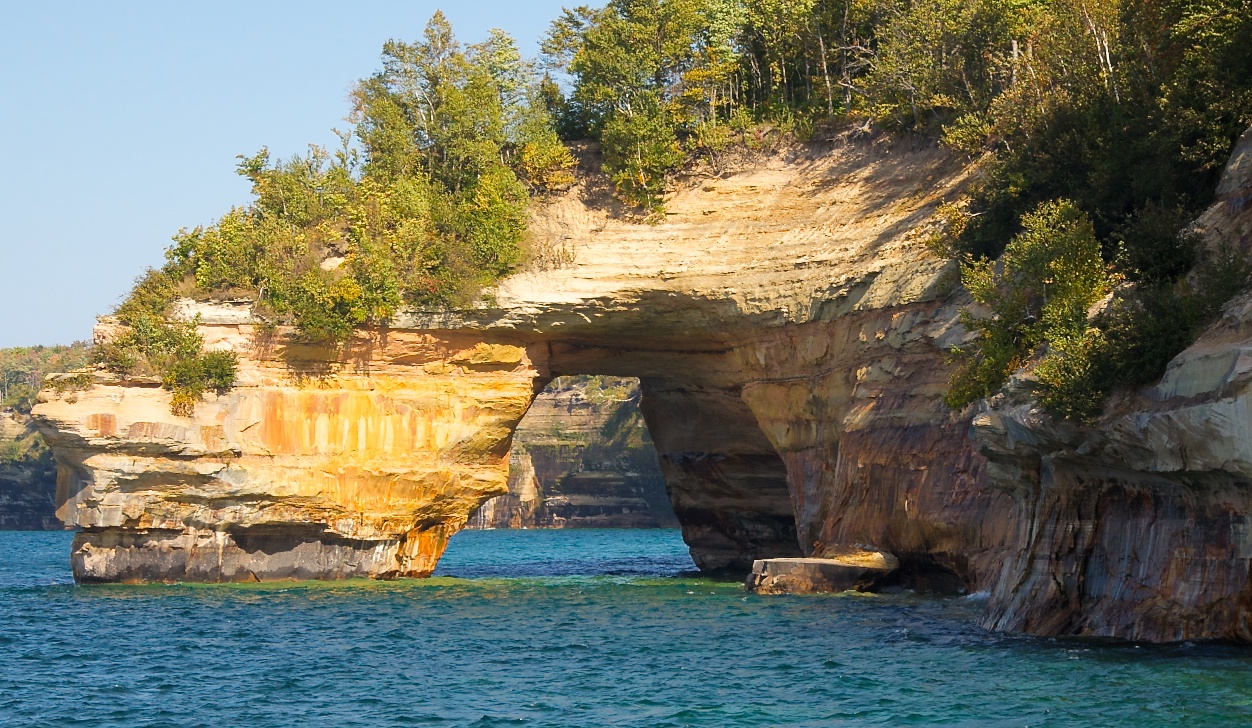
The sandstone is not a long-lived stone, and there are a number of archways tunnels and caves which are changing year to year as the sandstone gives way.  Upper Pen trip 1 Oct  018

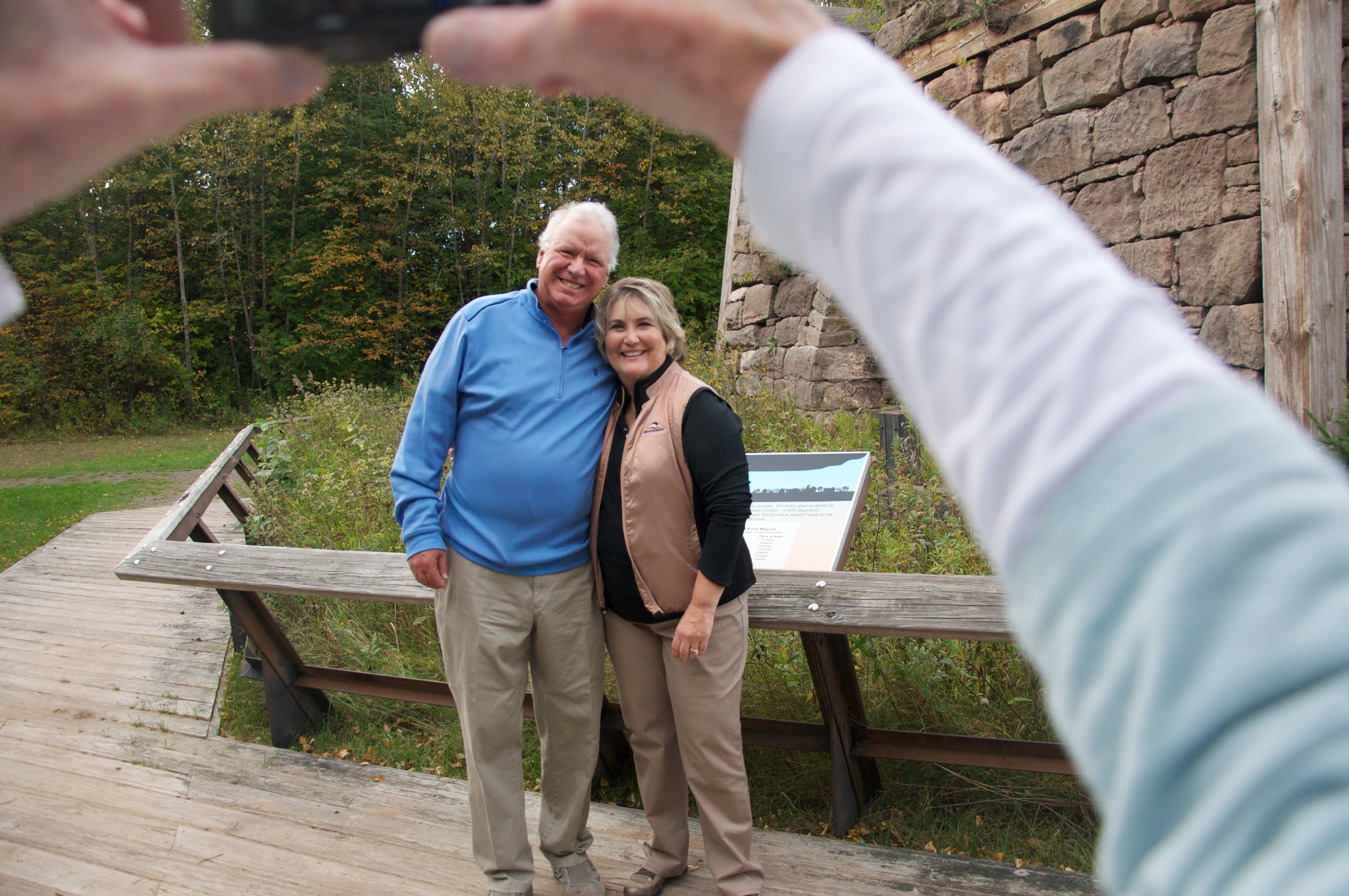
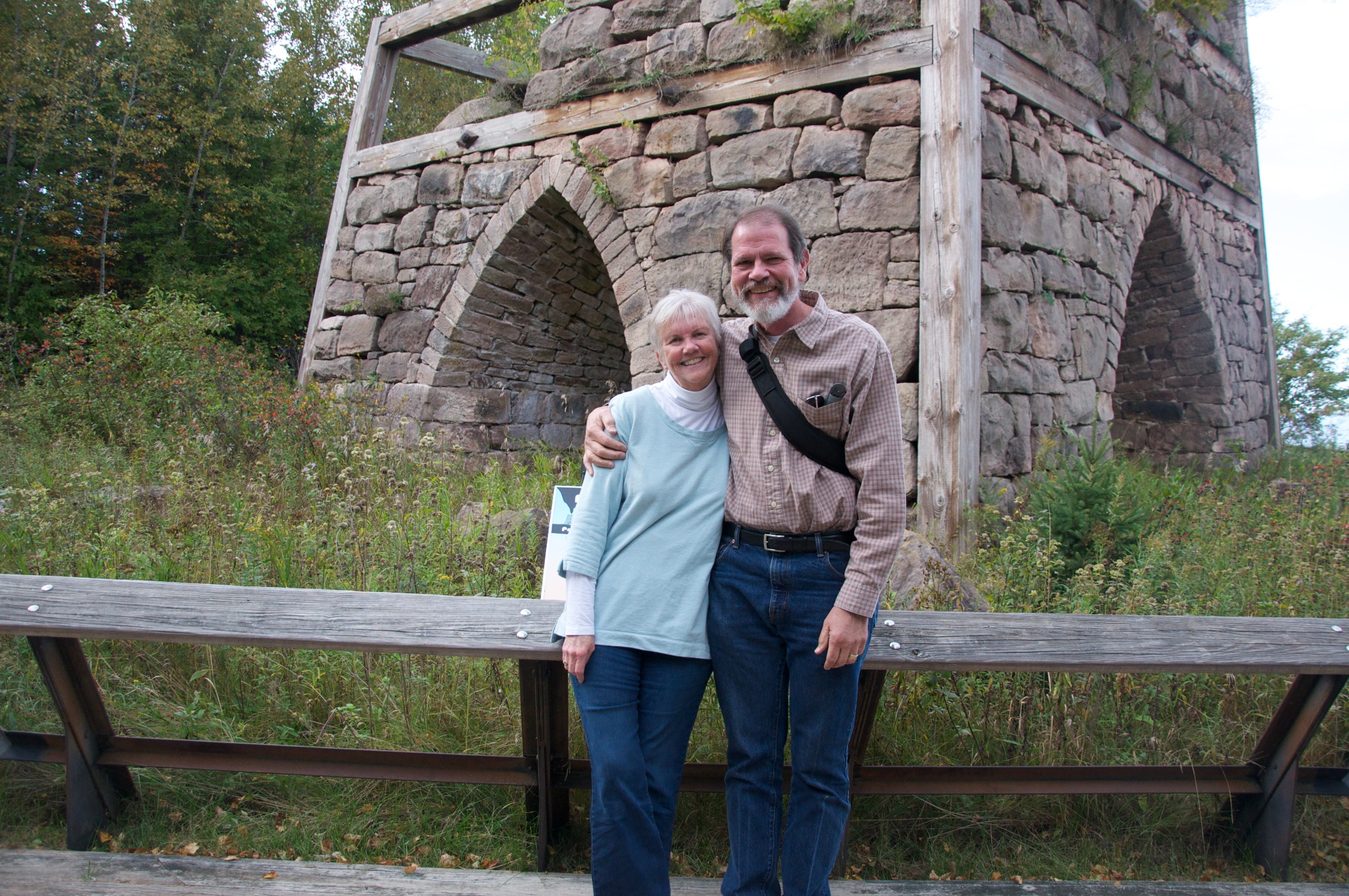
That evening, we went out to dinner at the Brownstone Inn, which turned out to be excellent.  On the way there, we stopped at a relic furnace in Hiawatha State Park.  Upper Pen trip 1 Oct  020 Upper Pen trip 1 Oct  021

Tomorrow we drive to Bayfield, Wisconsin.

And here are a few more of the pictures from the Agawa Canyon train trip.

Upper Pen trip 30 Sep   026 Upper Pen trip 30 Sep   025 Upper Pen trip 30 Sep   024 Upper Pen trip 30 Sep   023 Upper Pen trip 30 Sep   022

Leave a comment

Filed under Uncategorized

September 30, 2013

Today, we go to Munising and Christmas to stay with Hank and Beth (Kerr) at Hank’s brother’s cabin on Lake Superior.  Breakfast downstairs was a lot calmer than it had been the previous day (no train travelers to compete with as we did yesterday – they had already departed by the time we got down there).  We left, heading south first to get back to the UP across the US-Canadian bridge, and then to the west first to the Shipwreck Museum at Whitefish Point, and then to Tahquamenon Falls, and finally to Christmas, MI.

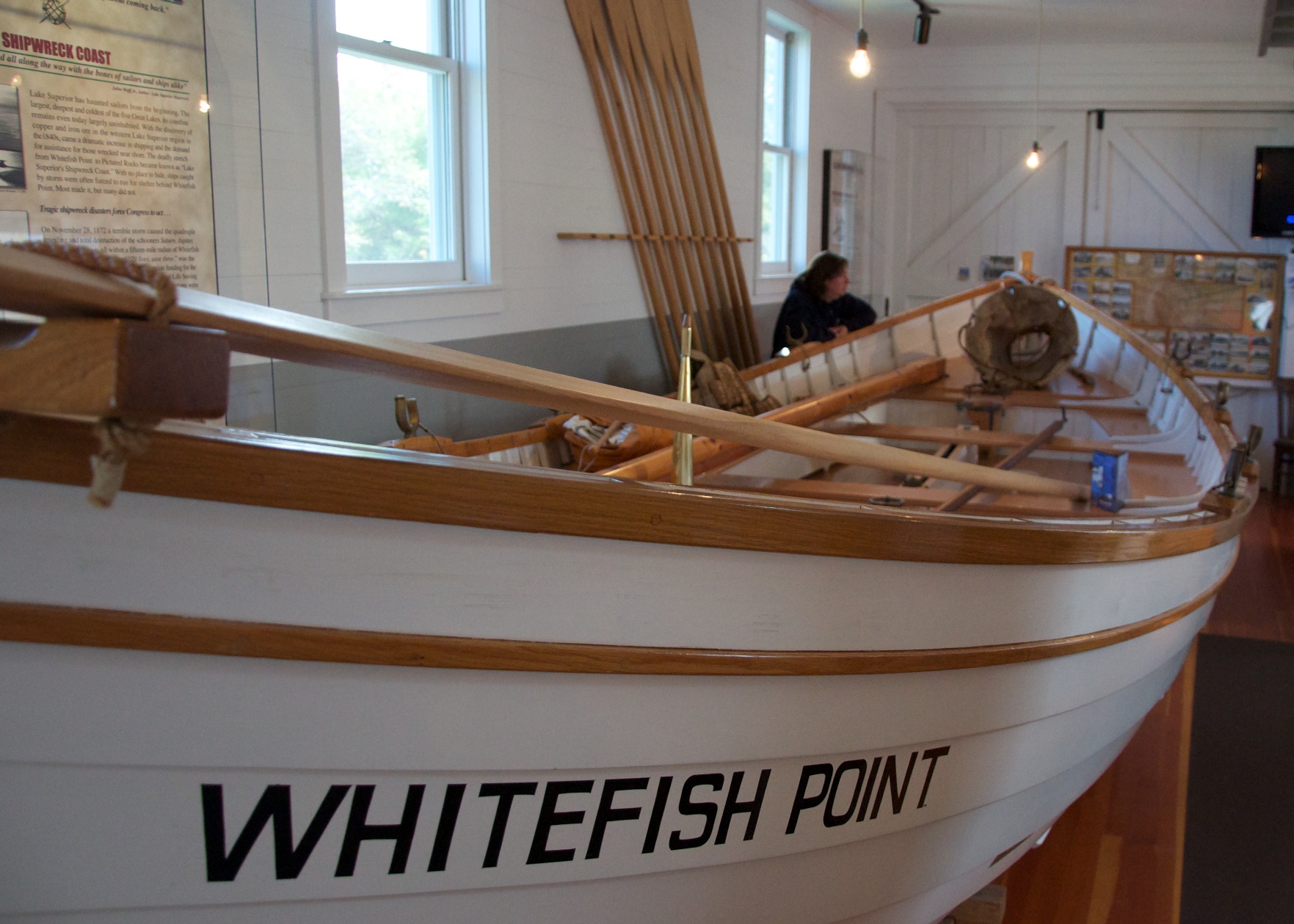
The Shipwreck Museum, located at Whitefish Point, is certainly one of the high points of the trip so far.  It comprises five buildings, all painted a bright white, arranged in a loose circle.  The first to visit is the Shipwreck Museum proper, with exhibits describing many of the more significant shipwrecks on Lake Superior.  In the center front as you walk in is the bell of the SS Edmund Fitzgerald.  Around the room are areas one after another each focused on a particular tragedy.  Each contains a brief story of that shipwreck, including descriptions of the ships involved (and there seemed to usually be more than one), and what is known of their crews and cargos.  On one side of the back wall is a back-lit screen that shows Whitefish Bay, slowly adding one circle at a time each labeled with the ship’s name and date when it went down there.   There have been over 1000 shipwrecks on Lake Superior from the early 1800’s to the present day, and Whitefish Bay, due to its peculiar geography, is the location of more than its share.

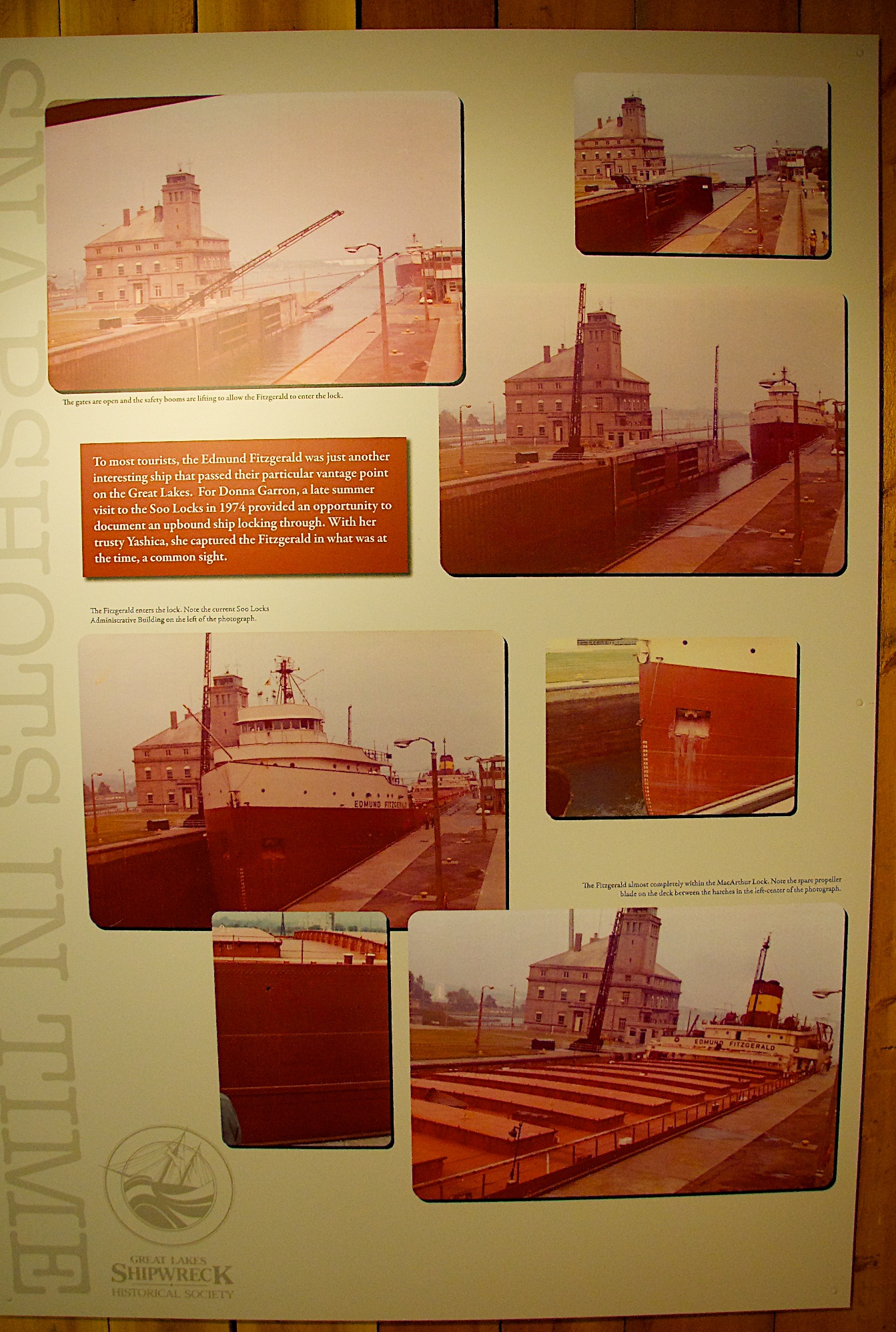
The wreck of the Edmund Fitzgerald is the only one I specifically knew about beforehand, as it was the subject of a song written and sung by Gordon Lightfoot, one of my favorites in years past.  I was not aware of much of the detail, however.  This was the largest freighter on the Lakes, launched in June of 1958.  It handled iron ore, setting records for the quantity it would move from the mines in Minnesota to smelting plants in Detroit, Toledo, and elsewhere.  Upper Pen trip 30 Sep   004The pictures in this panel show the EF moving into the Soo Locks on one of its many trips.

On the night of November 10th 1975, a storm caught her and a sister ship, the SS Arthur M. Anderson about 17 miles out from Whitefish Point.  Hurricane-force winds, rain and waves up to 35 feet high lashed the ships.  The Edmund Fitzgerald had a full load sailing not too far from Whitefish Point.  The two ships were in communication, and it seems the EF was having trouble – it was taking water on board at a rate only barely compensated for by its bilge pumps, and experiencing a list to port.  The storm had made its radar system inoperable, but the Captain in his last communication to the Anderson said they were going to make it.  Two larger-than-usual waves hit the Anderson, and after she righted herself, the Edmund Fitzgerald had disappeared; there were no lights from it to be seen anywhere, and it was lost from the radar screen.  After some searching, it was believed she went down, although no crew members nor debris was found.  After much more searching, she was found, sunk with her entire crew of 29 sailors, 17 miles off Whitefish Point.  Much speculation (and much writing) has been done concerning the cause of the wreck, but no definitive explanation has emerged.  Many changes have been made to the maritime rules for ships on the Lakes, however, and the results have been an increase in safety for the crews and a decrease in the accident rate.

In the second building, there’s a movie about the raising of the EF’s bell.  The bell was cleaned up and sits in pride-of-place in the museum building as a memorial to the crewmen and to those who have lost their lives in shipwrecks on the Lakes.  After raising the original bell, it was replaced on the sunken ship by one of similar size inscribed with the names of the crew members, and those who survived them.  The building where this movie was shown also had posters showing some of the more popular wrecks for diving, including information on how they came to their undoing.

The third building is the museum for the US Life Saving Service.  This service was founded in the mid-1800’s as a volunteer enterprise, funded only at the level necessary to pay for the tools of the trade: surfboats, Upper Pen trip 30 Sep   005  torpedo guns (to fling rope-attached missiles across the bows of boats in distress), life saving rings, axes, and such at stations along the Atlantic seaboard.  In 1871, Congress authorized funds to pay for personnel to man and maintain the stations.  It also extended the locations for such stations, and the next year stations were established on the Great Lakes.   The men who worked this service were not paid very much, but were nonetheless dedicated to their purpose of rescuing people who had been shipwrecked nearby.  I enjoyed the story of one captain who got the call from a nearby town’s mayor concerning a ship in distress just off their shore.   The only way to get there in any reasonable period of time was to board a train with his crew, tools and the surfboat.  They indeed were able to rescue the ship’s crew before it went down.  This service eventually became part of the Coast Guard.

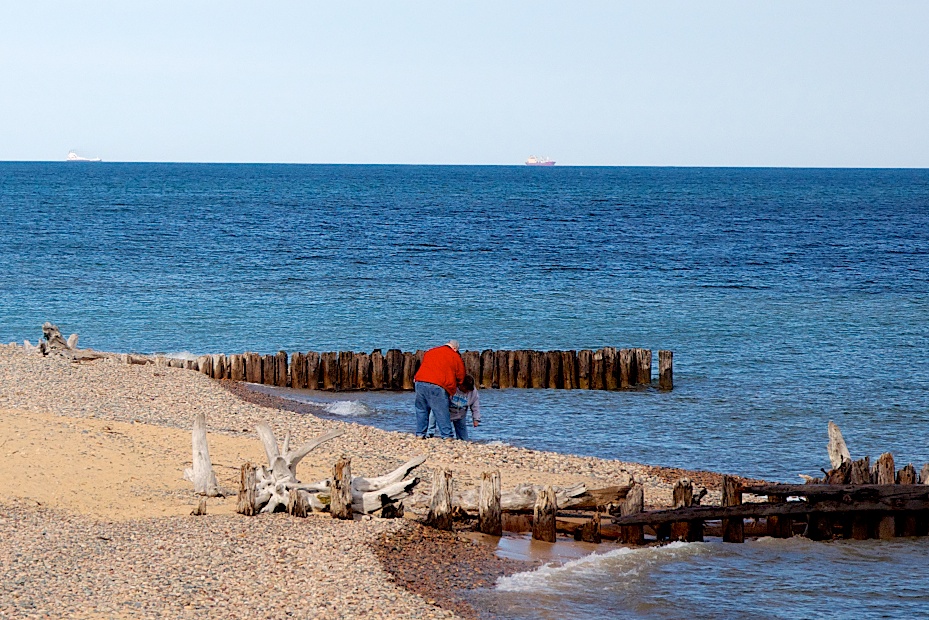
Next around the central green was the home of the Whitefish Point Lighthouse keeper.  This home is spacious, containing four bedrooms, living room, kitchen, two parlors, bathroom facilities, and a third floor we weren’t given access to.  It was just as well that the house was large, as the lighthouse keeper and his family were more or less on their own for most of the year.  The exhibits were based on the keeper who manned the lighthouse in the first 30 years of the 20th century, a Robert Carlson and his wife.  They raised a grandson and granddaughter there.  The isolation of the lighthouse keeper’s job made for close-knit families.  The granddaughter wrote a book of her experiences, which informed the reconstructions in the house.  The lighthouse itself is just outside the house.  Beyond the lighthouse, there is a decked path to the beach, and the opportunity to see shipping on the horizon (yes, there is one there!).Upper Pen trip 30 Sep   005 (3)

There is another building there, but it was not open to the public.  All and all, it was a very informative museum.

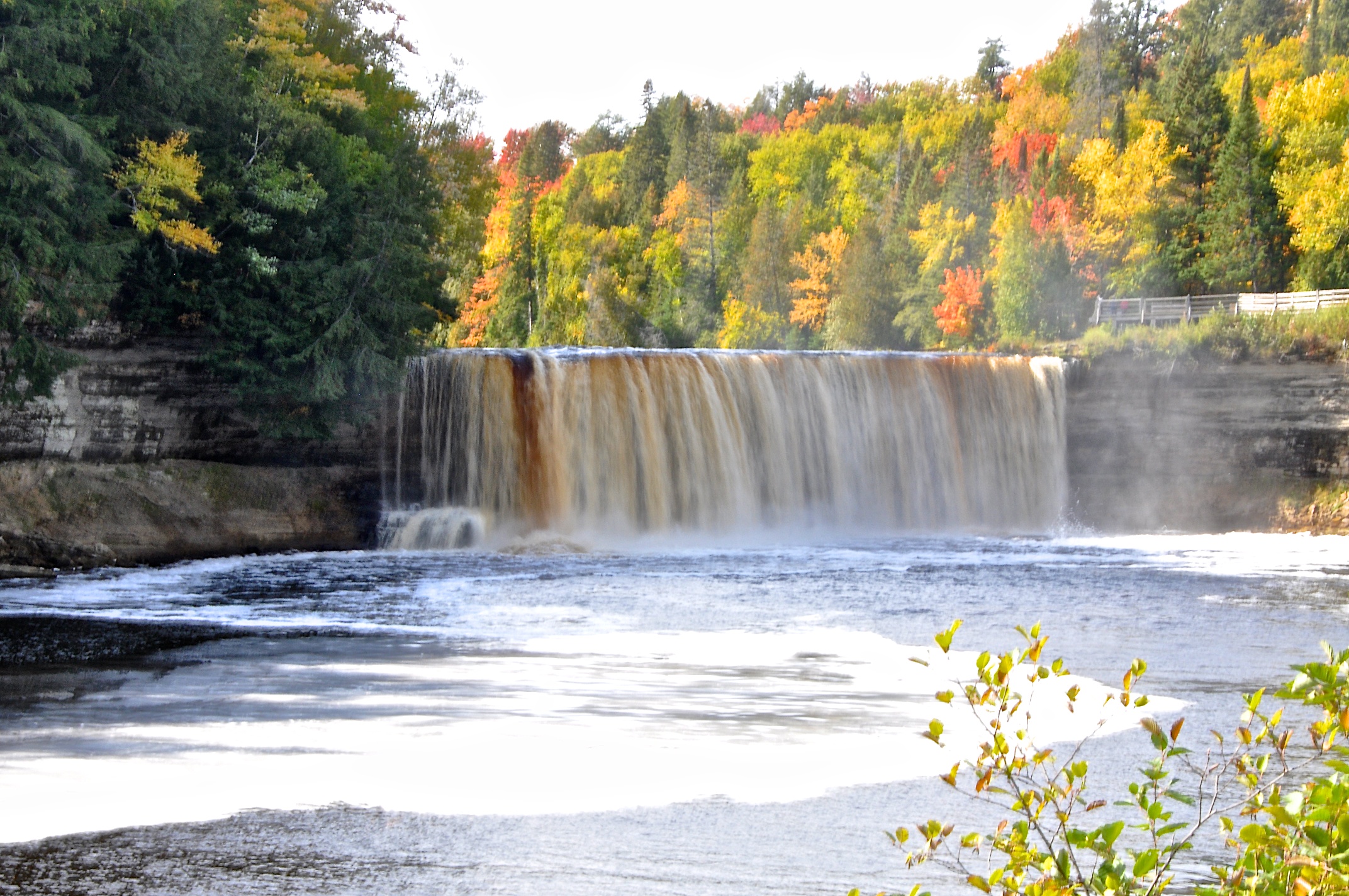
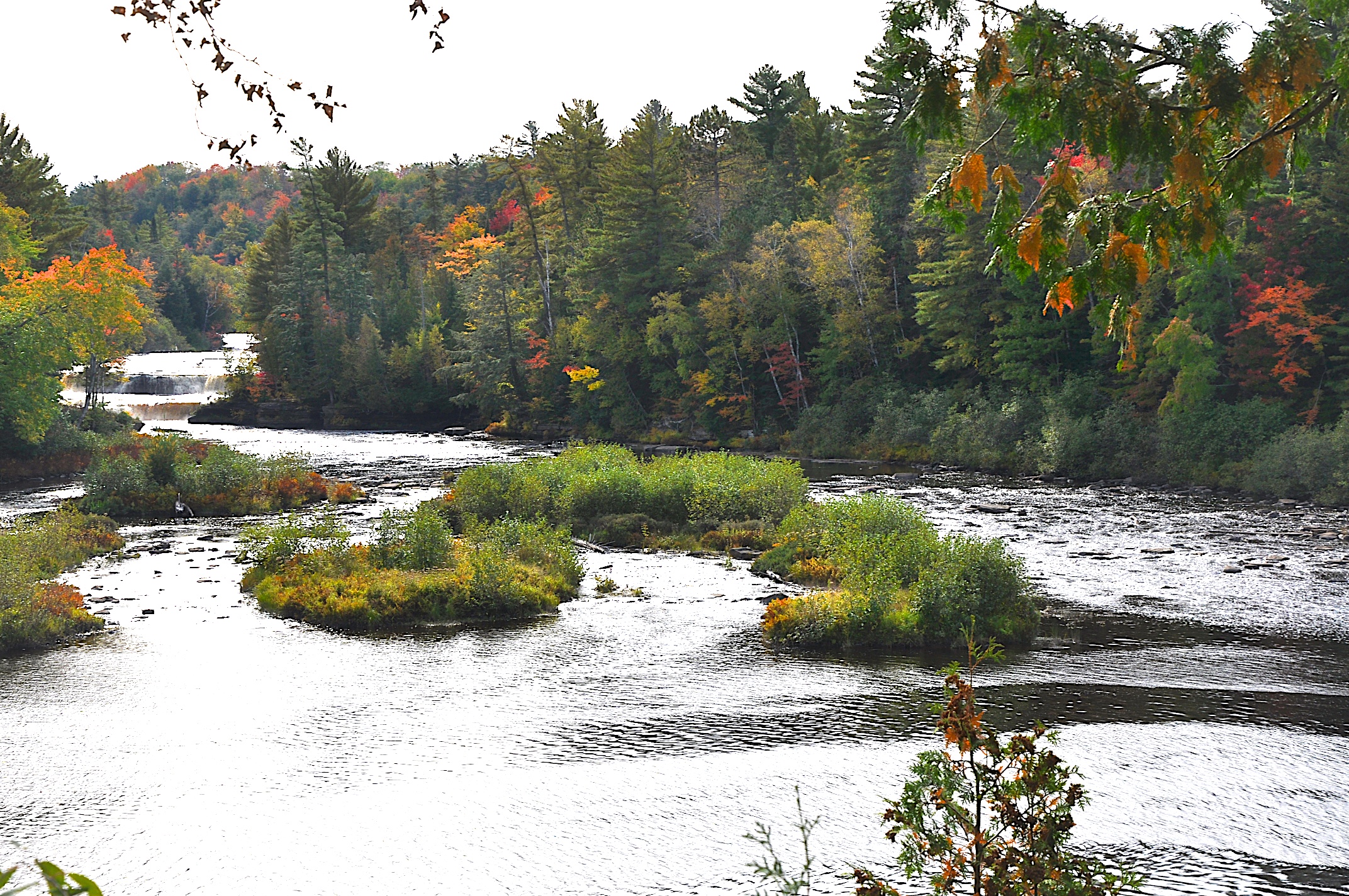
From there, we drove on to Tahquamenon Falls, said to be second only to Niagara Falls in the US in volume of water per minute flowing over it.  It has two separate falls named, not too imaginatively, the upper falls and the lower falls, and we saw them both.  The upper falls is the more dramatic, in that it is a higher drop, but the lower is more varied in how the water gets down with an island in the middle.

The upper falls is wide like the Niagara, but neither so high nor so wide.  Upper Pen trip 30 Sep   010 (1) Upper Pen trip 30 Sep   007 (1)

It is certainly large enough to create a deep pond at its bottom, and a wide river downstream.  Like all the water we have seen so far, the water here was brown with tannin.  As can be seen in the picture, it was very brown in one area on the left hand side, perhaps from a downed tree the water flows over at that point.    There are a number of viewing platforms, and each gives a different perspective of the falls.

From there we went to the lower falls.  Upper Pen trip 30 Sep   012 (1)

Here the water flows around an island, with small falls on either side.  On the left hand side, the water flows across rocky flats creating a rapids effect.  Beth said that when they were younger it was allowed to walk to the island over the falls, but now safety considerations means that is no longer allowed.

From here, we proceeded on to Christmas, MI, and Hank’s brother’s cabin.

Here are a few more pictures of the scenery from the Agawa Canyon train trip.

Upper Pen trip   001 (1) Upper Pen trip   003 (1) Upper Pen Sep 29 002 Upper Pen trip 30 Sep   006

Leave a comment

Filed under Uncategorized

September 29, 2013

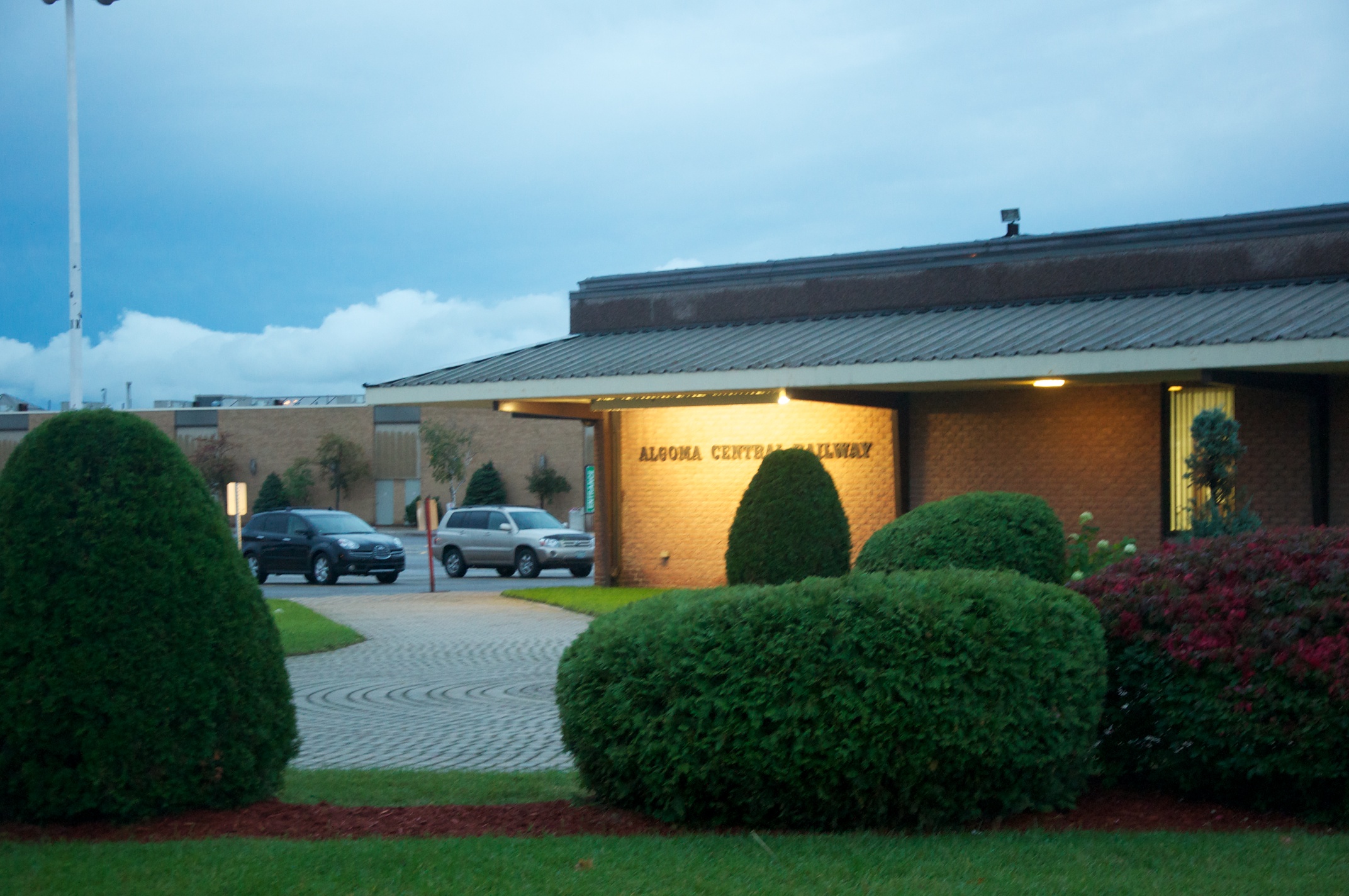
Travel to Agawa Canyon via the Algoma Central Railway.

Gwen’s challenge was to get us into the northern Michigan territory approximately when the trees are changing colors for fall.  She succeeded admirably.  But that is getting ahead of my story.   The focus for today’s travel was to take the a  slow train about 110 miles up into the upper Ontario province wilderness to see what could be seen.  And a lot could be seen.  The train, deliberately a tourist attraction, travels at a sedate 30-40 mph, starting at 8:00 am, getting to the Agawa Canyon valley at 12:00 for an hour and half’s stay, and then rumbles its way back to the starting point.  Once again, thanks to Gwen’s connections at Holiday Inns, we stayed in a Holiday Inn Express literally walking distance from the starting and ending point of the train journey.

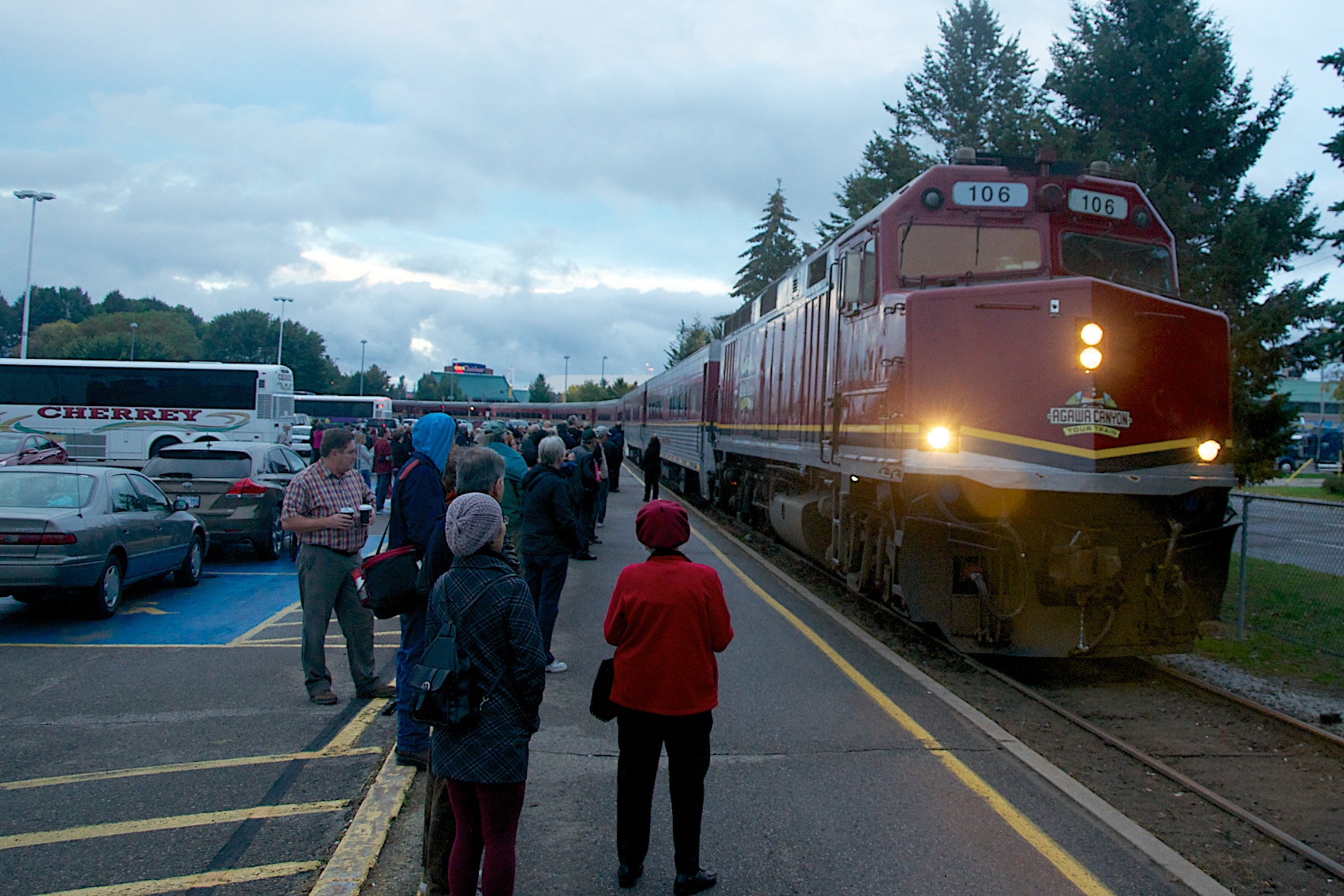
The train station sits in the middle of a large parking lot  Upper Pen trip   008

without the usual train station accoutrements, such as platforms, or even an obvious track.  Sure enough there is a track, running along the north side of the parking lot, sitting between the parking lot and Bay Street, but it is a single track with a tarmac sidewalk, and unless you walked right over it, you wouldn’t even know it was there.  Come 7:30 am on this particular Sunday morning, however, it was clear the train would be long and fully loaded.  Not quite on time, but looking ready for its day, along came the train down the track to enable us to climb on board.  (Can you spot Gwen amongst the anxious travelers?)  Upper Pen trip   009

The train is equipped for its job.  In addition to comfortable seats, it has TV monitors at a high level which serve two main purposes.  The first is to show the scenes to visualize the stories our hosts are telling us as we head up north, and the second is to show the view from the engineer’s seat as we charge forward down the track.  The engineer’s view gives us a 20-second warning of we will be seeing so we are prepared to look out the right or left as appropriate.  This is a very useful feature.  The hosts’ narration (fully pre-recorded; the on-board train people are there to do their specific jobs, not to entertain us) is well done; it nicely complements the scenery.  They talked a lot about the history of the area we were traveling through, and the railroad itself.  The local “Andrew Carnegie” who established the railroad and many of the businesses the railroad has served since the late 1800’s was a man by the name of Francis H. Clerque.  As found in Wikipedia: “Born in BrewerMaine, Clergue studied law at the University of Maine after which he was involved in a number of business ventures until coming to Ontario, Canada. Clergue came to the city backed by Philadelphia businessmen. He saw the potential for industry with the location of the town. He helped establish a hydro-electric dam which provided the town with cheap and abundant electricity. Following the 1895 construction of a new canal and lock, he founded the paper mill St. Mary’s PaperAlgoma Steel (now called Essar Steel), as well as a portion of the Algoma Central Railway connecting the city to the transcontinental artery of Canada, for which the city is most noted. He also established the Helen and Gertude mines. He used all of his ventures collectively to build his empire. Algoma Steel was started by using pig iron from the Helen mine to make steel rails.”
Clerque was not as lucky as (perhaps not as good as) Mr. Carnegie, and ended up bankrupted by his desire to get all the businesses started too quickly.  The story (for him) ended in 1903, but as our hosts pointed out, the main businesses that today are the chief employers in Sault Ste Marie are the same ones he started back in the late 1800’s.  They emerged out of that early bankruptcy and have maintained themselves ever since.
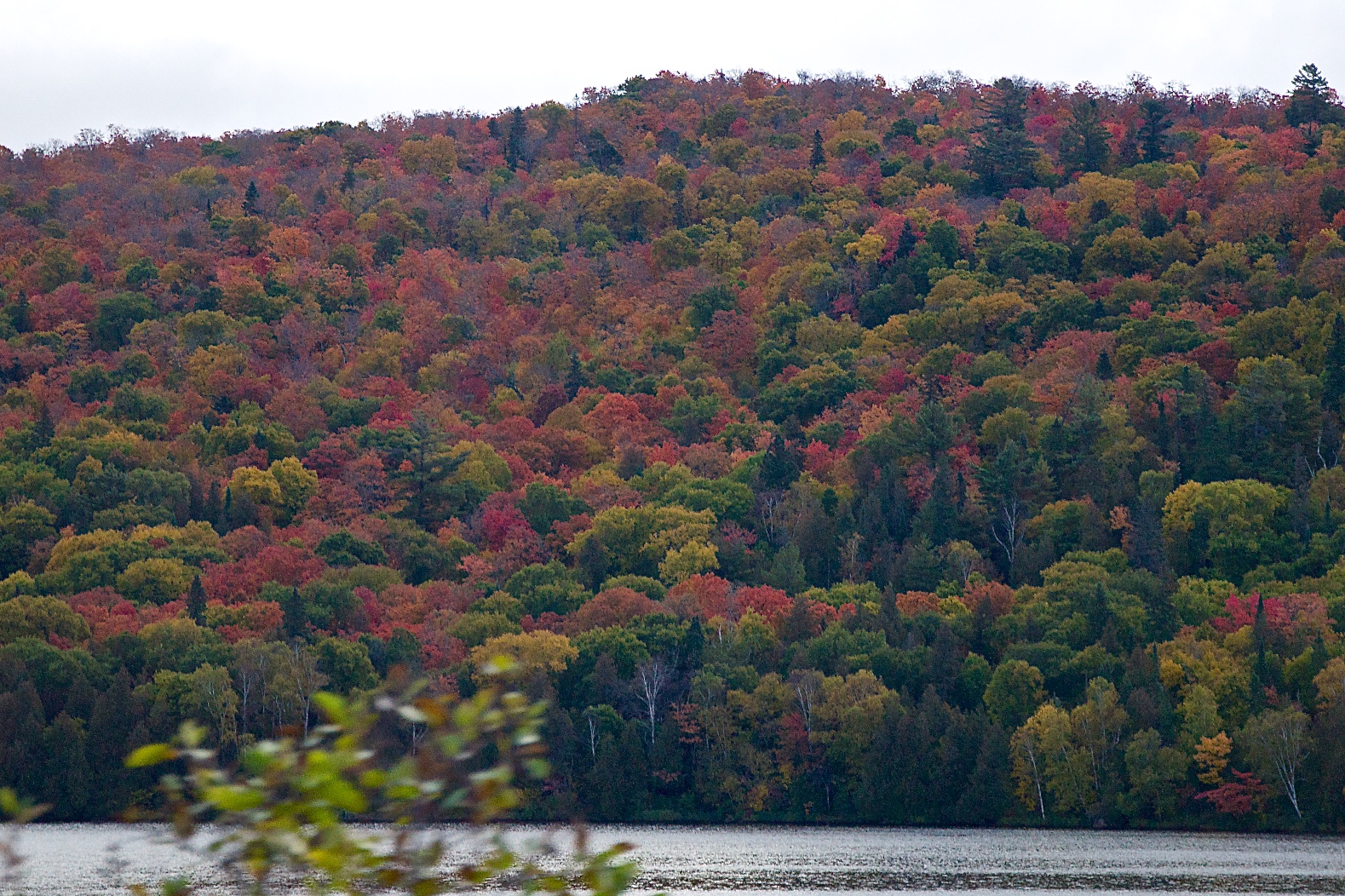
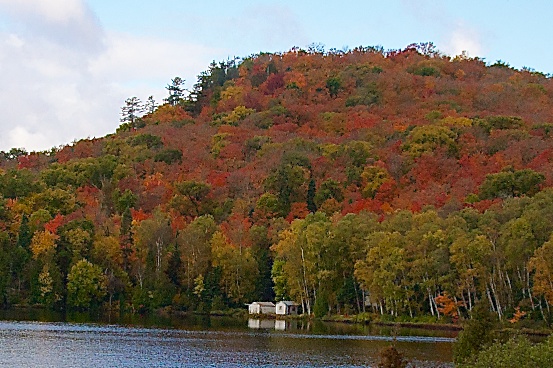
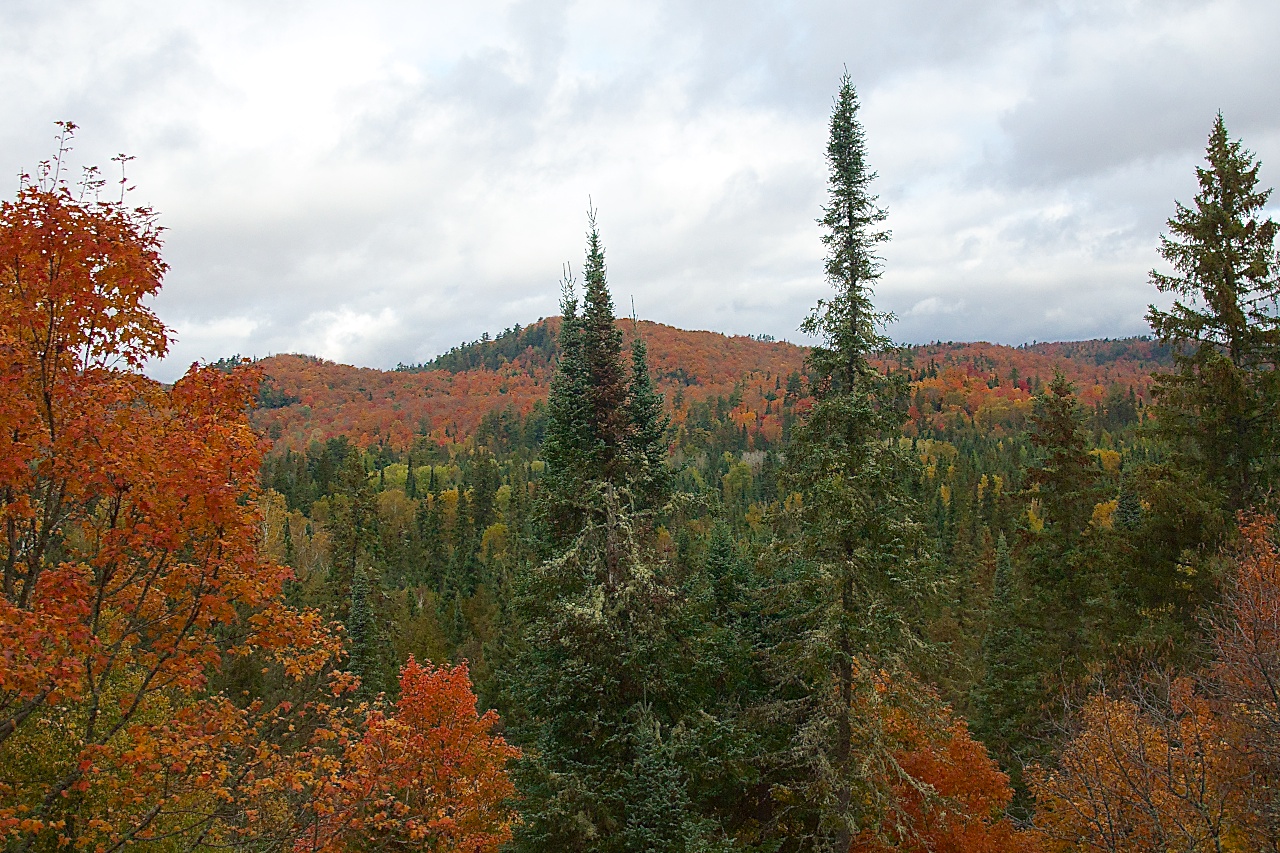
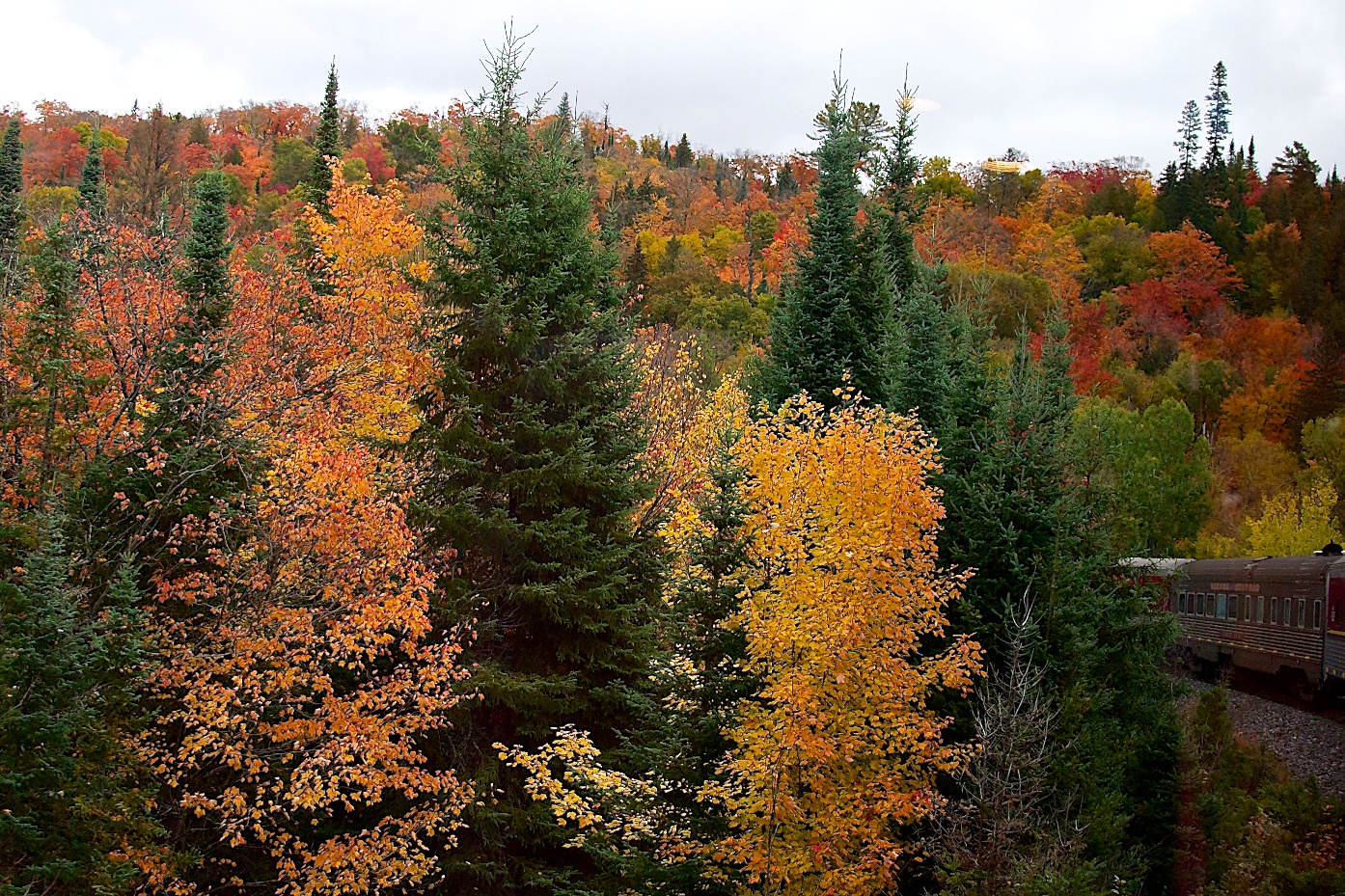
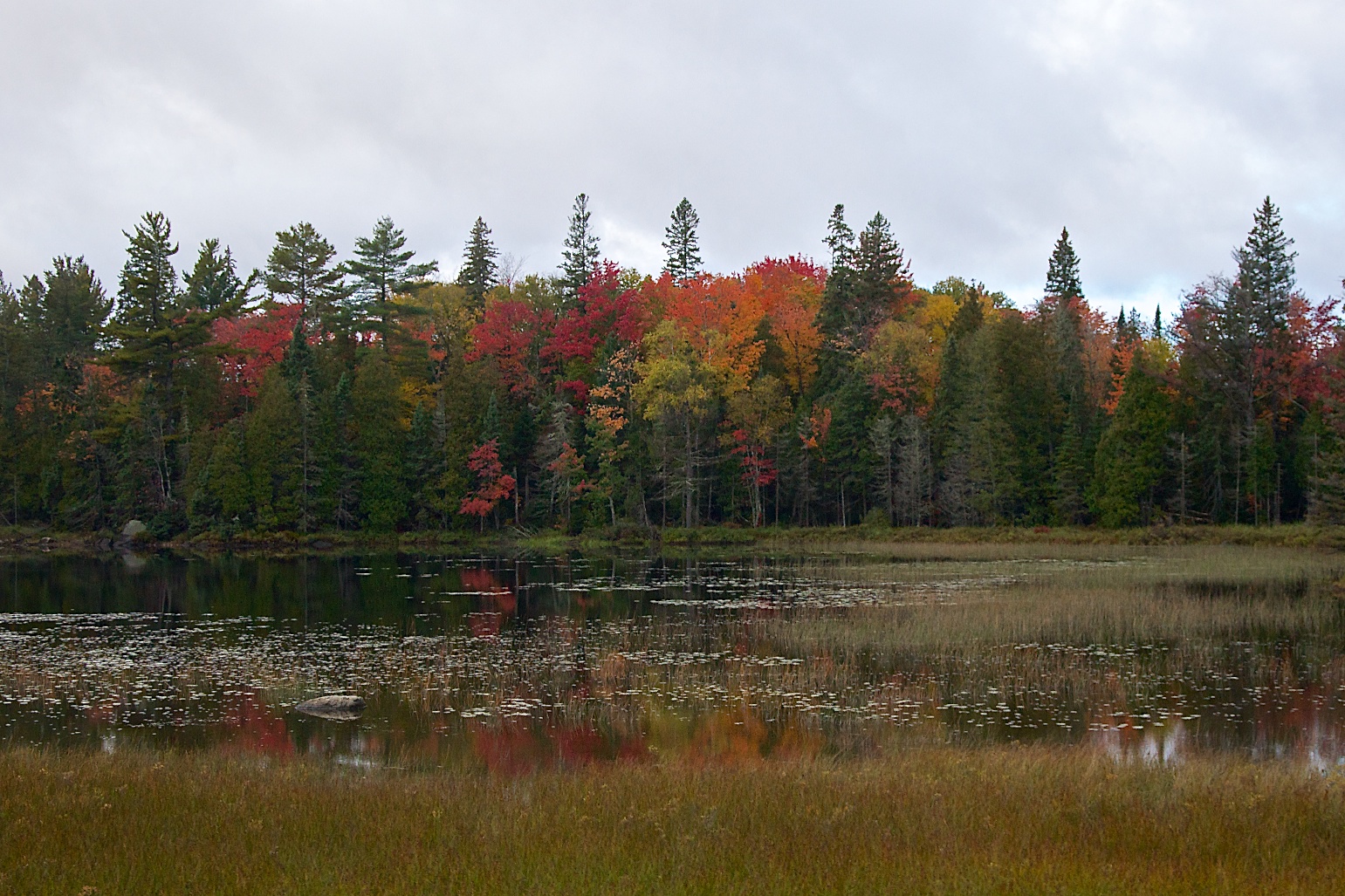
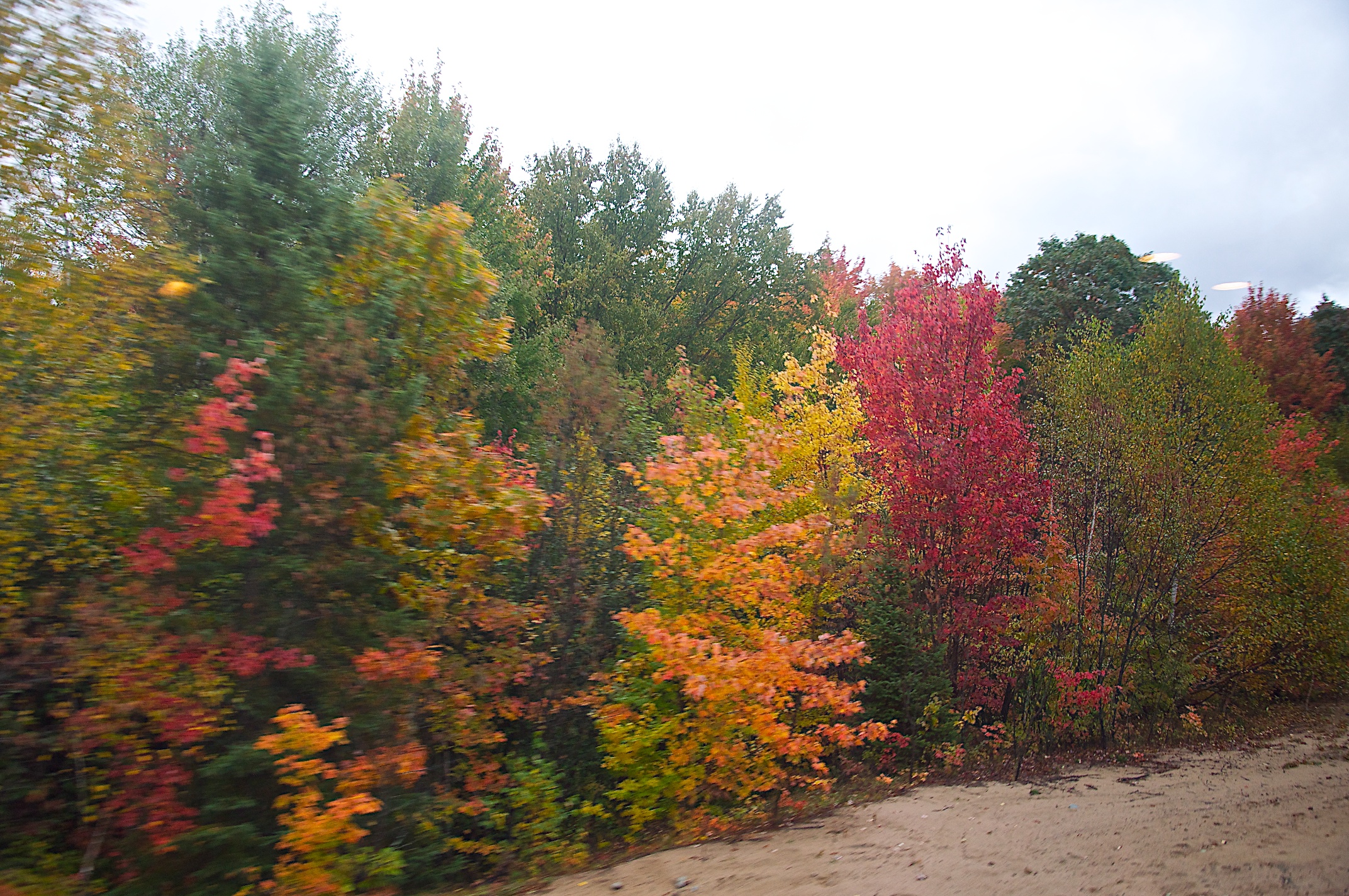
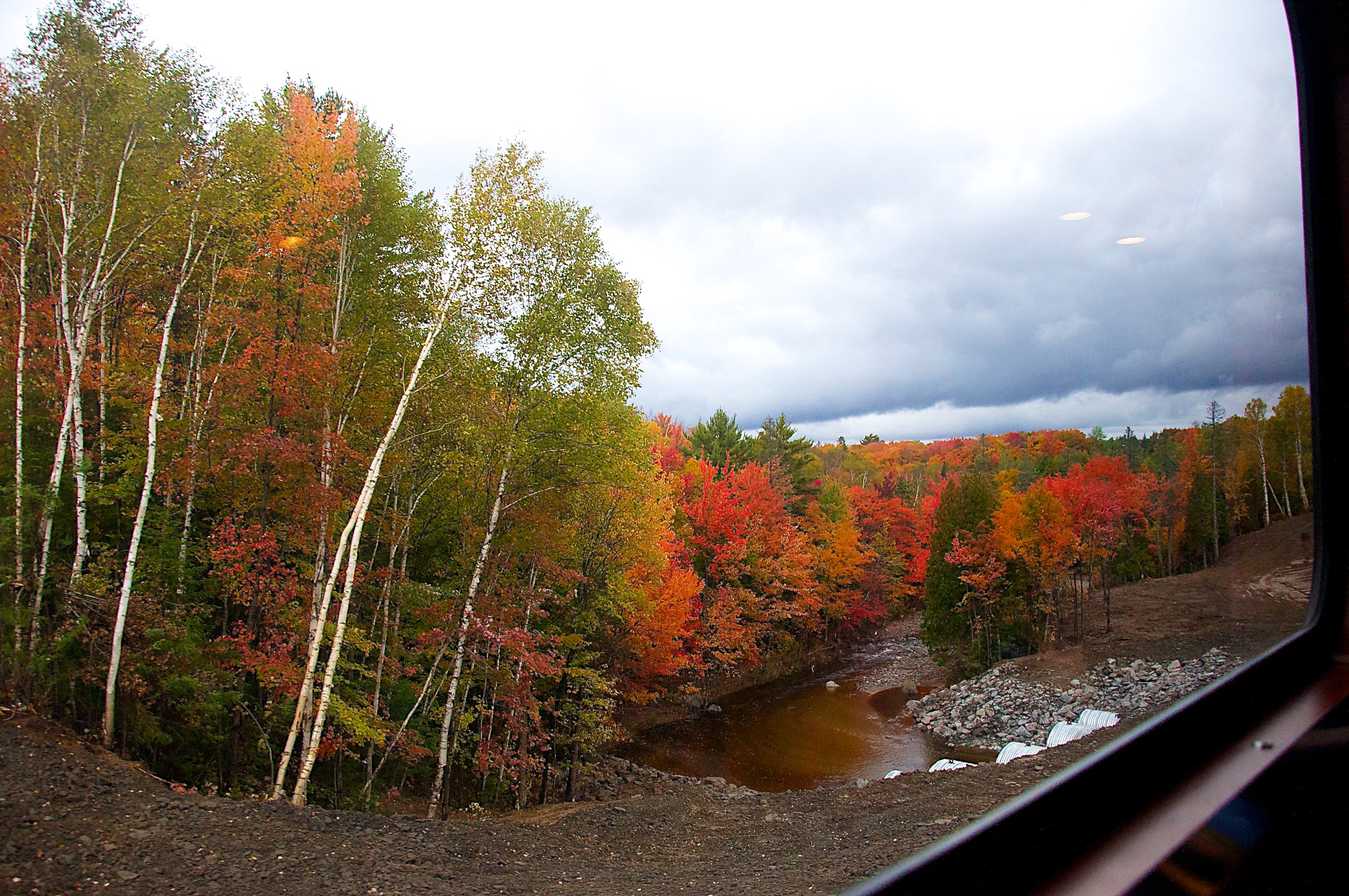
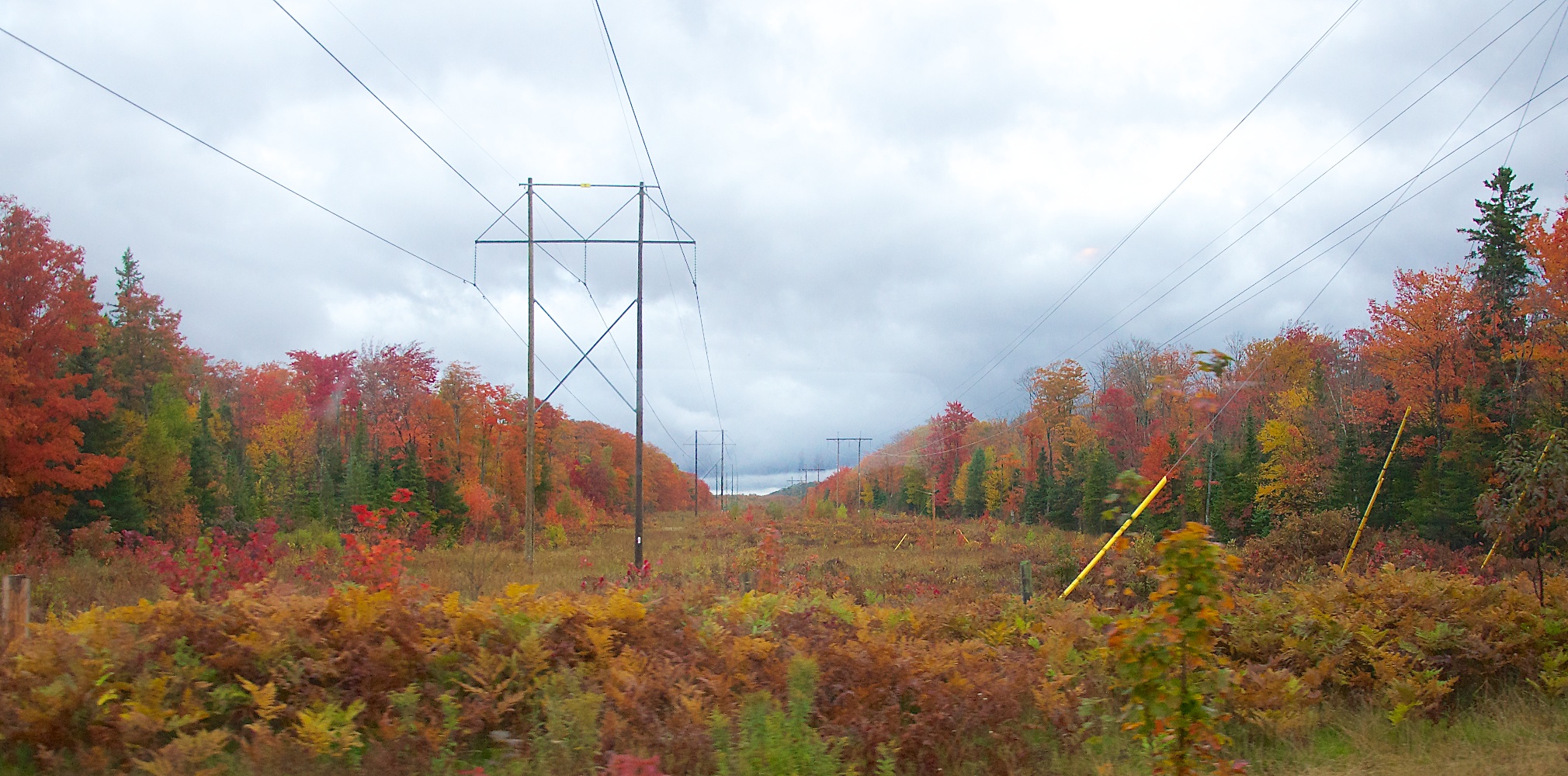
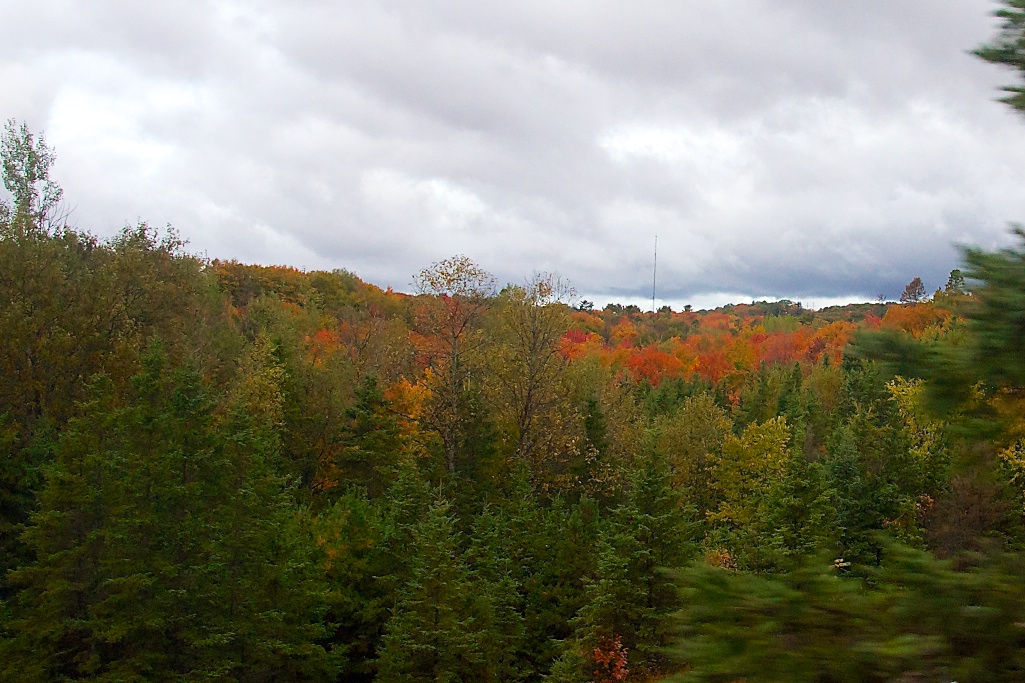
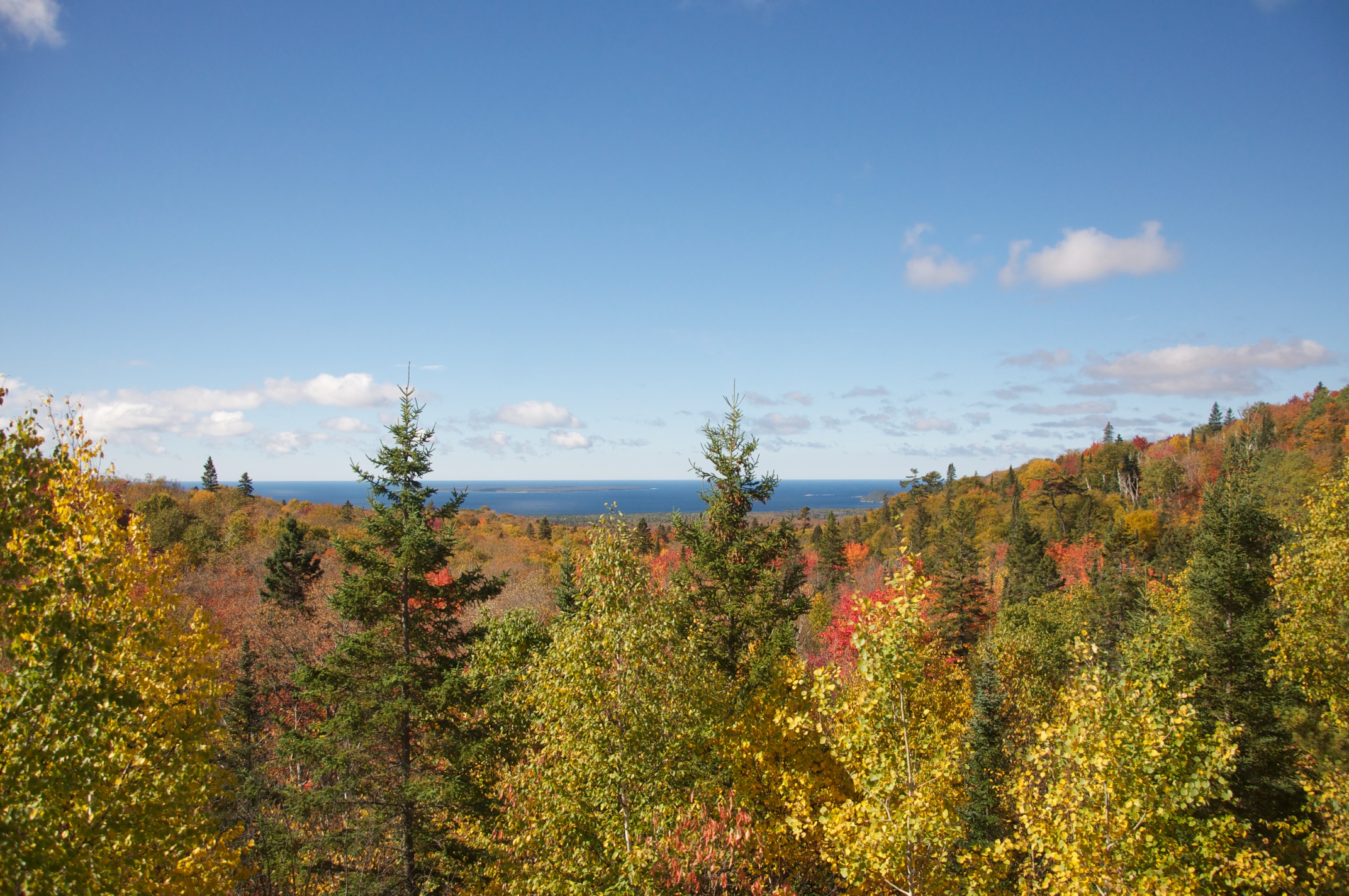
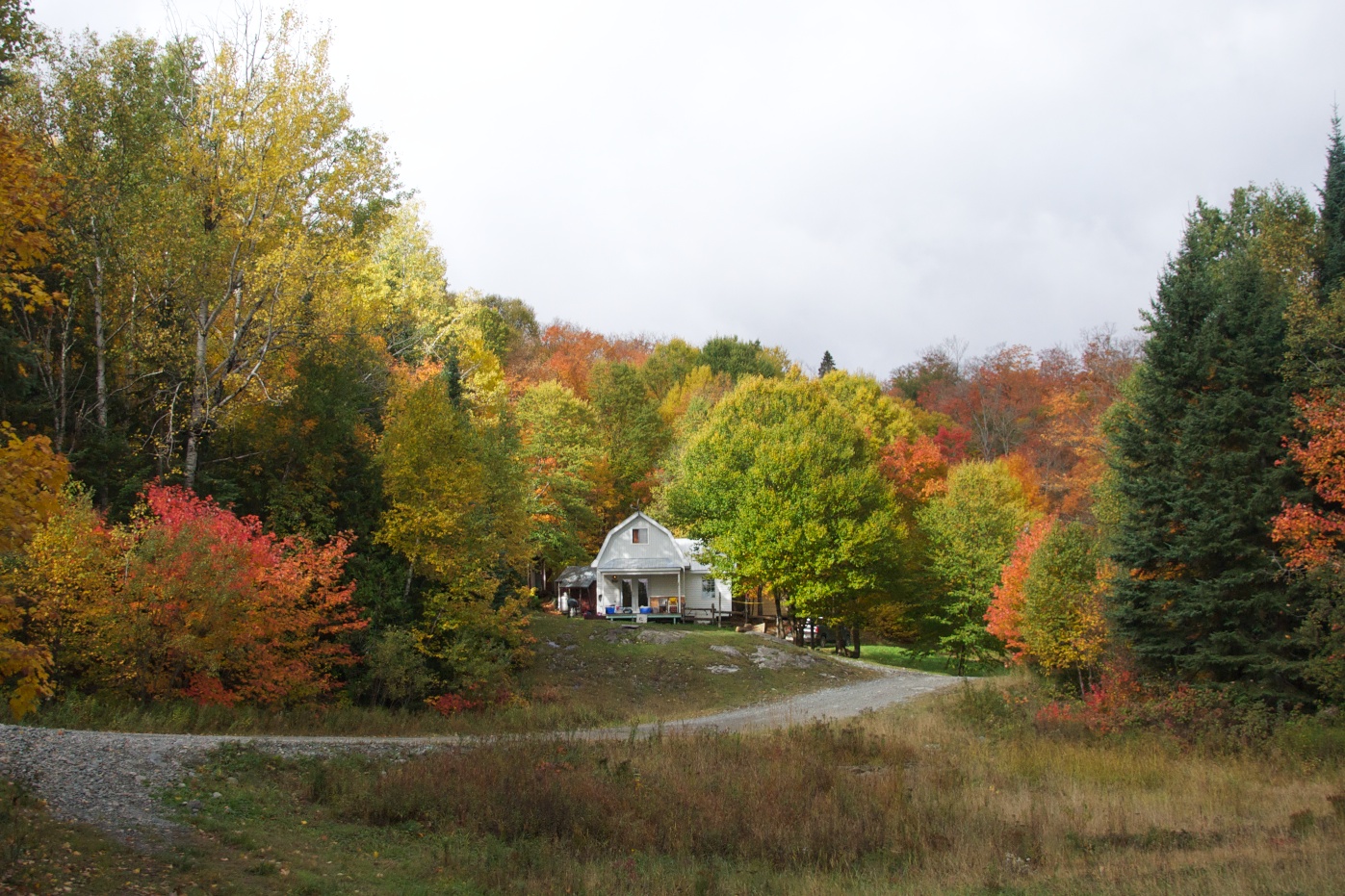
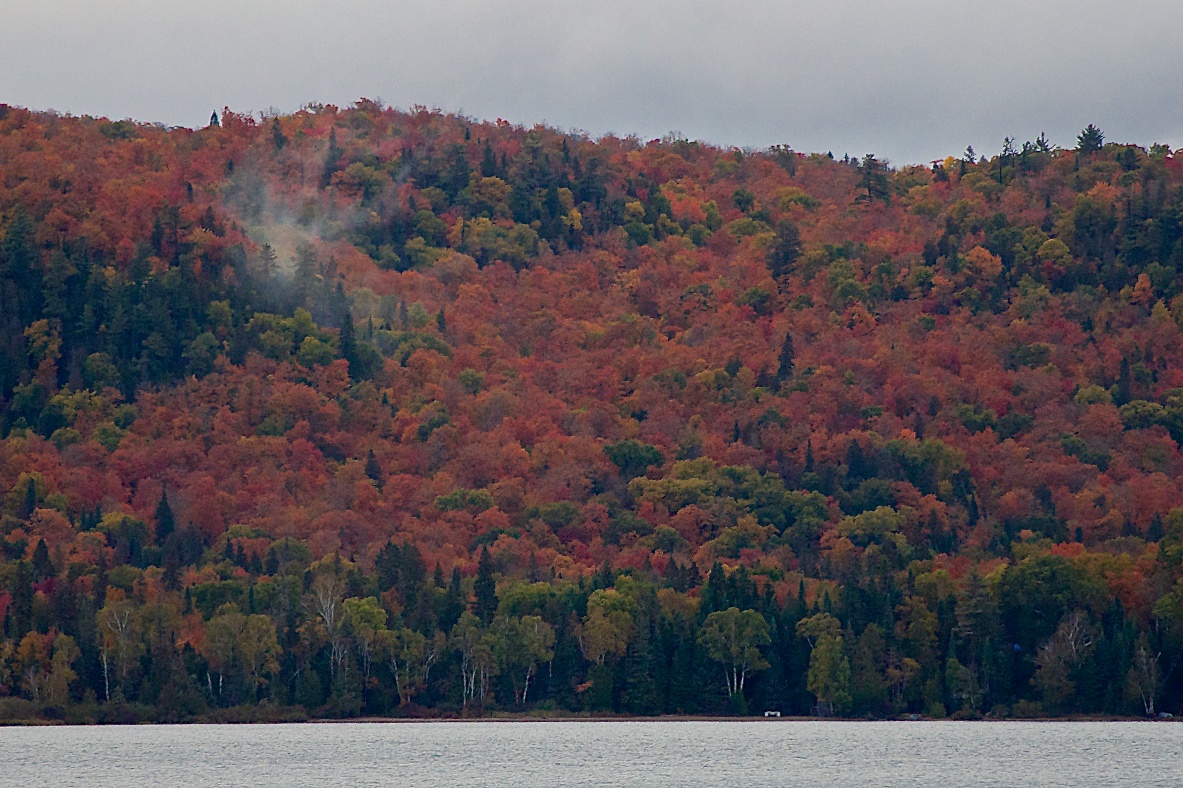
As we continued north, the colors grew more varied and picturesque.  While the train engineer Gwen talked to once we got to Agawa Canyon believed the top of the color wheel would not be reached for another one and two weeks, certainly in areas the colors were already there.  For us this was fine, as the contrast provided by the green interspersed amongst the colors from deep red to light yellow only enhanced the views.  Following is a series of pictures taken from the train as it traveled north.  It was a difficult process figuring out how to avoid colorful blurs as the train continued its motion.  But the views were spectacular, as you can see.  There were many lakes, and almost the whole way was through forest.  Some of the lakes had houses on them, and from what they said there is a train that picks up passengers by request as it travels north or south.  The colors were at places many and varied, while at others it was more clustered (such as all yellows).  At a few places the tracks are quite high on the side of a valley, and the views go way off into the distance.

Lake Superior from the train Upper Pen trip 30 Sep   031 On the train to Agawa Canyon in Algowa Country. Upper Pen trip 30 Sep   029 Upper Pen trip 30 Sep   028 Upper Pen trip 30 Sep   027

OK, there’s too many pictures for this one post.  I’ll put a few in this post, and then a few in each of the next posts until I run out.  It all fits the theme for this trip anyway, and we saw colored beauty every day, even when we didn’t manage to photograph it.

The train ambled its way through to Agawa Canyon, and we had an hour and a half there to look around and see the beauty spots.  There are three hiking trails, but with so many people, they were not lonely trails.  I took the “Lookout” trail, which they cautioned several times on board the train to think about beforehand, as it included 300 steps to traverse up and then back down again to get up to the main lookout platform.  As might be expected, the large contingent on board who were not obviously English speakers picked that trail as their first choice.  The steep climb took us first to a mid-way platform, and then up to a platform that was close to the top, and finally the highest platform.  Indeed the views were quite spectacular.  Agawa Valley from Lookout point.

The Agawa River runs to the left.  In the lower left corner, you can see how brown it is.  The tannin from the trees colors the water to a great extent.  It looks like it should have a distinct alcoholic taste to it (just in case, I didn’t try it).  It is possible to see the train car-tops to the right of the river.

Thanks to the good weather, there were good views to see.  Gwen took off to the two other sites, the Bridal Veil Falls,   Bridal Veil Falls in Agawa Canyon

and Black Beaver Falls.  Black Beaver Falls in Agawa Canyon  After climbing down from Lookout Point, I, too, went to Black Beaver Falls.  We then met up back in the train car.  The train crew had been busy while we were gone – taking the two engines from the front of the train, and moving them to the new “front” for the trip back, and rotating the seats in all the cars so indeed going back we would be still be facing forwards.  We traded with the pair across from us to we could get the view from the other side of the train.  As soon as the train got underway, Gwen and I headed to the dining car to get some lunch.  We returned, and enjoyed the view from the left side of the train all the way back.  On this side, there were many more lakes and rivers to be seen, or at least that was what it seemed.

The trip back seemed longer than the trip out, but it was, if anything, somewhat shorter in time.  We had left at 8:00 am, and returned about 5:45 pm.  Getting dinner proved to be more of a problem than it should have been – the restaurant within walking distance from the hotel had a 45-minute wait (we think a bus load arrived just before us), so we ended up at a Subway, not one of Gwen’s favorites.

Tomorrow — on to the Shipwreck Museum, Tahquamenon Falls and our visit with the Kerr’s.

2 Comments

Filed under Uncategorized

September 28, 2013

Back on the road again!  Gwen has planned for us to see a bit of the fall color as presented in Michigan’s Upper Peninsula, Lake Superior from above and below, and with help from Suzie, some of her favorite cities / towns in Wisconsin.  So we started yesterday (I write this on Sunday, 29 September).  The drive up from home to Sault Saint Marie in just a few hours,  It was a pleasant drive, with one main stop along the way at Ft Michilimackanac.

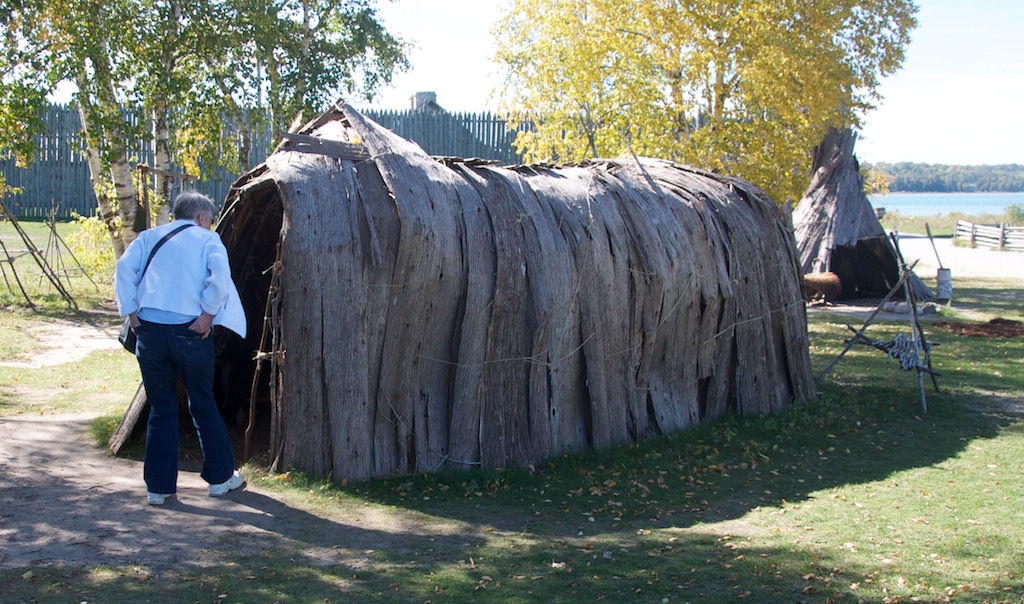
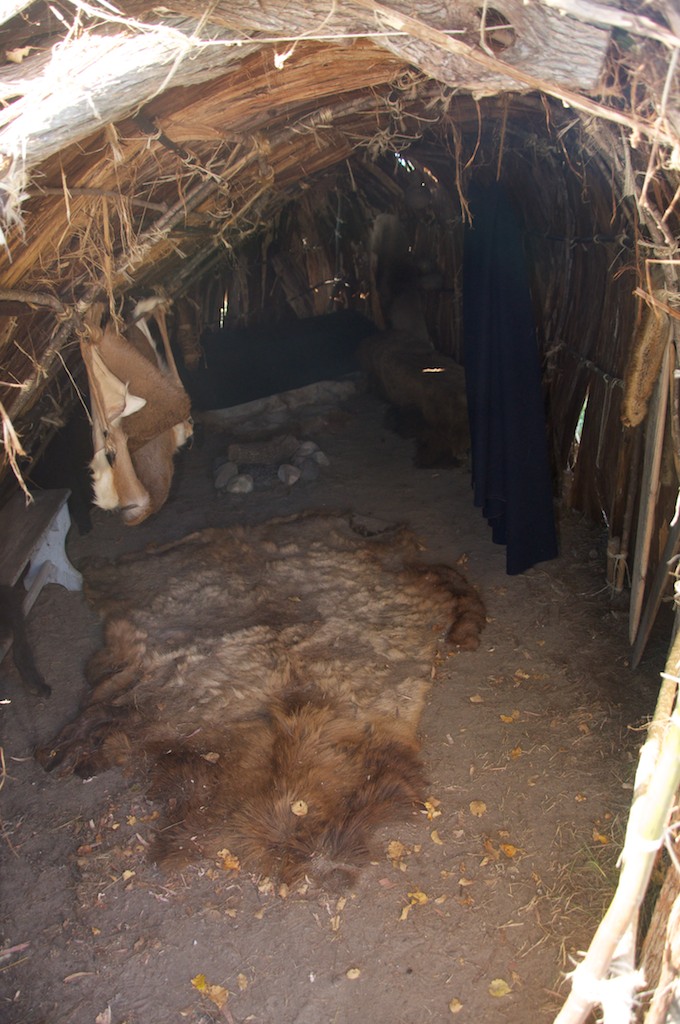
To get to this frontier fort with a great history you take the last exit before the Mackinac Bridge — the very last exit.  The entrance is located right under the bridge right at the edge of Lake Michigan in Mackinaw City.  Michilimackinac was the major depot for the northwestern fur trade.  Large canoes, weighted down with brandy, trade goods, and munitions, arrived from Montreal. Traders and voyageurs carried this merchandise on to Indian customers in Michigan, Wisconsin, Minnesota, Ontario, and beyond.  The Indians in the Great Lakes region include the Ogawa and Ojibwa (or Chippewa, as they are known in the US) tribes, as well as the Winnebago and the Menominee.  Many traders spent the winter among Indian hunting camps.  Ft. Michilimackinac, an Indian wikiup outside the fortThere they worked with the Indians to gather the furs and then collected the results.  In spring, they brought their furs to Michilimackinac for shipment to Montreal.  Ft. Michilimackinac, inside the Indian shelter.At the Straits, they rendezvoused with their friends and recent arrivals from Montreal and spent their wages in a few days of wild celebration.

The fort was built in about 1715 when the first French troops arrived.  It seems that the Indians were not necessarily as friendly to the French (and each other) as a simple history might suggest.  Several times, groups of French soldiers and friendly Indians were sent from the Fort to do battle with others, not always successfully.  In any case, there were English voyageurs and traders who were also interested in working with t

he Indians.  A complicated situation, and over years from 1715 to 1763 when the British took over as a result of the end of the French and Indian War, the fort was a unique central place for much activity.  As indicated, the British took over in 1763, but then in 1781, the leader in place at the time decided to move the fort to Mackinac Island, and so over that summer, a fort was built on the island, and everything that was useful was moved to it.  Upon completion, Fort Michilimackinac was burned to the ground, and left.

In the 1950’s, archeological interest in the orignal Fort was raised, and archeological digs began.  Digs have occurred over the years, and due to the advanced techniques now available, much has been learned about the fort’s history and how the people lived.  A full-size reconstruction has been built over the same space, and actors recreate examples of a few of the lives spent (at least partially) there.

This included an Indian site just outside the fort itself.  Gwen gets a good look at the Indian house outside of Ft Michilimackinac.

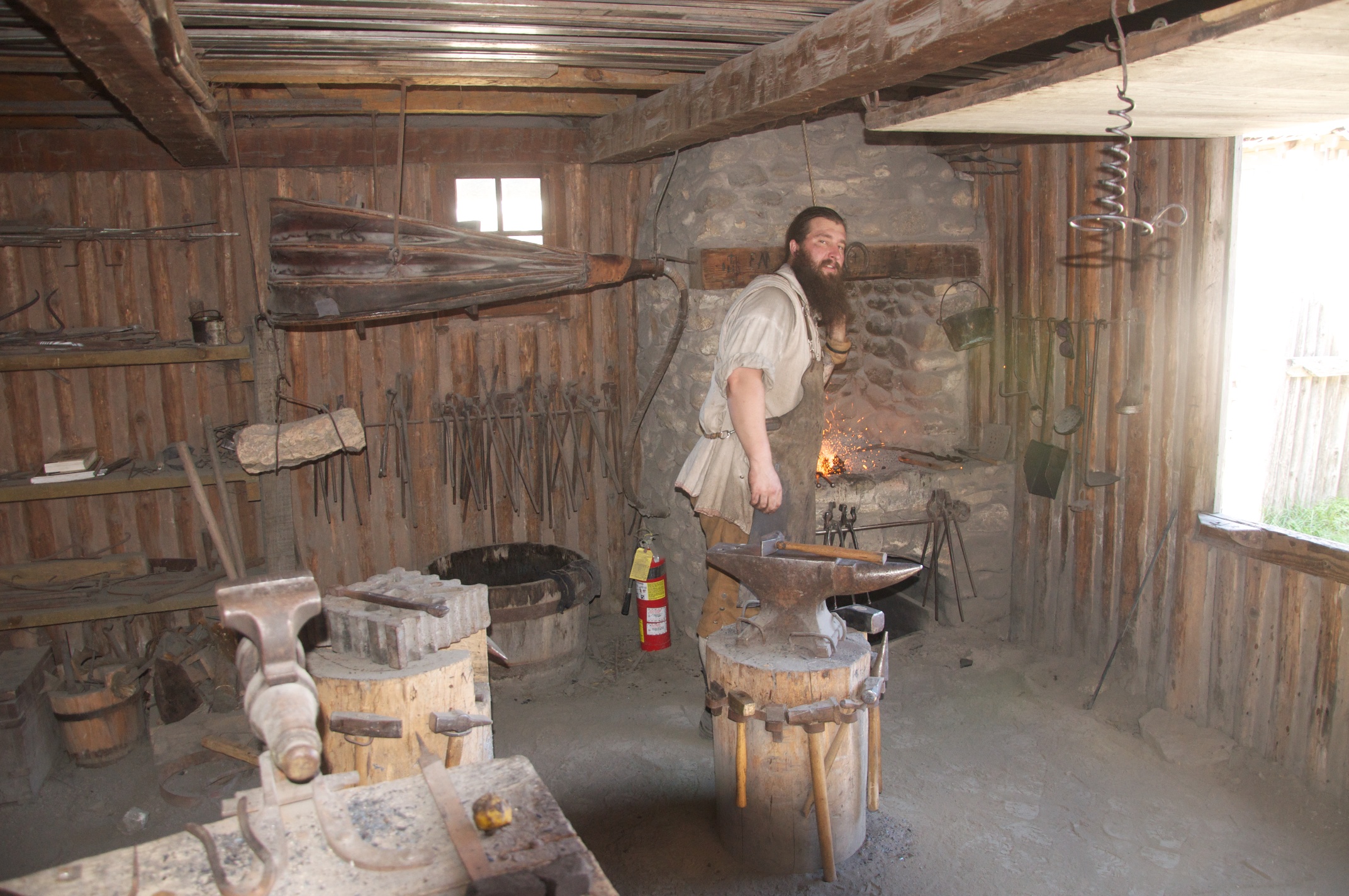
Inside the Fort, actors included a blacksmith (who told good stories as well as actually creating metal objects using a hand-cranked bellows to get the appropriate heat, Upper Pen trip   001

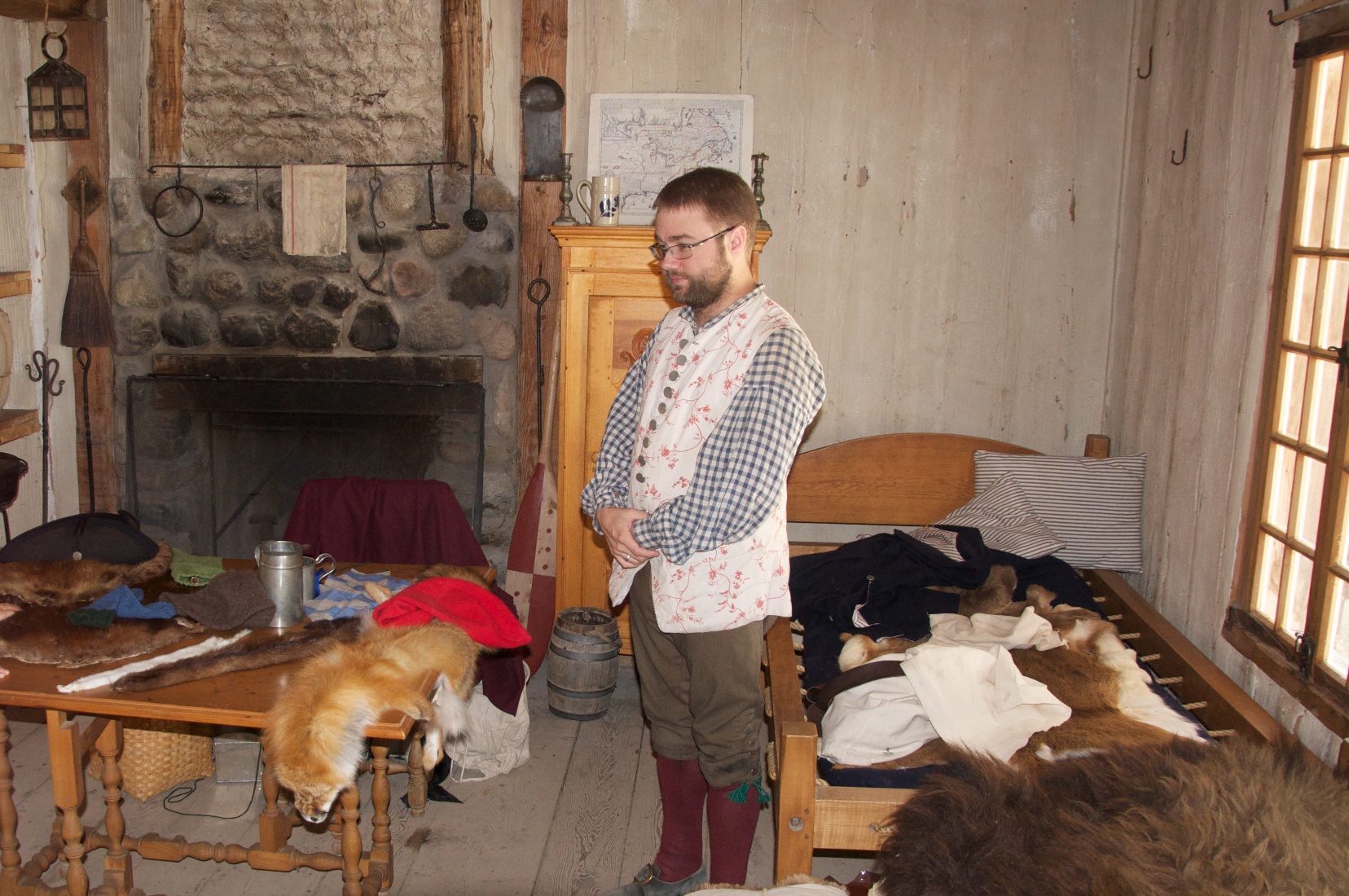
A trader at his house / place of businessUpper Pen trip   002

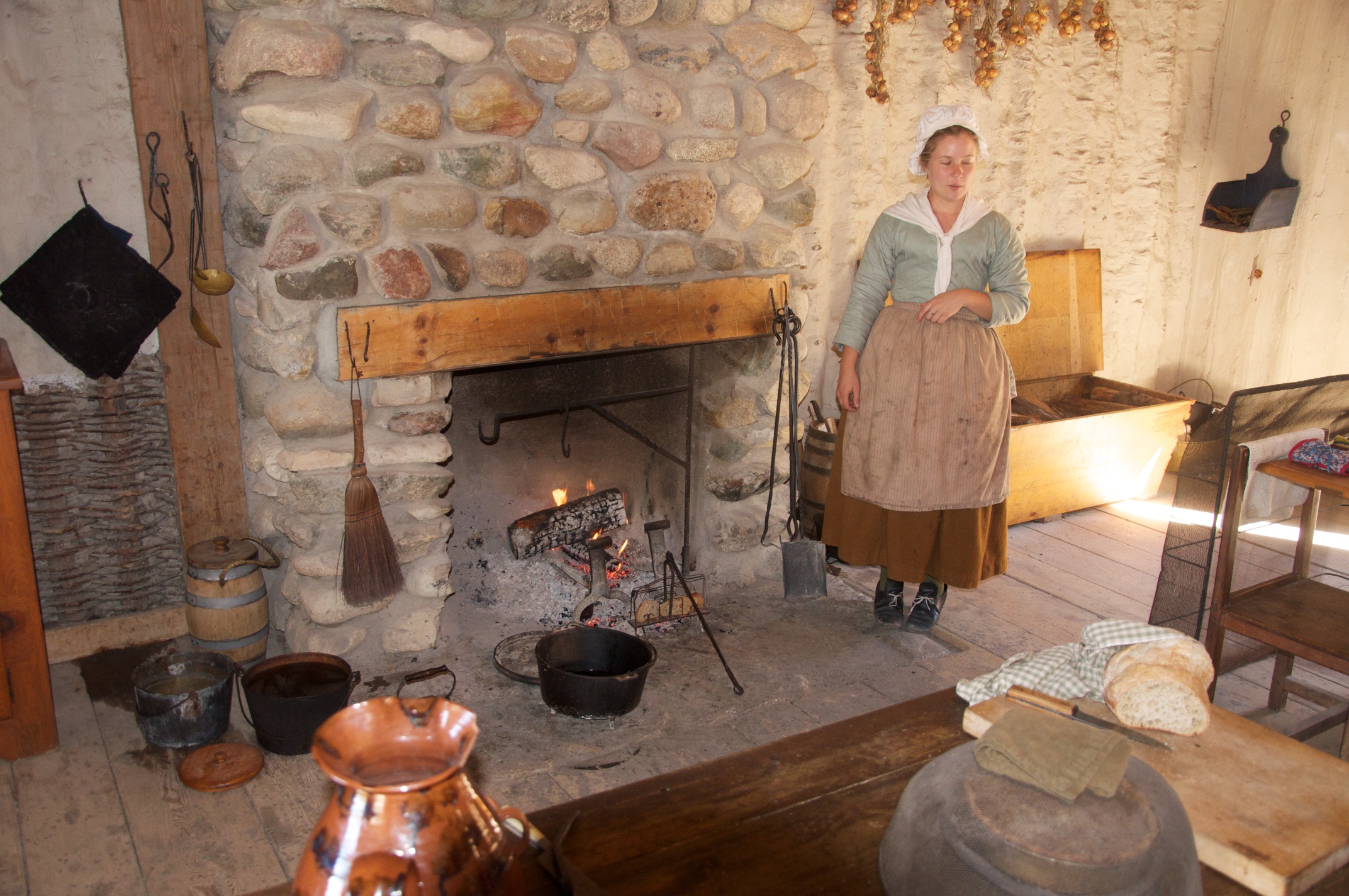
and a housewife of one of the fort dwellers (note the bread toasting at the hearth)Upper Pen trip   003

The fort also had (at various times) an in-house friar (Jesuit) to save the souls, especially in summer when people were likely to be around, and their military contingent, French at first, and then British.

The interior fort area in addition to the several buildings that are meant to resemble the original structures, also has a green for military exercises.  The military actors wear British colonial dress, as opposed to the French uniform dress. Upper Pen trip   004

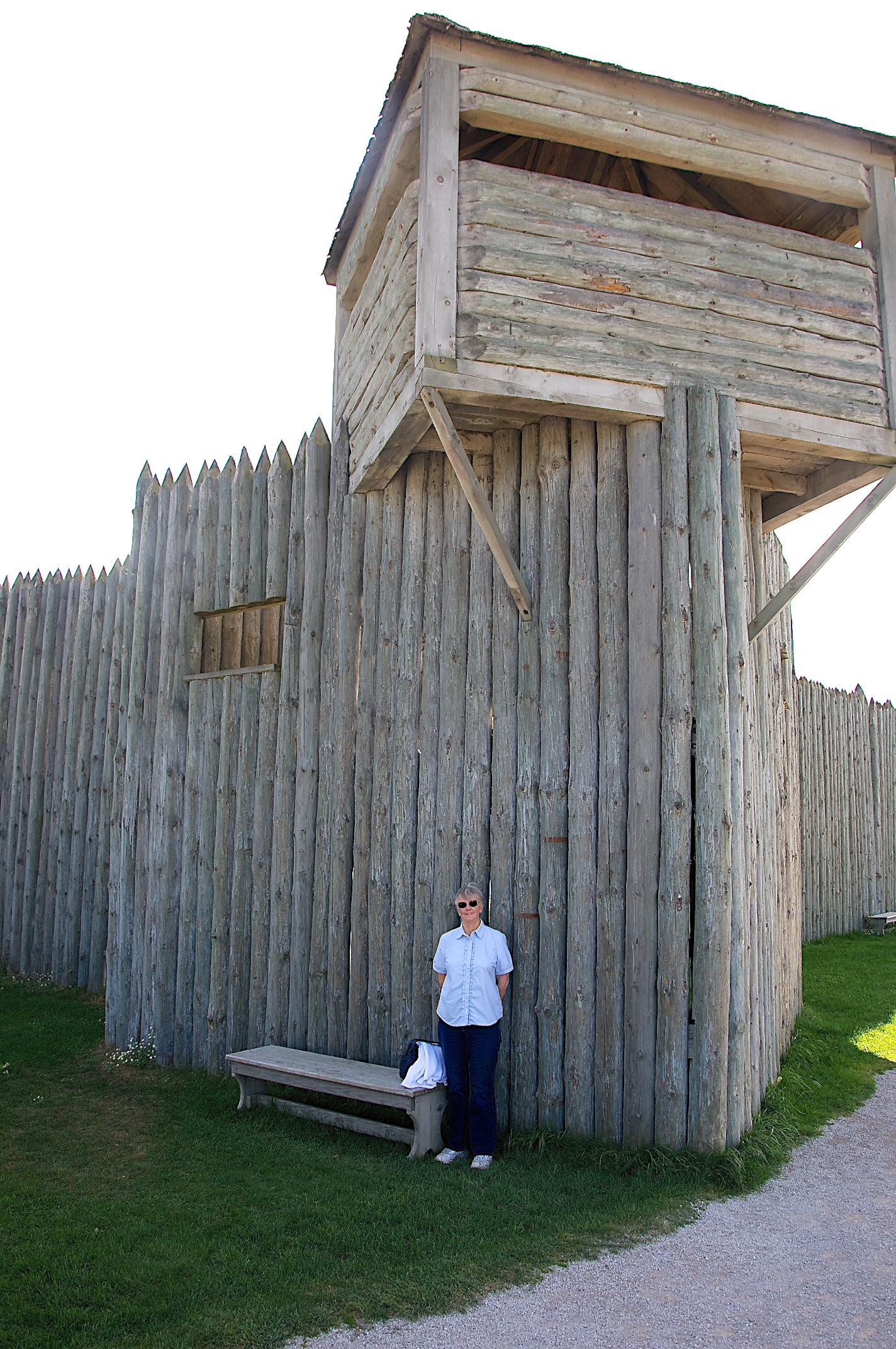
The fort itself is demarcated by a stake fence, which they say is authentic to the original. Upper Pen trip   005

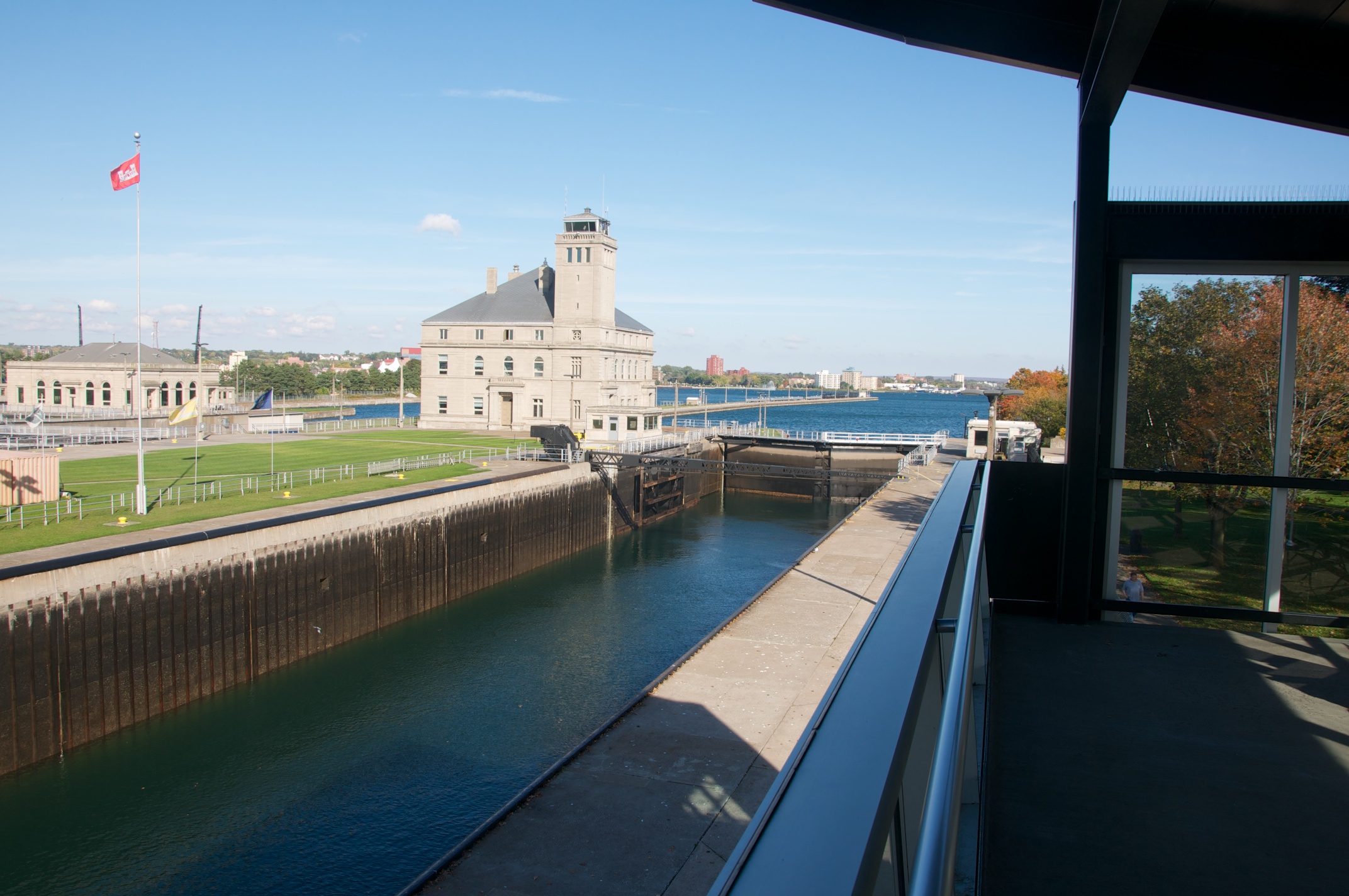
The fort is right under the start of the Mackinac bridge, and sits on the Lake Michigan side of the narrow water passage from Lake Michigan to Lake Huron.  Continuing on the M75 above the bridge for another hour (through Michigan’s Upper Peninsula) gets us to the US-Canadian bridge, across the straits between Lake Huron and Lake Superior.  For the early inhabitants or visitors, the bi-Lake crossing between Lakes Superior and Lake Huron was more treacherous than the crossing from Lake Huron to Lake Michigan as it involves rapids and a change in height.  Resolving this problem for shipping has led to what is known as the Soo Locks.  Upper Pen trip   006

There are two lock channels built by the US on its side of the border, and one built by the Canadians on their side.  The Canadian lock was the first to use electric power to manage the lock’s tasks when it was built in the late 1800’s.  The US locks were built later, and through the events of time eventually came to handle the commercial traffic, while the Canadian lock now is used solely for private traffic.

Across the US-Canadian bridge

Upper Pen trip 1  004

is Sault Ste Marie, the second largest city in northern Ontario, and the home of the Algoma Central Railway which is the focus of day 2.


2 Comments

Filed under Uncategorized